wayground logo

Free Printable Worksheets

Font size

S
M
L
XL
Worksheets

Unit 2 &3 Review: What Do You Know?

Total questions: 61

Worksheet time: 2hrs 45mins

Name
Class
Date
1.
As you move down the periodic table atoms get bigger.  This is because ____________.
a)
The atoms have more mass.
b)
The atoms have more protons.
c)
The atoms have more energy levels
d)
The atoms have more nuetrons
2.
What is this element?
1s22s22p63s2
a)
Neon
b)
Magnesium
c)
Aluminum
d)
Potassium
3.
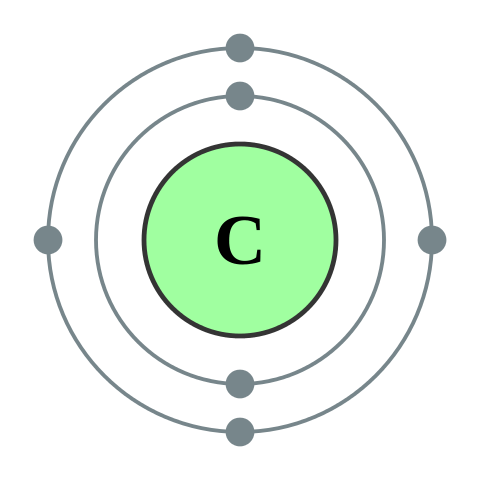
Which element is pictured?
a)
neon
b)
fluorine
c)
magnesium
d)
argon
4.
How many electrons can the d sublevel hold?
a)
8
b)
10
c)
2
d)
4
5.
How many p orbitals are there in a sublevel?
a)
2
b)
1
c)
4
d)
3
6.

Explain the trend in atomic radius as you move down a group in the periodic table.

a)

The atomic radius increases

b)

The atomic radius fluctuates

c)

The atomic radius remains constant

d)

The atomic radius decreases

7.

Which of the following elements has the largest atomic radius: Lithium, Carbon, or Fluorine?

a)

Oxygen

b)

Fluorine

c)

Carbon

d)

Lithium

8.
Electronegativity __________ from left to right within a period and __________ from top to bottom within a group.
a)
decreases, increases 
b)
increases, increases
c)
increases, decreases 
d)
stays the same, increases
9.
Atomic radius generally increases as we move __________.  
a)
down a group and from right to left across a period 
b)
up a group and from left to right across a period 
c)
down a group and from left to right across a period 
d)
up a group and from right to left across a period 
10.
What is the name of family I
a)
Alkaline Earth Metals
b)
Boron Family
c)
Alkali Metals
d)
Halogen Family
11.
Families all have similar 
a)
Names
b)
atomic numbers
c)
atomic masses
d)
properties
12.
Which has the greater Electronegativity: 
N or C?
a)
C
b)
N
13.

Isotopes of an element have a different number of...

a)

Protons

b)

Neutrons

c)

Electrons

d)

Mass

14.

What is the ATOMIC MASS of the isotope Carbon-14?

a)

14

b)

6

c)

12

d)

20

15.

Using the picture, you can determine that Carbon-13 has ____ neutrons.

a)

13

b)

6

c)

12

d)

7

16.

An element's atomic number _______ changes.

a)

always

b)

sometimes

c)

never

17.
Question Image

Match the following

a)

number of protons

1.

18

b)

number of neutrons

2.

22

c)

mass number

3.

40

18.
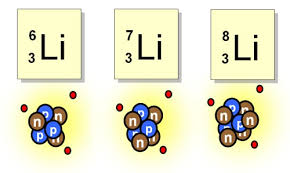
Which atom has  4 neutrons?
a)
Li-6
b)
Li-7
c)
Li-8
d)
they have the same # of neutrons
19.
Carbon has an atomic number of 6 and an atomic mass of 12. Which elements are considered isotopes of carbon?
a)
Carbon-12
b)
Carbon-13
c)
Carbon-14
d)
Both Carbon-13 and Carbon-14
20.
Name group 1 on the periodic table.
a)
alkali metals
b)
alkaline earth metals
c)
noble gases
noble gases
d)
halogens
21.
Name group 2 on the periodic table.
a)
alkali metals
b)
alkaline earth metals
c)
noble gases
d)
transition metals
22.
Name group 18 on the periodic table.
a)
alkali metals
b)
alkaline earth metals
c)
transition metals
d)
noble gases
23.
Name groups 3 - 12 on the periodic table.
a)
noble gases
b)
halogens
c)
metalloids
d)
transition metals
24.
Name group 17 on the periodic table.
a)
transition metals
b)
metalloids
c)
halogens
d)
alkali metals
25.
Which group has the most reactive nonmetals?
a)
alkali metals
b)
noble gases
c)
metalloids
d)
halogens
26.
Where are the nonmetals located on the periodic table?
a)
top left corner
b)
bottom left corner
c)
top right corner
d)
bottom left corner
27.
Name the group that contains inert (nonreactive) elements.
a)
noble gases
b)
halogens
c)
alkali metals
d)
alkaline earth metals
28.
Elements in the same ________ are more chemically similar.
a)
group
b)
period
c)
club
d)
table
29.
The atoms along the staircase are called 
a)
metals
b)
nonmetals
c)
metalloids
d)
noble gases
30.

The vertical (up and down) columns in the Periodic Table are called

a)

groups

b)

towers

c)

periods

d)

atomic numbers

31.

Choose the correct electron configuration for Chlorine (Cl).

a)

1s2 2s2 2p1

b)

1s2 2s2 2p6 3s2

c)

1s2 2s2 2p6 3s2 3p5

32.

Choose the correct electron configuration for Beryllium (Be).

a)

1s1

b)

1s2 2s2

c)

1s2 2s2 2p1

33.
What is the noble gas configuration for boron?
a)
[He]1s22s2
b)
[He]2s22p2
c)
[He]2s22p1
d)
[Li]2s22p1
34.
What is the noble gas configuration for Sulfur?
a)
[Ar] 3p4
b)
[He] 3s2 3p4
c)
[Ne] 3s2 3p4
d)
[Na] 3s2 3p4
35.

Match the elements with their electron configuration! (3 minutes)

a)

1s2 2s2 2p3

1.

Nitrogen, N

b)

1s2 2s2 2p6 3s2 3p3

2.

Phosphorus, P

c)

1s2

3.

Helium, He

d)

1s2 2s2 2p6 3s2 3p6

4.

Argon, Ar

e)

1s2 2s2 2p6 3s2 3p6 4s2 3d5

5.

Manganese, Mn

36.

What element has this electron configuration?

a)

hydrogen

b)

helium

c)

lithium

d)

beryllium

37.
What atom matches this electron configuration?
1s22s22p63s2
a)
Neon
b)
Magnesium
c)
Aluminum
d)
Potassium
38.
What atom matches this electron configuration?
1s22s22p63s23p64s23d10
a)
Zinc
b)
Copper
c)
Nickel
d)
Germanium
39.
What electron configuration matches an oxygen atom?
a)
1s22s22p63s2, 3p64s23d104p5
b)
1s22s22p4
c)
1s22s22p6
d)
1s22s22p63s23p64s23d1
40.
How many Valance electrons does Iodine Have?
a)
6
b)
16
c)
7
d)
17
41.
How many valence electrons are found in atoms of group 1?
a)
7
b)
6
c)
4
d)
1
42.

How many valence electrons does carbon have?

a)

4

b)

5

c)

6

d)

7

43.
a)
2
b)
8
c)
3
d)
13
44.

What are valence electrons?

a)

The total number of electrons in an atom

b)

The number of electrons in the outermost shell

c)

The number of electrons in the second shell

d)

The number of protons in the outermost shell

45.

A(n) ______________is an ion that has a positive charge.

a)

anion

b)

cation

c)

isotope

d)

allotrope

46.

This is a correct dot diagram for neon (Ne)

a)

true

b)

false

47.

How would you draw a Lewis dot diagram for Magnesium?

a)

b)

c)

d)

48.

What is the light that you can see called?

a)

observatory light

b)

ultraviolet light

c)

visible light

d)

infrared light

49.
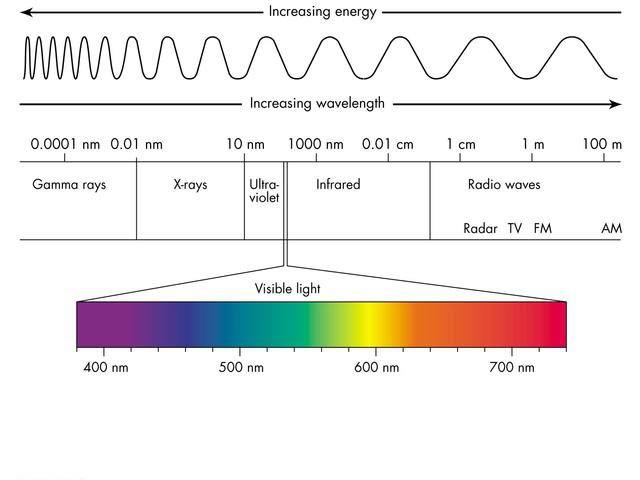
Visible spectrum is shown below. Which light has the highest energy?
a)
Red light
b)
Yellow light
c)
Green light
d)
Blue light
50.

Which wave has the shortest wavelength?

a)
b)
c)
51.

Which wave has the longest wavelength?

a)
b)
c)
52.

Which wave has the most energy?

a)
b)
c)
53.

Which of the following colors of light have the highest energy

a)

red

b)

orange

c)

green

d)

purple

54.

When heated, electrons are ____________.

a)

annoyed

b)

irritated

c)

excited

d)

angered

55.

Which image shows the lower energy light released?

a)

b)

56.

strontium

a)

red

b)

yellow

c)

orange

d)

blue

57.

What is the correct order of the visible light spectrum starting with the longer wavelength?

a)

Red, yellow, orange, blue, violet, indigo

b)

Violet, indigo, blue, green, yellow, orange, red

c)

Green, yellow, blue, indigo, red, orange

d)

Red, orange, yellow, green, blue, indigo, violet

58.
Which electromagnetic waves have the highest frequencies and the shortest wavelengths?
a)
microwaves
b)
visible light
c)
gamma rays
59.

This is a correct dot diagram for fluorine (F)

a)

true

b)

false

60.

This is a correct dot diagram for oxygen (O)

a)

true

b)

false

61.

Identify the Electron Configuration for Aluminum (Al)

a)

1s2 2s2 2p6 3s2 3p1

b)

1s2 2s2 2p6 3s2 3p3

c)

1s2 2s2 2p6 3s2 4p1