
Font size
 Worksheets
Matter & Phase Changes Review Quiz
Total questions: 100
Worksheet time: 1hrs 5mins
What is the smallest unit of matter?
Molecule
Atom
Compound
Cell
Which of these is a compound?
Oxygen gas (O₂)
Gold (Au)
Salt (NaCl)
Hydrogen (H)
What does density measure?
How much space an object takes up
How heavy something feels
How tightly mass is packed into a volume
How well something dissolves
Which property describes how well something transfers heat or electricity?
Solubility
Conductivity
Magnetism
Density
Which of these is an observable property?
Mass
Volume
Color
Density
Why do scientists use standard units?
To make objects look bigger
To compare results accurately
To make objects weigh more
To avoid using numbers
What does a model help scientists do?
See atoms directly
Represent things too small to see
Make new substances
Change mass
Which property would be most important for a space probe material?
Color
Conductivity
Ability to withstand heat
Solubility
Which of these is a molecule but not a compound?
Oxygen gas (O₂)
Water (H₂O)
Salt (NaCl)
Carbon dioxide (CO₂)
Which tool is used to measure mass?
Ruler
Balance scale
Thermometer
Graduated cylinder
What is the boiling point of water?
32°F
100°F
212°F
50°F
What phase change occurs when a gas turns into a liquid?
Melting
Condensation
Boiling
Evaporation
What is the melting point of water?
0°F
100°F
212°F
32°F or 0°C
Which of the following is a physical change?
Melting ice
Burning wood
Rusting iron
Cooking an egg
What phase change occurs when a liquid slowly turns into a gas from the surface?
Boiling
Freezing
Evaporation
Condensation
Which phase change turns a liquid into a solid?
Melting
Condensation
Freezing
Boiling
What process turns a solid into a liquid?
Melting
Boiling
Freezing
Condensation
What type of change is boiling water?
No change
Physical change
Phase-neutral change
Chemical change
What phase changes occurred in Maria’s water story?
Melting and condensation
Condensation and evaporation
Boiling and freezing
Freezing, melting, boiling
What tool could you use to separate a mixture like trail mix?
Beaker
Thermometer
Strainer or hand
Microscope
Which vocabulary word means “the substance that gets dissolved”?
Solvent
Solute
Solution
Mixture
What is the solvent in a cup of salt water?
Lemon juice
Salt
Water
Sugar
Which of the following is a mixture?
Sugar water
Salt water
Lemonade
Trail mix
Why is lemonade considered a solution?
The sugar dissolves and cannot be seen
It is made with water
It is yellow
It contains fruit
Which change creates a new substance?
Boiling
Melting
Burning
Evaporation
What dissolves in a solution?
Solvent
Solute
Mixture
Atom
Which can be separated easily?
Solution
Mixture
Compound
Molecule
What are the solute and solvent in lemonade?
Solute = water, Solvent = sugar
Solute = sugar, Solvent = water
Solute = lemon juice, Solvent = sugar
Solute = fruit, Solvent = water
What is a solution?
A mixture where parts stay separate
A mixture where one substance dissolves into another
A chemical reaction
A solid and a gas combined
Which of these is a solution?
Trail mix
Salt water
Sand and water
Oil and vinegar
What is a molecule?
The smallest unit of matter
Two or more atoms bonded together
A tool for measuring mass
A type of solution
What is a compound?
A mixture of solids
A substance made of two or more different atoms chemically joined
A gas that dissolves
A model of a molecule
What is a model in science?
A real object
A representation of something too small or large to see
A measuring tool
A type of atom
What is solubility?
How well something conducts electricity
The ability of a substance to dissolve
The amount of space something takes up
The color of a substance
What is magnetism?
A change in temperature
The ability to dissolve
A property that makes a material attracted to magnets
A type of molecule
What is a physical change?
A change that creates a new substance
A change that affects form but not composition
A change in color only
A change in temperature
What is a chemical change?
A change that affects only the shape
A change where a new substance is formed
A change in size
A change in mass
What is conductivity?
How well a material allows heat or electricity to flow
How tightly packed matter is
How much space something takes up
How well something dissolves
What is volume?
The amount of matter in an object
The amount of space an object takes up
The ability to dissolve
The ability to conduct heat
What is mass?
The amount of space something takes up
The amount of matter in an object
The ability to dissolve
The ability to attract magnets
Which of these is a measurable property?
Color
Texture
Density
Luster
Which of these is an observable property?
Mass
Volume
Color
Density
What tool would you use to measure volume?
Balance scale
Ruler
Graduated cylinder
Thermometer
What tool would you use to measure temperature?
Thermometer
Ruler
Balance scale
Magnet
What tool would you use to measure density?
Thermometer
Balance scale and graduated cylinder
Ruler and magnet
Microscope
Which property showed the biggest difference between the meteorite and Earth rock?
Color
Magnetism
Volume
Texture
Why is it important to use standard units?
To make objects look bigger
To compare results accurately
To avoid using numbers
To change the mass
What is the solute in salt water?
Water
Salt
Sugar
Lemon juice
What is the solvent in salt water?
Water
Salt
Sugar
Lemon juice
What happens when water reaches its boiling point?
It freezes
It turns into steam
It dissolves
It condenses
A change that affects form but not composition is called a ________.
physical change
chemical change
nuclear change
biological change
A change where a new substance is formed is called a ________.
chemical change
physical change
reversible change
temporary change
How well a material allows heat or electricity to flow is called ________.
conductivity
density
elasticity
opacity
The amount of space an object takes up is called ________.
volume
mass
weight
density
The amount of matter in an object is called ________.
mass
volume
weight
density
Which property is measured by how much mass is contained in a given volume?
Color
Volume
Density
Magnetism
Which property describes the appearance of an object?
Density
Magnetism
Color
Volume
Which tool is used to measure the volume of a liquid?
Thermometer
Balance scale
Graduated cylinder
Magnet
Which tool is used to measure temperature?
Thermometer
Graduated cylinder
Balance scale
Magnet
Which tools are used to measure mass and volume?
Thermometer and magnet
Balance scale and graduated cylinder
Graduated cylinder and thermometer
Magnet and balance scale
Which property allows certain metals to attract other metals?
Density
Magnetism
Color
Volume
Why do scientists use standard tools to measure?
To compare results accurately
To make experiments longer
To use more equipment
To change results
Which substance is commonly used to melt ice on roads?
Water
Salt
Sand
Sugar
Which substance is essential for life and covers most of Earth's surface?
Salt
Water
Sand
Oil
What happens to water when it is heated to 100°C?
It turns into steam
It freezes into ice
It turns into salt
It becomes solid

What state of matter is pictured?
Solid
Liquid
Gas
Plasma


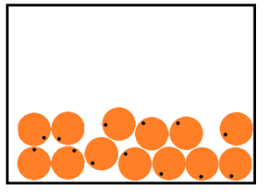

TRUE or FALSE: In order to change the state of matter, you need increase or decrease the energy (heat).
TRUE
FALSE

When changing a substance from liquid to solid, the energy has to...
INCREASE
DECREASE


Which arrow shows melting?
1
2
3
4

Which substance in the image is a most likely a liquid?
Substance A
Substance B
Substance C

When a gas changes into a liquid, it is called ________________.
evaporation
condensation
melting
freezing

a change that alters a substance without changing its chemical composition or its identity
Chemical Change
Physical Change
Chemical and Physical Change
Matter


The boiling point of a substance is the temperature at which it changes from
a liquid to a gas
a liquid to a solid
a gas to a solid
a solid to a liquid


Items KEEP their physical properties
Solution
Liquids
Mixture
Soluble

solute
solvent
solution


solvent
solute

The picture is an example of _____________.
freezing
evaporation
condensation
melting

Why does the glass on the right have less water in it?
the solid turned into a gas
the gas turned into a liquid
the liquid turned into a gas

What state of matter is shown in the image?
Solid
Liquid
Gas
Plasma


What are the four major phase changes?
Freezing, Melting, Condensation, Evaporation
Melting, Condensation, Evaporation, Heat
Freezing, Melting, Condensation, Cooling
Condensation, Evaporation, Freezing, Heating
The process by which a liquid changes into gas is ____________________.
condensation
density
evaporation
law of conservation of mass


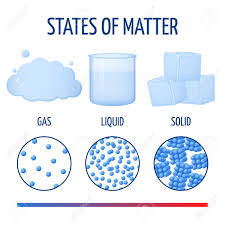
A noticeably different form or state of the same substance
Mixture
Phase
Mass
Density

Adding baking soda to vinegar
Physical Change
Chemical Change

What is a change in which a new substance is NOT formed?
physical change
chemical change
color change
physical property


Gas changing to a solid
sublimation
deposition
freezing
melting

