
 Worksheets
Topic D - Multiple Choice Questions
Total questions: 70
Worksheet time: 2hrs 45mins
The gravitational force between two point masses is F. What is the force when both masses are doubled and their separation halved?
F
4F
8F
16F
The gravitational field strength on the surface of Earth is g. A planet has double the mass and double the radius of Earth. What is the gravitational field strength on the surface of the planet?
g/4
g/2
g
2g
A planet has four times the mass of the Earth, but the acceleration of gravity on the surface is the same as that on Earth. What is the radius of the planet in terms of the Earth radius R?
R/4
R/2
2R
4R
A satellite is in a circular orbit around a planet. The orbit radius is 5000 km, and the speed of the satellite is 2.0 km s⁻¹. What is the gravitational field strength at the position of the satellite?
0.8 N kg⁻¹
4.0 N kg⁻¹
8.0 N kg⁻¹
Cannot be determined without knowing the mass of the planet.
The mass of a landing module on the Moon is 2000 kg. The gravitational field strength on the Moon is one-sixth that on Earth. What is the weight of the landing module on Earth?
330 N
2000 N
12 000 N
20 000 N
A planet has double the radius of Earth and half its density. What is the gravitational field strength on the surface of this planet?
5.0 N kg⁻¹
10 N kg⁻¹
20 N kg⁻¹
40 N kg⁻¹
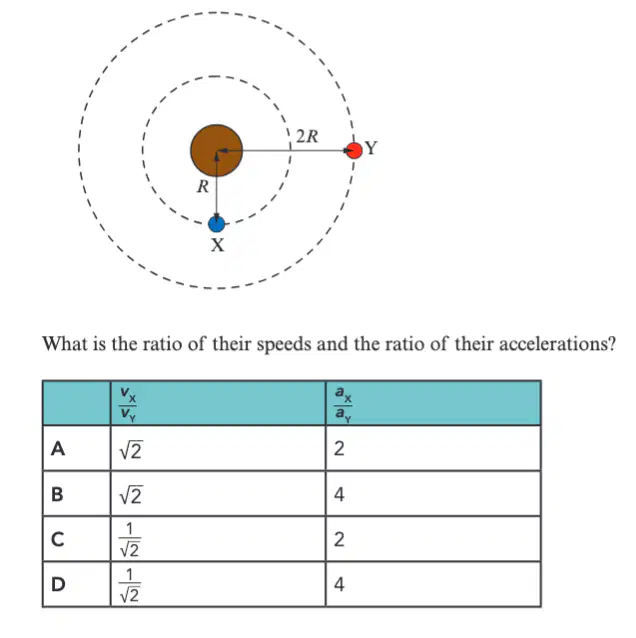
Two satellites, X and Y, orbit a planet in circular orbits of radius R and 2R. What is the ratio of their speeds and the ratio of their accelerations?
vx/vy = √2, ax/ay = 2
vx/vy = √2, ax/ay = 4
vx/vy = 1/√2, ax/ay = 2
vx/vy = 1/√2, ax/ay = 4
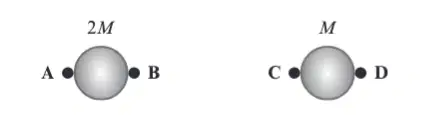
The two spherical bodies in the diagram have the same radius. The sphere on the left has twice the mass of the sphere on the right. At which point, A, B, C or D, does the net gravitational field strength of the two masses have the greatest magnitude? A, B, C and D are points on the surfaces of the spheres as shown.
A
B
C
D
Which of Kepler’s laws of planetary motion can be derived from Newtonian mechanics?
first
second
third
all three.
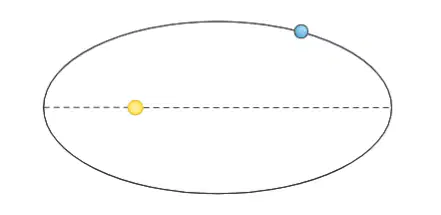
A planet moves anti-clockwise around the Sun in an elliptical orbit. Which diagram shows the net force (arrow x) and velocity (arrow y) of the planet?

[Diagram A]

[Diagram B]

[Diagram C]

[Diagram D]
A planet has double the mass of the Earth and double the radius. The gravitational potential at the surface of the Earth is V and the magnitude of the gravitational field strength is g. The gravitational potential and gravitational field strength on the surface of the planet are:
V, g/4
V, g/2
2V, g/2
2V, g/4
Two uniform spheres, each of mass M, have their centres a distance d apart. Which of the following is true at the point midway on the line joining the two centres?
Potential: Non-zero, Gravitational field strength: Zero
Potential: Non-zero, Gravitational field strength: Non-zero
Potential: Zero, Gravitational field strength: Zero
Potential: Zero, Gravitational field strength: Non-zero
A probe of mass m is in a circular orbit of radius r around a planet of mass M. The probe is moved to a higher circular orbit of orbit radius 2r. What is the work done on the probe?
-GMm/2r
GMm/2r
-GMm/4r
GMm/4r
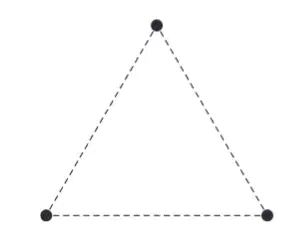
Three identical spheres each of mass M are at the vertices of an equilateral triangle of side d. What is the gravitational potential energy of this arrangement?
−GM2/d
−3GM2/d
-GM/d
-3GM/d
A satellite in a low circular orbit experiences a small frictional force. What is the effect of this force on the kinetic energy and the period of revolution of the satellite?
Kinetic energy: Decreases,
Period: Decreases
Kinetic energy: Decreases,
Period: Increases
Kinetic energy: Increases,
Period: Decreases
Kinetic energy: Increases,
Period: Increases
A planet without an atmosphere has mass M and radius R. An object is released from rest at a height R above the surface of a planet. What is the speed with which the object impacts the surface of the planet?
sqrt(GM/2R)
sqrt(GM/R)
sqrt(2GM/R)
2 sqrt(GM/R)
A probe of mass m is launched from the surface of a planet without an atmosphere of mass M and radius R with kinetic energy 3GMm/5R. What is the maximum height above the surface of the planet that this probe will reach?
2R/5
7R/5
3R/2
5R/2
A probe of mass m is launched from the surface of a planet without an atmosphere of mass M and radius R with kinetic energy 5R4GMm . The probe settles into a circular orbit around the planet. What is the radius of the orbit?
45R
23R
25R
5R
The escape speed from the surface of Earth is vesc . What is the escape speed from the surface of a planet without an atmosphere whose mass and radius are both double those of the Earth?
A) vesc
B) 2vesc
C) 4vesc
D) 8vesc
The escape speed from the surface of a planet without an atmosphere whose density and radius are both double those of the Earth?
vesc2
vesc8
4v_{esc}
8v_{esc}
A probe of mass m is launched from the surface of a planet of radius R. The gravitational field strength at the surface of the planet is g. What is the minimum kinetic energy at launch so that the probe escapes?
4mgR
2mgR
mgR
2mgR
Two identical point particles have mass m and charge q. They are separated by a distance d. The electric force between them is F. What is the electric force between the particles if their mass, charge and separation are all doubled?
A) 4F
B) 2F
C) F
D) 2F
The electric force between two particles X and Y each of charge q is F. The charge on particle X is doubled, and the separation of the charges is halved. What is the electric force on X and Y?
Force on X: 4F, Force on Y: 4F
Force on X: 4F, Force on Y: 8F
Force on X: 8F, Force on Y: 4F
Force on X: 8F, Force on Y: 8F
X and Y are two identical conducting spheres. X has charge Q, and Y is initially uncharged. Y is grounded and is then allowed to touch X. The ground is removed, and the spheres are separated. What is the charge on each sphere?
Charge on X: 0, Charge on Y: 0
Charge on X: Q/2, Charge on Y: Q/2
Charge on X: Q, Charge on Y: 0
Charge on X: 0, Charge on Y: Q
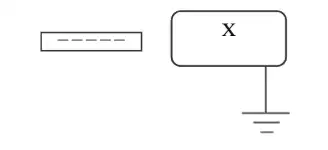
A negatively charged rod is placed close to a conducting body X that is initially uncharged. The body is then grounded briefly, and the ground is then removed. The rod is then also removed. Which is correct for the body?
No part of the body has a net charge.
The left end of the body has a positive charge and the right end an equal negative charge.
The body is negatively charged.
The body is positively charged.
A small charge q is placed near a large spherical charge Q. The force experienced by both charges is F. The electric field created by Q at the position of q is
F/Q
F/q
F/Qq
FQ/q
A positive charge q is placed half-way between two long parallel plates that are separated by a distance 2d. The charge on one of the plates is Q and the charge on the other plate is –Q. The potential difference between the plates is V. What is the magnitude of the force on the charge q?
kQq/d2
k2Qq/d^2
qV/2d
qV/d
The electric field strength at the surface of a sphere of charge Q and radius R is E. Another sphere has charge 2Q and radius 2R. What is the electric field strength at the surface of this sphere?
2E
E
E/2
E/4
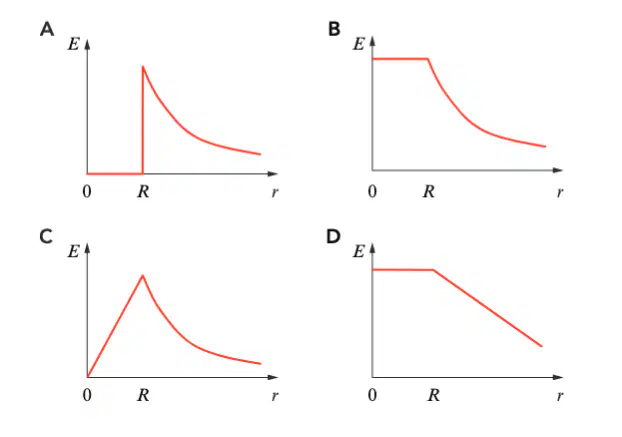
A spherical conductor of radius R is positively charged. Which graph shows how the electric field strength E varies with distance r from the centre of the conductor?
[Graph A]
[Graph B]
[Graph C]
[Graph D]
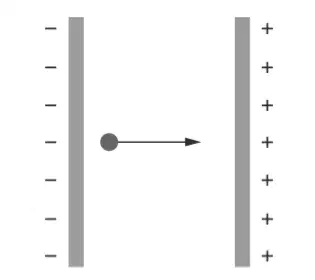
The diagram shows two oppositely charged parallel plates a distance d apart. A proton is launched from the negative plate. The proton just reaches the positive plate. Which graph represents the variation of the speed v of the proton with distance x from the negative plate?
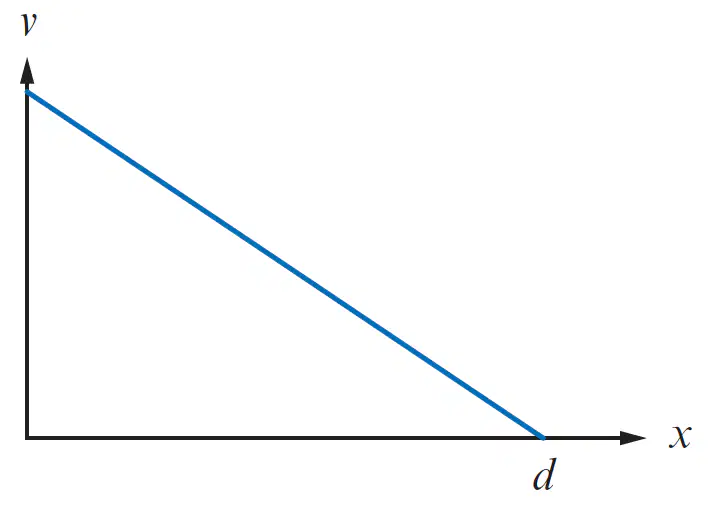
(Graph A)

(Graph B)
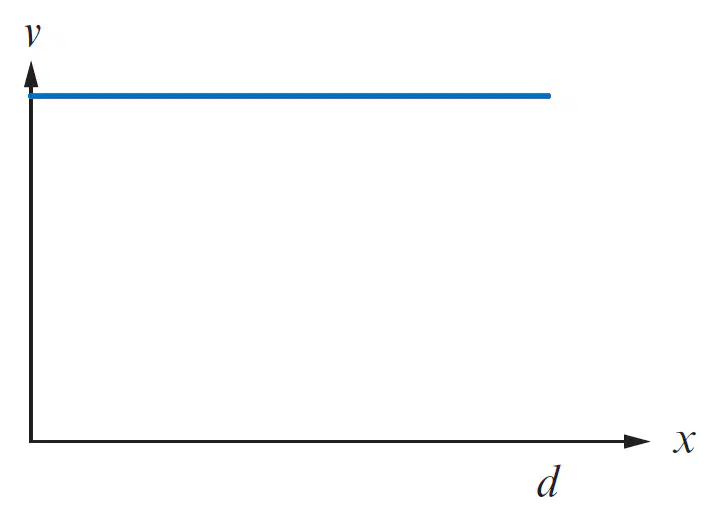
(Graph C)
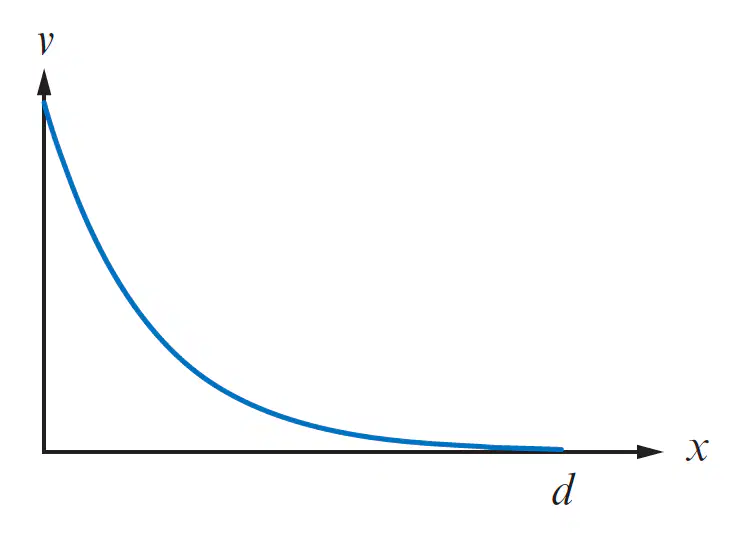
(Graph D)
A point charge q is placed near a neutral conducting sphere. What is correct about the electric force between the point charge and the sphere?
The force is zero.
The force is always attractive.
The force is always repulsive.
The force is attractive or repulsive depending on the sign of q.
Where does a non-zero electric field exist?
near the north pole of a bar magnet
near a wire carrying a constant current
outside two infinitely long, oppositely charged, parallel plates
near a point electric charge.
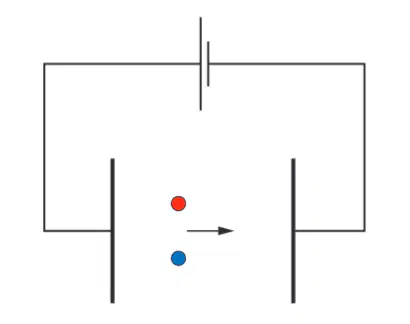
Two charged particles are released from rest from the middle of two parallel, oppositely charged plates. The particles reach the right plate in the same time. It may be deduced that the particles have the same
charge
mass
charge to mass ratio
charge and mass.
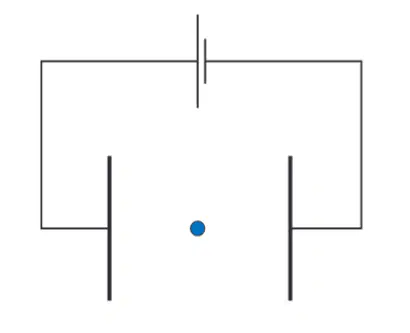
A charged particle is placed at the middle of two parallel, oppositely charged plates. What will happen to the particle?
It will experience a force towards one of the plates.
It will remain stationary forever.
It will lose its charge instantly.
It will move in a circular path between the plates.
The electric force on the particle is F. The charge on the particle is doubled, and the separation of the plates is halved. What is the electric force on the particle?
F/4
F
2F
4F
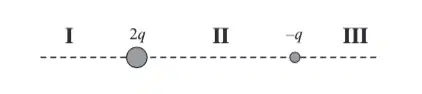
Two charged particles are fixed as shown. Their charges are 2q and -q. In which regions can the electric field strength due to the two particles be zero?
I only
II only
III only
I and III.
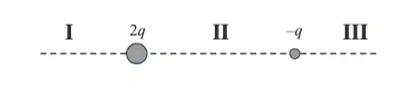
Two charged particles are fixed as shown. Their charges are 2q and -q. In which regions can we find points where the electric field strength is directed to the left?
I only
II only
III only
I and III.
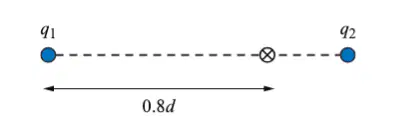
Two positively charged particles of charges q1 and q2 are a distance d apart. The electric field on the line joining the particles at a distance of 0.8d from q1 is zero. What is the ratio q1/q2?
2
4
16
32
A particle of mass m and charge q is accelerated from rest by a potential difference V. What is the speed acquired by the particle?
sqrt(2qV/m)
2qV/m
m/sqrt(2qV)
m/2qV
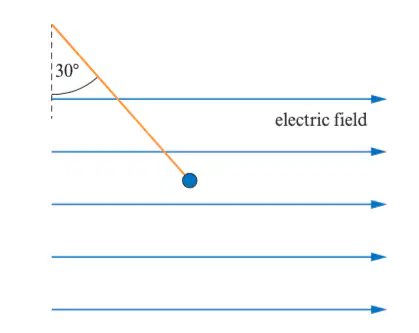
A positively charged particle is attached to a string and placed in a uniform horizontal electric field. The particle is in equilibrium when the string makes an angle of 30° to the vertical. The string is cut. What is the path of the charged particle while it is in the electric field?
a parabolic path
a horizontal straight line
a vertical straight line
a straight line at 30° to the vertical.
A charged particle moves in a circle of radius R in a uniform magnetic field. The magnetic field is at right angles to the velocity of the particle and exerts a force F on the particle. After half a revolution the change in the particle’s kinetic energy is
0
πRF
2πRF
RF
A negatively charged particle is at rest in a magnetic field B. The magnetic force on the particle is
parallel to B
opposite to B
at right angles to B
zero.
A charged particle moves in a circle in a magnetic field. The particle completes one revolution in time T. The speed of the particle is doubled. What is the time for one revolution?
T/4
T/2
T
2T
The diagram shows an electron moving in air in a magnetic field that is at right angles to the plane of the page. What is the direction of motion of the electron and the direction of the magnetic field?
Clockwise, Into the page
Clockwise, Out of the page
Anticlockwise, Into the page
Anticlockwise, Out of the page

An electron enters a magnetic field. In which case is the initial force on the electron directed towards the bottom of the page?
A
B
C
D
A length of wire carrying current I is in a magnetic field of magnetic flux density B. The force on the wire is F. What is the force when the current is doubled and the magnetic flux density becomes B/4?
F/4
F/2
2F
4F

Two long parallel wires carry equal currents in opposite directions. What field do the two wires produce at point M, which is midway between the wires and on the plane of the paper?
a magnetic field parallel to the wires
an electric field parallel to the wires
a magnetic field at right angles to the plane of the paper
an electric field at right angles to the plane of the paper.
An alpha particle, a proton, a neutron and an electron move at the same speed at right angles to a magnetic field. Which particle experiences the least magnetic force?
the alpha particle
the proton
the neutron
the electron.
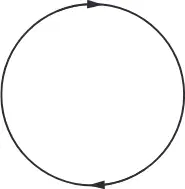
A loop of wire on the plane of the page carries a clockwise current. The magnetic field created by this current at the centre of the loop is
zero
directed into the plane of the page
directed out of the plane of the page
directed towards the top of the page.
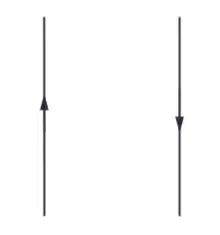
Two parallel wires carry currents in opposite directions. The force per unit length on each wire is f. The currents and the separation of the wires are all doubled. What is the force per unit length on the wires?
f
2f
f/2
f/4
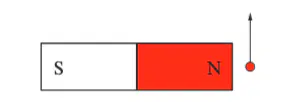
An electron moves near a bar magnet as shown. What is the direction of the magnetic force on the electron?
towards the top of the page
towards the bottom of the page
into the page
out of the page.
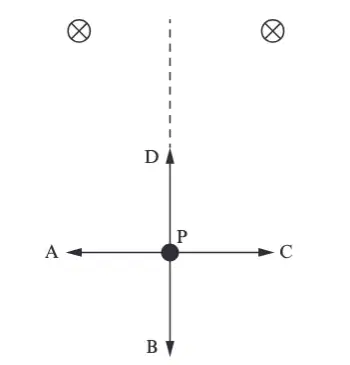
Two parallel wires carry the same current into the plane of the page. Point P is equidistant from the wires. What is the direction of the magnetic flux density at P?
A
B
C
D

Four parallel and equidistant wires, P, Q, R and S, carry equal currents into the page. The force per unit length P exerts on Q is f. What is the net force per unit length on R?
(f/2), Left
(f/2), Right
f, Left
f, Right
A charged particle moves in a field. The force on the particle due to the field is opposite to the field. What is correct about the nature of the field and the sign of the charge on the particle?
Electric - Positive
Electric - Negative
Magnetic - Positive
Magnetic - Negative

An electron enters an electric field of electric field strength E, with an initial velocity v that is normal to the field. What is the magnitude and direction of a magnetic field that will allow the electron to continue through the electric field undeflected?
vE, Into the plane of the page
vE, Out of the plane of the page
E/v, Into the plane of the page
E/v, Out of the plane of the page
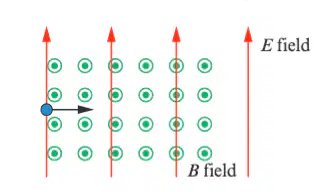
A proton, of speed v, enters a region of electric and magnetic fields at right angles to each other. The direction of the magnetic field is out of the page. The proton is not deflected. An alpha particle and an electron enter the same region with the same speed v. What is correct about the path of the alpha particle and the path of the electron?
Alpha particle: Deflected, Electron: Deflected
Alpha particle: Deflected, Electron: Undeflected
Alpha particle: Undeflected, Electron: Deflected
Alpha particle: Undeflected, Electron: Undeflected
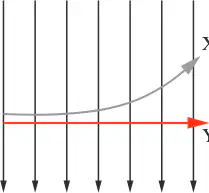
A charged particle X is projected horizontally from a point in a vertical electric field. The particle follows a parabolic path. A second particle Y is projected with the same speed and follows a horizontal straight line path. For both particles, gravity is not negligible.
It is electrically neutral.
It is positively charged.
It is more massive than X.
The electric force is cancelled by the weight.

Four charges that are equal in magnitude are put at the vertices of a square. Where is the electric potential zero?
at the origin only
along the x-axis
along the y-axis
along both axes.
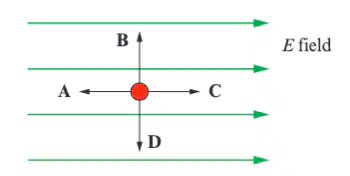
A negative charge is in a uniform electric field. In which direction should the charge be moved in order to decrease its potential energy?
A
B
C
D
A positively charged particle moves in a direction opposite to a uniform electric field. As the particle moves to the left it experiences
an increase in kinetic energy
an increase in potential energy
a decrease in the electric force
a decrease in the acceleration.
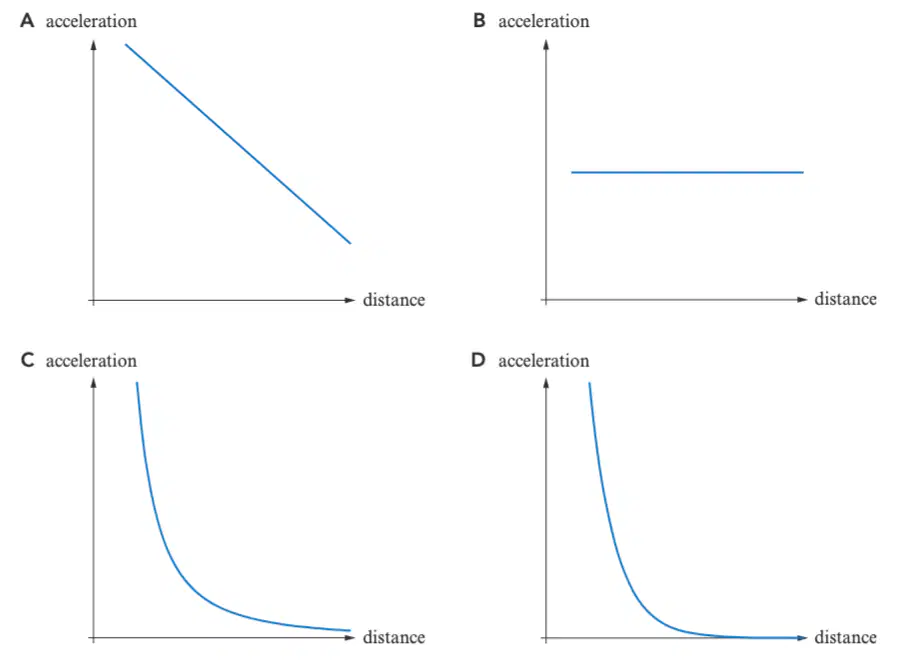
A positive point charge is released from rest on the surface of a positively charged sphere. Which graph shows the variation of the sphere of the acceleration of the point charge with distance from its centre?
A
B
C
D
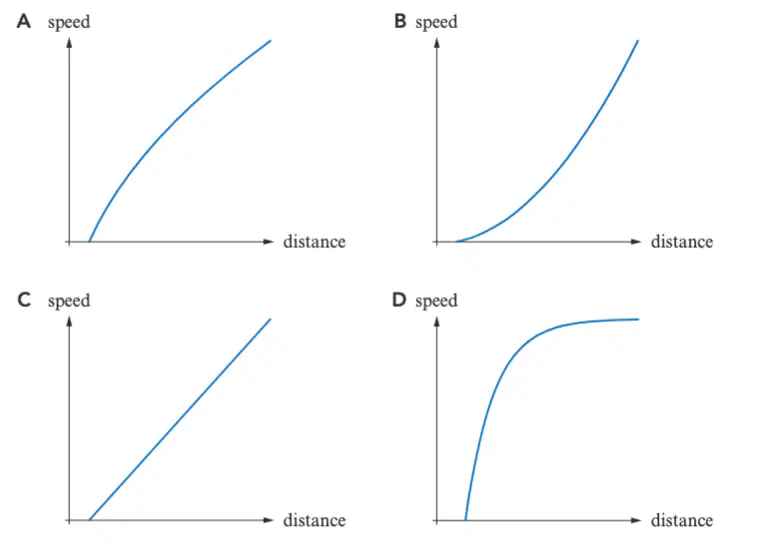
A positive point charge is released from rest on the surface of a positively charged sphere. Which graph shows the variation of the speed of the point charge with distance from the centre of the sphere?
A
B
C
D
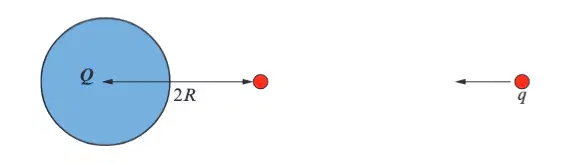
A negative point charge q has kinetic energy Ek when far from a sphere of radius R. The sphere has a negative charge Q. The point charge is directed towards the sphere and is brought to rest at a distance 2R from the centre of the sphere. What is the kinetic energy Ek of point charge q?
Ek=kQq/R2
Ek=4R2kQq
Ek = kQq/R
Ek = kQq/2R
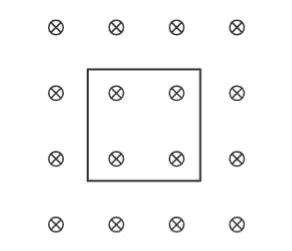
A square loop of area 0.20 m² has 50 turns of wire around it. The loop is at right angles to a uniform magnetic field. The magnetic flux density is increasing at a rate of 0.04 T s⁻¹. What is the induced emf in the loop?
8.0 mV
400 mV
5.0 V
250 V
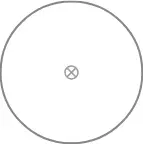
A magnetic field of uniformly increasing magnitude is directed into the plane of the page as shown. A conducting loop of wire is on the plane of the page. Which is correct about the direction and magnitude of the induced current in the wire?
Clockwise, Constant
Anticlockwise, Varying
Clockwise, Varying
Anticlockwise, Constant
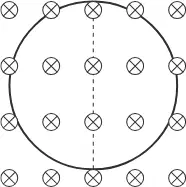
A conducting loop of area S is rotated by 360° about the axis shown in a time T. The magnetic flux density is H. What is the average emf induced in the loop during the time T ?
zero
HS/T
2HS/T
4HS/T
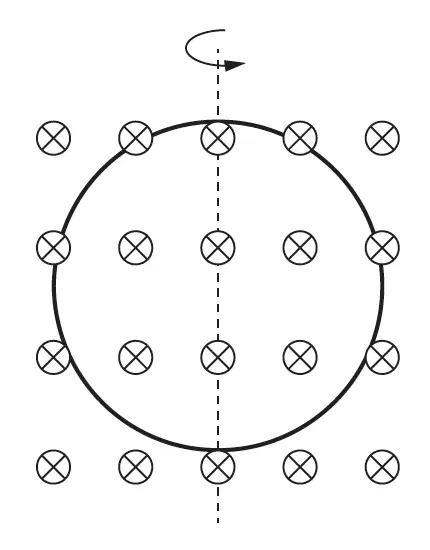
A conducting loop of area S is rotated by 360° about the axis shown in a time T. The magnetic flux density is H. What is the average emf induced in the loop during the time T?
zero
(HS)/T
(2HS)/T
(4HS)/T
A loop of wire of area S finds itself in a magnetic field directed at right angles to the plane of the loop. The magnetic flux density is M and increases by ΔM in time Δt. The induced current in the loop depends on all of the following except one. Which one?
S
M
ΔM
Δt
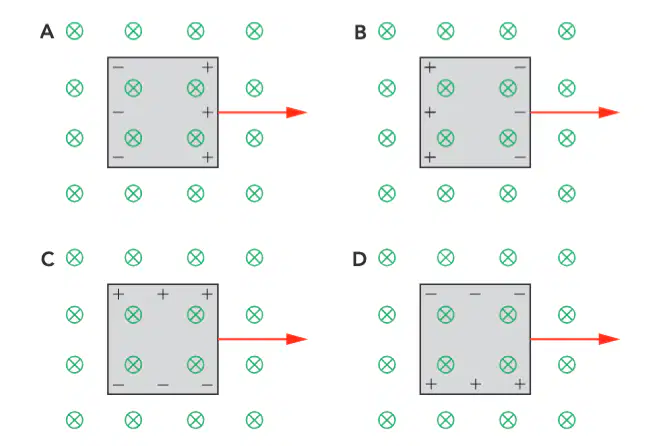
A metal sheet is moved at constant speed in a magnetic field directed into the page. Which diagram shows the correct charge separation in the metal sheet?
Diagram A
Diagram B
Diagram C
Diagram D
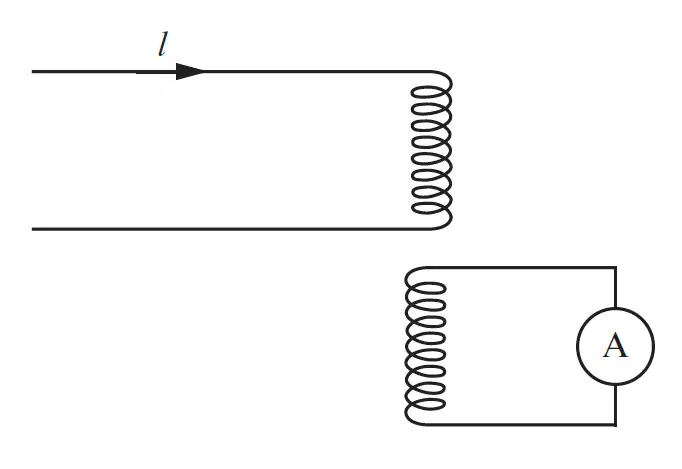
A coil carries current I. The coil is placed close to a second coil as shown. Three states of the current are considered:
I Current is constant.
Ii Current is increasing.
III Current is decreasing.
For which states of the current is a current registered in the ammeter?
A I and II
B I and III
C II and III
D I, II and III.

