
Font size
 Worksheets
Echo Registry Review
Total questions: 160
Worksheet time: 1hrs 29mins
What does TEE stand for?
Transthoracic Echo
Transectopic Echo
Transesophageal Echo
I have no idea anymore
All of the following are disease that present as dilated cardiomyopathy EXCEPT?
alcohol abuse
Acquired Immunodeficiency Syndrome (AIDS)
postpartum cardiomyopathy
glycogen storage disease
which of the following is the most common cause of mitral stenosis?
congenital
rheumatic fever
severe MAC
left atrial tumor
which of the following is NOT a symptom or clinical finding associated with infective endocarditis?
fever
positive blood culutres
pulsus paradoxus
malaise
a pericardial effusion may form due to
myocardial infarction
trauma
radiation exposure
all of the above
in dilated cardiomyopathies:
all four chambers are dilated with systolic dysfunction
all four chambers are dilated with normal systolic function
all four chambers are within normal size limits with systolic dysfunction
all four chambers are normal size limits with normal systolic function
each answer is a characteristic of hypertrophic obstructive cardiomyopathy (HOCM) EXCEPT for:
systolic anterior motion (SAM)
mid-diastolic notching of the MV
asymmetrical septal hypertrophy (ASH)
mid systolic notching of the aortic valve
what type of murmur is heard with aortic valve stenosis?
mid-late systolic clic
Austin Flint murmur
decrescendo systolic murmur
harsh, systolic ejection murmur
in cardiac tamponade, the MV inflow ______ with inspiration and _____ with expiration
increases, decreases
decreases, increases
decreases, unchanged
unchanged, increases
which tumor is most common benign tumor found in the adult heart?
papillary fibroelastoma
pericardial cyst
myxoma
rhabdomyoma
which tumor is most common benign tumor found in pediatrics?
papillary fibroelastoma
pericardial cyst
rhabdomyoma
myxoma
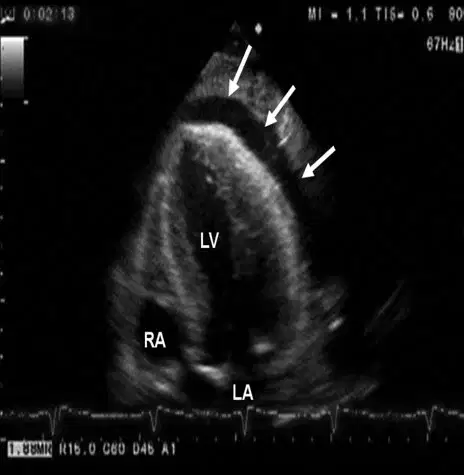
this image demonstrates which type of pathology?
pericardial effusion
dilated cardiomyopathy
cardiac tamponade
pseudoaneurysm
which classification of aortic dissection involves just the descending thoracic or abdominal aorta?
DeBakey Type I
DeBakey Type II
DeBakey Type III
DeBakey Type IV
which cardiac pathology may present with mid-systolic aortic valve closure?
aortic regurg
tricuspid regurg
mitral regurg
HOCM
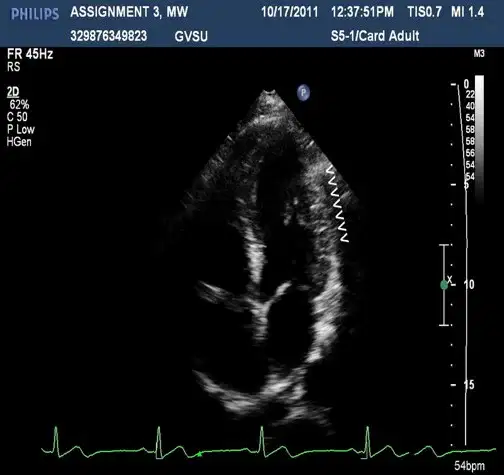
what coronary artery perfuses the wall segment indicated by the arrows?
LAD
LCX
RCA
PDAv
what is the most common etiology of pulmonic stenosis?
congenital
degenerative
carcinoid syndrome
rheumatic fever
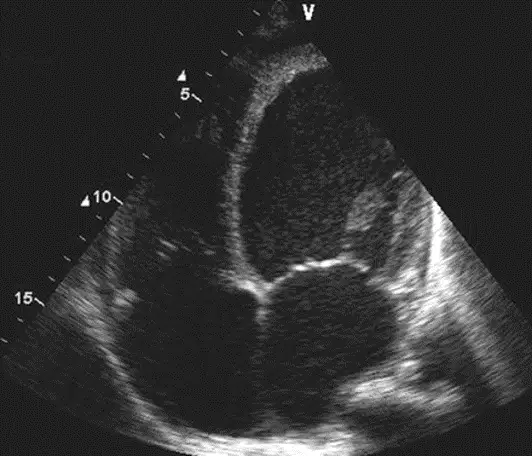
a complication of this cardiomyopathy is:
systemic emboli
MR
TR
all of the above
significant pulmonary regurg is a:
LV volume overload
RV volume overload
LV pressure overload
RV pressure overload
MVP is considered present when any portion of the leaflet protrudes beyond the mitral annulus by
<2 mm
>4mm
>2mm
>2cm
the connective tissue disease that manifests as "stretchy" skin, hypermobile joints, and easy bruising:
Ehlers-Danlos syndrome
Chagas disease
Fabry's disease
Cushing's disease
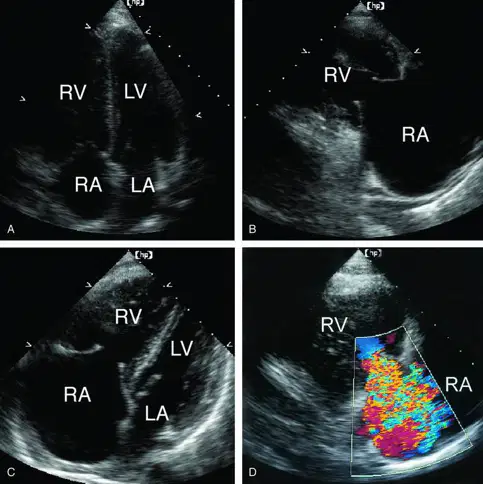
this type of tumor results in the TV being thickened, retracted and immobile as shown below:
carcinoid
melanoma
fibroelastoma
myxoma
which is NOT a possible cause of an aortic aneurysm?
Marfan syndrome
syphilis
atherosclerosis
AI
to differentiate between restrictive cardiomyopathy and constrictive pericarditis, this parameter may be used:
LV volume >22 mL/m^2
respiratory variation of Mitral A velocity
evaluation of LA and RA size
IVC respiration variation
untreated systemic HTN can cause
CVA/TIA
abdominal aortic aneurysm
acute MI
all of the above

when color Doppler is applied to this image, what would be the most likely finding:
MS
AI
MR
TR
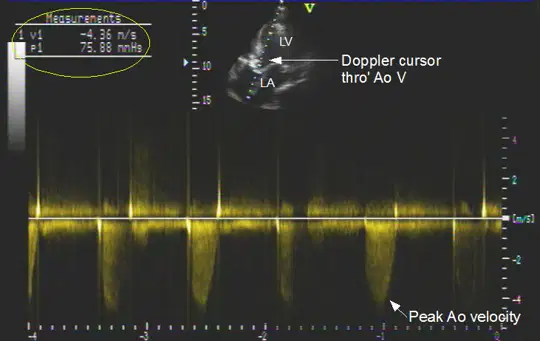
the velocity measurement of 4.2 m/s and area of 0.7 cm^2 through the aortic valve would indicate:
severe AI
mild AS
severe AS
normal peak aortic valve velocity
a characteristic in PSAX of RV pressure overload is
flattening of IVS during systole
flattening of the IVS throughout diastole and systole
flattening of the IVS during diastole
RV dilation
the three layers of the pericardium include epicardium, myocardium and pericardium.
true
false
a "spongy" appearance of the myocardium with prominent ventricular trabeculations describes:
LV non compaction
sarcoidosis
infiltrative cardiomyopathy
mural apical thrombus
dilated cardiomyopathies create a pressure overload.
true
false
the right sinus of valsalva is more prone to aneurysm than the left sinus of valsalva.
true
false
echocardiography cannot rule out the presence of acute PE
true
false
MR associated with SAM would have a posteriorly directed jet.
true
false
decreased LV preload will augment dynamic outflow obstructions.
true
false
amyloid and sarcoid are what type of cardiac abnormalities?
dilated
restrictive
inflammatory
hypertrophic
a 2D echo finding associated with RV volume overload:
flattening of the IVS in systole
hyperkinetic IVS motion
dyskinetic IVS motion
flattening of the IVS in diastole
Eisenmenger's syndrome may be associated with all of the following EXCEPT:
bicuspid aortic valve
PDA
ASD
VSD
the Chiari network is found in the:
RA
RV
LA
LV
surgical intervention of the aorta is considered when there is a rapid change in dilation of ____ mm per year
1
5
3
9
increases in preload cause dialtion
true
false
venous return decreases with inspiration
true
false
which of the following is not included in the aortic root?
sinotubular junction
annulus
sinus of valsalva
infundibulum
which pathology is a delayed form of pericarditis; occurring 1-12 weeks after MI?
LV true aneurysm
Takotsubo cardiomyopathy
papillary muscle dysfunction
Dressler's syndrome
3 month post-op echo post MV replacement, you notice excessive rocking motion of the sewing ring. this is called what
pannus
dehiscence
vegetation
normal post op finding
patient undergoes valve replacement for endocarditis. which of the following is an ABNORMAL post-op finding?
a higher peak velocity than the pre op evaluation
higher pressure gradient
paravalvular leak
increased pressure halftime
what is the classic 2D finding associated with cardiac tamponade?
diastolic collapse of the LV
systolic collapse of the RV
diastolic collapse of the RV
systolic collapse of the LV
during which part of the cardiac cycle can a bicuspid aortic valve be diagnosed?
systole
diastole
IVRT
IVCT
which side of the MV will a vegetation likely appear on?
atria
ventricular
on the septum
on the chords
what is a common cardiac auscultory finding for constrictive pericarditis?
split S2
S4
pericardial knock
systolic murmur
which cardiac disease creates concentric hypertrophy?
hypertensive heart disease
hypertrophic cardiomyopathy
chagas disease
marfan syndrome
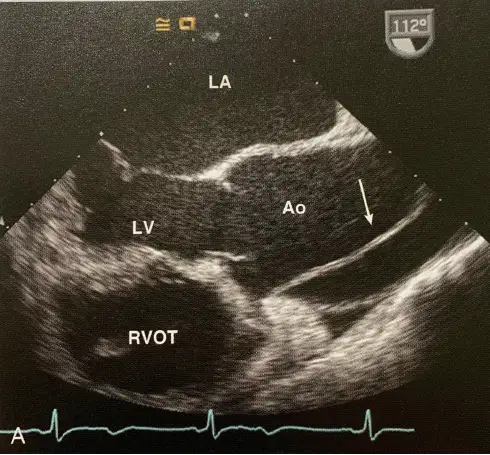
what is NOT a complication of the pathology pictured?
aortic dissection
coronary ostial obstruction
acute AI
coronary sinus obstruction
what is the best definition of PHTN?
increased systolic and decreased diastolic blood pressure
thickening and constriction of the small branches of pulmonary veins
decreased systolic and increased diastolic blood pressure
thickening and constriction of the small branches of the pulmonary arteries
iron overload that can affect multiple organ systems:
Pompes
hemochromatosis
Ebstein's
hyperironlemia
which of the following values indicate PHTN
>25 mmHg at rest or >30 during exercise
>30 mmHg at rest of >25 during exercise
>45 mmHg at rest or >40 during exercise
>55 mmHg at rest or >50 during exercise
what is the difference between idiopathic and secondary PHTN
idiopathic: known etiology
secondary: unknown etiology
hell if i know
idiopathic: unknown etiology
secondary: known etiology
there is no difference
which best defines the etiology of PHTN?
increased workload of the left side of the heart
increased workload on the LV
increased workload of the right side of the heart
increased workload on the valves of the heart
increased pressure of pulmonary arteries leads to an enlarged RV
true
false
which is the best definition of a murmur?
sound go whoosh whoosh when i use my stethoscope
lub, dub
silent bloodflow across the ventricles and atria
turbulent bloodflow across valves in the heart
what does a crescendo-decrescendo murmur indicate?
MR/TR
AS/PS
AI/PI
MS/TS
what does a holosystolic murmur indicate?
AS/PS
AI/PI
MR/TR
MS/TS
what does an early diastolic/decrescendo murmur indicate?
AS/PS
AI/PI
MR/TR
MS/TS
what does a mid-late diastolic murmur indicate?
AS/PS
AI/PI
MR/TR
MS/TS
which is a key feature of PHTN?
increased intensity of the second heart sound (P2)
increased intensity of the first heart sound (P1)
increased intensity of the third heart sound (P3)
increased intensity of the fourth heart sound (P4)
what would you see on an EKG in a patient with PHTN?
AFIB
RBBB
LBBB
sinus tachycardia
what class of medications (and drugs) are considered first line of treatment for PHTN?
diuretics - furosemide, hydrochlorothiazide
beta blockers - metoprolol, carvedilol
calcium channel blockers - amlodipine, Nifedipine
anticoagulants - coumadin, Warfarin
which of the following is a classic finding of MS?
decreased LAP
leaflet foming
LV enlargement
post stenotic dilation
MR associated with MS is most likely due to
aortic valve notching
LAE
LVE
scarring of the septum
signs and symptoms of MS include murmur, dyspnea, fatigue, dizziness, CP, syncope, and may worsen with exercise
true
false
what contributes to the doming effect?
commisural fushion
increased pressure in the proximal chamber
tethered leaflets
all of the above
choose the statement that supports the pressure halftime as it related to MS
the flatter the waveform, the more severe the stenosis
the lower the PHT the more critical the stenosis
time required for the mean gradient across the valve to reduce to one half
all of the above
MVA =
220/PHT
PHT/220
4V^2
peak gradient/220
if the MV PHT = 200 ms, the patient most likely has (hint: calculate the MVA to get the answer, you have 2 mins to answer)
normal MV
mild MS
moderate MS
severe MS
choose a WELL KNOWN cause of MR
annulus dilatation
fatigue
irregular rhythm
all of the above
chronic MR leads to decreased pulmonary artery pressure
true
false
what does pulmonary venous systolic flow reversal indicate
normal flow
severe MR
mild MR
artifact
what type of AS originates at the aortic valve cusps and moves out toward the commissures?
congenital
degenerative
prosthetic
rheumatic
which of the following can over or underestimate AS
improperly measured LVOT diameter
tachycardia
both A and B
none of the above
proximal to the aortic valve:
supra aortic
sub aortic
inside the cusps
in the descending AO
the thickening of the valve because of accumulation of sugar chains
fibroelastic deficiency
ebstein's anomaly
barlow's syndrome
marfan's syndrome
MVP must be greater than ___ beyond the annulus in systole
3 mm
4 mm
2 mm
1 mm
combination of ASD and MS is what disease
shone's
ebstein's
lutenbacher's
eisenmenger's
which is a secondary finding in MR
MAC
MVP
PHTN
endocarditis
the mean pressure in the LA is
0-2 mmHg
2-6 mmHg
2-12 mmHg
120/80 mmHg
chronic MR is a pressure overload
true
false
acute MR can happen due to a MI
true
false
with acute MR, you can have normal size chambers
true
false
stroke volume is related to
LVED volume
LVES volume
pressure
PHTN
what is the most common MS etiology
lutenbacher's
rheumatic fever
shones
MAC
Frank Starling law is associated with afterload
true
false
early closure of the PV is seen in
AI
AS
PHTN
carotid stenosis
4TRv^2 is used to calculate RVSP
true
false
reversal of cardiac shunts from left to right to right to left
ebstein's anomaly
eisenmenger's
HTN
barlows
change in the structure of the RV due to abnormal pulmonary circulation in long standing PHTN
ebstein's anomaly
aortic aneurysm
cor pulmonale
AFIB
what will you see in the short axis pap view with pressure overload:
O shaped ventricle
normal shaped ventricle
D shaped LV
no pap muscles
PE is defined as:
chronic AFIB
DVT
clot in the LV
sudden/acute blockage of one or more of the pulmonary arteries
a tumor or thrombus can cause or mimic MS
true
false
PE can be fatal if left untreated
true
false
MS always causes MR
true
false
MS over time causes LAE
true
false
you should check for LA thrombus in the presence of MS
true
false
which is a primary finding of MS
MR
MVP
LA tumor
LA thrombus
which is a secondary feature of MS
LA tumor
MAC
PHTN
decreased pressures
which is a complication of MS
LA tumor
IE
tricuspid atresia
valve replacement
severe MS valve area
4-6 cm^2
1.5 cm^2
1-1.5 cm^2
less than 1cm^2
elevated pressures in the arterial vessels in the body is called
hypothyroidism
HTN
hyperlipidemia
hyperkalemia
normal blood pressure
100/20
180/20
120/80
120/60
systemic HTN is known as the "silent killer" when left untreated
true
false
essential HTN is
primary
secondary
not harmful to the body
chemical
all are risk factors for HTN EXCEPT:
family history
alcohol abuse
stress
drinking water
which pathology can happen due to untreated, prolonged HTN
venous insifficiency
LVH
dilated cardiomyopathy
age
diabetes is a comorbidity for HTN
true
false
HTN can not cause a heart attack or stroke:
true
false
HTN can cause aortic dissection or aneurysm
true
false
all of the following are treatments for HTN EXCEPT:
gain weight
reduce stress
diuretics
change diet
smoking will lower blood pressure
true
false
which of the following is considered PHTN?
1-2mmHg
50-60mmHg
3-5 mmHg
5-10 mmHg
congestion in the vascular bed of the lungs
systemic HTN
PHTN
hyoptension
hyperlipidemia
glycogen storage disease within the myocardium
hemochromatosis
hyperkalemia
pompe
hypokalemia
multisystem disorder characterized by extra cellular interstitial deposits of protein
sarcoiosis
pericardial effusion
pompes
amyloidosis
inflammatory masses formed by granulomas that are deposited into multiple organs including the myocardium of the heart
pompes
amyloidosis
sarcoidosis
ebstein's
endomyocardial fibrosis is also known as the "heart of africa"
true
false
excessive alcohol use can result in dilated cardiomyopathy
true
false
which of the following is also known as congestive cardiomyopathy
HCM
DCM
RCM
sarcoidosis
the most common cardiomyopathy is known as RCM
true
false
LV thrombus is a primary finding of DCM
true
false
Takotsubo is also known as
heart string syndrome
LVH
broken heart syndrome
RCM
Chagas disease is a genetic disease
true
false
what is the inner layer of the arterial wall
tunica externa
tunica adventitia
tunica intima
tunica media
congenital defect that impacts the connective tissue in the body
fabry's
ebstein's
marfan's
eisenmengers
tear in the intimal lining of the aorta
aortic aneurysm
aortic stenosis
aortic regurg
aortic dissection
the ascending aorta only dissection is classified as Type I
true
false
aortic dissection can be fatal if not treated
true
false
DCM requires transplant in end stages
true
false
which echo method is most commonly used to estimate pressure gradients across valves?
continuity equation
pisa method
bernoulli equation
tissue doppler imaging
what doppler technique is required for accurate gradient assessment in stenotic valves?
color doppler
PW
CW
M mode
in severe AS, the mean transvalvular gradient is typically
<10 mmHg
10-19 mmHg
20-39 mmHg
>40 mmHg
the peak velocity threshold for severe AS is
>2.0 m/s
>3.0 m/s
≥ 4.0 m/s
≥ 5.0 m/s
pressure half time is most useful for quantifying the severity of
AS
MS
TR
MR
a MVA <1.0 cm^2 with a mean gradient >10 mmHg suggests
mild MS
moderate MS
severe MS
critical MR
in TR, the peak regurgitation velocity is used to estimate
RV stroke volume
PASP
LV filling pressure
aortic gradient
the mean transmitral gradient in mild MS is usually
< 5mmHg
5-10 mmHg
10-15 mmHg
>15 mmHg
the vena contracta width of >0.7 cm in MR responds to
mild MR
moderate MR
severe MR
indeterminate
which parameter is least dependent on heart rate when assessing MS
mean gradient
pressure halftime
MVA by planimetry
LV inflow pattern
PS is considered severe when the peak doppler velocity is
>2.5 m/s
>3.0 m/s
>3.5 m/s
>4.0 m/s
in AI, pressure half time of <200 m/s indicates
mild AI
moderate AI
severe AI
indeterminate
what is the hemodynamic consequence of overestimating doppler angle in stenosis assessment?
overestimation of velocity and gradient
underestimation of velocity and gradient
no effect
variable effect depending on valve
which gradient is more clinically relevant in valve stenosis assessment?
peak instantaneous gradient
mean gradient
pulse pressure
pressure recovery
a patient with MS has a pressure half time of 300 m/s. what is the estimated valve area? (hint: calculate the MVA, you have 2 minutes to answer)
1.0 cm^2
0.75 cm^2
0.6 cm^2
2.0 cm^2
the gorlin equation is based on
invasive catherization
doppler continuity
pisa method
2D planimetry
in MR, an effective regurgitant orifice area ≥ 0.40 cm^2 indicates
mild
moderate
severe
physiologic
PI severity is best assessed by
jet width
pressure half time
peak velocity alone
jet duration into diastole
what additional parameter must be added to TR gradient to estimate PASP
mean RA pressure
LVEDP
LV systolic pressure
systemic BP
in low flow, low gradient AS, dobutamine stress echo helps determine true vs pseudo-severe stenosis
true
false
MR jet area by color doppler is less reliable because it is highly dependent on
LA compliance and gain settings
LVOT velocity
pulmonary vein flow
heart rate
severe TS usually presents with a mean gradient of
<2 mmHg
2-4 mmHg
≥ 5 mmHg
≥ 10 mmHg
for severe MS, which combination is correct
MVA 1.5, mean gradient <5
MVA <1.0, mean gradient ≥ 10
MVA 1.0, mean gradient <1
MVA >2.0, mean gradient >10
CW doppler across the aortic valve shows a (Vmax) of 4.2 m/s. what is the peak instantaneous pressure gradient? (you have 2 mins to answer so you can calculate)
36 mmHg
56 mmHg
71 mmHg
84 mmHg
CW Doppler across the AV shows a mean transvalvular gradient of 45 mmHg (sinus rhythm, no tachycardia). severity? (you have 2 mins to answer for your valvulation
mild
moderate
severe
indeterminate
CW Doppler across the pulmonic valve shows a peak velocity (Vmax) of 3.8 m/s. what is the severity of pulmonic stenosis? (you have 2 mins to answer and to calculate)
mild
moderate
severe
indeterminate
An adult in sinus rhythm with normal SV has a mean aortic valve gradient of 32 mmHg on CW Doppler. Severity? (you have 2 mins to calculate and answer)
mild
moderate
severe
indeterminate

