
NEW
Font size
 Worksheets
Professional Qualities
Total questions: 41
Worksheet time: 21mins
What is the definition of Tact? Fill in the blank: Tact is ...
Skillful and sensitive in dealing with difficult or delicate situations, especially in your communication with others; The ability to say and do things in a way that will not offend another person.
A tendency to avoid all forms of communication.
The act of making quick decisions without considering others' feelings.
A method of solving mathematical problems efficiently.
What is the definition of Responsibility? Fill in the blank: Responsibility is ___ .
Being willing to be held accountable for your actions.
Doing whatever you want without consequences.
Letting others take credit for your work.
Ignoring your duties and tasks.
Which essential quality is defined as handling sensitive information and situations with confidentiality, good judgement and reasoning?
Professionalism
Team Player
Discretion
Leadership
Which essential quality is described as a set of standards that an individual is expected to adhere to in a workplace, usually in order to appear serious, uniform, or respectful?
Discretion
Professionalism
Team Player
Communication
Which essential quality is defined as being able to work well with others?
Discretion
Professionalism
Team Player
Initiative
Which of the following is required for appropriate attire if specified by the Uniform or Dress Code?
The correct color of scrubs
Any color of scrubs
Pajamas
Jeans
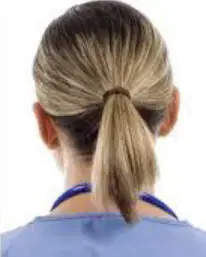
According to the guidelines for Personal Hygiene - Hair & Grooming, long hair should be:
Left loose
Pulled back and kept off the shoulders
Dyed unnatural colors
Covered with a hat

Facial hair (if allowed) should be ______ and tidy according to the Personal Hygiene - Hair & Grooming guidelines.
well-groomed
messy
untrimmed
unkempt
According to the guidelines on Personal Hygiene - Jewelry & Accessories, body jewelry should be avoided.
True
False
According to the guidelines on Personal Hygiene - Jewelry & Accessories, what are some exceptions to the jewelry rule?
A watch, wedding ring, small earrings
Necklaces and bracelets
Large hoop earrings and anklets
Multiple rings on each hand
Nose rings and toe rings
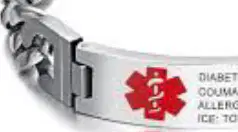
According to the guidelines on Personal Hygiene - Jewelry & Accessories, medical bracelets for diabetes or heart disease are always permitted.
True
False
Jewelry or accessories can ______ and transmit bacteria.
Harbor
Prevent
Destroy
Repel
Jewelry or accessories can tear ______.
gloves
shoes
hats
scarves
Understanding communication skills assists in which process?
Relating to patients, family, coworkers, and others.
Calculating medication dosages accurately.
Performing surgical procedures independently.
Diagnosing rare diseases without tests.
Nonverbal communication includes which of the following?
Reports
Spoken words
Body language
Prescriptions
One way to improve your verbal communication skills is to ________ your audience.
consider
ignore
interrupt
confuse
Which of the following is a way to improve your verbal communication skills?
Interrupt Frequently
Actively Listen
Speak Softly
Avoid Eye Contact
Which of the following should you pay attention to for additional information during active listening?
The speaker's clothing
Nonverbal cues such as body language and facial expressions
The color of the room
The time of day
Active Listening - Techniques: What should you do before offering your own thoughts?
Let the speaker finish their thoughts.
Interrupt the speaker to clarify your point.
Start preparing your response immediately.
Change the topic to something more interesting.
Which of the following is recommended for written communication?
Use plain language
Use jargon
Use complex sentences
Avoid organizing thoughts logically
In written communication, you should ensure that all facts, figures, and information are correct and reliable.
True
False
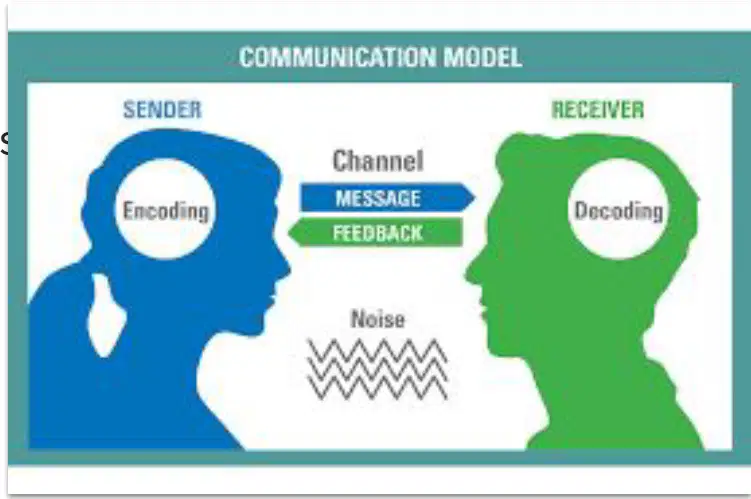
What does encoding mean in the communication process?
Receiving the message
Transforming an idea into a message using words, symbols, or nonverbal cues
Providing feedback
Decoding the message
What is the 'Message' in the communication process?
The person who receives the information
The actual content of the communication, which can be verbal, nonverbal, or visual
The method used to send information
The feedback given after communication
What does 'Channel' refer to in the communication process?
The feedback given after communication
The way the message is transmitted, such as spoken words, written text, visual or digital media
The person who sends the message
The noise that interferes with communication
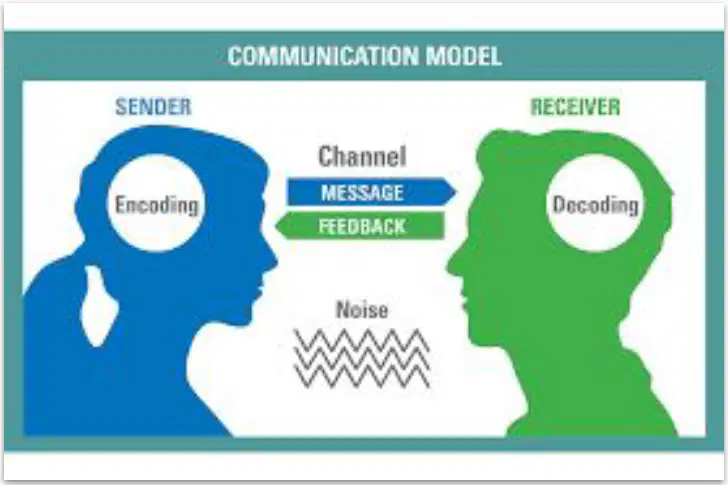
What does 'Decoding' mean in the communication process? Fill in the blank: Decoding is the process of how the receiver ______ and understands the message.
interprets
forgets
creates
ignores
Feedback indicates whether the message was ______ and how it was perceived.
understood
ignored
delayed
repeated
According to the Communication Process, what is one benefit of feedback?
It prevents misunderstandings.
It creates more noise.
It stops communication.
It confuses the sender.
Which of the following is NOT a common barrier to communication?
Psychological attitudes and prejudice
Cultural diversity
Physical disabilities
Effective teamwork
Fill in the blank: Common barriers to communication include physical disabilities, psychological attitudes and prejudice, and ______ diversity.
cultural
mathematical
seasonal
mechanical
Which of the following is a physical disability that can be a barrier to communication?
Deafness or hearing loss
Excellent vision
Fast typing skills
Multilingual ability
Which of the following is a physical disability that can be a barrier to communication?
Blindness or impaired vision
Strong memory
Quick reflexes
Good handwriting
Barriers to Communication: What may psychological barriers be caused by?
Prejudice, attitudes, and personality
Physical distance and noise
Technical jargon and language differences
Time zone differences
Which of the following non-verbal cues can be a barrier to communication in different cultures?
Eye contact
Handshakes
Smiling
Nodding
Which of the following can be a barrier to communication due to cultural differences?
Touch
Technology
Weather
Transportation
Which of the following is an important part of effective communication?
Ignoring details
Recording and reporting
Speaking loudly
Avoiding feedback
Fill in the blank: ______ observations cannot be seen or felt and are considered symptoms, while ______ observations can be seen or measured and are considered signs.
Subjective; objective
Objective; subjective
Physical; emotional
Visible; invisible
In any health care career, you will be part of an interdisciplinary healthcare team. What is the main goal of the team?
Provide quality holistic health care for every patient
Reduce the workload for individual team members
Increase hospital profits
Focus only on the physical health of patients
List two characteristics that professionals in a healthcare team may differ in.
Levels of education, ideas, backgrounds, interests
Uniforms and shoe sizes
Favorite TV shows and movie genres
Preferred vacation destinations and hobbies
Height and eye color
Teamwork: What should team members learn to do when conflict occurs among them?
Ignore the conflict
Resolve conflict positively and cooperatively
Blame others
Leave the team
The purpose of professional leadership is to:
Guide and inspire individuals or teams towards achieving organizational goals.
Focus solely on personal achievements.
Avoid taking responsibility for team outcomes.
Discourage collaboration among team members.
A leader is characterized by which of the following traits?
Ability to inspire and guide others
Lack of communication skills
Indecisiveness
Reluctance to take responsibility

