
 Worksheets
Quiz:: Reproduction, Cell theory and Organelles
Total questions: 56
Worksheet time: 1hrs 27mins
Which reproduction does diverse offspring come from?
Asexual reproduction
Sexual reproduction
Asexual offspring
Which of the following is a disadvantage for sexual reproduction?
a lot of time and energy is required for making gametes and finding mates
offspring can be produced more quickly than by asexual means
the offspring are genetically different
Is budding an example of asexual or sexual reproduction?
sexual
both
asexual

Prokaryotes (bacteria) reproduce asexually via -
sperm and egg
Fertilization
binary fission
This is why everyone is different from their parents and siblings.
mitosis
meiosis
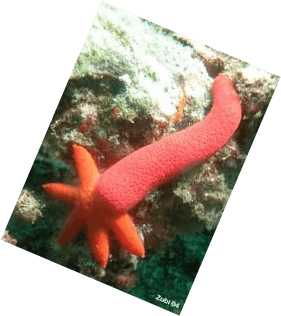
What type of asexual reproduction is taking place?
Fishermen work hard to catch and remove all the starfish that get into their favorite shell fishing beds and the “underwater farms” where they raise clams and oysters. In the past, they put the starfish into their boats, cut them up with knives, and then throw the pieces of starfish overboard. They thought this would kill the starfish. What they did not know was that each piece of starfish will grow into a whole new animal.
Regeneration
Vegetative propagation
Budding
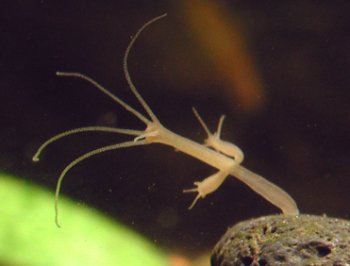
This is when a new organism grows by cell division on the body of its parent. The bud, or offspring is identical to the parent. The bud, when large enough, can break off of the parent and live on its own. Examples of this include yeast, hydra and potatoes.
Regeneration
Vegetative propagation
Budding

Which of the following is not a benefit of asexual reproduction?
Offspring will be successful in an unchanged environment.
Good at adapting to changing environments.
Only requires one parent to produce offspring.
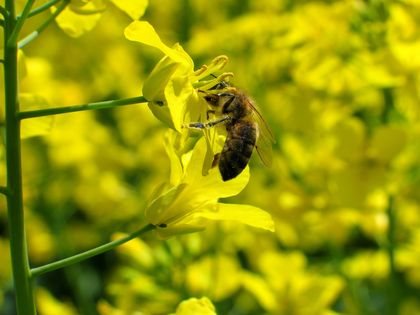
What is the big advantage of sexual reproduction?
Can quickly grow the population
Offspring are guaranteed to be successful in an unchanged environment.
Can adapt to changing environments
An organism that has been reproduced by sexual reproduction received ____________ of its chromosomes from the male parent.
50%
25%
100%
Requires gametes such as a sperm and an egg.
Sexual
Asexual
Both
Requires only one parent organism
Sexual
Asexual
Both
If a human is composed of 46 chromosomes, how many chromosomes would be in a human SPERM (sex) cell ?
23
25
46
What is one disadvantage of sexual reproduction?
Only one parent needed
Off spring are exact copies of parents
Needs two parents
If an organism reproduces asexually, its offspring will most likely be:
produced as a result of fertilization
Genetically identical to the parent
Produced from specialized cells known as gametes
The joining of a sperm cell and an egg cell is called __________.
fertilization
labor
asexual reproduction

This picture shows which process?
mitosis
meiosis

What process is occurring AND which type of cells are being produced?
mitosis, gametes
mitosis, body cells
meiosis, gametes
meiosis, body cells
Which process results in the production of a zygote?
fertilization
binary fission
budding
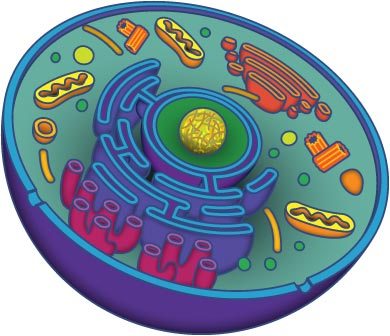

A cell that has a true nucleus
Prokaryotic
Eukaryotic

Prokaryote or Eukaryote?
Unicellular or Multicellular?
Orange Tree
Prokaryote
Unicellular
Eukaryote
Unicellular
Eukaryote
Multicellular

Identify the structure that is indicated by the arrow in the image.
cell wall
central vacuole
chloroplast
cell membrane

The arrow is showing the fluid inside the cell that surrounds the cell organelles and gives the cell its shape. What is the arrow pointing to in the cell?
cytoplasm
mitochondria
ribosomes
nucleus
This organelle breaks down (digest) worn out cell parts
cytoplasm
lysosomes
mitochondria
vacuoles
This organelle stores water, and is very big in plant cells
nuclolus
ribosomes
golgi bodies
vacuoles
Which organelle contains the cell's DNA, or the genes?
Nucleus
Mitochondria
Chloroplast
Vacuole
What is the purpose of genes, or DNA?
stores hereditary information to tell what the plant or animal is
makes proteins
reduces energy
produce sugars
What is the function of the cell membrane?
gives the cell its shape
produces proteins within the cell
allows water and nutrient to enter and leave the cell
contains the plant's DNA
Which organelles are only found in plant cells?`
cytoplasm and vacuole
nucleus and cell wall
cell wall and chloroplast
mitochondria and cytoplasm

What are the structures in this image called?
chromosomes
centromere
sister chromatids
chromatin
the weaker trait; you need 2 genes for the trait to show up in an organism
dominant
recessive
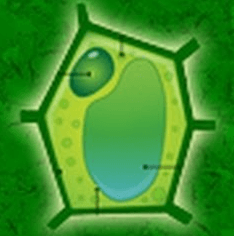
A rigid layer that lies outside the cell's membrane. Found only in PLANT cells.
This organelle turns radiant energy into sugar. This is where photosynthesis occurs. ONLY in PLANT CELLS.
cell wall
chloroplast
cell membrane
nucleus
Where DNA is found. Also known as the "brain of the cell" . This organelle directs all of the cell's activities.
Cell structures that perform specific functions are called
tissues
organs
organelles
organ systems


This is a beet plant. Beets are called root vegetables because people can eat the root of the beet plant. But before they can be eaten, beets need to grow strong and healthy in the soil. What role in improving the survival of the plant does the root of the beet plant likely have?
It absorbs sunlight
It stores energy
It is involved in photosynthesis
It stores water
The monarch butterfly can be found in a wide range of areas across Canada and the northern United States during the spring and summer. Monarch butterflies cannot survive the cold temperatures that occur during the winter in these areas.
In order to survive the winter, monarch butterflies-
live underwater during the winter
burrow into the ground
grow fur to keep them warm
migrate to warmer areas
Why do birds have different beaks?
they migrate different places
the beaks help with hibernation
they eat different things
no one knows
Rabbits with a mutation for longer, thicker fur survive an unusually cold winter, while many normal rabbits do not survive. This is an example of-
Selective Breeding
Natural Selection
To produce a more desirable fruit, a farmer crosses a tree that produces sweet oranges with a tree that produces large oranges. Is an example of-
Natural Selection
Selective Breeding
Which of the following is true about natural selection?
Natural selection usually causes a species to change slowly.
Natural selection does not cause a species to change
Natural selection usually causes a species to change suddenly.
Natural selection is the only cause of changes in a species

