
Font size
 Worksheets
Rizal and the Propaganda Movement
Total questions: 86
Worksheet time: 43mins
What was the main goal of the Propaganda Movement in the late 19th century Philippines?
To support Spanish colonial rule
To advocate for political and social reforms
To promote armed revolution
To establish a monarchy
Fill in the blank: The Propaganda Movement was a _______ effort by Filipino intellectuals and expatriates to push for changes that would benefit the oppressed population.
concerted
casual
isolated
unplanned
When and where was La Solidaridad established?
February 15, 1889, in Barcelona, Spain
June 12, 1898, in Manila, Philippines
March 1, 1896, in Madrid, Spain
December 30, 1896, in Cavite, Philippines
What was the primary purpose of La Solidaridad?
To entertain readers with stories
To serve as a platform for Filipino reformists to voice their concerns about colonial rule and advocate for societal reforms
To promote Spanish culture
To advertise products
One of the goals and objectives of La Solidaridad as stated in the worksheet is:
To seek reforms and representation for Filipinos in the Spanish Cortes
To promote absolute independence from Spain immediately
To establish a monarchy in the Philippines
To support the continuation of friar rule in the Philippines
Who was the first editor and skilled orator known for his satirical articles that critiqued the abuses of the Spanish clergy and the government?
Marcelo H. del Pilar
Graciano Lopez Jaena
Jose Rizal
Mariano Ponce
Which key figure in La Solidaridad was a lawyer and the second editor of the publication, known for his persuasive writings and efforts to unify reformists?
Graciano Lopez Jaena
Marcelo H. del Pilar
Antonio Luna
Pedro Paterno
Although not directly involved in its administration, whose contributions, such as essays and commentaries, were pivotal in attracting the movement's ideals?
Mariano Ponce
Jose Rizal
Isabelo de los Reyes
Pedro Paterno
Fill in the blank: Mariano Ponce wrote under the pen names "_____," "Kalipulako," and "Tikbalang."
Naning
Plaridel
Laong Laan
Dimasalang
Who contributed essays focusing on military reforms and the need for a professional Filipino military force?
Antonio Luna
Jose Maria Panganiban
Isabelo de los Reyes
Pedro Paterno
The main difference in approach between Jose Rizal and Marcelo H. del Pilar regarding the direction of the Propaganda Movement was:
Rizal advocated for peaceful reforms while del Pilar favored more confrontational methods.
Both supported armed revolution from the start.
Del Pilar wanted to maintain Spanish rule, while Rizal wanted immediate independence.
Rizal focused on economic reforms, while del Pilar focused on religious reforms.
The conflict between Rizal and Del Pilar over leadership weakened the unity of the Propaganda Movement.
True
False
According to the passage, what was the main purpose of Rizal's writings for La Solidaridad?
To entertain the Filipino elite
To critique colonial policies and inspire change
To support Spanish rule
To promote violence
Fill in the blank: Rizal's essay 'The Philippines a Century Hence' predicted the future of the Philippines under continued Spanish rule, emphasizing the need for ______ to prevent violent revolution.
reforms
taxes
alliances
colonization
Which of the following did Rizal highlight as factors that stifled Filipino potential in 'The Indolence of the Filipino'?
Forced labor, heavy taxation, and limited opportunities
Lack of education and self-awareness
Spanish language barriers
Violent revolution
What was one of the main successes of La Solidaridad as mentioned in the passage?
It promoted violent revolution
It provided a platform for advocacy for Filipino reformists
It was written in Tagalog for the masses
It ignored Spanish abuses
Fill in the blank: La Solidaridad helped expose Spanish abuses to a global audience, gaining sympathy and support from ______-minded individuals in Europe.
liberal
conservative
authoritarian
isolationist
Which of the following was a limitation of La Solidaridad?
It was financially stable
It was written in Spanish, catering mainly to the educated elite
It had strong political impact
It united all Filipinos
Despite its efforts, the Spanish government largely ignored the reformists' demands, frustrating their goals.
True
False
What internal conflict weakened the unity of the Propaganda Movement as mentioned in the passage?
Financial challenges
Leadership conflict between Rizal and Del Pilar
Lack of international awareness
Heavy taxation
When did Jose Rizal return to the Philippines, marking a critical turning point in his advocacy for reform?
July 3, 1892
June 26, 1892
May 1, 1892
August 20, 1892
What was the main aim of La Liga Filipina as established by Jose Rizal?
To promote armed revolution
To involve Filipinos directly in the push for reforms and national unity
To support Spanish colonial rule
To encourage emigration to Europe
Fill in the blank: La Liga Filipina was established on ________, in Tondo, Manila.
July 3, 1892
June 12, 1898
August 23, 1896
December 30, 1896
Which of the following was NOT one of the key aims of La Liga Filipina?
Unity and Mutual Protection
Fostering Education and Development
Peaceful Advocacy
Promoting armed conflict
Who hosted the meeting where La Liga Filipina was founded?
Jose Rizal
Doroteo Ongjunco
Spanish authorities
Filipino reformists
Which of the following best describes Rizal’s vision for La Liga Filipina?
A cooperative and empowered society
A society ruled by Spanish authorities
A society focused on military power
A society isolated from other nations
Fill in the blank: Rizal’s experience in the Propaganda Movement influenced his belief that change could be achieved by empowering the Filipino people through ________, economic support, and peaceful advocacy.
education
military force
foreign intervention
religious conversion
political exile
Who was the founder of the Katipunan and a notable member of La Liga Filipina?
Apolinario Mabini
Andres Bonifacio
Doroteo Ongjunco
Ambrosio Salvador
Who was known as the 'Brains of the Revolution' and supported Rizal's ideals?
Apolinario Mabini
Deodato Arellano
Andres Bonifacio
Ambrosio Salvador
Fill in the blank: Ambrosio Salvador was La Liga Filipina’s first ________, who worked to ensure the organization’s initial success.
president
secretary
treasurer
adviser
Doroteo Ongjunco was the host of the inaugural meeting of La Liga Filipina and actively supported reformist activities.
True
False
On what date was Rizal arrested after the inaugural meeting of La Liga Filipina?
July 6, 1892
June 12, 1898
August 23, 1896
December 30, 1896
Which of the following was NOT a reason for Rizal’s arrest?
Subversive writings
Formation of La Liga Filipina
Influence on local reformists
Armed rebellion against Spain
The arrest of Rizal led to which of the following impacts on La Liga Filipina?
It caused the dissolution of the organization.
It led to the expansion of La Liga Filipina.
It resulted in Rizal becoming its president.
It made La Liga Filipina the official government body.
Where was Rizal exiled after his arrest?
Dapitan in Mindanao
Fort Santiago in Manila
Cebu in Visayas
Vigan in Ilocos
From what year to what year was José Rizal exiled in Dapitan?
1892 to 1896
1887 to 1891
1890 to 1894
1895 to 1899
Where was José Rizal exiled after being accused of involvement with the Philippine Revolution?
Dapitan
Cebu
Vigan
Manila
What did José Rizal win that allowed him to purchase land in Talisay during his exile?
A lottery
A scholarship
A government grant
A business competition
Which of the following did José Rizal build in Dapitan?
A house
A school
A hospital
All of the above
In which town did José Rizal reside during his exile in Dapitan?
Talisay
Calamba
Binan
Intramuros
Which fields did José Rizal dedicate his time to while in Dapitan?
Education
Medicine
Agriculture
Engineering
All of the above
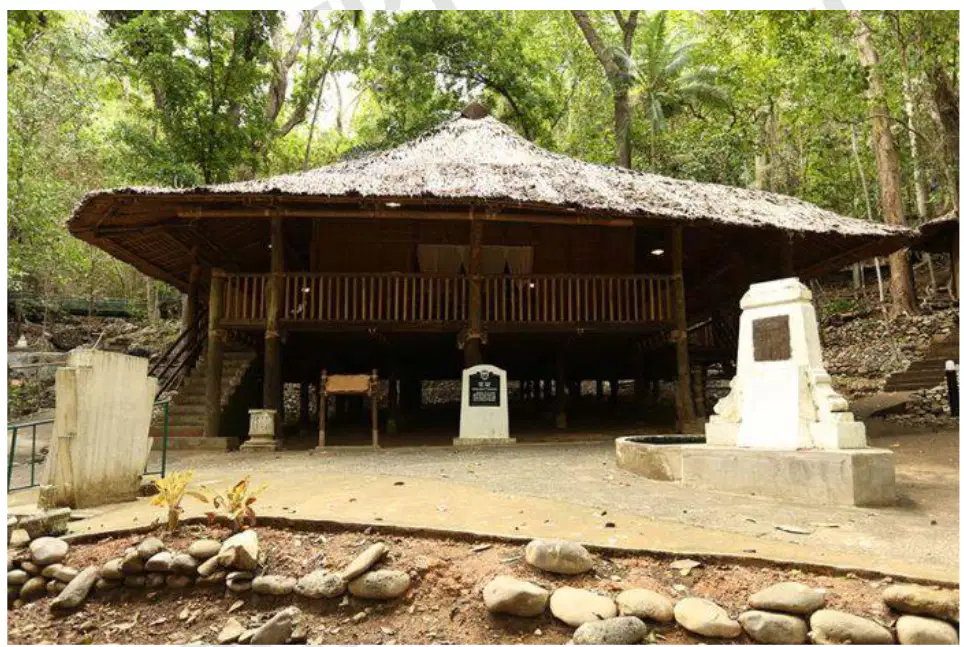
What is shown in Figure 1?
Rizal Shrine in Dapitan
Fort Santiago in Manila
Barasoain Church in Malolos
Magellan's Cross in Cebu
What activities were part of Rizal's daily routine according to the passage?
Medical practice, teaching, scientific research, and writing
Painting and sculpting
Playing music and dancing
Cooking and cleaning
Rizal's studies in ________, zoology, and ethnology further enriched his understanding of the region’s natural environment. (Fill in the blank)
botany
astronomy
geology
mathematics
Who was Josephine Bracken?
Rizal's sister
An Irish woman who became Rizal's common-law wife
A Spanish friar
Rizal's patient
Why did the Spanish friars refuse to allow Rizal and Josephine Bracken to marry?
Because Bracken was Irish
Because Rizal was in exile
Because they did not want them to marry under Catholic rites
Because George Taufer objected
According to Chief Inspector Moreno, when were Rizal and Bracken married?
After Rizal's death
Following Catholic rites hours before Rizal’s death
In Hong Kong
Before Rizal's exile
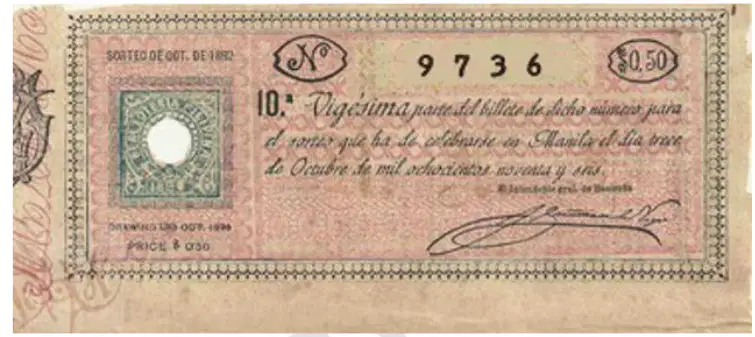
What is depicted in Figure 2?
A sculpture of Josephine Bracken
Rizal's lotto winning ticket with the number 9736
Rizal's medical license
A letter from George Taufer
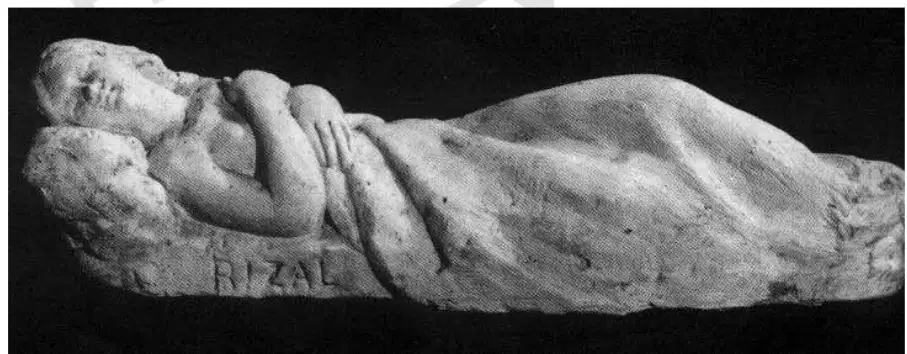
What is the title of the sculpture shown in Figure 3?
Rizal Sleeping
Josephine Sleeping
The Blind Father
Ethnology Study
According to the passage 'Rizal’s Contribution to Society While Exiled', what subjects did Rizal teach at the school he established for young boys in Dapitan?
Spanish, mathematics, and science
English, history, and geography
Art, music, and literature
Physical education, economics, and philosophy
As a physician in Dapitan, what medical service did Rizal provide that proved invaluable to many blind patients?
Dental surgery
Eye surgeries
Heart transplants
Vaccinations
Fill in the blank: Rizal introduced modern agricultural techniques, improved irrigation systems, and helped in constructing _______ facilities in Dapitan.
water supply
school
market
sports
Which of the following did Rizal design to improve community development in Dapitan?
A hospital
A public plaza
A university
A railway station
Rizal’s influence in Dapitan led to the promotion of sustainable fishing practices and the improvement of the town’s sanitation system.
True
False
What new species was named after Rizal?
Draco rizali, a species of flying lizard
Rana rizali, a species of frog
Panthera rizali, a species of big cat
Pavo rizali, a species of peacock
What fields of scientific research did Rizal conduct during his time in Dapitan, according to the passage?
Biology, anthropology, and archaeology
Physics, chemistry, and astronomy
Mathematics, engineering, and geology
Medicine, literature, and music
In 1896, Governor-General Ramon Blanco permitted Rizal to travel to Cuba to serve as an army doctor in exchange for ending his exile. Shortly after Rizal left the Philippines, the Katipunan launched the Philippine Revolution. What was Rizal charged with after his arrest?
Theft, bribery, and murder
Sedition, rebellion, and conspiracy
Treason, espionage, and fraud
Smuggling, arson, and kidnapping
Who did the Katipunan send to visit Rizal and inform him of the plan?
Emilio Aguinaldo
Dr. Pio Valenzuela
Apolinario Mabini
Antonio Luna
Katipunan's Plan to Rescue Rizal: The Katipunan offered Rizal a chance to escape in exchange for his support of the revolution. Did Rizal accept the offer?
True
False
Rizal was arrested en route on his way to Cuba and imprisoned at Fort Santiago. His trial was marked by procedural irregularities and was conducted by a ________.
Spanish military court
Philippine civil court
American tribunal
Revolutionary council
Rizal's Trial: The prosecution relied on ________ evidence, including his association with known revolutionaries and his writings criticizing the Spanish government.
circumstantial
direct
forensic
testimonial
Rizal was portrayed as a traitor who incited rebellion despite his commitment to peaceful reform.
True
False
On what date was Jose Rizal executed by firing squad at Bagumbayan?
December 30, 1896
June 12, 1898
August 30, 1896
July 4, 1946
How did Rizal face his executioners during his execution?
He was blindfolded
He refused to be blindfolded and faced his executioners
He turned his back to them
He ran away
What symbolic act did Rizal perform as he was shot by the firing squad?
He managed to turn his body so that he fell facing the sky, a symbolic act of defiance and patriotism.
He raised his hand to salute the firing squad.
He shouted for freedom before falling.
He dropped a white handkerchief as a sign of surrender.
Rizal's execution ignited a stronger sense of nationalism among Filipinos, inspiring more to join the revolutionary movement.
True
False
What is the title of the final poem written by Rizal on the eve of his execution?
Mi Último Adiós (My Last Farewell)
El Filibusterismo
Noli Me Tangere
Sa Aking Mga Kabata
Where did Rizal hide his final poem, Mi Último Adiós, before his execution?
Inside an alcohol lamp (cocinilla)
Under his pillow
Inside a book
In his shoe
Who did Rizal give the alcohol lamp containing his final poem to?
His sister, Trinidad
His mother, Teodora
His friend, Josephine Bracken
His brother, Paciano
Which theme in Rizal’s 'Mi Último Adiós' is described as Rizal expressing his unwavering love for his country, stating that he gladly offers his life for its freedom?
Patriotism
Romantic Love
Materialism
Despair
Which theme in Rizal’s 'Mi Último Adiós' is described as Rizal remaining hopeful that the Philippines will achieve independence despite his impending death?
Hope and Faith
Despair and Sorrow
Anger and Revenge
Indifference and Apathy
Which theme in Rizal’s 'Mi Último Adiós' is described as Rizal accepting his fate with courage, viewing his execution as part of the nation's struggle for liberty?
Martyrdom
Romanticism
Materialism
Satire
Which theme in Rizal’s 'Mi Último Adiós' is described as the poem transcending its historical context and serving as a universal message of selflessness, sacrifice, and devotion to one's homeland?
Universal Message
Romantic Love
Religious Devotion
Personal Ambition
According to the passage 'Rizal and the Philippine Revolution,' what role did Rizal's writings play in the Philippine Revolution?
They directly led the revolution
They inspired revolutionaries and awakened Filipinos to injustices
They supported Spanish rule
They called for violent revolt
Fill in the blank: Rizal's novels, _______ and El Filibusterismo, became powerful tools for awakening the Filipino people to the injustices of Spanish rule.
Noli Me Tangere
Florante at Laura
Ibong Adarna
Banaag at Sikat
Rizal was a revolutionary leader who directly fought in battles during the Philippine Revolution.
True
False
Who founded the revolutionary group Katipunan, which was influenced by Rizal's writings?
Andres Bonifacio
Jose Rizal
Simoun
Crissostomo Ibarra
Rizal's major contribution to the revolution according to the passage was:
inspiring Filipinos through his writings
leading the revolution in battle
signing the peace treaty
establishing the Katipunan
In the novel El Filibusterismo, what character represents the frustration and anger of Filipinos under Spanish rule?
Simoun
Padre Damaso
Basilio
Isagani
Rizal's vision of nationalism was:
the promotion of Filipino identity and unity
the pursuit of personal wealth
the rejection of all foreign influences
the establishment of a monarchy in the Philippines
According to the passage, what did Rizal's education in Europe expose him to?
The ideas of the Enlightenment, which emphasized reason, equality, and human rights.
The Spanish colonial way of life.
The importance of military power.
The need for economic reforms.
What is the term used by Rizal to describe a sense of national identity that was distinct from Spanish colonialism?
Filipinismo
Hispanismo
Nacionalismo
Kolonyalismo
Rizal believed that an educated populace was the key to social and political change.
True
False
According to the passage, what did Rizal emphasize as necessary for achieving unity among Filipinos?
Revolution and violence
Shared identity, mutual respect, dialogue, and understanding
Adopting Spanish culture
Economic reforms only
How did Rizal's approach to the revolution differ from that of Andres Bonifacio?
Rizal advocated for peaceful reform and intellectual resistance, while Bonifacio had a more radical approach and believed in armed rebellion as a means of achieving independence.
Rizal and Bonifacio both supported only peaceful negotiations with the Spanish authorities.
Rizal believed in immediate armed revolt, while Bonifacio preferred gradual reforms through education.
Both Rizal and Bonifacio rejected any form of resistance against Spanish rule.
According to the passage, what was Bonifacio's stance after being disillusioned with the Spanish government's refusal to grant reforms?
He continued to advocate for peaceful reforms
He believed revolution was the only viable solution
He supported Spanish rule
He joined Rizal in peaceful protests

