
NEW
Font size
 Worksheets
Ch 9 Musculoskeletal & Nerve Trauma
Total questions: 71
Worksheet time: 36mins
A physical injury or wound that is produced by an external or internal force.
Creep
Load
Strain
Trauma
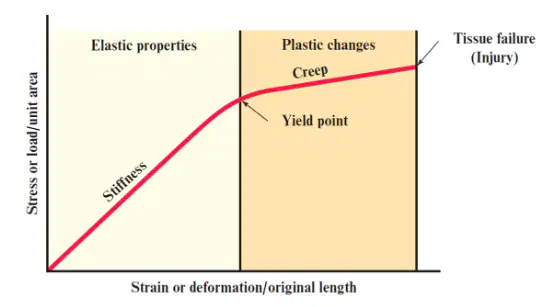
An external force acting on tissues that causes internal reactions within the tissues.
Creep
Load
Strain
Trauma
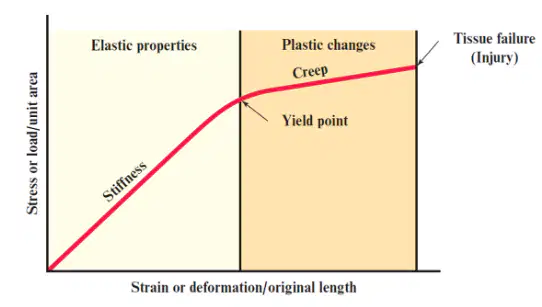
The relative ability of a tissue to resist a particular load.
Creep
Stiffness
Strain
Trauma
The internal resistance of the tissues to an external load.
Stiffness
Stress
Strain
Trauma
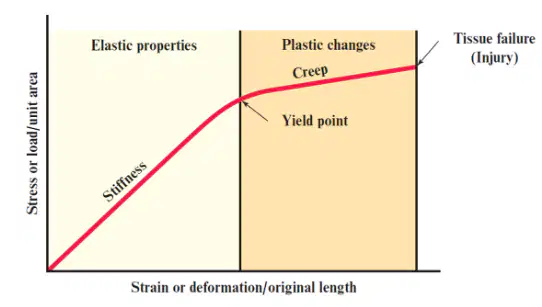
The extent of the deformation of tissue when it is loaded.
Stiffness
Strain
Stress
Trauma
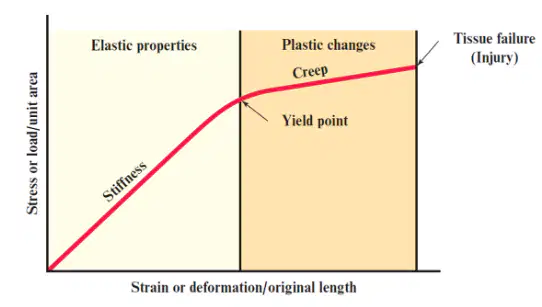
The internal strain placed on tissues from stress.
Deformation
Elasticity
Creep
Yield Point
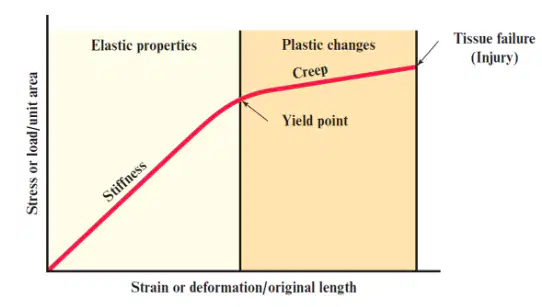
A property that allows a tissue to return to normal following deformation.
Elasticity
Creep
Deformation
Stress
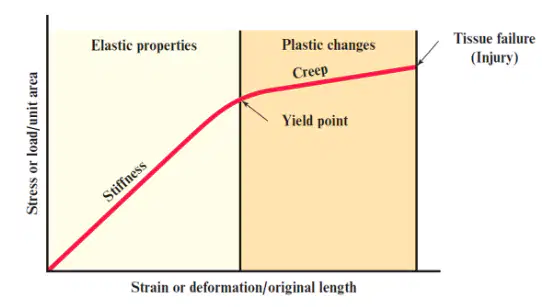
When tissue is deformed to the extent that it is no longer reacts elastically.
Creep
Mechanical Failure
Strain
Yield Point
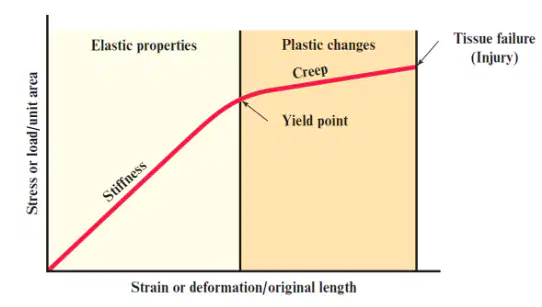
The deformation in the shape and/or properties of a tissue that occurs with the application of a constant load over time.
Creep
Mechanical Failure
Strain
Yield Point
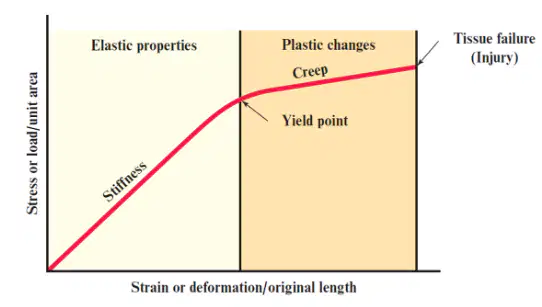
When the ability of the tissue to withstand stress and strain is exceeded, and an injury occurs.
Creep
Mechanical Failure
Strain
Yield Point
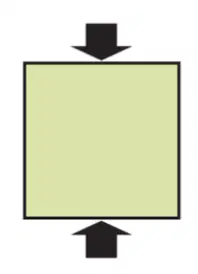
External loads applied toward one another on opposite surfaces in opposite directions that shortens or widens a structure.
Compression
Tension
Shearing
Bending
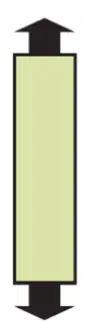
The force that pulls or stretches tissue that pulls a structure apart.
Bending
Compression
Shearing
Tension
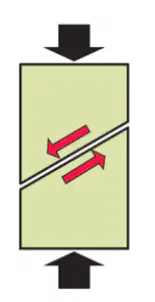
Equal but not directly opposite loads are applied to opposing surfaces, forcing those surfaces to move in parallel directions relative to another that exceeds the inherent strength of the tissue, causing injury.
Bending
Compression
Shearing
Tension
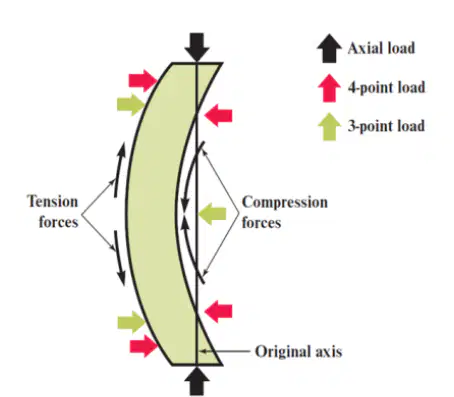
When 2 force pairs act at opposite ends of a structure (4 points of contact). When 3 forces cause bending or when an already bowed structue is axially loaded.
Bending
Compression
Shearing
Tension
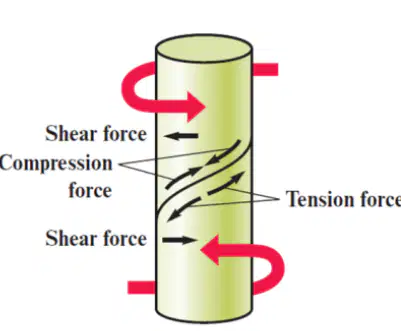
Loads caused by twisting in opposite directions from the opposite ends of a structure cause shear stress over the entire cross section of that structure.
Compression
Shearing
Tension
Torsion
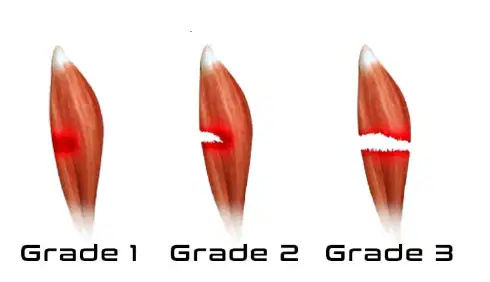
A muscle or tendon is overstretched by tension or forced to contract against too much resistance, separation or tearing of muscle fibers occur.
Exercise-Associated Cramps
Guarding
Spasm
Strain
Extremely painful involuntary muscle contractions that occur most commonly in the calf, hamstrings, quadriceps, or abdomen.
Exercise-Associated Muscle Cramps
Muscle Guarding
Muscle Spasm
Muscle Strain
Following injury, the muscles that surround the injured area contract to, in effect, splint that area, thus minimizing pain by limiting movement.
Excercise-Associated Muscle Cramps
Muscle Guarding
Muscle Spasm
Muscle Strain
An involuntary muscle contraction that results in increased tension and shorting of that muscle or a group of muscles which interferes with voluntary movement.
Exercise-Associated Muscle Cramps
Muscle Guarding
Muscle Spasm
Muscle Soreness
Overexertion in strenuous muscular exercise often results in muscular pain.
Exercised-Associated Muscle Cramps
Muscle Spasm
Muscle Soreness
Tendinopathy
A muscle spasm with alternating involuntary muscular contraction and relaxation in quick succession.
Clonic spasm
Tonic spasm
A muscle spasm with a rigid muscle contraction that lasts a period of time.
Clonic spasm
Tonic spasm
A pathological condition of a tendon with a complaint of pain and swelling.
Tendinopathy
Tendinitis
Tendinosis
Crepitus
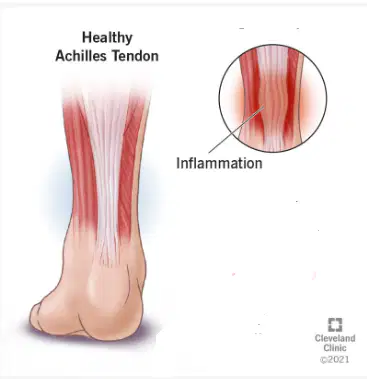
Inflammation of the tendon.
Tendinopathy
Tendinosis
Tendonitis
Crepitus
A crackling feeling or sound when you move a joint in the body.
Crepitus
Tendinopathy
Tendinitis
Tendinosis
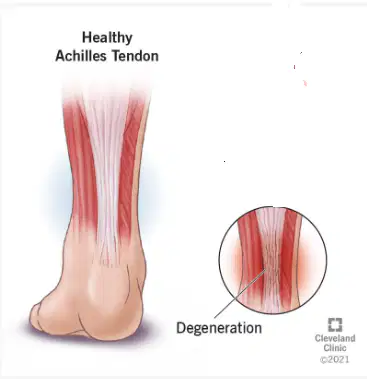
When you have microtears or degeneration of your tendon.
Crepitus
Tendinopathy
Tendinitis
Tendinosis

Inflammation of the synovial sheath around a tendon.
Tendinopathy
Tendinitis
Tenosynovitis
Tendinosis
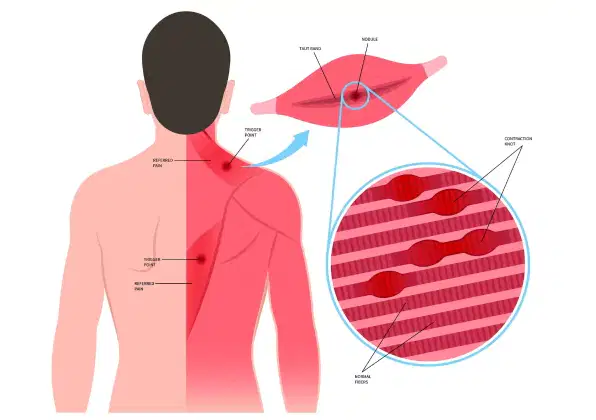
A discreet, hypersensitive nodule within a taut band of skeletal muscle or fascia.
Contusion
Ecchymosis
Myositis Ossificans
Myofascial Trigger Point
A fancy word for a bruise.
Contusion
Ecchymosis
Myositis Ossificans
Myofascial Trigger Point
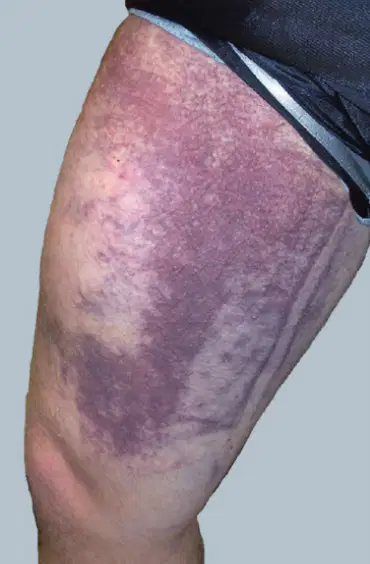
Minor bleeding that results in bluish-purple discoloration of the skin that persists for several days.
Ecchymosis
Myofascial Trigger Point
Myositis Ossificans
Tenosynovitis
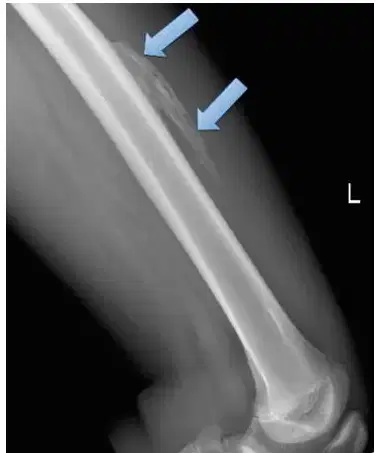
When a contusion continues to be bruised before it is healed and the body creates calcium deposits (bone) in the injured area to protect itself.
Ecchymosis
Myositis Ossificans
Myofascial Trigger Point
Tenosynovitis
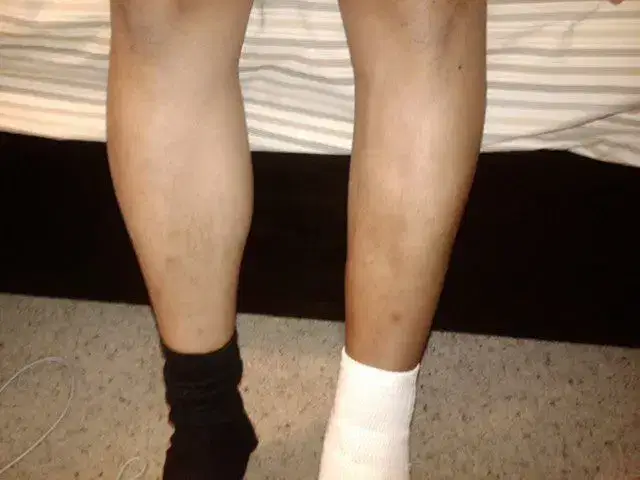
The wasting away of muscle tissue.
Muscle Atrophy
Muscle Contracture
An abnormal shortening of muscle tissue in which there is a great deal of resistance to passive stretch.
Muscle Atrophy
Muscle Contracture
Joint that are composed of two or more bones that articulate with one another to allow motion in one or more planes.
Dislocation
Ligament Sprain
Synovial Joint
Subluxation
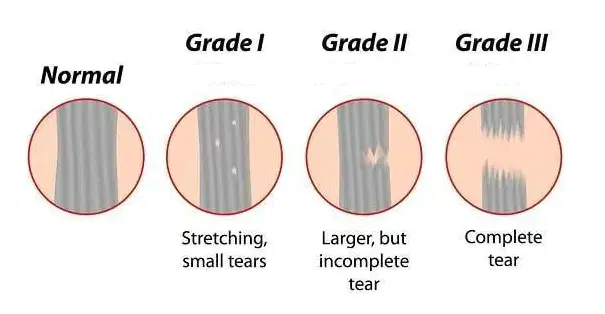
An overstretching or tearing of a ligament.
Dislocation
Sprain
Synovial Joint
Subluxation
The separation of 2 articulating bones.
Dislocation
Diastasis
Osteoarthritis
Subluxation
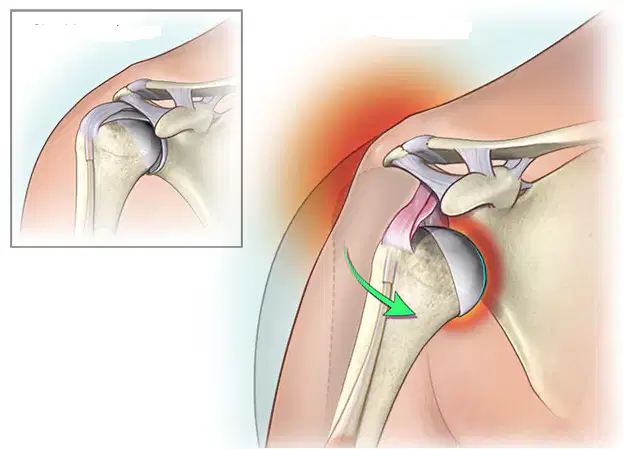
When at least one bone within a joint is forced completely out of the joint and must be manually or surgically put back into place or reduced.
Dislocation
Diastasis
Osteoarthritis
Subluxation
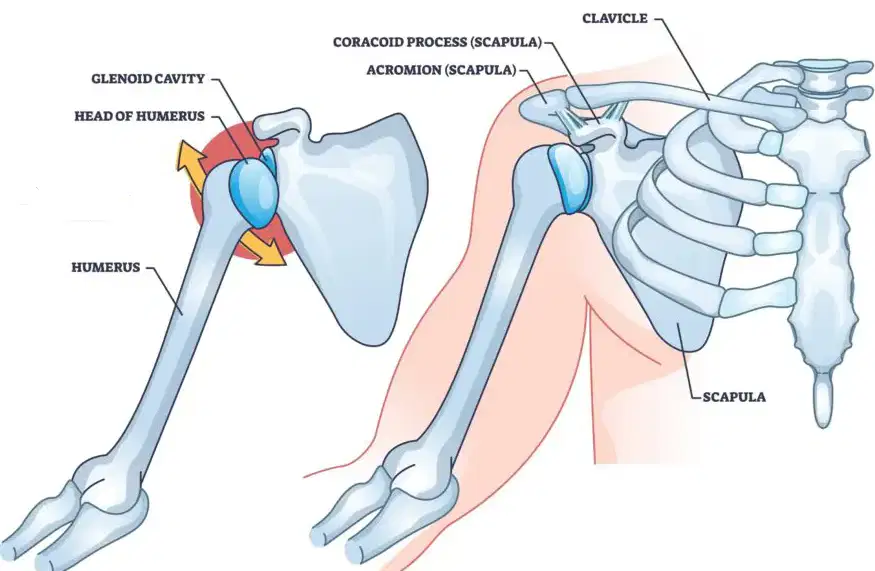
A bone comes partially out of its normal articulation but then goes right back into place.
Dislocation
Diastasis
Osteoarthritis
Subluxation
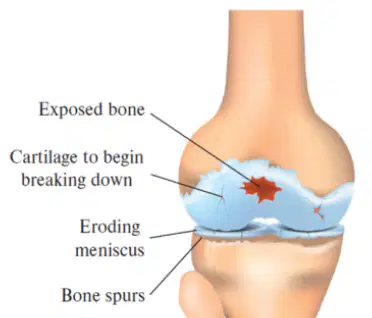
Inflammation of or defects on the boney surfaces within a joint.
Dislocation
Diastasis
Osteoarthritis
Subluxation
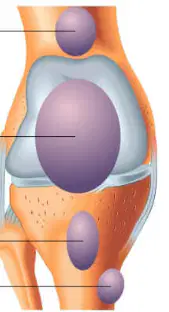
Saclike structures with an outer fibrous layer of thin connective tissue lined by synovial membrane that contain a small amount of fluid.
Bursae
Capsulitis
Diastasis
Osteoarthritis

Inflammation of a bursae sac.
Bursitis
Capsulitis
Osteoarthritis
Synovitis

Inflammation of the articular capsule that results in the thickening and formation of excessive scar tissue.
Bursitis
Capsulitis
Osteoarthritis
Synovitis
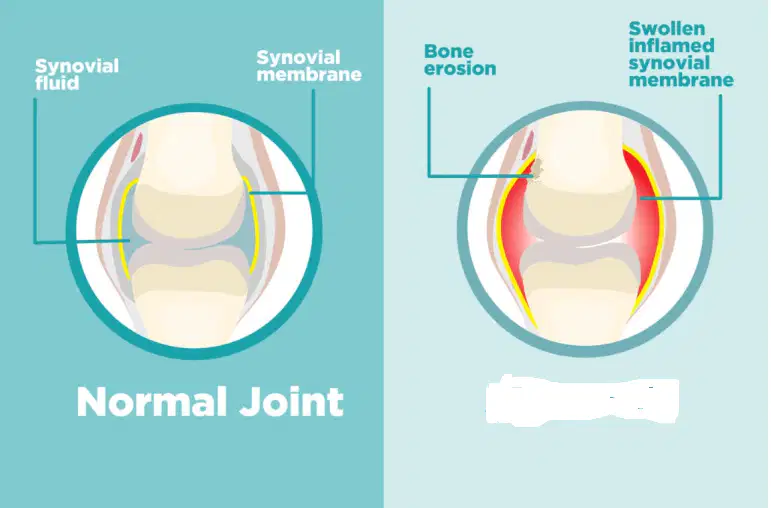
An inflammation of the synovial membrane.
Bursitis
Capsulitis
Osteoarthritis
Synovitis
These cells build new bone on the outside of bone.
Osteoblasts
Osteoclasts
These cells increase the medullary cavity by breaking down bony tissue.
Osteoblasts
Osteoclasts
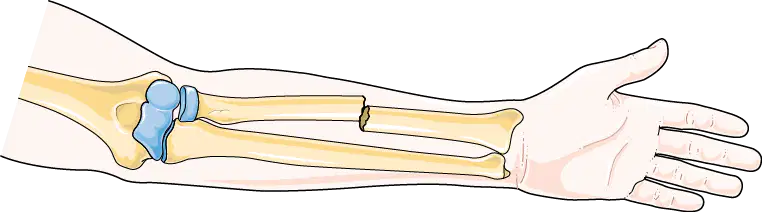
A fracture where there is little or no movement or displacement of the broken bones.
Closed fracture
Open Fracture
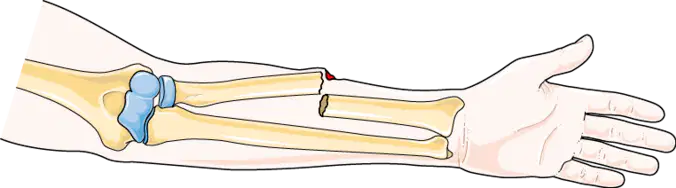
A fracture with enough displacement that the bones break through the skin.
Closed Fracture
Open Fracture
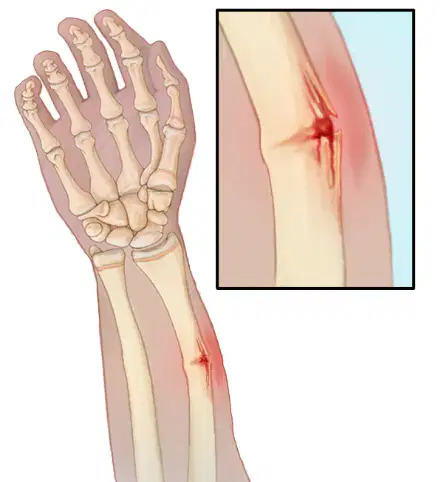
Fracture that is an incomplete break in a bone that has not completely ossified (Elementary - Middle School aged athletes).
Comminuted
Greenstick
Linear
Oblique
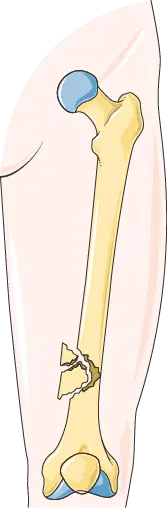
Consists of 3 or more fragments at a fracture site.
Communited
Greenstick
Linear
Oblique
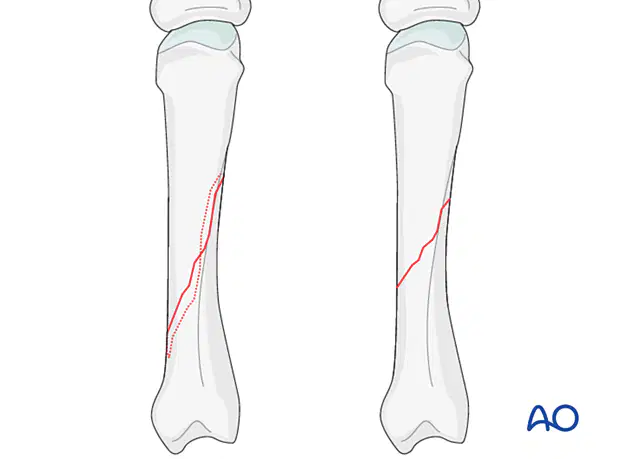
A diagonal fracture where one end of the bone receives sudden torsion or twisting while the other end is fixed.
Communited
Greenstick
Linear
Oblique
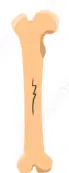
A fracture where a bone splits along the length of the bone.
Comminuted
Greenstick
Linear
Oblique
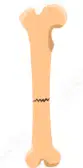
A fracture where it is a straight line perpendicular to the bone shaft.
Linear
Oblique
Spiral
Transverse
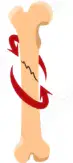
A fracture that has an S-shaped separation within the bone.
Linear
Oblique
Spiral
Transverse
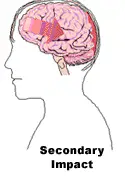
These fractures occur mostly within flat bones within the skull.
Avulsion
Blowout
Contrecoup
Depressed
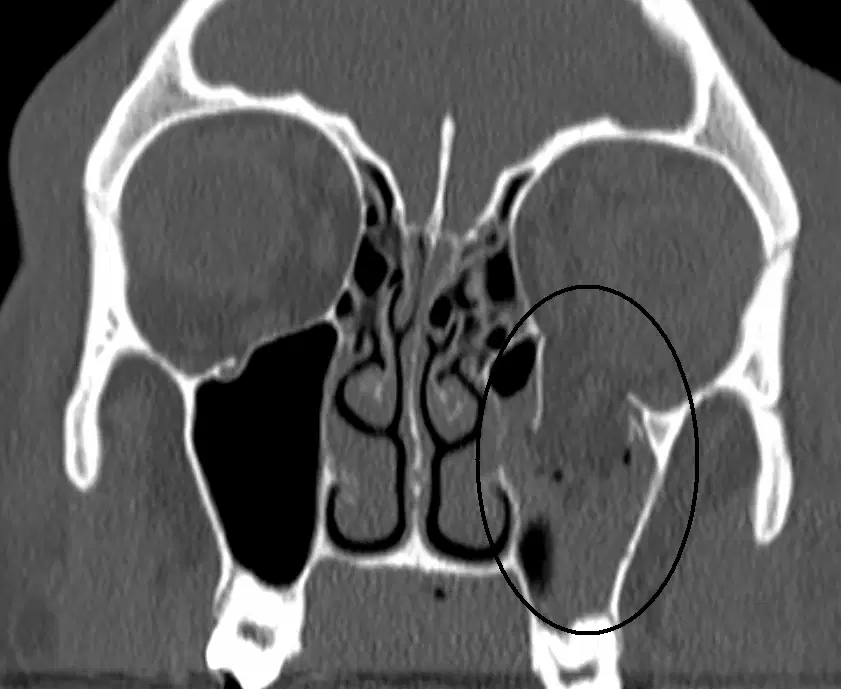
This fracture occurs to the wall of the eye orbit after a hit to the eye.
Avulsion
Blowout
Contrecoup
Depressed

A fracture where there is a separation of a bone fragment from its cortex at an attachment of a ligament or tendon.
Avulsion
Blowout
Contrecoup
Depressed
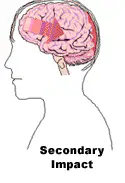
A fracture occurs on the opposite side of the body from where the contact was. You get hit on one side of the head, but the pressure in your head creates a fracture on the other side of the skull.
Avulsion
Blowout
Contrecoup
Depressed
A fracture where 2 bony fragments have a saw-tooth, sharp-edged fracture line.
Impacted
Serrated
Stress
Contrecoup
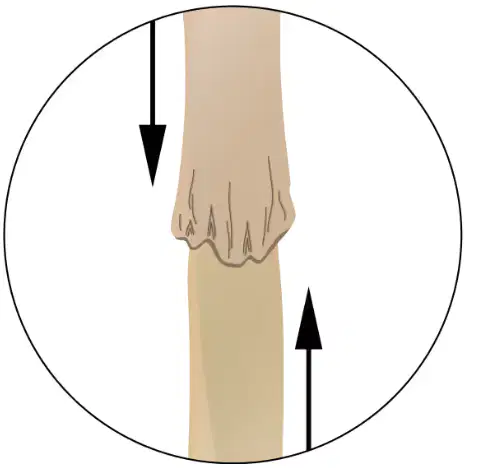
Fractures that result from a fall from a large height, causing an axial load to the bones involved. The bone tissue is compressed.
Contrecoup
Impacted
Serrated
Stress
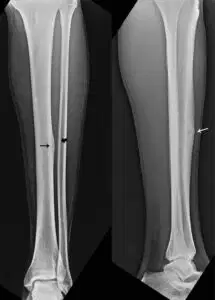
A fracture that occurs from a chronic, daily overload to the bone from overtraining.
Contrecoup
Impacted
Serrated
Stress
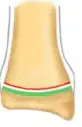
Epiphyseal growth plate injury where there is complete separation of the physis in relation to the metaphysis without a fracture to the bone.
Epiphyseal Growth Plate Injury 1
Epiphyseal Growth Plate Injury 2
Epiphyseal Growth Plate Injury 3
Epiphyseal Growth Plate Injury 4 (IV)
Epiphyseal Growth Plate Injury 5 (V)
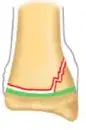
Epiphyseal growth plate injury where there is separation of the growth plate and a small portion of the metaphysis.
Epiphyseal Growth Plate Injury 1
Epiphyseal Growth Plate Injury 2
Epiphyseal Growth Plate Injury 3
Epiphyseal Growth Plate Injury 4 (IV)
Epiphyseal Growth Plate Injury 5 (V)
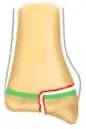
Epiphyseal growth plate injury where there is a fracture of the physis.
Epiphyseal Growth Plate Injury 1
Epiphyseal Growth Plate Injury 2
Epiphyseal Growth Plate Injury 3
Epiphyseal Growth Plate Injury 4 (IV)
Epiphyseal Growth Plate Injury 5 (V)
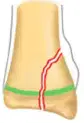
Epiphyseal growth plate injury where there is a fracture of a portion of the physis and metaphysis.
Epiphyseal Growth Plate Injury 1
Epiphyseal Growth Plate Injury 2
Epiphyseal Growth Plate Injury 3
Epiphyseal Growth Plate Injury 4 (IV)
Epiphyseal Growth Plate Injury 5 (V)
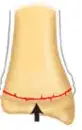
Epiphyseal growth plate injury where there is no displacement of the physis, but the crushing force can cause a growth deformity.
Epiphyseal Growth Plate Injury 1
Epiphyseal Growth Plate Injury 2
Epiphyseal Growth Plate Injury 3
Epiphyseal Growth Plate Injury 4 (IV)
Epiphyseal Growth Plate Injury 5 (V)
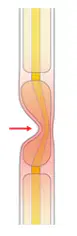
Mildest nerve injury. Caused by compression or mild blows close to the nerve.
Axonotmesis
Neuritis
Neurotmesis
Neuropraxia
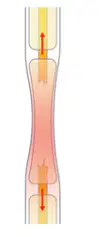
The axon is damaged, however, most of the covering connective tissues are still partially or fully intact. Seen in crush and stretch injuries.
Axonotmesis
Neuritis
Neurotmesis
Neuropraxia
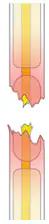
A serious injury that involves the crushing of a nerve or complete division (severing).
Axonotmesis
Neuritis
Neurotmesis
Neuropraxia
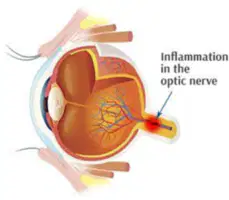
Inflammation of a nerve that can result from injury, infection, or autoimmune disease.
Axonotmesis
Neuritis
Neurotmesis
Neuropraxia
Symptoms that result from damage to peripheral motor, sensory, or autonomic nerves.
Neuropathy
Neuritis
Neurotmesis
Referred Pain
Pain that is felt at a point of the body other than actual origin.
Neuropathy
Neuritis
Neurotmesis
Referred Pain

