
 Worksheets
Skeleton
Total questions: 63
Worksheet time: 32mins
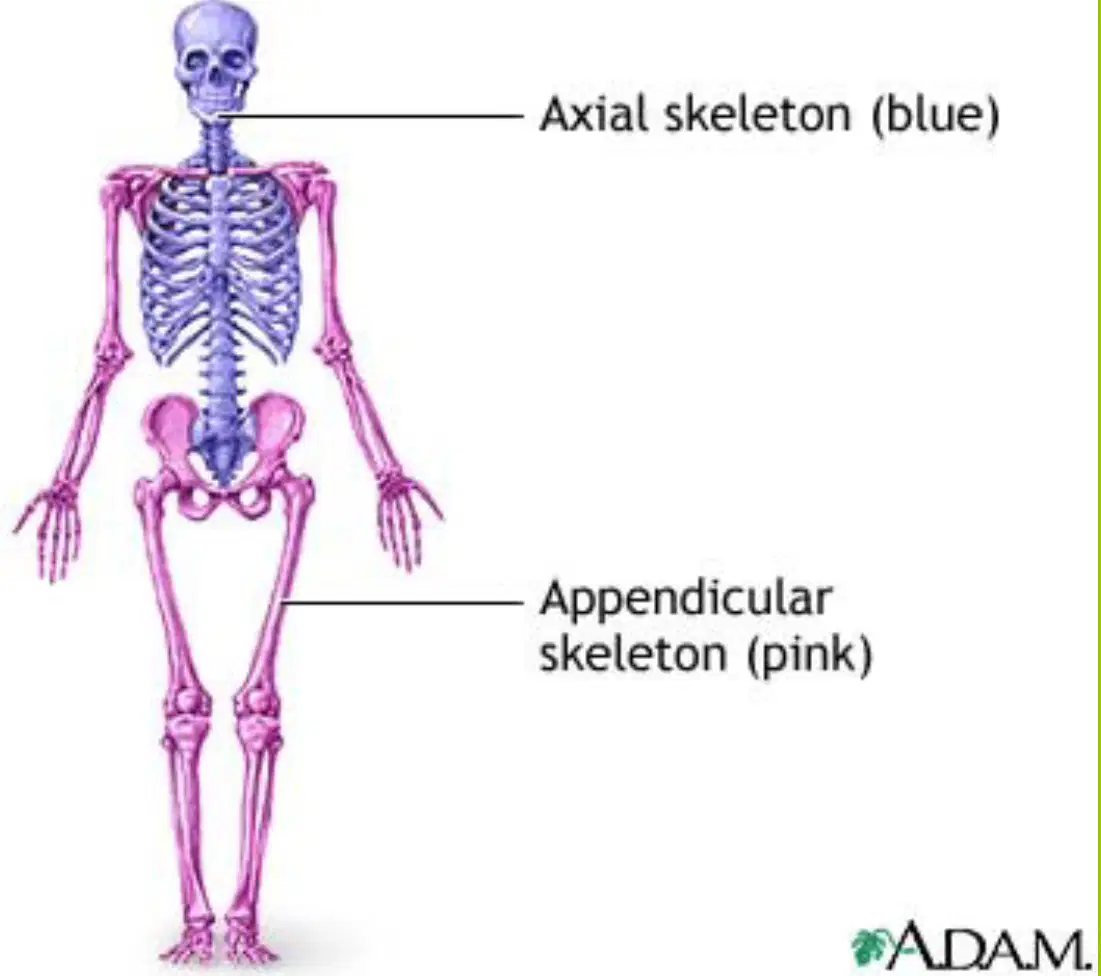
Refer to the diagram of the human skeleton. Which part of the skeleton is colored blue?
Axial skeleton
Appendicular skeleton
Both
Neither

Refer to the diagram of the human skeleton. The appendicular skeleton is colored _______.
pink
blue
green
yellow
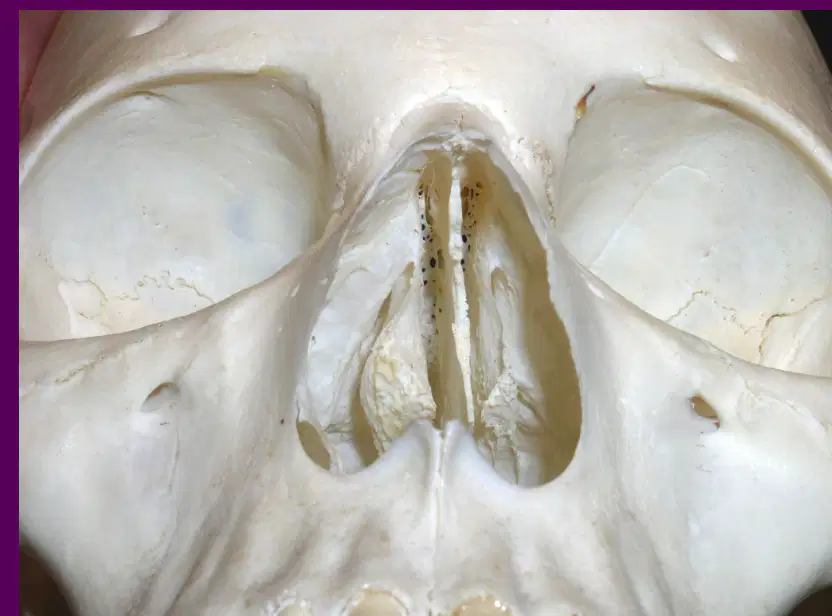
Look at the image of the skull. What is the name of the cavity in the skull that houses the eyes?
Orbits
Sinuses
Mandible
Foramen magnum
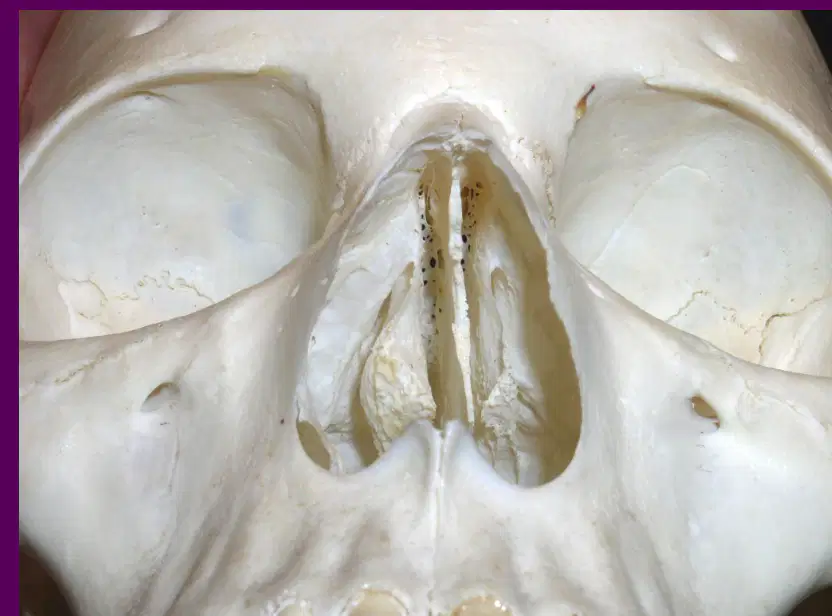
What is the name of the cavity in the skull that is located in the center and is used for breathing?
Nasal Cavity
Oral Cavity
Orbital Cavity
Cranial Cavity
Paranasal sinuses are ______-lined air-filled sinuses.
mucosa
serosa
cartilage
bone
Which five skull bones contain paranasal sinuses?
frontal, sphenoid, ethmoid, and paired maxillary bones
parietal, temporal, occipital, and paired nasal bones
mandible, vomer, palatine, and paired zygomatic bones
lacrimal, inferior nasal concha, and paired palatine bones
What is the function of the mucosae of the paranasal sinuses?
Help to warm and humidify inspired air.
Assist in the digestion of food.
Regulate blood pressure.
Produce red blood cells.
How do paranasal sinuses help the skull and voice?
They help to lighten the skull and enhance the resonance of voice.
They increase the weight of the skull and muffle the voice.
They produce hormones for brain function.
They protect the eyes from bright light.
Which sinus is located above the eye sockets?
Maxillary sinuses
Frontal sinuses
Sphenoid sinuses
Ethmoid air cells
Refer to the diagram of the paranasal sinuses. Fill in the blank: The sinuses located in the cheek area are called _________.
Maxillary sinuses
Frontal sinuses
Ethmoid sinuses
Sphenoid sinuses
Refer to the diagram of the paranasal sinuses. Which labeled part is responsible for forming the eye sockets?
A) Ethmoid air cells
B) Sphenoid sinuses
C) Eye sockets
D) Frontal sinuses
Refer to the diagram of the paranasal sinuses. Fill in the blank: The sinuses located behind the nose are called _________?
Sphenoid sinuses
Frontal sinuses
Maxillary sinuses
Ethmoid sinuses
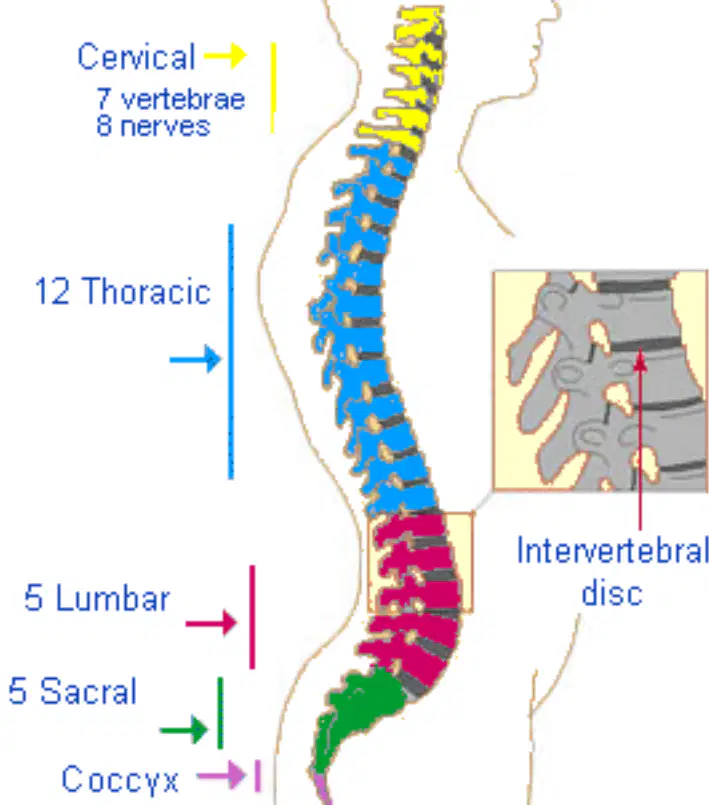
What are the five divisions of the vertebral column? Fill in the blanks: 1. _______ 2. _______ 3. _______ 4. _______ 5. _______
1. Cervical 2. Thoracic 3. Lumbar 4. Sacrum 5. Coccyx
1. Cervical 2. Thoracic 3. Pelvic 4. Sacrum 5. Femur
1. Cranial 2. Thoracic 3. Lumbar 4. Sacrum 5. Coccyx
1. Cervical 2. Thoracic 3. Lumbar 4. Pelvic 5. Coccyx
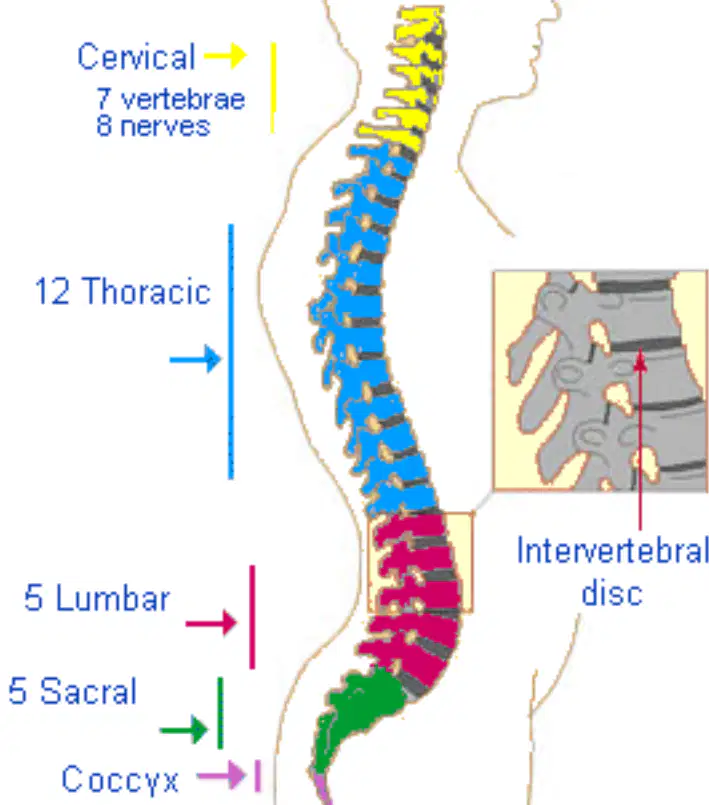
How many vertebrae are present in the cervical division of the vertebral column?
7 vertebrae
5 vertebrae
12 vertebrae
9 vertebrae
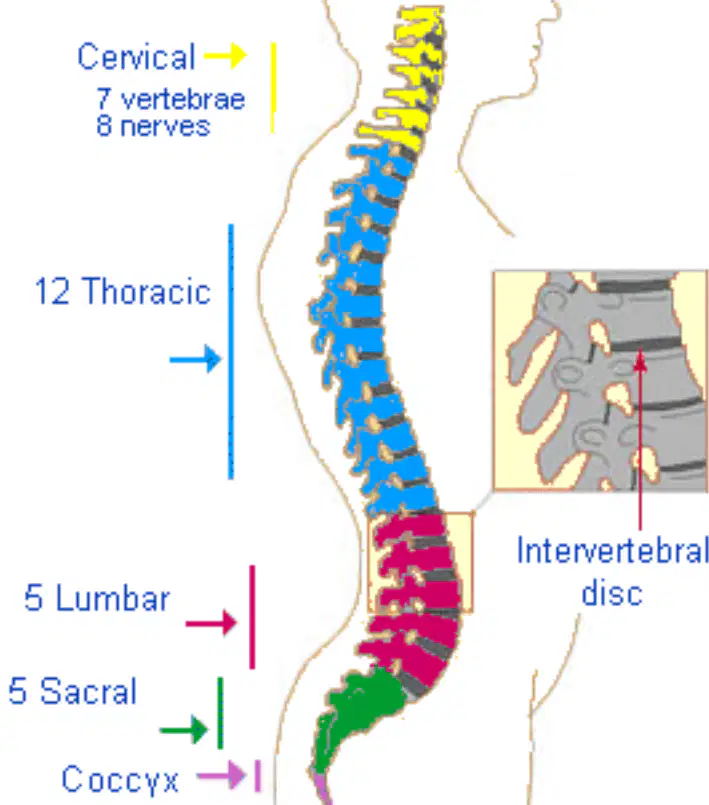
Which division of the vertebral column contains 12 vertebrae?
Thoracic
Cervical
Lumbar
Sacral
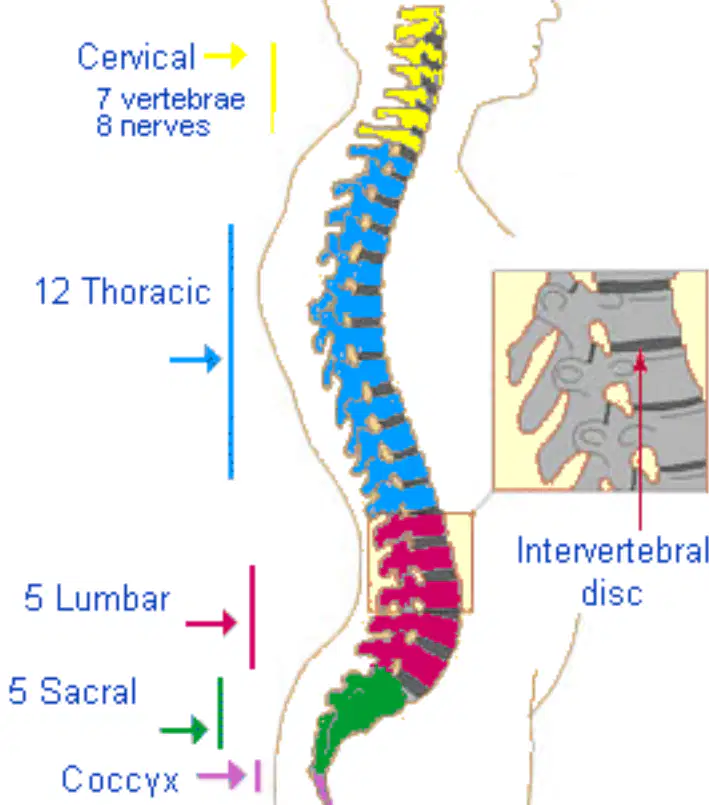
Which division of the vertebral column is located at the base and consists of fused vertebrae?
Sacrum and Coccyx
Cervical vertebrae
Thoracic vertebrae
Lumbar vertebrae
What is scoliosis?
Scoliosis is a condition characterized by an abnormal lateral curvature of the spine.
Scoliosis is a condition where the bones become brittle and porous.
Scoliosis is a disease that affects the muscles of the heart.
Scoliosis is a disorder causing inflammation of the joints.
Which image shows a scoliotic spine?
Left
Right
What is kyphosis? (Fill in the blank) Kyphosis is a ________ of the spine characterized by an excessive outward curvature, resulting in a hunched back.
deformity
fracture
infection
muscle
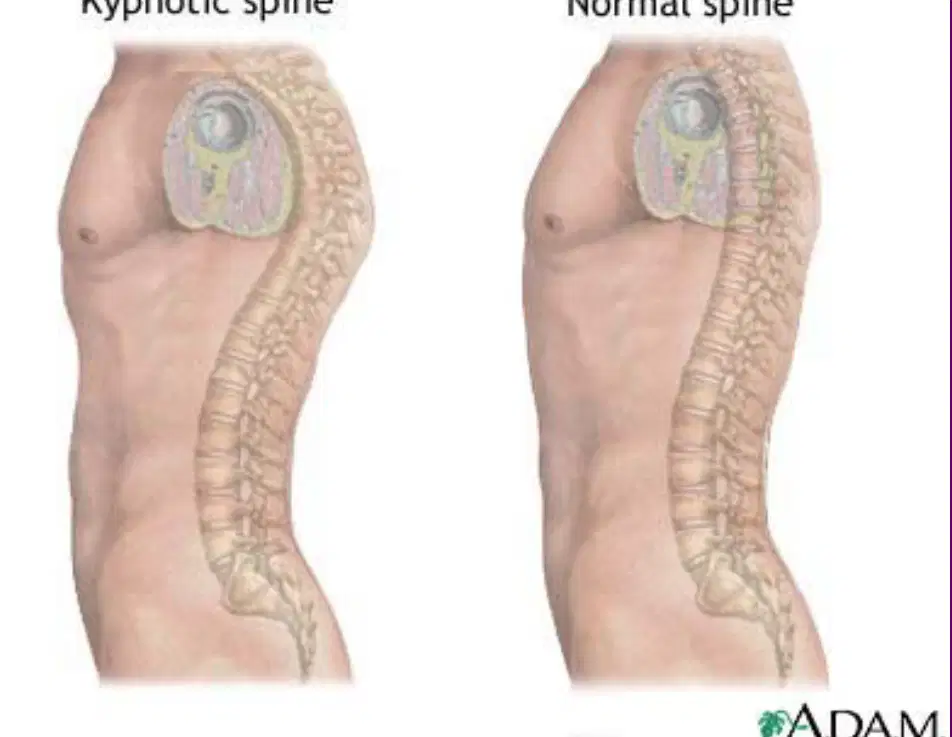
Based on the diagram, which spine shows kyphosis?
The left spine
The right spine
Both spines
Neither spine
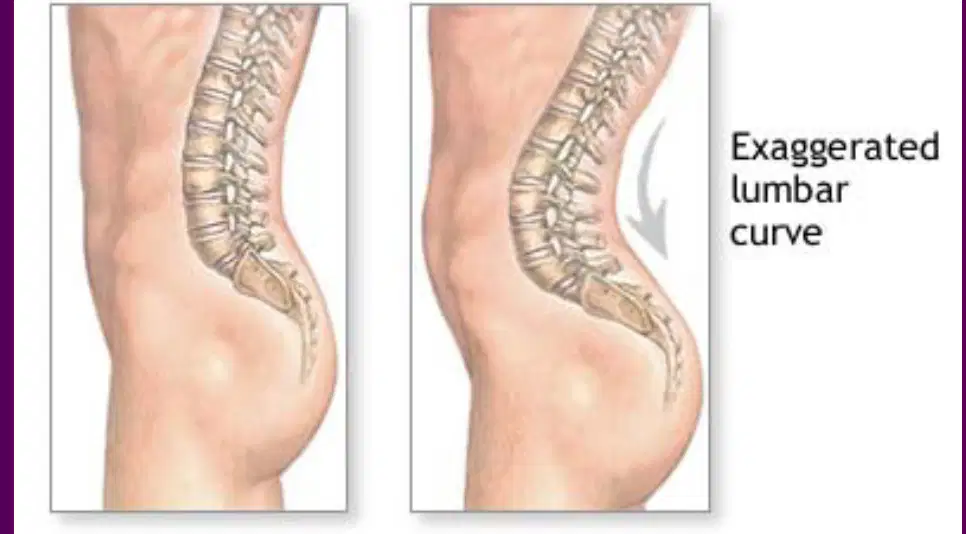
What is lordosis?
A condition with an exaggerated lumbar curve in the spine
A condition with a straight spine
A condition with a curved thoracic spine
A condition with a reduced lumbar curve
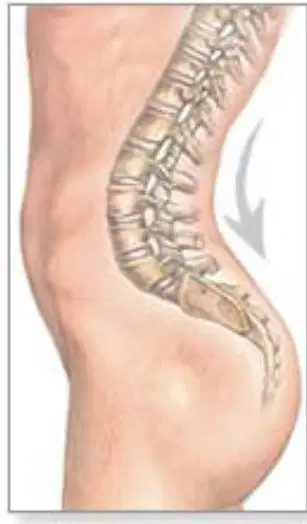
Fill in the blank: Lordosis is characterized by an exaggerated _______ curve in the spine.
lumbar
thoracic
cervical
sacral
Fill in the blank: The body of a cervical vertebra is _____?
oval
triangular
square
circular
Except in C7, the spinous process of cervical vertebrae is short, projects directly back, and is bifid (split at the top).
True
False
The vertebral foramen in cervical vertebrae is large and generally _____ in shape.
triangular
oval
circular
square
Fill in the blank: Each transverse process contains a transverse foramen through which the _____ arteries pass to service the brain.
vertebral
carotid
radial
coronary
Which shape best describes the body of a thoracic vertebra?
Oval
Heart shaped
Square
Triangular
What is the shape of the vertebral foramen in thoracic vertebrae?
Oval
Circular
Triangular
Square
The spinous process of a thoracic vertebra is ______ and pointed downward.
long
short
bifid
rounded
With the exception of T11 and T12, the transverse processes of thoracic vertebrae have ______ that articulate with the ribs.
facets
tubercles
spines
laminae
Superior and inferior articular facets of thoracic vertebrae lie mainly in which plane?
Sagittal
Frontal
Transverse
Oblique
What movement is prevented by the orientation of the superior and inferior articular facets in thoracic vertebrae?
Rotation
Flexion and extension
Lateral bending
Compression
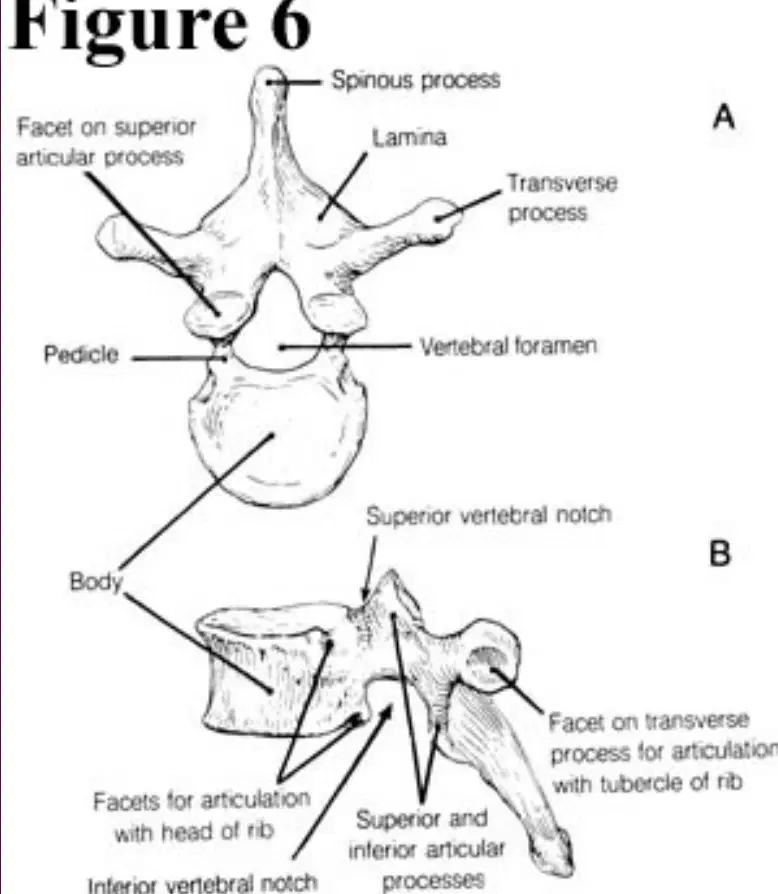
Identify the anatomical feature labeled as 'Spinous process'.
Spinous process (topmost pointed projection in the diagram)
Transverse process
Vertebral body
Lamina

Which feature is responsible for articulation with the head of the rib?
Facets for articulation with head of rib
Spinous process
Transverse foramen
Lamina
Fill in the blank: The pedicle and laminae of lumbar vertebrae are ______ and ______ than those of other vertebrae.
shorter and thicker
longer and thinner
narrower and weaker
longer and weaker
Fill in the blank: The spinous processes of lumbar vertebrae are ______, ______, and ______ shaped.
short, flat, and hatchet
long, pointed, and bifid
rounded, thin, and forked
tall, narrow, and triangular
Fill in the blank: The vertebral foramen of lumbar vertebrae is ______.
triangular
circular
oval
square
Fill in the blank: The orientations of facets and articulations in lumbar vertebrae differ substantially from other vertebrae, which locks the lumbar vertebrae together to provide ______ by preventing ______ of the lumbar spine.
stability; rotation
mobility; extension
flexibility; compression
rigidity; flexion
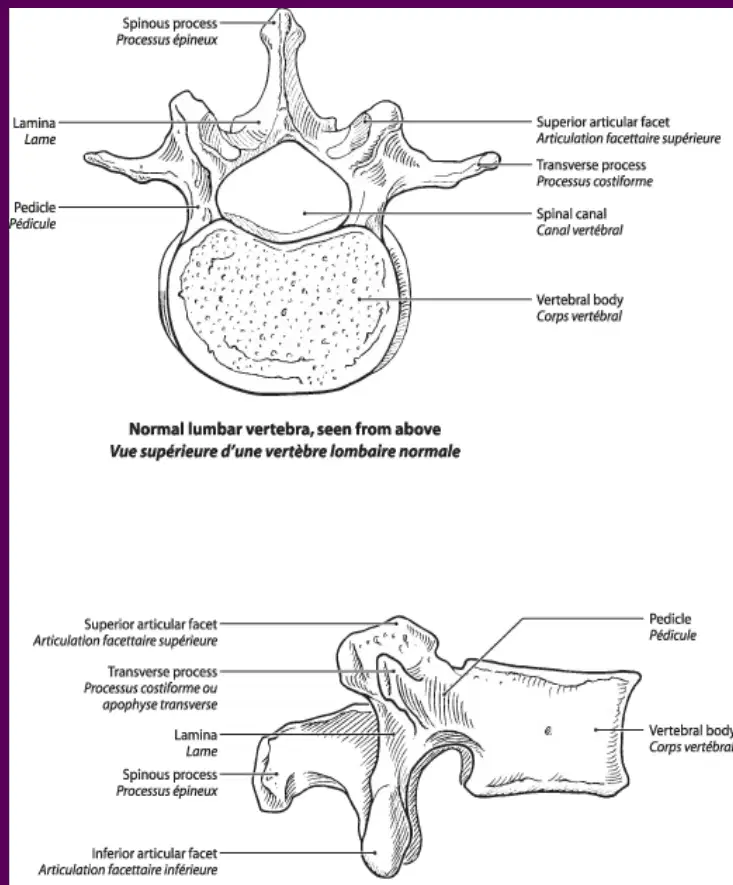
In the diagram labeled 'Normal lumbar vertebra, seen from above,' identify the part labeled as the 'Spinous process.'
Transverse process
Spinous process
Vertebral body
Lamina
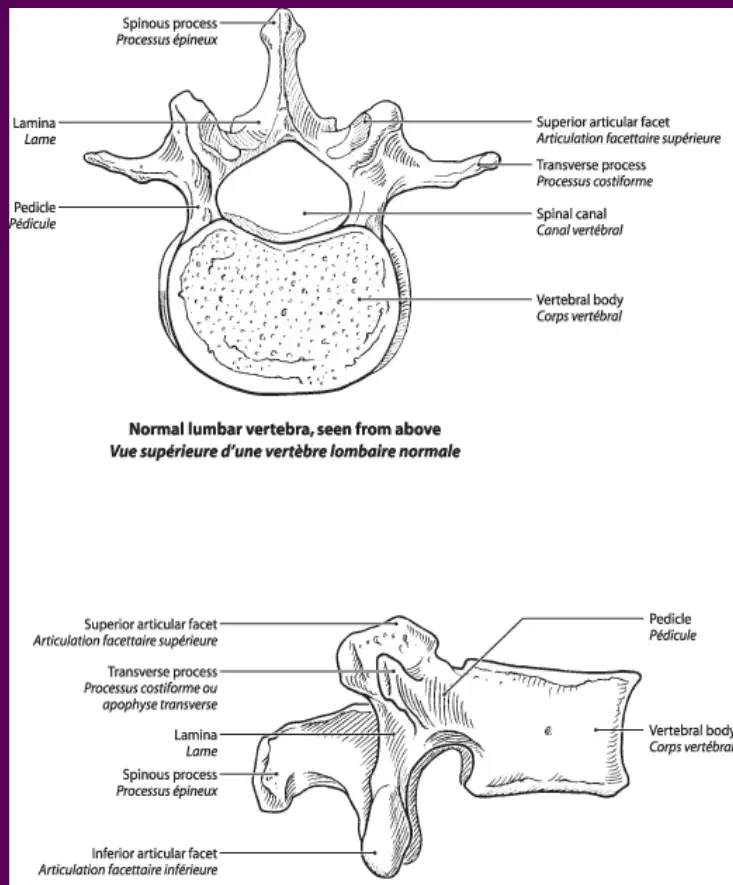
Refer to the diagram labeled 'Normal lumbar vertebra, side view.' The lower projection on the side view is labeled as which of the following?
Inferior articular facet
Transverse process
Spinous process
Superior articular facet
How many vertebrae are fused to form the sacrum?
3
4
5
6
Fill in the blank: The sacrum consists of ____ fused vertebrae.
5
3
7
4
Which surfaces are included in the auricular surfaces of the sacrum?
Superior articular surface and lateral sacroiliac joints
Inferior articular surface and medial sacroiliac joints
Superior articular surface and median sacral crest
Sacral wings and sacral foramina
What is another name for the coccyx?
Tailbone
Femur
Scapula
Patella
How many fused vertebrae make up the coccyx?
4
3
5
6
The coccyx articulates superiorly with which bone?
Sacrum
Ilium
Femur
Ischium
What is the main function of the coccyx?
Provides major support to the pelvic organs
Provides slight support to the pelvic organs but is otherwise useless
Articulates with the femur
Protects the spinal cord

What is the anatomical structure shown in the diagram?
Female Pelvis
Male Pelvis
Skull
Rib Cage
The male pelvis is tilted less forward than the ______ pelvis.
female
child
elderly
infant
The cavity of the true pelvis in males is ______ and ______.
narrow and deep
wide and shallow
broad and flat
short and wide
In the male pelvis, the bones are ______ and ______, and the markings are more prominent.
heavier and thicker
lighter and thinner
shorter and wider
narrower and smoother
The acetabula in the male pelvis are. Choose the correct option.
smaller and farther apart
larger and closer together
the same as in females
The pubic arch in the male pelvis is more acute, measuring ______ to ______ degrees.
50 – 60
70 – 80
90 – 100
110 – 120
The sacrum in the male pelvis is ? Choose the correct option.
wide and short
narrow, longer and more ventral
the same as in females
The coccyx in the male pelvis is less ______ and curves ______.
movable, ventrally
movable, dorsally
flexible, dorsally
flexible, laterally
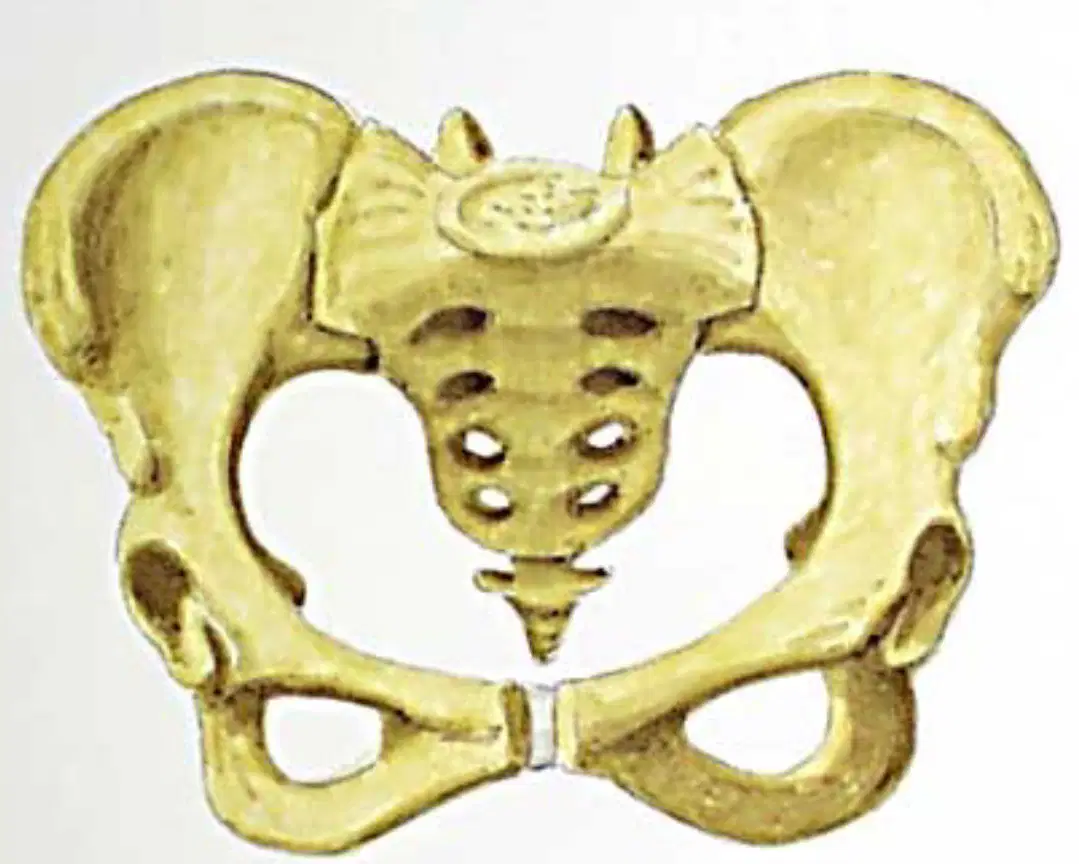
Identify the anatomical structure shown in the diagram above.
Female Pelvis
Male Pelvis
Thoracic Cage
Skull
Fill in the blank: The female pelvis is ________ forward.
tilted
rotated
compressed
extended
Fill in the blank: The cavity of true pelvis in females is broad, shallow and has a ________ capacity.
greater
lesser
narrow
limited
Fill in the blank: The bones of the female pelvis are ________, thinner and smoother.
lighter
heavier
shorter
thicker
Fill in the blank: The acetabula in the female pelvis are ________ and farther apart.
smaller
larger
narrower
deeper
Fill in the blank: The pubic arch in the female pelvis is broader and more rounded, measuring ________ degrees.
80-90
40-50
60-70
100-110
Fill in the blank: The sacrum in the female pelvis is wider, shorter and more ________.
curved
narrow
flat
pointed
Fill in the blank: The coccyx in the female pelvis is more ________ and straighter.
moveable
fixed
curved
rigid

