
NEW
Font size
 Worksheets
Unit 3
Total questions: 73
Worksheet time: 37mins
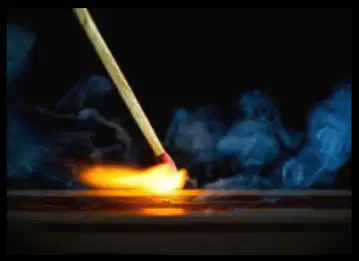
Which of the following is an example of a chemical reaction?
Lighting a match
Melting ice
Breaking a glass
Dissolving sugar in water
What happens during a chemical reaction?
Elements/compounds break or rearrange bonds
No new substances are formed
Energy is never absorbed or released
Physical changes occur without altering properties
Which of the following is NOT a characteristic of a chemical reaction?
Formation of new substances with new properties
Energy is absorbed or released
No change in the properties of substances
Bonds between elements/compounds are rearranged
What distinguishes a physical change from a chemical reaction?
Physical changes form new substances, while chemical reactions do not
Chemical reactions involve energy changes, while physical changes do not
Physical changes do not form new substances, while chemical reactions do
Chemical reactions are reversible, while physical changes are not
Which of the following is an example of a chemical change?
Boiling water
Rusting iron
Dissolving sugar
Breaking glass
What distinguishes a chemical change from a physical change?
Chemical changes involve a change in state, while physical changes do not.
Chemical changes produce new substances, while physical changes do not.
Physical changes involve energy, while chemical changes do not.
Physical changes are irreversible, while chemical changes are reversible.
Which of the following is NOT an example of a physical change?
Boiling water
Dissolving sugar
Burning wood
Breaking glass
Which of the following processes involves the formation of a new substance?
Tarnishing copper pennies
Breaking glass
Dissolving sugar
Boiling water
What does a reaction represent in chemistry?
A process where substances remain unchanged
A pathway showing how starting substances change to new ones
A method to separate substances
A way to measure the weight of substances
What is formed when hydrogen (H) and oxygen (O) combine?
NaCl (table salt)
CO2 (carbon dioxide)
H2O (water)
O2 (oxygen gas)
What is the product of the spontaneous reaction between sodium (Na) and chlorine (Cl)?
H2O (water)
NaCl (table salt)
CO2 (carbon dioxide)
O2 (oxygen gas)
What are reactants in a chemical reaction?
Substances that undergo change
Substances formed by the reaction
Substances that remain unchanged
Substances that act as catalysts
What is the limiting reactant in a chemical reaction?
The reactant that is fully consumed first
The reactant that is left over after the reaction
The product formed in the reaction
The catalyst used in the reaction
In the cake analogy, what do the ingredients represent in a chemical reaction?
Products
Reactants
Limiting reactants
Catalysts
How does the limiting reactant affect the amount of product formed in a reaction?
It determines how much product can form
It increases the amount of product formed
It has no effect on the product formed
It decreases the amount of product formed
What is the limiting reactant when making cakes if the pantry contains 2 eggs, 40 cups of flour, and 1 gallon of milk, and the recipe requires 2 eggs, 2 cups of flour, and 1 cup of milk per cake?
Flour
Milk
Eggs
None of the above
How many cakes can be made with 8 eggs, 6 cups of flour, and 10 cups of milk if the recipe requires 2 eggs, 2 cups of flour, and 1 cup of milk per cake?
2
3
4
5
If the recipe for one cake requires 2 eggs, 2 cups of flour, and 1 cup of milk, how many cups of flour are needed to make 5 cakes?
5 cups
10 cups
15 cups
20 cups
In the given example, why are eggs considered the limiting reactant when the pantry contains 2 eggs, 40 cups of flour, and 1 gallon of milk?
Because eggs are the ingredient with the smallest quantity relative to the recipe.
Because eggs are the most expensive ingredient.
Because eggs are not used in the recipe.
Because eggs spoil faster than other ingredients.
What does the arrow (→) in a chemical equation represent?
Conservation of mass
Reactants are converted to products
The equation is balanced
Formation of ionic bonds
Which of the following is an example of a balanced chemical equation?
H + O → H2O
H + H + O → H2O
Na + Cl → NaCl2
Na + Cl2 → NaCl
What is the purpose of balancing a chemical equation?
To show the formation of ionic crystals
To obey the conservation of mass
To simplify the equation
To increase the number of reactants
What type of compound is formed when sodium (Na) reacts with chlorine (Cl)?
Covalent compound
Ionic crystal
Metallic bond
Molecular compound
What does the Law of Conservation of Mass state about matter in a chemical reaction?
Matter is created during a chemical reaction.
Matter is destroyed during a chemical reaction.
Matter is neither created nor destroyed during a chemical reaction.
Matter is converted into energy during a chemical reaction.
According to the Law of Conservation of Mass, what is the relationship between the total mass of reactants and the total mass of products in a chemical reaction?
Total mass of reactants is greater than the total mass of products.
Total mass of reactants is less than the total mass of products.
Total mass of reactants equals the total mass of products.
Total mass of reactants and products are unrelated.
What happens to atoms during a chemical reaction according to the Law of Conservation of Mass?
Atoms are destroyed and new ones are created.
Atoms are rearranged into new substances, but the count of each atom type is conserved.
Atoms remain unchanged and do not form new substances.
Atoms are converted into energy.
Who is considered the pioneer of quantitative chemistry and emphasized careful mass measurements?
John Dalton
Antoine Lavoisier
Dmitri Mendeleev
Robert Boyle
What key role of oxygen did Antoine Lavoisier identify in his experiments?
Oxygen is responsible for photosynthesis.
Oxygen is a byproduct of combustion.
Oxygen plays a role in combustion and calcination.
Oxygen is the main component of water.
What was the title of the book published by Antoine Lavoisier in 1789 that formalized the conservation of mass?
The Principles of Chemistry
Traité Élémentaire de Chimie
The Conservation of Mass
The Chemical Revolution
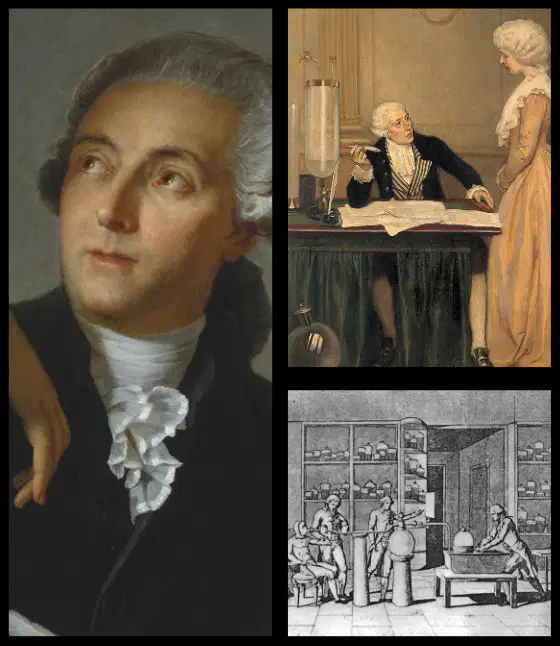
What legacy did Antoine Lavoisier leave in the field of chemistry?
The discovery of the periodic table.
The development of modern chemical nomenclature and the principle of mass conservation.
The invention of the microscope.
The formulation of the atomic theory.
What causes energy changes in chemical reactions?
Changes in temperature
Bond breaking and forming
Mixing of reactants
Presence of a catalyst
Which of the following best describes an exothermic reaction?
Absorbs heat
Releases heat
Requires light
Produces electricity
In an endothermic reaction, where does heat appear in the chemical equation?
On the product side
On the reactant side
On both sides
Heat does not appear in the equation
What are the two broad classes of chemical reactions based on energy changes?
Combustion and synthesis
Exothermic and endothermic
Oxidation and reduction
Acidic and basic
What is released during an exothermic reaction?
Heat
Light
Energy is absorbed
Cold
Which of the following is a common example of an exothermic process?
Melting of ice
Combustion
Evaporation of water
Photosynthesis
In the chemical equation Na + Br → NaBr + heat, what does the '+ heat' indicate?
The reaction is endothermic.
The reaction is exothermic.
The reaction absorbs energy.
The reaction is incomplete.
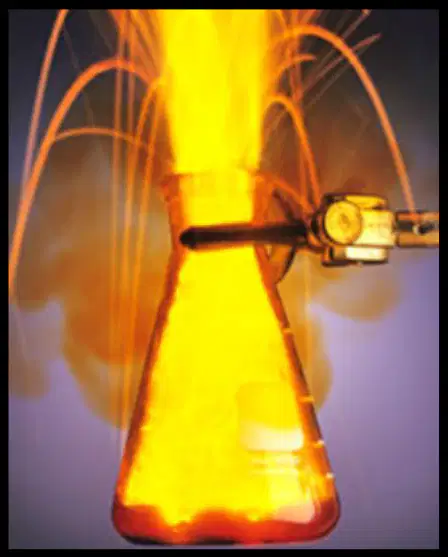
What happens to the energy stored in the reactants during an exothermic reaction?
It is absorbed by the products.
It is released, making the products feel hot.
It remains unchanged.
It is converted into light.
What type of reaction absorbs heat from its surroundings and can make the mixture feel cold?
Exothermic reaction
Endothermic reaction
Combustion reaction
Neutralization reaction
In the given reaction, Ba(OH)₂·8H₂O + 2 NH₄SCN + heat → Ba(SCN)₂ + 2 NH₃ + 10 H₂O, what is the role of heat?
Heat is released as a product.
Heat is absorbed as a reactant.
Heat is not involved in the reaction.
Heat acts as a catalyst.
What is a common observation during an endothermic reaction like the one shown in the image?
The mixture feels warm.
The mixture feels cold.
The mixture changes color.
The mixture produces light.
In an endothermic reaction, where should the heat term be written in a chemical equation to indicate absorption?
On the product side.
On the reactant side.
In the middle of the equation.
It is not included in the equation.
What is the general equation for a combustion reaction?
Fuel + O₂ → CO₂ + H₂O + heat
Fuel + CO₂ → O₂ + H₂O + heat
Fuel + H₂O → CO₂ + O₂ + heat
Fuel + O₂ → CO + H₂ + heat
What type of reaction is always exothermic, releasing heat and often light?
Combustion reaction
Decomposition reaction
Endothermic reaction
Neutralization reaction
Which of the following is an example of a combustion reaction?
Burning wood
Dissolving salt in water
Melting ice
Rusting of iron
What are the products of complete combustion in excess oxygen?
CO₂ and H₂O
CO and H₂
O₂ and H₂O
CO₂ and O₂
What is a key characteristic of a combustion reaction?
It is always exothermic.
It absorbs heat.
It produces only light.
It requires no oxygen.
What does it indicate if '+ heat' appears on the product side of a chemical equation?
The reaction is endothermic.
The reaction is exothermic.
The reaction absorbs heat.
The reaction is at equilibrium.
If a beaker feels cold during a reaction, what type of reaction is likely occurring?
Exothermic.
Endothermic.
Neutralization.
Combustion.
What does it indicate if '+ heat' appears on the reactant side of a chemical equation?
The reaction is exothermic.
The reaction releases heat.
The reaction is endothermic.
The reaction is spontaneous.
Which of the following is an example of evidence for a chemical change?
Melting of ice
Color change (e.g., copper tarnish)
Breaking a glass
Dissolving sugar in water
What does the formation of bubbles during a reaction indicate?
A physical change is occurring
Gas production, a sign of a chemical change
The substance is cooling down
The reaction is reversible
Which of the following is NOT evidence of a chemical change?
Light emission (flame, glow)
Formation of a precipitate (solid)
Temperature change without external heating/cooling
Change in the shape of a material
What is a precipitate in the context of chemical changes?
A gas released during a reaction
A solid formed during a chemical reaction
A liquid that evaporates
A substance that changes color
Which of the following scenarios best demonstrates light emission as evidence of a chemical change?
A light bulb turning on
A candle flame burning
A mirror reflecting sunlight
A flashlight being switched on
What is the definition of a "Reactant" in a chemical reaction?
Substance(s) formed by a chemical reaction
Starting substance(s) in a chemical reaction
Reaction that absorbs heat
Burning in oxygen yielding CO₂, H₂O, and heat
Which term refers to the substance(s) formed by a chemical reaction?
Reactant
Product
Limiting Reactant
Combustion
What is the "Limiting Reactant" in a chemical reaction?
Reactant consumed first; limits product amount
Reaction that releases heat
Starting substance(s) in a chemical reaction
Burning in oxygen yielding CO₂, H₂O, and heat
Which type of reaction releases heat, with heat appearing on the product side?
Endothermic
Exothermic
Combustion
Limiting Reactant
What is the characteristic of an "Endothermic" reaction?
Reaction that releases heat
Reaction that absorbs heat
Burning in oxygen yielding CO₂, H₂O, and heat
Reactant consumed first; limits product amount
What does "Combustion" refer to in a chemical reaction?
Reaction that absorbs heat
Reaction that releases heat
Burning in oxygen yielding CO₂, H₂O, and heat
Reactant consumed first; limits product amount
In the reaction "A + B → C + heat," is the reaction endothermic or exothermic?
Endothermic
Exothermic
Neither
Both
In the reaction "X + Y + heat → Z," what type of reaction is this?
Endothermic
Exothermic
Combustion
Neutralization
In the reaction "Fuel + O₂ → CO₂ + H₂O + heat," what type of reaction is this?
Endothermic
Exothermic
Decomposition
Neutralization
What is the key factor to determine if a reaction is endothermic or exothermic?
The presence of oxygen
The appearance of heat in the reaction
The number of reactants
The color change during the reaction
What is the definition of a reactant in a chemical reaction?
A substance that is formed as a result of a chemical reaction
A substance that takes part in and undergoes change during a chemical reaction
A substance that remains unchanged during a chemical reaction
A substance that speeds up the rate of a chemical reaction
What does the Law of Conservation of Mass state?
Mass can be created or destroyed in a chemical reaction
Mass is always lost during a chemical reaction
Mass is neither created nor destroyed in a chemical reaction
Mass is always gained during a chemical reaction
Classify the following reaction as endothermic or exothermic: CaCO₃ + heat → CaO + CO₂
Endothermic
Exothermic
Neither endothermic nor exothermic
Both endothermic and exothermic
Classify the following reaction as endothermic or exothermic: 2 H₂ + O₂ → 2 H₂O + heat
Endothermic
Exothermic
Neither endothermic nor exothermic
Both endothermic and exothermic
What does a chemical change create?
New substances with new properties
The same substances with the same properties
New substances with the same properties
The same substances with new properties
What do chemical equations model?
How products rearrange bonds to form reactants
How reactants rearrange bonds to form products
How substances maintain their original bonds
How energy is released during a reaction
What explains why some reactions need a 'kick' to start while others run on their own?
Chemical equations
Activation energy and spontaneity
Reaction evidence
Bond rearrangement
Which of the following is NOT common evidence of a chemical reaction?
Color change
Gas formation
Precipitate formation
Increase in mass

