
 Worksheets
Knee Practice Test
Total questions: 60
Worksheet time: 44mins
Identify the lateral collateral ligament.
Identify the anterior cruciate ligament.
Identify the patellar tendon.
Identify the Gerdy's Tubercle.
Identify the apex of the patella.
Identify the femoral condyle.
Identify the posterior cruciate ligament.
Identify the head of the fibula.
Identify the femoral patellar tendon.
Identify the medial collateral ligament.
What injury is where ligaments have been completely torn in the knee?
Strain III
Sprain II
Strain II
Sprain III
The tibia is a weight bering bone.
True
False
What is the difference between a dislocation and subluxation?
RICE is the general treatment for most sprains and strains.
True
False
What is the medical name for the knee joint?
(a)
Which part of the knee is often injured in a lateral blow to the knee?
MCL
ACL
PCL
LCL
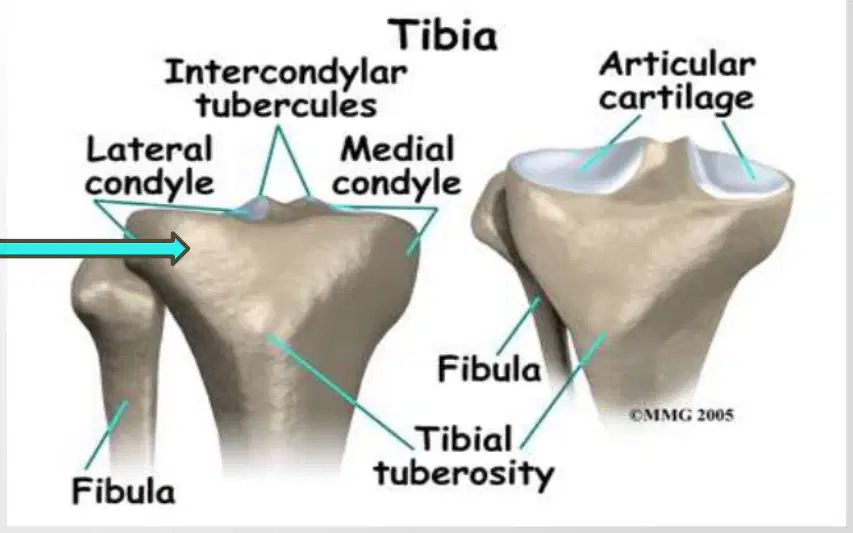
What is the function of the tibial plateau?
Articulates with femoral condyles
Inserts the IllioTibial Band
Attachment site for the patellar tendon
Supports the fibula.
What is the medical name for the knee?
A) Tibiofemoral
B) Patellafemoral
C) Patellatibiofemoral
D) Knee
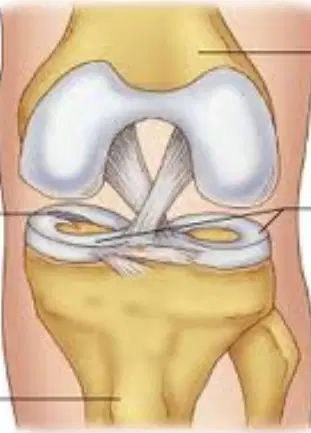
What are the names of the two menisci?
A) Anterior and Posterior
B) Medial and Lateral
C) Superior and Inferior
D) Proximal and Distal
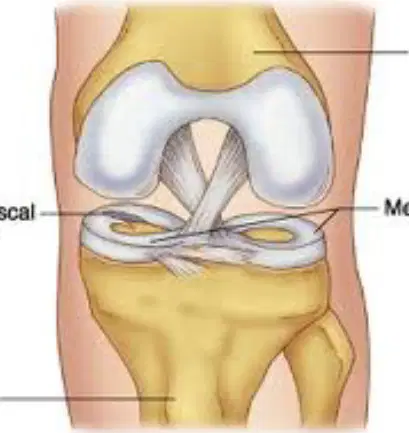
What is the main function of the menisci?
Shock absorbtion
Increase stability
cover the bone
Destabilize the joint
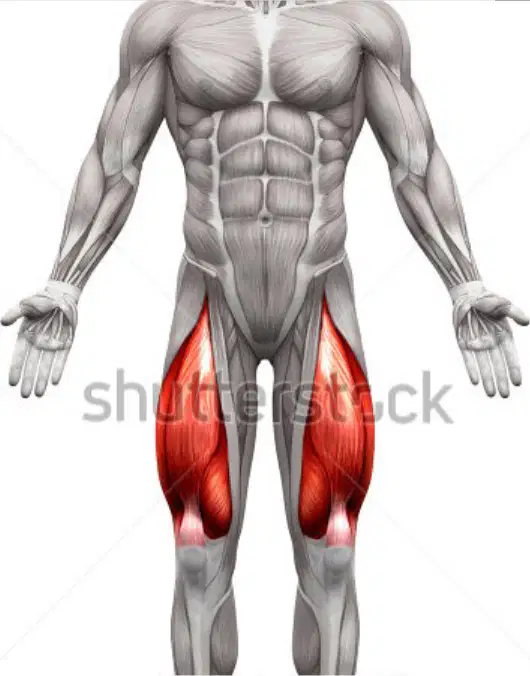
Which of the following muscles is not located in the quadriceps group?
A) Vastus lateralis
B) Vastus medialis
C) Vastus intermedius
D) Biceps femoris
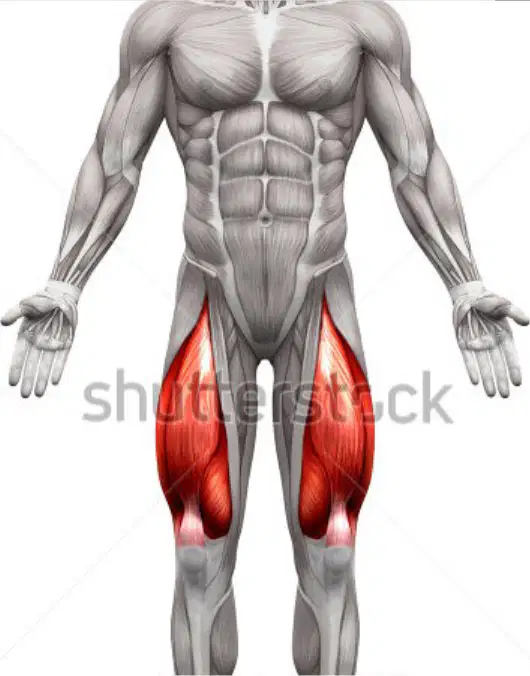
Which muscle is located on the lateral side of the thigh?
Vastus lateralis
Vastus medialis
Rectus femoris
Vastus intermedius
What movement is associated with the biceps femoris?
abduction
Knee flexion
Knee extension
adduction
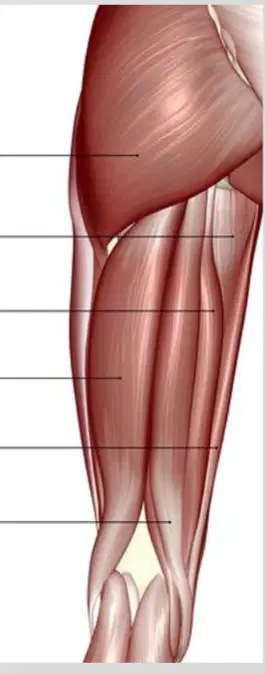
Which muscle is located lateral to the semimembranosus and semitendinosus in the diagram?
Gracilis
Biceps femoris
Adductor magnus
Gluteus maximus
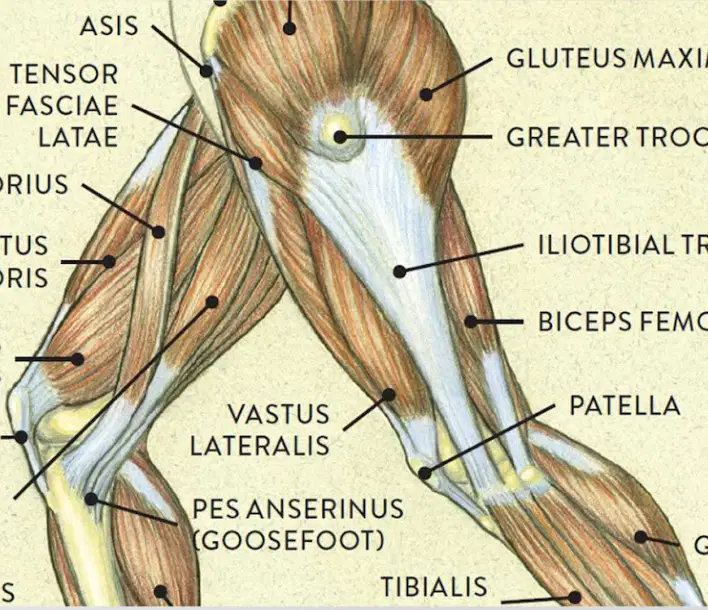
Which muscle is responsible for knee flexion and hip adduction?
Sartorius
Gracilis
Popliteus
Gastrocnemius
Which muscle(s) are accessory muscles responsible for knee flexion?
Plantaris
Popliteus
Peroneus longus
Flexor hallucis
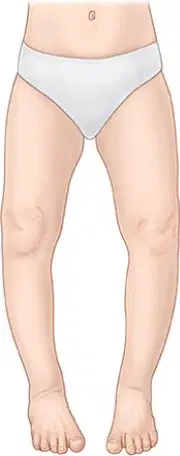
What is the condition called when a person is bow-legged?
Genu valgum
Genu varum
Genu recurvatum
Genu flexum
What does the knee do when an ACL rupture occurs?
Gives out
Becomes stronger
Heals immediately
Stays the same
Which muscle group is primarily responsible for knee extension?
Quadriceps
Hamstrings
Calf muscles
Gluteal muscles
Which of the following knee stress tests is used to assess the integrity of the anterior cruciate ligament (ACL)?
McMurray's Test
Lachman's Test
Apley's Compression Test
Valgus Stress Test
During a range of motion assessment, what is the normal range of knee flexion in degrees?
0-60 degrees
0-90 degrees
0-135 degrees
0-180 degrees
Which manual muscle testing technique is used to evaluate the strength of the quadriceps muscle?
Resisted knee flexion
Resisted knee extension
Resisted hip abduction
Resisted ankle dorsiflexion
A patient presents with pain and swelling in the knee after a twisting injury. Which knee injury is most likely?
Patellar Tendinitis
Meniscus Tear
Osteoarthritis
Bursitis
Explain why the Lachman's Test is preferred over the Anterior Drawer Test for assessing ACL injuries.
The Lachman's Test is less painful for the patient.
The Lachman's Test is more sensitive and specific for ACL injuries.
The Anterior Drawer Test requires more equipment.
The Anterior Drawer Test is only used for chronic conditions.
A patient has limited knee extension. Which muscle group is most likely contributing to this limitation?
Hamstrings
Quadriceps
Gastrocnemius
Adductors
Describe the strategic approach to performing a manual muscle test for the hamstrings.
The patient is seated, and the examiner applies resistance to knee extension.
The patient is prone, and the examiner applies resistance to knee flexion.
The patient is standing, and the examiner applies resistance to hip flexion.
The patient is supine, and the examiner applies resistance to ankle dorsiflexion.
What is the primary reason for using the McMurray's Test in a clinical setting?
To assess the stability of the patella
To evaluate the integrity of the meniscus
To measure the range of motion of the knee
To test the strength of the quadriceps
Which of the following is a common symptom of patellar tendinitis?
Swelling behind the knee
Pain at the front of the knee, especially during jumping
Locking of the knee joint
Numbness in the lower leg
How does the valgus stress test help in diagnosing knee injuries?
It assesses the integrity of the lateral collateral ligament.
It evaluates the strength of the quadriceps muscle.
It measures the range of motion of the knee joint.
It assesses the integrity of the medial collateral ligament.
What is the strategic importance of assessing the range of motion in a patient with a suspected knee injury?
To determine the patient's pain threshold
To identify the specific ligament involved
To evaluate the functional limitations and guide treatment planning
To measure the patient's endurance
Which of the following is a strategic reason for performing manual muscle testing on a patient with a knee injury?
To confirm the presence of a fracture
To assess muscle strength and identify potential muscle imbalances
To measure the patient's height
To evaluate the patient's cardiovascular fitness
What is the primary cause of knee bursitis?
Overuse or repetitive motion
Genetic predisposition
Viral infection
Calcium deficiency
Which of the following symptoms is most commonly associated with knee bursitis?
Sharp pain in the knee joint
Swelling and warmth around the knee
Locking of the knee
Numbness in the foot
What is Osgood-Schlatter disease primarily associated with?
Overuse of the knee joint in adolescents
Genetic predisposition
Viral infection
Calcium deficiency
Which symptom is most commonly observed in patients with Osgood-Schlatter disease?
Swelling and tenderness at the tibial tuberosity
Locking of the knee joint
Numbness in the lower leg
Sharp pain in the hip joint
What is the typical age range for individuals affected by Osgood-Schlatter disease?
5-10 years
10-15 years
15-20 years
20-25 years
What is Sinding-Larsen-Johansson’s Disease primarily associated with?
Overuse of the knee joint in adolescents
Genetic predisposition
Viral infection
Calcium deficiency
Which symptom is most commonly observed in patients with Sinding-Larsen-Johansson’s Disease?
Swelling and tenderness at the inferior pole of the patella
Locking of the knee joint
Numbness in the lower leg
Sharp pain in the hip joint
What is the typical age range for individuals affected by Sinding-Larsen-Johansson’s Disease?
5-10 years
10-15 years
15-20 years
20-25 years
What is the primary symptom of chondromalacia patella?
Sharp pain in the hip
Dull, aching pain in the front of the knee
Swelling in the ankle
Numbness in the toes
Which activity is most likely to exacerbate symptoms of patellar tendonitis?
Swimming
Running or jumping
Walking on flat surfaces
Standing still
What is the primary cause of jumper's knee?
Overuse of the patellar tendon
Genetic predisposition
Calcium deficiency
Viral infection
Which of the following is a common symptom of jumper's knee?
Swelling behind the knee
Pain at the lower part of the kneecap, especially during jumping
Locking of the knee joint
Numbness in the lower leg
What is the primary purpose of the Apley's Compression Test?
To assess the stability of the patella
To evaluate the integrity of the meniscus
To measure the range of motion of the knee
To test the strength of the quadriceps
Which special test is used to assess the integrity of the posterior cruciate ligament (PCL)?
McMurray's Test
Posterior Drawer Test
Lachman's Test
Valgus Stress Test
Which tests the meniscus?
McMurray
Varus stress test
Valgus stress test
Anterior drawer
What special test tests the LCL?
What special test tests the MCL?
Which is used to test the PCL?
Posterior drawer
McMurray
Thessaly
Anterior drawer

