
 Worksheets
Lesson 16.1: Theory and Clinical Practice Objectives
Total questions: 112
Worksheet time: 56mins
Which objective focuses on analyzing etiologies of anemia?
Examine the causes of the various types of anemias
Explain the pathophysiology and care of sickle cell disease
Interpret lab values for a patient with leukemia
Summarize the problems and treatments patients with hemophilia face
Which learning objective requires developing a patient care plan for anemia?
Formulate a teaching plan for the patient with leukemia
Develop a plan of care for the patient with an anemia
Compare cell abnormalities of polycythemia vera with those of leukemia
Assess for signs and symptoms of disseminated intravascular coagulation (DIC)
Which objective specifically addresses sickle cell disease?
Compare cell abnormalities of polycythemia vera with those of leukemia
Explain the pathophysiology and care of sickle cell disease
Interpret lab values for a patient with leukemia
Prepare to provide preprocedure and postprocedure care for bone marrow aspiration
What is the focus when comparing polycythemia vera to leukemia?
Treatment outcomes
Cell abnormalities
Patient education strategies
DIC symptom clusters
Which objective involves patient education for leukemia?
Formulate a teaching plan for the patient with leukemia
Summarize hemophilia treatments
Prepare for bone marrow aspiration
Perform assessment on suspected hematologic disorder
Which objective requires interpreting diagnostic data for leukemia?
Interpret lab values for a patient with leukemia
Develop a plan of care for anemia
Explain care of sickle cell disease
Compare polycythemia vera with leukemia
Which objective focuses on hemophilia?
Summarize the problems and treatments patients with hemophilia face
Explain pathophysiology of sickle cell disease
Develop an anemia care plan
Interpret leukemia lab values
Which clinical practice objective emphasizes outcome writing based on nursing diagnoses for blood disorders?
Assess for signs and symptoms of DIC
Write expected outcomes for appropriate nursing diagnoses
Perform assessment on suspected hematologic disorder
Assist with leukemia plan of care
Preparing for which invasive procedure is explicitly listed as a clinical practice objective?
Lumbar puncture
Bone marrow aspiration
Central line insertion
Splenectomy
Which objective emphasizes assessment skills for suspected hematologic disorders?
Perform an assessment on a patient with a suspected hematologic disorder
Summarize hemophilia treatments
Explain sickle cell care
Compare polycythemia vera cells
Which clinical practice objective involves collaboration on adult leukemia care planning?
Assist with the development of a plan of care for an adult with leukemia
Interpret lab values for leukemia
Explain sickle cell pathophysiology
Assess for DIC signs
Which condition requires assessment for specific signs and symptoms per the objectives?
Anemia
Sickle cell disease
Disseminated intravascular coagulation (DIC)
Polycythemia vera
In the theory objectives, what type of analysis is required for anemia?
Pathophysiology of clotting cascade
Etiologic examination
Nursing outcome documentation
Postprocedure monitoring
Which objective combines both understanding and care delivery for a genetic hemoglobinopathy?
Explain the pathophysiology and care of sickle cell disease
Compare cell abnormalities of polycythemia vera with leukemia
Summarize hemophilia treatments
Develop an anemia care plan
The objective to interpret lab values is targeted at which disorder?
Hemophilia
Leukemia
Anemia
DIC
Which clinical practice objective occurs before and after a diagnostic procedure?
Outcome writing for nursing diagnoses
Preprocedure and postprocedure care for bone marrow aspiration
Assessment for suspected hematologic disorder
Assist with leukemia care plan
What is the educational emphasis for patients with hemophilia in the theory objectives?
Summarize problems and treatments patients face
Interpret CBC values
Prepare for bone marrow biopsy
Plan post-splenectomy care
Which objective is most aligned with identifying cellular differences between two proliferative disorders?
Interpret leukemia labs
Compare cell abnormalities of polycythemia vera with those of leukemia
Assess for DIC signs
Develop anemia care plan
Which practice objective centers on recognizing clinical manifestations of a coagulation emergency?
Assess for signs and symptoms of DIC
Explain sickle cell pathophysiology
Formulate leukemia teaching plan
Write expected outcomes
What is the primary action described for suspected hematologic disorders in clinical practice?
Immediate transfusion
Perform an assessment
Initiate chemotherapy
Order imaging
Which topic is introduced as a subset of disorders affecting red blood cells in this section?
Leukemias
Anemias
Coagulation disorders
Platelet function disorders
Lymphomas
At the start of a unit on red blood cell disorders, which focus best aligns with an overview of conditions characterized by decreased oxygen-carrying capacity of blood due to reduced red cell mass or hemoglobin?
Coagulation pathway defects
Anemias
Autoimmune thrombocytopenia
Hyperlipidemia
Bone fractures
Which of the following is listed as a risk factor for developing anemia?
Low physical activity
Acute or chronic blood loss
Excessive hydration
High dietary iron intake
A patient with rapid metabolic activity is at increased risk for anemia primarily because it can lead to which of the following?
Reduced need for oxygen
Increased demand for red blood cell production
Enhanced vitamin B12 storage
Decreased hemoglobin turnover
Which statement best describes one etiologic category of anemia presented: 'Anemia resulting from a failure in blood cell production'?
It is caused by acute blood loss only
It involves a deficiency of necessary components for erythropoiesis
It results exclusively from autoimmune hemolysis
It is due to excessive hydration of red cells
Increased hemolysis as a risk factor is most directly linked to which etiologic type of anemia?
Anemia resulting from blood loss
Anemia associated with excessive destruction of red blood cells
Anemia resulting from failure in blood cell production
Anemia due to iron overload
Which scenario aligns with the risk factor of inadequate dietary intake or malabsorption?
Deficiency of necessary components leading to impaired blood cell production
Acute trauma causing external bleeding
Age-related increase in blood volume
Excessive destruction of mature red blood cells
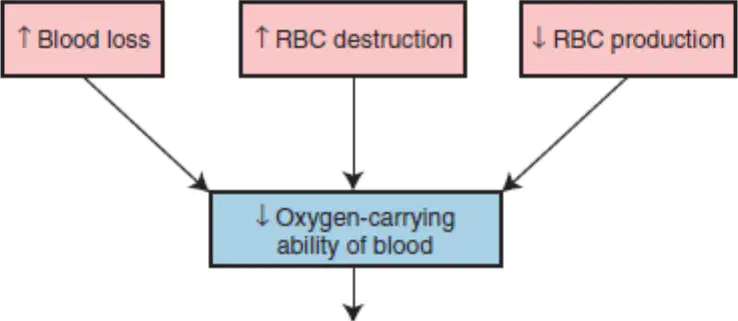
According to the diagram titled "Pathophysiology of Anemia," which primary changes directly lead to a decreased oxygen-carrying ability of blood?
Increased blood loss, increased RBC destruction, decreased RBC production
Decreased blood loss, increased RBC production, decreased RBC destruction
Increased blood pressure, increased heart rate, decreased plasma volume
Decreased hematocrit, increased platelet count, decreased white blood cells

In the flowchart, what is the immediate physiological consequence of decreased oxygen-carrying ability of blood?
Tissue hypoxia
Leukocytosis
Hypercapnia
Hypertension
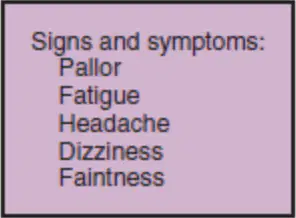
Which set lists signs and symptoms specifically associated with the pathophysiology shown in the diagram?
Pallor, fatigue, headache, dizziness, faintness
Fever, rash, jaundice, pruritus, edema
Chest pain, hemoptysis, cyanosis, clubbing
Polyuria, polydipsia, weight gain, tremor

A patient develops anemia due to decreased red blood cell (RBC) production. Based on the diagram, which reasoning best explains the patient’s dizziness?
Reduced RBC production lowers oxygen-carrying capacity, causing tissue hypoxia that manifests as dizziness
Reduced RBC production increases blood viscosity, leading to decreased cerebral perfusion
Reduced RBC production triggers leukocyte proliferation, which directly causes vertigo
Reduced RBC production elevates plasma glucose, resulting in neuroglycopenia and dizziness
Which symptom is commonly present in mild anemia according to the expected findings?
Palpitations with chest pain
Little to no manifestations
Retinal hemorrhage
Orthopnea at rest
A patient with anemia reports shortness of breath and fatigue, especially upon exertion. Which body system category best fits these findings?
Neurologic
Respiratory
Gastrointestinal
Musculoskeletal
Which skin-related manifestation of anemia is specifically noted among the expected findings?
Blue sclera
Spoon-shaped nail bed deformities
Smooth tongue
Jaundice only
In severe anemia, which cardiovascular sign is listed that indicates increased workload on the heart?
Retinal hemorrhage
Angina with systolic murmur
Glosstitis
Cold intolerance
Which neurologic symptom appears in both general expected findings and the severe anemia table?
Pruritus
Impaired vision
Irritability
Orthopnea
A patient presents with pallor of nail beds and mucous membranes along with tachycardia and palpitations. Based on the material, these findings most likely indicate:
Mild anemia only
Respiratory infection
Anemia with cardiovascular involvement
Musculoskeletal disorder
Which respiratory sign is specifically associated with severe anemia rather than the general expected findings list?
Dyspnea on exertion
Tachypnea and orthopnea with dyspnea at rest
Sensitivity to cold
Somnolence
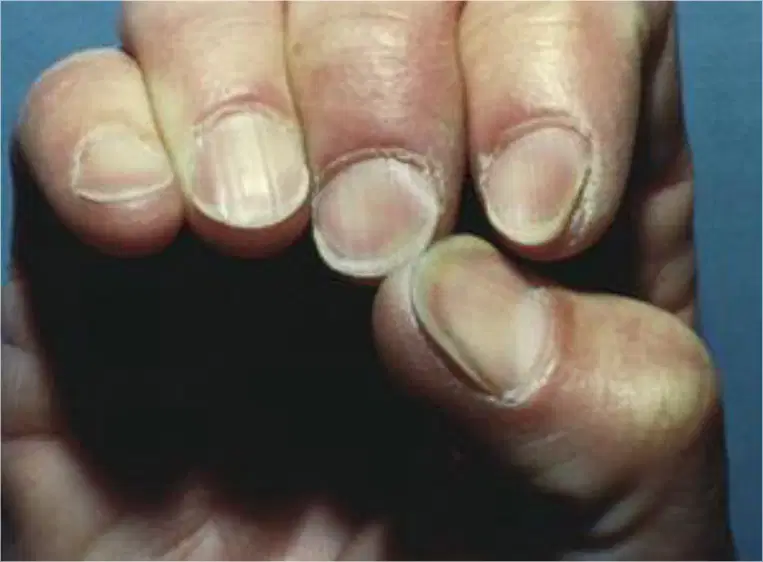
The image shows thin, concave, spoon-shaped nails with raised edges. Which term best describes this nail deformity commonly associated with anemia?
Clubbing
Koilonychia
Beau’s lines
Onycholysis
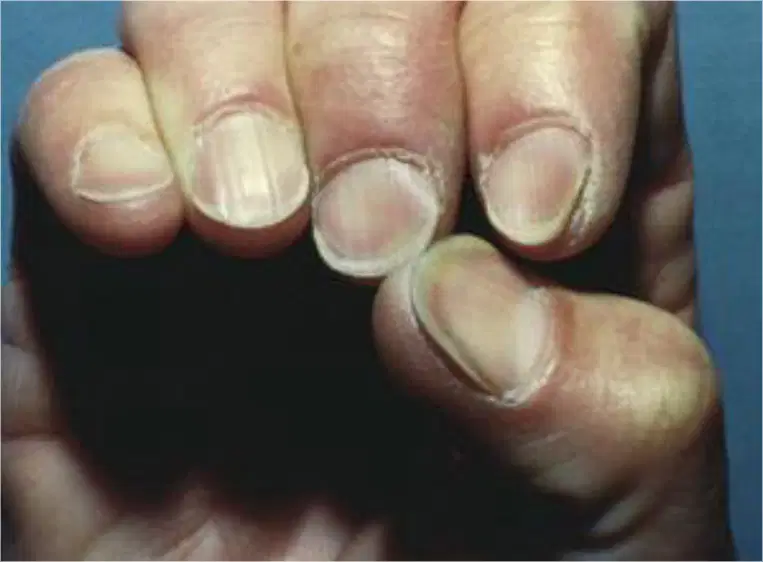
A patient presents with thin, concave nails that have raised edges, as depicted. Which initial assessment action best applies the concept of linking physical signs to systemic conditions?
Reassure the patient that nail shape is a cosmetic variant
Assess for anemia as a potential underlying cause
Diagnose fungal onychomycosis and start antifungals
Schedule immediate nail matrix biopsy
Which RBC index pattern is characteristic of microcytic, hypochromic anemia?
Normal MCV, MCH, MCHC
Decreased MCV, MCH, MCHC
Increased MCV only
Increased MCHC only
A patient presents with macrocytic, normochromic anemia. Which underlying cause is most consistent with this RBC index classification?
Acute blood loss
Iron-deficiency anemia (late detection)
Vitamin B12 deficiency
Chronic blood loss
Normocytic, normochromic anemia with normal MCV, MCH, and MCHC is MOST likely associated with which scenario?
Thalassemia
Chronic illness such as kidney disease, sepsis, or tumor
Folic acid deficiency
Chemotherapy
Which condition is linked to decreased MCV, MCH, and MCHC?
Thyroid gland dysfunction
Iron-deficiency anemia (late detection)
Aplastic anemia
Acute blood loss
Anemia due to folic acid deficiency typically shows which RBC index classification?
Normocytic, normochromic
Microcytic, hypochromic
Macrocytic, normochromic
Hyperchromic, normocytic
Which general principle guides the management of anemia?
Treat the underlying cause
Increase fluid intake only
Avoid all medications
Provide bed rest for one week
Treatment decisions for anemia should be based on which factor?
Patient age
Type of anemia
Time of day
Patient height
Which medication is an erythropoiesis-stimulating agent used in anemia management?
Metoprolol
Epoetin alfa (Epogen, Procrit)
Warfarin
Atorvastatin
When a patient is taking epoetin alfa, which monitoring is specifically recommended?
Serum potassium daily
Blood pressure monitoring
Liver enzymes monthly
Blood glucose hourly
How frequently should Hgb and Hct be checked for patients on epoetin alfa, according to the guidance?
Once a month
Daily
Twice a week
Every other week
Rapid increases in hemoglobin (about 1 g/dL in 2 weeks) while on epoetin alfa warrant which action?
Stop all fluids
Monitor cardiovascular status
Increase iron supplementation without monitoring
Switch to anticoagulants
Which complication can develop due to low hematocrit reducing oxygen delivery to tissues?
Kidney failure
Heart failure
Liver cirrhosis
Stroke
Low Hct makes the heart work harder, often leading to which findings?
Bradycardia and hypotension
Tachycardia and palpitations
Hyperglycemia and polyuria
Hypothermia and shivering
Which nursing action is appropriate when managing anemia-related cardiac strain?
Restrict oxygen delivery
Monitor cardiac rhythm
Avoid weighing the client
Withhold prescribed anti-anemia medications
Which medication category may be administered as prescribed to address heart failure risk in anemic clients?
Antivirals
Diuretics and antidysrhythmics
Insulin analogs
Anticoagulants only
Which health promotion advice is correct for clients who are pregnant or menstruating regarding iron?
Avoid iron-rich foods to prevent constipation
Ensure adequate iron-rich foods or take an iron supplement
Limit dietary iron to once weekly
Focus only on calcium intake
Iron-deficient individuals with elevated cholesterol should integrate which foods into their diet?
Red or organ meats only
Iron-fortified cereal and breads, fish, poultry, dried peas and beans
Sugary snacks and juices
High-sodium processed meats
Clients should regularly consume foods high in folate. Which is a recommended option?
White rice
Spinach, lentils, bananas
Whole milk
Fried potatoes
Which condition directly results from rapid, severe bleeding leading to decreased circulating blood volume?
Hyponatremia
Hypovolemia
Hypervolemia
Polycythemia
At approximately what percentage of acute blood volume loss are there typically no clinical signs or symptoms at rest?
5%
10%
20%
30%
Which clinical manifestation is most consistent with about 20% acute blood loss?
Shock and potential death
Below-normal blood pressure at rest with thready pulse
No symptoms at rest; slight postural hypotension when standing; tachycardia with exercise
Normal blood pressure and pulse when supine; postural hypotension and tachycardia with exercise
A patient with about 30% acute blood loss is supine. Which finding is expected based on the instructional material?
Below-normal blood pressure and thready pulse at rest
Blood pressure and pulse normal when supine
No symptoms at rest
Shock
Which set of findings best corresponds to roughly 40% acute blood loss?
Normal supine vitals; tachycardia only with exercise
No symptoms at rest
Shock and potential death
Below-normal blood pressure, decreased central venous pressure and cardiac output at rest; rapid, thready pulse; cold, clammy skin
Massive hemorrhage from severe trauma primarily raises the risk of which outcome if not promptly managed?
Hypertension
Shock
Polycythemia
Hyperkalemia
Which statement best differentiates gradual blood loss from rapid, severe bleeding in terms of immediate clinical impact?
Gradual blood loss more commonly causes immediate shock
Rapid bleeding is less likely to cause hypovolemia
Gradual blood loss may present with fewer acute signs initially compared with rapid bleeding
Both cause the same acute manifestations
Initial treatment priorities for anemia due to acute blood loss most directly target which problem?
Eradicating bone marrow suppression
Correcting hypovolemia to prevent shock
Reducing platelet count
Lowering hemoglobin concentration
Which category best describes anemias resulting from insufficient formation of blood cells?
Hemolytic anemia
Failure in cell production anemia
Post-hemorrhagic anemia
Autoimmune anemia
Nutritional anemia in the context of failure in cell production is most directly associated with deficiencies in which of the following?
Vitamin C and calcium
Protein, folic acid, and iron
Sodium and potassium
Vitamin D and magnesium
Megaloblastic (pernicious) anemia in this overview is linked to a problem with which process?
B12 absorption
Iron excretion
Platelet aggregation
Oxygen binding to hemoglobin
Bone marrow suppression leads to anemia primarily because it reduces the production of which cells?
Neurons
Hepatocytes
Red blood cells
Epithelial cells
In end-stage renal disease (ESRD), anemia arises largely due to decreased production of which hormone?
Insulin
Thyroxine
Erythropoietin
Cortisol
Which statement best describes the pathophysiology of iron deficiency anemia?
Excess iron increases erythropoiesis and hemoglobin formation
Total body iron is insufficient, diminishing erythropoiesis and impeding hemoglobin formation
Vitamin B12 deficiency leads to macrocytosis and elevated hemoglobin
Autoimmune destruction of leukocytes results in hypochromia
Iron deficiency primarily impedes the formation of which molecule essential for oxygen transport?
Myoglobin
Albumin
Hemoglobin (Hb)
Fibrinogen
Which diagnostic pattern is most characteristic of iron deficiency anemia?
Normochromic, macrocytic anemia with high iron levels
Hypochromic, microcytic anemia with low iron levels
Hyperchromic, microcytic anemia with normal iron levels
Hypochromic, macrocytic anemia with high iron levels
Which of the following is listed as a common cause of iron deficiency anemia beyond insufficient diet?
Hyperabsorption of iron
Blood loss
Excess erythropoietin
Viral infection
According to the material, iron deficiency anemia is:
A rare hematologic condition
The most common type of anemia
Primarily caused by autoimmune hemolysis
Only diagnosed by bone marrow biopsy
Which treatment approach is recommended for iron deficiency anemia?
High-protein diet alone
Vitamin C supplements only
Dietary changes and iron supplements
Leukocyte transfusions
Which statement about signs and symptoms (S/S) of iron deficiency anemia is accurate based on the content?
They are unique and distinct from other anemias
They are the same as general anemia
They always include jaundice and splenomegaly
They are unrelated to oxygen-carrying capacity
Which food is specifically identified as a high-iron organ meat in the list?
Lean beef
Beef liver
Turkey
Whole grains
A patient with iron-deficiency anemia prefers plant-based options. Which choice from the list provides a vegetarian source of iron?
Chicken liver
Kidney beans
Cooked shrimp
Turkey
You are designing a breakfast to improve iron intake. Which option best aligns with the list of iron-rich foods?
Yogurt and berries
Cooked oatmeal with raisins
White rice and cucumber
Orange juice and banana
To increase both dietary iron and fiber for a patient, which listed item is the most appropriate selection?
Whole grains
Egg yolks
Cooked shrimp
Turkey
Which statement best explains why folic acid deficiency can lead to anemia?
Folic acid is required for DNA synthesis needed for red blood cell production
Folic acid directly carries oxygen in the bloodstream
Folic acid increases blood viscosity to prevent bleeding
Folic acid is the primary component of hemoglobin
Which of the following is a common cause of folic acid anemia listed in the material?
Excess sunlight exposure
Poor diet
High calcium intake
Viral infection
A patient taking a medication that interferes with folic acid absorption presents with anemia. Based on the material, which implementation strategy is most appropriate to address the deficiency?
Increase fluid intake
Increase dietary intake of iron
Begin folic acid supplements
Reduce physical activity
Which option identifies a mechanism linked to RBC production described in the material?
Protein folding in the endoplasmic reticulum
DNA synthesis requiring folic acid
Lipid metabolism in mitochondria
Electrolyte transport across membranes
Select the food that is specifically listed as high in folic acid.
White rice
Brussels sprouts
Chicken breast
Apples
A patient with malabsorption is at risk for folic acid anemia. Which diet plan from the options would best increase folic acid intake according to the material?
Apples and white bread
Cucumber and plain yogurt
Asparagus, legumes (kidney beans), and whole grains
Iceberg lettuce and soda
Which mechanism most directly leads to pernicious anemia by preventing intrinsic factor production?
Autoimmune destruction of parietal cells
Iron deficiency from chronic blood loss
Folate deficiency due to alcohol use
Hemolysis from sickle cell disease
A patient with a history of total gastrectomy is at highest risk for which deficiency related to pernicious anemia?
Vitamin C
Vitamin B12
Iron
Vitamin D
Which long-term medication use can contribute to pernicious anemia by suppressing gastric juices?
Beta-blockers
H2 inhibitors or proton pump inhibitors (PPI)
Diuretics
Statins
Which surgical procedure listed is associated with Vitamin B12 deficiency due to decreased intrinsic factor availability?
Appendectomy
Bariatric surgery
Cholecystectomy
Hernia repair
Identify the specific sign most characteristic of pernicious anemia involving the tongue.
White coated tongue
Tongue sore, smooth, red ("beefy")
Fissured tongue with ulcers
Bluish discoloration of tongue
Which neurologic manifestation is specifically noted in pernicious anemia?
Photophobia
Loss of sense of body position
Hyperreflexia without sensory changes
Facial paralysis
A patient reports tingling of hands and feet with an insidious onset and a yellowish tint to the skin. Which condition best fits these findings?
Pernicious anemia
Iron-deficiency anemia
Thalassemia
Vitamin K deficiency
Which oral health issue may present in pernicious anemia?
Caries due to enamel hypoplasia
Infection around gums
Leukoplakia
Angular cheilitis only
First-line replacement therapy for pernicious anemia focuses on which intervention?
High-dose oral folate
Vitamin B12 injections or sublingual vitamin B12
Iron infusions
Erythropoietin injections
Dietary management for pernicious anemia should emphasize which approach?
Low-protein, high-fat diet
Diet high in protein, vitamins, and minerals
Ketogenic diet
Strict avoidance of dairy and eggs
Which dietary advice helps reduce mouth sores in patients with pernicious anemia?
Increase spicy foods to boost circulation
Avoid hot, acid, salty, and spicy foods
Consume only cold liquids
Add citrus fruits at every meal
In severe cases of pernicious anemia, which supportive therapy may be indicated in addition to B12 replacement?
Transfusion
Chelation therapy
Dialysis
Plasmapheresis
Which category best describes anemias resulting from accelerated red blood cell breakdown?
Nutritional anemias
Hemolytic anemias
Anemias due to blood loss
Megaloblastic anemias
Which condition listed is included under hemolytic anemias in the material?
Iron deficiency anemia
Pernicious anemia
Sickle cell anemia
Polycythemia vera
A patient develops anemia after receiving incompatible blood. Based on the overview, which cause is most likely?
Aplastic anemia
Transfusion reactions
Malaria
Changes in blood chemistry
Which factor from the overview is an infectious cause of red blood cell destruction leading to anemia?
Toxins
Immune reactions
Malaria
Erythroblastosis fetalis
Which listed mechanism specifically involves maternal–fetal incompatibility causing RBC destruction?
Thalassemia
Immune reactions
Erythroblastosis fetalis
Toxins
Which statement best describes the pathophysiology of aplastic anemia?
Deficiency of circulating cells due to decreased development in bone marrow
Excess production of red blood cells leading to hyperviscosity
Autoimmune destruction of mature erythrocytes only
Iron deficiency causing microcytic anemia
Aplastic anemia is characterized by which hallmark clinical finding?
Leukocytosis
Erythrocytosis
Pancytopenia
Thrombocytosis
Which factor is noted as a contributing cause to bone marrow failure in aplastic anemia?
Acute exposure to vitamin C
Chronic exposure to myelotoxic agents
Deficiency of folate only
High-altitude hypoxia
In aplastic anemia, what change occurs in the bone marrow?
Bone marrow increases production of all cell lines
Bone marrow decreases or stops functioning
Bone marrow selectively produces platelets
Bone marrow becomes fibrotic and increases megakaryocytes
Which implementation strategy directly addresses severe cytopenias in aplastic anemia by immediately increasing circulating cells?
Transfusion
Immunosuppressive therapy
Splenectomy
Vitamin B12 supplementation
Which treatment aims to restore hematopoiesis by replacing dysfunctional marrow in aplastic anemia?
Iron chelation therapy
Bone marrow transplant
Antibiotic prophylaxis
Erythropoietin injections
Which management approach targets immune-mediated suppression of hematopoietic stem cells in aplastic anemia?
Transfusion
Splenectomy
Immunosuppressive therapy
Plasmapheresis

