
 Worksheets
Tissues and the Integumentary System
Total questions: 65
Worksheet time: 46mins
Which of the following is not a category of the four major tissues?
smooth
muscle
connective
nervous


Name the tissue that found walls of large arteries, airways, heart
elastic connective tissue
reticular tissue
loose (areolar)
adipose
Name the tissue that supports and protects, insulates against heat loss, reserve source of fuel
adipose
mesenchyme
elastic
aerolar
What type of tissue is involuntarily controlled?
Skeletal and cardiac
Smooth and cardiac
cardiac
nervous
Which type of connective tissue is used to pack in organs and looks like cobwebs?
areolar tissue
adipose tissue
reticular tissue
hyaline cartilage

simple cubidol
simple squamous
stratified squamous
stratified cubidol
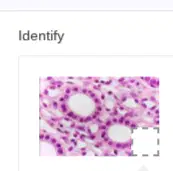
simple cubidol
simple columnar
simple squamous
transitonal
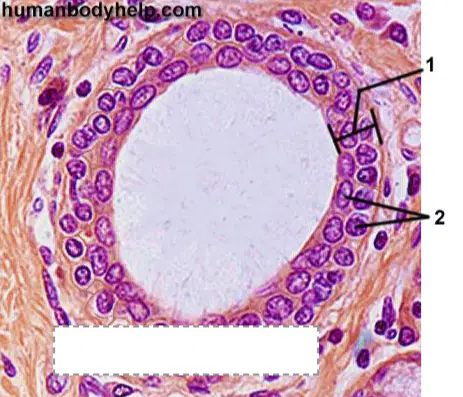
simple columnar
stratified columnar
straitified squamous
stratified cubidol
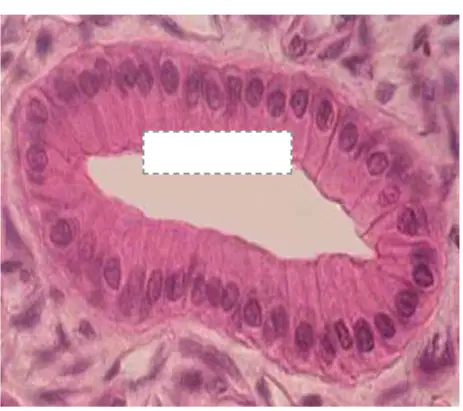
simple columnar
stratified squamous
psuedostratified columnar
simple cubidol
male uretha/ ducts of large glands
simple squamous
stratified columnar
simple squamous
stratified squamous
kidney tubules
simple cubidol
psuedostratifed cubidol
stratified cubidol
simple cubidol
The skin aids in the production of which vitamin?
vitamin D
vitamin B
vitamin C
vitamin A
What is the main purpose of melanin in the skin?
prevent fluid loss
block harmful UV rays
strengthen the skin
produce vitamins
A third degree burn is more painful than a second degree burn.
true
false

List the layers of the Epidermis in order from top to bottom.
5,2,3,4,1
1,2,3,4,5
4,5,3,1,2
1,4,3,2,5
What layer of the skin contains sweat glands?
Dermis
Epidermis
Hypodermis
Subcutaneous

Which degree is this burn?
(a)
A burn victim comes into the hospital but is not experiencing pain at the burn site. What is the lowest severity of burn this individual could have?
first-degree burn
second-degree burn
third-degree burn
fourth-degree burn
Which of the following is NOT visible when looking at your fingernail?
nail matrix
lunula
proximal nail fold
nail body
Which of the following is the thickest layer of the integument that is made up of connective tissue?
dermis
epidermis
hypodermis
interdermis
What is the upper region of the dermis that has nipple-like extensions that forms part of the dermal-epidermal junction forming the ridges and grooves of fingerprints?
stratum germinativum
stratum corneum
dermal papillae
cutaneous mounds
What is the upper region of the dermis that has nipple-like extensions that forms part of the dermal-epidermal junction forming the ridges and grooves of fingerprints?
stratum germinativum
stratum corneum
dermal papillae
cutaneous mounds
What is the upper region of the dermis that has nipple-like extensions that forms part of the dermal-epidermal junction forming the ridges and grooves of fingerprints?
stratum germinativum
stratum corneum
dermal papillae
cutaneous mounds
What makes perspiration, excretes wastes and helps to regulate internal body temperature?
eccrine sweat glands
apocrine sweat glands
sebaceous glands
perspiration glands
What makes perspiration, excretes wastes and helps to regulate internal body temperature?
eccrine sweat glands
apocrine sweat glands
sebaceous glands
perspiration glands
What makes perspiration, excretes wastes and helps to regulate internal body temperature?
eccrine sweat glands
apocrine sweat glands
sebaceous glands
perspiration glands
What is found mostly in armpits and genital regions, secretes thick/milky substance, an can lead to odors when bacteria grow here?
apocrine sweat glands
eccrine sweat glands
sebaceous glands
odiferous glands

What is shown in the picture?
nail bed
nail root
lunula
cuticle
nail body

What is shown in the picture?
nail bed
nail root
lunula
cuticle
nail body

What layer of the skin is shown in the diagram?
dermis
epidermis
hypodermis
stratum germinativum

What is shown in the diagram?
hair shaft
hair follicle
hair papillae
arrector pili

What is in the diagram shown?
apocrine sweat gland
eccrine sweat gland
sebaceous gland
oil gland
What Tissue Would Allow for Gas Exchange Between the Blood and the Air in the Lungs?
Stratified squamous epithelium
Simple squamous epithelium
Stratified columnar epithelium
Simple cuboidal epithelium
Type of gland that secretes products into a duct that opens to the surface instead of the blood.
endocrine
exocrine
How many strata does the epidermis have in THICK SKIN?
1
3
5
7
Which skin layer is vascular?
dermis
epidermis
stratum corneum
none of them
Dense Irregular Tissue
Collagen fibers in many directions; provides strength in dermis
Collagen fibers arranged in parallel; provides flexibility
Elastic fibers in a random arrangement; allows for stretch
Loose fibers that provide cushioning and support

Layer C is likely the Stratum ______.
Corneum
Granulosum
Lucidum
Spinosum
Basale
Adult Legs
1
4.5
9
18
Anterior Trunk
4.5
9
18
36

what is #9?
adipose tissue
lamellated corpuscle
sweat gland
dermal papillae
These cells are epidermal macrophages that help activate the immune system.
Keratinocytes
Melanocytes
Langerhans' cells
Merkel cells

The nail body covers the
hyponychium
nail bed
lunula
root


If a patient has burns covering their entire left arm and left leg, according to the rules of 9's how much of this patient is burned?
9%
18%
27%
45%
Which phase of healing last the longest?
acute inflammatory
proliferation
remodeling

