
 Worksheets
Nutrition Review - HL
Total questions: 42
Worksheet time: 21mins
A waxy fatlike substance found in animal products.
Cellulose
Glucose
Cholesterol
Hemoglobin
Stretching and yoga are an example of ________________ type of exercise.
Plyometric
Aerobic
Anaerobic
Isometric
Consuming water before, during and after exercise helps prevent ___________________________.
Dehydration
Overeating
Muscle gain
Sunburn
This type of fat can actually fight heart disease.
Hydrogenated Fat
Saturated Fat
Trans Fat
Unsaturated Fat
Which nutrient provides the most calories (energy) per gram?
Fat
Carbohydrate
Protein
Vitamins
Calories are not seen because they are a ___________________________.
Food
Measurement
Vitamin
Mineral
Flour is called a ____________________ carbohydrate.
Complex
Simple
Refined
Starchy
This nutrient promotes healthy bones and teeth. It can also benefit heart health.
Potassium
Vitamin C
Iron
Calcium
Our natural drive to eat and protects us from starvation: _______________________
Appetite
Cravings
Thirst
Hunger
A gram of carbohydrates contain ________ calories.
Four
Two
Six
Eight
A gram of fat contains _________ calories.
Nine
Four
Seven
Twelve
Lack of Calcium can cause one to develop _________________ .
Asthma
Diabetes
Osteoporosis
Hypertension
Which food is highest in Saturated Fat and can cause blood cholesterol levels to increase.
Olive Oil
Red Meat
Almonds
Salmon
Swimming 1 mile is an example of an ________________ activity.
Aerobic
Anaerobic
Isometric
Flexibility
Nutrient that helps regulate the digestive system. _________________.
(Found in Whole Grain Foods + Fruits + Veggies)
Fiber
Protein
Vitamin C
Calcium
In order to lose 1 lb you must burn _______________ calories.
3,500
1,000
2,000
5,000
Monounsaturated and polyunsaturated fats are examples of _____________________ fat (liquid fat), or “good fats.”
trans
saturated
unsaturated
hydrogenated
________________ fats are considered “bad fats,” are solid at room temperature and can cause heart disease and other health complications and should be limited in our diet.
Saturated
Unsaturated
Translucent
Polyunsaturated
Beans are a great source of _______________.
protein
carbohydrate
vitamin
fat
It is important that half of your grains come from _______________ grains.
enriched
refined
processed
whole
________________ promotes the absorption of calcium.
Vitamin D
Vitamin C
Iron
Potassium
______________ helps hydrate the body, eliminates waste, cushions the joints, and supports kidney functions.
Water
Sugar
Oil
Vinegar
Too much _____________ can cause problems with blood pressure. You should not consume more than 2,300 milligrams a day.
potassium
sodium
calcium
magnesium
________________ is the current food guide for the United States of America and outlines what we should eat in order to be healthy in any given day.
MyPlate
Food Pyramid
Eatwell Plate
Healthy Plate
Factors like more fast food restaurants and lower activity levels among youth have increased ______________ levels in the United States.
obesity
literacy
employment
hydration
Fiber is abundant in which types of foods?
Sugary snacks
Dairy products
Meat and poultry
Fruits and vegetables
The physical benefits of participating in physical activity include:
Greater risk of type 2 diabetes and heart disease
Increased fat storage and joint stiffness
Lowered immune function and weaker muscles
Improved cardiovascular health and enhanced bone density.
Which one explains an ISOTONIC type of exercise:
Muscles contracting and relaxing at a
constant rate
Muscles contracting and relaxing
Muscles contracting with very little body movement
Ongoing physical activity that raises your breathing and heart rate for an extended period of time
Which one explains an AEROBIC type of exercise:
Muscles contracting and relaxing at a
constant rate
Muscles contracting and relaxing
Muscles contracting with very little body movement
Ongoing physical activity that raises your breathing and heart rate for an extended period of time
Which one explains an ISOMETRIC type of exercise:
Muscles contracting and relaxing at a
constant rate
Intense physical activity that lasts for a few seconds or a few minutes
Muscles contracting with very little body movement
Ongoing physical activity that raises your breathing and heart rate for an extended period of time
Which one explains an ISOKINETIC type of exercise:
Muscles contracting and relaxing at a
constant rate
Intense physical activity that lasts for a few seconds or a few minutes
Muscles contracting with very little body movement
Ongoing physical activity that raises your breathing and heart rate for an extended period of time
Which one explains an Anaerobic type of exercise:
Muscles contracting and relaxing at a
constant rate
Intense physical activity that lasts for a few seconds or a few minutes
Muscles contracting with very little body movement
Ongoing physical activity that raises your breathing and heart rate for an extended period of time
Factors that impact the amount of calories you should eat in a day include:
Age, gender, activity level, and overall health
Favorite foods and meal times
Color of the food and plate size
Number of meals skipped in a week
The difference between simple and complex carbohydrates is:
Simple carbohydrates are found only in vegetables, while complex carbohydrates are found only in fruits.
Simple carbohydrates are quickly digested and provide rapid energy, while complex carbohydrates are digested more slowly and provide sustained energy
Simple carbohydrates contain more fiber than complex carbohydrates.
Complex carbohydrates are made up of only one sugar unit, while simple carbohydrates are made up of many sugar units.
Energy balance can help with weight management by:
Ensuring the calories consumed equal the calories burned
Increasing calorie intake regardless of activity
Avoiding all carbohydrates
Skipping meals regularly
Some of the health problems associated with obesity include:
Lower risk of chronic diseases
Improved immunity and faster metabolism
Increased energy and better sleep
Heart disease, diabetes, and high blood pressure
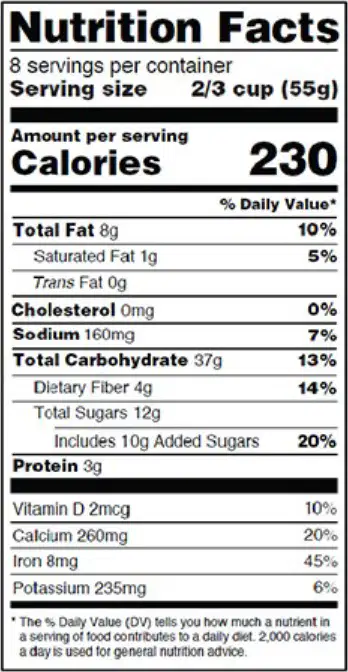
If I eat the entire package of this food, I will consume 230 calories.
TRUE
FALSE
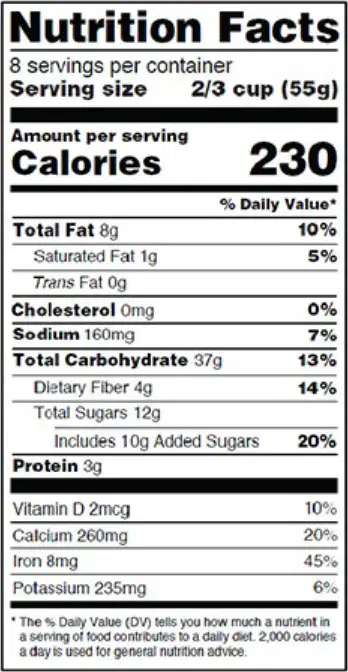
Refer to the Nutrition Facts label provided. One serving of this food is ⅔ of a cup.
TRUE
FALSE
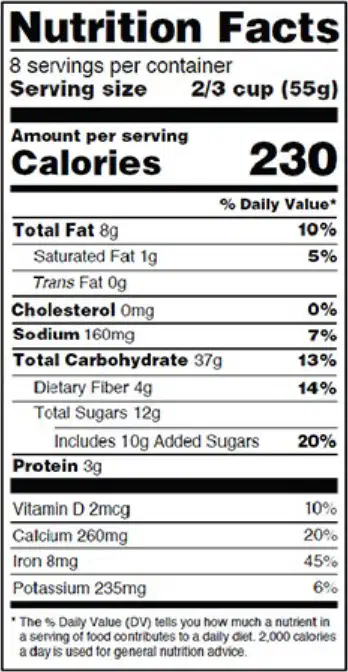
This food would be considered low in sodium (less than 10%).
TRUE
FALSE
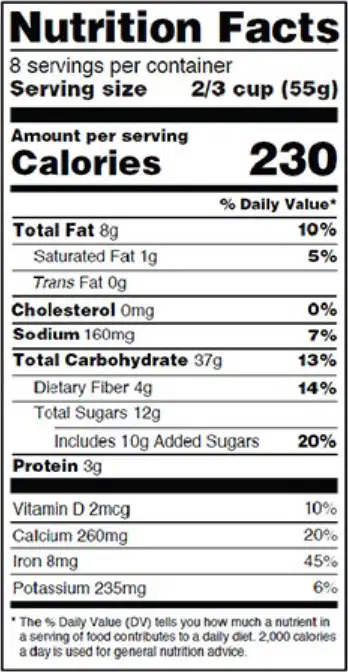
Refer to the Nutrition Facts label provided. 42 calories in one serving of this product come from fat.
TRUE
FALSE
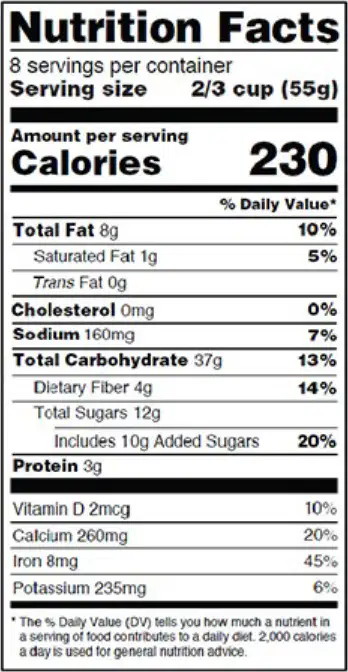
The carbohydrates in this product contribute 37 calories per serving.
TRUE
FALSE
The protein in this product contribute 12 calories per serving.
TRUE
FALSE

