
 Worksheets
Unit 3-4 World History
Total questions: 89
Worksheet time: 45mins
Hinduism is described as the world’s oldest religion and which rank in size globally?
Third largest
Second largest
Fourth largest
Largest
According to the material, approximately how long ago did Hinduism originate?
Over 4,000 years ago
Around 2,000 years ago
About 500 years ago
Over 10,000 years ago
What proportion of India’s population practice Hinduism?
83%
50%
25%
97%
In 2004, the estimated number of Hindus living in the US was between which figures?
1.5 and 2.4 million
500,000 and 1 million
3 and 5 million
10 and 12 million
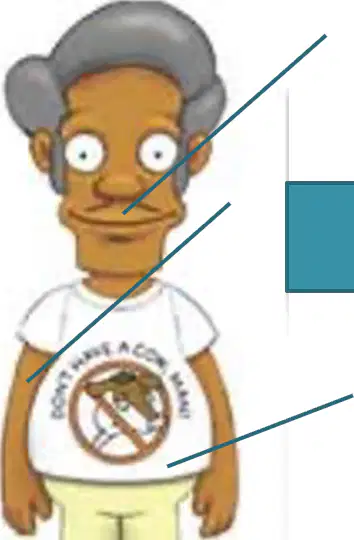
According to the diagram of the caste system, which groups are identified as castes?
Priests & Teachers
Warriors & Rulers
Merchants & Craftsmen
Farmers & Servants
The “untouchables” (outcasts of society)
According to the passage, Buddhism is one of the world's oldest what?
religions
languages
governments
myths
According to the passage, Buddhism seeks to find what?
spiritual enlightenment or wisdom
unwavering faith in deities
political power
material wealth
Which statement about deities in Buddhism is stated in the passage?
It has no official gods or goddesses.
It worships a single creator god.
It requires devotion to many gods.
It forbids meditation.
According to the passage, some consider Buddhism to be what?
a way of life
a branch of Christianity
a system of magic
a political party
Buddhism is based on the teachings of whom, according to the passage?
the Buddha
Confucius
Muhammad
Laozi
In the passage, the title "Buddha" is explained to mean which of the following? Select all that apply.
Enlightened One
Enlightened Teacher
Creator God
Ancient Emperor

According to the worksheet, what are the basic principles of Buddhism called?
The Noble Eightfold Path ("Middle Way")
The Ten Commandments
The Four Vedas
The Five Pillars
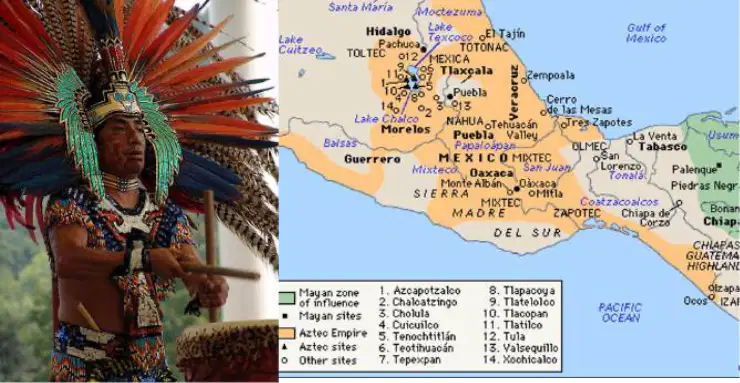
According to the slide titled “Who were the Aztecs?”, the Aztecs were the dominant native group of which region.
Central Mexico
Northern Andes
Yucatán Peninsula
Pacific Northwest
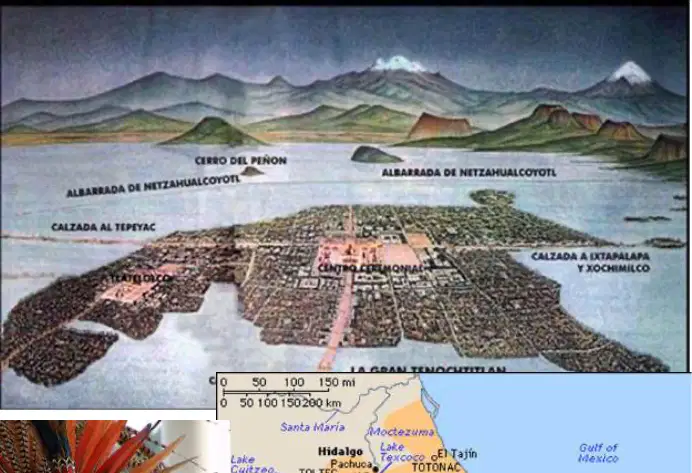
According to the slide, The Valley of Mexico is associated with which civilization.
Aztecs
Incas
Mayans
Olmecs
According to the slide, which combination explains how the Aztecs acted as conquerors.
Powerful military and a vast alliance system
Isolation and neutrality
Nomadic herding and pacifism
Reliance solely on foreign mercenaries
According to the slide, which statement best describes Aztec society.
Well-organized and educated; skilled engineers
Small hunter-gatherer bands without urban planning
Decentralized villages with little engineering knowledge
A maritime empire centered on a large navy
According to the text, the Incas were the dominant native culture of which continent?
South America
North America
Europe
Asia
According to the text, which mountain range is associated with the Incas?
Andes Mountains
Rocky Mountains
Alps
Himalayas
According to the text, how is the Inca government described?
Complex government system
No organized government
Rule by foreign colonizers
Anarchy
According to the text, which specific feature of the Inca government is mentioned?
Branches of government
Elected parliament
Feudal lords
City-states only
According to the text, which engineering achievement is noted for the Incas?
Network of roads/communication
Steam engines
Concrete skyscrapers
Submarines
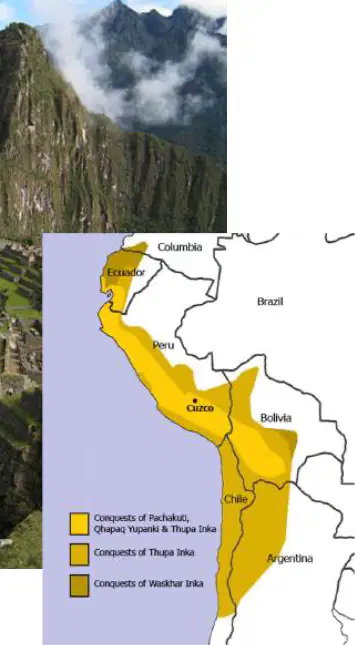
Based on the map image showing highlighted regions along the Pacific side of South America, where was the Inca Empire primarily located?
Western coast of South America
Central Europe
North Africa
Eastern Australia
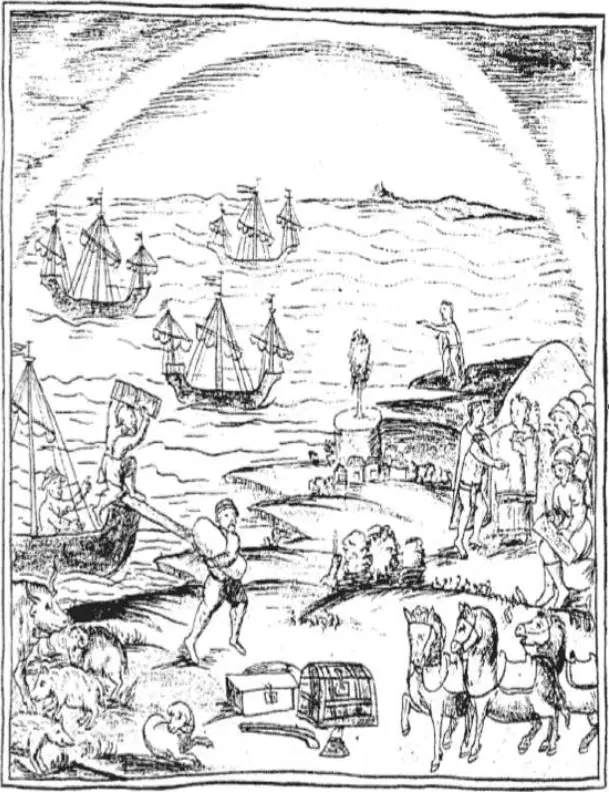
What is the Columbian Exchange?
A massive exchange of plants, animals, and people between the Old World and the New World
A trade route limited to Asian spices between Europe and Asia
A political alliance among European colonies in the Americas
A religious movement spreading Christianity across Europe
Following their conquests, how did the Spanish organize themselves in Latin America, as shown and described in the prompt?
Into encomiendas
Into independent city-states
Into merchant guilds
Into nomadic bands
In the social and economic system described, who primarily provided labor for Spanish operations in Latin America?
Indian and African laborers (including imported slaves)
European nobles
Chinese migrants
Spanish clergy
What social outcome resulted from Spanish intermarriage and discrimination against laborers in Latin America, according to the prompt?
Creation of a new class system
Abolition of slavery
Immediate independence movements
Rise of democratic government
What does the term “encomienda” most closely refer to in the context of Spanish rule in Latin America?
Large plantations or ranches
Small family farms
Urban craft workshops
Ocean-going trade ships
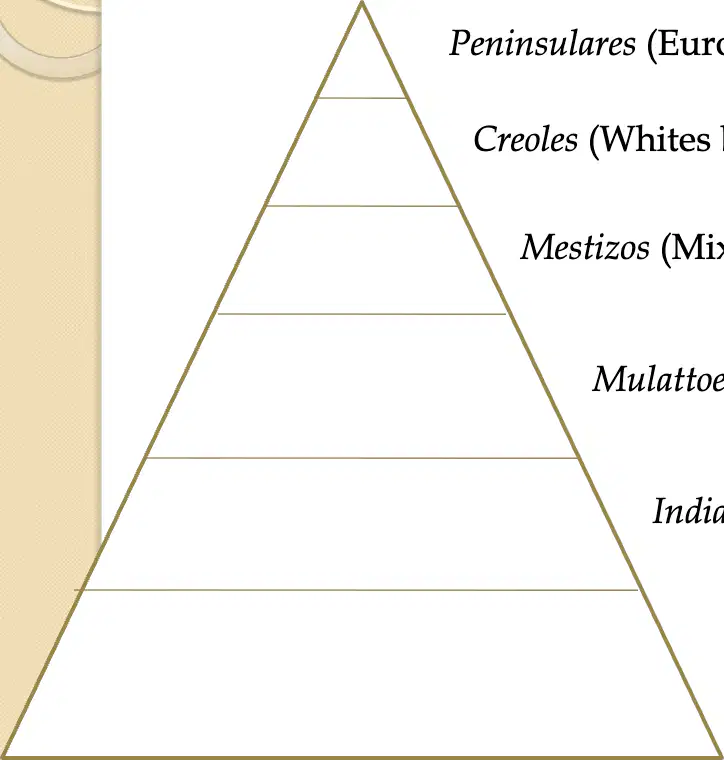
Based on the social pyramid diagram of colonial Latin America showing labeled tiers, which of the following were social classes depicted in the diagram? Select all that apply.
Peninsulares (European-born whites)
Creoles (Whites born in Latin America)
Mestizos (Mix of European & Indian)
Mulattoes (Mix of European & African)
What is filial piety?
Putting the family’s needs or interests above one’s own wishes
Pursuing personal success regardless of family needs
Keeping family matters private from elders
Ensuring equal decision-making between parents and children
Which action best demonstrates filial piety?
Prioritizing the family’s needs over personal desires
Ignoring advice from elders
Publicly challenging parents to be more independent
Focusing only on individual goals
Which statements are listed as aspects of filial piety? Select all that apply.
Unconditionally love and support for parents and other relatives
Show complete obedience towards elders
Deep respect towards the family’s past (ancestors)
Seeking independence from family above all else
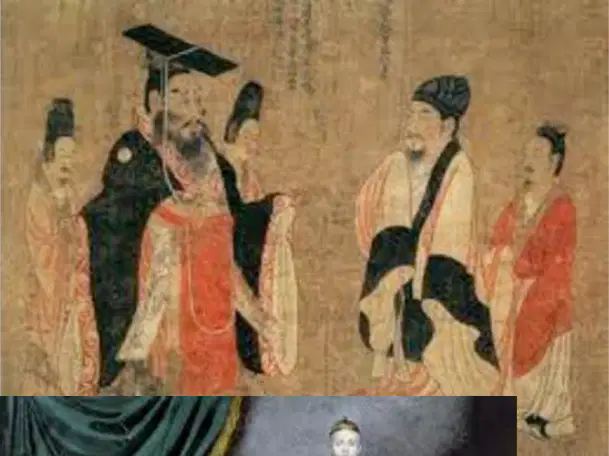
Based on the images of elders and a multi-generational family, which concept is being illustrated?
Filial piety
Industrialization
Individualism
Democratic governance
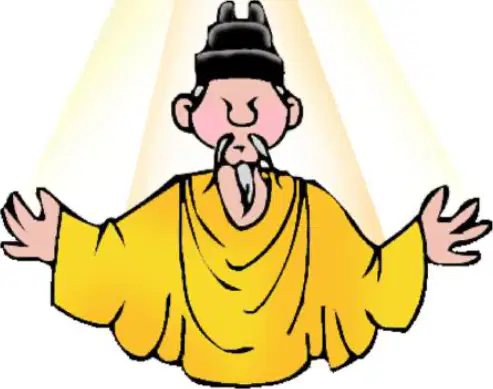
What is the “Mandate of Heaven”?
The Chinese version of divine right
A democratic election system
A legal code from the Qin dynasty
A Buddhist doctrine
What is “divine right”?
The belief that a ruler’s authority comes from God
The requirement for rulers to consult a parliament
The right to trade with foreign merchants
A legal code guaranteeing citizens’ rights
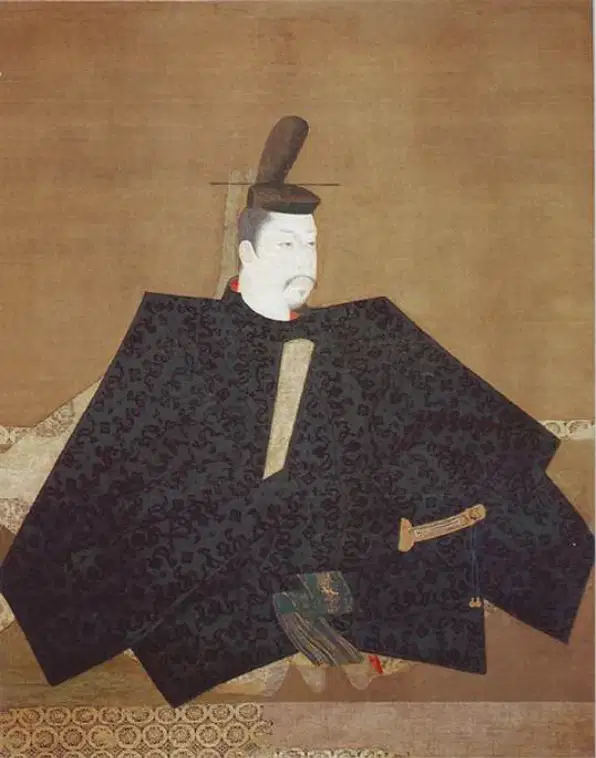
Who where the “shoguns”?
Powerful military leaders or warlords in feudal Japan
Elected merchant guild leaders in medieval Europe
Religious monks who governed monasteries in China
Portuguese naval explorers of the 1400s
Select all statements that describe how Japan was united under a single ruler, according to the slide.
Daimyo lords banded together to take control of Japan.
Fighting for control took place across the whole island.
This era was called the "Warring States" Period.
By 1600, the daimyo Tokugawa Ieyasu united Japan under his control.
His descendants would rule Japan for the next 30 years.
In the 1500s, who banded together to take control of Japan?
Daimyo lords
European traders
Peasant armies
What name was given to the era when rival lords fought for control of the whole island?
Meiji Restoration
"Warring States" Period
Edo Isolation
By 1600, which daimyo succeeded in uniting Japan under his control?
Oda Nobunaga
Tokugawa Ieyasu
Toyotomi Hideyoshi
According to the slide, how long did the ruler's descendants continue to rule Japan after unification?
30 years
300 years
3,000 years
3 years
According to the material, which country originally jumpstarted the Age of Discovery?
China
Portugal
Spain
England
Which figure’s voyages are referenced as part of China’s role in the Age of Discovery?
Zheng He
Christopher Columbus
Ferdinand Magellan
Vasco da Gama
During which years did the referenced voyages take place?
1405–1433
1492–1504
1519–1522
1607–1620
According to the material, the voyages showcased which aspect of China?
Technological power
Political fragmentation
Agricultural decline
Isolationist policies
According to the material, which regions did the voyages visit? Select all that apply.
Southeast Asia & India
Eastern Africa & Middle East
Western Europe
Arctic Ocean
What reason is given for why the voyages ended?
Lack of money/resources
Defeat by European navies
Outbreak of plague
Volcanic eruption
What does the material suggest about whether the voyages reached America?
It is uncertain
They definitely did
They definitely did not
The issue is not mentioned
Based on the slide titled Why did China and Japan turn isolationist? which of the following were reasons they turned isolationist?
Believed they were self-sufficient
Untrusting / dislike for European technology
Resentment for Christianity
Desire for increased European trade
Which belief contributed to China and Japan turning isolationist?
They were self-sufficient and did not need European trade or disruptions
They depended on European trade to survive
They sought European political alliances
They aimed to expand Christianity in Europe
Which European technology is specifically mentioned as distrusted or disliked?
Firearms
Steam engines
Printing press
Compass
What was the stated reason related to Christianity for China and Japan turning isolationist?
Resented European attempts to convert them
Sought state sponsorship of Christianity
Were indifferent to Christian missions
Desired to convert Europeans
What is “mercantilism” as described in the slide titled What is “mercantilism”?
A political system based on democracy
An economic theory emphasizing that trade generates wealth and power, colonies stimulate wealth, and protectionism shields domestic industries
A religious movement focused on charity
A scientific method for measuring markets
According to the slide, trade in a mercantilist system primarily generates which outcome?
Wealth and global power
Religious unity
Environmental sustainability
Local self-sufficiency without trade
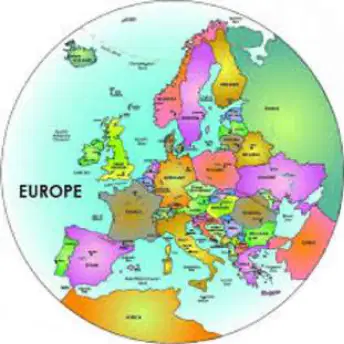
In the description of mercantilism, what is said to stimulate wealth?
Domestic agriculture only
Accumulation of overseas colonies
Free immigration policies
Reduction of all government involvement in the economy
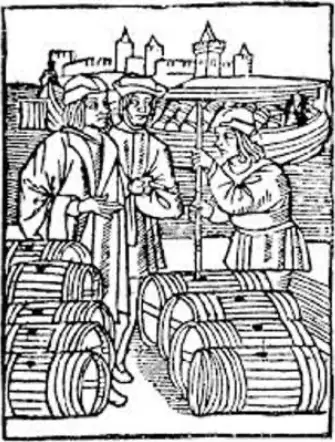
Which policy approach does mercantilism encourage, according to the slide?
Laissez-faire with zero tariffs
Protectionism that shields domestic industries from foreign competition using tariffs
Open borders for all goods with no restrictions
Subsidizing foreign competitors
What was the "Middle Passage"?
The transatlantic voyage that forcibly transported enslaved Africans to the Americas
A European sea route around Africa to reach Asia
The migration of English Pilgrims from Europe to North America
A canal shortcut through Central America
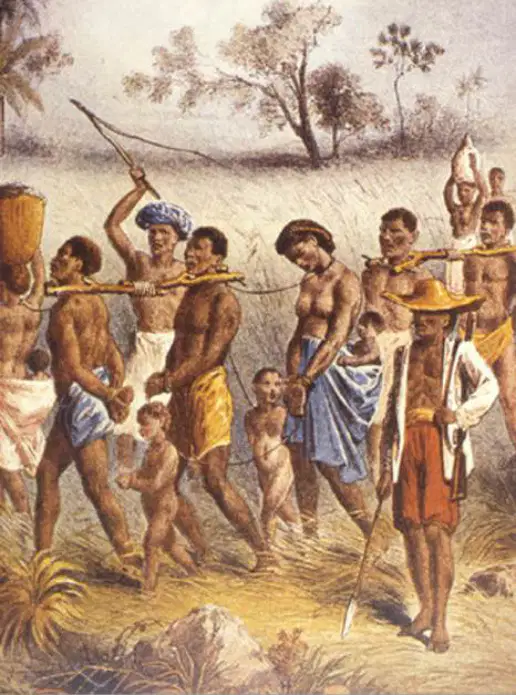
Why was Africa seen as a good source of slaves? Select all that apply. Consider the historical context of European colonization and the transatlantic slave trade.
Established coastal trade networks enabled large-scale capture, sale, and transport of enslaved people from West Africa.
Many Africans possessed agricultural skills useful for plantation crops such as sugar and tobacco.
Colonists believed Africans would be less able to escape or find support in the Americas because they were unfamiliar with the land.
Most Africans freely sought indentured contracts for passage to the Americas.
Based on the slide titled “What is ‘divine right’?”, which statement best defines divine right?
The monarch carries out the will of God through their rule
Nobles choose the monarch through a council vote
Citizens grant the ruler power through a social contract
The church directly governs the state without a monarch
According to the slide, how is a monarch’s authority characterized under divine right?
Unchecked and unlimited authority
Balanced by a representative parliament
Strictly limited by a written constitution
Shared equally with the nobility
Even with divine right, what did monarchs still need according to the slide?
Their nobility’s support
Approval from all citizens via elections
Appointment by the clergy alone
Alliance with foreign empires
How could monarchs keep their nobility in check, as stated on the slide?
By using their wealth and influence
By granting the nobility complete autonomy
By abolishing taxation on the nobility
By surrendering control of the military to the nobility
According to the worksheet, what helped unite England under a single absolute monarch?
Alfred the Great leading resistance to Viking invasions
William the Conqueror’s Norman invasion in 1066
The Magna Carta limiting royal power
The English Civil War under Oliver Cromwell
According to the worksheet, when were the Viking invasions of England?
The 800s (9th century)
The 700s (8th century)
The 1000s (11th century)
The 1200s (13th century)
What did Alfred the Great eventually accomplish, as described in the worksheet?
Gained control of all of England
Converted the Vikings to Christianity
Established an elected Parliament
United Scotland and Ireland with England
For approximately how long did Alfred the Great’s descendants rule England, according to the worksheet?
50 years
100 years
200 years
400 years
Which statement best describes Alfred the Great’s role in response to the Viking invasions?
He led the resistance against them
He invited them as mercenaries
He surrendered Wessex to them
He fled to Normandy to avoid conflict
How does the English monarchy grow under William’s rule? William I expands the power of the England monarchs: Takes all land as "personal property"; Institutes new taxes; Declares "divine" rule. Select all that apply.
Takes all land as "personal property"
Institutes new taxes
Declares "divine" rule
Grants full autonomy to nobles
His decedents will continue to claim more land, money, and power. According to this statement, what will his decedents continue to claim? Select all that apply.
More land
Money
Power
Less taxation
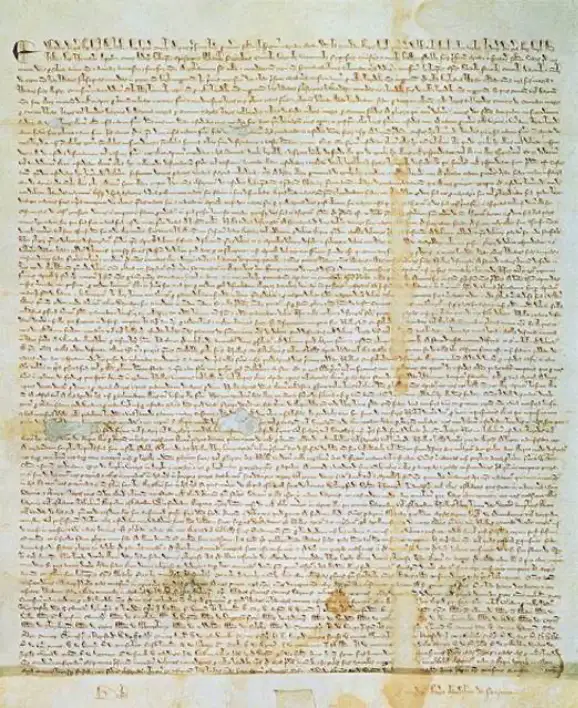
What is the Magna Carta?
An English legal document that spells out certain rights for both the king and his subjects
A medieval tax record
A religious decree
A manual of feudal warfare tactics
Does the Magna Carta solve all of England’s issues?
Yes
No
According to the slide, what did English nobles demand after the Magna Carta?
More of a say in how their country is run
Higher taxes on commoners
Less involvement in government
The end of the monarchy
In what year, after threats of revolt, was the British Parliament formed?
1215
1258
1066
1649
What did the formation of the British Parliament give the nobles?
A say in their government
More land from the crown
Higher taxation powers over peasants
Trial by jury in all cases
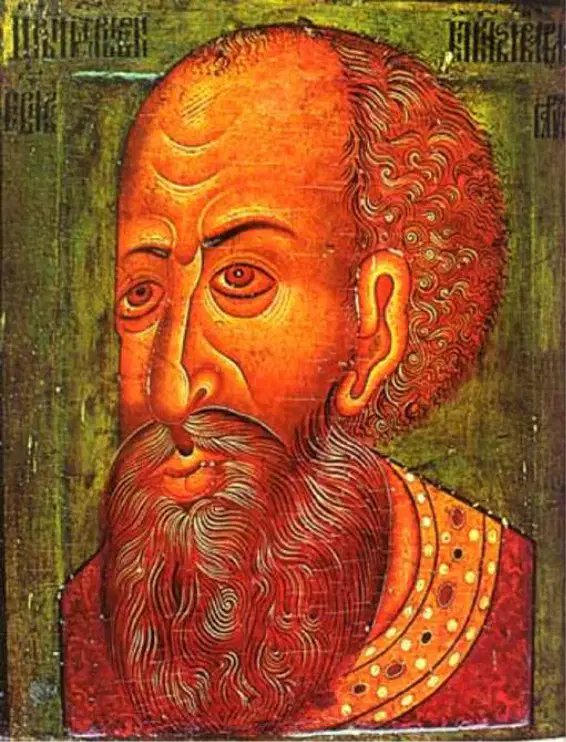
According to the passage, who was “Ivan the Terrible”?
One of Russia’s most powerful absolute monarchs
A medieval poet from Western Europe
A Mongol khan who invaded Russia
A French revolutionary leader
Which dates are associated with Ivan IV’s reign?
1533–1584
1206–1227
1613–1645
1812–1825
At what age did Ivan IV rise to power?
3
10
16
21
Who ruled in Ivan IV’s place until he was 16?
His mother
His uncle
The patriarch of the church
The merchant guild
During Ivan IV’s youth, the struggle for power was primarily with which group?
The Russian boyars (nobles)
Peasants
Foreign ambassadors
Cossack raiders
Which years identify Ivan IV’s “good period”?
1547–1560
1500–1510
1565–1572
1600–1610
Which actions or qualities are associated with Ivan IV’s “good period”? Select all that apply.
“Just & noble” ruler
Reforms (law code)
Added territory to Russia
Repealed all laws
Lost major territories
Based on the slide titled “How did Ivan become ‘terrible’?”, what was identified as the major reason for his turn?
The death of his wife
A nationwide famine
A Mongol invasion
Failed economic reforms
According to the slide, what did Ivan claim about his wife’s death?
The boyars had poisoned her
She died of the plague
Foreign assassins killed her
She died of natural causes
What was the name of the secret police force Ivan organized, as noted on the slide?
The Oprichnina
The Janissaries
The Cheka
The Streltsy
How does the slide describe “The Time of Troubles”?
Constant warfare between boyars and the Czar
A period of peaceful reforms
An era of foreign colonization of Russia
A time of economic boom
According to the slide, what eventually saved Russia from disaster?
The strong rule of the Czars under Peter the Great
A widespread peasant uprising
The withdrawal of the Mongols
Military aid from the Ottoman Empire
Which ruler is identified on the slide as bringing back law and order in Russia?
Peter the Great
Ivan the Terrible
Catherine the Great
Nicholas II
During which years did Peter the Great rule Russia, as shown on the slide?
1682–1725
1613–1645
1725–1762
1801–1825
As a young man traveling in Europe, which actions are described on the slide?
Wanted to learn European ways and technology
Traveled in disguise
Led a Russian army across Asia
Avoided contact with foreigners
After returning to Russia, what goal is described on the slide for Peter the Great?
Modernize Russia and turn it into a modern power
Restore the boyars' traditional privileges
Isolate Russia from European influence
Return to medieval practices

