
 Worksheets
Elements & Compounds in Living Things
Total questions: 68
Worksheet time: 34mins
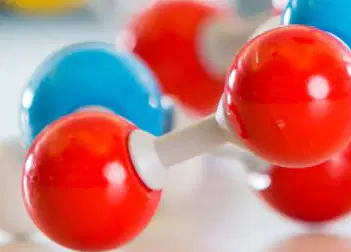
Living things are made of _______ and _______.
elements, compounds
cells, tissues
atoms, molecules
proteins, carbohydrates

Which of the following combine to form the macromolecules essential for life?
Elements
Compounds
Atoms
Cells
Understanding elements and compounds helps explain how cells survive and function.
True
False

What is an element?
A substance that can be broken down into simpler substances
A substance that cannot be broken down into simpler substances
A mixture of different atoms
A type of molecule
The smallest unit of an element is a(n) _______.
atom
molecule
cell
proton
Elements are made up of only one kind of _______.
atom
molecule
compound
mixture
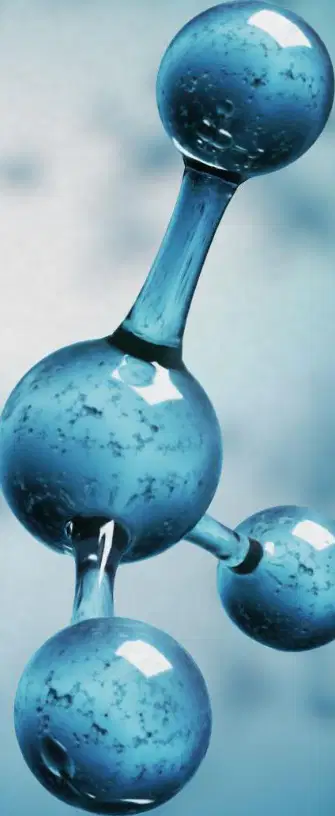
Which of the following is an example of an element?
Water (H2O)
Oxygen (O2)
Carbon dioxide (CO2)
Glucose (C6H12O6)
Which of the following is NOT an important element in living things?
Carbon (C)
Hydrogen (H)
Sodium (Na)
Sulfur (S)
Match the element with its symbol:
O
A
S
B
N
C
H
D
C
E
A compound forms when two or more ______ combine chemically.
elements
atoms
molecules
compounds
What is the smallest unit of a compound?
A molecule
An atom
A cell
A nucleus
Which of the following is an example of a compound?
Oxygen (O2)
Carbon dioxide (CO2)
Nitrogen (N2)
Hydrogen (H2)
How many oxygen atoms are in a molecule of carbon dioxide (CO2)?
2
1
3
0
Most elements in living things are found as compounds.
True
False
Molecules are the building blocks of ______ and life.
cells
atoms
organs
tissues
What is the chemical formula for water?
H2O
CO2
O2
H2SO4
Water (H2O) is made up of how many hydrogen atoms and how many oxygen atoms?
2 hydrogen atoms and 1 oxygen atom
1 hydrogen atom and 2 oxygen atoms
2 hydrogen atoms and 2 oxygen atoms
1 hydrogen atom and 1 oxygen atom
About how much of your body is made up of water?
One-third
Two-thirds
Half
Three-fourths
Which of the following is NOT a role of water in cells?
Dissolves chemicals that cells need
Allows most chemical reactions to take place
Helps cells keep their shape
Provides energy for cells
Water helps cells keep their shape, similar to what?
Air in a balloon
Water in a glass
Sand in a box
Light in a room
Water prevents rapid temperature changes in cells.
True
False
Without water, cells could not function ________.
properly
slowly
randomly
loudly
Which of the following statements is true about organic compounds?
They do not contain carbon.
They contain carbon.
They are always inorganic.
They are not vital to life.
Inorganic compounds do not contain _____
carbon.
hydrogen.
oxygen.
nitrogen.
Which of the following is an example of an organic compound?
Water
Sodium chloride
Glucose
Table salt
Which of the following is an example of an inorganic compound?
Proteins
Lipids
Water
Nucleic acids
Both organic and inorganic compounds are vital to life.
True
False
Which group of organic compounds includes sugars and starches?
Carbohydrates (CHO)
Lipids (CHO)
Proteins (CHONS)
Nucleic acids (CHONP)
Which group of organic compounds includes fats, oils, and waxes?
Carbohydrates (CHO)
Lipids (CHO)
Proteins (CHONS)
Nucleic acids (CHONP)
Which group of organic compounds is made up of amino acid chains?
Carbohydrates (CHO)
Lipids (CHO)
Proteins (CHONS)
Nucleic acids (CHONP)
Which group of organic compounds includes DNA and RNA?
Carbohydrates (CHO)
Lipids (CHO)
Proteins (CHONS)
Nucleic acids (CHONP)
These macromolecules are the building blocks of cells and control _________.
life processes
cell walls
genetic mutations
energy drinks
What elements are carbohydrates made of?
Carbon, hydrogen, oxygen
Nitrogen, oxygen, hydrogen
Carbon, nitrogen, sulfur
Oxygen, sulfur, phosphorus
Carbohydrates include sugars and _______.
starches
proteins
lipids
vitamins
Carbohydrates are produced during _______ in plants.
photosynthesis
respiration
transpiration
germination
Which of the following is the main energy source for cells?
Protein
Glucose
Fat
Cellulose
Plants store _______ for energy.
starch
protein
cellulose
glucose
Cellulose, a carbohydrate, forms _______ in plants.
plant cell walls
chloroplasts
starch granules
mitochondria
Which of the following is NOT an example of a carbohydrate-rich food?
Potatoes
Rice
Chicken
Bread
Lipids include which of the following?
fats, oils, waxes
proteins, amino acids, nucleotides
starch, cellulose, glycogen
enzymes, hormones, antibodies
Do lipids contain more energy than carbohydrates?
True
False
Cells store energy in ______ for later use.
lipids
proteins
nucleic acids
water
Which of the following is a function of lipids?
Short-term energy storage
Long-term energy storage (ex: bears in hibernation)
DNA replication
Protein synthesis
What is the main component of cell membranes?
Lipids
Proteins
Carbohydrates
Nucleic acids
Lipids provide waterproofing in ______ and ______.
plants and animals
bacteria and fungi
viruses and protozoa
algae and yeast
What elements are proteins primarily made of?
Carbon, hydrogen, oxygen, nitrogen, and sometimes sulfur
Carbon, hydrogen, phosphorus, and potassium
Oxygen, nitrogen, calcium, and iron
Hydrogen, sulfur, and magnesium
The building blocks of proteins are called _________. (There are 20 types.)
amino acids
fatty acids
nucleotides
monosaccharides
Which of the following is NOT a function of proteins?
Structural parts of cells
Speeding up chemical reactions
Storing genetic information
Forming organelles
Which of the following is an example of a protein?
Feathers
Spider webs
Fingernails
All of the above
The sequence of ________ determines the type of protein, like letters forming different words.
amino acids
fatty acids
nucleotides
sugars
Enzymes are ______ that act as catalysts.
proteins
lipids
carbohydrates
nucleic acids
What do enzymes do in living things?
Slow down chemical reactions
Speed up chemical reactions
Stop chemical reactions
Have no effect on chemical reactions
Without enzymes, many reactions would be too slow to support life.
True
False
An example of how enzymes work in the human body is:
Amylase breaking down starch into sugars in the mouth.
Hemoglobin transporting oxygen in the blood.
Insulin regulating blood sugar levels.
White blood cells fighting infections.
Enzymes in saliva break down ______ into sugar during digestion.
starch
protein
fat
vitamin
What are nucleic acids?
Small molecules that store energy
Very large molecules that store and transmit genetic information
Molecules that provide structural support
Molecules that speed up chemical reactions
Which elements are found in nucleic acids?
Carbon, hydrogen, oxygen, nitrogen, phosphorus
Carbon, hydrogen, oxygen, sulfur
Carbon, hydrogen, oxygen, calcium
Carbon, hydrogen, oxygen, magnesium
The two main types of nucleic acids are ______ and ______.
DNA and RNA
Glucose and Fructose
Amino acids and Fatty acids
ATP and ADP
What is the function of DNA?
Helps produce proteins
Directs cell activities and passes traits
Stores energy
Provides structural support
Where is RNA found?
Only in the nucleus
Only in the cytoplasm
In the cytoplasm and nucleus
In the cell membrane
Nucleic acids control the instructions for all ______ functions.
life
mechanical
chemical
electrical
The elements C, H, O, N, P, and S are essential to _____
life
metals
rocks
plastics
Compounds form molecules, which are the building blocks of _____
cells
atoms
planets
rocks
Water is essential for cell structure, _____, and stability.
reactions
colors
sounds
textures
Which of the following organic compounds provides energy and structure?
Carbohydrates
Lipids
Proteins
Nucleic acids
Which organic compound is responsible for stored energy and membranes?
Carbohydrates
Lipids
Proteins
Nucleic acids
Proteins provide _____ and enzymes.
structure
energy
vitamins
carbohydrates
Nucleic acids provide _____ information.
genetic
thermal
mechanical
chemical

