
 Worksheets
Anatomy Lecture 3.02
Total questions: 30
Worksheet time: 15mins
What is the primary function of spinal nerves?
To store energy
To produce hormones
To serve as pathways for sensory and motor impulses
To regulate blood pressure
Which meninx adheres directly to the spinal cord?
Dura mater
Arachnoid mater
Pia mater
Epidural mater
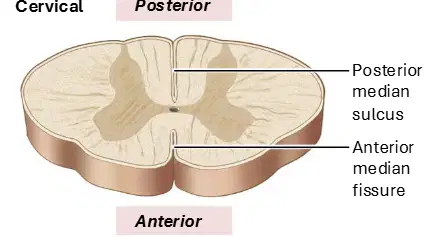
Where is the cervical enlargement located in the spinal cord?
Inferior cervical part
Thoracic part
Lumbar part
Sacral part
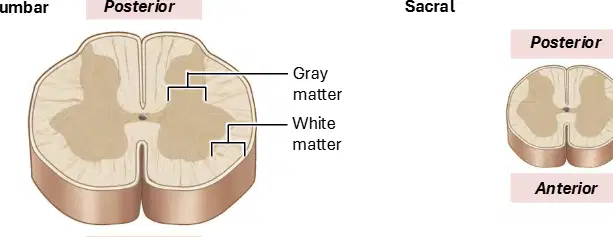
What does the lumbosacral enlargement innervate?
Upper limbs
Lower limbs
Thoracic region
Cervical region
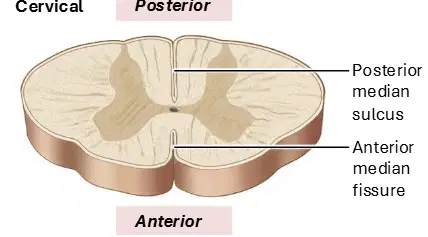
Which of the following is a characteristic of the anterior median fissure?
It is narrower than the posterior median sulcus
It is associated with the anterior spinal artery
It is located in the thoracic part
It is found only in the sacral region
What is the primary composition of gray matter in the spinal cord?
Myelinated axons
Dendrites and cell bodies of neurons
Connective tissue
Blood vessels
Which of the following is a part of the white matter in the spinal cord?
Posterior horn
Lateral horn
Anterior funiculus
Gray commissure

Where is gray matter located in the spinal cord?
Centrally located
Peripherally located
Only in the anterior region
Only in the posterior region
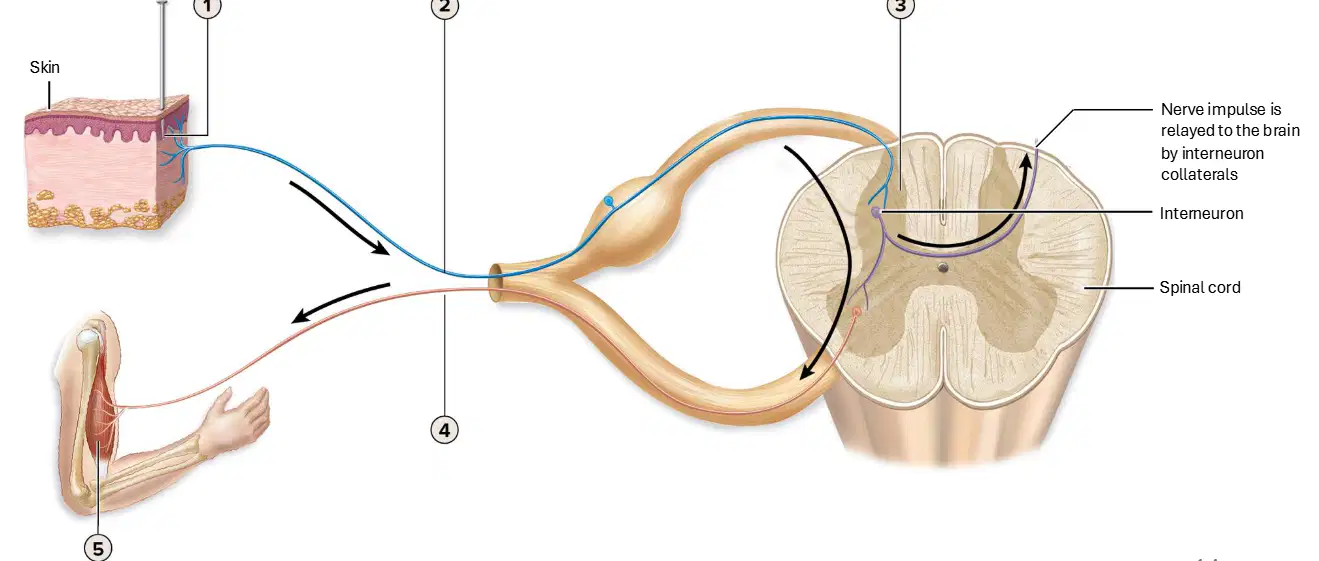
In the reflex arc, what role do interneurons play?
They activate sensory receptors
They send impulses to effectors
They process information about the stimulus
They bring about the response
What does a hypoactive reflex indicate?
Normal muscle function
Diminished or absent response
Abnormally strong response
Enhanced muscle tone
What does a hyperactive reflex indicate?
Normal muscle function
Diminished or absent response
Abnormally strong response
Reduced muscle tone
What is the role of Golgi tendon organs in the tendon reflex?
They initiate muscle contraction.
They inhibit sensory neurons.
They activate motor neurons.
They detect tension in the tendon.

What is the function of the white and gray rami in the sympathetic trunk?
They connect the sympathetic trunk to each spinal nerve.
They carry sensory information to the brain.
They provide blood supply to the spinal cord.
They regulate the heart rate.

What does the color of the white rami reflect?
Lack of myelin
Presence of myelin
Blood flow
Nerve density

What do sympathetic trunk ganglia house?
Sensory neuron cell bodies
Sympathetic ganglionic neuron cell bodies
Blood vessels
Connective tissue
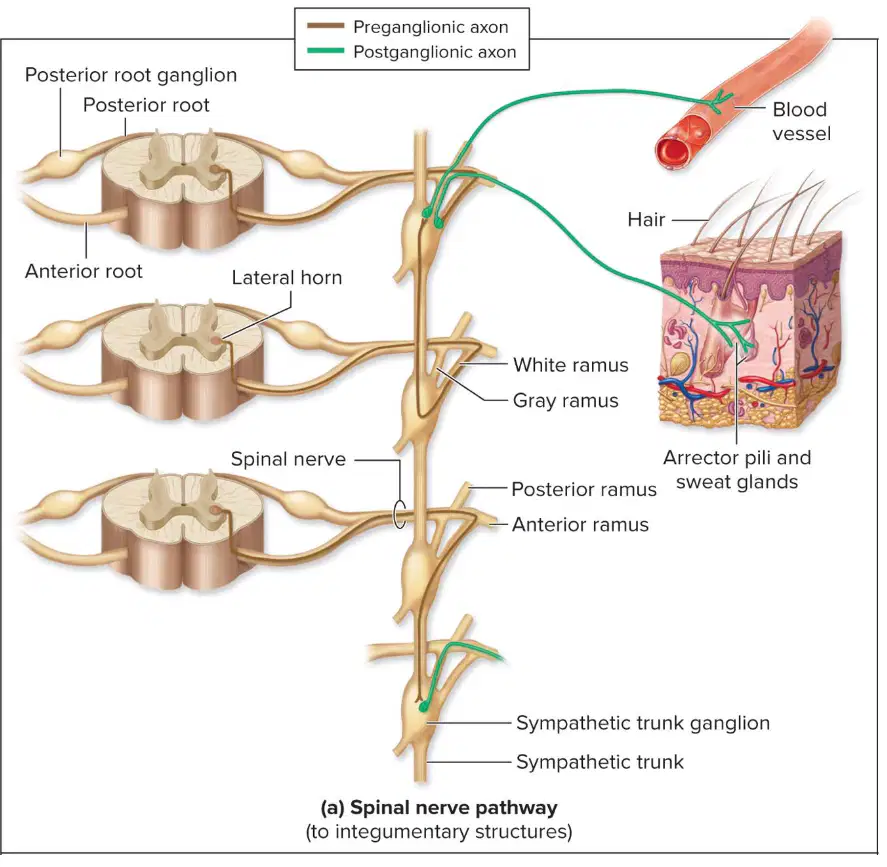
What is the role of the preganglionic axon in the sympathetic spinal nerve pathway?
It terminates in the sympathetic trunk via the white ramus communicans.
It exits via the gray ramus to the target organ.
It connects directly to the target organ.
It bypasses the sympathetic trunk entirely.

How does the postganglionic neuron exit in the sympathetic spinal nerve pathway?
Via the white ramus at a different level.
Via the gray ramus at the same level.
Directly through the anterior root.
Through the posterior root ganglion.
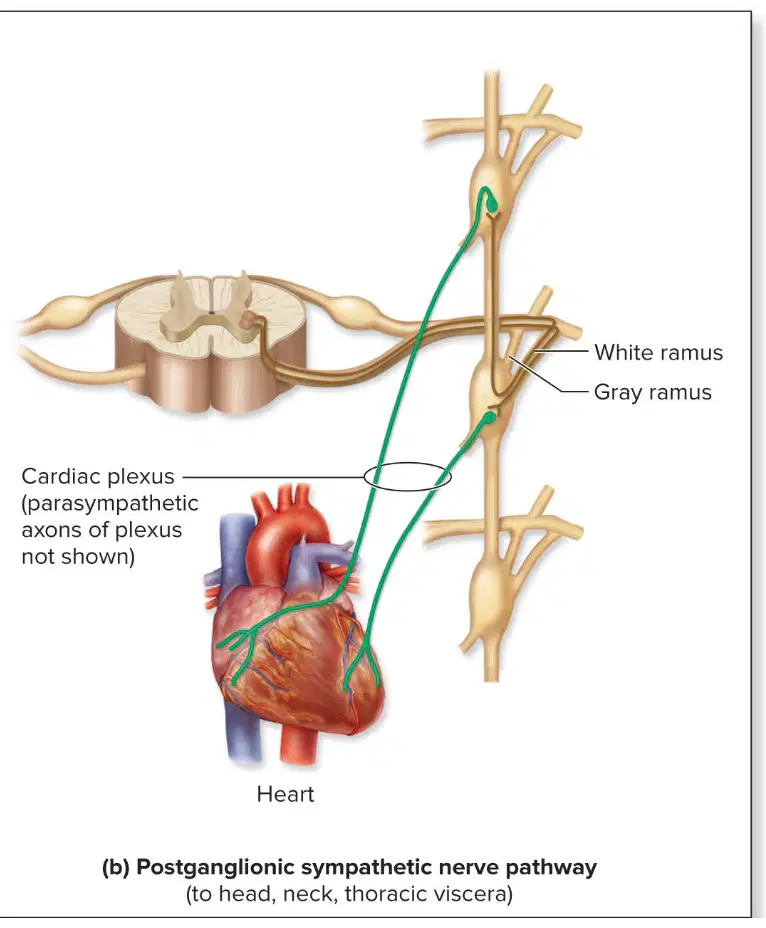
What is the role of the preganglionic axon in the sympathetic nerve pathway?
It extends directly to the target organ.
It terminates in the sympathetic trunk via the white ramus communicans.
It connects to the parasympathetic nervous system.
It bypasses the sympathetic trunk entirely.

Where does the postganglionic neuron extend in the sympathetic nerve pathway?
To the spinal cord.
To the brain.
Directly to the target organ.
To the white ramus communicans.

What is the role of the preganglionic axon in the splanchnic nerve pathway?
It passes through the sympathetic trunk via the white ramus communicans and terminates in the prevertebral ganglion.
It directly innervates the target organ.
It terminates in the sympathetic trunk ganglion.
It bypasses the sympathetic trunk entirely.
What is the role of preganglionic axons in the adrenal medulla pathway?
They release epinephrine directly into the bloodstream.
They innervate the internal region of the adrenal gland.
They inhibit the release of norepinephrine.
They connect to the gray ramus.
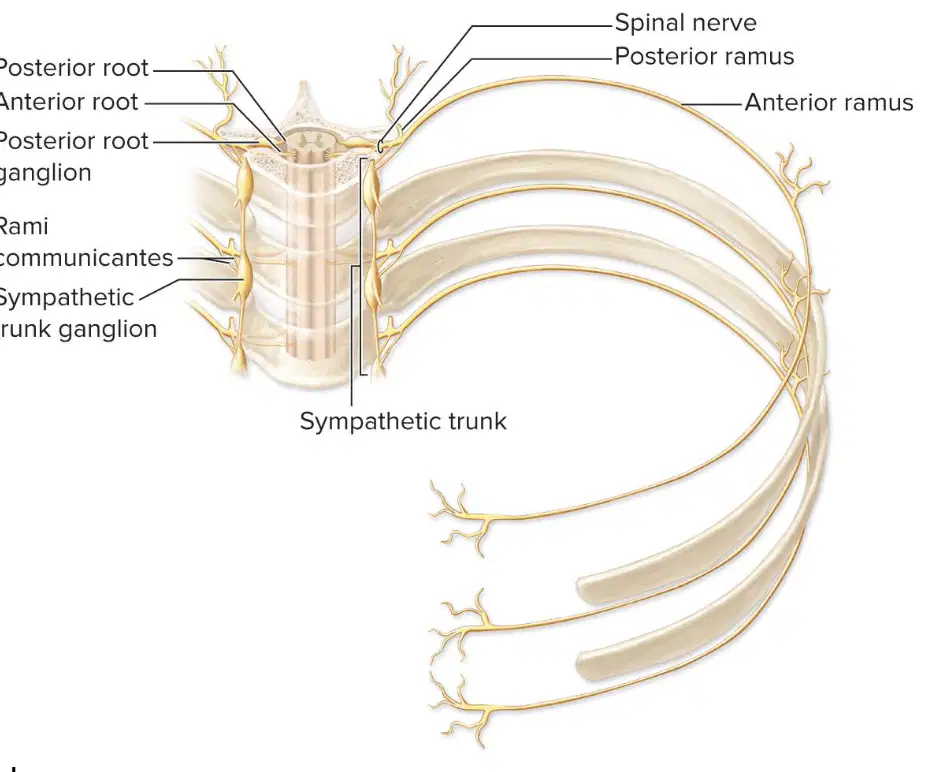
Which spinal nerves are referred to as intercostal nerves?
T1–T11
T2–T12
T1–T12
T3–T11
What is the name given to spinal nerve T12?
Subcostal nerve
Intercostal nerve
Brachial nerve
Axillary nerve
Which spinal nerve helps form the brachial plexus?
T1
T2
T3
T12

Which of the following is NOT a major nerve plexus?
Cervical plexus
Brachial plexus
Thoracic plexus
Sacral plexus

What is the primary function of the phrenic nerve?
Innervates the diaphragm
Controls the heart rate
Regulates blood pressure
Stimulates digestion

What are the cutaneous branches of the cervical plexus?
Great auricular, Lesser occipital, Supraclavicular, Transverse cervical
Radial, Ulnar, Median, Axillary
Femoral, Obturator, Sciatic, Tibial
Vagus, Accessory, Hypoglossal, Glossopharyngeal
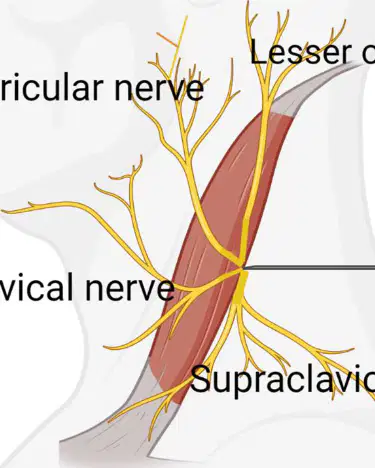
Which of the following is a cutaneous branch of the cervical plexus?
Great auricular
Median nerve
Radial nerve
Ulnar nerve
The lesser occipital nerve is associated with which cervical nerve root?
C1
C2
C3
C4
What is the mnemonic tip provided for remembering the cutaneous branches of the cervical plexus?
Get LoST
Remember ABC
Find XYZ
Keep Calm

