
 Worksheets
Matter Review-NC standards
Total questions: 125
Worksheet time: 2hrs 19mins
Is boiling water a physical or chemical change?
A physical change—the water changes state from liquid to gas but remains H2O.
A chemical change—the water transforms into hydrogen and oxygen gas.
A physical change—the water changes color and taste.
A chemical change—the water becomes steam and loses its properties.
Is melting a physical or chemical change?
A physical change—it does not create a new substance.
A chemical change—it creates a new substance.
A physical change—it alters the chemical composition.
A chemical change—it involves a change in state.
Crushing a can—physical or chemical change?
Physical change—the material stays the same.
Chemical change—the material transforms into a new substance.
Neither—a can is an inanimate object.
Both—it's a combination of physical and chemical changes.
What is a chemical change?
A change that creates a new substance with different properties. Example: rusting, burning.
A change that only affects the physical properties of a substance.
A change that occurs when a substance is mixed with another without any reaction.
A change that can be easily reversed without altering the original substance.
What is an example of a chemical change in cooking?
Baking a cake is a chemical change because it results in new substances being formed.
Boiling water is a chemical change because it creates steam.
Frying an egg is a physical change because the egg remains the same.
Mixing sugar and water is a chemical change because it forms a new solution.
What is a physical change?
A change that creates a new substance.
A change that does not create a new substance. Example: melting ice, tearing paper.
A change that only occurs in liquids.
A change that involves a chemical reaction.
Is dissolving a physical or chemical change?
A physical change—it does not create a new substance.
A chemical change—it creates a new substance.
A physical change—it alters the substance's chemical properties.
A chemical change—it involves a change in state.
Is freezing water a physical or chemical change?
A physical change—the water changes state from liquid to solid but remains H2O.
A chemical change—the water transforms into a different substance.
A physical change—the water evaporates into vapor.
A chemical change—the water becomes ice and loses its original properties.
What are signs of a chemical change?
Color change, odor, temperature change, gas (bubbles) forming.
Physical state change without any other signs.
No observable changes in the substance.
Only a change in color.
The transfer of thermal energy or heat energy between two objects at different temperatures:
heating
cooling
thermal insulators
weight
Materials that prevent heat from passing through them are called thermal insulators
(Ex. Wood, plastic, wool, cotton)
thermal conductors
thermal insulators
conductors
physical change
To cause to draw more closely together
expand
contract
material
cool
The process of removing thermal energy or heat energy:
transferring
conducting
cooling
heating
A substance or mixture of substances that an object is made from
substance
material
copper
aluminum
To make larger or wider
dissolve
contract
expand
mixture
Materials that allow heat to pass through them easily are called thermal conductors
(Aluminum, copper, steel, iron)
thermal insulators
thermal conductors
thermal underwear
thermal mugs
Iron rusting is an example of a ______________ change.
physical
chemical
Cutting a piece of paper is an example of a _______________change.
chemical
physical
This describes how matter looks, feels or interacts with other matter and can be observed or measured.
weight
physical property
The state of matter in which a substance maintains a rigid form without a container:
solid
liquid
gas
The state of matter in which a substance takes the shape of a container
gas
solid
liquid
The state of matter in which a substance expands to fill a container:
solid
liquid
gas
When two or more substances combine physically, they become a:
solution
mixture
When a solid is mixed into a liquid and disappears:
dissolves
solution
Is a mixture of one kind of matter (sugar) dissolved in another kind of matter (water). A mixture of one kind of matter that dissolves in another kind of matter and cannot be easily separated.
solid
solution
Anything that has mass and takes up space.
mass
matter
The amount of matter in an object.
mass
chemical property
Happens when a substance changes without changing the true identity of the substance (ex. water changing to ice). A change in which no new substances are formed.
Describes the way a substance may change or react to form a different substance.
Chemical property
Happens when one substance changes into another substance. Example: if you leave your bike outside in the rain it will probably have rust on it. Happens when matter becomes something completely new.
The Law of Conservation states that the weight of an object is...
equal to the sum of its parts
A collection of data that describes something such as its color, texture, or smell.
A collection of data of a substance based on measurable data (numbers) such as its weight or height.
Burning wood is an example of which change?
Ripping paper is an example of which change?
Rusting is an example of which change?
Dissolving sugar into water is an example of which change?
A student weighs ice. It weighs 100 grams. How much will it weighs when the ice melts?
A student weighs a piece of paper. Then, she rips the piece of paper and weighs it. What will be the weight of the paper after it is ripped?
A student dissolves 10 grams of sugar into 100 grams of water. What is the total weight of the water and dissolved sugar?
Examples of insulators
plastic
metal
water
concrete
What can heating or cooling do to a material?
It can change its state, size, or temperature, but not always its substance.
It can always change its substance completely.
It can only change its color.
It has no effect on the material.
Give an example of a material that expands when heated.
Wood
Plastic
Metal
Glass
What happens to most materials when they are cooled?
They expand and their particles move faster.
They contract (shrink) and their particles move more slowly.
They remain the same size and their particles stop moving.
They dissolve in liquids and become less dense.
What are conductors of heat?
Materials that allow heat to pass through easily—like metal.
Materials that do not allow heat to pass through—like wood.
Materials that absorb heat without transferring it—like rubber.
Materials that reflect heat—like glass.
Examples of conductors
silver, copper, gold, aluminum, and steel
wood, plastic, rubber, and glass
water, air, oil, and sand
ceramics, paper, and fabric
What are insulators of heat?
Materials that allow heat to pass through easily—like metals.
Materials that do not allow heat to pass through easily—like wood, plastic, and silicone.
Materials that conduct heat very well—like copper and aluminum.
Materials that absorb heat without transferring it—like rubber and glass.
Why do changes often happen faster at higher temperatures?
Heat gives particles more energy, making changes occur more quickly.
Higher temperatures cause particles to slow down.
Changes at higher temperatures are less significant.
Temperature has no effect on the speed of changes.
What is a physical change?
A change that affects one or more physical properties of a substance without changing its chemical composition.
A change that alters the chemical structure of a substance.
A process that results in the formation of a new substance.
A change that only affects the temperature of a substance.
What is evaporation?
The process where liquid water turns into vapor due to heat.
The process of water freezing into ice.
The process of water being absorbed by soil.
The process of water condensing into liquid from vapor.
What occurs when a cold pack is activated?
A physical change occurs, causing the pack to become warm.
A chemical change occurs when the liquid and powder combine, causing the pack to become cold.
The pack remains at room temperature without any change.
The liquid evaporates, making the pack cooler.
What is the difference between a physical change and a chemical change?
A physical change creates a new substance, while a chemical change does not.
A physical change involves a change in state, while a chemical change involves a change in composition.
A physical change is reversible, while a chemical change is irreversible.
A physical change does not create a new substance, while a chemical change does.
What is a solution?
A heterogeneous mixture of different substances.
A homogeneous mixture where one substance is dissolved in another.
A pure substance with a fixed composition.
A mixture that cannot be separated by physical means.
What provides the energy for water to evaporate?
Sunlight
Wind
Temperature
Humidity
What is the role of sunlight in the water cycle?
Sunlight provides the energy needed for evaporation.
Sunlight cools the water to prevent evaporation.
Sunlight purifies the water in rivers and lakes.
Sunlight increases the acidity of water bodies.
What happens to the properties of a substance during a chemical change?
The properties of a substance remain the same, and no new substances are formed.
The properties of a substance change, and new substances with different chemical identities are formed.
The properties of a substance are enhanced, but no new substances are created.
The properties of a substance are temporarily altered, but revert back after the change.
What is melting?
The process of a solid turning into a liquid when its temperature is raised.
The process of a liquid turning into a gas when heated.
The process of a gas turning into a solid when cooled.
The process of a solid becoming a gas without turning into a liquid.
What is a chemical change?
A change that results in the formation of new chemical substances.
A physical change that does not alter the chemical composition.
A process that only involves the mixing of substances without any reaction.
A change that can be easily reversed without any new substances formed.
Give an example of a chemical change.
Burning wood, which produces ashes and smoke.
Melting ice into water.
Dissolving sugar in water.
Chopping vegetables for a salad.
Give an example of a physical change.
An example of a physical change is ice melting into water.
An example of a physical change is burning wood.
An example of a physical change is rust forming on iron.
An example of a physical change is dissolving sugar in water.
What is an example of a reversible physical change?
Water freezing into ice and then melting back into water.
Iron rusting when exposed to moisture.
Wood burning to ash.
Sugar dissolving in water and then crystallizing.
What is a physical change?
A change that alters the chemical composition of a substance.
A change that affects one or more physical properties of a substance without altering its chemical composition.
A change that only occurs at high temperatures.
A change that results in the formation of a new substance.
What is an example of an irreversible chemical change?
Cooking an egg
Melting ice
Dissolving sugar in water
Baking a cake
What is an example of a mixture?
Salad, which contains various ingredients that do not chemically combine.
Sugar, which dissolves in water to form a solution.
Salt, which is a pure substance.
Oxygen, which is a single element.
What is the role of temperature in physical changes?
Temperature has no effect on physical changes.
Temperature can cause substances to change state, such as melting or freezing.
Temperature only affects chemical changes.
Temperature is irrelevant in the state of matter.
What is the significance of ashes after burning wood?
Ashes can be used as fertilizer for plants.
Ashes are evidence of a chemical change because they cannot be transformed back into wood.
Ashes indicate that the wood was of poor quality.
Ashes can be used to create new wood products.
What is the process of freezing?
The process of a liquid turning into a solid when its temperature is lowered.
The process of a solid turning into a liquid when its temperature is raised.
The process of a gas turning into a liquid when its temperature is lowered.
The process of a liquid evaporating into a gas when its temperature is raised.
What happens to the properties of a substance during a physical change?
The properties of a substance remain unchanged and its chemical identity changes.
The properties of a substance may change, but its chemical identity remains the same.
The properties of a substance change completely and it becomes a different substance.
The properties of a substance are irrelevant during a physical change.
A student conducts an investigation in class. If 10 grams of water are added to 5 grams of salt, how much salt water will be made?
2 grams
5 grams
10 grams
15 grams
A student notices that an inflated balloon gets larger when it is warmed by a lamp. Which best describes the mass of the balloon as a result of this change?
The mass of the balloon increases because the size of the balloon has increased.
The mass of the balloon increases because the temperature of the balloon has increased.
The mass of the balloon stays the same because the gas inside the balloon still has the same mass after it warms up.
The mass of the balloon stays the same because warming decreases the mass enough to cancel out the effect of increasing the size.
Joey conducted an investigation to explore how heat affects an object. With help from his teacher, he melted three crayons. The three melted crayons have a combined weight of 0.5 oz. Which is the most likely combined weight of the crayons before they were melted?
The weight of the crayons should have been less than to 0.5 oz.
The weight of the crayons should have been more than to 0.5 oz.
The weight of the crayons should have been three times 0.5 oz.
The weight of the crayons should have been equal to 0.5 oz.
An apple weighs 18 grams and is cut into 6 equal slices. How much does each slice weigh?
1 gram
2 grams
3 grams
4 grams
Students want to conduct an investigation to show a new substance being formed. Which investigation below should the students conduct?
The students should break a piece of glass.
The students should melt metal.
The students should freeze water.
The students should burn wood.
Which of the following is an example of a chemical change? A) Water freezing and expanding, forcing cement to break apart. B) Extreme heat causing a boulder to split apart. C) Wind blowing sand at a stone, causing the sides to smooth. D) Limestone dissolving in acid rain.
Water freezing and expanding, forcing cement to break apart.
Extreme heat causing a boulder to split apart.
Wind blowing sand at a stone, causing the sides to smooth.
Limestone dissolving in acid rain.
Students visit a local bakery on a field trip. While there, each child is able to bake a loaf of bread. The baker asks students to explain why baking bread is an example of a chemical change. What could be a reason the students could give to support the baker's claim?
Heat is produced.
A new substance is produced.
The bread changes color.
The bread changes shape.
Students conduct an investigation in class to determine what happens to an apple over time. What is a characteristic that may be observed?
The apple rusts.
The apple burns.
The apple decomposes.
The apple stays the same.
What happens to metal railroad tracks during the heat of a summer day?
They decrease in weight.
They increase in weight.
They decrease in length.
They increase in length.
During a hot summer day, metal railroad tracks ______ in length.
decrease
increase
remain the same
fluctuate
Lisa bought a box of candles weighing 30 ounces. There were 5 candles in the box. Lisa left the box in her car, and the candles melted together, forming one piece of wax. How much will the box of candles most likely weigh after this change?
5 ounces
6 ounces
25 ounces
30 ounces
Laura placed 20 grams each of water, grape juice, orange juice, and coffee in an ice cube tray. Laura wanted to see what the mass of each liquid would be after freezing. Which is most likely Laura’s conclusion when she weighs the frozen samples?
Each sample will weigh 40 grams.
Each sample will weigh 25 grams.
Each sample will weigh 20 grams.
Each sample will weigh 15 grams.
Mrs. Jones wants to prove to her students that when an object is burned, its total mass is the same before and after the reaction. What should Mrs. Jones do to make sure this is shown by the experiment?
burn the object in a closed container
burn the object outside on a nice day
add water to the object after it is burned
split the object into two equal pieces before burning
A group of students mixed 10 ounces of liquid X with 12 ounces of liquid Y to create a new substance. The experiment was conducted in a closed soda bottle weighing 3 ounces. The students weighed the bottle with the new substance immediately following the experiment. Which best describes their results?
It weighed 13 ounces because liquid Y dissolved in liquid X.
It weighed 15 ounces because liquid X dissolved in liquid Y.
It weighed 25 ounces because the weight of both liquids and the bottle remain the same and must be added together.
It weighed 47 ounces because the weight of the liquids is doubled when they are mixed, and the weight of the bottle remains the same.
A fresh apple is placed in a tightly sealed glass jar. The total mass of the jar and apple is measured. After a week, the apple in the jar begins to rot. The total mass is measured again. Which can be accurately predicted?
The total mass will not change because the amount of matter in the jar and the apple will not change.
The mass of the jar will be the total mass because no matter will be left in the jar after the apple rots.
The total mass will increase because the rotting apple will produce gases.
The total mass will decrease because the rotting apple will release heat.
A student flattens a ball of clay he is given and shapes it to resemble a boat. Which best describes the masses of the clay ball and the clay boat?
The mass of the clay ball is more than the mass of the clay boat.
The mass of the clay boat is more than the mass of the clay ball.
The masses of the clay ball and the clay boat are the same.
The clay ball has mass, but the clay boat does not.
Why do metal pans often have plastic or wooden handles?
To keep the handle from melting.
To make the pan lighter.
To protect hands from heat since plastic and wood do not conduct heat well.
To help the pan heat up faster.
What happens to chocolate when it is heated?
A. It melts into a liquid.
It turns into gas.
It freezes.
It becomes a solid.
What happens to a balloon when it is placed in a freezer?
It pops.
It gets smaller because the air inside contracts.
It gets bigger because the air inside expands.
Nothing happens.
What happens to a balloon when it is placed in a freezer?
It pops.
It gets smaller because the air inside contracts.
It gets bigger because the air inside expands.
Nothing happens.
Why is metal used for cooking pots?
It is easy to melt.
It heats up quickly and spreads heat evenly.
It does not change size when heated.
It cools down very slowly.
What happens to a candle when it is heated?
The wax melts and can flow as a liquid.
The wax becomes solid.
The wax disappears instantly.
The wick turns into water.
Why do bridges often have small gaps between sections?
To let water drain through and prevent flooding.
To allow metal to expand and contract with heating and cooling.
To save material
To prevent cars from skidding.
What happens to water when it is cooled below 0°C (32°F)?
It evaporates.
It stays the same.
It disappears.
It turns into ice.
What happens to most materials when they are heated?
They become smaller.
They expand or get bigger.
They turn into liquids.
They disappear.
Which would most likely result in a new substance being produced?
tearing a newspaper
breaking a glass
baking a cake
cutting bread

What should the student do at step 3?
Put both glasses in a sunny location.
Put both glasses in the same spot in her kitchen.
Put one glass in her kitchen and one glass in a closet.
Put one glass in the sun and one glass in the shade.
Mrs. Champion’s class performed an experiment in which they combined 10 ounces of lemon juice with 15 ounces of vinegar to create a new cleaning solution. The experiment was conducted in a sealed spray bottle weighing 5 ounces. The students weighed the bottle with the solution immediately following the experiment. What did the students most likely discover about the weight of the solution and the bottle?
It weighed 25 ounces because the solutions mixed and dissolved the bottle.
It weighed 10 ounces because some of the solution dissolved when it was combined.
It weighed 60 ounces because the solutions doubled in quantity when mixed together.
It weighed 30 ounces because the solutions mixed and everything was contained inside the closed bottle.
Why does liquid water become solid when placed in the freezer?
The liquid water condenses.
The liquid water loses heat.
The liquid water gains heat.
The liquid water evaporates.
Jack placed his wooden baseball bat in the sun. The bat cracked open along the center. What is the most likely reason for this happening?
The wooden bat cools in the sun.
The wooden bat evaporates in the sun.
The sun’s heat causes the wooden bat to expand.
The sun’s heat causes the wooden bat to contract.
Matter that has its own shape and takes up space is a _______.
Milk takes the shape of its container because it is a _______.
Molecules are closest together in a _______.
Freezing
Melting
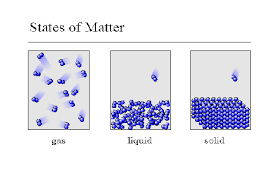
At higher temperatures _________.
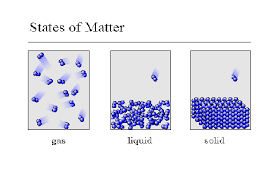
A gas has _________.
has a definite shape and volume
fast-moving particles
Boiling changes from a _________.
liquid to a gas
gas to a solid
liquid to a solid
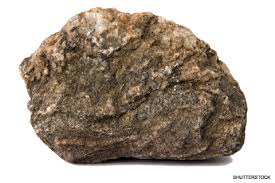
A desk is which of the following states of matter?
solid
liquid
gas
Freezing changes _________.
from a liquid to a solid
from a liquid to a gas
Melting changes a ___________.
liquid to a solid
In a solid, particles ___________.
have a lot of room to move
do not have much room to move

Identify the particles.
solid
liquid
gas

Identify the particles.
solid
liquid
gas

Identify the particles.
solid
liquid
gas
What is matter?
The basic building block for life.
Only 4 things.
Anything that has weight and takes up space.
Nothing
(a) is the amount of space taken up by something.
The amount of matter in an object.
matter
volume
mass

How might temperature changes affect a glass of iced tea?
Making it warmer could cause the ice cubes to melt.
Making it colder could cause the ice cubes to melt.
Making it much warmer could cause the liquid to freeze.

Why does the glass on the right have less water in it?
the solid turned into a gas
the gas turned into a liquid
the liquid turned into a gas

Styrofoam Cup
conductor
insulator

