
Font size
 Worksheets
Material Properties and Structural Scales Quiz
Total questions: 99
Worksheet time: 50mins
What determines the properties of a material?
Its weight and density
Its structure and chemical composition
Its color and texture
Its temperature and pressure
Which scale is defined as 0.1–1 nm?
Nanoscale or ultrastructural
Microstructural
Atomic or molecular
Macrostructural
What is the range of the nanoscale or ultrastructural level?
0.1–1 nm
1 nm–1 μm
1 μm–1 mm
>1 mm
Which structural scale is greater than 1 mm?
Atomic or molecular
Nanoscale or ultrastructural
Microstructural
Macrostructural
In pure elements, alloys, ceramics, and polymers, where are the major structural features found?
At the nanoscale
At the atomic/molecular scale
At the macrostructural scale
At the microstructural scale
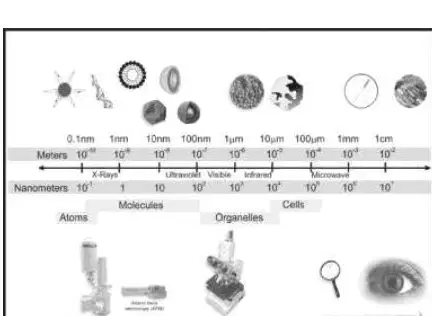
Which of the following correctly lists the scales of structure from atomic to macrostructural levels, including examples like atoms, molecules, organelles, and cells?
Atoms → Molecules → Organelles → Cells
Cells → Organelles → Molecules → Atoms
Organelles → Atoms → Cells → Molecules
Molecules → Cells → Atoms → Organelles
What type of bonding involves the interaction of outermost (valence) electrons in solids?
Ionic bonding
Metallic bonding
Covalent bonding
All of the above
Which material exhibits both covalent and metallic bonding characteristics due to its ability to share electrons and permit limited conductivity?
Copper
Silicon
Sodium chloride
Iron
What is the term used to describe the ability of valence electrons to move freely within a solid?
Semi-conductivity
Electron mobility
Bonding patterns
Conductivity
What is the nature of bonding in materials that exhibit a hybrid of different bond types?
Pure ionic bonding
Pure metallic bonding
Hybrid bonding characteristics
Pure covalent bonding
Which of the following is an example of a material that exhibits ionic bonding characteristics?
NaCl
Fe
Si
Cu
What characteristic of metallic bonds makes them nondirectional?
Electrons are tightly held to the ions.
Electrons are loosely held to the ions.
Electrons are shared equally between atoms.
Electrons are absent in metallic bonds.
Why is it easy for plastic deformations to occur in metals with metallic bonds?
The ions are rigidly fixed in place.
The ions can rearrange themselves permanently under external forces.
The electrons are tightly bound to the ions.
The bonds are directional and resist deformation.
Which of the following is a property of metallic bonds?
They are highly directional.
They allow ions to rearrange permanently under external forces.
They prevent plastic deformation in metals.
They involve the sharing of electrons between atoms.
What is the primary role of electrons in metallic bonds?
To hold the ions loosely, making the bond nondirectional.
To create a rigid structure that resists deformation.
To form covalent bonds between atoms.
To prevent the rearrangement of ions under external forces.
What type of chemical bond is formed by exchanging electrons between metallic and non-metallic atoms?
Covalent bond
Ionic bond
Hydrogen bond
Metallic bond
In an ionic bond, what happens to metallic atoms such as sodium (Na)?
They receive electrons and become negative ions.
They donate electrons and become positive ions.
They share electrons equally with non-metallic atoms.
They remain neutral and do not participate in bonding.
What type of ion does chlorine (Cl) become when it receives electrons in an ionic bond?
Positive ion (Cl+)
Neutral atom (Cl)
Negative ion (Cl–)
Metallic ion (Cl+)
Which of the following best describes the process of ionic bond formation?
Sharing of electrons between two metallic atoms.
Donation of electrons by metallic atoms and acceptance by non-metallic atoms.
Equal sharing of electrons between metallic and non-metallic atoms.
Formation of neutral atoms through electron exchange.
What is the primary characteristic of covalent bonds?
Sharing of valence electrons
Transfer of electrons
Formation of ionic lattices
Weak intermolecular forces
What happens to the strength of covalent bonds when the overlap of valence orbitals increases?
The bond strength decreases
The bond strength remains the same
The bond strength increases
The bond strength becomes negligible
Why is the bond strength of covalent bonds limited?
Due to weak intermolecular forces
Due to strong repulsive forces between nuclei
Due to lack of electron sharing
Due to the absence of valence orbitals
Which material demonstrates the high directionality and strength of covalent bonds?
Graphite
Diamond
Quartz
Silicon
Which of the following are examples of secondary bonds that contribute to material properties?
Ionic Bond and Covalent Bond
Hydrogen Bond and Van der Waals Bond
Metallic Bond and Ionic Bond
Covalent Bond and Metallic Bond
What is the role of secondary bonds in materials?
They are the primary factor in determining material properties.
They contribute to material properties alongside primary bonds.
They do not affect material properties.
They replace primary bonds in materials.
Which type of bond is NOT considered a secondary bond?
Hydrogen Bond
Van der Waals Bond
Ionic Bond
None of the above
What distinguishes secondary bonds from primary bonds?
Secondary bonds are stronger than primary bonds.
Secondary bonds are weaker and contribute to material properties.
Secondary bonds are formed by sharing electrons.
Secondary bonds are the main structural bonds in materials.
What is a hydrogen bond?
A bond formed when hydrogen is covalently bonded to an electronegative atom, creating a positive ion.
A bond formed between two hydrogen atoms.
A bond formed when hydrogen is bonded to a metal atom.
A bond formed between hydrogen and oxygen in water molecules only.
Why is the electrostatic force between hydrogen and a negative ion substantial in hydrogen bonds?
Because hydrogen is a large atom.
Because hydrogen ion is small and can approach the negative ion closely.
Because hydrogen ion has a high electronegativity.
Because hydrogen ion is neutral.
What happens to the hydrogen atom when it is covalently bonded to an electronegative atom?
It becomes a negative ion.
It becomes a positive ion.
It remains neutral.
It forms a metallic bond.
What causes van der Waals forces to arise?
Unequal distribution of electrons among ions that can form dipoles
Formation of hydrogen bonds
Equal distribution of electrons among ions
Long-distance directional bonds
How do dipole-dipole interactions differ from hydrogen bonds?
Dipole-dipole interactions are stronger than hydrogen bonds
Dipole-dipole interactions give rise to directional bonds
Dipole-dipole interactions are weaker and act over short distances
Dipole-dipole interactions involve equal electron distribution
Which of the following statements is true about van der Waals forces?
They are stronger than hydrogen bonds
They arise due to equal electron distribution
They occur when electrons are not distributed equally among ions
They give rise to long-distance directional bonds
What is the primary characteristic of dipole-dipole interactions?
They are directional and act over long distances
They are weaker than hydrogen bonds and act over short distances
They involve equal electron distribution
They are stronger than van der Waals forces
Which type of chemical bond has the lowest heat of vaporization according to the table?
Ionic
Covalent
van der Waals
Metallic
What is the heat of vaporization for substances with hydrogen bonds, such as HF?
13 kJ/mol
31 kJ/mol
47 kJ/mol
180 kJ/mol
Which bond type has the highest heat of vaporization according to the table?
Ionic
Covalent
Metallic
van der Waals
What is the heat of vaporization for NaCl, an ionic compound?
1062 kJ/mol
652 kJ/mol
180 kJ/mol
1180 kJ/mol
Which substance listed in the table has a heat of vaporization of 652 kJ/mol?
NaCl
Fe
SiO2
HF
What is the difference between isotropy and anisotropy in materials?
Isotropy refers to uniform properties in all directions, while anisotropy refers to varying properties in different directions.
Isotropy refers to varying properties in different directions, while anisotropy refers to uniform properties in all directions.
Isotropy refers to the presence of heterogeneity, while anisotropy refers to homogeneity.
Isotropy refers to the ability to conduct electricity, while anisotropy refers to the inability to conduct electricity.
What is the difference between homogeneity and heterogeneity in materials?
Homogeneity refers to uniform composition throughout the material, while heterogeneity refers to varying composition in different parts of the material.
Homogeneity refers to varying composition in different parts of the material, while heterogeneity refers to uniform composition throughout the material.
Homogeneity refers to isotropy, while heterogeneity refers to anisotropy.
Homogeneity refers to the ability to conduct heat, while heterogeneity refers to the inability to conduct heat.
What does "isotropic" mean in the study of mechanical properties of materials?
Having identical values of a property in all directions.
Having different values of a property in all directions.
Having identical values of a property in one direction only.
Having no measurable properties in any direction.
Which of the following is an example of an isotropic material?
Wood.
Glass.
Slate.
Layered rocks.
Why is wood considered an anisotropic material?
Because its properties are identical in all directions.
Because its properties are different parallel and perpendicular to the grain.
Because it has no measurable properties.
Because it is layered like slate.
Which of the following materials is anisotropic?
Metals.
Glass.
Slate.
Plastic.
What is the key difference between isotropic and anisotropic materials?
Isotropic materials have identical properties in all directions, while anisotropic materials have different properties in different directions.
Isotropic materials have no measurable properties, while anisotropic materials have measurable properties.
Isotropic materials are always layered, while anisotropic materials are not.
Isotropic materials are only found in metals, while anisotropic materials are only found in wood.
What does "homogeneous" mean in technical applications?
Properties are uniform throughout the system.
Properties change within the system.
The system contains only one type of element.
The system contains multiple compounds.
What is the key characteristic of a heterogeneous system?
Properties are uniform throughout the system.
Properties change within the system.
The system contains only one type of element.
The system contains only one type of compound.
Which of the following is an example of a homogeneous mixture?
Oil and water.
Salt dissolved in water.
Sand and gravel.
A bowl of mixed nuts.
What is the difference between pure substances and mixtures?
Pure substances are uniform, while mixtures can be homogeneous or heterogeneous.
Pure substances are heterogeneous, while mixtures are always homogeneous.
Mixtures contain only one type of element, while pure substances contain multiple elements.
Mixtures are uniform throughout, while pure substances are not.
What does "isotropic" mean in terms of material properties?
Properties are different in every direction.
Properties are the same in every direction.
Properties are different at every point.
Properties are the same at every point.
Which term describes materials with properties that are different in every direction?
Homogeneous
Isotropic
Anisotropic
Heterogeneous
What is the definition of "homogeneous" in material properties?
Properties are the same at every point.
Properties are different at every point.
Properties are the same in every direction.
Properties are different in every direction.
Which term refers to materials with properties that vary at every point?
Homogeneous
Heterogeneous
Isotropic
Anisotropic
What is the key difference between isotropic and anisotropic materials?
Isotropic materials have properties that vary at every point, while anisotropic materials have properties that are the same at every point.
Isotropic materials have properties that are the same in every direction, while anisotropic materials have properties that vary in every direction.
Isotropic materials are homogeneous, while anisotropic materials are heterogeneous.
Isotropic materials are heterogeneous, while anisotropic materials are homogeneous.
What are the characteristics of solids?
Compressibility, flexibility, and weak mechanical strength
Incompressibility, rigidity, and mechanical strength
High compressibility, low rigidity, and weak atomic arrangement
Random molecular arrangement and flexibility
How are crystalline solids different from amorphous solids?
Crystalline solids have randomly oriented particles, while amorphous solids have orderly arranged particles
Crystalline solids have long-range order, while amorphous solids have randomly oriented particles
Crystalline solids are flexible, while amorphous solids are rigid
Crystalline solids are compressible, while amorphous solids are incompressible
What does the term "long-range order" refer to in crystalline solids?
Random arrangement of particles across the volume
Orderly arrangement of particles throughout the entire structure
Periodic arrangement of particles only at the surface
Disordered arrangement of particles in specific regions
Which type of solid has a periodic arrangement across the whole volume?
Amorphous solid
Polycrystal
Single crystal
Random solid
What is the arrangement of particles in amorphous solids?
Orderly arranged with long-range order
Randomly oriented without periodicity
Periodic across the whole volume
Periodic across each grain
What is the defining characteristic of an ideal single crystal?
It has no translational symmetry.
It is comprised of many individual grains or crystallites.
Its atomic structure repeats periodically across its whole volume.
It has short-range order only.
What distinguishes a polycrystalline solid from a single crystal?
It has no atomic structure.
It is made up of individual grains or crystallites with long-range order.
It has no periodicity across a large enough length scale.
It has no short-range order.
Which of the following is true about amorphous materials like window glass?
They have long-range order.
They have no translational symmetry.
Their atomic structure is completely random.
They have periodic atomic structures.
Why do liquids and crystals have similar densities?
Both have long-range order.
Both have short-range order that fixes the distances between atoms.
Both have no translational symmetry.
Both are comprised of individual grains or crystallites.
What can the differences in structure between single crystals, polycrystals, and amorphous materials explain?
Their atomic mass.
Their mechanical, optical, magnetic, and electronic behavior.
Their melting points.
Their density.
What is the term used to describe the orderly arrangement of atoms or molecules in a crystalline solid?
Amorphous structure
Crystal lattice
Crystal structure
Molecular structure
What does the term 'crystal lattice' refer to?
The smallest repeating unit in a crystal structure
The pattern formed by points representing positions of repeating structural elements
The arrangement of atoms in an amorphous solid
The molecular structure of a liquid
What is the smallest repeating unit in a crystal structure called?
Crystal lattice
Unit cell
Molecular structure
Atomic structure
How is the entire lattice of a crystal generated?
By arranging atoms randomly
By repeating the unit cell in different directions
By forming amorphous structures
By combining molecular structures
What characteristic does a crystal possess due to its structure?
Short-range order and asymmetry
Long-range order and symmetry
Random arrangement of atoms
Irregular molecular structure
What does the arrangement of atoms in a crystal represent when treated as an arrangement of hard spheres?
Equilibrium distances between atoms
Random atomic arrangement
Irregular atomic structure
Bond angles between atoms
What is the characteristic dimension of a unit cell in a crystal structure?
Lattice constant and bond length
Lattice constant and angles α, β, and γ
Bond angles and atomic radius
Atomic radius and equilibrium distance
What type of crystal structure is formed when the atomic structure is extended into three dimensions?
Hexagonal lattice
Cubic lattice
Tetragonal lattice
Orthorhombic lattice
What is the name of the simplest type of cubic space lattice?
Body-centered cubic
Face-centered cubic
Simple cubic
Hexagonal cubic
What is the coordination number (CN) of atoms in a face-centered cubic (fcc) crystal structure?
6
8
12
10
Why is the face-centered cubic (fcc) structure considered the most efficiently packed structure?
Because each atom touches 6 neighbors
Because each atom touches 8 neighbors
Because each atom touches 12 neighbors
Because each atom touches 10 neighbors
What is the key difference between a simple cubic structure and a face-centered cubic (fcc) structure?
The coordination number in fcc is 6, while in simple cubic it is 12
The coordination number in fcc is 12, while in simple cubic it is 6
The coordination number in both structures is 8
The coordination number in both structures is 10
What does the term "close packed in three dimensions" refer to in the context of the face-centered cubic (fcc) structure?
Atoms are loosely arranged in three dimensions
Atoms are arranged in a way that maximizes empty space
Atoms are packed efficiently with minimal empty space
Atoms are arranged randomly in three dimensions
What is the packing efficiency of the body-centered cubic (bcc) structure?
68%
52.4%
74%
48%
In the body-centered cubic (bcc) structure, where is the additional atom located?
At the corners of the cube
At the center of the cube
At the edges of the cube
At the face of the cube
Which cubic structure has the lowest packing efficiency?
Face-centered cubic (fcc)
Body-centered cubic (bcc)
Simple cubic
Hexagonal close-packed (hcp)
What is the packing efficiency of the face-centered cubic (fcc) structure compared to the body-centered cubic (bcc) structure?
Higher, at 68%
Lower, at 52.4%
Higher, at 74%
Equal, at 68%
What is the arrangement pattern of layers in the hexagonal close-packed (hcp) structure?
ABAB
ABCABC
AABB
ABCA
What is the packing efficiency of both hcp and fcc structures?
68%
74%
80%
90%
Which of the following statements is true about hcp and fcc structures?
Hcp has a higher packing efficiency than fcc.
Fcc has a higher packing efficiency than hcp.
Both hcp and fcc have the same packing efficiency.
Neither hcp nor fcc has efficient packing.
How are the layers of planes represented in the fcc structure?
ABAB
ABCABC
AABB
ABCA
Which crystal structure is characterized by a rectangular parallelepiped with unequal sides?
Hexagonal
Orthorhombic
Monoclinic
Triclinic
What type of unit cell is associated with hexagonal crystal structures?
Rectangular parallelepiped
Hexagonal prisms
Oblique parallelepiped with one oblique angle
Unit cell with unequal sides and all oblique angles
Which crystal structure has a unit cell with unequal sides and all oblique angles?
Orthorhombic
Hexagonal
Monoclinic
Triclinic
What is the crystal structure of iron (Fe) at temperatures between 912°C and 1394°C?
bcc (body-centered cubic)
hcp (hexagonal close-packed)
fcc (face-centered cubic)
Orthorhombic
Which material has an orthorhombic crystal structure?
Rock salt (NaCl)
Alumina (Al₂O₃)
Polyethylene
Titanium (Ti)
At what temperature does cobalt (Co) transition from hcp to another crystal structure?
Below 460°C
Above 460°C
Below 900°C
Above 912°C
Which crystal structure is associated with alumina (Al₂O₃)?
fcc
hcp
bcc
Orthorhombic
What is the crystal structure of titanium (Ti) below 900°C?
bcc
hcp
fcc
Orthorhombic
What is the formula for determining inter-planar spacing (d) in crystal structures using Bragg's law?
nλ=2dcosθ
\( n\lambda = 2d \sin\theta \)
\( n\lambda = d \sin\theta \)
\( \lambda = 2d \sin\theta \)
In Bragg's law, what does \( \lambda \) represent?
Diffraction order
Angle of incident
Wavelength
Inter-planar spacing
What is the role of \( \theta \) in Bragg's law?
It represents the diffraction order.
It represents the angle of incident.
It represents the wavelength.
It represents the inter-planar spacing.
What does \( n \) signify in Bragg's law?
Wavelength
Diffraction order
Angle of incident
Inter-planar spacing
What is the primary purpose of using an X-ray instrument in crystal structure determination?
To measure the wavelength of light.
To determine the diffraction order.
To analyze the diffraction of monochromatic waves from atomic planes.
To calculate the angle of incident.

