
Font size
 Worksheets
Chapters 18-28 RESP 172
Total questions: 81
Worksheet time: 41mins

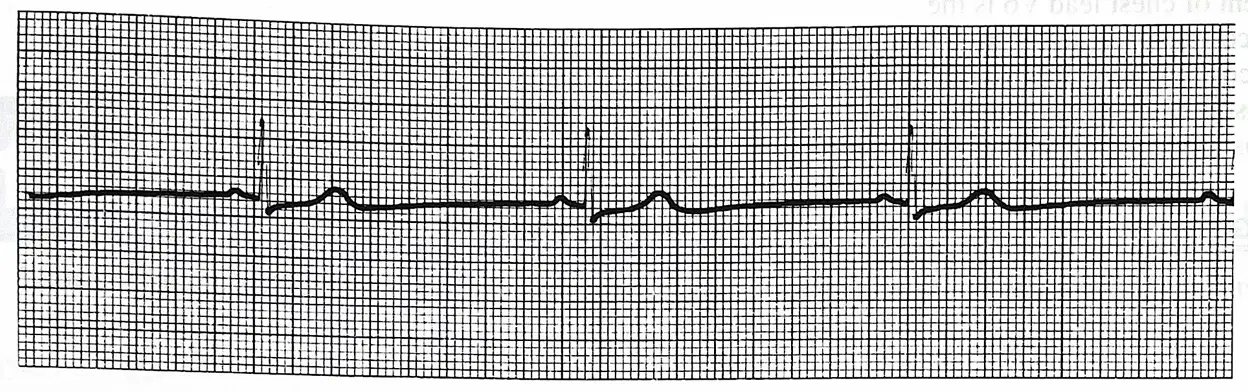
An RT is suctioning a patient on a ventilator and observes the following rhythm on the monitor: In regard to this pattern, the RT should
continue to suction the patient.
stop and administer 100% oxygen.
recommend atropine administration.
defibrillate the patient.
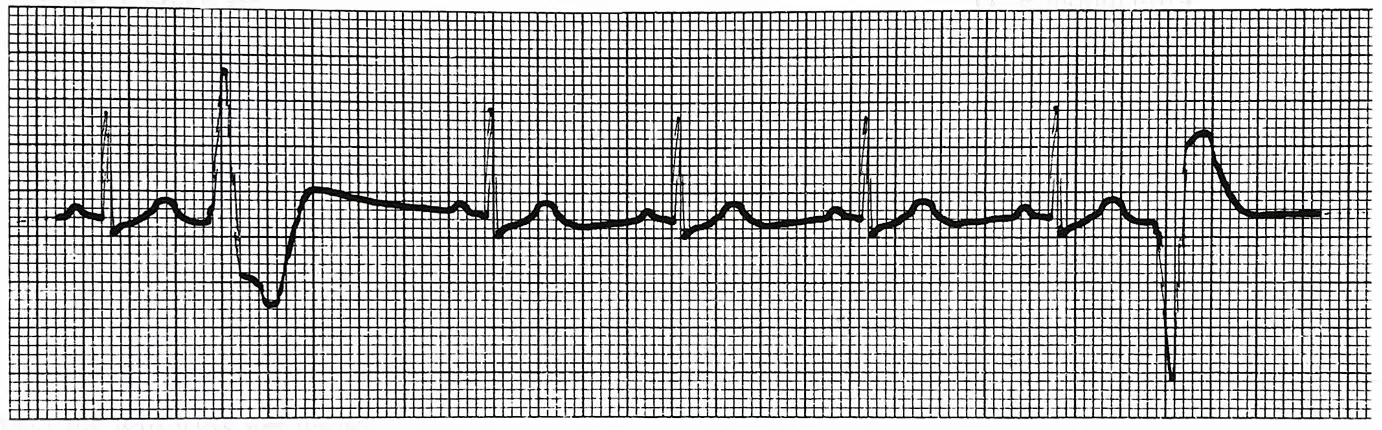
An RT is preparing to perform an arterial puncture when the following rhythm is observed on the monitor:
continue to suction the patient.
stop and administer 100% oxygen.
recommend atropine administration.
defibrillate the patient.
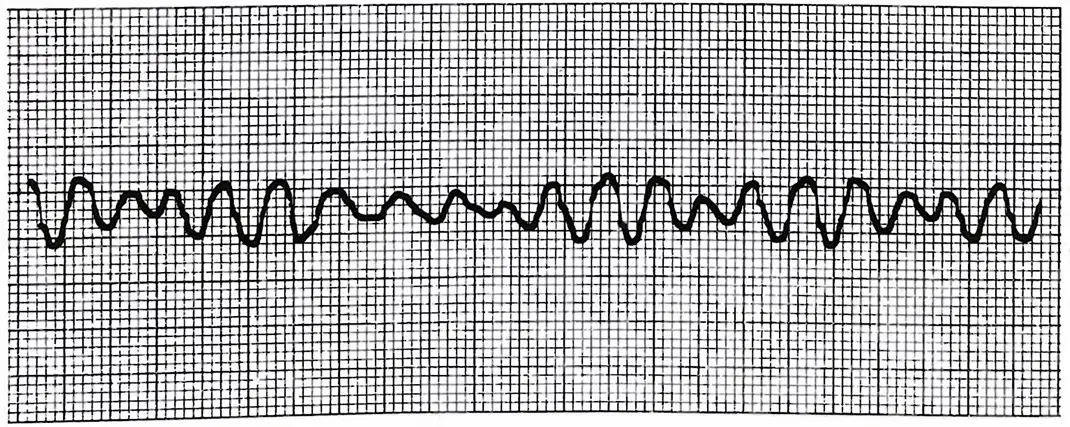
During a routine suctioning procedure, an RT notes the following rhythm on the cardiac monitor. In regard to this pattern, the RT should
continue to suction the patient.
stop and administer 100% oxygen.
recommend atropine administration.
defibrillate the patient.
During a routine suctioning procedure, an RT notes the following rhythm on the cardiac monitor:
continue to suction the patient.
stop and administer 100% oxygen.
recommend atropine administration.
defibrillate the patient.
A respiratory therapist is called to perform a STAT ECG on a patient with chest pain in the emergency department. Proper placement of chest lead V6 is the
fourth intercostal space, left sternal margin.
fourth intercostal space, right sternal margin.
fifth intercostal space, left midaxillary line.
fifth intercostal space, left midclavicular line.
How will you ensure that your patients don’t feel awkward or embarrassed when you do ECGs or chest exams?
By maintaining privacy and explaining the procedure clearly.
By ignoring their discomfort and proceeding quickly.
By making jokes to lighten the mood.
By allowing other patients to watch the procedure.
A respiratory therapist is preparing to perform pulse oximetry. Which of the following would be least beneficial for assessing accuracy of the device?
Checking the capillary refill time
Assessing skin color and temperature
Performing an Allen test on the patient
Assessing pulse rate
Which of the following would you perform after obtaining an arterial blood gas sample?
Remove air bubbles from the sample.
Mix the sample by rotating the syringe.
Maintain site pressure for at least 1 minute.
Add heparin to the sample.
A pulse oximeter is being used to monitor a patient who was rescued from a fire. The SpO₂ is 90%; however, the patient is unconscious and shows signs of respiratory distress. What additional test should the RT recommend?
CT scan
Electrolyte measurement
Co-oximetry
Hemoglobin and hematocrit levels
A polarographic O2 analyzer fails to calibrate when exposed to 100% O2. The first action the respiratory therapist should take would be to
replace the battery.
replace the membrane.
replace the fuel cell.
try another O2 source.
An infant is placed on a transcutaneous O2 monitor. The TcPO2 is reading 40 mm Hg less than the PaO2 obtained from an arterial sample. All of the following could cause this problem except
improper calibration of the transcutaneous electrode.
room air contamination of the transcutaneous electrode.
inadequate heating of the skin at the electrode site.
inadequate perfusion of the skin at the electrode site.
Which of the following analyzers is calibrated to a value of zero when exposed to room air?
Clark electrode
Galvanic O2 analyzer
Capnometer
Geisler type of nitrogen analyzer
Which of the following would be most useful in assessing proper tube placement following endotracheal intubation?
Transcutaneous monitoring
Arterial blood gas analysis
Pulse oximetry
End-tidal CO2 monitoring
Complications of arterial puncture include all of the following except
pulmonary embolus.
hematoma.
infection.
nerve damage.
A galvanic O2 analyzer is being used as a check of the ventilator system to measure the delivered FiO2. The set FiO2 is 40%; however, the analyzer is reading 32%. Which of the following is the most likely cause of this discrepancy?
The batteries in the analyzer need to be changed.
The electrode membrane has water condensation on its surface.
The analyzer needs to be calibrated.
The ventilator requires servicing.
Which of the following will affect the accuracy of pulse oximeter measurements?
increased bilirubin levels
decreased hematocrit levels
dark skin pigmentation
exposure to sunlight
An arterial blood gas sample is drawn from a patient who is breathing room air. Analysis reveals the following results: pH 7.45, PaCO2 35 mm Hg, PaO2 155 mm Hg. Which of the following best explains these results?
Too much heparin was added to the sample.
An air bubble has contaminated the sample.
Analysis of the sample was delayed for more than 60 minutes.
The patient was hyperventilating during the puncture.
Which of the following sites would be the best for continuous monitoring of exhaled carbon dioxide during mechanical ventilation?
Exhalation valve
Inspiratory side of the ventilator circuit
Expiratory side of the ventilator circuit
Endotracheal tube connector
Which of the following is true concerning the use of a transcutaneous PO2 monitor?
TcPO2 should be checked with arterial blood samples.
The skin temperature control should be maintained at 37°C.
The site should be changed every 24 hours.
The low calibration point is determined using room air.
How would you modify your technique if you had to perform ABGs on a patient receiving anticoagulants?
Apply prolonged pressure to the puncture site after the procedure.
Use a larger gauge needle to minimize bleeding risk.
Skip the post-procedure pressure as anticoagulants prevent clotting.
Perform the procedure without any modifications.
67. Why can you use a capnometer during CPR but not a pulse oximeter?
Because a capnometer measures exhaled CO2, which is present during chest compressions, while a pulse oximeter requires a detectable pulse.
Because a capnometer measures oxygen saturation, which is not affected by CPR, while a pulse oximeter measures CO2.
Because a capnometer is less expensive than a pulse oximeter.
Because a capnometer can be used on unconscious patients, while a pulse oximeter cannot.
Which of the following tests would be helpful in assessing the effects of cigarette smoking on the smaller airways?
FVC
FEV₁
FEV₂₅%-₇₅%
FEF₂₀₀-₁₂₀₀
A patient’s physician asks you to recommend a pulmonary function test to help assess the effects of a possible tumor in the trachea. Which of the following would you recommend?
Spirometry with volume-time curves
Spirometry before and after bronchodilator
Lung volume studies via nitrogen washout
Spirometry with flow-volume loops
A pulmonary function technologist tests a spirometer by injecting 3.0 L of air from a large-volume syringe. The spirometer measures 2.9 L. Which of the following is true regarding this situation?
The results are within normal limits.
The spirometer is not ready to use.
The air was injected too slowly.
The BTPS corrections were not made properly.
Which of the following values could be incorrectly calculated?
TLC
FVC
FRC
RV
Which of the following pulmonary measurements is usually the smallest?
Inspiratory capacity
Vital capacity
Functional residual capacity
Total lung capacity
The following results were obtained from spirometry of an adult female smoker with chronic bronchitis. What is the correct interpretation? Test Actual Predicted % Predicted FVC 3.9 L 4.8 L 81% FEV1 3.1 L 4.1 L 76% FEV1/FVC 79% 70%
Results indicate a mild diffusion defect.
Results are within the normal range.
A mixed obstructive/restrictive defect is present.
Results show obstructive lung disease.
After a bronchodilator is administered, what percentage increase in forced spirometric volumes or flow rates is the minimum indication that reversible airway obstruction is present?
5%
10%
15%
20%
Which of the following can be measured during spirometric testing?
Residual volume
Tidal volume
Total lung capacity
Functional residual capacity
An increased total lung capacity combined with a decreased diffusing capacity is strongly indicative of which of the following conditions?
Emphysema
Pneumonia
Pulmonary fibrosis
Pleural effusion
Smoking affects the results of a diffusion test by:
Decreasing the diffusion capacity due to damage to alveolar walls
Increasing the diffusion capacity due to improved lung function
Having no effect on the diffusion capacity
Decreasing the diffusion capacity due to increased mucus production
The lung volume or capacity useful in predicting normal values for incentive spirometry is:
Tidal Volume
Inspiratory Capacity
Residual Volume
Expiratory Reserve Volume
A patient has dyspnea and tachycardia following thoracentesis to treat a pleural effusion. Evaluation of this patient should include a(n) _____________.
CT scan
MRI
chest radiograph
bronchoscopy
A pneumothorax would appear on a chest radiograph as a:
White area near the lung base
white area that obscures the costophrenic angle
dark area without lung markings
dark area with honeycomb markings
The medical record of an intubated patient indicates that the morning chest film shows opacification of the lower right lung field with elevated right diaphragm and a shift of the trachea to the right. These findings suggest:
left-sided pneumothorax
right-sided pleural effusion
right mainstem intubation
right-sided atelectasis
On a chest radiograph, the tip of the endotracheal tube for an adult patient should be:
2 cm above the vocal cords
5 cm above the carina
at the carina
2 cm below the carina
What specific type of chest radiograph may be useful in evaluating pleural effusion?
Lateral decubitus position
Apical lordotic position
Lateral upright
PA expiratory film
A patient with a history of hypertension presents in the ED with headache, slurred speech, and left-sided weakness. What diagnostic imaging procedure does the respiratory therapist recommend to further evaluate this patient according to the ACLS guidelines?
Computed tomography (CT)
Ultrasound
Angiography with contrast
Magnetic resonance imaging (MRI)
A patient with a history of pulmonary pathology and cancer presents with a suspicious mediastinal mass on the chest x-ray. What diagnostic imaging procedure would be useful in gathering further information about the mass?
Computed tomography (CT)
Ultrasound
Angiography with contrast
Magnetic resonance imaging (MRI)
Ultrasound is useful in the cardiopulmonary setting for
guiding catheter placement
evaluation of pleural effusion
evaluation of pneumonia
diagnosis of myocardial infarction
A respiratory care practitioner is treating a child with respiratory distress in the emergency department. Which type of diagnostic imaging procedure may be useful for differentiating between epiglottitis and croup in children?
AP chest x-ray
Lateral neck x-ray
MRI
Ultrasound
The respiratory therapist is checking a patient-ventilator system in the medical intensive care unit when the high-pressure alarm begins to sound. Breath sounds are absent on the left with good tube placement. Blood pressure is 80/50 mm Hg. SpO₂ is 86% and falling. The heart rate is 160 beats/min. There is a hyperresonant percussion note on the left upper chest. The patient has lost consciousness. What action should the respiratory therapist take at this time?
Call for a STAT portable chest x-ray.
Remove the patient from the ventilator and begin manual ventilation.
Remove the endotracheal tube and begin manual ventilation.
Recommend immediate needle decompression of the chest.
The patient head position is important in assessing the placement of the tip of an endotracheal tube on a radiograph. What happens to the tube if the head moves up (extension) or the chin goes down (flexion)? How far can the tube move?
The endotracheal tube can move up to 2 cm with head movement, moving upward with extension and downward with flexion.
The endotracheal tube remains stationary regardless of head movement.
The endotracheal tube moves only with flexion, not with extension.
The endotracheal tube can move up to 5 cm with head movement.
You are preparing a patient for her flexible bronchoscopy procedure. Her weight is 50 kg. What is the total dose of lidocaine that should not be exceeded to help avoid methemoglobinemia?
300 mg
350 mg
400 mg
450 mg
What effects could be seen during a flexible bronchoscopy procedure on an intubated patient receiving mechanical ventilation?
High peak inspiratory pressures
Increase in tidal volume delivery
Acute hypocapnia
High minute ventilation alarm
A respiratory therapist is caring for a 66-year-old male patient with acute exacerbation of COPD. The therapist notes the patient is extremely thin, with ribs obviously showing on his chest. What term should the therapist use to document the patient's appearance?
Malnourished
Cyanotic
Cachexic
Wasted
Cystic fibrosis patients may need what dietary supplement to be able to absorb nutrients?
Calcium
Amino acids
Enzymes
Vitamin C
A patient is seen in the ED with fever, chills, and tachypnea. He states he feels weak and short of breath. The vitals are T 101.4°F, f 28, HR 121, BP 140/96, and SpO2 88% on room air. What should the respiratory therapist do first?
Obtain a sputum specimen.
Request a chest x-ray.
Place the patient on antibiotics.
Place the patient on oxygen.
A 14-year-old is admitted to the medical floor with “acute exacerbation of asthma secondary to lung infection.” While administering bronchodilator therapy, the respiratory therapist observes the patient producing moderate amounts of thick yellow phlegm. What should the therapist recommend at this point?
Obtain a sputum specimen.
Request a chest x-ray.
Place the patient on antibiotics.
Place the patient on oxygen.
Which of the following mechanisms is the most common cause for bacterial pneumonia?
Inhalation
Aspiration
Contiguous spread
Hematogenous dissemination
A person with AIDS presents in the ED with profound hypoxemia, shortness of breath, and nonproductive cough. Physical examination findings suggest bilateral lower lobe pneumonia. Which of the following organisms is most likely to be seen in this particular individual?
Pneumocystis jiroveci
Streptococcus pneumoniae
Mycobacterium tuberculosis
New onset of fever accompanied by purulent secretions and a new infiltrate on the chest film in an intubated patient are strongly suggestive of
VAP.
HAP.
CAP.
MDR.
You suspect that one of your ventilator patients is at high risk for developing pneumonia. What general action should you take?
Request a chest x-ray.
Elevate the head of the bed.
Implement the VAP protocol.
Implement an in-line suction catheter.
The role of the RT in educating at-risk populations about methods to prevent pneumonia is to:
Provide information on prevention strategies and promote healthy behaviors.
Diagnose pneumonia in at-risk populations.
Prescribe antibiotics for pneumonia prevention.
Monitor vital signs in at-risk populations.
A 20-year-old woman who has a history of asthma is brought to the emergency department in respiratory distress. Your assessment of the patient reveals the following: pH 7.47 PaCO₂ 33 mm Hg PaO₂ 72 mm Hg HCO₃⁻ 23 mEq/L RR 28 HR 115 PEFR 200 L/min Which of the following breath sounds would you expect to hear in this patient?
Inspiratory crackles
Expiratory wheezing
Inspiratory stridor
Expiratory rhonchi
A 20-year-old woman who has a history of asthma is brought to the emergency department in respiratory distress. Your assessment of the patient reveals the following: pH 7.47 PaCO₂ 33 mm Hg PaO₂ 72 mm Hg HCO₃⁻ 23 mEq/L RR 28 HR 115 PEFR 200 L/min The arterial blood gas results indicate the presence of
acute respiratory alkalosis.
acute metabolic alkalosis.
chronic respiratory acidosis.
acute respiratory acidosis.
A 20-year-old woman who has a history of asthma is brought to the emergency department in respiratory distress. Your assessment of the patient reveals the following: pH 7.47, PaCO₂ 33 mm Hg, PaO₂ 72 mm Hg, HCO₃⁻ 23 mEq/L, RR 28, HR 115, PEFR 200 L/min. You are asked to initiate oxygen therapy. What would you recommend?
Simple mask at 10 L/min
Nonrebreathing mask at 15 L/min
Nasal cannula at 2 L/min
Air-entrainment mask at 0.50 FIO₂
A 20-year-old woman who has a history of asthma is brought to the emergency department in respiratory distress. Your assessment of the patient reveals the following: pH 7.47 PaCO₂ 33 mm Hg PaO₂ 72 mm Hg HCO₃⁻ 23 mEq/L RR 28 HR 115 PEFR 200 L/min What therapy would you recommend after the oxygen is in place?
2 puffs ipratropium (Atrovent) via MDI
2.5 mg albuterol (Proventil) via SVN
Intravenous theophylline administration
Intravenous antibiotics
Blood gases are repeated 30 minutes after the oxygen therapy is initiated. pH 7.42 PaCO₂ 38 mm Hg PaO₂ 86 mm Hg HCO₃⁻ 23 mEq/L RR 24 HR 88 PEFR 210 L/min Which of the following has shown significant improvement based on this information?
Compliance
Resistance
Oxygenation
Ventilation
A patient with COPD and CO2 retention is admitted for an acute exacerbation of her disease. The physician requests your suggestion for initiating oxygen therapy. Which of the following would you recommend?
Nasal cannula at 6 L/min
Air-entrainment mask at 28%
Simple mask at 2 L/min
Partial rebreathing mask at 8 L/min
A PFT on a 65-year-old woman indicates airflow obstruction with mild air-trapping. The patient is coughing up thick sputum. Which of the following diagnoses is most likely?
Cystic fibrosis
Pneumonia
Pulmonary fibrosis
Bronchiectasis
A PFT on a 56-year-old man with a history of smoking shows increased TLC and RV. The Dlco is reduced. What diagnosis is suggested by these findings?
Emphysema
Pneumonia
Sarcoidosis
Pneumoconiosis
Spirometry is performed before and after bronchodilator administration. Which of the following indicates a therapeutic response?
A. 1 only
3. PEFR increased by 5.
1. FEV1 increased by 10%.
2. FVC increased by 300 ml.
B. 2 only
Because only 15% of smokers show big declines in airflow, why should we encourage all patients to quit smoking?
Because all smokers are at risk for other health problems, not just airflow decline.
Because quitting smoking only benefits those with airflow decline.
Because most smokers do not experience any health issues.
Because airflow decline is the only consequence of smoking.
Omalizumab (Xolair) is used for asthma. How does it work?
It blocks IgE antibodies to reduce allergic inflammation.
It increases histamine production in the lungs.
It stimulates bronchoconstriction.
It acts as a corticosteroid to suppress the immune system.
A patient with a history of sarcoidosis presents in the emergency department with shortness of breath. Vital signs are T 99, P 114, f 32, BP 138/88, and SpO2 82%. The respiratory care practitioner would
administer oxygen via nasal cannula at 2 L/min.
request a STAT portable AP chest x-ray.
perform a STAT ABG.
administer albuterol.
What is the general term for all lung diseases that cause a reduction in lung volumes without a reduction in flow rates?
Restrictive lung disease
Obstructive lung disease
Asthma
Emphysema
Immediately after insertion of a central line via the subclavian vein, an intubated patient becomes dyspneic. The respiratory therapist should recommend which of the following diagnostic tests?
12-lead ECG
Chest radiograph
ABG
Bedside spirometry
The middle bottle of a three-bottle chest drainage system is used for which of the following?
Water seal
Fluid collection
Means of applying vacuum to the chest
Measurement of improvement of the pneumothorax
A chest tube is placed anteriorly between the second and third ribs. The tube is probably intended to treat a
chylothorax.
hemothorax.
transudative pleural effusion.
pneumothorax.
A patient is suspected of having a pleural effusion. Which x-ray position is most appropriate to confirm this diagnosis?
AP chest film
Lateral decubitus chest film
Apical lordotic chest film
PA chest film
Thoracentesis is performed and 1500 ml of fluid is removed from the right chest. Which of the following is likely to occur as a result?
Pulmonary edema in the right lung
Stridor and respiratory distress
Pneumothorax in the right lung
Atelectasis in the right lung
All of the following would be useful in differentiating right mainstem intubation from left-sided pneumothorax except
A. chest radiograph.
B. diagnostic percussion.
C. auscultation.
D. lung compliance measurement.
Following an IPPB treatment, a COPD patient complains of sudden severe chest pain. What is the respiratory therapist's first priority in this situation?
Notify the physician of the problem.
Initiate oxygen therapy.
Recommend a chest radiograph.
Perform an arterial blood gas.
A patient develops subcutaneous emphysema following a motor vehicle accident involving multiple rib fractures. What action should the respiratory therapist take in this situation?
Perform bedside spirometry.
Initiate oxygen therapy.
Recommend a chest radiograph.
Perform an arterial blood gas.
What is meant by the term "ascites" and how could ascites affect respiratory function besides causing effusions?
Ascites refers to the accumulation of fluid in the abdominal cavity, which can restrict diaphragm movement and impair breathing.
Ascites refers to fluid in the lungs, which directly causes pneumonia and respiratory failure.
Ascites is a buildup of fluid in the pericardial sac, leading to heart failure and shortness of breath.
Ascites is a swelling of the lymph nodes, which compresses the trachea and causes airway obstruction.
Subcutaneous emphysema is characterized by air present under the skin. What relationship does it have to pneumothorax?
It often occurs as a result of pneumothorax due to air escaping from the lung into subcutaneous tissues.
It is unrelated to pneumothorax and only occurs in skin infections.
It is a direct cause of pneumothorax.
It is a symptom exclusive to abdominal trauma.
A patient who is being mechanically ventilated shows an increased V_D/V_T ratio. Which of the following disorders could be responsible?
Atelectasis
Pneumonia
Pulmonary embolism
Pleural effusion
Which of the following is the most appropriate test to confirm the presence of a suspected PE?
Chest radiograph
V/Q scan
Bronchogram
Arterial blood gas
A ventilation/perfusion scan reveals a defect in perfusion in the right lower lobe without a corresponding decrease in ventilation. Which of the following is the most probable diagnosis?
Right lower lobe atelectasis
Acute pulmonary embolus
Pneumothorax
Pneumonia
Discuss the Westermark sign and the Hampton hump in the confirmation of PE.
Westermark sign and Hampton hump are radiological findings suggestive of pulmonary embolism.
Westermark sign and Hampton hump are ECG changes seen in pulmonary embolism.
Westermark sign and Hampton hump are clinical symptoms of pulmonary embolism.
Westermark sign and Hampton hump are laboratory markers for pulmonary embolism.

