
NEW
Font size
 Worksheets
Refresher: Macronutrients
Total questions: 77
Worksheet time: 39mins
Which statement best defines macronutrients based on the refresher?
Nutrients required only in trace amounts for enzyme cofactors
Dietary components needed in relatively large amounts
Compounds used exclusively for genetic information storage
Molecules that cannot be broken down during digestion
Match each macromolecule subunit to its primary function described in the refresher table.
Monosaccharide — source of short-term energy and structural roles
Fatty acid — speeds up reactions and enables immunity
Amino acid — forms cell membranes and long-term energy storage
Monosaccharide — builds antibodies and muscle tissue
During digestion, macromolecules are broken into smaller subunits through catabolic reactions and later reassembled through anabolic reactions. Which scenario correctly illustrates this process?
Hydrolyzing starch into glucose during digestion, then synthesizing glycogen from glucose in cells
Linking fatty acids to glycerol during digestion, then breaking triglycerides in cells for energy
Converting amino acids directly into cholesterol during digestion, then storing cholesterol as starch
Oxidizing glucose to CO2 during digestion, then rebuilding it into glucose via catabolism
According to the refresher table, which set correctly pairs a subunit with an example macromolecule containing that subunit?
Monosaccharide — phospholipids
Fatty acid — oil and wax
Amino acid — starch
Monosaccharide — antibodies
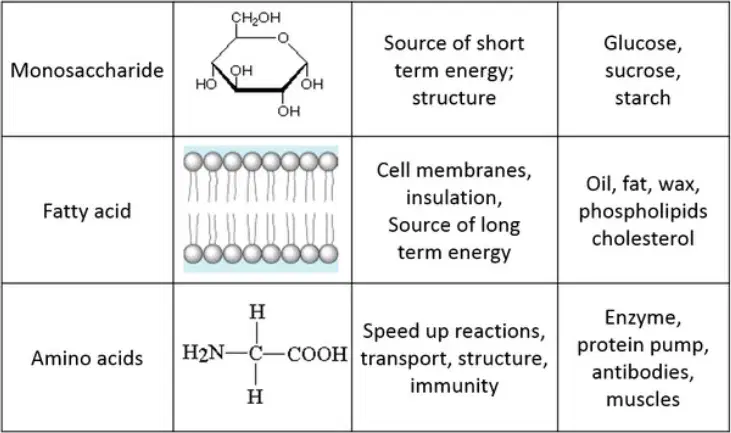
Which structural formula shown in the table corresponds to an amino acid, and what key feature identifies it?
Ringed hexose with multiple hydroxyl groups; indicates a monosaccharide
Long hydrocarbon chains with a polar head; indicates fatty acids
Central carbon with amino (NH2) and carboxyl (COOH) groups; indicates an amino acid
Sterol four-ring structure; indicates cholesterol
Which statement best defines a monosaccharide in the context of carbohydrates?
A simple sugar that serves as the monomer of carbohydrates
A complex sugar formed from long chains of glucose
A storage lipid found in plant leaves
A protein modified with carbohydrate groups
According to the material, how much energy do carbohydrates provide per gram?
2 kcal/g
4 kcal/g
7 kcal/g
9 kcal/g
Which process produces the monosaccharide glucose in plants?
Cellular respiration
Nitrogen fixation
Photosynthesis
Transpiration
Glucose can be assembled into more complex molecules. Which pairing correctly matches the polymer with its typical plant location or role?
Starch—fiber in leaves
Cellulose—energy storage in grains
Starch—stored in grains or root vegetables
Cellulose—short-term energy in animal muscle
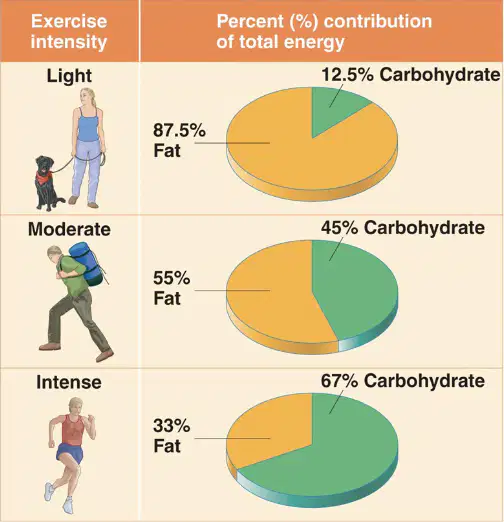
As exercise intensity increases, which fuel becomes predominant for ATP production, based on the chart described?
Fat
Carbohydrates
Protein
Ketone bodies
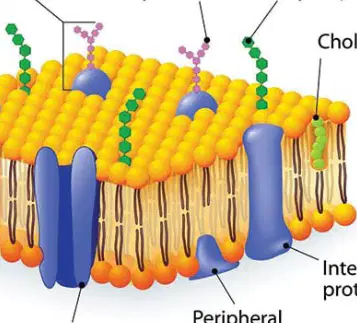
Which function of carbohydrates is directly involved in cell recognition?
Formation of antibodies as glycoproteins
Long-term energy storage in adipose tissue
Production of oxygen during photosynthesis
Synthesis of cholesterol in membranes
Which statement best distinguishes simple sugars from complex carbohydrates?
Simple sugars are long chains of monosaccharides; complex carbohydrates are single glucose units
Simple sugars are monosaccharides; complex carbohydrates are polymers formed by linking many monosaccharides
Simple sugars are proteins with attached sugars; complex carbohydrates are lipids with sugars
Simple sugars and complex carbohydrates are both lipids differing only in saturation
Which role of carbohydrates helps tissues resist friction within joints?
Energy transfer during intense exercise
Smooth surface formation in cartilage
Blood type determination on cell surfaces
Water transport through xylem
Recall: Which statement best describes how monosaccharide monomers contribute to larger carbohydrate structures?
They remain isolated and cannot form larger molecules
They join via glycosidic linkages to create disaccharides and polysaccharides
They only bond to lipids to form glycolipids
They combine with amino acids to form nucleic acids
Recall: According to the instructional text, which is identified as a quick source of energy?
Starch
Glycogen
Glucose
Cellulose
Skill/Concept: The properties of a polysaccharide depend on which combination of features of its monomer chain?
Length only
Orientation only
Length, structure of the chain, and orientation of monomers
Presence of nitrogen atoms
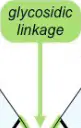
Skill/Concept (diagram-based): Using the depicted reaction showing two hexose rings joined by a glycosidic linkage with water released, what type of carbohydrate is formed?
Monosaccharide
Disaccharide
Polysaccharide
Triglyceride
Strategic Thinking: If a nutrition plan aims for longer-term energy storage rather than rapid energy availability, which class of carbohydrates should be emphasized based on the material?
Monosaccharides, such as glucose
Disaccharides like sucrose exclusively
Polysaccharides, such as starch and glycogen
Ketone bodies
Recall: Which monosaccharide is found naturally in fruits and honey and is also produced industrially in high fructose corn syrup?
Glucose
Fructose
Galactose
Ribose
Strategic Thinking: A food technologist wants to reduce the amount of sweetener added while maintaining perceived sweetness. Based on the material, which choice is most effective and why?
Use glucose because it is the primary blood sugar and will taste sweeter
Use fructose because it is about four times sweeter than glucose, requiring less to achieve the same sweetness
Use galactose because it is common in dairy and thus intensely sweet
Use starch because complex carbohydrates taste sweeter per gram
Recall: Which disaccharide is commonly referred to as table sugar?
Maltose
Lactose
Sucrose
Cellulose
Recall: Match each disaccharide with the monosaccharides produced upon digestion by its specific enzyme. Choose the pair that is correct based on the provided descriptions:
Maltose → glucose + fructose via maltase
Lactose → glucose + galactose via lactase
Sucrose → glucose + galactose via sucrase
Maltose → glucose + galactose via sucrase
Skill/Concept: A student with low lactase activity drinks milk. Based on disaccharide digestion, which immediate molecular consequence is most likely in the small intestine?
Rapid formation of glucose and galactose from lactose
Accumulation of intact lactose due to reduced hydrolysis
Conversion of lactose into fructose and glucose
Enhanced sucrase activity compensating for lactase deficiency
Skill/Concept: Which statement best explains why disaccharides must be digested before entering the bloodstream?
Disaccharides are too small to be transported across intestinal cells
Disaccharides are polymers that cannot be recognized by transporters for monosaccharides
Disaccharides are hydrophobic and therefore insoluble in blood
Disaccharides are already absorbed without modification
Recall: Which polysaccharide serves primarily as energy storage in animals?
Starch
Glycogen
Cellulose
Sucrose
Skill/Concept: According to the material, what property difference explains why starch is easily broken down in the human GI system while cellulose is not?
Length and orientation of the monosaccharide units within the polysaccharide
Presence of peptide bonds instead of glycosidic bonds
Higher lipid content in starch than in cellulose
Cellulose contains disaccharides rather than monosaccharides
Strategic Thinking: A plant engineer wants a carbohydrate for structural support rather than energy storage. Based on the roles outlined, which choice is most appropriate and why?
Starch, because its branching provides rigid cross-links
Glycogen, because animals use it to stabilize tissues
Cellulose, because it provides structure to plants
Sucrose, because it forms long insoluble fibers
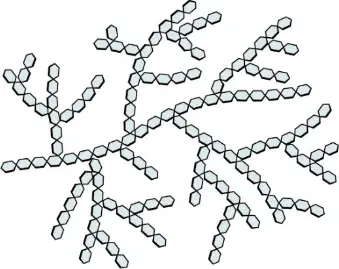
Strategic Thinking with visual reference: Examine the described diagram of polysaccharide structures (amylose and amylopectin under starch, highly branched glycogen, and layered cellulose). Which option best predicts which of these would be most rapidly mobilized for energy in animals and why?
Cellulose, because its layered arrangement exposes many ends for rapid enzymatic attack
Glycogen, because its extensive branching creates many terminal glucose residues for quick release
Amylose, because its linear chain resists enzyme binding and therefore releases glucose quickly
Sucrose, because disaccharides store energy more densely than polysaccharides
According to the visual guide, which statement best characterizes carbohydrate sources?
Only sweet foods provide carbohydrates
All starchy and sweet foods are sources of carbohydrates, including glucose
Only animal products provide carbohydrates
Only processed foods contain carbohydrates
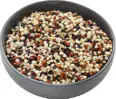
Which option lists a grain explicitly identified in the food sources image?
Quinoa
Avocado
Salmon
Yogurt
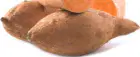
Which item is presented as a starchy tuber and carbohydrate source?
Potato
Broccoli
Almonds
Eggs
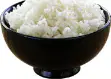
Which food category includes brown rice, white rice, and wild rice?
Grains
Vegetables
Rice
Beans & Lentils
Which option names a carbohydrate source commonly used in baking and listed under 'OATS'?
Oat flour
Corn oil
Cocoa butter
Ghee
Which category explicitly notes it is relatively low in carbohydrates compared with others?
Vegetables
Dried fruits
Breads
Crackers
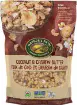
Which selection correctly matches category to example as shown?
Cereals — granola
Beans & Lentils — yogurt
Fruits — chicken breast
Crackers — naan
Which item is identified as a carbohydrate source derived from legumes?
Beans & Lentils
Breads
Dried fruits
Oats
Which category includes honey, maple syrup, sugars, and desserts?
Other
Grains
Rice
Crackers
A student wants a whole-grain baked carbohydrate source. Which category in the visual directly addresses this?
Breads
Fruits
Oats
Dried fruits
Recall: Which enzyme is responsible for the digestion of lactose into simpler sugars during normal digestion?
Amylase
Lactase
Protease
Lipase
Recall: According to the material, what typically happens to the ability to digest lactose after a baby is weaned?
It increases because the lactase gene turns on
It remains unchanged throughout life
It disappears because the gene for lactase production is turned off
It fluctuates randomly with age
Skill/Concept: Based on the stated prevalence, which population has the lowest rate of lactose intolerance?
Asian Americans
African Americans and Native Americans
Americans of northern European descent
All populations have equal prevalence
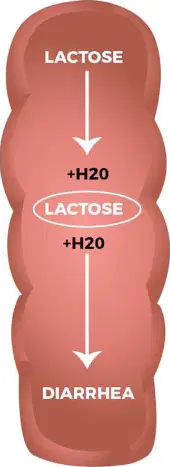
Skill/Concept: In the provided GI tract diagram, what outcome is shown when lactose is present but lactase is unavailable?
Lactose is split into glucose and galactose with normal digestion
Lactose is absorbed directly without water involvement
Water is retained and constipation occurs
Water enters the intestinal lumen with lactose, leading to diarrhea
Strategic Thinking: A genetic mutation leads to lactase persistence in certain populations. Which explanation aligns with nutrigenomics for why only about 10% of Americans of northern European descent are lactose-intolerant?
Food availability historically selected for a mutation keeping the lactase gene switched on
Higher dairy fat content directly increases lactase enzyme concentration without genetics
Lactose molecules in those populations are structurally different and easier to digest
Infant feeding practices permanently elevate lactase through learned behavior
Recall: Which statement best defines nutrigenomics as presented?
The study of digestive diseases caused by dairy products
The study of how nutrients regulate gene expression and how genetic makeup influences responses to food
The cataloging of all human genes related to metabolism
The measurement of calorie intake in different populations
Strategic Thinking: Which example most directly illustrates nutrigenomics affecting individual dietary choices, based on the listed areas within the field?
Choosing foods solely based on cultural tradition
Differences in food preferences influenced by genetic makeup
Avoiding vegetables due to cost
Preferring foods after advertising exposure
Which statement best defines dietary fiber based on the material?
Carbohydrates that can be fully digested and provide energy
Proteins from animal sources that resist digestion
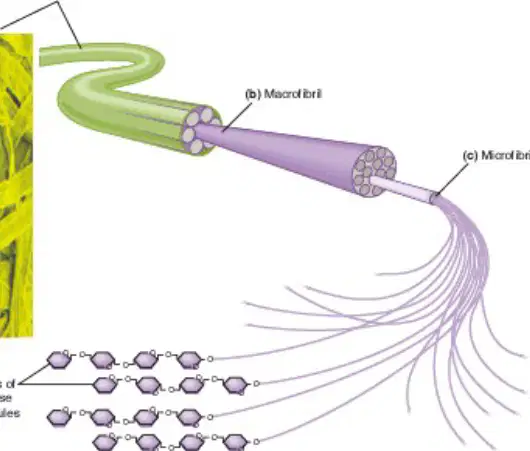
Carbohydrates, mostly plant cellulose, that humans cannot digest and thus provide no calories
Lipids that are broken down only in the small intestine
Why does most dietary fiber pass through the human digestive tract undigested?
Humans lack enzymes to hydrolyze the bonds in fiber such as cellulose
Fiber molecules are too small to be recognized by digestive cells
Fiber is absorbed directly into the bloodstream without digestion
Bile salts deactivate all enzymes that would digest fiber
According to the material, what role do large-intestine bacteria play in fiber digestion?
They completely digest all fiber into absorbable sugars
They can ferment and break down some fiber, though most remains undigested
They prevent any fiber from reaching the colon
They convert fiber into amino acids for absorption
Which characteristic distinguishes soluble fiber from insoluble fiber?
Soluble fiber dissolves in water and forms gels; insoluble fiber does not dissolve
Soluble fiber cannot be fermented; insoluble fiber is readily fermented
Soluble fiber is found only in whole grains; insoluble fiber occurs only in citrus fruits
Soluble fiber promotes bowel regularity; insoluble fiber lowers heart disease risk
Which is a documented benefit associated with soluble fiber?
Lower risk of heart disease and cancer
Increased risk of constipation
Enhanced protein absorption
Formation of gallstones
Which set correctly matches fiber type to typical sources listed in the material?
Soluble: whole grains and seeds; Insoluble: citrus fruits and berries
Soluble: citrus fruits, berries, oats, beans; Insoluble: whole grains, seeds, legumes, fruits, vegetables
Soluble: red meat and dairy; Insoluble: fish and eggs
Soluble: peas and apples; Insoluble: only nuts
Which statement about fermentability is accurate according to the section?
Both soluble and insoluble fibers are equally fermentable by colon bacteria
Only insoluble fiber is fermentable by intestinal bacteria
Soluble fiber is fermentable and may cause gas and bloating; insoluble fiber cannot be fermented
Neither fiber type is fermentable by bacteria
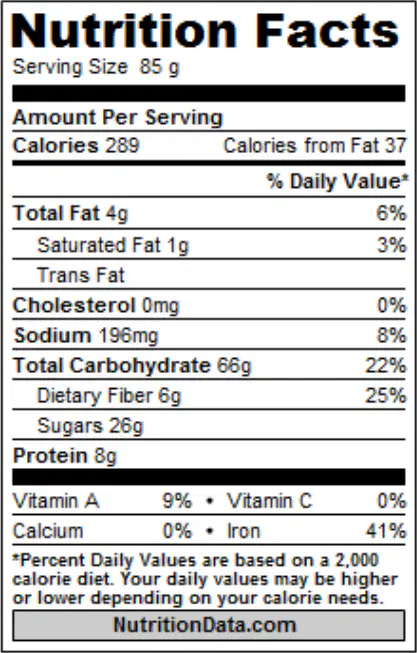
A nutrition facts label lists: Total Carbohydrate = 66 g, Dietary Fiber = 6 g, Sugars = 26 g. Based on the definition that total carbohydrate includes sugars + fiber + starch, what is the grams of starch in one serving?
32 g
34 g
36 g
40 g
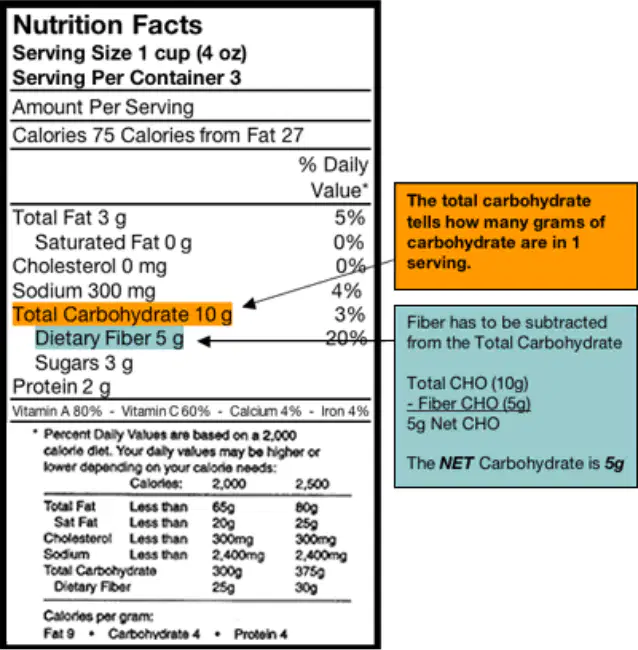
Which statement best describes how to find carbohydrate-derived kcal from a food when fiber is present?
Multiply total carbohydrate (including fiber) by 4 kcal/g.
Subtract sugars from total carbohydrate, then multiply by 9 kcal/g.
Subtract dietary fiber from total carbohydrate, then multiply the remainder by 4 kcal/g.
Use protein grams plus carbohydrate grams multiplied by 4 kcal/g.
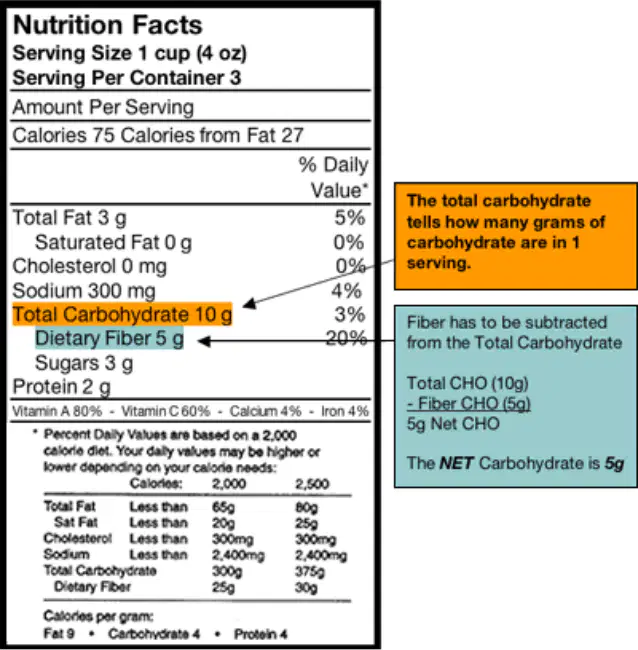
Using the label where Total Carbohydrate = 10 g and Dietary Fiber = 5 g, what are the net carbohydrate calories for one serving?
10 kcal
15 kcal
20 kcal
40 kcal
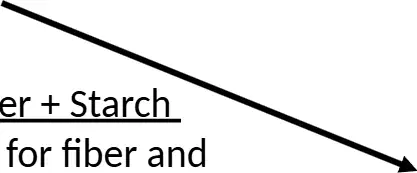
On many nutrition labels, starch is not explicitly listed. What procedure yields starch grams from the listed carbohydrate components?
Add sugars and fiber and divide by total carbohydrate.
Subtract sugars and fiber from total carbohydrate.
Multiply total carbohydrate by 4 and subtract protein kcal.
Subtract total fat grams from total carbohydrate grams.
Recall: What does the Glycemic Index (GI) describe? Choose the best definition.
How different types of carbs affect blood glucose on a scale from 1–100
How much total carbohydrate a food contains per serving
How quickly proteins are digested and absorbed
How fiber content changes the calorie density of food
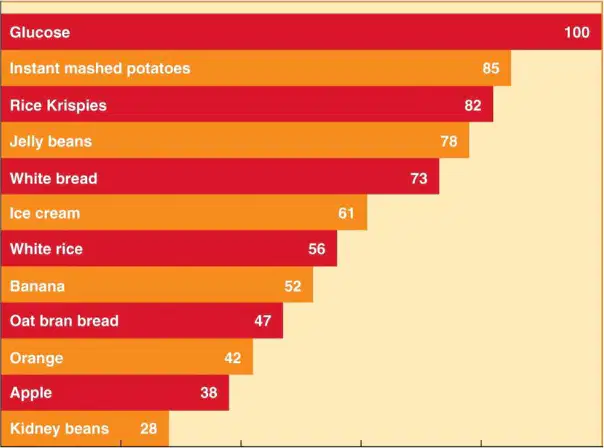
Recall: According to the GI scale shown, which statement is correct?
Pure glucose is assigned a GI of 100
White rice has a GI higher than glucose
Kidney beans have a GI equal to white bread
Apple has a GI above Jelly beans
Skill/Concept: Which type of carbohydrate typically has a higher GI, and why?
Simple carbohydrates, because they are rapidly catabolized into monosaccharides
Complex carbohydrates, because they contain more fiber
Simple carbohydrates, because they contain more protein
Complex carbohydrates, because they slow gastric emptying
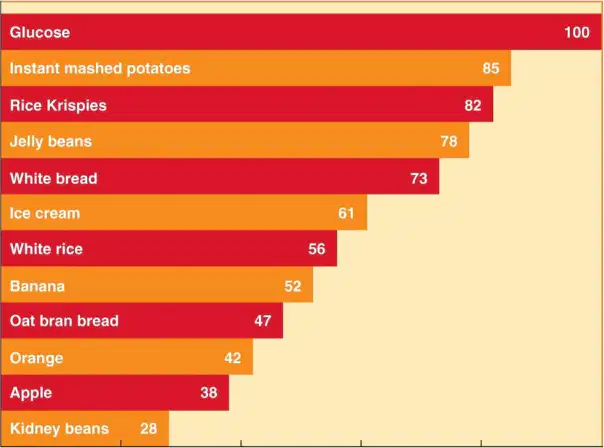
Skill/Concept: Based on the chart, which pair correctly identifies the food with the lower GI?
Kidney beans vs. white bread: kidney beans have the lower GI
Jelly beans vs. apple: jelly beans have the lower GI
Instant mashed potatoes vs. glucose: instant mashed potatoes have the lower GI
Rice Krispies vs. oat bran bread: Rice Krispies have the lower GI
Strategic Thinking: A patient wants to reduce post-meal blood glucose spikes. Which modification is most consistent with GI principles stated?
Replace white bread with oat bran bread to increase fiber and lower GI
Switch from kidney beans to white rice to lower GI
Choose instant mashed potatoes over glucose to achieve the lowest GI
Add simple sugars to complex meals to reduce GI
Recall: Which factor generally raises the GI of a food?
Greater processing of the food
Higher soluble fiber content
Higher protein content
Higher fat content
Skill/Concept: Which mechanism explains how fat influences GI?
Fat lowers GI by slowing gastric emptying
Fat raises GI by accelerating carbohydrate absorption
Fat has no effect on GI because it contains no carbohydrates
Fat lowers GI by increasing glucose release into the bloodstream
Recall the definitions to answer: Which statement best distinguishes Glycemic Index (GI) from Glycemic Load (GL)?
GI estimates a food’s ability to raise blood glucose levels, whereas GL reflects the total impact of all carbohydrates in a serving.
GI measures total grams of carbohydrates per serving, whereas GL measures only fiber grams.
GI and GL are identical metrics; both quantify the amount of protein and fat per serving.
GI describes how much water a food contains, whereas GL describes the sweetness of simple sugars.
Apply the formula provided: A food has GI = 70 and contains 8 grams of digestible carbohydrates per serving. What is its Glycemic Load (GL)? Use GL = GI × grams of carbs in a serving ÷ 100.
5.6
8.8
70
0.8
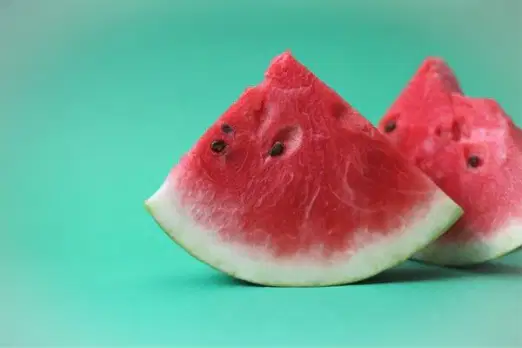
Use the watermelon example described: Why can watermelon have a high GI (~70) but a low GL (~6)?
Its carbohydrates are mostly complex starches that digest slowly.
It contains many grams of digestible carbohydrates per serving.
It contains very few digestible carbohydrates per serving because it has a high water content.
Its GI value is adjusted downward when fiber is present.
Use the table values for 1 cup servings: Which food shows the highest GL among the listed items?
Baked potato (GI 95; carbs 21 g; GL 20)
White rice (GI 68; carbs 82 g; GL 56)
Oatmeal, cooked in water (GI 60; carbs 15 g; GL 9)
Low-fat yogurt, plain (GI 35; carbs 1.5 g; GL 0.5)

Strategic reasoning with the formula and table: Two foods have similar GI values (around 60–68). Based on the data, which factor most explains why white rice has a much higher GL than cooked oatmeal?
White rice contains substantially more digestible carbohydrates per serving.
Cooked oatmeal has more fat, which increases GL.
White rice has lower fiber, and GL directly includes fiber grams.
Cooked oatmeal has a lower GI because it is cooked in water.
Which statement best describes the primary action of insulin on body cells?
It closes glucose channels to keep glucose in the bloodstream
It opens channels in cells to allow glucose to enter and be removed from the bloodstream
It converts glucose directly into amino acids inside the bloodstream
It releases glucose from the liver into the blood
Under which condition is glucagon most likely to be released?
High blood glucose after a carbohydrate-rich meal
Normal blood glucose during fasting
Low blood glucose when energy is needed
Immediately after insulin binds to its receptor
What is the role of the liver in blood glucose regulation as described?
It produces insulin to open glucose channels in cells
It stores glucose as glycogen and releases it when stimulated by glucagon
It blocks glucose uptake in tissue cells during fasting
It directly absorbs glucose from the pancreas

According to the diagram titled “How does insulin work?”, what happens after insulin binds its receptor on the cell membrane?
The glucose channel remains closed and glucose accumulates in blood
The glucose channel opens, permitting glucose to enter the cell
Glucagon is released to increase blood glucose
The cell secretes more glycogen into the bloodstream
Which sequence correctly traces the feedback loop when blood glucose is high?
High blood glucose → glucagon release → glycogen breakdown → higher blood glucose
High blood glucose → insulin release → increased glucose uptake into cells → decreased blood glucose
High blood glucose → insulin release → glycogen breakdown → increased blood glucose
High blood glucose → no hormone release → homeostasis maintained
When blood glucose is low, which process is stimulated to raise it?
Glycogen formation in the liver
Glucose uptake into tissue cells
Glycogen breakdown in the liver with release of glucose
Insulin secretion from the pancreas
A high glycemic index (GI) food is most likely to cause which immediate physiological response?
Slow, modest rise in blood glucose with minimal insulin release
Rapid rise in blood glucose triggering strong insulin release and possible later rebound drop
Decline in blood glucose that stimulates glucagon release first
Direct conversion of glucose to glycogen without hormonal involvement
Which pairing correctly matches the hormone with its primary effect on blood glucose?
Insulin — increases blood glucose by releasing glycogen from the liver
Glucagon — decreases blood glucose by opening cell glucose channels
Insulin — decreases blood glucose by stimulating uptake into cells
Glucagon — increases blood glucose by inhibiting glycogen breakdown
A student eats a high-GI snack leading to a rapid spike in blood glucose. Which outcome best explains the rebound effect that may follow?
Persistent elevation in blood glucose because insulin is not released
Overshoot of insulin-mediated glucose uptake causing blood glucose to fall below baseline
Glucagon keeps blood glucose elevated by releasing more glucose
The liver halts glycogen breakdown, preventing any drop in blood glucose

