
 Worksheets
Chemistry revision
Total questions: 91
Worksheet time: 1hrs 18mins
Which of the following statements describes a chemical property?
An iron bar rust
Ice melts when heated.
The density of iron 7.87 g/cm^3.
Aluminum is a silver-colored metal.
Which property could NOT be used to distinguish between table salt and table sugar?
color
density
boiling point
melting point
Which of the following is an intensive property?
mass
volume
color
shape
INTENSIVE or EXTENSIVE
your weight on the moon.
(a)
INTENSIVE or EXTENSIVE
the mass of powdered milk in your glass of milk.
(a)
INTENSIVE or EXTENSIVE
the temperature of boiling water
(a)
INTENSIVE or EXTENSIVE
the amount of dish washing liquid used to clean the dishes.
(a)
Measuring the mass and volume of a piece of chalk is a way of investigating its ______________.
Physical and intensive properties
Physical and extensive properties
Chemical and extensive properties
Chemical and intensive properties

Properties that describe how a substance reacts with other substances are called?
Chemical properties
Physical properties
Roasting a marshmallow over a campfire is an example of a _______ change.
chemical
physical
both
Drying wet hair is an example of a _______ change.
chemical
physical
both
The Statue of Liberty turning green over time from being exposed to oxygen is an example of a chemical change.
True
False
Which state of matter takes BOTH the shape and volume of its container?
solid
liquid
gas
Particles move fastest in a
solid
liquid
gas
Particles are packed closest together in what state of matter?
solid
liquid
gas
Which phase change occurs when transitioning from a liquid to a gas?
liquid ---> gas
melting
vaporizing
condensing
freezing
In order to transition from a liquid to a solid, a substance must
absorb energy
release energy
How close a measurement is to the accepted value is called..
Accuracy
Precision
Significant
Estimate
A measurement result is considered ________ if it is judged to be close to the true value. It is influenced by random and systematic errors.
Precise
Accurate
An error
Resolution
A quality denoting the closeness of agreement (consistency) between values obtained by repeated measurement. It is influenced by random effects and can be expressed numerically.
Repeatability
Precision
Uncertainty
Resolution
Express 23400 in proper scientific notation.
2.34 x 10⁴
2.3 x 10³
2.30 x 10⁵
2.34 x 10³
Express the following in scientific notation: 0.000457
457 x 106
457 x 10-6
4.57 x 10⁴
4.57 x 10⁻⁴
Contains only one kind of atom.
Element
Compound
Mixture

A substance that cannot be broken down further chemically is known as...
an element
a compound
a molecule
a mixture

protons, neutrons, and isotopes
neutrons, isotopes, and electrons
positives, negatives, and electrons
protons, neutrons, and electrons

H2O is most accurately described as a ___________________.
molecule
compound
element
atom

Hydrogen is an example of a(n)-
element
compound
What is the Law of Conservation of Mass?
It states that no matter can be created or destroyed.
It states that matter can be created or destroyed.
It sates that no energy can be created or destroyed.
It state that no sound can be created or destroyed.

The figure shows ________________________
cathode ray tube experiment
gold foil experiment
oil drop experiment
In alpha decay, the mass number...
increases by 2
decreases by 2
increases by 4
decreases by 4
In alpha decay, the atomic number...
increases by 2
decreases by 2
increases by 4
decreases by 4

What is the product of the alpha decay of Thorium-232 ( 90232Th )?
88228Ra
91232Pa
89228Ac
92232U

The fluorine atom has an atomic number of
19
9

A charged atom
An atom with different amounts of neutrons
An atom with different amounts of protons
A neutral atom
Which of the following can vary for atoms of the same element?
number of protons
number of electrons
number of neutrons

16
15.99
8
Doesn't contain any neutrons
Which of the three sub-atomic particles is the lightest?
the proton
the electron
the neutron
Why are all atomic masses not nearly whole numbers?
This is due to the mass of all the electrons in the atom.
This is because of experimental error.
This is because atomic masses are the weighted average of the masses of all naturally-occurring isotopes.
This is due to binding energy of the atoms.
The atomic number of an element is defined by its number of ________.
protons
neutrons
electrons
nuclei
The sum of the protons and neutrons in a nucleus is __________.
the atomic number
the mass number
Avogadro's number
the element number
Which of the following is true for any atom?
atomic number = number of protons = number of electrons
atomic number = number of neutrons = number of electrons
mass number = number of protons = number of electrons
mass number = number of protons = number of neutrons
How is the atomic mass unit (amu) defined?
1/12 the mass of a carbon-12 atom
1/14 the mass of a nitrogen-14 atom
1/13 the mass of a carbon-13 atom
1/16 the mass of an oxygen-16 atom
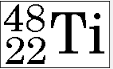
smallest particle of matter that retain the properties of element is ____________________
atom
proton
cathode
energy
electrons are discovered by _________experiment
cathode ray tube
gold foil
oil drop

The figure shows _____________experiment
oil drop
cathode ray tube
gold foil
The experiment ( shown in the figure ) lead to determine __________
mass and charge of the electron
the size of the electron
the mass of the atom
the charge of the atom

The name of the model of the atom ( shown in the figure) is _______________
plum pudding model
nuclear model
energy levels model
quantum model

the part ( labeled by the question mark in the figure ) is _______________
atom
nucleus
proton
electron
Who was the first person to "think" of an atom?
Democritus
J.J. Thompson
Rutherford
Bohr
Used the word "atomos" to decsribe the uncuttable (indivisible) atom.
Democritus
Thomson
Bohr
Dalton
Who came up with the Atomic Theory?
Dalton
Thomson
Goldstein
Democritus
What is the relative electric charge of a neutron?
+1
-1
0
none of the above
Who did not believe that empty space could exist?
Aristotle
Democritus
Dalton
J.J. Thomson

The law of definite proportions states that a given chemical compound always contains the same _ in the exact same _ by mass.
elements, compounds
elements, molecules
elements, proportions
proportions, elements

The percentage of copper and oxygen in samples of “CuO” obtained by different methods were found to be the same. This illustrates the law of:
Definite proportions
Conservation of mass
Multiple proportions
Reciprocal proportions
What is the Law of Definite Proportions?
The Law of Definite Proportions states that the mass of a compound is always equal to the sum of the masses of its elements.
A chemical compound always contains the same elements in the same proportions by mass.
The Law of Definite Proportions only applies to organic compounds.
A chemical compound contains different elements in different proportions by mass.
the law that states that when two elements combine to form two or more compounds the mass of one element that combines with a given mass of the others is in the ratio of small whole number
law of conservation of mass
law of definite proportions
law of whole numbers
law of multiple proportions
In the formation of carbon monoxide and carbon dioxide, the mass ratio of oxygen that combines with a fixed mass of carbon is an example of which law?
Law of Conservation of Mass
Law of Definite Proportions
Law of Multiple Proportions
Law of Constant Composition

