
 Worksheets
Chapter 3 Test - China and India
Total questions: 93
Worksheet time: 47mins
Name
Class
Date
1.
Password:
4 lines
2.
1. In Ancient China there were _________ great dynasties
a)
2
b)
3
c)
4
d)
5
3.
2. The Zhou dynasty claimed the _________________.
a)
Mandate of Heaven
b)
Promise Keepers
c)
Disciples of the Order
d)
Zhou Zoa
4.
3. The Zhou realized the government, which allowed for the city-states to be ruled by:
a)
Bandits
b)
Local lords
c)
Generals
d)
Relatives
5.
4. The Zhou did many things, which group farmed the land for them?
a)
slaves
b)
prisoners of war
c)
peasants
d)
calvary
6.
5. _______________ led to the end of the Zhao dynasty in the 200s BC
a)
floods
b)
local wars
c)
disease
d)
religious challenge
7.
6. Another name for the Han dynasty was the __________________
a)
Pax Romana
b)
Pax Topeca
c)
Pax Cirsusa
d)
Pax Sinica
8.
7. China was named after the ________________ dynasty
a)
Zhou
b)
Qin
c)
Han
d)
Ramese
9.
8. All of the following were goals of the Qin dynasty EXCEPT:
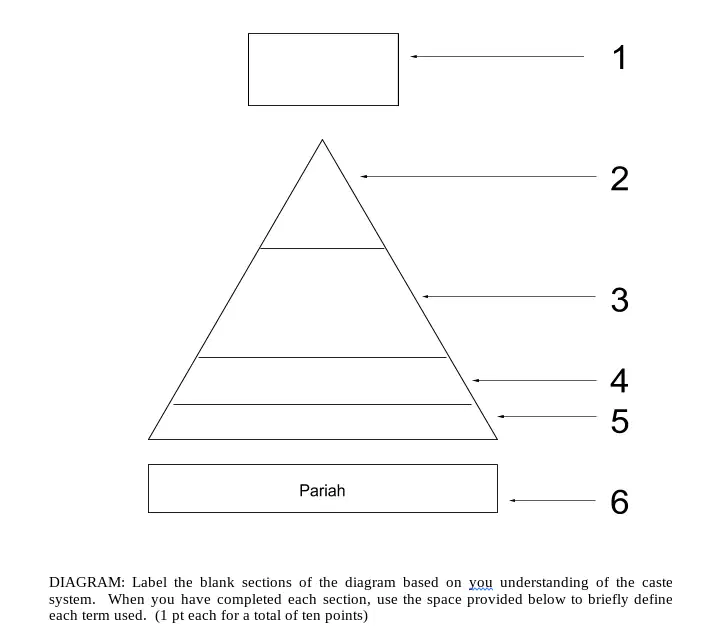
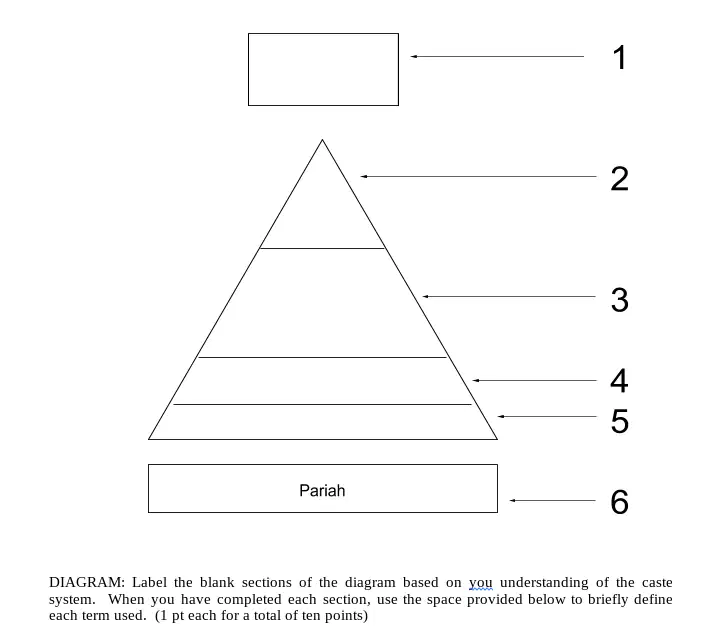
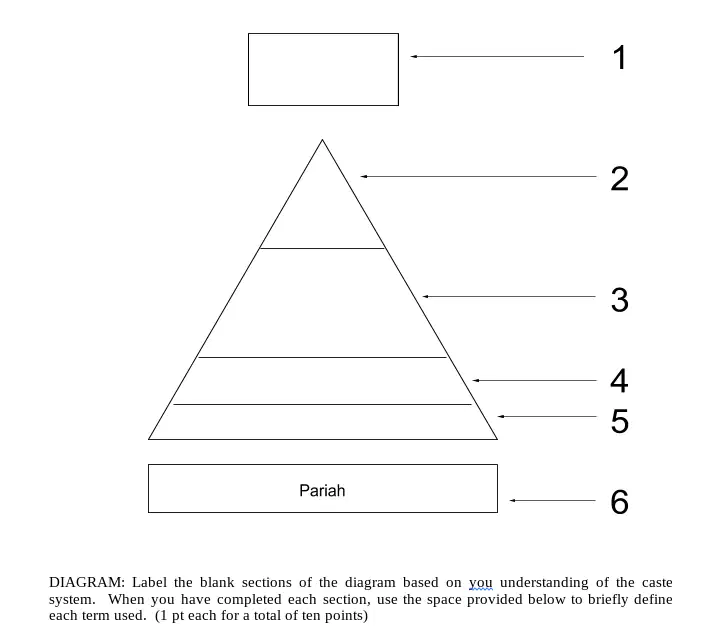
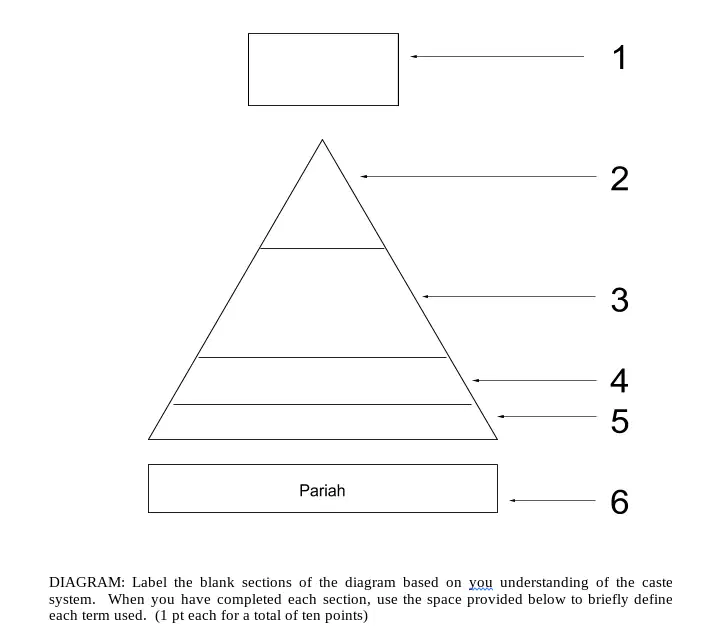
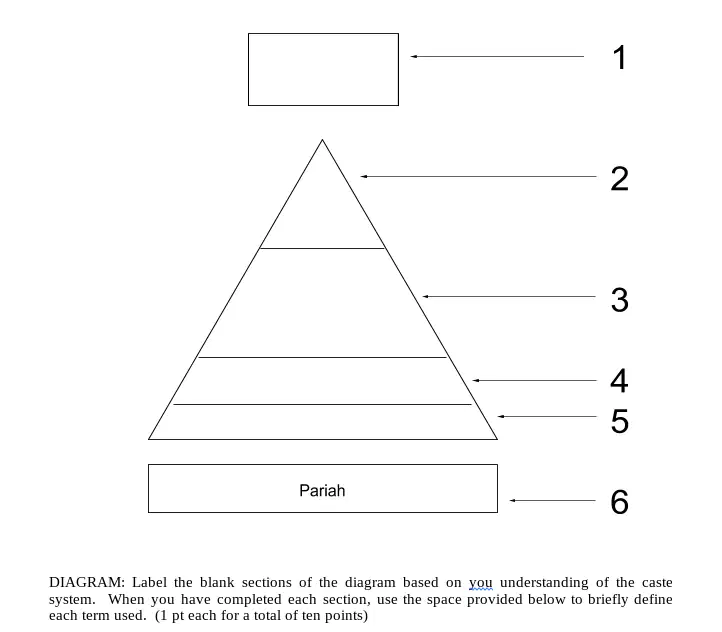
a)
establish a strong relationship with foreign traders
b)
standardized weights and measures
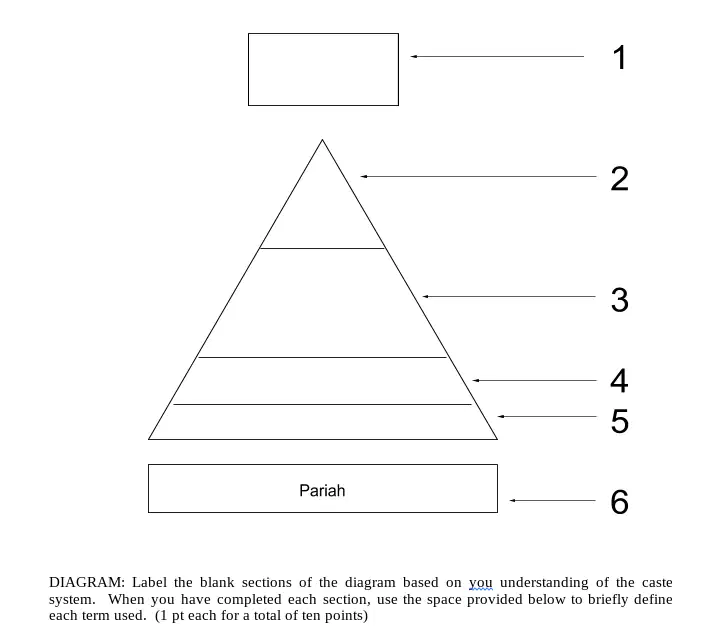
c)
used slave labor
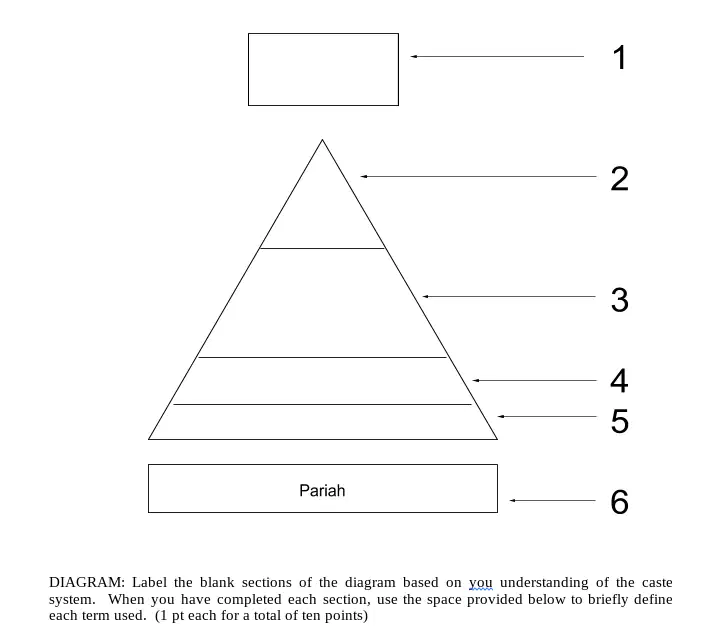
d)
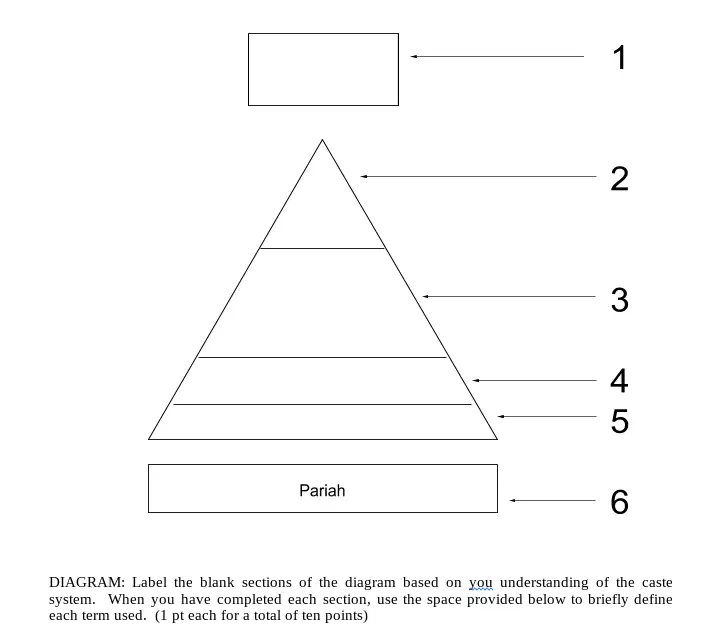
divided the kingdom into military districts
10.
9. ___________________ was the ruler responsible for building the Great Wall of China
a)
Changragupta
b)
Lui Bang
c)
Qin Shihuangdi
d)
Wudi
11.
10. Qin was known as a _____________________
a)
cruel tyrant
b)
fearful majority
c)
tactical organizer
d)
military director
12.
11. What action did Qin use to try and erase all Chinese history?
a)
Gave all new and improved freedoms
b)
Built new schools that taught current history
c)
Preached that old fables with myths
d)
Burned many of the books
13.
12. Qin was very radical because:
a)
he did not want to be criticized by others
b)
he wanted to be different than previous rulers
c)
he wanted to rename himself savior
d)
he followed the principles of the Theravada
14.
13. ________________ conquered the Qin to the end of the dynasty.
a)
Wudi
b)
Buddha
c)
Lui Bang
d)
Zhou How
15.
14. The Hans compared themselves to another ancient group the ___________________
a)
Greeks
b)
Egyptians
c)
Africans
d)
Romans
16.
15. Wudi was known as the greatest Chinese leader because he:
a)
developed a new way to irrigate crops
b)
supervised all parts of the government
c)
ruled with a strict sense of justice
d)
brought thousands out of poverty
17.
16. What was the goal of Wudi's?
a)
Send out exploration expeditions
b)
Bur all of the books not of a political matter
c)
Set up military districts
d)
Perfect the crossbow as a weapon
18.
17. Wudi changed the hiring process by:
a)
giving jobs to his family members
b)
filling all positions with merchants
c)
appointing military generals to positions
d)
introducing the civil service test
19.
18. What led to the end of the Han dynasty?
a)
Corruption in government
b)
Floods and famine
c)
Wudi's death
d)
Lui Bang conquers the region
20.
19. Confucian used the motto described as the:
a)
Political harmony
b)
Golden Rule
c)
Yin and Yang
d)
Ten Commandments
21.
20. The philosophy of Daoism emphasizes:
a)
harmony with nature
b)
specific jobs in life
c)
social structure
d)
aggressive living
22.
21. Confucius's teachings were accepted in China:
a)
during the Shang dynasty
b)
during the early Zhou dynasty
c)
only after Confucius's death
d)
after Confucius became advisor to the emperor
23.
22. Daoism and Confucianism shared an emphasis on:
a)
the supernatural
b)
life in this world
c)
social structure
d)
nature
24.
23. According to Confucius, the primary ethical relationships include all of the following except:
a)
friend to friend
b)
ruler and subject
c)
man and nature
d)
parent and child
25.
24. All of the following were events that occur during the Zhou dynasty except:
a)
the use of the iron plow
b)
the invention of paper
c)
the development of the crossbow
d)
advances in flood control
26.
25. The typical Han home consisted of:
a)
an extended family dominated by the grandfather
b)
an extended family dominated by the father
c)
an nuclear family dominated by the father
d)
an nuclear family dominated by the mother
27.
26. All of the following were ancient Chinese inventions except:
a)
paper
b)
crossbows
c)
suspension bridges
d)
gunpowder
28.
27. The concept of ____________ helped to balance the two powers of nature
a)
Yin and Yang
b)
Confucianism
c)
the Zhou
d)
Pax Sinica
29.
28. According to social hierarchy, the _____________ would be at the bottom of the ladder
a)
father
b)
son
c)
mother
d)
daughter
30.
29. Chinese women had little authority or respect in society but their treatment did improve when:
a)
they received their education
b)
they reach retirement age
c)
their husband died
d)
they got married and had kids
31.
30. Of the three main social classes, _______________ was considered on top
a)
landowners
b)
peasants
c)
merchants
d)
slaves
32.
31. The ___________ made up 90% of the population
a)
landowners
b)
peasants
c)
merchants
d)
slaves
33.
32. The ______________ could not become rich because of the teachings of Confucius
a)
landowners
b)
peasants
c)
merchants
d)
slaves
34.
33. Which of the following is true of the merchants?
a)
Had courtyards
b)
Raised livestocks
c)
Had homes with walls
d)
Not eligible for government jobs
35.
34. The landowners had homes with ______________, which made them different from other groups
a)
lights
b)
walls
c)
toilets
d)
door knobs
36.
35. The _____________ can also be drafted into the Army
a)
Peasants
b)
Slaves
c)
Landowners
d)
All people
37.
36. The Yin signifies:
a)
warmth
b)
light
c)
submissiveness
d)
male
38.
37. The development of the 365 day calendar was an example of a contribution in:
a)
medicine
b)
farming
c)
science
d)
transportation
39.
38. The _____________ was a collection of Confucius' teachings
a)
the Odyssey
b)
Analects
c)
the Clouds
d)
Simple Minds
40.
39. Which of the following was NOT a way of thinking in China?
a)
Confucianism
b)
Legalism
c)
Daoism
d)
Judaism
41.
40. _______________ was the rock of Chinese society
a)
Family
b)
Government
c)
Religion
d)
Education
42.
1. The concepts of zero and infinity were developed during the reign of the
a)
Mauryans
b)
Aryans
c)
Guptas
d)
Sudras
43.
2. After crossing the mountains, Aryan invaders moved
a)
through the Indus River Valley into the Ganges Plain
b)
north to the Caspian Sea
c)
across the Ganges Plain into the Hindu Kush
d)
north to the Black Sea
44.
3. Most people in India today are
a)
Hindus
b)
Buddhists
c)
Christians
d)
Muslims
45.
4. The Buddha rejected all of the following EXCEPT
a)
belief in Hindu deities
b)
the idea that a person’s place in life was determined by his or her birth
c)
the varna system
d)
belief in reincarnation
46.
5. In Hindu belief, the form a person will take in life is determined by
a)
reincarnation
b)
moksha
c)
karma
d)
ahimsa
47.
6. Most of India was first brought under unified rule by the
a)
Gupta Empire
b)
Aryan Empire
c)
Mauryan Empire
d)
Sanskrit Empire
48.
7. The Gupta rulers encouraged religious learning based on
a)
Buddhist principles
b)
Aryan principles
c)
Arabic principles
d)
Hindu principles
49.
8. For followers of the Eightfold Path, the main goal is to
a)
eliminate desire
b)
obey one’s duties
c)
be reborn in a higher form
d)
practice nonviolence
50.
9. The founder of Buddhism was named
a)
Rama
b)
Ramayana
c)
Siddhartha Gautama
d)
Chandragupta Maurya
51.
10. Asoka adopted Buddhism after
a)
the collapse of the Hindu caste system
b)
witnessing the aftermath of a brutal battle
c)
seven years of wondering
d)
witnessing scenes of shocking poverty outside his palace
52.
11. The two great epics of ancient Indian literature are
a)
the Ramayana and the Mahabharata
b)
the Bhagavad-Gita Gita and the Upanishads
c)
the Bhagavad-Gita Gita and the Rig-Veda
d)
the Panchatantra and the Shakuntala
53.
12. The transformation of Magadha from a small state into the center of an empire was begun by
a)
Alexander the Great
b)
Asoka
c)
Chandragupta II
d)
Chandragupta Maurya
54.
13. The main ideas of Buddhism are found in the
a)
Four Noble Truths
b)
Vedas
c)
Ramayana
d)
varnas
55.
14. Members of India’s priestly class were called
a)
Sudras
b)
Upanishads
c)
Brahmans
d)
jati
56.
15. The concept of dharma refers to the
a)
rebirth of the soul
b)
practice of meditation
c)
preservation of family honor
d)
carrying out one’s personal duty
57.
16. The Aryans are best described as
a)
hunter-gatherers
b)
warrior-nomads
c)
merchant traders
d)
farmers-agriculturalists
58.
17. The oldest major religion to originate in India is
a)
Hinduism
b)
Buddhism
c)
Islam
d)
Jainism
59.
18. One cause of the Mauryan Empire’s collapse was
a)
the death of Chandragupta II
b)
Hindu resentment of pro-Buddhist policies
c)
invasions along the empire’s borders
d)
popular unrest because of heavy taxation
60.
19. According to tradition, Gautama began to search for truth after
a)
experiencing a flash of insight while meditation under a tree
b)
witnessing scenes of human misery for the first time
c)
suffering greatly during an impoverished childhood
d)
becoming a charioteer for a Kshatriya prince
61.
20. All of the following are true of the Rock Edicts EXCEPT that they
a)
were issued by Asoka
b)
were written in the Sanskrit language
c)
were carved on rocks and stone pillars
d)
stressed having concern for other human beings
62.
21. The Golden Age of India refers to the
a)
period of peace following Asoka’s reunification of war
b)
development of written language by Aryans
c)
flourishing of arts and sciences during the Gupta dynasty
d)
period in which the independent kingdoms of India were first united
63.
22. After the fall of the Mauryan Empire, India remained fragmented until an empire was formed by
a)
Alexander
b)
Asoka
c)
Chandragupta I
d)
Chandragupta II
64.
23. The language of the Aryans was called
a)
Veda
b)
Gupta
c)
Sanskrit
d)
Indo-European
65.
24. The highest rank in Aryan social system is
a)
pariah
b)
Kshatriya
c)
Sudra
d)
Brahman
66.
25. How did Asoka attempt to bring diverse groups in India under his control?
a)
He destroyed them with powerful armies
b)
He had his laws written in many languages
c)
He asked Chandragupta II for help
d)
He converted all of his subjects to Buddhism
67.
26. The practice of non violence
a)
ahimsa
b)
Chandragupta II
c)
rajah
d)
Rig-Verda
e)
The Buddha
68.
27. The Enlightened One
a)
The Buddha
b)
Chandragupta II
c)
rajah
d)
Rig-Verda
e)
ahimsa
69.
28. The leader of each Aryan tribe
a)
rajah
b)
Chandragupta II
c)
Rig-Verda
d)
ahimsa
e)
The Buddha
70.
29. The leader whose death signaled the end of the Golden Age
a)
Chandragupta II
b)
rajah
c)
Rig-Verda
d)
ahimsa
e)
The Buddha
71.
30. The laws of Asoka
a)
Rock Edicts
b)
Chandragupta II
c)
rajah
d)
Rig-Verda
e)
ahimsa
72.
31. The empire that dissolved by AD 600
a)
Gupta
b)
Chandragupta II
c)
rajah
d)
Rig-Verda
e)
ahimsa
73.
32. The oldest Aryan religious text
a)
Rig-Verda
b)
Chandragupta II
c)
rajah
d)
ahimsa
e)
The Buddha
74.
33. The social classes
a)
varnas
b)
Chandragupta II
c)
rajah
d)
Rig-Verda
e)
ahimsa
75.
34. commoners
a)
Vaisyas
b)
Vedas
c)
pariahs
d)
Eightfold Path
e)
Gupta
76.
35. Buddhists follow these practices
a)
Eightfold Path
b)
Vedas
c)
pariahs
d)
Gupta
e)
Vaisyas
77.
36. “Books of Knowledge”
a)
Vedas
b)
pariahs
c)
Eightfold Path
d)
Gupta
e)
Vaisyas
78.
37. Both infinity and zero were invented in this era
a)
Gupta
b)
Vedas
c)
pariahs
d)
Eightfold Path
e)
Vaisyas
79.
38. Buddhist mound
a)
stupa
b)
Vedas
c)
pariahs
d)
Eightfold Path
e)
Gupta
80.
39. outcastes or “untouchables”
a)
pariahs
b)
Vedas
c)
Eightfold Path
d)
Gupta
e)
Vaisyas
81.
40. duty
a)
dharma
b)
Vedas
c)
pariahs
d)
Eightfold Path
e)
Gupta
82.
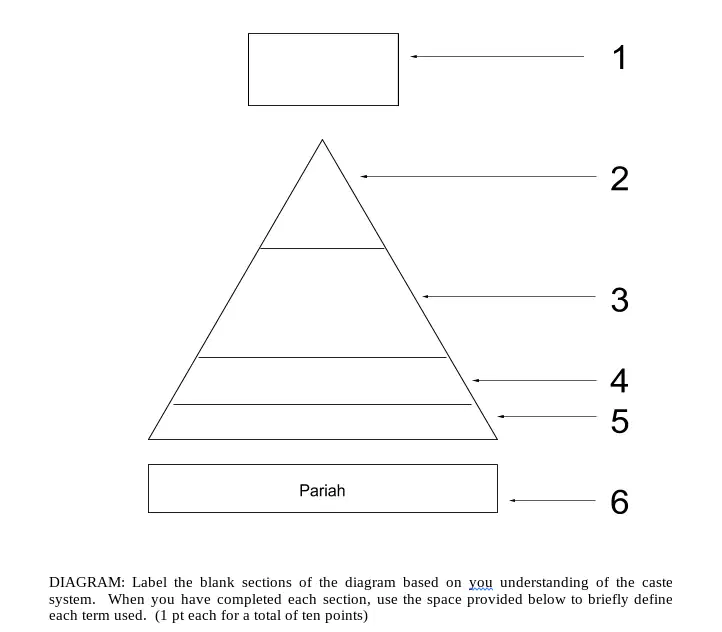
1. Where are Hindu's trying to get?
4 lines
83.
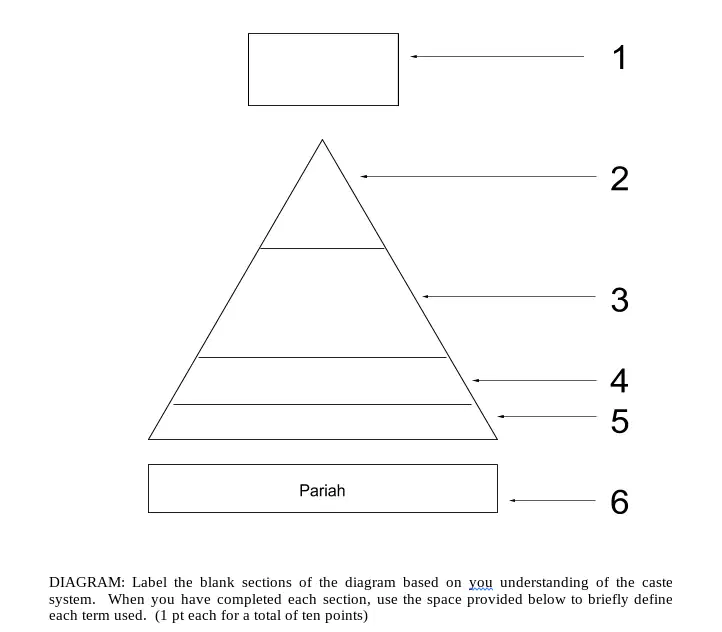
2. What is the name of this level of the caste system?
4 lines
84.
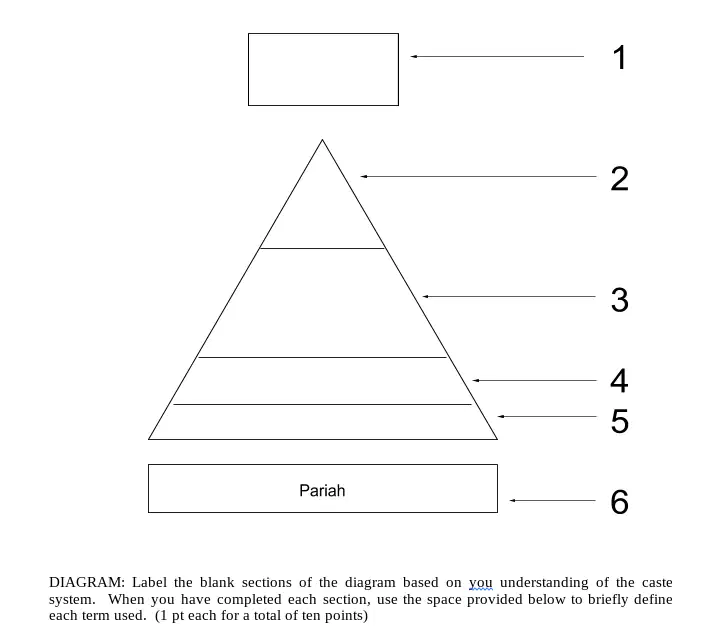
3. What is the name of this level of the caste system?
4 lines
85.
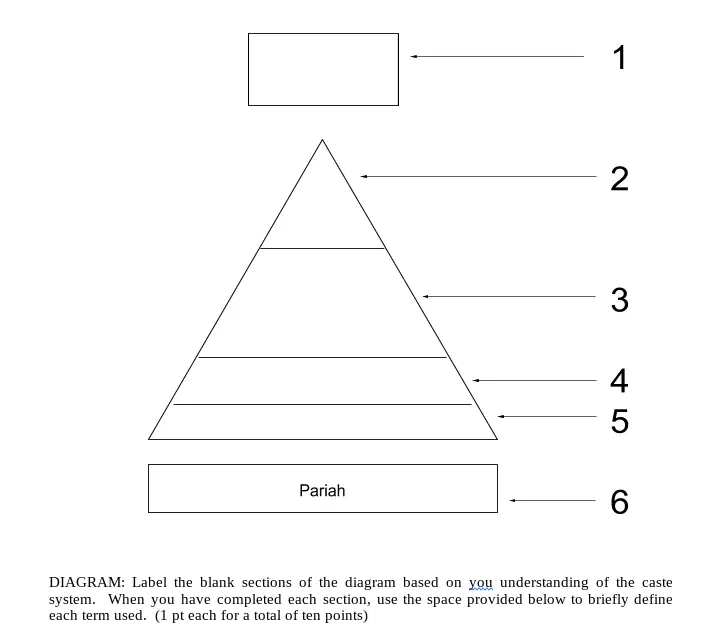
4. What is the name of this level of the caste system?
4 lines
86.
5. What is the name of this level of the caste system?
4 lines
87.
6. What is the name of this level of the caste system? (The answer is written down for you already)
4 lines
88.
7. Describe what # 1 is? Not the name of it, but what is it like?
4 lines
89.
8. Describe what kinds of people are in the level labeled 2 in the caste system picture?
4 lines
90.
9. Describe what kinds of people are in the level labeled 3 in the caste system picture?
4 lines
91.
10. Describe what kinds of people are in the level labeled 4 in the caste system picture?
4 lines
92.
11. Describe what kinds of people are in the level labeled 5 in the caste system picture?
4 lines
93.
11. Describe what kinds of people are in the level labeled 6 in the caste system picture?
4 lines
100 %

