
 Worksheets
Components of a Central Heating System
Total questions: 27
Worksheet time: 14mins
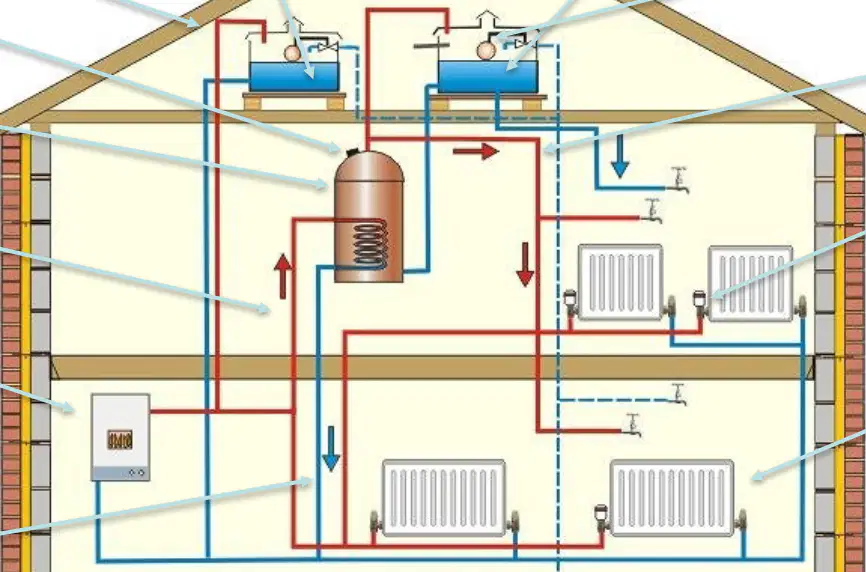
Refer to the diagram of a domestic hot water and heating system. Which component is responsible for heating the water before it is distributed throughout the house?
Boiler
Radiator with TRV installed, which increases water temperature before distribution
Ball float valve, which heats water as it regulates flow
Heating header tank, which directly heats water for the system
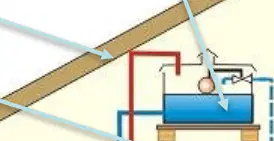
In a domestic hot water and heating system, what is the primary function of the ball float valve as shown in the diagram?
To regulate the water level in the hot water header tank
To heat water before it enters the radiators
To control the temperature of the water in the boiler
To circulate water through the flow and return pipes
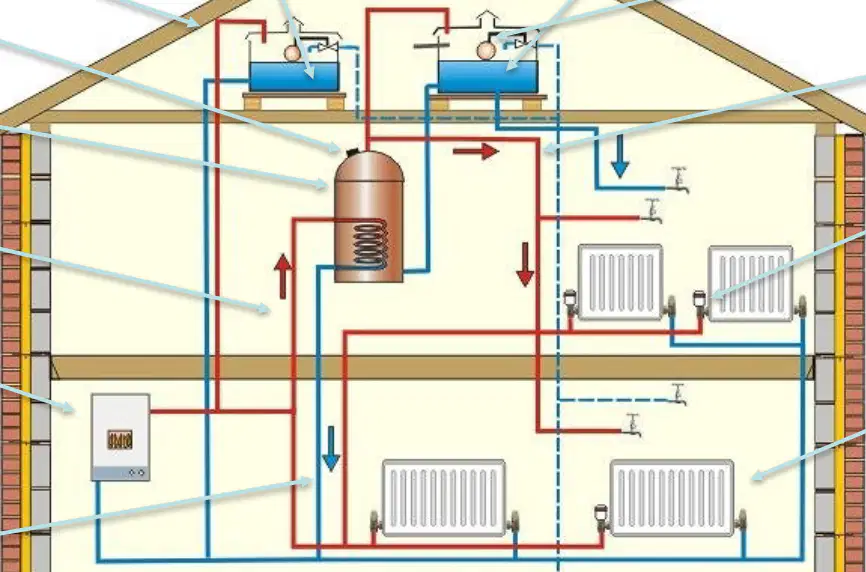
Based on the diagram of the domestic hot water and heating system, explain how the flow pipe and return pipe work together to maintain the heating cycle in the house.
The flow pipe carries hot water from the boiler to the radiators, while the return pipe brings cooled water back to the boiler to be reheated.
The flow pipe brings cold water from the mains to the boiler, and the return pipe sends hot water to the radiators.
The flow pipe and return pipe both carry hot water to different parts of the house without cycling back to the boiler.
The flow pipe circulates water only to the hot water storage, while the return pipe circulates water only to the heating header tank.
Which British Standard covers the installation and commissioning of water-based heating systems?
BS EN 14336
BS EN 12828: Design of water-based heating systems and their components
BS EN 442: Manufacture of radiators
CHESS: Central Heating Efficiency System Specification
A plumber is working on a new building that is not a dwelling. Which subcategory of Building Regulations part L applies?
L1a
L1b
L2a
L2b
What is the main purpose of the Domestic Heating Compliance Guide (DHCG)?
To provide advice on satisfying the requirements of L1a and L1b regarding the design efficiency of domestic central heating systems
To regulate the manufacture of radiators
To specify basic and best practice for central heating efficiency
To approve components and appliances to current standards
Which statement best explains the main advantage of central heating compared to an open fire?
Central heating provides heat in every room, while an open fire only heats one room.
Central heating is more expensive than an open fire because it uses more fuel.
Central heating is only suitable for small properties, while open fires can be used anywhere.
Central heating requires less maintenance than an open fire.
A homeowner wants to achieve thermal comfort in their house while staying within their budget. Which of the following best describes thermal comfort in this context?
Thermal comfort is when the desired heat balance between the body and surroundings is met within the customer’s economic constraints.
Thermal comfort is when the temperature in the house is always above 25°C, regardless of cost.
Thermal comfort is when the heating system is turned off to save money.
Thermal comfort is when only one room in the house is heated.

Which statement best describes how warm air heating systems operate?
They use an 'indirect' gas-fired heater to warm air that is circulated by a fan through ductwork under the floor.
They use a direct electric heater to warm water that is pumped through radiators in each room.
They rely on solar panels to heat air that is distributed by natural convection.
They use a wood-burning stove to heat air that is vented into living spaces.
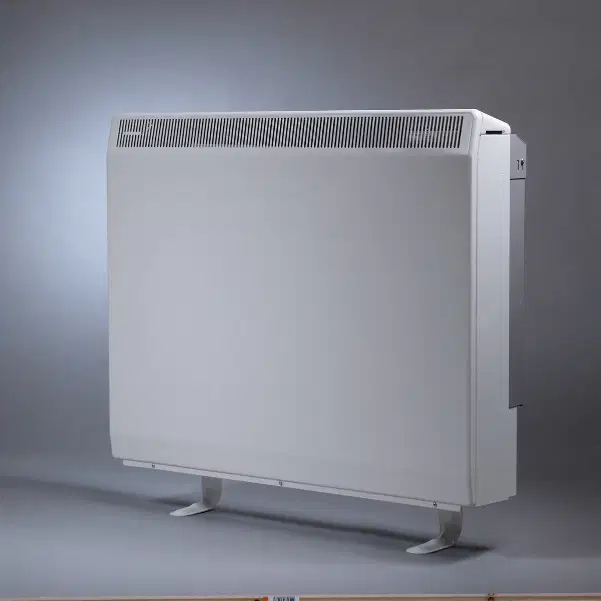
Why are electric storage heaters considered more economical when used overnight?
They can store heat generated during off-peak hours and discharge it throughout the day.
They use less electricity during the day when demand is higher.
They automatically adjust their temperature based on room occupancy.
They require less maintenance when operated at night.
Which of the following is now a more popular way to provide warm air heating than the traditional 'indirect' gas-fired heater?
Air source heat pumps
Electric storage heaters
Wood-burning stoves
Solar thermal panels
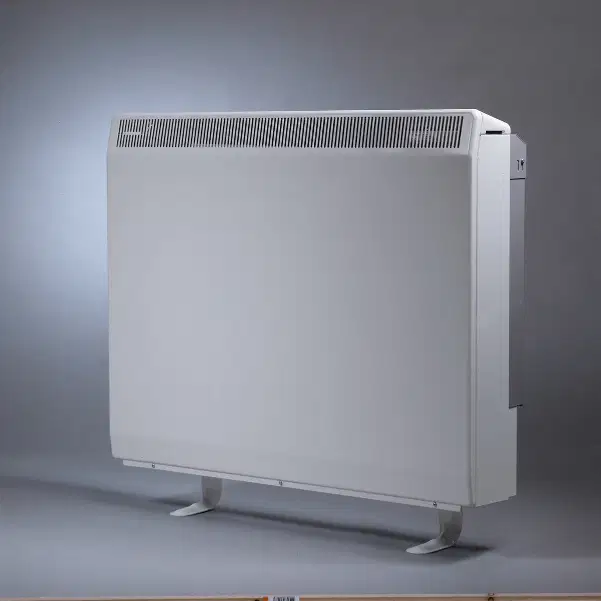
Electric storage heaters are often used when which resource is unavailable?
Gas supplies
Electricity
Water
Solar energy
Which statement best describes full central heating in a property?
All rooms are heated to a specific temperature set by the customer, even when the outside temperature is −1°C.
Only some rooms are heated to a temperature set by the customer, and the system may not work when the outside temperature is −1°C.
All rooms are heated to a temperature chosen by the installer, regardless of outside temperature.
Only the largest rooms are heated to a specific temperature set by the customer.
What is the main difference between full central heating and selective central heating?
Full central heating heats all rooms, while selective central heating heats only rooms chosen by the customer.
Full central heating uses a larger boiler, while selective central heating uses a smaller boiler.
Full central heating is less energy efficient than selective central heating.
Selective central heating heats all rooms to a lower temperature than full central heating.
Which of the following best describes background central heating?
It is installed mainly on a cost basis and may use a smaller boiler or heat emitters, heating rooms to a lower temperature.
It heats all rooms to the customer’s desired comfort temperature even when the outside temperature is −1°C.
It is a system that only heats rooms selected by the customer to a high temperature.
It is a system that always uses the largest possible boiler regardless of cost.
A customer’s heating system cannot reach their desired comfort temperature when the outside temperature is −1°C. How should this system be classified?
Background central heating
Full central heating
Selective central heating
High-efficiency central heating
Which of the following heating systems replaced the traditional open fire in each room over the past 100 years?
Gravity hot water system
Electric fan heaters in every room
Solar panel heating system
Wood-burning stove in each room
Why is central heating now preferred to an open fire in homes?
It heats up the whole property
It is easier to install in every room
It uses only solid fuel
It requires less maintenance than an open fire
Which fuel types have become more common for heating systems, replacing solid fuel?
Gas, oil, and electricity
Wood and coal
Solar and wind
Biofuel and peat
When choosing a heating system, which factor relates to whether the system will be expensive to run and considers fuels and modern technologies?
Running costs
Maintenance
Performance
Controls
A client is concerned that a heating system may be harmful to both the environment and their budget. Which consideration is most relevant to this concern?
Efficiency
Controls
Maintenance
Performance
Which statement best describes a sealed, pressurised central heating system?
It is fed directly from the mains cold water and uses an expansion vessel to accommodate heated water expansion.
It is fed from a feed-and-expansion cistern located at high level and can be fully pumped or gravity operated.
It is always a gravity system and does not use any expansion vessel.
It is an older system that does not require any pumping mechanism.
What is the main difference between low-pressure, open-vented systems and sealed, pressurised systems in domestic central heating?
Low-pressure systems use a feed-and-expansion cistern, while sealed systems use mains cold water and an expansion vessel.
Low-pressure systems are always fully pumped, while sealed systems are always gravity systems.
Sealed systems do not require any expansion vessel, while low-pressure systems do.
Low-pressure systems are more modern than sealed systems.
Which type of central heating system is described as being fed from a feed-and-expansion cistern located at high level?
Low-pressure, open-vented system
Sealed, pressurised system
Combination boiler system
System boiler option
Which of the following is the main focus of Building Regulations part L?
Conservation of fuel and power
Ensuring water quality in plumbing systems by using advanced filtration methods
Improving the aesthetics of building interiors through modern design
Reducing construction time by using prefabricated materials
What must be considered to attain thermal comfort in a heating system?
The customer’s economic constraints
The color of the radiators used in the system
The number of windows in the building
The type of flooring material installed
Which system has become a more popular way to provide warm air heating compared to traditional systems?
Air source heat pumps
Gas-fired boilers with cast iron radiators
Electric underfloor heating only
Gravity-fed hot water tanks

