
 Worksheets
Ultraviolet Radiation
Total questions: 97
Worksheet time: 49mins
What is the most important compound in the stratosphere?
Ozone
Carbon dioxide
Methane
Nitrogen
Why is the ozone layer often called the ozone shield?
Because it absorbs most of the potentially hazardous ultraviolet radiation that enters the earth’s atmosphere from the sun.
Because it reflects all visible light back into space.
Because it produces oxygen for the earth’s atmosphere.
Because it traps greenhouse gases to keep the earth warm.
UV is the part of the electromagnetic spectrum made up of wavelengths between:
100 and 200 nm
280 and 400 nm
400 and 700 nm
700 and 1000 nm
Which type of ultraviolet radiation is only mildly associated with sunburn and DNA damage and is relatively benign to most plant life?
UV-A light
UV-B light
UV-C light
Infrared light
Ill effects of ultraviolet radiation increase more than a thousandfold in the shorter wavelengths referred to as UV-B and UV-C.
True
False
UV-A radiation has the _______ wavelength and the _______ energy of the three types of UV radiation.
longest; least
shortest; most
medium; medium
shortest; least
Which of the following statements about UV-A radiation is true?
It has the shortest wavelength and the most energy
It has the longest wavelength and the least energy
It is completely blocked by stratospheric ozone
It does not cause any damage to living cells
UV-A radiation is not affected by stratospheric ozone and is transmitted to the surface of earth.
True
False
UV-A results in skin tanning and is used in medicine to treat certain skin disorders.
True
False
Which type of radiation is energetic and strongly absorbed by stratospheric ozone?
UV-A
UV-B
UV-C
Infrared
What is the only known gas that absorbs UV-B radiation?
Nitrogen
Oxygen
Ozone
Carbon dioxide
Depletion of ozone in the stratosphere results in an increase in the _______ that reaches the earth.
UV-B
Infrared
Visible light
Radio waves
UV-B has a very high penetrating ability and results in _______.
sunburn
tanning
frostbite
dehydration
Why is an increase in UV-B considered a hazard when discussing the ozone problem?
Because UV-B radiation is known to be hazardous to living things.
Because UV-B radiation helps plants grow faster.
Because UV-B radiation increases rainfall.
Because UV-B radiation reduces air pollution.
Increased UV-B could lead to _________.
skin cancer
improved eyesight
stronger bones
faster hair growth
Increased UV-B could lead to _________.
Cataracts
Improved vision
Decreased skin sensitivity
Enhanced bone strength
Increased UV-B could lead to immune system damage.
True
False
Which of the following is a possible effect of increased UV-B? Choose the correct option(s).
DNA damage
Improved eyesight
Increased crop yield
Reduced marine food chains
UV-C has the ________ wavelength and is the most energetic of the types of ultraviolet radiation.
shortest
longest
average
visible
What does UV-C do to diatomic oxygen (O₂) in the stratosphere?
It breaks down diatomic oxygen (O₂) into two oxygen atoms.
It combines diatomic oxygen (O₂) with nitrogen.
It converts diatomic oxygen (O₂) into ozone directly.
It has no effect on diatomic oxygen (O₂).
UV-C is strongly absorbed in the stratosphere and negligible amounts reach the surface of earth.
True
False
Which type of ultraviolet radiation is the most energetic?
A) UV-A
B) UV-B
C) UV-C
UV-C light is very versatile and can be used for which of the following purposes? Choose all that apply.
Disinfecting water
Destroying harmful micro-organisms in other liquids
On surfaces
On food products
In air
With UV-C technology, it is possible to destroy more than ____% of all pathogens within seconds, without addition of chemicals, without harmful side effects, inexpensively, highly efficiently and absolutely reliably.
99.99
75
50
90
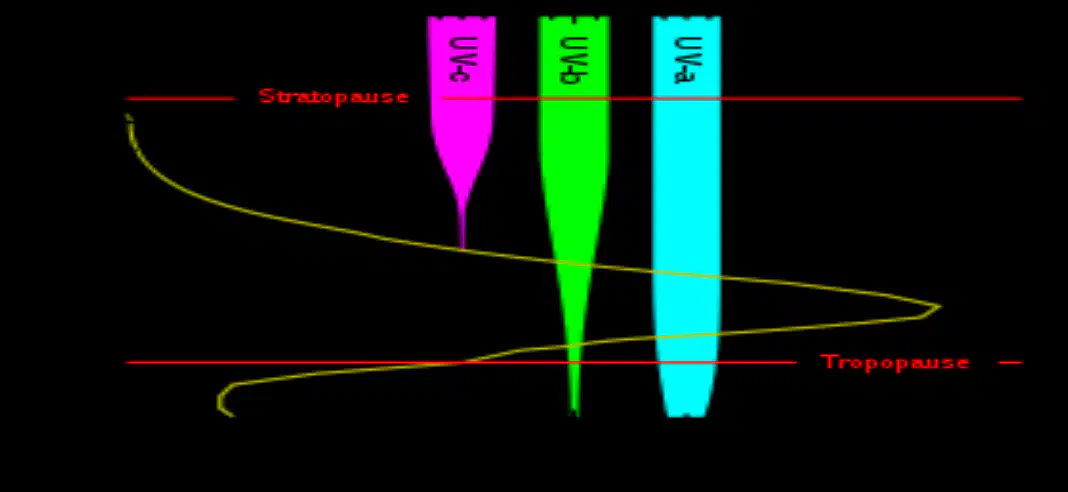
Refer to the diagram showing UVA, UVB, and UVC penetration through the atmosphere. Which type of ultraviolet radiation is almost completely blocked by diatomic oxygen and ozone before reaching the Earth's surface?
A) UVA
B) UVB
C) UVC
D) None of the above
Levels of ozone at various altitudes and blocking of different bands of ultraviolet radiation: Fill in the blank. The ozone layer blocks most ______ radiation, while hardly affecting ______ radiation.
UVB, UVA
UVA, UVB
Infrared, UVB
Visible, UVB
According to the passage, what percentage of the Sun's total UV that penetrates the Earth's atmosphere is made up by UVA?
~25%
~10%
~50%
~75%
All UVC is blocked by diatomic oxygen and ozone in the atmosphere before reaching the Earth's surface.
True
False
Which ultraviolet radiation is hardly affected by ozone and reaches the ground?
UVA
UVB
UVC
Infrared
What does the Solar Ultraviolet Index (UVI) describe?
The level of solar UV radiation at the Earth’s surface
The amount of rainfall in a region
The temperature at noon
The amount of oxygen in the air
Fill in the blank: The higher the index value of the Solar Ultraviolet Index (UVI), the greater the potential for damage to the ______ and ______, and the less time it takes for harm to occur.
skin, eye
lungs, heart
bones, muscles
hair, nails
During which period does the maximum UV level normally occur according to the Solar Ultraviolet Index (UVI)?
Midnight to 4 am
Four-hour period around solar noon (between local noon and 3 pm)
6 pm to 10 pm
8 am to 12 pm
The UVI is a useful indicator to avoid unnecessary exposure to ultraviolet radiation during the maximum UV level period.
True
False

What was the UVI at 1 pm?
6
7
8
9
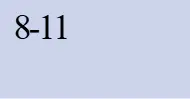
Refer to the table 'UVI over P.Jaya on 26 March 2012'. Fill in the blank: The UVI at 2 pm was ___?
6
3
8
10
Based on the UVI effects table, what precaution should be taken when the UVI is between 3 and 7?
No damage is expected
Some precaution is needed for people with sensitive skin
Avoid unnecessary exposure especially during midday hours
No precaution needed
At 12 pm, the UVI over P.Jaya was 8.
True
False
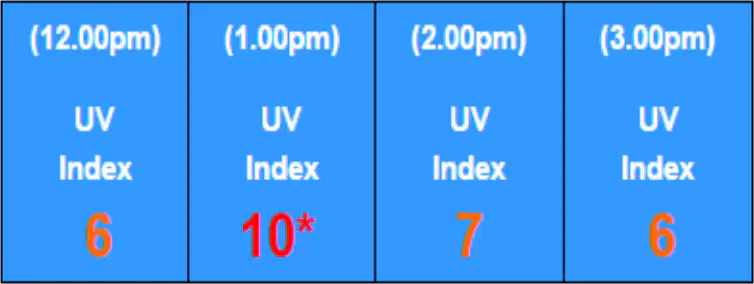
According to the Solar Ultraviolet Index (UVI) chart for Petaling Jaya on 09 October 2015, what was the UV Index at 1:00pm?
6
7
10
4
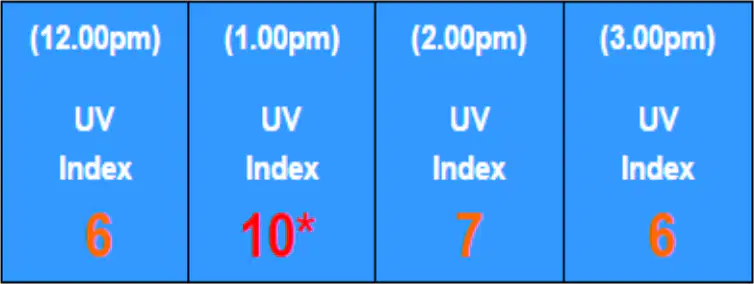
According to the Solar Ultraviolet Index (UVI) chart for Petaling Jaya on 09 October 2015, what was the UV Index at 2:00pm?
6
7
10
4
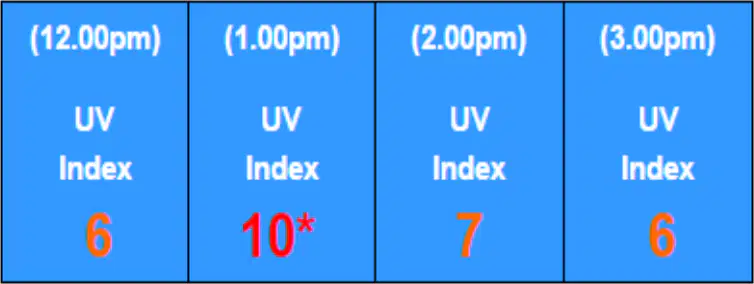
According to the Solar Ultraviolet Index (UVI) chart for Petaling Jaya on 09 October 2015, what was the UV Index at 12:00pm?
6
7
10
4
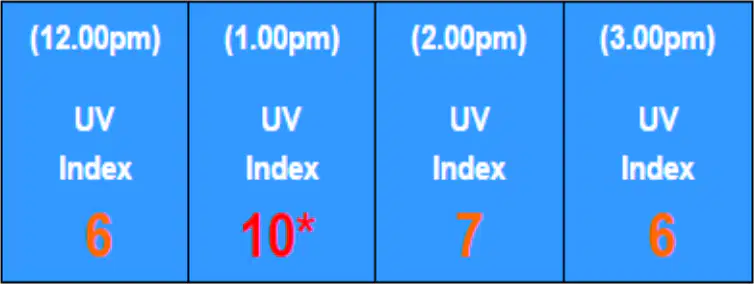
According to the Solar Ultraviolet Index (UVI) chart for Petaling Jaya on 09 October 2015, what was the UV Index at 3:00pm?
6
7
10
4
Fill in the blank: According to the UV Index scale, a UV Index of 1 or 2 means _________.
No damage is expected
Extreme risk of harm
Sunburn is likely within minutes
UV exposure is at its highest
Fill in the blank: According to the UV Index scale, a UV Index of 6 or 7 means _________.
Avoid unnecessary exposure especially during midday hours
It is safe to stay outdoors all day
UV radiation is at its lowest
No need for sun protection
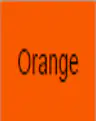
What is the media graphic color for a UV Index of 0–2.9?
Green
Yellow
Orange
Red
Fill in the blank: The risk of harm from unprotected sun exposure for the average adult at a UV Index of 3–5.9 is _________.
Moderate
Low
Severe
Negligible
Which of the following is the recommended protection for a UV Index of 6–7.9?
Wear sunglasses and use sunscreen
Take precautions, such as covering up
Cover the body with sun protective clothing, use SPF 30+ sunscreen, wear a hat, reduce time in the sun within three hours of solar noon, and wear sunglasses
Take all precautions: Wear SPF 30+ sunscreen, a long-sleeved shirt and trousers, sunglasses, and a very broad hat
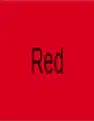
For a UV Index of 8–10.9, the recommended protection includes wearing SPF 30+ sunscreen, a shirt, sunglasses, and a wide-brimmed hat, and not staying in the sun for too long.
True
False
Natural Ozone Formation: Fill in the blank for the following reaction: O₂(g) + hv → 2O(g) (given λ = 180-240 nm) ……____
A
B
C
D
Natural Ozone Formation: Fill in the blank for the following reaction: O₂(g) + O(g) + M → O₃(g) + M ……____
B
A
C
D
Natural Ozone Destruction: Fill in the blank for the following reaction: O₃(g) + hv → O₂(g) + O(g) (give λ = 250 nm) ……____
C
N
H
S
Natural Ozone Destruction: Fill in the blank for the following reaction: O₃(g) + O → 2O₂(g) ……
D
A
B
C
In the stratosphere, ozone is always being created and destroyed. Normally, this natural cycle is in perfect balance. What is the name of these reactions?
The Chapman cycle
The Nitrogen cycle
The Carbon cycle
The Oxygen cycle
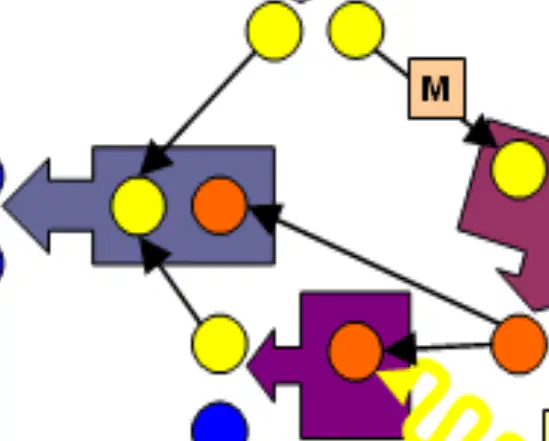
According to the legend in the Chapman Cycle diagram, what color represents O (atomic oxygen)?
Yellow
Blue
Orange
Purple
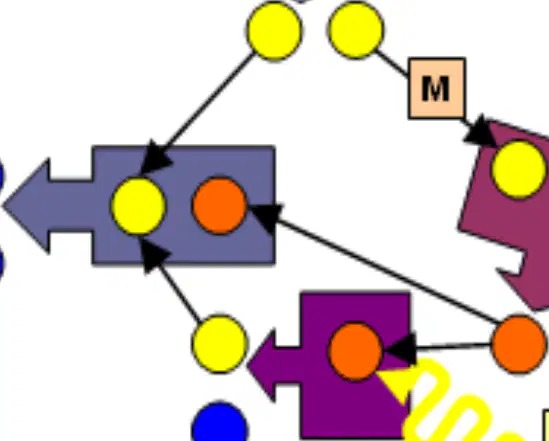
According to the legend in the Chapman Cycle diagram, what color represents O2 (molecular oxygen)?
Yellow
Blue
Orange
Purple
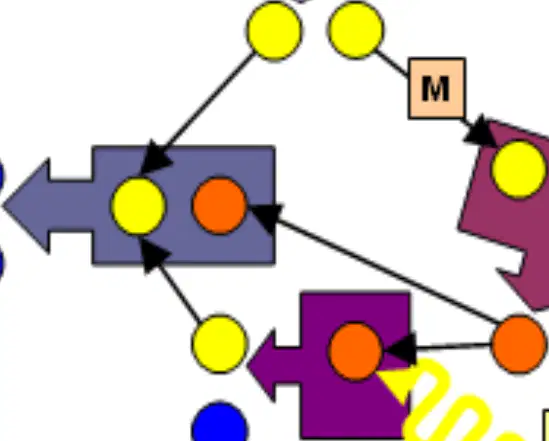
According to the legend in the Chapman Cycle diagram, what color represents O3 (ozone)?
Yellow
Blue
Orange
Purple
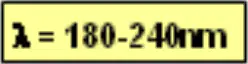
In the Chapman Cycle diagram, which reaction is associated with the wavelength range λ = 180-240 nm?
Reaction A
Reaction B
Reaction C
Reaction D
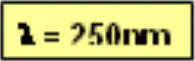
In the Chapman Cycle diagram, which reaction is associated with the wavelength λ = 250 nm?
Reaction C
Reaction A
Reaction B
Reaction D
Fill in the blank: Atmospheric conditions in the stratosphere are very ________, so foreign material introduced into it may persist for a very long time.
stable
chaotic
humid
volatile
Which of the following is considered one of the greatest threats to the environment?
Global warming
Ozone depletion
Acid rain
Deforestation
When was the appearance of damage in the earth ozone first detected over the Antarctic?
1982
1976
1990
2000
Who reported the first clear sign of damage to the stratosphere ozone layer over the Antarctic in 1982?
Joe Farman
James Watson
Marie Curie
Albert Einstein
Fill in the blank: Ozone 'holes' where O3 concentration is down to ____ μg/m³ occur most frequently in the Antarctic region.
200
100
500
1000
Is there evidence of stratospheric ozone depletion occurring everywhere except at the equatorial regions?
True
False
What did scientists not suspect two decades ago?
The importance of chemical processes destroying ozone
The presence of ozone in the stratosphere
The role of human activity in ozone depletion
The existence of CFCs
When scientists saw dramatic fluctuations in ozone levels, what did they assume?
Their instruments were in error
Ozone was being created
Human activity was responsible
Chlorine was the culprit
Read the passage below and fill in the blank: Scientists did not realise that ______ was the main culprit and that most of it in the stratosphere comes from human activity.
chlorine
oxygen
carbon dioxide
nitrogen
What is the largest source of chlorine in the stratosphere according to the passage?
Chlorofluorocarbons (CFCs)
Natural processes
Ozone itself
Water vapor
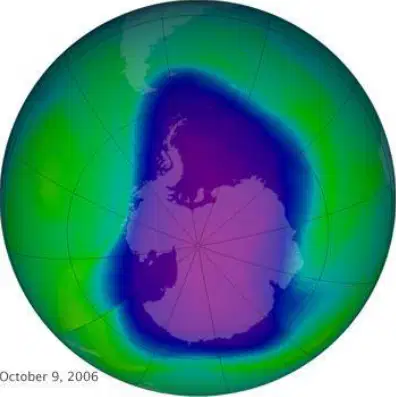
Look at the diagrams showing ozone concentration over Antarctica on different dates. Which year shows the largest ozone hole?
September 17, 1979
October 7, 1989
October 9, 2006
October 1, 2010
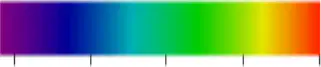
According to the information provided, what is the average concentration of ozone in the atmosphere in Dobson Units?
About 300 Dobson Units
About 100 Dobson Units
About 600 Dobson Units
About 50 Dobson Units
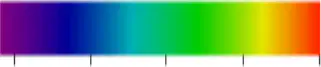
The ozone hole is considered to be wherever the concentration drops below ____ Dobson Units.
220 Dobson Units
300 Dobson Units
180 Dobson Units
250 Dobson Units

True or False: Purple and dark blue areas in the diagrams are part of the ozone hole.
True
False
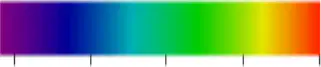
Which color on the ozone concentration scale represents the lowest concentration of ozone?
Purple
Blue
Green
Yellow
Halogen Depletion Theory: Chemists designed CFC's to be chemically inert. What does this mean?
They break down rapidly
They do not break down rapidly and do not react with other chemicals
They react with other chemicals
They are highly flammable
Halogen Depletion Theory: CFCs are ideal for use as ________ in refrigerators and air-conditioners, as propellants in aerosol spray cans, for cleaning electronic equipment, and in fire extinguishers.
refrigerants
lubricants
coolants
solvents
From environmental perspective, inert chemicals are desirable because they do not break down to forms that are toxic or dangerous. For example, the pesticide DDT becomes more dangerous when it breaks down into _________?
dieldrin
benzene
malathion
atrazine
Since CFCs are nonreactive, CFCs do not interfere with ________ processes.
biological
chemical
physical
mechanical
Extensive investigations indicated that CFCs in the troposphere do not break down, nor do they react with other ________.
chemicals
gases
liquids
elements
According to the Halogen Depletion Theory, where do CFCs eventually make their way to?
Troposphere
Stratosphere
Mesosphere
Thermosphere
Who identified the process that destroys the CFC molecule according to the Halogen Depletion Theory?
Einstein and Curie
Rowland and Molina
Watson and Crick
Newton and Galileo
Fill in the blank: As CFCs reach the stratosphere, the powerful rays of the sun break it up through _________
photodissociation/photolysis
condensation
sublimation
oxidation
What is the chemical equation that represents the breakdown of CFCl3 by sunlight in the stratosphere?
CFCl3 + hv → Cl + CFCl2
CFCl3 + O2 → CO2 + Cl2
CFCl3 + H2O → HF + Cl2 + CO2
CFCl3 + hv → CFCl3O
Ozone Depletion: What was destroying ozone faster than nature could replace it?
CFCs
Carbon dioxide
Methane
Nitrogen
Ozone Depletion: What does CFC stand for?
Carbon Fluoride Compound
Chlorofluorocarbons
Chemical Fluorine Compound
Chlorine Fluoride Carbon
Ozone Depletion: How many ozone molecules can one CFC molecule help destroy over its lifetime?
1,000
10,000
100,000
1,000,000
Ozone Depletion: CFCs affect the balance in the natural process of ozone production and destruction by:
Releasing chlorine atoms that break down ozone molecules
Increasing the production of ozone in the stratosphere
Blocking ultraviolet radiation from reaching the ozone layer
Reacting with oxygen to form more ozone
Which ozone-depleting substance is used in fire extinguishers?
Halons
Chlorofluorocarbons (CFCs)
Carbon dioxide
Ammonia
Which ozone-depleting substance is a widely used fumigant?
Methyl bromide
Carbon dioxide
Sulphur dioxide
Ammonia
Methane
Which ozone-depleting substance is emitted into the stratosphere by space shuttles?
Hydrogen chloride
Methane
Carbon dioxide
Nitrous oxide
Which of the following are cleaning solvents that are ozone-depleting substances?
Carbon tetrachloride
Methyl chloroform
n-propyl bromide
Hexachlorobutadiene
All of the above

What is the formula of CFC-11 (76 yrs)?
CFCl3
CCl4
CHCl3
C2F6

What is the ozone depletion potential (ODP) of CFC-12?
0.82
0.03
0.5
1.2

Which chemical has the formula CF3Cl3?
CFC-113 (92 yrs)
CFC-12 (100 yrs)
CFC-11 (45 yrs)
CFC-114 (100 yrs)

Which chemical listed has the highest ozone depletion potential (ODP)?
CFC-11 (76 yrs)
Halon-1301 (65 yrs)
Halon-1211 (11 yrs)
HCFC-22 (12 yrs)

What is the ozone depletion potential (ODP) of HCFC-22 (12 yrs)?
0.04
0.01
0.2
1.0

Which chemical has the shortest atmospheric lifetime?
CFC-11 (76 yrs)
Halon-1211 (11 yrs)
Methyl chloroform (5 yrs)
CFC-12 (139 yrs)
What does the ozone depletion potential (ODP) of a compound measure?
Its ability to destroy stratospheric ozone
Its ability to produce oxygen
Its ability to absorb sunlight
Its ability to form clouds
The ODP of CFC-11 is defined to be _____
1.0
0.5
0.01
0.8

