
 Worksheets
PS Ch 1-5 S1 Final Study Questions
Total questions: 70
Worksheet time: 35mins
Determination of the amount of something
Measurement
Estimation
Hypothesis
Inference
What system do we use to measure in our everyday lives?
English
Metric
SI
Imperial only
What system do we use to measure in science class?
Metric
English
Customary
Random units
What is the difference between distance and length?
Distance is the amount of space between two points, while length is a measured distance of an object
Length is the amount of space between cities, while distance is the measured size of a pencil
Distance and length are identical in meaning
Length is time between two events, while distance is speed of an object
Which SI unit is used for length?
Meters
Liters
Grams
Seconds
Which SI unit is used for time?
Seconds
Meters
Liters
Grams
Which SI unit is used for volume?
Liters
Meters
Grams
Seconds
Which SI unit is used for mass?
Grams
Liters
Meters
Seconds
Which SI units are used for temperature in science? Select all that apply.
Kelvin
Celsius
Fahrenheit
Rankine
What is the definition of accuracy and precision? Choose the statement that best matches.
Accuracy is closeness to the true value; precision is closeness of repeated measurements to one another
Accuracy is repeating the same value; precision is closeness to the true value
Accuracy and precision mean the same thing
Accuracy is speed of measurement; precision is number of significant figures
In science we strive to be both ____ and ____.
Accurate and precise
Fast and efficient
Creative and subjective
Qualitative and descriptive
The amount of matter in an object is called
Mass
Volume
Density
Weight
Anything that has mass and takes up space is called
Matter
Energy
Force
Vacuum
The amount of space an object takes up is called
Volume
Mass
Area
Density
A set of rules the universe follows are called
Natural laws
Hypotheses
Theories
Experiments
Learning by asking questions is called
Inquiry
Observation only
Assumption
Speculation
A single explanation that is supported by lots of evidence collected over a long period of time is a
Theory
Hypothesis
Law
Opinion
A suggested answer written as an IF and THEN statement is a
Hypothesis
Theory
Conclusion
Law
A situation specifically set up to investigate something is an
Experiment
Observation
Model
Inference
What you keep the same in an experiment are the
Constants
Variables
Controls only
Trials
The item you change in an experiment is the
Variable
Constant
Control
Observation
How are mass and weight different? Choose the statement that best matches.
Mass is the amount of matter and does not change with gravity; weight depends on gravity and is measured in newtons
Mass depends on gravity while weight is constant everywhere
Mass and weight are identical and both measured in grams
Weight is the amount of matter and never changes with gravity
Which phase is more dense?
Solid
Liquid
Same density
Which phase is less dense?
Liquid
Solid
Same Density
What do theories start out as?
Hypotheses
Facts
Laws
Opinions
Scientific hypotheses must be ____; written as ____ and ____ statements.
Testable; IF; THEN
Provable; WHEN; BECAUSE
Measurable; WHAT; HOW
Repeatable; DO; NOW
How many variables should we change in an experiment?
1
2
3
None
Total distance divided by total time is
Average speed
Instantaneous speed
Acceleration
Velocity with direction only
The actual speed of a moving object at any moment is
Instantaneous speed
Average speed
Constant speed
Terminal velocity
Speed that stays the same is called
Constant speed
Average speed
Instantaneous speed
Acceleration
The rate at which your speed (or velocity) changes is
Acceleration
Speed
Displacement
Inertia
An object accelerating due to the force of gravity with no other forces acting on it is in
Freefall
Terminal velocity
Uniform motion
Equilibrium
An object moving under the influence of only gravity is a
Projectile
Satellite only
Pendulum
Equilibrium body
What is the difference between speed and velocity? Choose the correct statement.
Velocity has direction while speed does not
Speed has direction while velocity does not
Speed and velocity are identical
Velocity is always constant but speed changes
What does zero acceleration mean?
Changing speed
Constant speed
Zero velocity
Infinite speed
If you are speeding up you have ____ ____.
Positive acceleration
Negative acceleration
Zero acceleration
Constant velocity
If you are slowing down you have ____ ____ which can be called ____.
Positive acceleration, speeding
Negative acceleration, deceleration
Zero acceleration, rest
Constant acceleration, equilibrium
Push or pull is called what?
Mass
Force
Energy
Work
Which quantity is measured in newtons and depends on mass and gravity?
Mass
Weight
Speed
Power
What force resists the motion of objects or surfaces?
Tension
Friction
Gravity
Normal force
What quantity has magnitude and direction?
Scalar
Vector
Speed
Energy
Which force is created whenever an object is in contact with a surface?
Normal force
Gravitational force
Electromagnetic force
Weak nuclear force
______ forces are important in technology.
Gravitational
Electromagnetic
Strong nuclear
Weak nuclear
____ force is universal.
Electromagnetic
Gravitational
Strong nuclear
Weak nuclear
____ force causes radioactivity.
Gravitational
Weak nuclear
Electromagnetic
Strong nuclear
____ force acts between positive and negative charges and holds a molecule together.
Weak nuclear
Strong nuclear
Electromagnetic
Gravitational
_____ force holds the nucleus together but only reaches a short distance.
Electromagnetic
Strong nuclear
Gravitational
Tension
____ force causes all masses to attract to each other.
Electromagnetic
Gravitational
Strong nuclear
Weak nuclear
We use ____ to measure weight/force of gravity in everyday life but in science we use ____.
kilograms; joules
pounds; newtons
meters; seconds
calories; watts
What are the 3 types of moving friction?
Sliding
Rolling
Fluid
Static
What is the 1 type of NONmoving friction?
Sliding
Rolling
Fluid
Static
For an object to be in equilibrium, all forces acting on the object must add up to ___.
One
Zero
A constant
Infinity
Which graph has to be horizontal?
Line graph
Bar graph
Circle (pie) graph
Scatter plot
Which graph has labels with units on both the X and Y axes?
Line graph
Bar graph
Circle (pie) graph
Pictograph
Which graph is used when data are percentages?
Line graph
Bar graph
Circle (pie) graph
Histogram
Which graph must be cut from the center into correctly sized slices?
Line graph
Bar graph
Circle (pie) graph
Dot plot
Which graph has to be 90% of the paper?
Line graph
Bar graph
Circle (pie) graph
Scatter plot
Which graph has numbers ONLY on the Y axis?
Line graph
Bar graph
Circle (pie) graph
Scatter plot
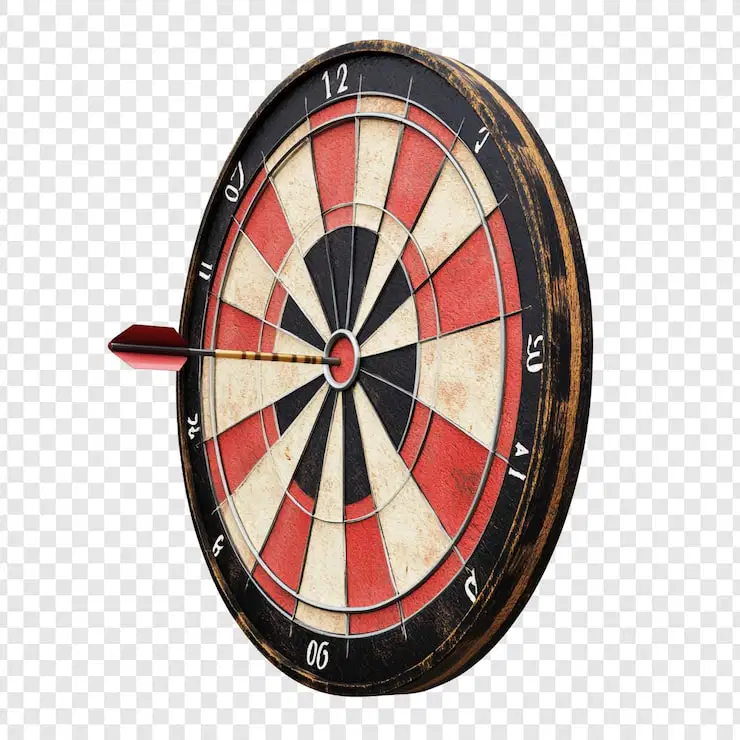
What does this show?
Accuracy
Accurate and Precise
NOT Accurate; NOT Precise
NOT Accurate; Precise
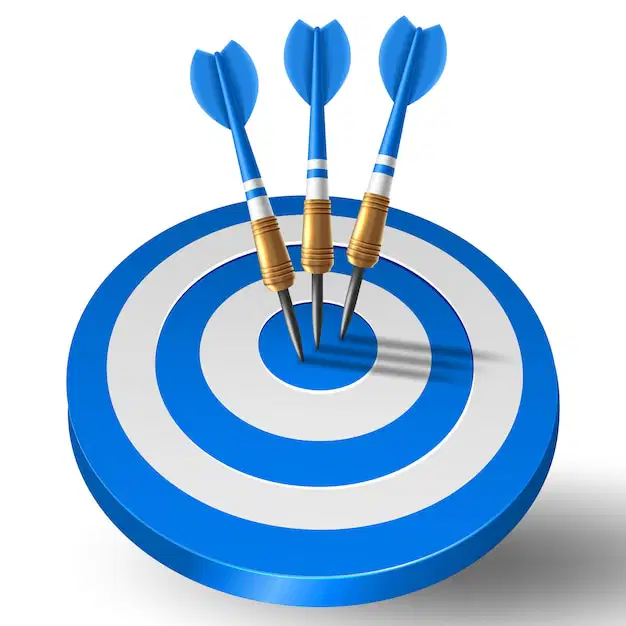
What does this show?
Accuracy
Accurate and Precise
NOT Accurate; NOT Precise
NOT Accurate; Precise
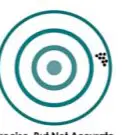
What does this show?
Accuracy
Accurate and Precise
NOT Accurate; NOT Precise
NOT Accurate; Precise
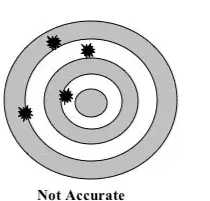
What does this show?
Accuracy
Accurate and Precise
NOT Accurate; NOT Precise
NOT Accurate; Precise

What does this show?
Positive Acceleration
Negative Acceleration
Constant Speed
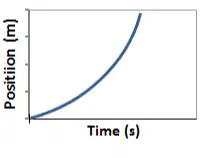
What does this show?
Positive Acceleration
Negative Acceleration
Constant Speed
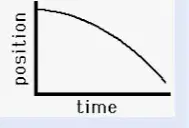
What does this show?
Positive Acceleration
Negative Acceleration
Constant Speed
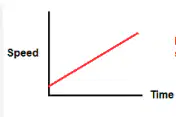
What does this show?
Positive Acceleration
Negative Acceleration
Constant Speed
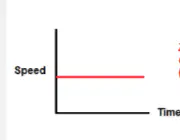
What does this show?
Positive Acceleration
Negative Acceleration
Constant Speed
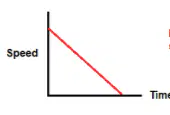
What does this show?
Positive Acceleration
Negative Acceleration
Constant Speed
Give 1 example of direct contact force.
Tug of war
Gravity between Earth and Moon
Magnet attraction
Light shining on a surface
Give an example of a force field.
Gravity between Earth and Moon
Tug of war
Pushing a box
Turning off a light switch

