
 Worksheets
Peripheral Nervous System
Total questions: 34
Worksheet time: 18mins
The Peripheral Nervous System (PNS) includes??
Sensory receptors: (general senses & special senses)
Cranial Nerves (12 pairs)
Spinal Nerves (31 pairs)
Effectors (skeletal, smooth, cardiac muscles & glands)
Bundles of myelinated & unmyelinated axons of neurons in the PNS
Nerves
Ganglia
Cluster of cell bodies of neurons in the PNS
Nerves
Ganglia
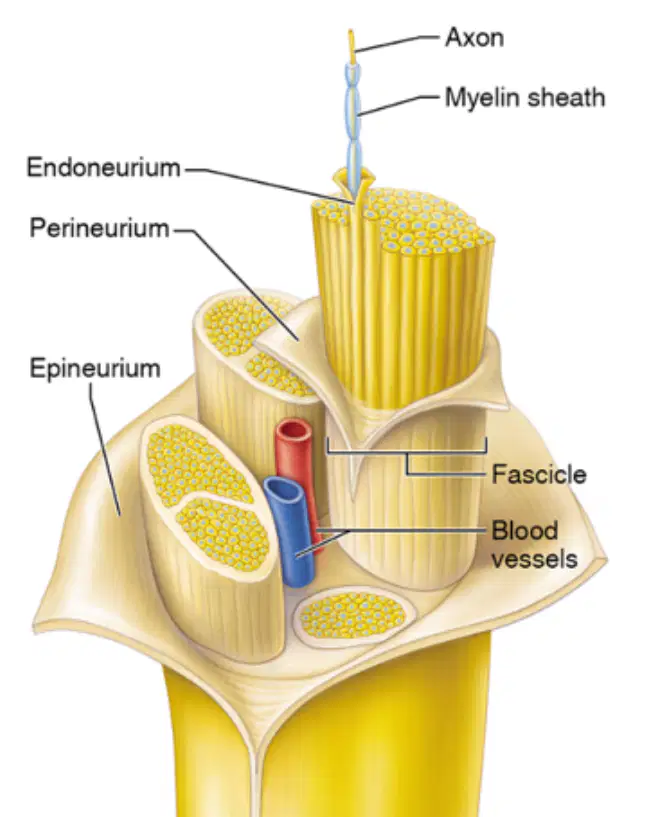
The outermost tough fibrous sheath
Epineurium
Perineurium
Endoneurium
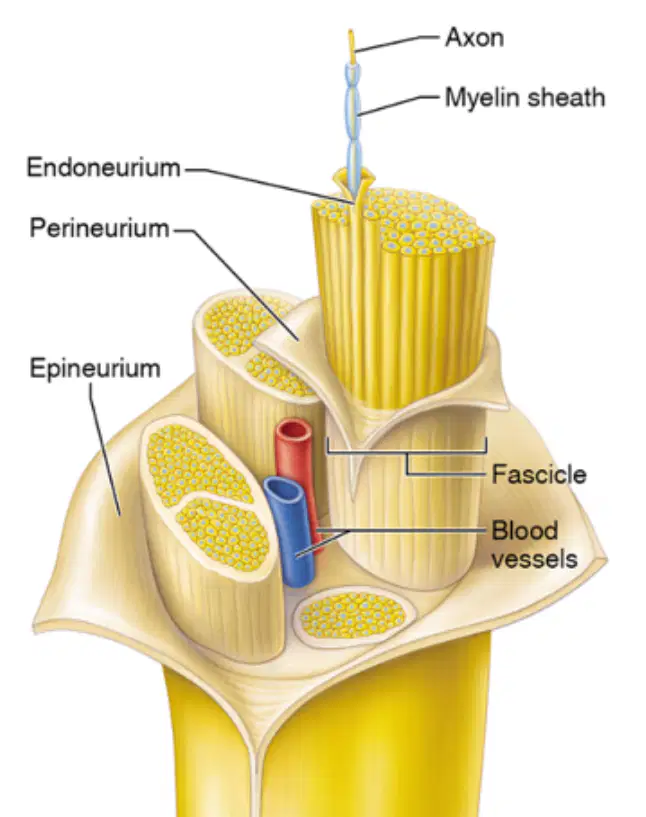
A course sheath that bundles nerve fibers into fascicles
Epineurium
Perineurium
Endoneurium
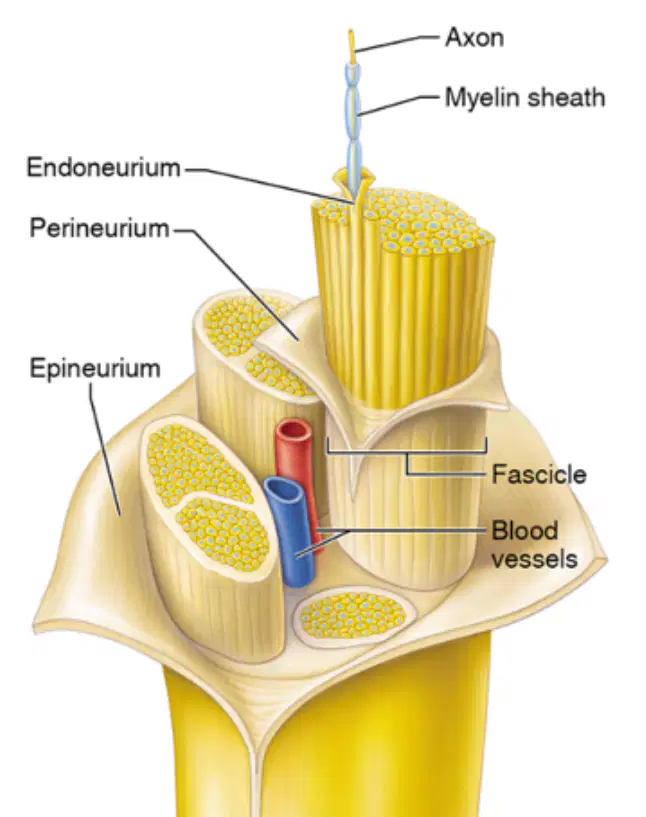
A loose connective tissue sheath that encloses single axons.
Epineurium
Perineurium
Endoneurium
Cranial Nerves has how many pairs?
13 pairs
31 pairs
12 pairs
15 pairs
Conduct impulses from their receptors to the CNS to get integrated/analyzed (specific cortex or areas in the lobes)
Sensory Fibers
Somatic Motor Fibers
Visceral/ANS Motor Fibers
Conduct impulses from the primary motor cortex or the frontal eye field to their respective skeletal muscle effectors.
Sensory Fibers
Somatic Motor Fibers
Visceral/ANS Motor Fibers
Conduct impulses from the brain to their respective viscera/organs.
Sensory Fibers
Somatic Motor Fibers
Visceral/ANS Motor Fibers
Spinal Nerves Fibers contain how many pairs?
31 pairs:
8 Cervical
12 Thoracic
5 Lumbar
5 Sacral
1 Coccygeal
30 pairs:
7 Cervical
12 Thoracic
5 Lumbar
5 Sacral
1 Coccygeal
12 pairs:
7 Cervical
12 Thoracic
5 Lumbar
5 Sacral
1 Coccygeal
12 pairs:
8 Cervical
12 Thoracic
5 Lumbar
5 Sacral
1 Coccygeal

Sensory Fibers
Has receptors located in the Epithelium of the Nasal Cavity.
Exits Cranium through the Olfactory Foramina in the cribriform plate of the Ethmoid bone to the Olfactory Bulb.
Responsible for sense of Smell processes in Olfactory Cortex!
If damaged --> Lose the sense of Smell.
Optic N.
Olfactory N
Oculomotor N.
Trochlear N.
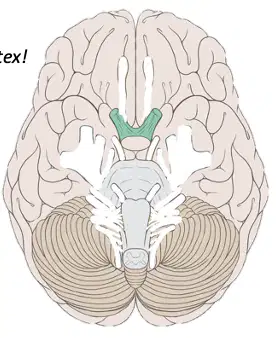
Sensory Fibers
Has receptors (photoreceptors - rods & cones) located in the Retina.
Arises from the RETINA
Leaves the eye at the optic disc (blind spot)
Exits Cranium through the optic canal
Responsible for sense of sight (vision) processed in visual cortex!
If damaged --> lose the ability to see.
Olfactory N.
Optic N.
Oculomotor N.
Trochlear N.
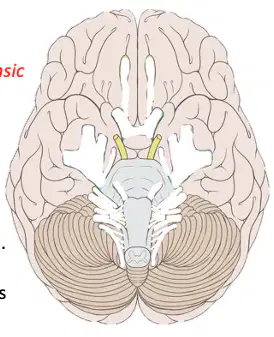
Motor Fibers (processes in Frontal Eye Field)
Opening of eyelids, eye movement (upward/medial, upward/lateral, medial, downward/lateral).
Somatic Motor Fibers:
a.) Extend from the Ventral Midbrain to 4 of the 6 Extrinsic Eye Muscles:
* Medial Rectus
* Superior Rectus
* Inferior Rectus
* Inferior Oblique
b.) Innervate the Levator Palpebrae Muscle.
* If damaged would not be able to open the eye lid.
Visceral Motor Fibers (Parasympathetic):
a.) Constricts the Iris
b.) Make the lens Bulge to accommodate close vision.
Olfactory N.
Optic N.
Oculomotor N.
Trigeminal N.
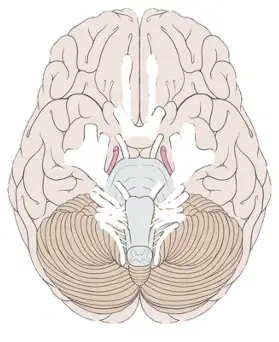
Motor Fibers (processes in Frontal Eye Field)
Innervates the Superior Oblique Muscle of the Eye.
If damaged --> Eye will be held in Upper Medial Corner.
Eye movement (UP/medial)
Trochlear N.
Trigeminal N.
Optic N.
Oculomotor N.

BOTH Sensory & Motor Fibers. (processed on Primary Motor & Primary Somatosensory Cortex!)
The largest of all cranial nerves.
Receives sensory information from various parts of the face (Facial Sensation)
This nerve is partially deadened during dental work.
Has 3 Branches:
1. Ophthalmic (sensory only)
2. Maxillary (sensory only)
3. Mandibular (sensory & motor)
* Supplies motor fibers for chewing muscles (MASTICATION)
Trochlear N.
Trigeminal N.
Abducens N.
Facial N.
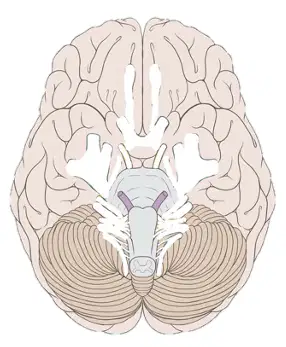
Motor Fibers (processed in Frontal Eye Field)
Innervates the Lateral Rectus muscle of the eye.
If damaged --> Person will not be able to Abduct the Eye (look to the outside on the Ipsilateral side.
* Eye movement (lateral)
Facial N.
Vestibulocochlear N.
Abducens N.
Trigeminal N.
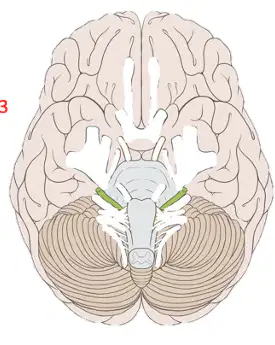
BOTH Sensory & Motor Fibers (processes in Primary Motor & Primary Somatosensory Cortex!)
Somatic Motor Fibers:
* Innervated the facial expression muscles.
* Major motor nerve of the face.
Visceral Motor Fibers (parasympathetic):
Innervates Submandibular & Sublingual glands, Lacrimal gland, glands of the nose & palate.
Sensory Fibers:
* Supplies taste fibers (sensory fibers) to the anterior 2/3 of the tongue.
If damaged --> Facial muscles will not work on the Ipsilateral Side.
Facial Muscle Movement (except chewing muscles) and eyelid closing.
Abducens N.
Facial N.
Trigeminal N.
Vestibulocochlear N.
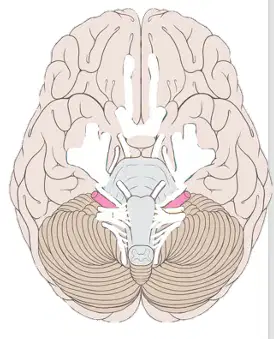
Sensory Fibers
Carries afferent fibers from hearing & equilibrium receptors in the inner ear to the CNS.
* Auditory from the Cochlea. Processes in Primary Auditory Area!
* Vestibular from the Semicircular ducts, Utricle & Saccule. Processed in Vestibular Cortex!
Hearing and Balance
Trochlear N.
Vestibulocochlear/
Auditory N.
Glossopharyngeal N.
Vagus N.
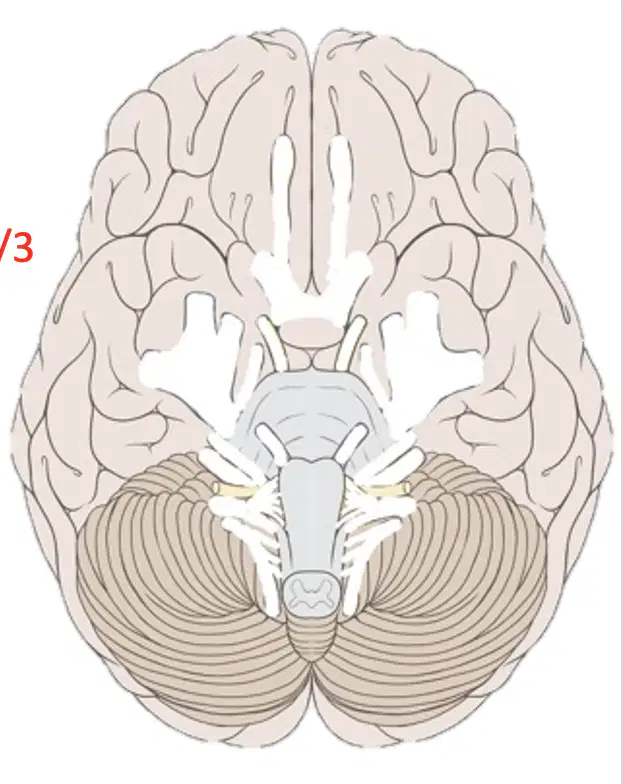
BOTH Sensory & Motor Fibers
Somatic Motor Fibers: Processes in Primary Motor Cortex!
* Innervates part of the tongue and pharynx for swallowing.
Visceral Motor Fibers (parasympathetic):
* Innervated the Parotid salivary glands.
Sensory Fibers: Processes in Gustatory Cortex!
* Supplies taste fibers (sensory fibers) to the posterior 1/3 of the tongue.
* General sensory to the skin of external ear.
Taste on the posterior third of the tongue.
Glossopharyngeal N.
Vagus N.
Accessory N.
Hypoglossal N.
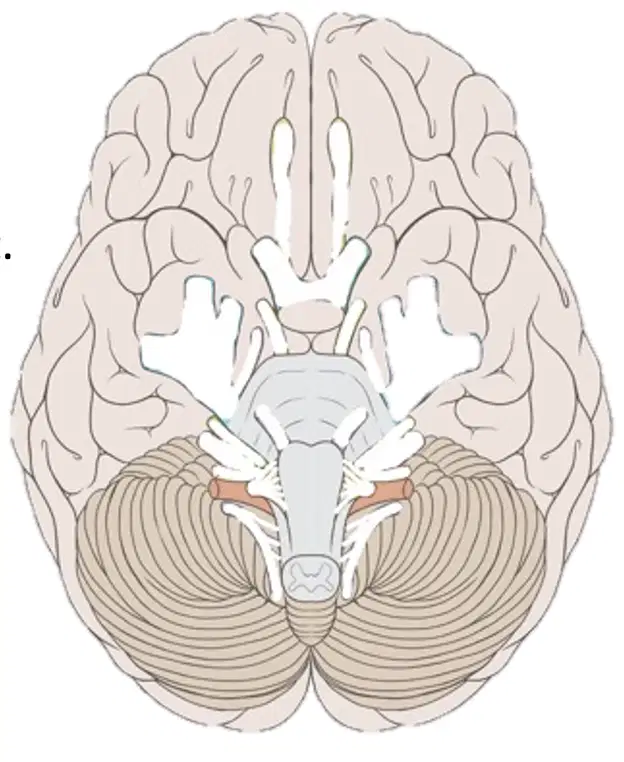
BOTH Sensory & Motor Fibers.
Somatic Motor Fibers:
* Innervates muscles of Pharynx, larynx, esophagus & palate.
Visceral Motor Fibers (parasympathetic):
* Innervated the Trochea, Bronchi & Digestive Tract, Sinoatrial Node & Atrioventricular Nodes of the Heart.
Sensory Fibers:
* Supplies taste fibers (sensory fibers) to the posterior 1/3 of the tongue.
The ONLY cranial nerve that extends below the head & neck.
Sensory Fibers carry impulses from thoracic and abdominal viscera.
Responsible for 90% of Parasympathetic functions.
Uvula (palate muscles) and swallowing
Trochlear N.
Vagus N.
Accessory N.
Hypoglossal N.
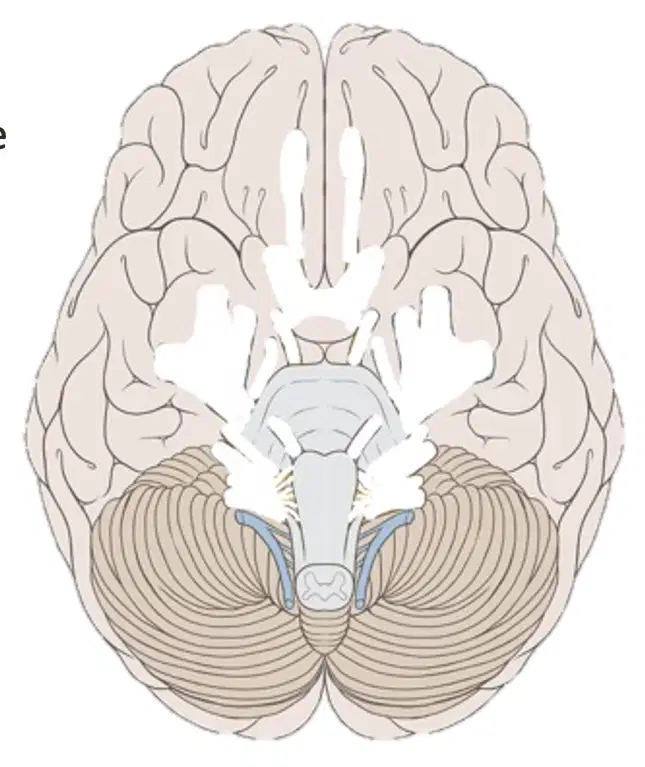
Motor Fibers (processed in Primary Motor Cortex!)
* Innervated the Trapezius & Sternocleidomastoid (SCM) muscles.
Formed from Ventral Rootlets of the C1-C5 region of the Spinal Cord.
Runs upward through the Foramen Magnum then Exits the skull through the Jugular Foramen.
If damaged --> Dropping of shoulder & paralysis of SCM on Ipsilateral side.
Shoulder Shrug
Accessory N.
Hypoglossal N.
Vagus N.
Optic N.
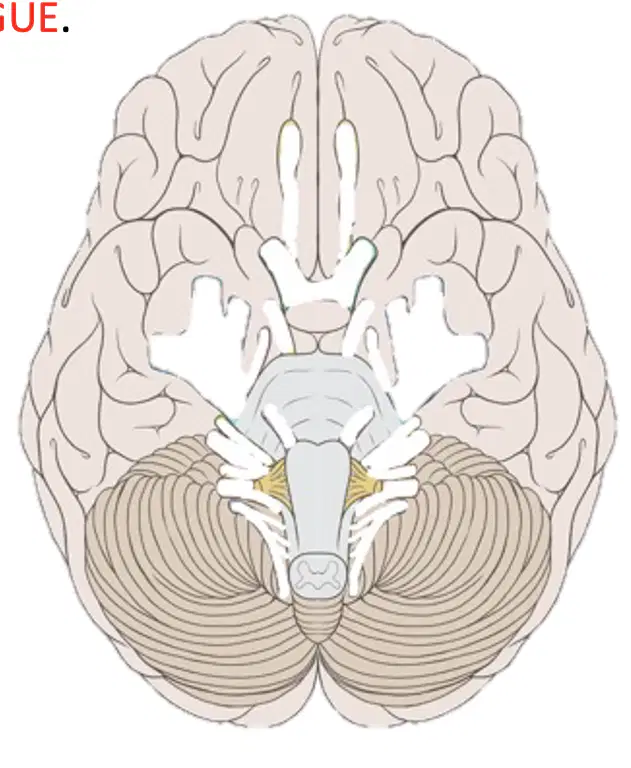
Motor Fibers (processed in Primary Motor Cortex!)
Controls both extrinsic and intrinsic muscles of the TONGUE
Tongue Movment.
Accessory N.
Vagus N.
Hypoglossal N.
Olfactory N.

"Oh Once One Takes The Anatomy Final A Good Vacation Sounds Heavenly"
1. Olfactory
2. Optic
3. Oculomotor
4. Trochlear
5. Trigeminal
6. Abducens
7. Facial
8. Auditory/Vestibulocochlear
9. Glossopharyngeal
10. Vagus
11. Accessory
12. Hypoglossal
1. Optic
2. Olfactory
3. Oculomotor
4. Trochlear
5. Trigeminal
6. Abducens
7. Facial
8. Auditory/Vestibulocochlear
9. Glossopharyngeal
10. Vagus
11. Accessory
12. Hypoglossal
1. Olfactory
2. Optic
3. Oculomotor
4. Trochlear
5. Trigeminal
6. Facial
7. Abducens
8. Auditory/Vestibulocochlear
9. Glossopharyngeal
10. Vagus
11. Accessory
12. Hypoglossal

"Some Say Marry Money But My Brother Says Big Brains Matter More"
1. Sensory
2. Sensory
3. Motor
4. Motor
5. Both
6. Motor
7. Both
8. Sensory
9. Both
10. Both
11. Motor
12. Motor
1. Sensory
2. Sensory
3. Sensory
4. Motor
5. Both
6. Motor
7. Both
8. Sensory
9. Both
10. Both
11. Motor
12. Motor
1. Sensory
2. Sensory
3. Motor
4. Sensory
5. Both
6. Motor
7. Both
8. Sensory
9. Both
10. Both
11. Motor
12. Sensory
Sensory = Afferent
Motor = Efferent
SAME
DAVE
Dorsal = Afferent
Ventral = Efferent
SAME
DAVE
Clear the way by removing debris
Macrophages
Schwann Cells
Form regeneration tubes & secrete growth factors that stimulate Axons to grow back.
Schwann cells
Macrophages
Which cranial nerve is the LARGEST of all??
Trochlear N.
Abducens N.
Trigeminal N
Facial N.
Supplies taste fibers (sensory fibers) to the anterior 2/3 of the tongue?
Facial N.
Glossopharyngeal N.
Vagus N.
Supplies taste fibers (sensory fibers) to the posterior 1/3 of the tongue
Facial N.
Glossopharyngeal N.
Vagus N.
The only cranial nerves that extends below the head & neck
Spinal Accessory N
Hypoglossal N
Vagus N.
Olfactory N.
Cranial Nerve responsible for 90% of Parasympathetic functions.
Optic N.
Olfactory N.
Trochlear N.
Vagus N.

