
Font size
 Worksheets
Food Chains & Food Webs
Total questions: 72
Worksheet time: 6hrs 30mins
Plants create food using energy from _________ in a process called __________ .
soil; photosynthesis
sunlight; photosynthesis
sunlight; decomposition
soil; decomposition
Organisms that are able to make their own food.
Apex predators
Detritivores
Consumers
Producers
How do consumers get their energy?
Eating other organisms
Preying on apex predators
Using sunlight to carry out photosynthesis
Releasing chemicals that break down dead matter
Organisms, such as fungi and bacteria, that release chemicals to break down dead matter.
Detritivores
Consumers
Producers
Decomposers
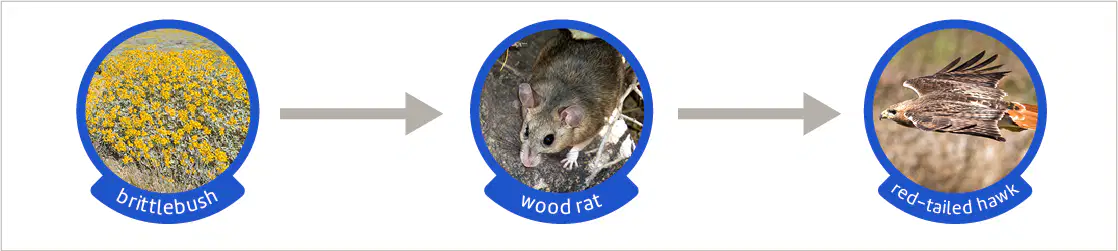
Identify organisms in the food chain above that are producers.
Brittlebrush
Red-tailed hawk
None
Wood rat
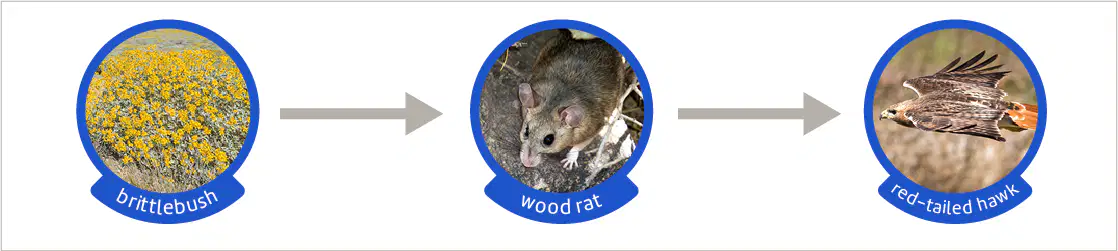
In the food chain above, the wood rats: (check all that apply)
eat red-tailed hawks
are producers
eat brittlebush
are primary consumers
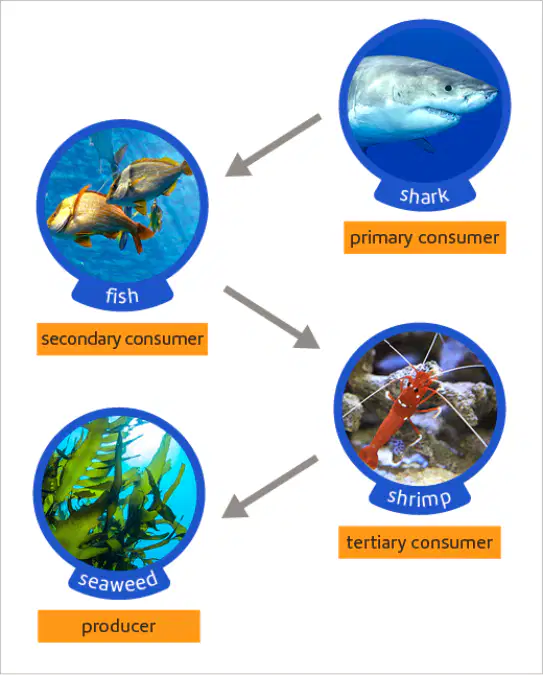
A student drew a picture of a marine food chain. Identify two mistakes they made.
The fish is not a secondary consumer
The primary and tertiary consumers are incorrectly labelled
Seaweed is not a producer
The energy arrows should be pointing in the opposite directions
Producers are important in an ecosystem because:
they provide energy for other organisms through photosynthesis.
they consume other animals for energy.
they break down dead matter.
they control the weather patterns.
What is the difference between food chains and food webs?
Food webs don't always include a producer
Food webs are made of many food chains joined together
Only food chains show the flow of energy and matter
There is no difference
True or False: Organisms in food webs can have more than one role. For example, some organisms could be both secondary and tertiary consumers.
True
False
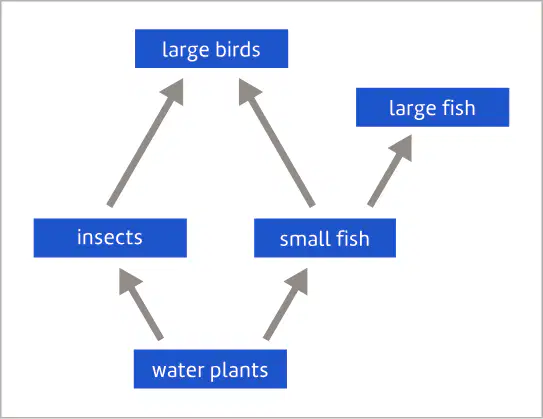
Look carefully at this pond food web. A number of large fish are removed from a pond by fishing.
Using the food web, determine the effect on the number of water plants.
The number of water plants would decrease
The number of water plants would increase
The number of water plants would stay the same
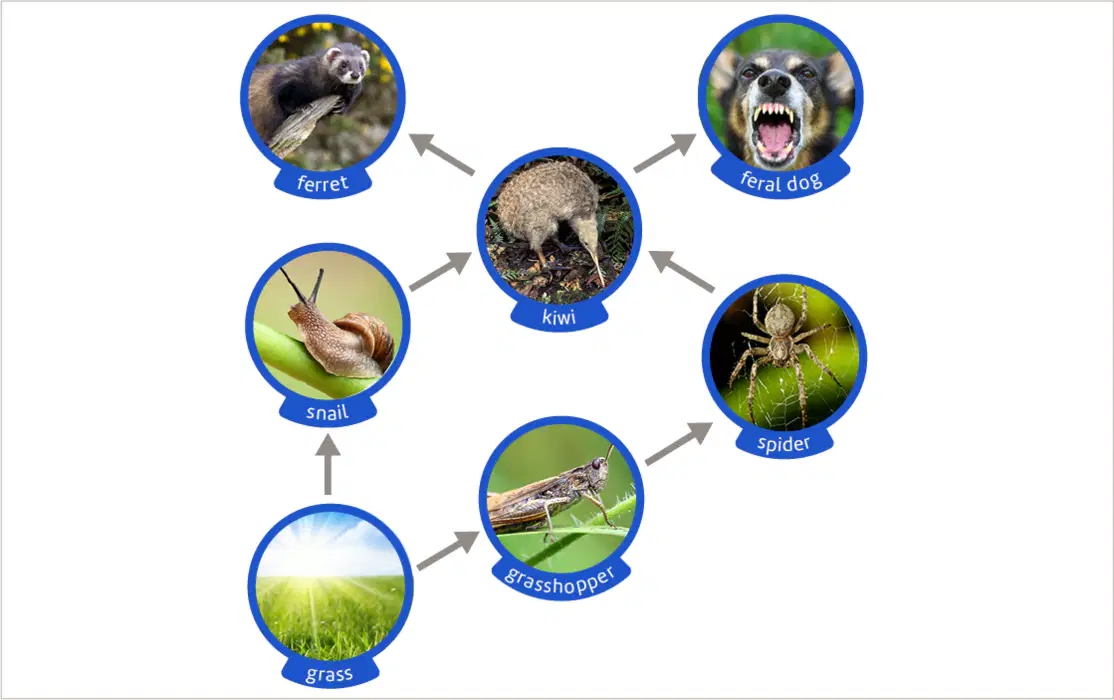
Refer to the Forest Food Web below.
Identify the producer in this food web.
Grasshopper
Grass
Kiwi
Snail
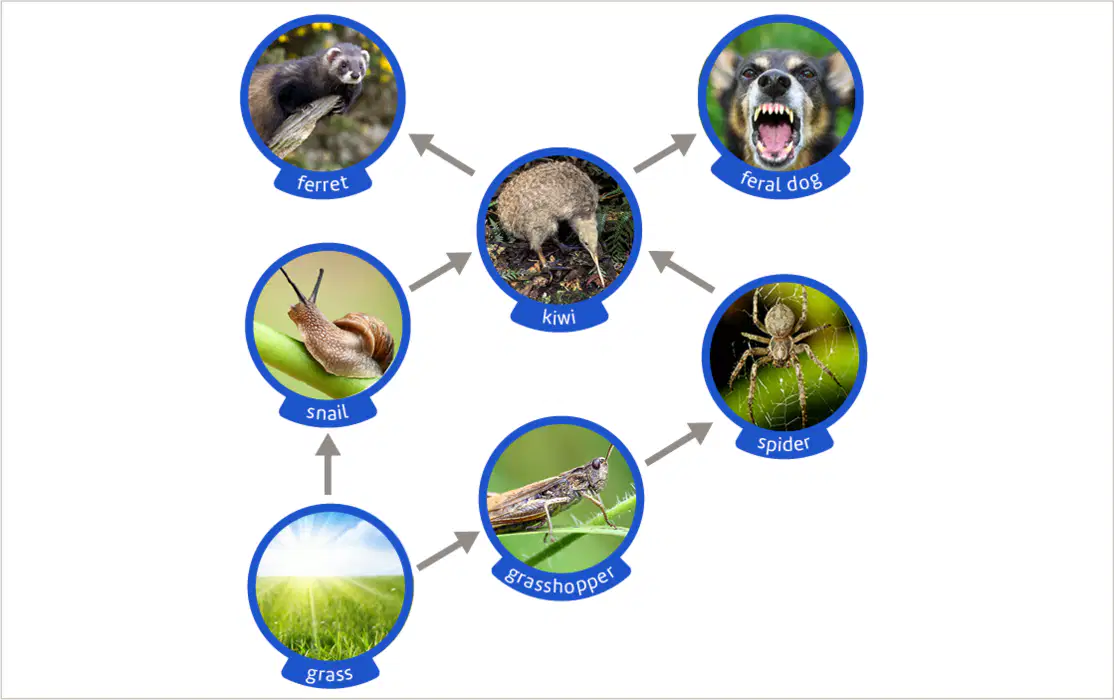
Refer to the Forest Food Web below.
Identify the predators of kiwis. (choose all that apply)
Grasshoppers
Snail
Humans
Ferret
Feral dogs

Identify the role/s of the kiwi in this food web.
Apex pradators
Primary consumers
Secondary consumers
Tertiary consumers

True or False: The spider eats the grasshopper.
True
False
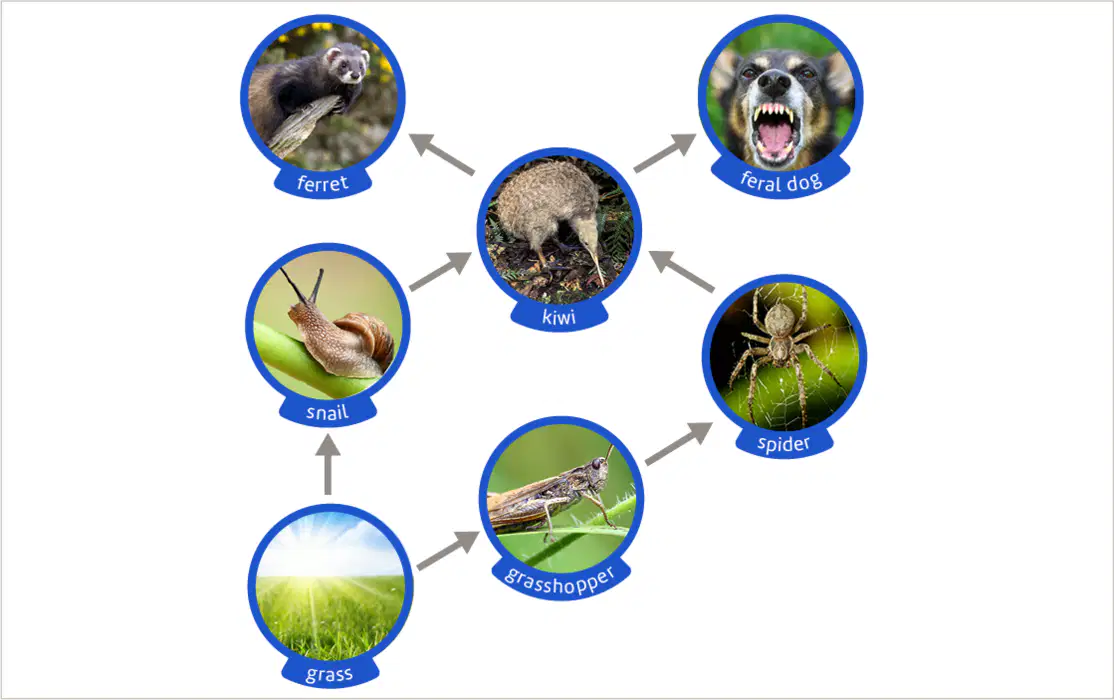
Identify the producer in the food web above.
Kiwi
Grass
Grasshopper
Ferret
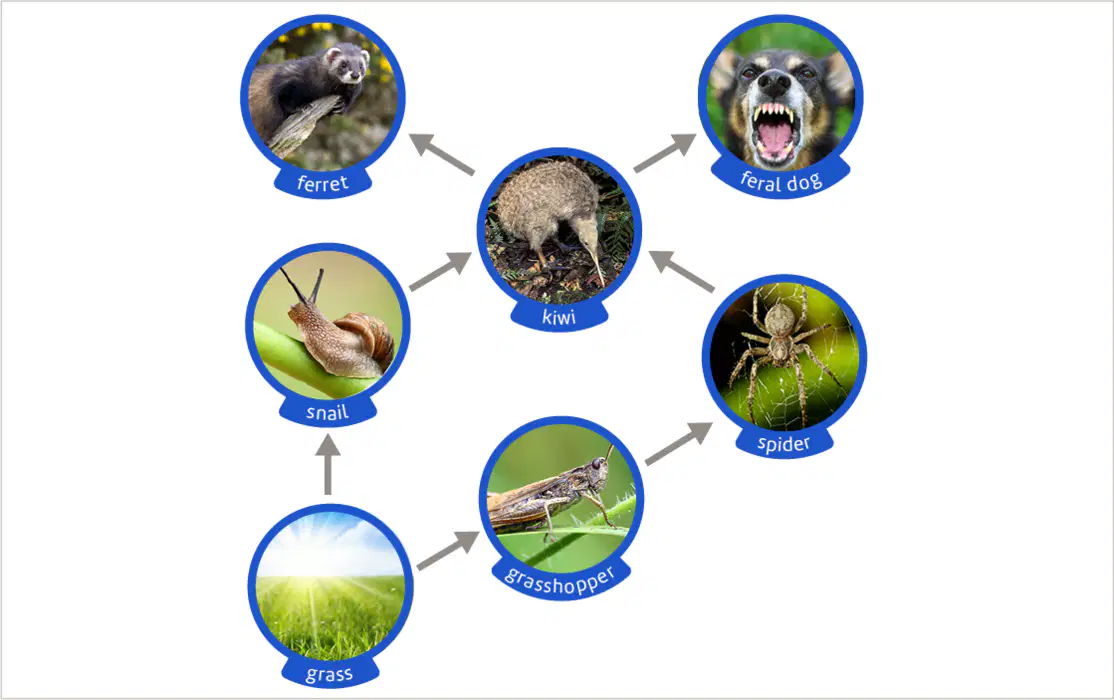
Ferrets were brought to New Zealand from England in the 1880s. What effect did this likely have on the number of kiwis?
The number of kiwis decreased.
The number of kiwis increased.
The number of kiwis stayed the same.
Kiwis became more widespread across New Zealand.
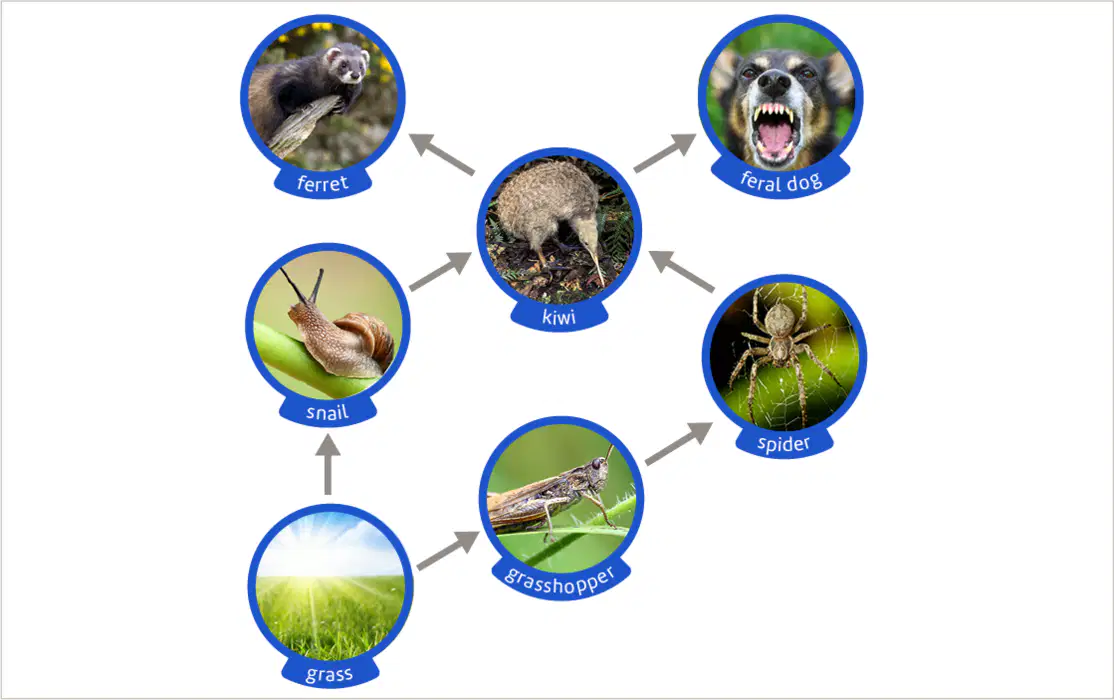
Explain how the flow of matter and energy is represented in a food web. Then, describe how matter and energy flow to and from the spider in the forest ecosystem above.
Matter and energy flow through a food web as organisms eat and are eaten; in the forest ecosystem, the spider gains energy by eating insects and loses energy to predators and decomposers.
Matter and energy flow only from plants to animals; in the forest ecosystem, the spider only receives energy from plants.
Matter and energy do not flow in a food web; the spider does not exchange energy or matter with other organisms.
Matter and energy flow in a food web by sunlight being directly absorbed by all animals; the spider gets energy from the sun.
True or False: An ecosystem is defined as a collection of living things interacting with other living things.
True
False
Define abiotic.
Living things in an ecosystem
Parts of a living thing
Non-living things in an ecosystem
Things that are introduced to an ecosystem by humans
Which of the following parts of an ecosystem are biotic factors.
Tigers
Rocks
Mushrooms
Temperature
Select the interaction between a biotic and an abiotic factor in a coral reef ecosystem.
A fish swims in water
Coral eats zooplankton
A clownfish finds shelter in an anemone
Shells are carried by ocean currents
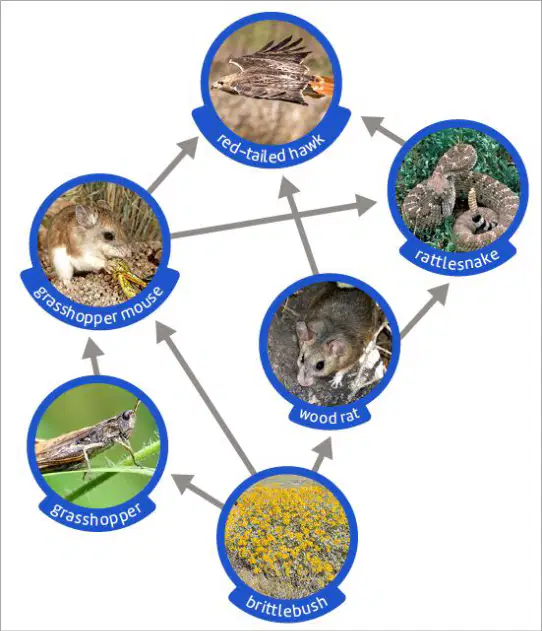
The food web shown illustrates some of the relationships in a desert ecosystem.
Determine which of the following statements are true.
The wood rat and grasshopper compete for resources
The red-tailed hawk is a predator of the grasshopper
The rattlesnake is a predator of the grasshopper mouse
The rattlesnake and grasshopper compete for resources
Identify which of the following statements about competition are true.
Competition only occurs when two animals fight one another
Plants cannot be in competition with one another
Only organisms of different species compete for resources
Organisms compete with one another because resources are limited
Determine which of the following are examples of competition.
A shark eats a fish
Ten zebras graze on grass in the same open plain
Two male rhinos fight for a mate
Carrots and potatoes grow next to each other in the same garden
Select the best definition of an invasive species.
An invasive species is one that:
has no predators in its native habitat
migrates and settles in a new ecosystem
damages an ecosystem after being introduced
carries disease
True or False: Only animal species can be invasive.
True
False
Brown tree snakes have no natural predators on Guam. Classify their role in the food web.
Apex predators
Producers
Primary consumers
An organism that makes its own food through photosynthesis is called...
Consumer
Producer
the Sun
Decomposer
In an ecosystem, a rock is considered a(n) _____________ factor
Biotic
Abiotic

Factors that makes up the nonliving parts of an ecosystem such as air, water, and rocks are called ___________ __________.
abiotic factors
biotic factors
bionic factors
abionic factors
Factors that makes up the living organisms in an ecosystem are called ________________ ________________.
biotic factors
abiotic factors
bionic factors
abionic factors
An organism that needs to eat in order to get energy is called this.
consumer
producer
decomposer
starving
An organism that gets energy by breaking down dead matter is called this.
decomposer
consumer
producer
hungry


Fish picking off and eating bits of algae or parasites from a turtle's shell is an example of
competition
predation
commensalism
mutualism
If an organism is living inside another and causing it harm, it is an example
mutualism
commensalism
parasitism
If two organisms benefit from a relationship (++), it is called
mutualism
commensalism
parasitism
If two organisms have a relationship in which only one benefits (+,0), it is an example of
mutualism
commensalism
parasitism
Mutualism, commensalism, and parasitism are examples of
competition
symbiotic relationships
prey adaptations
predation
If two organisms have a relationship in which one benefits and the other is harmed (+,-), it is an example of
mutualism
commensalism
parasitism
Regions of the planet with similar types of life and climates are called
biomes
kingdoms
spheres
systems
A cold, dry biome that is far from the equator and encircles the Arctic Ocean. It is home to animals such as; polar bears, arctic wolves, and snow owls.
Tundra
Desert
Tropical Rainforest
Coniferous Forest
A biome that is close to the equator, very warm, and has abundant rainfall. It is home to more species and varieties than any other ecosystem. Animals such as; tree frogs, toucan, leopard, monkey, jaguar, and tree snakes live there.
Tundra
Deciduous Forest
Desert
Tropical Rainforest
A biome that receives very little precipitation and animals must rely on plants to get water. Many animals that live there are nocturnal. It is home to animals such as; rats, mice, lizards, and snakes
Grasslands
Freshwater
Desert
Coniferous Forest
What biome is New Jersey in?
Temperate Forest
Wetlands
Savanna
Tropical Rainforest

Grassland located close to the equator, receives as much as 120cm of rain each year.
Desert
Rainforest
Temperate Forest
Savanna
Which biome consists of diverse deciduous trees, warm summers, cool winters, and can be found in the eastern US?
Wetlands
Temperate Forest
Tropical Rainforest
Savanna

