
 Worksheets
excercise P4
Total questions: 105
Worksheet time: 2hrs 31mins
It protects the spinal chord.
backbone
voluntary muscles
stomach
heart and lungs
brain
Protected by the rib cage
stomach
lungs only
voluntary muscles
brain
heart and lungs
It is protected by the skull.
heart and lungs
voluntary muscles
stomach
brain
spine
Muscles that you can control
voluntary muscles
backbone
stomach
brain
heart and lungs
Examples of muscles that you cannot control
voluntary muscles
backbone
stomach
brain
heart and lungs

A cold
A temperature
A cough
A toothache

A coold
Cool
A cold
A temperature

A cough
A cold
A stomach-ache
Nothing

Head
My head hurts :(
A toothache
A headache
A toothache


A stomach-ache


A pig eats berries, nuts, fungi, and insects. What type of consumer is a pig?
producer
herbivore
omnivore
decomposer
What type of consumer is the Walleye in this food chain?
Algae--> Minnow --> Walleye --> Bacteria
Herbivore
Omnivore
Scavenger
Carnivore
Food chains and food webs begin with a
decomposer
consumer
producer
carnivore
Plants and algae are producers because they _________
decompose dead material
make their own food
consume other animals
need food from other animals

An animal which gets its food by the killing and consuming of other animals is which of the following?
Prey
Predator
Portable
Producer
Which of the following images shows an animal that would be considered prey?


The relationship between a crocodile and fish is
friendly
symbiosis
predator and prey
competition
What do herbivores eat?
Plants
Animals
Plants and animals
candy
How do producers make their own food?
using energy from the sun
using water
using light from our house
using soil from our garden
What do omnivores eat?
Plants
Animals
Plants and animals
candy

The crocodile is
a predator which eats fish, zebras, hippos and so on.
a prey which is eaten by zebras, hippos and so on.
a prey which is eaten by alligators.
a predator which eats alligators.

The lion likes to eat
grass and plants.
humans.
antelopes, rodents, hippos, zebras.
only antelopes.

Which animal is this?
a hare, a carnivore mammal.
a hare, an herbivore mammal.
a lynx, a carnivore mammal.
a lynx, an omnivore mammal.
A living thing that can make its own food is called...
A fungus
A predator
A consumer
A Producer
What does a food chain show?
The predator and prey in a habitat
The transfer of food energy between organisms
The number of animals living in an ecosystem
All of the decomposers
The place where a living thing lives is called . . . .
its environments
its food
its houses
its habitats

A swamp is home to many animals. Which of the following animals is best suited for a swamp habitat . . . .


what happens if our environment is like the image above . . . .
humans, plants, and animals will die
plants have more room to grow
the animal grows thrives
human migrate in search of gold

Peacocks have colourful tail feathers they display to attract . . . .
best friend
the neighbor
mates
parents
The habitat provides the living thing with what it needs to . . . .
a place to store kitchen equipment
get together and fight
survive and such as food
just a place for meetings
Pay attention to the statement below!
1. Sea eagle, crab, sea anemone, shellfish, and coconut tree
2. butterfly, birds’net fern, pigeon, and squirrel
3. tree crab, crocodile, mudskipper, egret, and mud lobster
4. fish, coral, whales, dolphins and sharks
Living beings whose place of residence in the seashore is shown a statement of numbers . . . .
four
one
two
three

Name the habitat . . . .
polar region
forest
jungle
desert

What animal live in the garden . . . .


where is the habitat of the living creatures above . . . .
Ocean
Jungle
Polar region
Desert

The animal habitats above is . . . .
Ocean
Desert
garden
artic
Fish, dolphins, coral, sea turtles, and plants live here. What habitat is this describing . . . .


Where does the starfish live?
Polar region
Jungle
Ocean
Desert
Mountains

savannah
tundra
grassland
desert
True or False. Animals and Plants can survive in any habitat.
True
False
What is a habitat?
A way an animal behaves
A group of the same animals living together
A place where living things live
When an animal lives in a place that is not their home eg. a zoo
Habitats provide all ... for living things, except ....
food
fun
water
shelter
What animal would you most likely find in the forest habitat?
sea turtle
dragonfly
orang utan
zebra

Choose the correct answers based on the picture given.
goats, mountain
camels, desert
tiger, jungle
camels, ocean

Habitat this animal is....
desert
ocean
polar region
rainforest
Penguin's habitat is......


Shark lives in....
desert
ocean
polar region
rainforest
What do animals need to survive in their habitat?
clothes
food
shelter
sunlight
water

Where do lizards live?
They live in the sea.
They live in ice and snow.
They live in deserts and mountains.

Where do penguins live?
They live in forests.
They live in ice and snow.
They live in lakes.

Where do toucans live?
They live in lakes.
They live in forests.
They live in deserts.
Liquid takes the shape of its_____:
container
size
color

Identify the process.
Freezing
Evaporation
Melting
Condensation

Identify the process.
Melting
Condensation
Freezing
Evaporation
_________is made up of the same type of particles.
mixture
solution
substances
material
There are the examples of chemical reaction, except ....
burning wood
rusted nails
builders make concrete
melting ice
when a substance or materials change from a liquid to a solid. they lose heat. It is called ....
freezing
melting
material
substance
A chocolate can melt because it is (a)
Banu's ice cream started as solid, when the sun heated, ice cream changed into liquid. it is called ....
melting
freezing
solidifying
materials
Which is the right statement for describing LIQUIDS particles?
the particles are packed tightly together
the particles are close together, but they are not packed
the particles are very far apart from each other
there are big spaces between the particles

The picture describes the particles of (a)
Plastic, wood, glass, and rubber are (a)
Which materials are solid?
oxygen and carbon dioxide
pure water and oil
vinegar and syrup
sugar and powder milk
The process of changing from a solid into a liquid (a)
One or more new substances are formed during ....
chemical reaction
physical changes
What is the physical change?
Particles move around one another.
So ... can flow and take the shape of any container.
(a)
Write the properties of solid particles.
A ... is made of one type of matter.
(a)

The incorrect description about the particles is ….
Packed very closely together
Have a fixed position
Particles vibrate
Taking the shape of any container
A ... is made of one type of matter.
(a)
A place in which an animal lives is called a (a)
A habitat provides the animal with water, shelter, and (a)
Below are the aquatic habitats, except ...
deserts
oceans
rivers
lakes
The habitat characterised with a cold area and there is ice all around is known as the ...
polar regions
deserts
lakes
rainforests
Below are the animals living in polar regions .... (Choose 4 correct options!)
polar bears
penguins
camels
snowy owls
arctic foxes
A habitat that is typically hot, has dry soil, and there is very little rainfall is a (a)
Below are the animals living in the deserts .... (choose 4 correct options!)
rattlesnakes
camels
fenner foxes
tarantulas
polar bears
The habitat that is usually warm, very humid and wet is a ...
rainforest
desert
polar region
sea
The animals living in a rainforest are ... (Choose 4 correct options!)
tigers
orangutans
toucans
leaf insects
penguins
The habitat which is wide, open areas where mostly grass and flowers grow is known as a ....
grassland
lake
ocean
desert
The following are the examples of animals living in grasslands ... (Choose 4 correct options!)
hyenas
zebras
ostriches
elephants
orcas
The habitat which has water that contains a lot of salt is known as an/a ....
ocean
river
rainforest
grassland
Below are the animals living in the ocean, except ...


Grass can grow in the following areas, except ...
polar regions
grasslands
forests
deserts
Pine trees can grow in the following areas, except ...
deserts
mountains
rainforests
along the beaches
Deer are best suited to habitats with trees where they can hide among the trees.
True
False
Apple snails are not best suited to swamps.
True
False
Some animals do not move to a different place when their habitat changes.
True
False
Some animals change colours over time to help them blend into their new environment.
True
False
Squirrels in the desert are active the whole year, but squirrels in cold habitats go into a long deep sleep during winter.
True
False
Plants that live in a desert where the environment is dry generally have small or no leaves.
True
False
Plants that live in a rainforest where the environment is wet generally have large leaves.
True
False
Habitat is ……
Habitat is a natural home only for plants to live and survive
Habitat is a natural homes for living things to have food, water, and shelter to survive
Habitat is a natural home only for the animal to have food, water, and reproduce
Habitat is a natural home for pets to live and survive
What 4 things must be present in a habitat?
space, shelter, water, food
ponds
food and air
shelter and no water

What's the name of this habitat?
Rainforest
Arctic
Ocean
Desert

What's the name of this habitat?
Rainforest
Arctic
Ocean
Grassland

Where does the monkey live?
Grassland
Desert
Rainforest
Arctic
Which of these habitats has a very cold temperature?
Grassland
Polar regions
Desert
Tropical rainforest
Which habitat is suitable for a bird?
Answer are more than one.
Terrestrial habitat
Aerial habitat
Aquatic habitat
Arctic habitat
Which of these options is describe best about the desert ?
A desert is an area in which vegetation is dominated and covered in grass
A desert is an ecosystem that occur where the land meets the sea
A desert is a complex ecological system in which trees are the dominant life form
A desert is very dry, hot, and sandy of land with very little vegetation
What is the tropical rainforest?
Tropical rainforests doesn’t have many trees
Tropical rainforest is the driest place on earth
Tropical rainforests is usually warm, humid, and wet
Tropical rainforest has extremely cold weather throughout the year
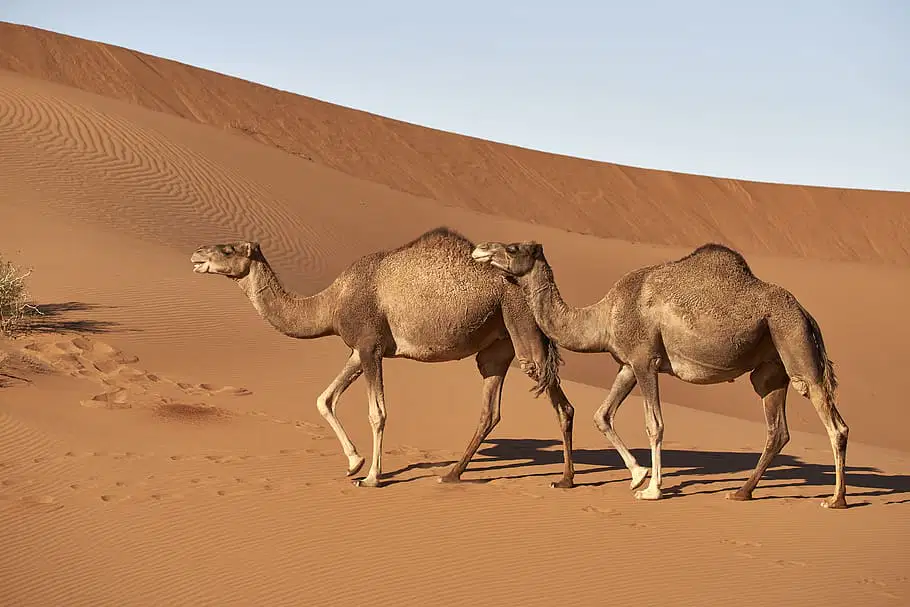
Where does the camel lives in ?
Aquatic habitat
Grassland
Desert
Polar regions
Where do plants get the energy they need to make their own food?
water
air
soil
sunlight
A student is creating a food chain with a wolf, the Sun, a rabbit, and grass. The student wants to show the flow of energy for this food chain. What order should these be placed in from beginning to end?
the Sun --> wolf --> rabbit --> grass
wolf --> grass --> rabbit --> the Sun
grass --> rabbit--> wolf --> the Sun
the Sun --> grass --> rabbit --> wolf

