
Font size
 Worksheets
4 Electricity Q2 Revision
Total questions: 130
Worksheet time: 1hrs 27mins
Is steel a .....
Conductor
Insulator
Mercury is a .....
Conductor
Insulator
Plastic is a .....
Conductor
Insulator
Diamond is a .....
Conductor
Insulator
Graphite is a .....
Conductor
Insulator
How can we test if a material is a conductor? Choose the best method.
Build a simple circuit with a battery, a bulb, and the material; if the bulb lights, the material is a conductor.
Measure the material’s mass; if it is heavy, it is a conductor.
Heat the material strongly; if it melts, it is a conductor.
Check the material’s color; if it looks shiny, it is a conductor.
Electric charge can be either positive or negative. In an atom, an electron has a negative charge that is the same size as the positive charge of a proton. Which statement best describes the relative charges of electrons and protons in an atom?
They have equal magnitude but opposite signs
They have equal magnitude and the same sign
The electron’s charge is larger in magnitude than the proton’s
Both have no net charge
What is the charge on a neutron?
Positive
Negative
Zero
Depends on the atom
As an atom has the same number of electrons as protons it is uncharged. What is the overall charge of such an atom?
Positive
Negative
Zero
Depends on the number of neutrons
Static electricity describes the situation when electric charges remain stationary and occurs best with insulators. Which option correctly identifies the conditions for static electricity?
Charges are stationary; best with insulators
Charges are moving; best with insulators
Charges are stationary; best with conductors
Charges are moving; best with conductors
Which statement is correct about electric current?
It is stationary charge and occurs best with insulators
It is moving charge and occurs best with conductors
It is stationary charge and occurs best with conductors
It is moving charge and occurs best with insulators
When certain insulating materials are rubbed against each other they become electrically charged as electrons are rubbed off one material onto the other. According to this, which material becomes negatively charged?
The material that loses electrons
The material that gains electrons
Both materials become negative
Neither material becomes negative
When insulating materials are rubbed together, the material that loses electrons is left with an equal positive charge. Which statement identifies the positively charged material?
The material that gains electrons
The material that loses electrons
Both materials are positive
The cloth only becomes positive regardless of electron transfer
Which statement matches the law of charges?
Like charges attract; unlike repel
Like charges repel; unlike attract
Neutral and positive always repel
Neutral and negative always attract

The instrument shown is used to detect electric charge. What is the name of the device illustrated?
Gold-leaf electroscope
Voltmeter
Ammeter
Thermistor probe
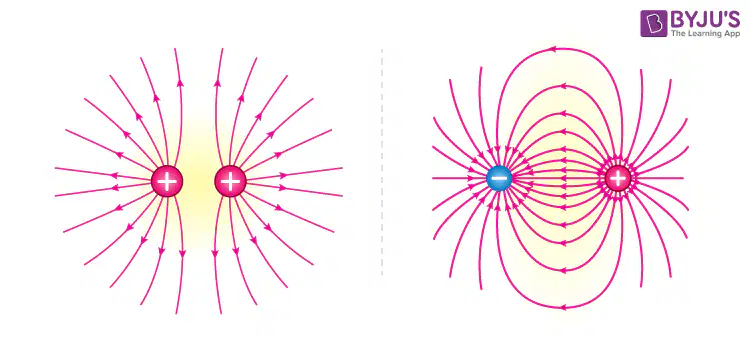
In electric field diagrams for a positive charge, field lines point away from the charge. For a single isolated positive charge, what is the direction of the electric field lines?
Radially outward from the charge
Radially inward toward the charge
Circular around the charge
Random, without a defined direction
Between two parallel plates with the left plate negative and the right plate positive, what is the direction of the uniform electric field?
From the negative plate to the positive plate
From the positive plate to the negative plate
Upward from bottom to top plate
There is no electric field between parallel plates
Show understanding that a current is a rate of flow of charge and recall the equation. Which equation defines electric current?
I=Q/t
I=V/R
I=P/V
I=F/q
Distinguish between the direction of flow of electrons and conventional current. Compared to electron flow in a metal conductor, conventional current is in which direction?
The same direction as electron flow
Opposite to the direction of electron flow
Perpendicular to the direction of electron flow
Conventional current does not have a defined direction
Keywords include the unit of current. What is the SI unit of electric current?
Volt
Ohm
Ampere
Coulomb
Define electric current.
Charge passing a point per unit time
Energy used per electron per unit length
Number of atoms in a conductor per unit volume
Rate of temperature increase in a wire
Which equation correctly relates current, charge and time?
I=tQ
I=Qt
Q=tI
t=IQ
Which statement about directions is correct for conventional current and electron flow in a circuit?
Conventional current is from positive to negative, while free electrons flow from negative to positive
Conventional current and free electrons both flow from negative to positive
Conventional current is from negative to positive, while free electrons flow from positive to negative
Both conventional current and free electrons flow from positive to negative
In metals, electrical conduction is described in terms of the movement of which particles?
Free electrons
Protons
Neutral atoms
Positive ions
Which description correctly distinguishes direct current (d.c.) from alternating current (a.c.)?
d.c. flows in one constant direction; a.c. repeatedly reverses direction
d.c. repeatedly reverses direction; a.c. flows in one constant direction
Both d.c. and a.c. flow in one constant direction
Both d.c. and a.c. repeatedly reverse direction
Electricity is the movement of what around a circuit?
Charge
Heat
Light
Mass
Which statement about materials is correct?
Good conductors allow electrons to move through them easily; insulators do not allow electrons to move easily
Good conductors prevent electrons from moving; insulators allow electrons to move easily
Both conductors and insulators allow electrons to move equally easily
Neither conductors nor insulators allow electrons to move at all
A current of 1 A corresponds to what amount of charge transferred in 1 s?
1C
0.1C
10C
1A
Using Q=It , how much charge is transferred when a current of 2A flows for 5s ?
10C
7C
2.5C
1C
Using t=IQ , how long does it take for 12C of charge to pass a point in a circuit if the current is 3A ?
4s
0.25s
3s
9s
Based on the diagram showing arrows that indicate the direction of electron movement around a cell, which statement is supported by the diagram?
Free electrons move from the negative terminal to the positive terminal
Free electrons move from the positive terminal to the negative terminal
Electrons remain stationary while charge moves
Conventional current and electron flow are in the same direction

Name that component: The symbol is a circle with the letter A inside, connected in series in a circuit.
Ammeter
Voltmeter
Lamp
Switch

Name that component: The symbol is a circle with the letter V inside, connected across a component.
Voltmeter
Ammeter
Cell
Fuse

Name that component: The symbol shows one long line and one short line representing a single source.
Cell
Battery
Resistor
Variable resistor

Name that component: The symbol shows multiple pairs of long and short lines indicating several sources in series.
Battery
Cell
Fuse
Lamp
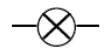
Name that component: The symbol is a circle with an X (filament) inside.
Lamp
Resistor
Switch
Ammeter

Name that component: The symbol is a rectangle placed in a conductor line.
Resistor
Fuse
Switch
Voltmeter

Name that component: The symbol is a straight line with a small rectangle (or gap with a block) indicating a protective element.
Fuse
Cell
Battery
Ammeter
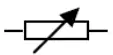
Name that component: The symbol is a rectangle with a diagonal arrow across it.
Variable resistor
Resistor
Lamp
Voltmeter
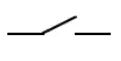
Name that component: The symbol shows a break in a conductor with a pivoted lever in the open position.
Switch
Fuse
Ammeter
Cell
Which description matches Direct Current (DC)?
The direction of the current or voltage is always constant over time.
The direction of the current switches periodically and the voltage also switches.
The voltage oscillates while the current remains zero.
The current increases linearly with time without changing direction.
Which plot represents Alternating Current (AC) voltage over time?
A sinusoidal wave crossing the time axis periodically
A horizontal line above the time axis
A vertical line at t = 0
A parabolic curve opening upward
Which statement about Alternating Current (AC) is correct?
The direction of the current is switched periodically, and the voltage is also switched.
The direction of the current is always constant, and the voltage never changes.
The current and voltage are both zero at all times.
The voltage increases stepwise while the current remains constant.
What is the energy change which takes place in a battery?
Chemical energy to electrical energy
Electrical energy to chemical energy
Thermal energy to electrical energy
Mechanical energy to electrical energy
What is potential difference?
The work done to drive a unit charge through a component in a circuit
The work done to drive any amount of charge around a complete circuit
The rate of flow of charge through a conductor
The resistance a component offers to current flow
What is e.m.f. (electromotive force) of a cell or power source?
The work done per unit charge by the source in driving charge around a complete circuit
The work done per unit charge across a single component
The force experienced by a charge in a magnetic field
The power dissipated per unit charge in a resistor
Which statement best describes resistance as a property of a conductor that resists the flow of electrical current, where good conductors have little resistance and poor conductors have lots of resistance?
Resistance is the ability of a material to store charge.
Resistance is the opposition a conductor offers to current flow.
Resistance is the rate at which a charge moves through a circuit.
Resistance is the total amount of energy supplied by a battery.
In physics, the unit used to measure resistance is which of the following?
ampere
volt
ohm
coulomb
How does the resistance of a wire vary with its dimensions according to the lesson outline: long wires have more resistance than short wires, and thin wires have more resistance than thick wires?
Resistance decreases with length and increases with thickness.
Resistance increases with length and decreases with thickness.
Resistance decreases with both length and thickness.
Resistance increases with both length and thickness.
Which expression is the equation for resistance stated in the course takeaway?
R=IV
R=VI
R=VI
R=V+I
Qualitatively, for a metallic electrical conductor, which relationship is correct according to the takeaway: resistance is directly proportional to length and inversely proportional to cross-sectional area?
Resistance decreases as length increases and increases as cross-sectional area increases.
Resistance increases as length increases and increases as cross-sectional area increases.
Resistance increases as length increases and decreases as cross-sectional area increases.
Resistance is independent of both length and cross-sectional area.
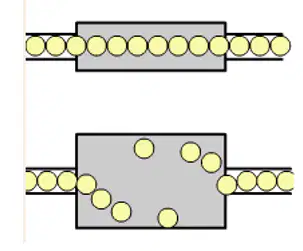
Based on the diagram comparing a thin wire (not much space, high resistance) and a thick wire (more space, low resistance), which wire has the higher resistance and why?
The thin wire, because there is less space for electrons to pass through.
The thick wire, because it contains more metal ions to collide with.
Both wires have the same resistance if made of the same material and length.
The thick wire, because its cross-sectional area increases current density.
According to the explanation of electron collisions in a conductor, which statement correctly compares the resistance of long and short wires of the same material and thickness?
A long wire has less resistance because electrons have more room to spread out.
A long wire has greater resistance because electrons collide with ions more often.
Both have the same resistance because the material is the same.
A short wire has greater resistance because it restricts current more strongly.
Which comparison matches the effect of thickness on resistance for wires made of the same material and length?
A thin wire has greater resistance than a thick wire.
A thick wire has greater resistance than a thin wire.
Thickness does not affect resistance.
Both have equal resistance only if temperature increases.
From the straight-line current–voltage graph for a resistor that passes through the origin, what does the graph indicate about the relationship between current and voltage?
Current is inversely proportional to voltage.
Current is directly proportional to voltage.
Voltage is independent of current.
The ratio I/V decreases with current.
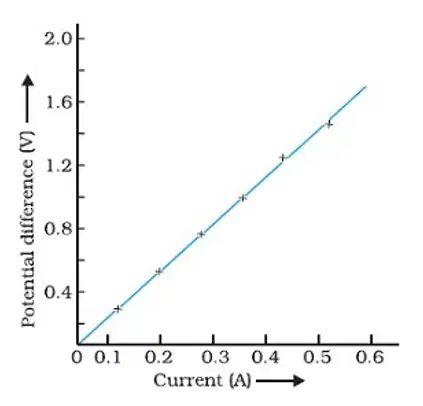
For a resistor with an I–V graph that is a straight line through the origin, what quantity does the constant ratio IV represent?
Power
Current
Resistance
Charge
According to Ohm’s Law as shown, which rearranged form is correct?
I=VR
V=IR
R=VI
V=RI
Which device is identified as a non-ohmic component whose I–V graph is not a straight line and that does not obey Ohm’s Law?
A resistor of constant resistance
A filament lamp
An ideal fixed-voltage source
A metal wire kept at constant temperature
For a filament lamp, as the current increases and the filament heats up, what happens to its resistance according to the I–V description?
Resistance decreases because electrons move faster.
Resistance stays constant because the material is metallic.
Resistance increases due to more frequent collisions at higher temperature.
Resistance oscillates with the AC supply frequency.
Which set lists factors that affect the resistance of a material?
Type of material (conductivity)
Length of the material
Cross-sectional thickness
Temperature of the material
Ambient light intensity
Which qualitative effects are correctly paired with each factor affecting resistance: better conductor → lower resistance; longer material → higher resistance; thinner material → higher resistance; higher temperature → higher resistance?
Better conductor gives lower resistance
Longer length gives higher resistance
Thinner cross-section gives higher resistance
Higher temperature gives higher resistance
Higher temperature gives lower resistance
Which equation gives electrical power in a circuit?
P=IV
P=IV
P=IR
P=IV1
Which equation gives electrical energy transferred in a circuit over time?
E=IVt
E=IV
E=IR
E=V+I+t
What does the kilowatt-hour (kWh) represent?
A unit of energy
A unit of current
A unit of potential difference
A unit of resistance
Which relationship represents electrical power?
P=IV
P=tV
P=IR
P=V1
Which relationship for electrical energy is correct?
E=IVt
E=Vt
E=It
E=IV
One kWh is equal to?
3,600,000 J
1 J
3,600 J
1,000 J
1 kWh equals ?
3.6MJ
360J
36kJ
0.36MJ

What is the relationship between the three currents in a series circuit?
The current is the same at each point: I1=I2=I3
The current decreases around the loop: I1>I2>I3
The current increases around the loop: I1<I2<I3
The current splits equally so each is one-third of the total: I1=I2=I3=IT/3

What is the relationship between the four Vs in a series circuit?
VS=V1+V2+V3
VS=V1=V2=V3
VS=(V1+V2+V3)/3
VS=V1+V2−V3

How do you find total resistance in series?
Add each resistance together: Rtotal=R1+R2+R3
Multiply the resistances together: Rtotal=R1R2R3
Add the reciprocals of the resistances: 1/Rtotal=1/R1+1/R2+1/R3
Subtract the smallest resistance from the largest

What is the relationship between the four currents in a parallel circuit?
The total current equals the sum of the branch currents: IT=I1+I2+I3
The current is the same in every branch: IT=I1=I2=I3
The total current equals the average of the branch currents: IT=(I1+I2+I3)/3
The total current equals the largest branch current: IT=max(I1,I2,I3)

What is the relationship between the four voltages in a parallel circuit?
Each branch voltage equals the supply: VS=V1=V2=V3
The supply equals the sum of the branch voltages: VS=V1+V2+V3
The supply equals the average branch voltage: VS=(V1+V2+V3)/3
The supply equals one branch voltage minus the others: VS=V1−V2−V3

The resistance rule in a parallel circuit?
RT1=R11+R21+R31
RT=R1+R2+R3
RT=R1+R2+R3R1R2R3
RT=3R1+R2+R3
Disadvantages of series circuits: When one component in a series circuit fails the whole circuit fails. Which statement best matches this idea?
If one component stops working, only that component turns off while the rest keep working
If one component stops working, the entire circuit stops working
If one component stops working, other components get brighter
If one component stops working, the total resistance becomes zero
Disadvantages of series circuits: Choose the correct description of current and voltage in a series circuit.
The current is the same at all points and the voltage is divided between components
The current splits in each component and the voltage is the same across each component
Both current and voltage are the same at all points
The current is zero at the first component and increases after each component
Disadvantages of series circuits: What happens to the brightness of each bulb as more bulbs are added in series?
Each bulb becomes dimmer
Each bulb becomes brighter
Brightness stays exactly the same
Bulbs alternately brighten and dim
If more resistors are connected in parallel the total resistance will always ________. Select the correct outcome.
increase
decrease
stay the same
first increase then decrease
Why does total resistance decrease when more resistors are connected in parallel?
There are more branches through which the electricity can flow
Each resistor converts more energy to heat
The supply voltage increases automatically
The resistors cancel each other's resistance
Advantages of the parallel circuit: When one bulb fails, what happens to the rest of the circuit?
The rest of the circuit continues to work
The entire circuit stops working
All remaining bulbs become dimmer and then fail
The supply voltage doubles to compensate
Advantages of the parallel circuit: How does adding more components in parallel affect the total resistance?
Total resistance increases
Total resistance stays constant
Total resistance lowers
Total resistance becomes infinite
Advantages of the parallel circuit: What happens to the total current drawn when more components are added in parallel?
Total current decreases
Total current increases
Total current stays the same
Total current becomes zero
Advantages of the parallel circuit: What is the voltage in each branch relative to the supply voltage, and how does this affect bulb brightness?
Each branch has a lower voltage than the supply, so bulbs are dimmer than a single bulb
Each branch has the same voltage as the supply, so bulbs are as bright as a single bulb
Each branch has a higher voltage than the supply, so bulbs are brighter than a single bulb
Voltage varies randomly between branches, so bulb brightness is unpredictable
Which statement best describes alternating current (AC) in terms of its behavior over time?
The current flows in one direction only.
The current periodically reverses direction.
The current is only present during specific intervals.
The current remains constant regardless of time.
What happens to the charge of an object when it gains electrons?
It loses its charge completely.
It remains neutral.
It becomes negatively charged.
It becomes positively charged.
10C of charge flows in a wire every 2 seconds. Calculate the current in the wire.
5 Ohms
5 Amps
0.2 Volts
0.2 Amps

Use the graph to find the current and calculate the resistance of this conductor when the voltage is 4V? Ignore the mA and just use A.
2
4
1
0.5

Which graph represents a diode?
A
B
C
D
Which graph represents a Filament bulb?
A
B
C
D
Longer wires have _______ resistance than shorter wires.
more
less
the same
If a cell provides 12 V to a circuit and 4 Coulombs of charge flows. How much energy is being provided by the cell?
3 J
0.25 J
48 J
16 J

Calculate the voltage of the 4 Ohm resistor in the circuit and use this answer to find the voltage of the across the heater.
4.8 V and 7.2 V
3 V and 9 V
6 V and 6 V
3.2 V and 9.8 V
Two lamps of resistance 40ohm and 20ohm are connected in series to a battery of emf 6V. What is the current in the circuit and voltage across 40 ohm and 20 ohm.
(a)

A wire has a certain electrical resistance. The diameter and length of the wire may be changed. Which pair of changes must cause the resistance of the wire to increase?
A
B
C
D

The circuit shown contains a battery, a 6 ohms resistor and two meters X and Y. One meter records current and one meter records potential difference.
A
B
C
D

The diagram shows part of a circuit used to switch street lamps on and off automatically.
A
B
C
D

P and Q are the circuit symbols for two electrical components. Which components are represented by P and by Q?
A
B
C
D

The diagram shows a 10 ohms resistor and a 20 ohms resistor connected in a potential divider circuit. What is the reading on the voltmeter?
A
B
C
D
Which of these 4 circuits can be used to measure how the current varies with a change in voltage across a bulb?


Which component has the following characteristic graph - showing how the current varies as the voltage is changed?
bulb
fuse
resistor
diode

Which component has the following characteristic graph - showing how the current varies as the voltage is changed?
bulb
resistor
diode
LDR

Which component has the following characteristic graph - showing how the current varies as the voltage is changed?
bulb
resistor
diode
cell

Which of these answers gives the correct way of connecting each meter?
A
B
C
D
What is the correct name for the unit for measuring resistance?
amp
volt
coulomb
ohm
A computer circuit board contains a 4 kΩ resistor and has a p.d. of 8 V across it.
What does p.d. stand for?
potential difference
potential divider
power difference
power divider
A computer circuit board contains a 4 kΩ resistor and has a p.d. of 8 V across it.
What is the current through the resistor?
2 mA
2 A
16 mA
16 A
To get a large current to flow in a wire, you can either
increase the wire resistance or increase the supply voltage
increase the wire resistance or decrease the supply voltage
decrease the wire resistance or increase the supply voltage
decrease the wire resistance or decrease the supply voltage

Which of these answers gives the correct change in resistance for each component?
A
B
C
D
The safety device that limits the current flow in a plug is the
fuse
cable grip
earth wire
insulation
Where should the earth wire be connected inside a metal toaster?
power supply
heating element
metal casing
Earth wire not needed in a metal appliance
A 240 volt, 3 amp heater is left running for 5 minutes.
Which of these gives the total energy output?
3.6 kJ
216 kJ
72 kJ
0.9 kJ
Which of the following is the correct unit for charge?
coulomb
capacitance
current
charge
A 6 V light bulb is switched on for a short time. A 6 V battery transfers 2 C of charge to the bulb in this time. What energy has been transferred?
0.33 J
3 J
6 J
12 J
An electric heater connected to the mains supply has a power of 2200 W. The mains supply voltage is 230 V. Show that the current in the electric heater is approximately 10 A.
2300 / 220 = 9.6 A
2200 / 230 = 10 A
2200 / 230 = 9.6 A
2200 / 320 = 9.6 A
Explain the meaning of the term "insulated wire".
A wire encased in a hard polystyrene shell
A wire covered with a non-conductive material (insulator) such as plastic or rubber
A wire that is made of a non-conductive material (insulator) such as plastic or rubber
A wire covered with a conductive material (conductor) such as metal
A man pushes a metal trolley along a corridor towards a lift. The trolley has nylon wheels and the floor of the corridor is covered with plastic. The man wears shoes with rubber soles. As he moves the trolley, the man gains an electric charge.
Which choice indicates how the man gains an electric charge.
Transfer of protons due to force between floor and lift
Transfer of electrons due to force between shoes and wheel
Transfer of electrons due to friction between floor and shoes
The man doesn’t gain an electric charge.
When a plastic rod is rubbed with a cloth, the rod gains charge.
How could you show that the plastic rod gains charge?
Use charged object to check
Attract scraps of paper
Deflect water stream
You cannot show plastic rod gains charge
When a plastic rod is rubbed with a cloth, the rod gains charge. There are two types of charge.
Which choice shows how you could demonstrate this using different insulating rods and a cloth?
Cannot charge rods and does not have any using.
Charge rods and use charged gold leaf electroscope (GLE) and look for rise and fall of leaves
Rubbing with the cloth as charging by force
Using of charge rods and suspend it to observe for rise and fall.
A car becomes electrically charged as it travels along a road.
Which choice indicates how a moving car becomes electrically charged.
Reaction force between car and ground where electron transfer occur
Friction between car and ground where proton transfer occur
No force or friction present, but electron transfer occur
Friction between car and ground where electron transfer occur

A student creates this circuit. The current running through Lamp 1 is 2A and the voltmeter reading is 4V. Calculate the resistance of Lamp 1.
2Ω
2R
2V
4 Ohms
5N
What is the unit of electric current?
Volt
Ampere
Watt
Ohm
Which component is used to measure voltage in a circuit?
Ammeter
Voltmeter
Ohmmeter
Galvanometer
What happens to the total resistance in a series circuit when more resistors are added?
Total resistance increases
Total resistance remains the same
Total resistance becomes zero
Total resistance decreases

