
Font size
 Worksheets
Circuit Lab - Online Test 1
Total questions: 67
Worksheet time: 50mins
The unit of electric current is the:
Volt
Ohm
Ampere
Watt
According to Ohm's Law, V = IR. If voltage is 24V and resistance is 6Ω, current equals:
A. 4A
B. 30A
C. 18A
D. 144A
In a series circuit, what stays the same through all components?
Current
Voltage
Resistance
Power
In a parallel circuit, what stays the same across all branches?
Voltage
Current
Resistance
Power
Like magnetic poles:
Attract
Repel
Have no effect
Create current
A transformer requires which type of current to operate?
DC
AC
Static
Pulsed DC
The purpose of a GFCI is to protect against:
Overcurrent
High voltage
Ground faults/shock
Short circuits
An electric motor converts:
Mechanical to electrical energy
Electrical to mechanical energy
A generator works on the principle discovered by:
Ohm
Volta
Faraday
Ampère
The formula for electrical power is:
P = V/I
P = IR
P = VI
P = R/V
What type of switch has 3 terminals and can select between two circuits?
A. SPST
B. SPDT
C. DPST
D. DPDT
Coulomb's Law describes the force between:
Magnets
Electric charges
Currents
Capacitors
According to Coulomb's Law, if distance between charges doubles, force becomes:
2× stronger
2× weaker
4× stronger
4× weaker
The unit of resistance is named after:
Ampère
Faraday
Ohm
Tesla
AC is preferred for long-distance power transmission because:
It's safer
Voltage can be easily transformed
It travels faster
It uses less wire
What is the formula for Ohm's Law?
IR, I*R, IxR, I x R, I × R
V = I/R
P = IV
R = V/I
V = IR
What unit is named after Alessandro Volta?
Volt, volt, V, volts, Volts
Ampere, amp, A, amps, Amps
Ohm, ohm, Ω, ohms, Ohms
Watt, watt, W, watts, Watts
In a parallel circuit with two resistors, total resistance equals R₁ × R₂ divided by what?
R₁ + R₂
R₁ - R₂
R₁ × R₂
R₁ ÷ R₂
What type of trip mechanism in a circuit breaker protects against short circuits?
magnetic
thermal
hydraulic
mechanical
Faraday discovered that a CHANGING magnetic field induces what in a coil?
voltage (EMF)
heat
light
sound
What scientist invented the first battery (voltaic pile)?
Volta
Edison
Faraday
Tesla
Energy = Power × _____ Fill in the blank.
Time
Speed
Distance
Force
Q24. The right-hand rule for a solenoid: fingers curl with current, thumb points to which pole?
North pole
South pole
East pole
West pole
Q25. The device that uses an electromagnet to control a high-power circuit with a low-power signal is called:
Relay
Transformer
Resistor
Capacitor
Kirchhoff's Current Law states that current entering a junction equals current leaving.
True
False
DC current changes direction periodically.
True
False
A capacitor stores energy in a magnetic field.
True
False (It's an electric field)
Nikola Tesla promoted AC power systems.
True
False
In parallel circuits, if one component fails, all components stop working.
True
False
The thermal trip mechanism in a circuit breaker responds to sustained overloads.
True
False
Michael Faraday had extensive formal education in mathematics.
True
False
A DPDT switch has 6 terminals.
True
False
Increasing the number of turns on an electromagnet decreases its strength.
True
False
Ohm's Law was immediately accepted when first published in 1827.
True
False
A circuit has a 12V battery and a 4Ω resistor. Calculate the current in Amps. (Just type the number)
3
1
6
0.5
A device uses 60W of power for 5 hours. Calculate energy consumed in Watt-hours.
300
120
12
65
Two resistors (6Ω and 12Ω) are in parallel. Calculate the equivalent resistance in Ohms.
4
6
8
18
Three resistors (10Ω, 20Ω, 30Ω) are in series. Calculate total resistance in Ohms.
60
10
30
50
A 100W light bulb runs for 10 hours. If electricity costs $0.10 per kWh, what is the cost in dollars?
0.10 (or 0.1)
1.00
0.50
0.20
Using P = I²R, if current is 5A and resistance is 8Ω, calculate power in Watts.
200
40
320
80
A transformer has 200 turns on the primary and 50 turns on the secondary. If input voltage is 120V, what is output voltage?
30
60
15
50
Using V = IR, if current is 2.5A and resistance is 20Ω, calculate voltage in Volts.
50
25
40
100
Match each scientist to their contribution: Invented the electric battery (voltaic pile)
Coulomb
Ampère
Volta
Kirchhoff
Faraday
Match each scientist to their contribution: Discovered electromagnetic induction
Ampère
Kirchhoff
Ohm
Faraday
Coulomb
Match each scientist to their contribution: Formulated V = IR
Coulomb
Ampère
Kirchhoff
Ohm
Faraday
Fill in the blank: ________ developed AC power systems and induction motor.
Tesla
Edison
Faraday
Newton
Fill in the blank: ________ created circuit laws (KCL and KVL).
Kirchhoff
Ohm
Faraday
Tesla
Fill in the blank: ________ quantified electric force (inverse square law).
Coulomb
Newton
Faraday
Ampere
Fill in the blank: ________ discovered relationship between electricity and magnetism in current-carrying wires.
Ampère
Faraday
Newton
Ohm
A relay is used to control a 120V motor with a 5V control signal. Why can't the 5V signal directly control the motor, and how does the relay solve this problem?
The 5V signal cannot directly control the motor because it cannot handle the high voltage and current required; the relay acts as a switch that allows the low voltage signal to control the high voltage motor safely.
The 5V signal can directly control the motor, but the relay is used to increase the speed of the motor.
The relay is used only to reduce the voltage from 120V to 5V for the motor.
The 5V signal is used to power the motor directly, and the relay is not necessary.
Which of the following statements correctly describes the difference between a step-up and step-down transformer, including coil turns, current and voltage relationship, and a real-world application?
A step-up transformer has more turns on the secondary coil, increases voltage and decreases current, and is used in power transmission lines.
A step-down transformer has more turns on the secondary coil, increases voltage and decreases current, and is used in mobile phone chargers.
A step-up transformer has fewer turns on the secondary coil, decreases voltage and increases current, and is used in doorbell circuits.
A step-down transformer has more turns on the secondary coil, increases voltage and decreases current, and is used in power transmission lines.
You need to wire three LEDs (each requiring 2V, 20mA) to a 9V battery. Which configuration should you use, what value resistor(s) would you need, and how do you calculate it?
Wire the LEDs in parallel, use a 175Ω resistor for each LED, calculated as (9V-2V)/0.02A = 350Ω, but for three LEDs in parallel, use 175Ω per branch.
Wire the LEDs in series, use a single 350Ω resistor, calculated as (9V-6V)/0.02A = 150Ω.
Wire the LEDs in parallel, use a single 350Ω resistor for all LEDs, calculated as (9V-2V)/0.06A = 116.7Ω.
Wire the LEDs in series, use a 175Ω resistor for each LED, calculated as (9V-2V)/0.02A = 350Ω.
Q54. Which of the following correctly compares fuses and circuit breakers? A) Both protect circuits from overcurrent; fuses must be replaced after operation, while circuit breakers can be reset; fuses are preferred in low-cost, single-use applications; circuit breakers are preferred where frequent resetting is needed. B) Both are used for lighting; fuses can be reset, circuit breakers cannot; fuses are preferred in high-voltage systems; circuit breakers are preferred in disposable devices. C) Both increase current flow; fuses are more expensive than circuit breakers; fuses are preferred in computers; circuit breakers are preferred in toys. D) Both are used for heating; fuses can be reused, circuit breakers cannot; fuses are preferred in large factories; circuit breakers are preferred in batteries.
A) Both protect circuits from overcurrent; fuses must be replaced after operation, while circuit breakers can be reset; fuses are preferred in low-cost, single-use applications; circuit breakers are preferred where frequent resetting is needed.
B) Both are used for lighting; fuses can be reset, circuit breakers cannot; fuses are preferred in high-voltage systems; circuit breakers are preferred in disposable devices.
C) Both increase current flow; fuses are more expensive than circuit breakers; fuses are preferred in computers; circuit breakers are preferred in toys.
D) Both are used for heating; fuses can be reused, circuit breakers cannot; fuses are preferred in large factories; circuit breakers are preferred in batteries.
The "War of Currents" was a rivalry between which two main figures?
Thomas Edison and Nikola Tesla
Thomas Edison and Alexander Graham Bell
Nikola Tesla and Michael Faraday
James Watt and Nikola Tesla
What did each promote?
Their own beliefs or ideas
Economic growth
Military expansion
Environmental protection
Who won and why?
Team A won because they scored the most points.
Team B won because they played better defense.
Team C won because they had more possession.
Team D won because they made fewer mistakes.
How does this affect your daily life today?
It influences my daily routines and decisions.
It has no impact on my daily life.
It only affects my weekends.
It makes my life more difficult every day.
What is the percentage range for grade C?
70-79%
60-69%
80-89%
50-59%
What is the percentage range for grade D?
60-69%
70-79%
50-59%
80-89%
What is the percentage for grade F?
Below 61%
61% - 70%
71% - 80%
Above 80%

What is the value of the total resistance in the shown circuit ?
7 Ohm
15 Ohm
12 Ohm
9 Ohm

(a)


Using the triangle shown, calculate the voltage in the circuit when their is 4 amps of current and the resistance is 3 ohms
12
10
24
14

Rohan is setting up a small electric circuit for his science project. The circuit has a resistance of 5 Ω and a current of 2 A. What is the Voltage of the circuit?
25 V
10 V
2.5 V
0.4 V
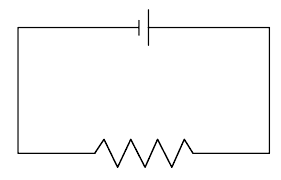
This circuit has a 12 volt battery and the resistor is 4 ohms. How many amps are running through the circuit?
3 amps
48 amps
16 amps
8 amps

What causes electric current?
static electric charge
moving electric charge
electric shock
metal objects

