
Font size
 Worksheets
IGCSE Science Revision
Total questions: 74
Worksheet time: 1hrs 28mins
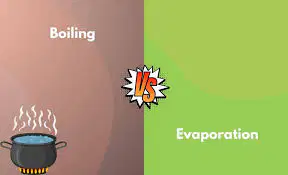
Evaporation happens at the _______ of a liquid. Boiling happens ________
bottom/surface
surface/bottom
surface/at the surface and below the surface.
start/end

This change of state occurs when the surface particles of a solid gain enough energy that they form a gas, the particles skip the liquid state.
evaporation
sublimation
boiling
vaporization
Adding thermal energy to a gas at constant pressure will cause the.....
volume of the gas to decrease.
volume of the gas to increase.
temperature of the gas to decrease.
pressure of the gas to decrease.
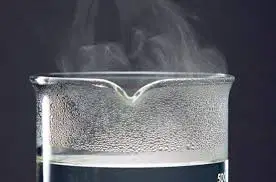
How do the particles of water that evaporate from an open container differ from the particles that remain?
The particles that evaporate have less speed.
The particles that evaporate have greater potential energy.
The particles that evaporate have less energy.
The particles that evaporate have more speed and higher energy.
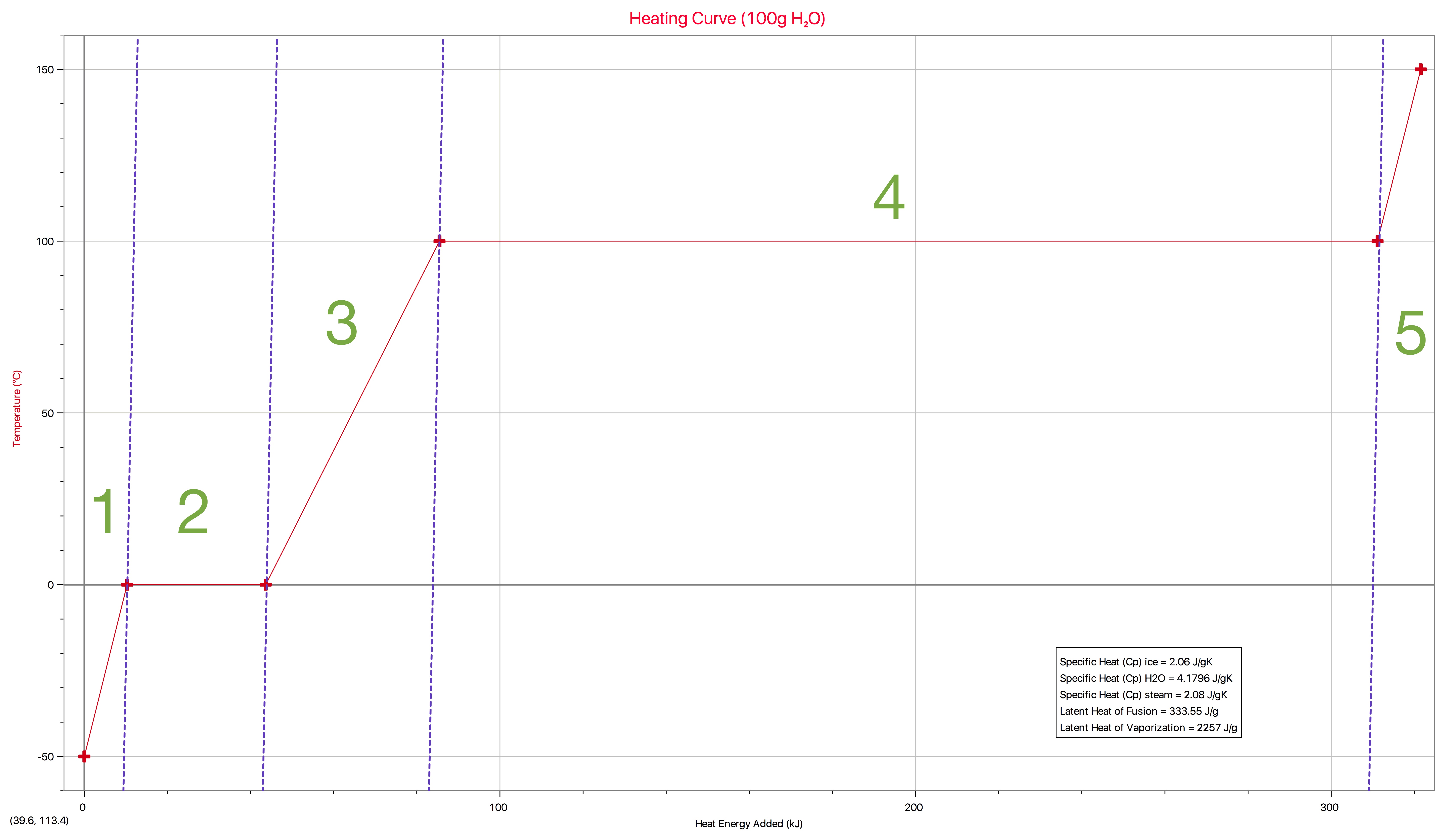


Which letter indicates where water is in both the solid and liquid phase at the same time?
A
B
C
D
E
In a heating curve, diagonal lines indicate temperature is __________, while flat lines indicate temperature is __________.
Constant, changing
Changing, constant
A measure of the average kinetic energy of the particles in an object is called
Heat
Temperature
Kinetic energy
Enthalpy
What is holding molecules in a solid close to each other?
Intermolecular forces
Chemical Bonds
Heat
Cold
What is true about intermolecular forces in gases
they have been broken by heat
They are very strong
They cannot be put back together
they represent a chemical change
Heat is added to a sample of liquid water, starting at 80.°C, until the entire sample is a gas at 120.°C. This process, occurring at standard pressure, is represented by the balanced equation below.
H2O(l) + heat → H2O(g)
Which diagram correctly represents the heating curve for this physical change?


Which dot-and-cross diagram represents the bonding of electrons in a molecule of ethene?
A
B
C
D

Hydrogen chloride is a gas. It dissolves in water to form an acidic solution.
Three different samples of hydrogen chloride are listed.
1. 73.0 g of hydrogen chloride gas
2. 7.30 dm3 of hydrogen chloride gas
3. 730 cm3 of 1.00 mol / dm3 solution of hydrogen chloride
Which row shows the relative number of moles of hydrogen chloride in these samples?
A
B
C
D
12.00 moles of NaClO3 will produce how many grams of O2?
Which of these are considered properties of metals? (choose ALL that apply)
brittleness
low melting point
luster (shininess)
malleability
ductility
Why do metallic compounds conduct electricity as solids?
core electrons are mobile, allowing electricity to flow through the metal
valence electrons are mobile, allowing electricity to flow through the metal
protons are mobile, allowing electricity to flow through the metal
the metal cations are mobile, allowing electricity to flow through the metal
How does a metallic lattice differ from an ionic crystal?
A metallic lattice is less flexible
A metallic lattice can change shape without breaking
A metallic lattice shatters when struck
Which statement about different forms of carbon is correct?
Graphite and diamond conduct electricity
Graphite conducts electricity but diamond does not
Diamond conduct electricity but graphite does not
Which statement best explains why diamond has a high melting point?
It has strong covalent bonds
A large amount of energy is needed to break its strong covalent bonds
A large amount of energy is needed to break its bonds
Why does silicon dioxide have such a high melting point?
Because the silicon and oxygen atoms are held by strong intermolecular forces
Because the silicon and oxygen atoms are held by many strong covalent bonds
Because there are strong electrostatic forces between the silicon and oxygen atoms
Which statement describes the attractive forces between molecules (intermolecular forces)?
They are strong covalent bonds which hold molecules together.
They are strong ionic bonds which hold molecules together.
They are weak forces formed between covalently-bonded molecules.
They are weak forces which hold ions together in a lattice.

Why does the water in the beaker turn red after one hour?
Molecules of red ink move through the membrane by diffusion.
Molecules of red ink move through the membrane by osmosis.
Molecules of water move through the membrane by diffusion.
Molecules of water move through the membrane by osmosis.
What will happen to the plant cell several minutes after it has been placed in a concentrated solution of sugar?


A red blood cell is placed in a concentrated sugar solution. What happens, and why?
The cell bursts as sugar molecules diffuse into it
The cell shrinks because sugar molecules leave it
The cell shrinks because water leaves it
The cell bursts because the concentrated sugar solution enters it

Which process occurs by osmosis?
the small intestine absorbing fatty acids into the blood
plant roots absorbing water from the soil
plant roots absorbing mineral ions from the soil
the small intestine absorbing glucose into the blood
Which of the following statements about diffusion is true?
substances move from high to low concentration
diffusion only happens across a partially permeable membrane
water moves from high to low water potential
substances move from low to high concentration
What happens during osmosis?
water molecules moves from high to low concentration without the use of energy
water molecules moves from high to low concentration with the use of energy
water molecules moves from high to low water potential without the use of energy
water molecules move from high to low water potential with the use of energy

What will happen if we put an animal cell in pure water?
water will move out of the cell by osmosis and cell will shrivel up
water will not move either way by osmosis and cell stays as is
water will move into the cell by osmosis and cell will swell and burst
water will move away by osmosis and cell will dry out and die
What is the meaning of a "turgid" cell?
cell is swollen and firm
cell is sickly and weak
cell is tiny but strong
cell is shriveling up
Explain why a plant cell does not burst when we put it in pure water?
The plant cell absorbs water by osmosis just like an animal cell, but the strong cellulose cell wall prevents it bursting.
The plant cell absorbs water by osmosis just like an animal cell, but the strong nuclear force prevents it bursting.
The plant cell absorbs water by osmosis just like an animal cell, but the strong cell membrane prevents it bursting.
The plant cell absorbs water by osmosis just like an animal cell, but the strong cytoplasm glue prevents it bursting.
Plasmolysis is...
the condition of an animal cell when it has lost so much water that the cytoplasm and vacuole have shrunk, pulling the cell membrane towards the center.
the condition of an animal cell when it has gained so much water that the cytoplasm and vacuole have shrunk, pulling the cell membrane towards the center.
the condition of a plant cell when it has gained so much water that the cytoplasm and vacuole have expanded, pushing the cell membrane towards the cell wall
the condition of a plant cell when it has lost so much water that the cytoplasm and vacuole have shrunk, pulling the cell membrane away from the cell wall
Which of the following require energy to take place?
Active transport
Passive transport


I am used to test for the presence of complex carbohydrates (starch)
Benedict's Test
Biuret Test
Iodine Test
Ethanol Emulsion Test
I am used to test for the presence of simple carbohydrates (sugars)
Benedict's Test
Biuret Test
Iodine Test
Ethanol Emulsion Test
I am used to test for the presence of protein
Benedict's Test
Biuret Test
Iodine Test
Ethanol Emulsion Test
I am used to test for the presence of lipids (fats)
Benedict's Test
Biuret Test
Iodine Test
Ethanol Emulsion Test
If I am positive, I will turn dark blue/black
Benedict's Test
Biuret Test
Iodine Test
Ethanol Emulsion Test
If I am positive, I will turn purple (violet)
Benedict's Test
Biuret Test
Iodine Test
Ethanol Emulsion Test
In this experiment, you must put your test tubes into a hot water bath
Benedict's Test
Biuret Test
Iodine Test
Ethanol Emulsion Test

Name the food test and the type of food that was being tested. (select multiple options)
Benedict's test
Glucose
Millon's test
Protein
Iodine test

Identify a mistake of this test.
The test tube is not in a water bath
Blue flame is used
Only a few drops of Benedict's reagent is used

This is emulsion test. Select the names ALL the mixtures used. (You can select more than one options)
Water
Ethanol
Oil
Millon's reagent
Filter paper


What is happening at E?
Stationary
Accelerating
Constant speed; moving away from the starting position
Constant speed; returning to start position
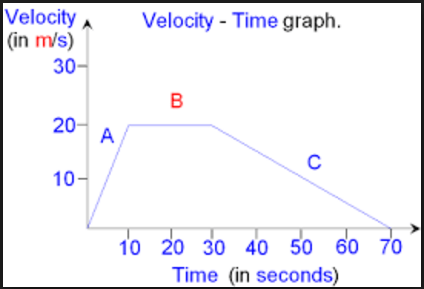
This is a velocity-time graph. What is the object doing in segment A?
Speeding up
Slowing down
Constant Velocity
Not moving
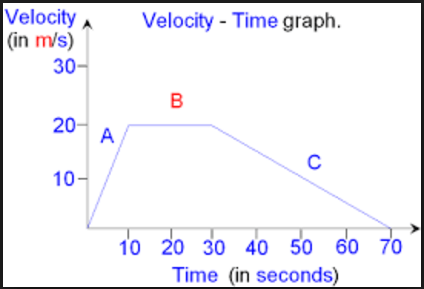
This is a velocity-time graph. What is the object doing in segment C?
Speeding up
Slowing down
Constant Velocity
Not moving
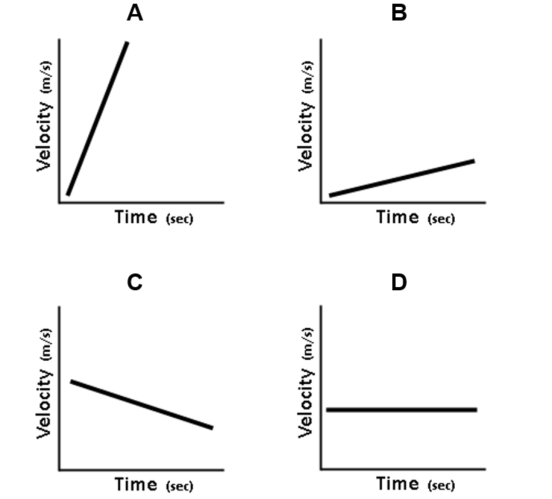
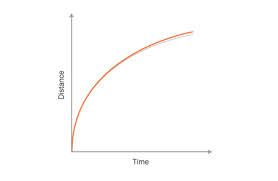

Which graph shows acceleration followed by a period at a constant speed then accelerating again?
F
G
H
J

Which graph displays the data on an object that is accelerating?
A only
A and C only
A and D only
D only

Which graph or graphs displays the data of an object that is moving at a constant speed?
A only
A and C only
C only
A, B and C only

