
NEW
Font size
 Worksheets
Biology Quiz on Animal Classification
Total questions: 49
Worksheet time: 25mins
What is the approximate number of different kinds of animals identified by biologists?
More than one million
Less than one million
Exactly one million
Two million
Why do biologists need to divide the list of animals into smaller groups?
To make the list easier to manage
To increase the number of animals
To eliminate some animals from the list
To create new species

What is the concept of classifying based on shared features?
Grouping items based on their differences
Grouping items based on their shared characteristics
Grouping items randomly
Grouping items based on their location

Which of the following is an example of classifying vehicles based on shared features?
Grouping vehicles by their license plate numbers
Grouping vehicles by their color
Grouping vehicles by the time they were parked
Grouping vehicles by random selection

What does the H2O symbol represent in the context of the image?
Hydrogen gas
Oxygen molecule
Water
Carbon dioxide
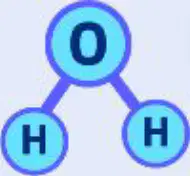
What is the significance of the molecular diagram shown in the image?
It represents the structure of carbon dioxide
It represents the structure of water
It represents the structure of oxygen gas
It represents the structure of nitrogen gas

What is one way to classify vehicles based on their features?
By their speed
By their color
By grouping passenger cars and SUVs separately
By their fuel type

After grouping passenger cars and SUVs, how can you further classify them?
By their size
By their brand
By their fuel efficiency
By their engine type

What is a possible way to divide vehicle groups into smaller subgroups?
Based on their color
Based on their speed
Based on their fuel type
Based on their price
Why do biologists divide animals into groups?
To make them look similar
To classify them based on their similarities
To separate them from plants
To study their differences
Why are falcons, sparrows, and geese classified as birds?
Because they can fly
Because they have feathers
Because they are small in size
Because they live in trees
What is a unique characteristic of birds that no other type of animal has?
Wings
Feathers
Beaks
Ability to fly
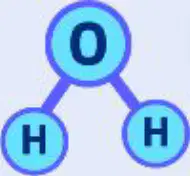
A diagram shows the molecular structure of water (H2O) with two hydrogen atoms and one oxygen atom. What is the chemical formula for water?
H2O
CO2
O2
H2
Which bird group has feet with sharp claws that can grab prey?
Perching birds
Waterbirds
Birds of prey
Songbirds
What type of feet do sparrows have?
Webbed feet for swimming
Feet with sharp claws for grabbing prey
Toes good for gripping branches
Flat feet for walking
What is the primary function of geese's webbed feet?
Gripping branches
Swimming
Catching prey
Walking on land
Which bird group is associated with waterbirds?
Falcons
Sparrows
Geese
Eagles
Which groups of birds have feet like those shown in the image?
Perching birds, swimming birds, and birds of prey
Flightless birds, swimming birds, and scavenger birds
Perching birds, flightless birds, and scavenger birds
Swimming birds, scavenger birds, and birds of prey
What do biologists use to determine how organisms are related?
Only the appearance of organisms
Similarities in cell structure, hereditary material, and how organisms get nutrients and reproduce
The size of organisms
The habitat of organisms
Which of the following is NOT a feature biologists use to determine relationships between organisms?
Appearance
Similarities in cell structure
Hereditary material in cells
The color of the organism
What is the science of classifying organisms called?
Biology
Taxonomy
Ecology
Genetics

Organisms that have more features in common are more related to each other than to other organisms. What does this imply?
Organisms with fewer features in common are more related.
Organisms with more features in common are less related.
Organisms with more features in common are more related.
Organisms are unrelated regardless of features.

What are the seven levels in the classification system of organisms?
Kingdom, Phylum, Class, Order, Family, Genus, Species
Kingdom, Phylum, Class, Order, Family, Genus, Subspecies
Domain, Kingdom, Phylum, Class, Order, Family, Species
Kingdom, Phylum, Class, Order, Family, Subfamily, Species
Which level of classification is the most specific in the hierarchy?
Kingdom
Genus
Species
Family
Which level of classification comes directly after 'Order'?
Class
Family
Genus
Phylum
What is the primary purpose of using classification levels in biology?
To identify the physical characteristics of organisms
To organize living things into groups based on shared traits
To determine the lifespan of organisms
To study the behavior of organisms
What is the highest level of classification in the hierarchy shown in the diagram?
Species
Genus
Kingdom
Family
Which level of classification is directly below 'Order' in the hierarchy?
Family
Class
Genus
Phylum
What is the lowest level of classification in the hierarchy?
Genus
Species
Family
Order
Which level of classification comes between 'Phylum' and 'Order'?
Class
Family
Genus
Species
How many levels of classification are shown in the diagram?
5
6
7
8

What is the highest level in the classification system used by biologists?
Phylum
Kingdom
Class
Order
How many kingdoms are organisms classified into?
Three
Four
Five
Six
What is the second-highest level of classification in the biological system?
Class
Phylum
Order
Kingdom
Which kingdom is mentioned as one of the five kingdoms?
Plant kingdom
Animal kingdom
Fungi kingdom
Protist kingdom

What is each phylum divided into?
Orders
Classes
Families
Species
What is the mnemonic used to remember the taxonomic hierarchy in the image?
King Philip Came Over For Good Soup
Keep Penguins Cool On Frozen Ground
Kings Prefer Cold Oceans For Swimming
Kangaroos Play Chess On Fine Sand
What is the taxonomic rank directly below "Order" in the hierarchy shown?
Class
Family
Genus
Phylum
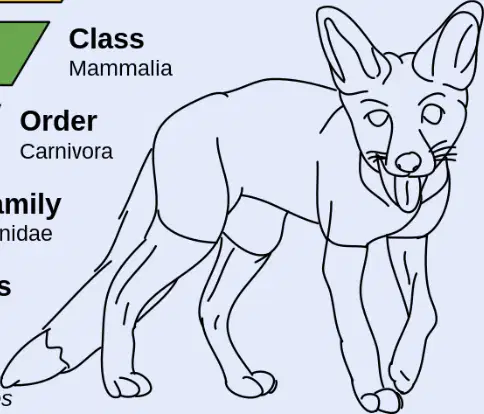
What is the scientific name of the red fox as shown in the image?
Canis lupus
Vulpes vulpes
Felis catus
Ursus arctos

Which taxonomic rank does "Mammalia" belong to in the hierarchy?
Class
Order
Family
Genus
In the taxonomic hierarchy, which rank is the most specific?
Kingdom
Genus
Species
Phylum
What is the correct order of the taxonomic hierarchy from the broadest to the most specific?
Species, Genus, Family, Order, Class, Phylum, Kingdom, Domain
Domain, Kingdom, Phylum, Class, Order, Family, Genus, Species
Kingdom, Domain, Phylum, Class, Order, Family, Genus, Species
Domain, Phylum, Kingdom, Class, Order, Family, Genus, Species
What is the mnemonic used to remember the taxonomic hierarchy?
King Philip Came Over For Good Soup
Keep Penguins Cool On Frozen Ground
Kings Play Chess On Fine Green Sand
Kangaroos Prefer Cold Oceans For Swimming
What is the scientific name for humans?
Homo erectus
Homo sapiens
Homo habilis
Homo neanderthalensis
In the taxonomic hierarchy, which level comes directly below 'Order'?
Class
Family
Genus
Phylum
Which taxonomic level includes organisms classified as 'Eukarya'?
Domain
Kingdom
Phylum
Class
What is the lowest level in the classification system?
Genus
Family
Species
Kingdom
What can members of the same species do?
Live in the same habitat
Breed and produce offspring like themselves
Compete for resources
Belong to different genera
What does a group of separate but related species belong to?
Family
Genus
Order
Class

