
 Worksheets
What is Quantitative Research?
Total questions: 101
Worksheet time: 51mins
Which statement best defines quantitative research in business studies?
Describes unique cases without generalization
Explores meanings through open-ended interviews
Builds theory from prolonged field observation
Collects numerical data to test relationships
A core characteristic of quantitative research is its emphasis on:
Unstructured, emergent data collection
Statistical analysis of measured variables
Narrative accounts of participant stories
Flexible, evolving research questions
Why are large samples often used in quantitative studies?
Reduce need for standardized instruments
Guarantee zero sampling bias in results
Ensure deeper qualitative insights
Increase statistical power and precision
Sample size determination in quantitative research primarily depends on:
Preference of the lead researcher
Amount of time for fieldwork
Number of interviewers available
Desired confidence level and margin of error
In survey research, a confidence level of 95% means:
Results fall within the margin 95% of times
The sample equals 95% of the population
Errors will be eliminated in 95% of cases
Ninety-five participants must be surveyed
Reducing the margin of error typically requires:
Fewer respondents but longer interviews
Randomly changing measurement scales
More open-ended questions and narratives
A larger sample size and consistent design
Which instrument is central to the survey method shown?
Ethnographic diaries and memos
Structured questionnaires with fixed items
Unscripted focus group discussions
Participant observation field notes

In the survey methods diagram, CATI refers to:
Centralized automated tabulation index
Continuous assessment testing interface
Customer analytics trend integration
Computer-assisted telephone interviewing
Which survey mode best supports rapid data collection at low cost?
Postal surveys with mailed forms
Face-to-face interviews on the street
Home or workplace in-person visits
Online surveys using digital platforms

A Likert-scale item such as “Strongly agree … Strongly disagree” is mainly used to:
Measure attitudes on an ordered scale
Record exact behavioral frequencies
Classify respondents into clusters
Capture detailed life histories
Which factor most threatens quantitative survey validity through interviewer influence?
Speed of data collection across modes
Potential for interviewer bias during administration
High perceived participant anonymity in responses
Use of physical stimuli in measurement
To achieve generalizable results in business market research, you should prioritize:
Purposive selection of extreme cases
Snowballing among known participants
Convenience sampling from easy contacts
Random sampling with adequate sample size
Which method best captures cause-and-effect by manipulating variables under controlled conditions?
Longitudinal panel without interventions
Structured observations in natural settings
Cross-sectional surveys at one time point
Experiments with randomized assignment
A business wants to track customer satisfaction changes over three years with the same respondents. Which design is most appropriate?
Cross-sectional study across demographics
Longitudinal panel following individuals
Quasi-experiment without randomization
Content analysis of online reviews
Which approach relies on standardized instruments to collect quantifiable responses from many participants?
Surveys and questionnaires
Ethnographic field immersion
Case study interviews
Unstructured participant observation
In structured observation, what is the primary advantage compared to open-ended field notes?
Greater flexibility of interpretations
Higher standardization of coded behaviors
Improved random assignment to groups
Deeper exploration of personal motives
A researcher cannot randomize store locations but still introduces a new display in some stores to compare sales. What design is this?
True experiment with random assignment
Cross-sectional descriptive survey
Longitudinal cohort intervention
Quasi-experiment with nonrandom groups
Which method is best for estimating prevalence of a behavior at a single point in time?
Cross-sectional sampling snapshot
Longitudinal repeated measures
Laboratory randomized experiment
Content analysis time series
When analyzing existing datasets to answer new questions, which technique is used?
Structured laboratory observation
Second data analysis of archives
Primary survey administration
Quasi-experimental field test

Which tool of quantitative research best suits collecting standardized responses from a large audience quickly?
Unscheduled conversations at events
Online surveys with structured questions
Telephone interviews during peak hours
Face-to-face interviews in public places
What is the primary characteristic of a structured questionnaire in quantitative research?
Adaptive questions changing for each participant
Unscripted prompts based on interviewer judgment
Consistent wording and fixed response options
Open-ended narratives without scales
A researcher needs to gauge agreement with statements on a five-point scale from Strongly Disagree to Strongly Agree. What measurement approach should be used?
Nominal coding with categorical labels
Semantic differential with bipolar terms
Ratio scale with true zero baseline
Likert scale with ordered agreement points

Face-to-face interviewing today is often limited. Which factor most reduces its use compared to other survey modes?
High costs and interviewer security risks
Inability to use structured questionnaires
Lower response accuracy in person
Difficulty reaching older demographics
You must sample a target population for an online survey of urban consumers. Which plan shows sound sampling at a basic level?
Invite friends and colleagues only
Use a clear frame and random selection
Pick malls with convenient parking
Survey the first 200 users who reply
Which survey mode is currently the dominant method for quantitative research?
Face-to-face mall intercepts
Postal mail questionnaires
Telephone interviewer surveys
Online self-administered surveys
What factor primarily made telephone interviews popular in households historically?
Cheaper long-distance calling rates
Higher literacy among respondents
Better interviewer training programs
Widespread household telephone ownership
For what duration are telephone interviews described as most efficient?
Nearly twenty to thirty minutes
Roughly five to seven minutes
Approximately thirty to forty minutes
About ten to fifteen minutes
In which context are telephone surveys highlighted as especially efficient?
Business-to-business settings
Student classroom studies
Public street intercepts
Government postal panels
Which trend contributed to a decline in telephone survey use?
Better landline audio quality
Improved call center software
Growth of unlisted numbers
Lower paper questionnaire costs
What shift in telephony reduced reachability for telephone surveys?
From landlines to mobile phones
From VoIP to analog phones
From mobiles to pagers
From satellites to radio phones
Approximately what share of interviews are conducted by telephone today?
Around ten percent of interviews
Roughly one third of interviews
Nearly half of interviews
About three quarters of interviews
Which devices commonly administer online surveys?
Mobile phones, tablets, computers
Fax machines, pagers, scanners
Smart TVs, consoles, cameras
Printers, copiers, routers
Which advantage is directly associated with online surveys?
Slow, manual data processing
Quick, efficient, cost-effective
More personal, time-intensive
High cost, complex logistics
Which survey method offers the least control over the respondent’s environment?
In-home in-person interviews
Online self-completion surveys
Laboratory-based interviews
Supervised computer labs
Which method has the highest risk of interviewer bias influencing responses?
Online questionnaires
Face-to-face interviews
Postal self-administered
Automated IVR calls
Which method generally incurs the lowest marginal cost per additional respondent?
Door-to-door interviews
Paper postal returns
CATI telephone surveys
Web-based online surveys
Which method is most suitable when you need rapid completion from a large sample at low cost?
Face-to-face depth interviews
Online self-administered surveys
Postal mail-out surveys
Live telephone interviews
A researcher needs business executives to answer a brief 12-minute questionnaire. Which method best fits this requirement?
Telephone interviews in B2B
Door-to-door canvassing
Online panels for teens
Postal surveys to homes
What is a likely limitation when sampling via telephone today?
Too few trained interviewers
Coverage gaps from unlisted mobiles
Excessively long questionnaires
Overly high literacy demands
Compared with postal surveys, online surveys typically provide which benefit for data handling?
More physical storage
Slower manual entry
Higher paper audit trails
Automatic digital capture
If a study requires strict control of the data collection setting to minimize distractions, which method is least appropriate?
Supervised computer-assisted
Controlled facility sessions
Monitored lab interviews
Unsupervised online surveys
Which characteristic best differentiates face-to-face interviews in quantitative research?
Automated routing, anonymous participation
High nonverbal cue collection, longer scheduling
Low setup costs, minimal rapport building
Rapid dialing, widespread landline coverage
A key efficiency of telephone interviews historically was their ability to:
Replace sampling, guarantee population coverage
Ensure full anonymity, no interviewer bias
Capture rich body language, high depth
Reach many respondents quickly, moderate cost
Which trend describes the decline of telephone interviews?
More interviewer training, higher completion times
Expanding landline ownership, better call quality
Rising mobile screening, falling response rates
Lower privacy concerns, improved caller trust
Why have online surveys become the dominant quantitative method?
Superior nonverbal observation, deep context
Guaranteed random sampling, no bias
Fast deployment, scalable distribution
Exclusive to desktop users, limited reach
In terms of cost-effectiveness, online surveys typically offer:
Lower per-response cost, automated data capture
Variable per-response cost, telephone charges
Higher per-response cost, manual transcription
Equal per-response cost, extensive travel needs
Which disadvantage most often affects face-to-face interviews at scale?
No consent procedures, legal constraints
Limited questionnaire length, skip logic issues
High interviewer time, logistical expenses
Weak rapport, minimal probing capability
What is a common drawback of online surveys for business research?
Excess travel costs for fieldwork, lodging
Sampling bias from self-selection, coverage gaps
Inability to randomize question order, routing
Guaranteed 100% completion rates, perfect data
Which scenario best fits using telephone interviews today?
Narrow, time-critical follow-ups, small samples
Rich ethnographic observation, long sessions
Mass market measurement, large landline panels
Highly visual tasks, product interaction testing
To reduce interviewer bias while keeping costs low, a firm should choose:
On-site interviews with product demonstrations
Live telephone calls with persuasive scripts
Extended face-to-face sessions with flexible probing
Anonymous online surveys with standardized wording
Which statement best describes why online surveys are widely used in quantitative research today?
They provide slow data collection with deep interviews
They enable quick and efficient large-scale data collection
They focus exclusively on qualitative focus groups
They rely on paper forms mailed to participants
A research team wants high response rates from busy consumers. Which administration method aligns best with this goal?
Mobile phone survey links via messaging apps
Door-to-door interviews on weekends
Phone calls on landlines during work hours
Faxed questionnaires to office numbers
A retailer needs cost-effective feedback across regions within two days. Which approach is most suitable?
Tablet and laptop-based online survey rollout
Print surveys distributed in stores nationwide
Lengthy telephone interviews with customers
In-person focus groups in multiple cities
Which trade-off should a manager plan for when prioritizing speed with online surveys?
Limited ability to reach mobile users
Possible superficial responses without deep context
Greater printing costs for materials
Higher travel expenses for field teams
Which use of quantitative research most directly supports making predictions from a sample to a broader market?
Generalizable results across populations
Attitude and behavior surveys only
Policy evaluation within one firm
Performance metrics for one team
A company tests whether a new ad increases click-through rate. Which application of quantitative research is this?
Policy evaluation in government
Trend analysis over decades
Comparative studies without controls
Hypothesis testing of an intervention
Why are large sample sizes valuable in quantitative business studies?
They remove all bias sources
They make qualitative insights
They guarantee perfect accuracy
They improve external validity
You compare customer satisfaction scores between two product versions released last quarter. Which use applies?
Performance metrics for staff
Policy evaluation compliance
Market analysis of segments
Comparative studies across groups
A retailer tracks monthly sales to identify cyclical patterns and seasonality. What use is this?
Policy evaluation for legislation
Attitude and behavior surveys
Hypothesis testing with experiments
Trend analysis over time
Surveying thousands of users on purchase intentions primarily serves which business goal?
Market analysis of demand
Performance metrics for employees
Policy evaluation of taxation
Comparative studies of machines
Which scenario best illustrates attitude and behavior surveys in quantitative research?
Measuring frequency of usage
Estimating quarterly profits
Calculating loan amortization
Auditing warehouse inventory
A city measures accident rates before and after a new traffic rule. Which application is demonstrated?
Policy evaluation of outcomes
Generalizable results only
Trend analysis without baselines
Attitude surveys not behavioral
A call center tracks average handling time, first-call resolution, and queue length. These are examples of:
Attitude surveys on values
Hypothesis tests for causality
Market analysis of segments
Performance metrics for operations
Which branch summarizes and presents characteristics of a data set without generalizing beyond it?
Predictive analytics forecasts future sales trends
Qualitative methods interpret interview narratives
Inferential statistics test population hypotheses
Descriptive statistics summarize sample characteristics
In a small sample of weights, which measure reports the central value such that half the observations are above and half below?
Skewness shows distribution asymmetry
Median shows the middle ordered value
Mean shows the arithmetic average value
Mode shows the most frequent value
Which descriptive measure quantifies the typical spread of values around the mean?
Variance expresses average squared deviation
Standard deviation expresses typical dispersion
Median expresses central ordered position
Skewness expresses distribution asymmetry
Inferential statistics are primarily used to do which of the following?
Compute exact values for each observation
Clean data and remove measurement outliers
Describe sample features using summary tables
Test hypotheses and make population predictions
A researcher compares average heights between groups defined by favorite meal. What type of inferential task is this?
Estimation of measurement instrument reliability
Prediction about differences between groups
Description of single-sample characteristics
Exploration of within-person time trends
Studying the relationship between weekly yoga hours and body weight illustrates which inferential focus?
Differences between predefined groups
Relationships between quantitative variables
Design of randomized controlled experiments
Summarization of sample-level patterns
When properly conducted, inferential methods connect sample findings to the real-world population. What enables this connection?
Averaging descriptive charts visually
Assuming samples always equal populations
Using evidence from observed sample data
Ignoring sampling variability entirely
Why might skewness be reported alongside mean and variance in a descriptive summary?
It proves causal effects between variables
It guarantees normality of the distribution
It indicates asymmetry that can bias averages
It replaces standard deviation in all cases
Which measure of central tendency is most affected by extreme outliers in a data set?
Median is most affected by extremes
Mode is most affected by extremes
Midrange is most affected by extremes
Mean is most affected by extremes
A retailer records daily sales: 12, 15, 15, 18, 20. What is the mode of this data?
12 is the most frequent value
15 is the most frequent value
18 is the most frequent value
20 is the most frequent value
When a distribution is right-skewed, which statement about mean and median is typically true?
Mean is less than the median
Mean equals the median exactly
Median is greater than the mode only
Mean is greater than the median
A set of customer wait times has mean 6 minutes and standard deviation 2 minutes. What does the standard deviation describe here?
Largest gap in the distribution
Difference between mean and median
Typical spread around the mean
Average of all wait times
You have transaction values: 40, 42, 45, 55, 300. Which measure best represents the central tendency for pricing decisions?
Mean because it uses all values
Median because it resists outliers
Mode because it is most common
Range because it shows extremes
Compute the mean for quarterly profits ($ thousands): 50, 60, 70, 80.
Mean equals 60 thousand dollars
Mean equals 65 thousand dollars
Mean equals 75 thousand dollars
Mean equals 70 thousand dollars
A dataset’s median increased after removing one very low value. Which property explains this change?
Median is robust to outliers
Median equals the mean always
Median depends on sample size only
Median is sensitive to outliers
Sales amounts are approximately symmetrical with small variance. Which measure pair best summarizes the distribution?
Median and range
Mode and mean absolute deviation
Mean and standard deviation
Median and interquartile range
Given salaries: 45, 47, 50, 53, 55, 120 (in $ thousands). Which statement is most accurate for describing the distribution?
Distribution has no skewness at all
Distribution is perfectly symmetric
Distribution is right-skewed strongly
Distribution is left-skewed strongly
In the diagram, ANOVA is introduced. What does ANOVA primarily compare across groups?
Variances of one group
Skewness of distributions
Means of multiple groups
Medians of two samples
Which statement best distinguishes ANOVA from a T-test as shown in the slide?
ANOVA estimates medians only
ANOVA replaces correlation entirely
ANOVA uses nonparametric ranks
ANOVA handles more than two groups
The correlation analysis slide explains what correlation measures. Which choice captures that idea?
Causation of outcomes over time
Direction and strength between two variables
Distribution shape across categories
Sampling bias within one dataset
If average temperature rises and ice cream sales rise too, what type of relationship is being assessed?
No correlation
Curvilinear causation
Positive correlation
Negative correlation

On the scatter plot of weight versus height, points cluster along a diagonal from bottom left to top right. What does this pattern suggest?
Perfect independence
Positive linear association
Random non-linear curve
Strong negative trend

Which statistic from descriptive analysis is most directly used inside ANOVA computations shown in the table?
Interquartile Range
Sum of Squares
Coefficient of variation
Mode frequency
A business analyst wants a macro-level view to spot data errors before modeling. Which descriptive measure is least helpful for error detection?
Mean across groups
Standard deviation levels
Minimum and maximum checks
Skewness of distributions
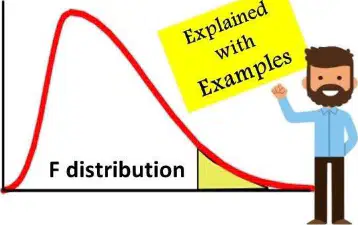
You observe two product lines with different variances but similar means. Which technique tests if mean differences across multiple lines are statistically significant?
Median test
Simple regression
Chi-square test
One-way ANOVA
Which best describes the macro-level view provided by descriptive statistics for a business dataset?
Testing hypotheses with p-values for specific relationships
Summarizing overall patterns and distributions across variables
Isolating individual records to audit transaction details
Predicting future trends using causal modeling techniques
A retail analyst sees average order value spiking on one day while the median stays stable. What is the most plausible warning sign to investigate first?
A change in regression coefficients across all segments
A normal seasonal fluctuation with symmetric purchases
A confirmed causal effect of a marketing campaign
Potential outliers or data entry errors skewing the mean
Which task best fits the micro-level use of descriptive statistics in quality control?
Modeling long-run trends with multivariate regression
Selecting the best inferential test for causal claims
Estimating population parameters from sampled data
Drilling into records to spot duplicate or impossible values
You observe a strong correlation between ad spend and sales. What is the most appropriate next step guided by descriptive statistics?
Check distributions and anomalies before choosing an inferential method
Conclude that increased ad spend directly causes higher sales
Ignore outliers because correlation already summarizes the data
Proceed straight to regression without preliminary diagnostics
Which statement best defines inferential statistics in business research?
Methods for summarizing sample characteristics
Rules for designing qualitative interviews
Techniques for predicting population parameters
Procedures for cleaning raw data tables
What is the primary purpose of using a representative sample?
To reduce computation time only
To make valid inferences about the population
To guarantee zero measurement error
To increase the number of variables studied
Which method is most appropriate to test whether two group means differ?
Median comparison without assumptions
Regression predicting a dependent variable
T-test comparing group averages
Correlation analysis between variables
A business analyst wants to examine the relationship between advertising spend and sales. Which technique should be used?
ANOVA on categorical segments
Correlation to assess linear association
Median split to create two groups
Skewness to measure distribution shape
Which scenario best illustrates a population inference?
Predicting overall customer churn rate nationwide
Transforming data into standardized z-scores
Describing average satisfaction in the sample
Listing software tools used for analysis
Select the most critical risk when the sample is not representative.
More complex visualizations and charts
Longer processing times in software
Biased predictions about the population
Higher variance but unbiased estimates
You run ANOVA on three pricing strategies and find a significant result. What conclusion is justified?
At least one strategy differs in mean outcome
All strategies have identical mean outcomes
No differences exist among any strategies
The distribution is perfectly symmetrical
Which statement correctly distinguishes descriptive from inferential statistics?
Descriptive predicts population trends broadly
Descriptive describes samples; inferential predicts populations
Inferential only cleans data before modeling
Inferential summarizes sample characteristics
A manager samples 400 customers and estimates the net promoter score for all customers. Which concept is central to this process?
Hypothesis testing on qualitative themes
Population inference from sample data
Skewness correction in distributions
Daily pivot tables for quick insights

