
 Worksheets
Reproductive System Final Exam
Total questions: 75
Worksheet time: 41mins
What is the main purpose of the reproductive system?
To digest food
To produce offspring
To pump blood
To filter waste
Males and females have different roles, structures, and hormones to accomplish the purpose of the reproductive system.
True
False
What are the primary sex organs called?
Kidneys
Gonads
Lungs
Heart
Which of the following are the gonads in females?
Testes
Ovaries
Kidneys
Lungs
Which of the following are the gonads in males?
A) Ovaries
B) Testes
C) Kidneys
D) Lungs
Fill in the blank: Gonads produce sex cells or ________.
gametes
hormones
enzymes
antibodies
What is the primary reproductive role of males?
Produce eggs
Produce sperm
Provide environment for offspring
None of the above
What do females produce as part of their reproductive role? ________
eggs or ova
sperm
pollen
milk
If fertilization occurs, what is the role of females?
Deliver sperm
Produce sperm
Provide environment for offspring to develop
None of the above
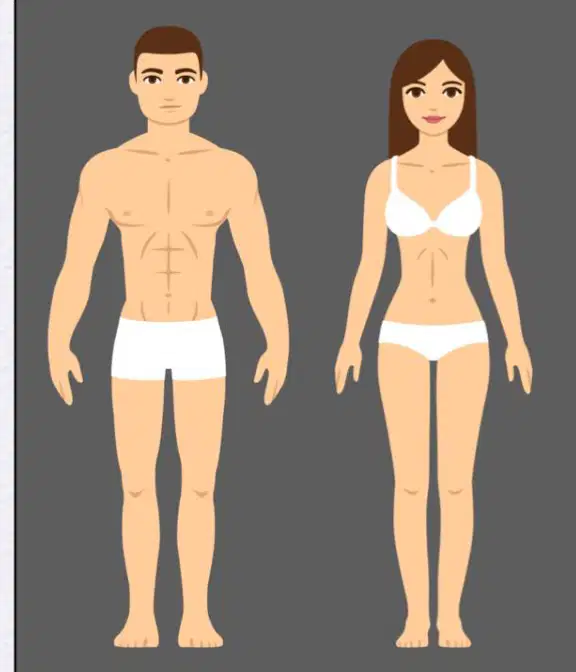
Sex hormones play important roles in which of the following?
The development and function of reproductive organs
Sexual behavior
Growth and development of other organs and tissues in the body
All of the above
Fill in the blank: Male and female sex hormones are important for the development and function of ________ organs.
reproductive
digestive
respiratory
excretory
How long and wide are the testes in males?
About 2 cm long and 1 cm wide
About 4 cm long and 2.5 cm wide
About 6 cm long and 3 cm wide
About 5 cm long and 2 cm wide
Testes produce ______ and hormones.
sperm cells
red blood cells
white blood cells
platelets
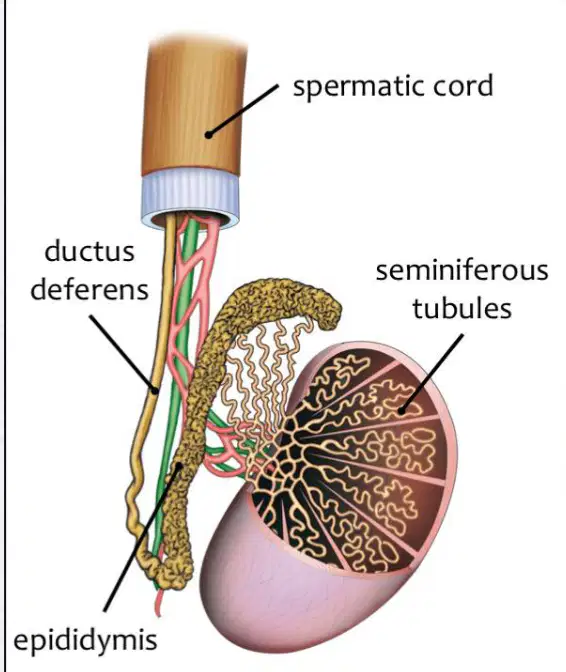
What is the function of the seminiferous tubules?
Seminiferous tubules are where sperm are formed.
Seminiferous tubules store urine before excretion.
Seminiferous tubules produce digestive enzymes.
Seminiferous tubules transport oxygen in the blood.
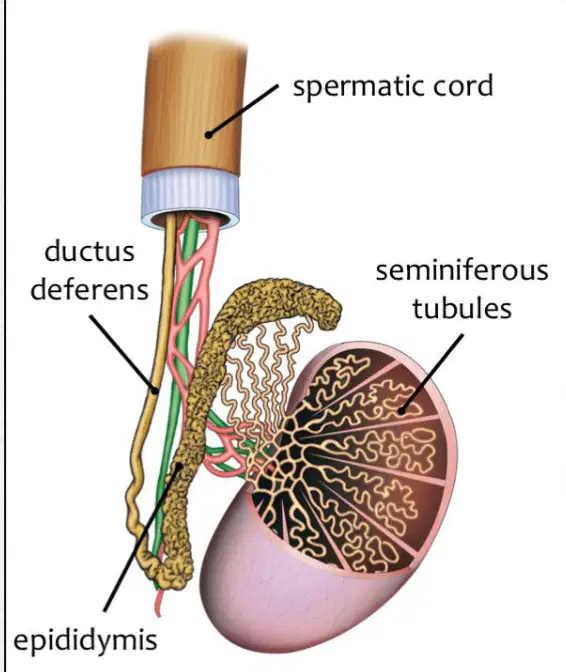
What is the function of the epididymis?
The epididymis stores immature sperm; they mature as they travel through.
The epididymis produces testosterone.
The epididymis is responsible for the production of eggs.
The epididymis filters waste from the blood.
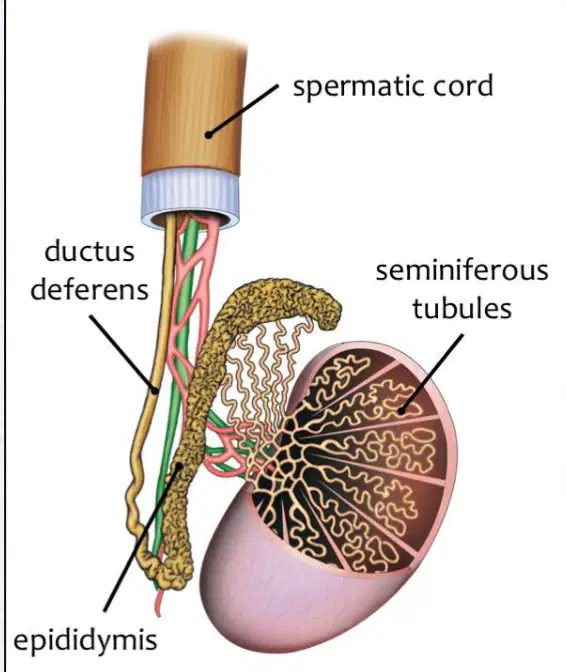
What is the function of the ductus (vas) deferens?
The ductus (vas) deferens propels live sperm into the urethra.
The ductus (vas) deferens produces testosterone.
The ductus (vas) deferens stores urine before excretion.
The ductus (vas) deferens filters blood in the kidneys.
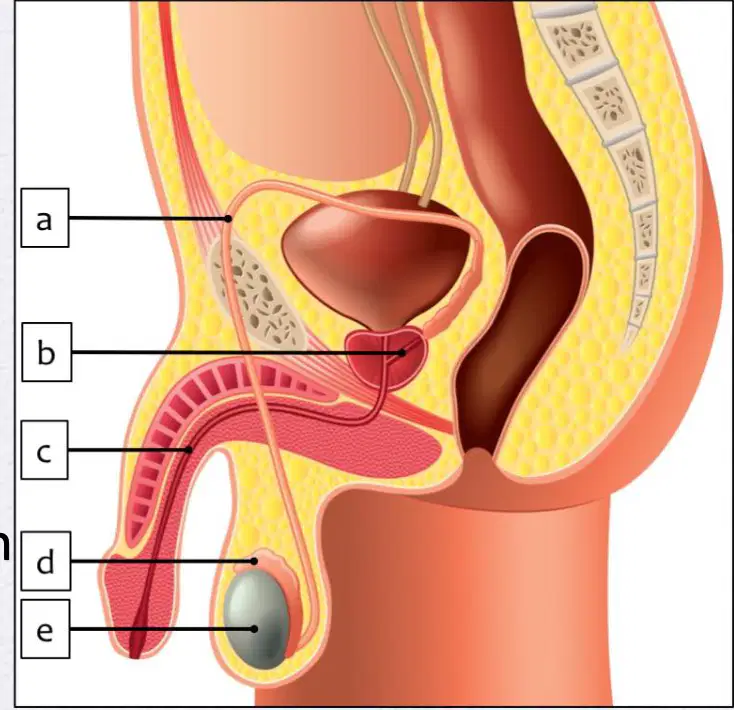
Refer to the diagram of the male reproductive system. What is the function of the structure labeled 'a'?
Stores sperm
Propels sperm toward the ejaculatory duct
Produces sperm
Exits sperm from the body
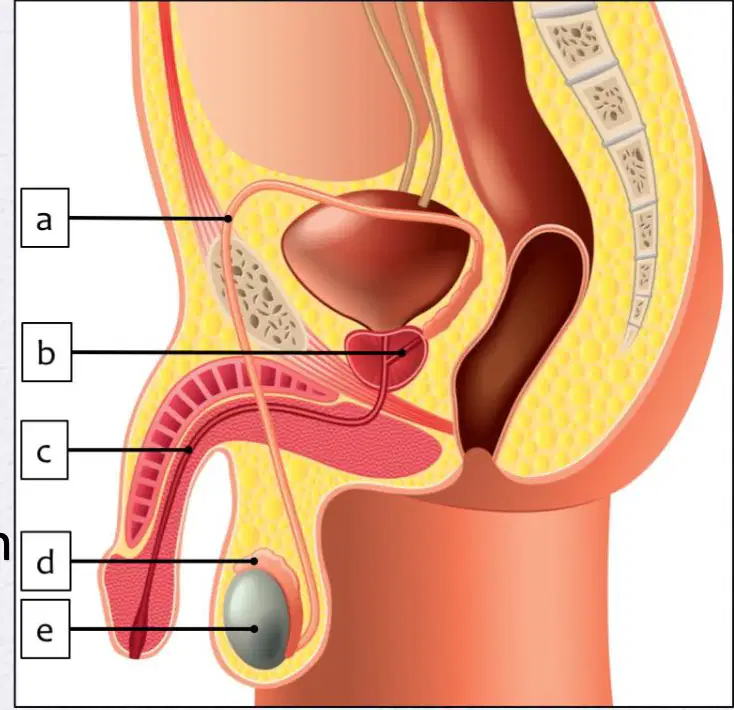
Refer to the diagram of the male reproductive system. Which structure is responsible for storing sperm?
a
b
d
e

Refer to the diagram of the male reproductive system. The structure labeled 'c' is the _________.
urethra
vas deferens
epididymis
seminal vesicle
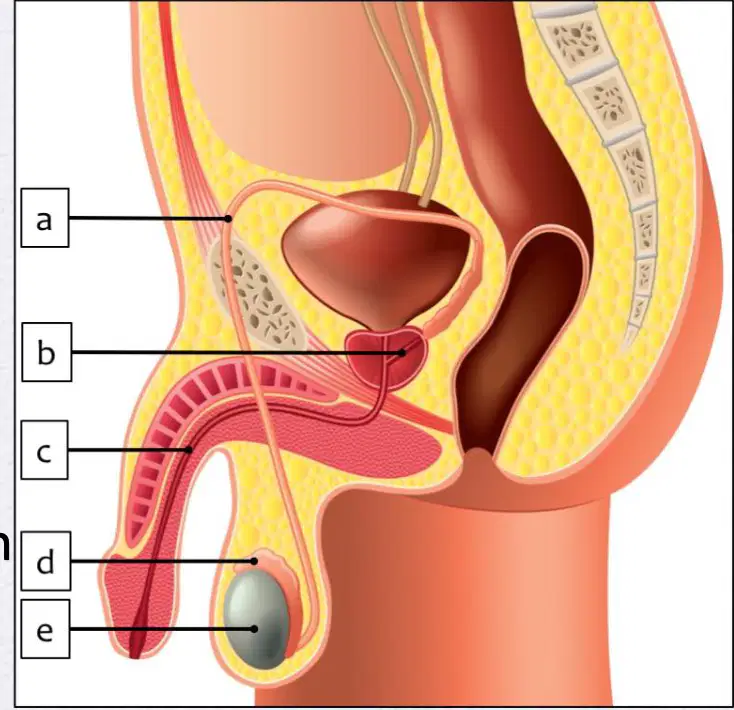
Match the labeled parts of the male reproductive system to their correct function:
Ductus deferens
Propels sperm toward ejaculatory duct
Ejaculatory duct
Empties sperm into the urethra
Urethra
Exits sperm from the body
Epididymis
Stores sperm
Seminiferous tubules
Produces sperm
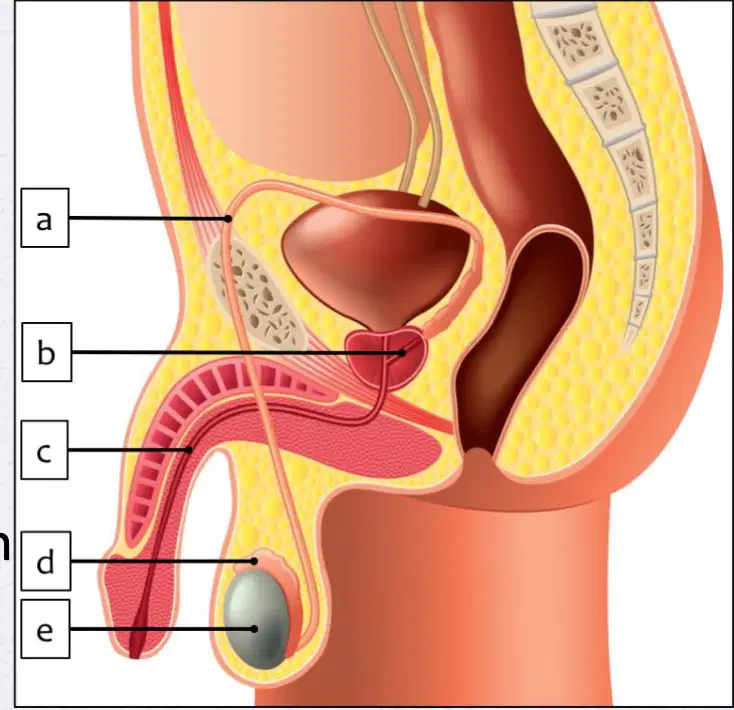
In what order does sperm travel through the labeled structures from production to exit from the body?
A) e → d → a → b → c
B) d → e → a → b → c
C) a → b → c → d → e
D) e → a → d → b → c
Which of the following is NOT an accessory gland involved in semen production?
Seminal vesicles
Prostate gland
Bulbourethral glands
Thyroid gland
What is the main function of the accessory glands (seminal vesicles, prostate gland, bulbourethral glands) in the male reproductive system?
To work together to produce semen, the sperm-containing fluid that exits the body.
To produce hormones that regulate blood sugar levels.
To filter waste products from the blood.
To aid in the digestion of food in the stomach.
Fill in the blank: Seminal vesicles produce fluid that is rich in sugar, vitamins, and other substances to nourish _______.
sperm
red blood cells
enzymes
hormones
Fill in the blank: Prostate gland secretes an alkaline fluid that helps sperm _______ and swim more efficiently.
survive
multiply
digest
evaporate
Fill in the blank: Bulbourethral glands secrete _______.
mucus
bile
insulin
saliva
What is semen a mixture of?
Sperm and accessory gland secretions
Blood and sperm
Mucus and vitamins
Sugar and sperm
Fill in the blank: The ______ is a sac of skin that holds the testes outside the body cavity and provides the ideal temperature for sperm production.
scrotum
urethra
epididymis
vas deferens
Fill in the blank: The ______ is a shaft of spongy erectile tissue surrounding the urethra, designed to deliver sperm to the female reproductive tract.
penis
ureter
vas deferens
scrotum
Where does spermatogenesis occur?
Ovaries
Seminiferous tubules of the testes
Uterus
Prostate gland
Each stem cell produces how many haploid sperm cells?
2
3
4
5
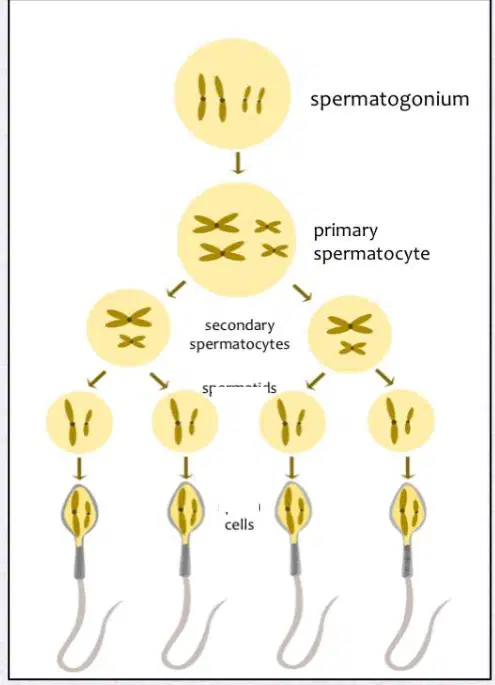
Match the following stages of spermatogenesis with their correct description:
Initial stem cell
Spermatogonium
First stage after mitosis
Primary spermatocyte
Second stage after meiosis I
Secondary spermatocytes
Final haploid cells
Sperm cells
Fill in the blank: Mature sperm are very _________
streamlined
rigid
sticky
bulky
Fill in the blank: The head of a sperm contains _______.
DNA
Chlorophyll
Cellulose
Starch
Fill in the blank: The acrosome contains _______ to help penetrate the protective layer around the ovum.
enzymes
hormones
antibodies
nutrients
Fill in the blank: Mitochondria provide _______ for swimming.
energy
protein
oxygen
movement
Fill in the blank: The tail of a sperm is a long _______.
flagellum
cilia
axoneme
pseudopod
Fill in the blank: Development of a mature sperm cell takes approximately ______ days.
64
30
90
120
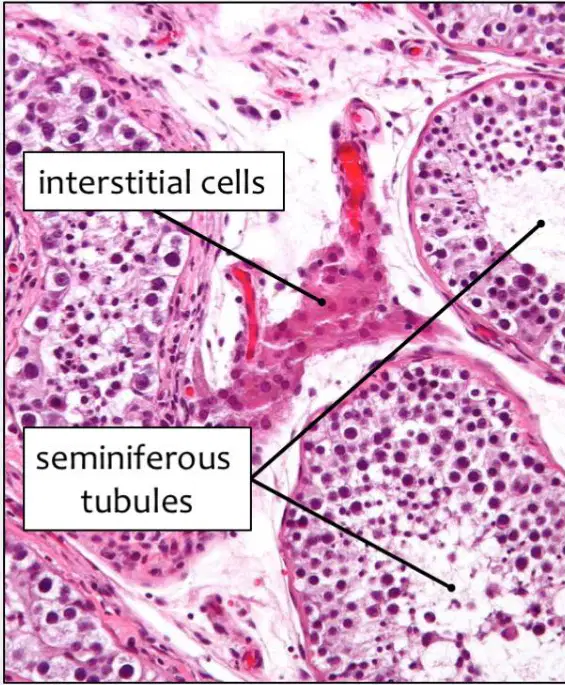
Luteinizing hormone produced by the anterior pituitary stimulates the production of which hormone by interstitial cells of the testes?
Estrogen
Testosterone
Progesterone
Cortisol
In addition to sperm production, testosterone is responsible for the development of _________.
male sex characteristics
female sex characteristics
digestive enzymes
red blood cells
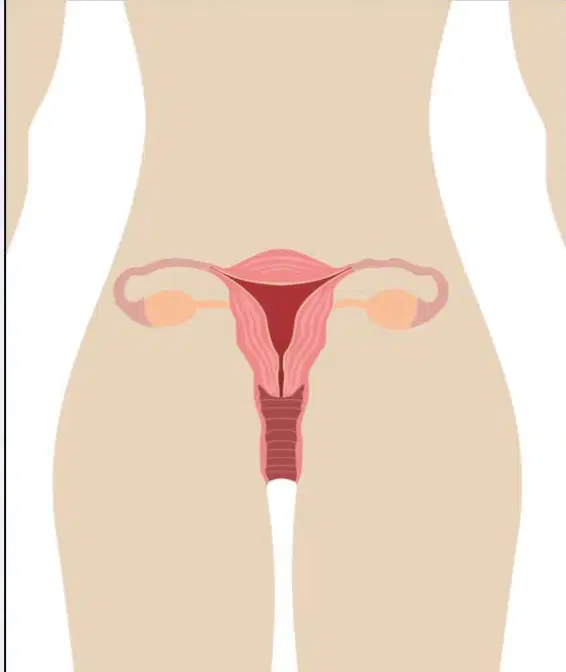
Which organs are paired and oval-shaped in the female reproductive system?
Ovaries
Testes
Uterus
Fallopian Tubes
What is the approximate length of the ovaries?
About 3-5 cm
About 7-9 cm
About 1-2 cm
About 10-12 cm
The ovaries produce ova and which female hormones?
Estrogens and progesterone
Testosterone and insulin
Adrenaline and thyroxine
Cortisol and glucagon
Which of the following is NOT produced by the ovaries?
Ova
Estrogens
Testosterone
Progesterone
Each ovary contains saclike structures called _______.
follicles
tubules
villi
alveoli
Immature eggs or _______ develop inside the follicles.
oocytes
sperms
zygotes
embryos
Once mature, the oocyte is released during _______.
ovulation
fertilization
menstruation
implantation
After ovulation, the follicle transforms into a hormone-producing structure called the _______.
corpus luteum
Graafian follicle
zona pellucida
oviduct
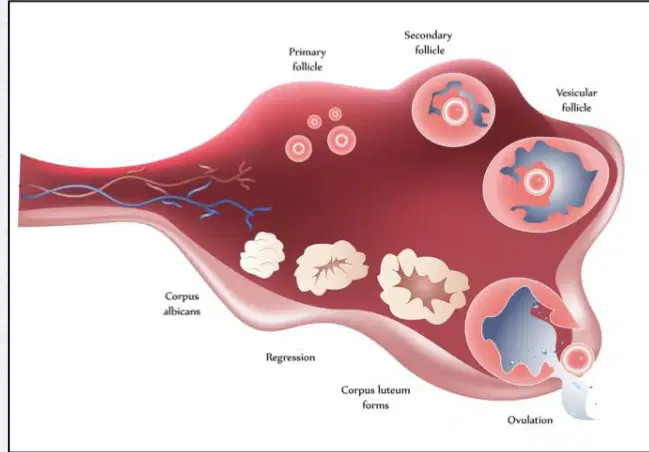
Match the following terms with their correct description from the diagram:
Structure formed after ovulation
Degenerated follicle
Immature egg cell
Structure formed after ovulation
Saclike structure in ovary
Immature egg cell
Degenerated follicle
Saclike structure in ovary
What are the pair of muscular tubes that lead from the right and left superior corners of the uterus towards the ovaries called?
Uterine tubes
Vas deferens
Eustachian tubes
Ureters
The distal end of each uterine tube expands and forms fingerlike projections called ________.
fimbriae
villi
cilia
papillae
Waving fimbriae create a current that draws the ovulated oocyte in.
True
False
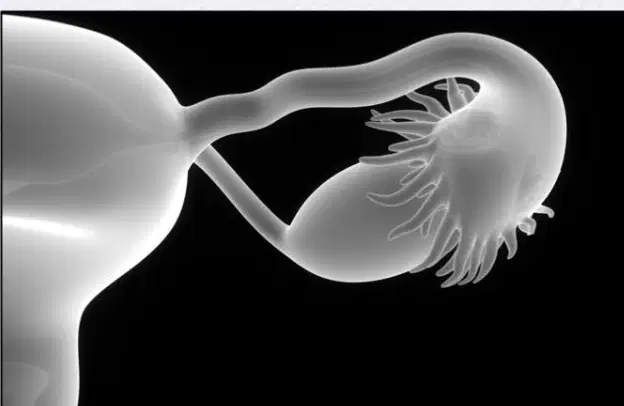
Fertilization most often occurs in which part of the uterine tube?
Distal end
Isthmus
Ampulla
Infundibulum
How long is the oocyte viable after ovulation?
About 24 hours
About 72 hours
About 12 hours
About 48 hours
Which part releases the oocyte at ovulation and produces progesterone to maintain the uterine lining in case of fertilization?
Uterine tube
Ovary
Uterus
Vagina
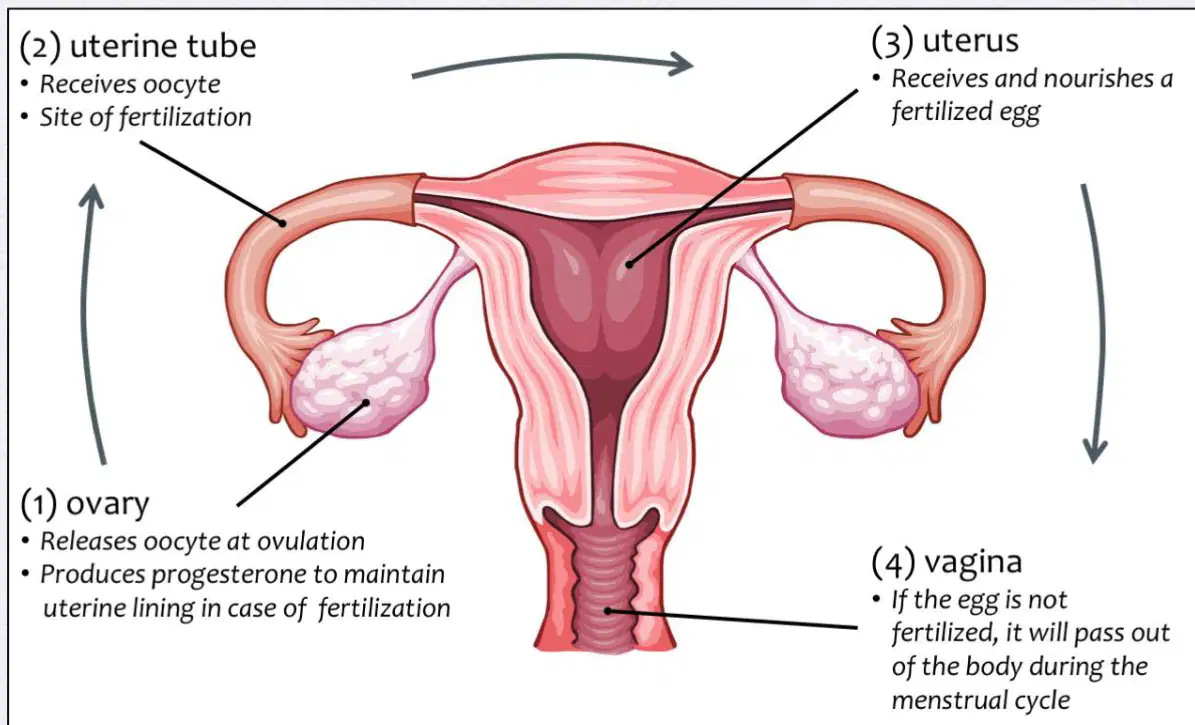
Refer to the diagram titled 'Path of the Egg Cell'. The site of fertilization and the structure that receives the oocyte is the _________.
uterine tube
ovary
cervix
vagina
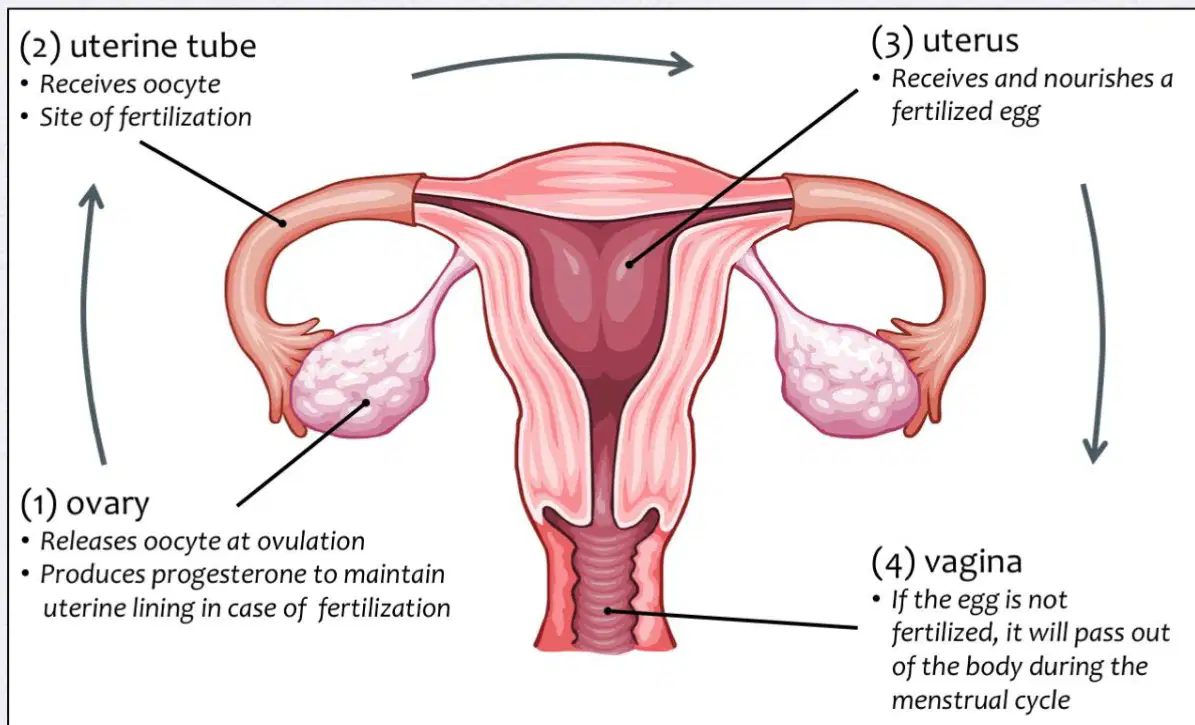
Refer to the diagram titled 'Path of the Egg Cell'. Which part receives and nourishes a fertilized egg?
A) Ovary
B) Uterine tube
C) Uterus
D) Vagina
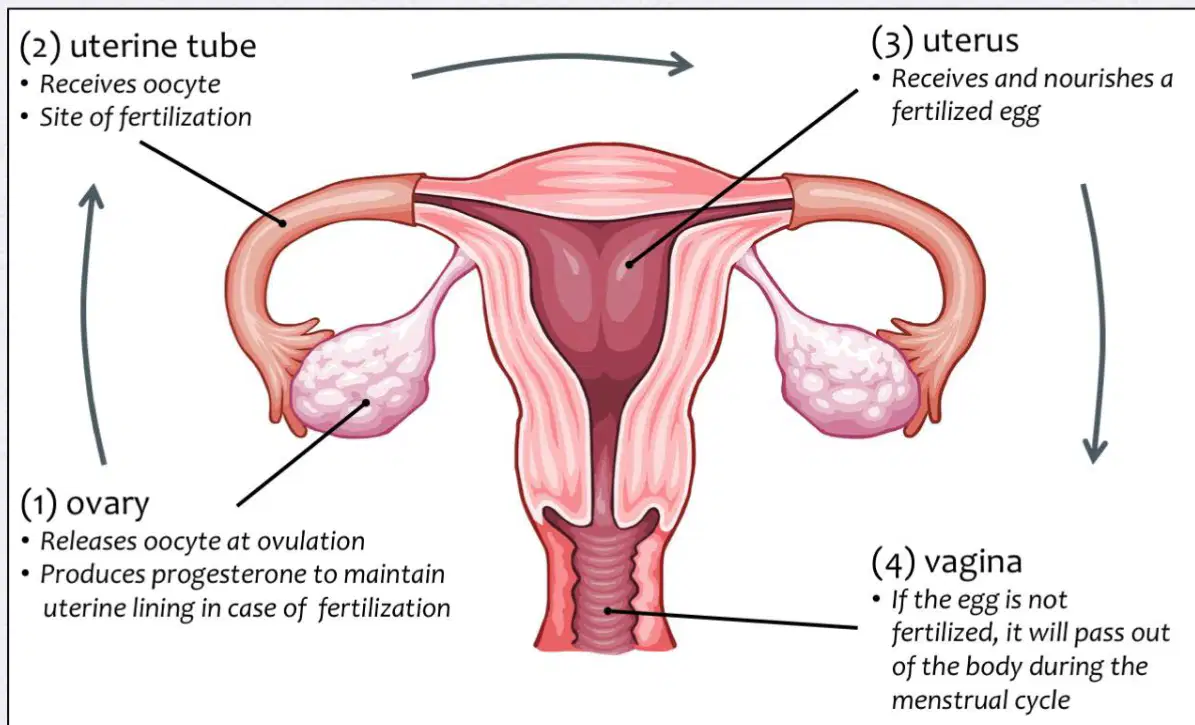
Refer to the diagram titled 'Path of the Egg Cell'. If the egg is not fertilized, it will pass out of the body during the menstrual cycle through the _________?
vagina
fallopian tube
ovary
uterus
Match the following parts of the female reproductive system with their correct functions:
Ovary
Releases oocyte at ovulation
Uterine tube
Receives oocyte, site of fertilization
Uterus
Receives and nourishes a fertilized egg
Vagina
If the egg is not fertilized, it will pass out of the body during the menstrual cycle
What is the uterus also known as?
Ovary
Womb
Cervix
Endometrium
The uterus is connected to the two uterine tubes ______ and to the vagina ______.
superiorly, inferiorly
inferiorly, superiorly
laterally, medially
anteriorly, posteriorly
Which of the following best describes the function of the uterus?
Produces eggs
Houses a developing fetus during pregnancy
Produces hormones
Filters blood
A fertilized egg will implant in the lining of the uterus called the ______.
endometrium
myometrium
cervix
oviduct
What is the length of the vagina in centimeters?
8-10 cm
2-4 cm
15-18 cm
20-25 cm
Which of the following is NOT a function of the vagina?
Passageway for delivery of an infant
Receives the penis during sexual intercourse
Produces eggs
Carries sperm to the uterus
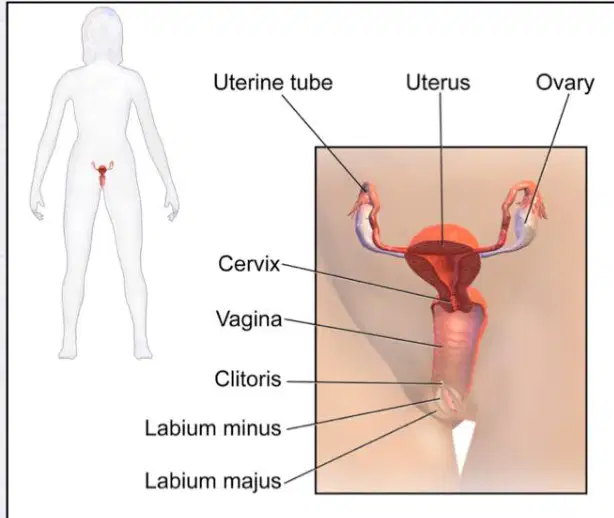
Match the following parts of the female reproductive system with their correct labels:
Uterine tube
Uterine tube
Uterus
Uterus
Ovary
Ovary
Cervix
Cervix
Vagina
Vagina
The labia are external folds of skin that protect the openings of the urethra and vagina.
True
False
What is oogenesis?
The development of female gametes.
The process of fertilization in plants.
The division of somatic cells.
The formation of male gametes.
Oogenesis starts with stem cells called ______ in fetal ovaries.
oogonia
spermatogonia
folliculocytes
granulosa cells
Label the Male Reproductive System.
Testes
Penis
Vas Deferens
Prostate Gland
Urethra

Match the following
fertilization occurs here
oviduct
egg is released
ovulation
fetus grows here
uterus
opening of uterus
cervix
provides fetus with nutrients
placenta
label the following digram with the appropriate structures
Please match the term to its function
Uterus
embryo implants into lining
Ovary
Produces Eggs
Fallopian Tubes
passageway for sperm and egg
Cervix
separates vagina from uterus
Vagina
where sperm is deposited
Please match the part to its function
Epididymis
Stores Sperm
Testes
Produces Sperm
Vas Deferens
Moves sperm from testes to body cavity
Scrotum
Keeps sperm cooler then body tem
Seminole Vesicles
Adds semen


