
 Worksheets
chem exam 1
Total questions: 60
Worksheet time: 3hrs 26mins
What is the charge of the nucleus of all atoms or ions?
Negative
Neutral
Positive
Variable
What are subatomic particles with a positive charge called?
Neutrons
Electrons
Protons
Photons
What are the three main subatomic particles?
Protons, neutrons, and electrons
Protons, electrons, and positrons
Neutrons, electrons, and muons
Protons, quarks, and neutrinos
What is the overall charge of an atom?
Positive, because it has more protons than electrons.
Negative, because it has more electrons than protons.
Neutral, because it has equal numbers of protons and electrons.
Variable, depending on the number of neutrons.
What is the mass of a proton compared to a neutron?
Approximately equal, but protons are slightly lighter.
Protons are significantly heavier than neutrons.
Protons and neutrons have the same mass.
Neutrons are lighter than protons.
What do all atoms of a particular element have in common?
The same number of neutrons
The same number of protons
The same number of electrons
The same atomic mass
Where is all of an atom's mass considered to be located?
In the nucleus
In the electron cloud
In the outer shell
In the atomic bonds
What determines the chemical properties of an element?
The number and arrangement of its electrons.
The mass of the nucleus.
The temperature of the element.
The color of the element.
How many electrons does a neutral Argon atom have?
16 electrons
18 electrons
20 electrons
14 electrons
What is an isotope?
Atoms of the same element with different numbers of neutrons.
Atoms of different elements with the same number of protons.
Atoms that have the same mass number but different atomic numbers.
Atoms that are chemically identical but physically different.
What is the electron cloud?
The region around the nucleus where electrons are likely to be found.
A dense area of protons and neutrons in the nucleus.
A cloud of gas surrounding the atom.
The space where electrons are stored in fixed orbits.
F, N, B


What happens to the atomic numbers as you move from left to right on the periodic table?
Increase
Decrease
Stay the same
Nothing
Which of the following elements is most likely to have similar properties to those of sodium (Na)?
Magnesium (Mg)
Sulfur (S)
Francium (Fr)
Titanium (Ti)
If an element has 117 protons which group will it be in on the periodic table?
1
7
11
17
Which element is located in group 3?
Yttrium (Y)
Carbon (C)
Sodium (Na)
Lithium (Li)
Which element is located in period 4?
Zirconium (Zr)
Silicon (Si)
Beryllium (Be)
Iron (Fe)


1s22s22p63s23p64s23d10


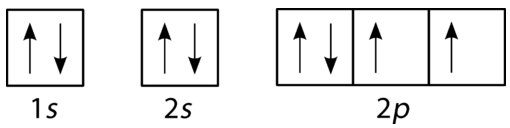

How many electrons does an atom with 8 protons have (assuming the atom is neutral)?
8
16
15.99
24
When the valence shell of an atom is full, the atoms is chemically _____________.
Full
Radioactive
Stable
Unstable
An atom with an electrical charge is called an _____________.
Atom
Isotope
Covalent
Ion
The electrons found in the outermost shell are called _____________ electrons.
Energy
Valence
Negative
Covalent
A positively charged atom (more protons than electrons) is called a __________.
Anion
Cation
Isotope
A negatively charged atom (more electrons than protons) is called a __________.
Anion
Cation
Isotope
Atoms with the same number of protons but different numbers of neutrons (Carbon 14 and Carbon 12) are called ___________.
Anion
Cation
Isotope
______________ bonds form between two oppositely charged ions (cation-anion)
Ionic
Covalent
Isotope


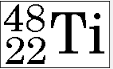

How many significant figures are in the number? 2804 m
3
4
5
unknown
How many significant figures are in the number? 75,000 m
2
3
5
unknown
How many significant figures are in the number? 0.003068 m
6
5
4
unknown
What is the correct answer to: 6.201 cm + 7.4 cm + 0.68 cm +12.0 cm =
26.281
26.28
26.2
26.3
What is the correct answer for: 12.00 m +15.001m =
27.001
27.00
27.0
27
What is the correct answer for: 20.2 cm ÷ 7.41 s
2.726045884
2.72604
2.73
2.7
3.05 + 0.013
3.063
3.06
3.1
3
5.9 x 6.01
35.459
35.46
35.5
35

