
 Worksheets
final exam review
Total questions: 98
Worksheet time: 49mins
Which term refers to microorganisms that normally inhabit the human body without causing disease?
Normal flora
Pathogen
Toxin
Exoenzyme
The normal microbiota are characterized by which of the following functions?
They aid in digestion, protect against pathogens, and synthesize certain vitamins.
They only cause diseases in the host.
They are found exclusively in sterile body sites.
They have no interaction with the immune system.
The main stages in the development of an infection are:
Incubation, prodromal, illness, decline, convalescence
Exposure, recovery, relapse, immunity
Invasion, multiplication, elimination, resistance
Transmission, vaccination, eradication, prevention
Describe the difference among the portals of entry and give examples of pathogens that invade by these means.
Portals of entry are the ways pathogens enter the body, such as respiratory tract (influenza), gastrointestinal tract (Salmonella), and skin (Staphylococcus aureus).
Portals of entry are only through the skin, and all pathogens use the same route.
Portals of entry refer to the exit points of pathogens from the body, like sneezing or coughing.
Portals of entry are the methods by which the immune system destroys pathogens.
The adhesion process and various mechanisms microbes use to gain entry include:
Attachment to host cells via pili, production of adhesins, invasion through host tissues, and evasion of immune responses.
Only passive diffusion through cell membranes.
Replication outside the host without entry mechanisms.
Direct transformation into host cells without attachment.
Exotoxins and endotoxins differ in their major characteristics. Which of the following best compares and contrasts them?
Exotoxins are secreted proteins, usually from Gram-positive bacteria, and are highly toxic; endotoxins are lipopolysaccharides from Gram-negative bacteria and are less toxic.
Exotoxins are lipopolysaccharides from Gram-negative bacteria, and endotoxins are secreted proteins from Gram-positive bacteria.
Both exotoxins and endotoxins are secreted proteins from Gram-positive bacteria.
Exotoxins and endotoxins are both non-toxic components of bacterial cell walls.
Which type of bacterial toxin is toxic in small amounts?
Exotoxin
Endotoxin
Which type of bacterial toxin is toxic in higher quantities?
Exotoxin
Endotoxin
Which type of bacterial toxin has effects specific to a cell type (blood, liver, nerve)?
Exotoxin
Endotoxin
Which type of bacterial toxin causes systemic and less specific effects such as fever, inflammation, weakness, and shock?
Exotoxin
Endotoxin
What is the chemical composition of exotoxins?
Small proteins
Polysaccharides
Lipids
Nucleic acids
What is the chemical composition of endotoxins?
Lipopolysaccharide of cell wall
Peptidoglycan of cell wall
Teichoic acid of cell wall
Protein of cell wall
Which type of bacterial toxin is unstable at 60°C?
Exotoxin
Endotoxin
Which type of bacterial toxin is stable at 60°C?
Exotoxin
Endotoxin
Can exotoxins be converted to toxoid?
Yes
No
Can endotoxins be converted to toxoid?
Yes
No
Which type of bacterial toxin stimulates antitoxins?
Exotoxin
Endotoxin
Which type of bacterial toxin does not stimulate antitoxins?
Exotoxin
Endotoxin
Does exotoxin usually stimulate fever?
Yes
No
Does endotoxin stimulate fever?
Yes
No
How are exotoxins released from the cell?
Secreted from live cell
Released upon cell lysis
Stored in cell membrane
Released during cell division
How are endotoxins released from the cell?
Released from cell wall during lysis
Secreted actively by the cell
Released during cell growth
Produced and stored in vesicles
What are the typical sources of exotoxins?
A few gram-positive and gram-negative bacteria
All viruses
Only fungi
All eukaryotic cells
What are the typical sources of endotoxins?
All gram-negative bacteria
All gram-positive bacteria
Viruses
Fungi
Which diseases are caused by exotoxins?
Tetanus, diphtheria, cholera, anthrax
Tuberculosis, leprosy, typhoid, malaria
AIDS, influenza, measles, mumps
Rabies, hepatitis, dengue, chikungunya
Which diseases are caused by endotoxins?
Meningitis, endotoxic shock, salmonellosis
Tetanus, botulism, diphtheria
Tuberculosis, leprosy, syphilis
Malaria, dengue, chikungunya
Which of the following lists correctly identifies the three lines of body defense and provides an example for each?
Physical barriers (skin), Inflammatory response (phagocytes), Immune response (antibodies)
Physical barriers (antibodies), Inflammatory response (skin), Immune response (phagocytes)
Physical barriers (phagocytes), Inflammatory response (antibodies), Immune response (skin)
Physical barriers (inflammation), Inflammatory response (antibodies), Immune response (skin)
Nonspecific defense refers to the body's general mechanisms to protect against pathogens. Which of the following is an example of a nonspecific defense?
Skin acting as a barrier
Production of specific antibodies
Memory cell formation
Antigen recognition by T-cells
An inflammatory response is a defense mechanism. Is this response part of the innate or adaptive immune system, and what is the correct sequence of events?
It is part of the innate immune system; the sequence is tissue injury, release of chemicals, increased blood flow, and arrival of immune cells.
It is part of the adaptive immune system; the sequence is antibody production, memory cell formation, and pathogen elimination.
It is part of the innate immune system; the sequence is antibody production, pathogen elimination, and tissue repair.
It is part of the adaptive immune system; the sequence is tissue injury, increased blood flow, and antibody release.
Adaptive defenses are considered specific defenses because:
They target particular pathogens with a tailored immune response.
They provide a general barrier against all pathogens.
They only work against non-living threats.
They are part of the body's physical barriers.
B & T lymphocytes are types of immune cells. Where in the body are they produced and matured?
B lymphocytes are produced and mature in the bone marrow, while T lymphocytes are produced in the bone marrow and mature in the thymus.
Both B & T lymphocytes are produced and mature in the thymus.
B lymphocytes are produced in the thymus and mature in the bone marrow, while T lymphocytes are produced and mature in the bone marrow.
Both B & T lymphocytes are produced and mature in the bone marrow.
Antigens are foreign substances that induce an immune response, while antibodies are proteins produced by the body to neutralize antigens. Which of the following best compares antigens and antibodies?
Antigens trigger immune responses; antibodies neutralize antigens.
Antibodies are foreign substances; antigens are produced by the body.
Antigens and antibodies are both produced by the body to fight infections.
Antibodies trigger immune responses; antigens neutralize antibodies.
The origin of interferon and its role in controlling viruses and other immune functions can be described as:
Interferon is produced by host cells in response to viral infection and helps control viruses and regulate immune responses.
Interferon is a hormone secreted by the pancreas to regulate blood sugar levels.
Interferon is an enzyme that digests proteins in the stomach to aid in digestion.
Interferon is a neurotransmitter released by neurons to transmit signals in the brain.
Undifferentiated stem cells are cells that have not yet specialized. Which of the following are types of blood cells that arise from pluripotent stem cells?
Red blood cells, white blood cells, and platelets
Muscle cells, nerve cells, and skin cells
Bone cells, cartilage cells, and fat cells
Epithelial cells, gland cells, and hair cells
Distinguish between granulocytes and agranulocytes. What types of stem cells differentiate to give rise to granulocytes and agranulocytes? List all of them.
Granulocytes arise from myeloid stem cells, while agranulocytes arise from both myeloid and lymphoid stem cells.
Granulocytes and agranulocytes both arise only from lymphoid stem cells.
Granulocytes arise from lymphoid stem cells, while agranulocytes arise from myeloid stem cells.
Both granulocytes and agranulocytes arise only from myeloid stem cells.
The relative abundance, general properties, and specific functions of all types of WBC populations found in blood are best described by which of the following?
Neutrophils are the most abundant, followed by lymphocytes, monocytes, eosinophils, and basophils, each with distinct immune functions.
Basophils are the most abundant, followed by eosinophils, monocytes, lymphocytes, and neutrophils, each with similar functions.
Lymphocytes are the least abundant, and all WBCs have identical roles in immunity.
Monocytes are the most abundant, and all WBCs function primarily in oxygen transport.
Make a list of all phagocytic cells of the immune system.
Neutrophils, macrophages, dendritic cells, monocytes
B cells, T cells, plasma cells, mast cells
Eosinophils, basophils, lymphocytes, erythrocytes
Natural killer cells, helper T cells, cytotoxic T cells, fibroblasts
MHC class I & II molecules are associated with which type of cells?
MHC class I with all nucleated cells; MHC class II with antigen-presenting cells
MHC class I with red blood cells; MHC class II with platelets
MHC class I with neurons; MHC class II with muscle cells
MHC class I with epithelial cells; MHC class II with connective tissue cells
Clonal selection refers to the process by which lymphocytes are selected and developed based on their ability to recognize specific antigens. Which of the following best describes how lymphocytes get clonally selected and developed?
Lymphocytes with receptors specific to an antigen are activated, proliferate, and differentiate upon encountering that antigen.
All lymphocytes are activated regardless of antigen specificity.
Lymphocytes are selected randomly without regard to antigen recognition.
Lymphocytes develop only in response to self-antigens.
Discuss the main difference between B-cell and T-cell maturation.
B-cells mature in the bone marrow, while T-cells mature in the thymus.
Both B-cells and T-cells mature in the thymus.
B-cells mature in the spleen, while T-cells mature in the bone marrow.
Both B-cells and T-cells mature in the bone marrow.
Which statement best contrasts the properties of B & T cells and describes the primary functions of helper T cells and cytotoxic T cells?
B cells produce antibodies, T cells mediate cellular immunity; helper T cells activate other immune cells, cytotoxic T cells kill infected cells.
B cells destroy infected cells directly, T cells produce antibodies; helper T cells suppress immune response, cytotoxic T cells activate B cells.
B cells and T cells both produce antibodies; helper T cells and cytotoxic T cells have identical functions.
B cells mediate cellular immunity, T cells produce antibodies; helper T cells kill infected cells, cytotoxic T cells activate other immune cells.
Which of the following terms refers to a molecule that can induce an immune response?
Antigen
Superantigen
Autoantigen
Allergen
Natural killer cells and superantigens are best described as:
Components of the immune system involved in defense and immune response modulation.
Types of red blood cells responsible for oxygen transport.
Enzymes that break down pathogens in the digestive tract.
Hormones that regulate blood sugar levels.
The basic structure and functions of immunoglobulin (Ig) include:
Two heavy chains and two light chains forming a Y-shaped molecule that binds antigens and mediates immune responses.
A single polypeptide chain that acts as a hormone in the body.
A double helix structure that stores genetic information.
A ring-shaped molecule that transports oxygen in the blood.
The actions of antibodies in protective immune reactions include which of the following?
Neutralization of pathogens, opsonization, activation of complement system, and agglutination
Production of red blood cells, breakdown of glucose, and synthesis of hormones
Destruction of nerve cells, inhibition of muscle contraction, and production of bile
Absorption of nutrients, filtration of blood, and secretion of digestive enzymes
Analyze the primary and secondary responses to antigens and immunogens.
Primary response is slower and produces fewer antibodies, while secondary response is faster and produces more antibodies.
Primary response is faster and produces more antibodies, while secondary response is slower and produces fewer antibodies.
Both primary and secondary responses produce the same amount of antibodies at the same speed.
Secondary response only occurs after exposure to a different antigen.
Describe the categories of acquired immunity with examples.
Acquired immunity is divided into active and passive immunity; active immunity includes vaccination, while passive immunity includes transfer of antibodies.
Acquired immunity is divided into innate and adaptive immunity; innate immunity includes skin barriers, while adaptive immunity includes fever.
Acquired immunity is divided into humoral and cellular immunity; humoral immunity includes phagocytes, while cellular immunity includes B cells.
Acquired immunity is divided into natural and artificial immunity; natural immunity includes antibiotics, while artificial immunity includes inflammation.
The basis of vaccination or immunization is:
To stimulate the immune system to produce antibodies against specific pathogens.
To directly kill all pathogens in the body.
To provide immediate cure for all diseases.
To replace the immune system with artificial components.
Which of the following correctly describes the four types of vaccine design strategies and provides an example for each?
Live attenuated (e.g., MMR), inactivated (e.g., polio), subunit (e.g., hepatitis B), and mRNA (e.g., COVID-19) vaccines.
Live attenuated (e.g., rabies), toxoid (e.g., influenza), DNA (e.g., tetanus), and protein (e.g., smallpox) vaccines.
Inactivated (e.g., measles), conjugate (e.g., COVID-19), viral vector (e.g., hepatitis B), and toxoid (e.g., polio) vaccines.
Subunit (e.g., polio), live attenuated (e.g., hepatitis B), mRNA (e.g., rabies), and inactivated (e.g., MMR) vaccines.
What is the site of maturation for T cells?
Thymus gland
Bone marrow
Spleen
Lymph nodes
What is the site of maturation for B cells?
Bone marrow
Thymus
Spleen
Lymph node
Which immune surface markers are present on T cells?
T-cell receptor, CD molecules, MHC I receptors
B-cell receptor, CD19, MHC II receptors
Immunoglobulin, CD20, MHC II receptors
Fc receptor, CD16, MHC III receptors
Which immune surface markers are present on B cells?
Immunoglobulin, MHC I and MHC II receptors
CD8 and CD4 receptors only
T-cell receptor and CD3 complex
MHC I and CD8 receptors
T cells circulate in the blood in ?
high numbers
low numbers
B cells circulate in the blood in ?
high numbers
low numbers
What is the receptor for antigen on T cells?
T-cell receptor (TCR)
B-cell receptor (BCR)
CD4 molecule
Immunoglobulin G (IgG)
What are the receptors for antigen on B cells?
Immunoglobulins D and M
T cell receptors
Major histocompatibility complex molecules
Complement proteins
Where are T cells distributed in lymphatic organs?
Paracortical sites (interior to the follicles)
Germinal centers of follicles
Medullary cords
Subcapsular sinus
Where are B cells distributed in lymphatic organs?
Cortex (in follicles)
Medulla
Trabeculae
Sinuses
Do T cells require antigen presented with MHC?
Yes
No
Do B cells require antigen presented with MHC?
Yes
No
What is the product of antigenic stimulation in T cells?
Helper and cytotoxic T cells and memory cells
Red blood cells and platelets
B cells and plasma cells
Neutrophils and basophils
What is the product of antigenic stimulation in B cells?
Plasma cells and memory cells
Red blood cells and platelets
T cells and macrophages
Neutrophils and basophils
What are the general functions of T cells?
Regulate immune functions, kill foreign and infected cells, synthesize cytokines
Produce antibodies and regulate blood pressure
Transport oxygen and nutrients throughout the body
Store energy and insulate organs
What are the general functions of B cells?
Produce antibodies to target, inactivate, and neutralize antigens
Engulf and digest pathogens directly
Initiate muscle contractions in response to infection
Regulate blood glucose levels
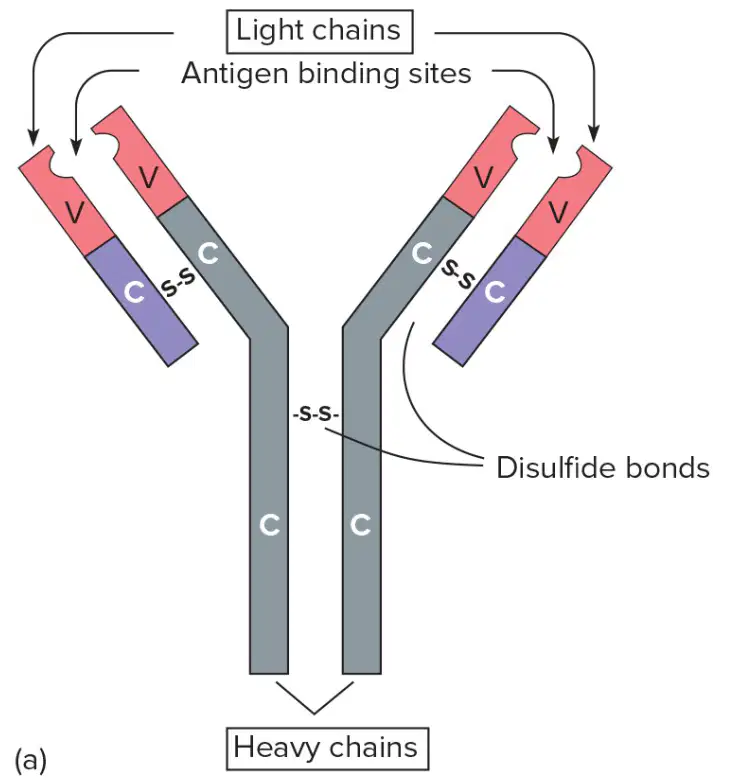
In the diagram of antibody structure, which chains are labeled as 'Light chains'?
The shorter arms of the Y-shaped structure are labeled as 'Light chains'.
The longer arms of the Y-shaped structure are labeled as 'Light chains'.
The base of the Y-shaped structure is labeled as 'Light chains'.
The circular region at the center of the Y-shaped structure is labeled as 'Light chains'.

Which region of the antibody is responsible for antigen binding?
Antigen binding sites (at the tips of the Y arms).
Constant region (Fc region).
Hinge region.
Transmembrane region.
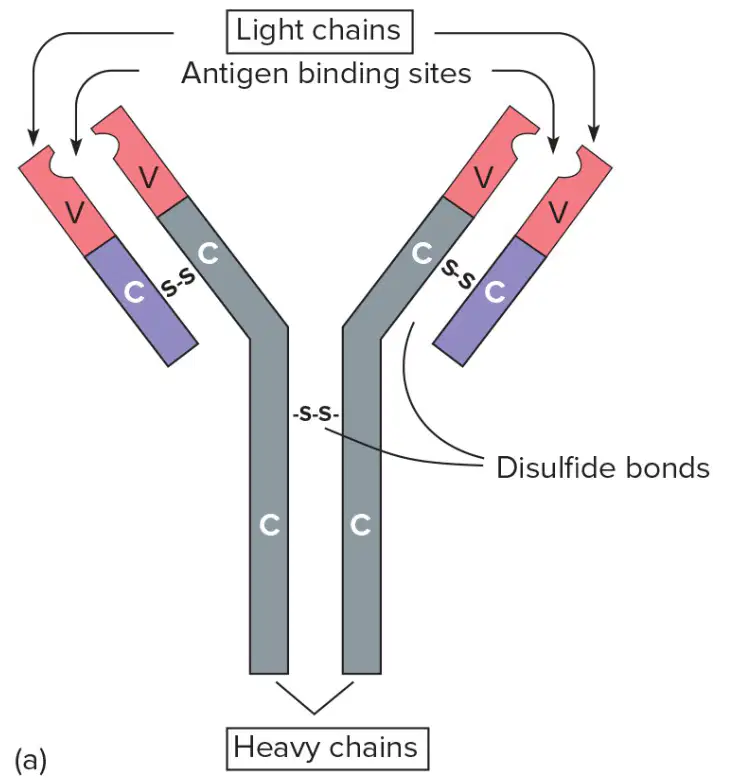
What type of bond holds the antibody chains together?
Disulfide bonds
Hydrogen bonds
Ionic bonds
Peptide bonds

Which part of the antibody is labeled as 'Fab'?
The arms of the Y-shaped structure (containing the antigen binding sites) are labeled as 'Fab'.
The stem of the Y-shaped structure is labeled as 'Fab'.
The entire Y-shaped structure is labeled as 'Fab'.
The hinge region connecting the arms and stem is labeled as 'Fab'.
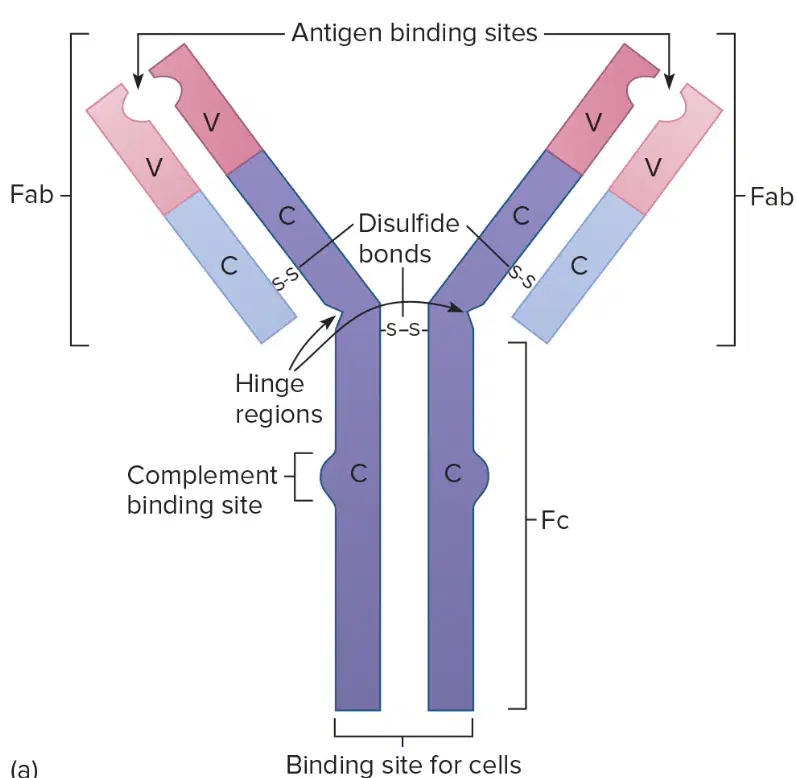
Which part of the antibody is responsible for binding to cells?
Fc region (the stem of the Y-shaped structure)
Fab region (the arms of the Y-shaped structure)
Variable region
Light chain
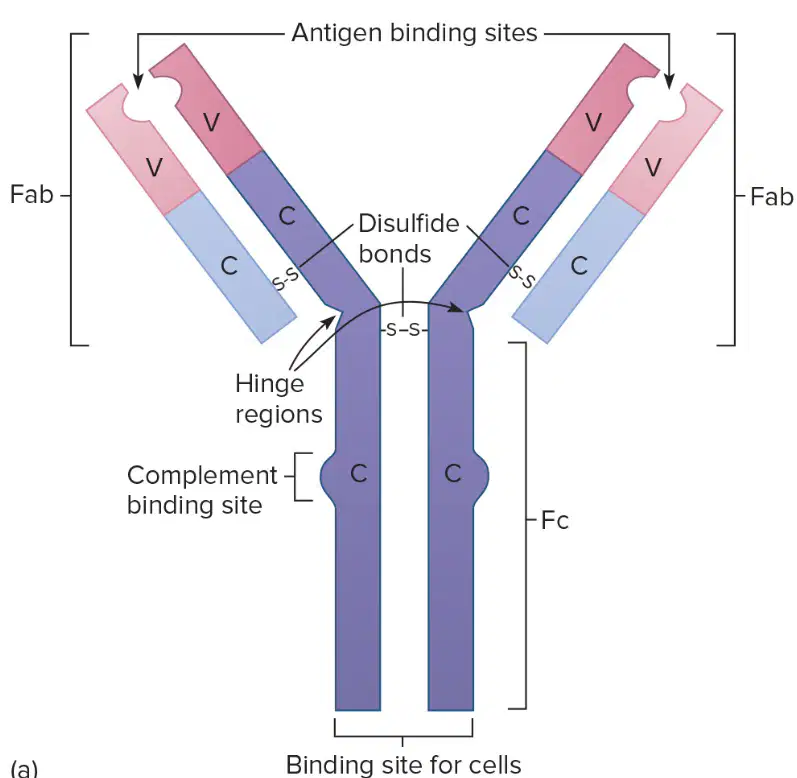
Which of the following is NOT a function of the Fab region of an antibody?
Antigen binding
Cell binding
Variable region
Part of the Y arms
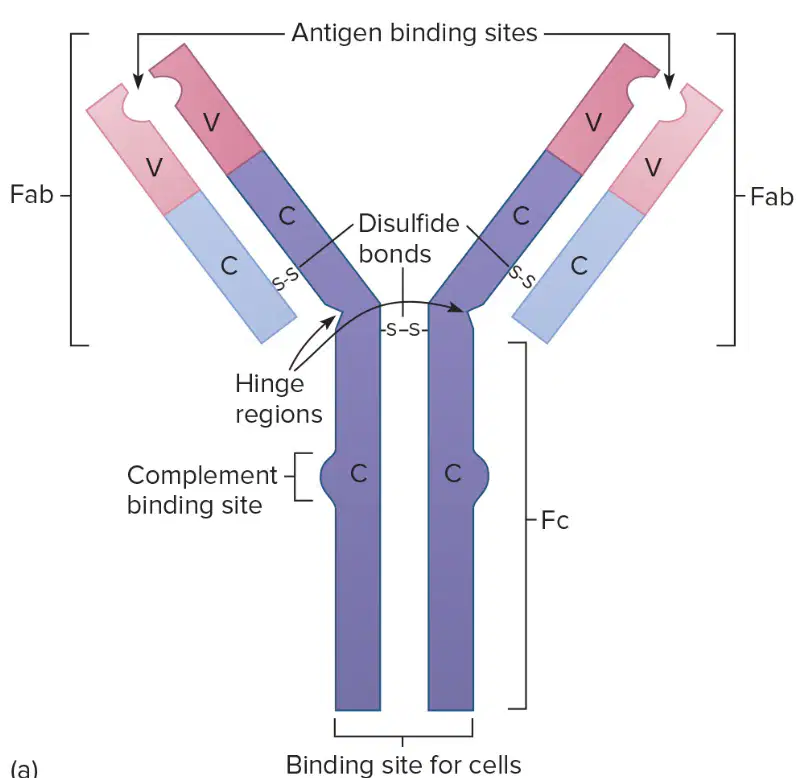
The complement binding site is located in which region of the antibody?
Fab
Fc
Antigen binding site
Light chain
Discuss the overview of diagnostic methods. (Fig 17.1)
Diagnostic methods include clinical examination, laboratory tests, imaging techniques, and molecular diagnostics.
Diagnostic methods are limited to only laboratory tests.
Diagnostic methods focus solely on imaging techniques.
Diagnostic methods exclude molecular diagnostics.
Describe the unknown bacterial specimen identification (flowcharts) scheme.
A stepwise process using flowcharts to identify bacterial specimens based on biochemical tests and morphology.
A random selection of bacterial species without any testing.
Identification based solely on color changes in the specimen.
A method that uses only genetic sequencing for identification.
Some important direct (phenotypic) methods of testing a specimen include:
Microscopy, culture, and biochemical tests
PCR and DNA sequencing
ELISA and Western blot
Serological typing and immunofluorescence
Explain the different variations of genetic testing and how they can be used in identification. (PCR, PFGE)
PCR and PFGE are genetic testing methods used for identification by analyzing DNA sequences and patterns.
PCR and PFGE are chemical tests used to identify proteins in cells.
PCR and PFGE are imaging techniques used to visualize chromosomes.
PCR and PFGE are methods for testing blood types in genetic studies.
The basis for immunological testing is:
Detection of antigen-antibody reactions
Measurement of blood pressure
Analysis of genetic mutations
Observation of cell division
Identify how antigen-antibody reactions are detected and quantified.
By using immunoassays such as ELISA and radioimmunoassay
By measuring blood pressure
By observing color changes in plant leaves
By counting red blood cells under a microscope
Differentiate between agglutination and precipitation, and describe how they are used in diagnosis.
Agglutination involves the clumping of particles, while precipitation involves the formation of insoluble complexes; both are used to detect antigens or antibodies in diagnostic tests.
Agglutination and precipitation both refer to the formation of insoluble complexes in solution and are not used in diagnosis.
Agglutination is used only for blood typing, while precipitation is used only for urine analysis.
Agglutination and precipitation are identical processes and have no role in diagnosis.
Interpret the outcome of direct and indirect immunofluorescent antibody (ELISA) testing.
Direct immunofluorescent antibody testing detects antigen in a sample, while indirect testing detects antibodies.
Both direct and indirect immunofluorescent antibody testing detect only antigens.
Direct immunofluorescent antibody testing detects antibodies, while indirect testing detects antigens.
Indirect immunofluorescent antibody testing is not used in ELISA.
Indirect ELISA is used to detect the presence of which molecule in a clinical sample?
Antigen
Antibody
Enzyme
Substrate
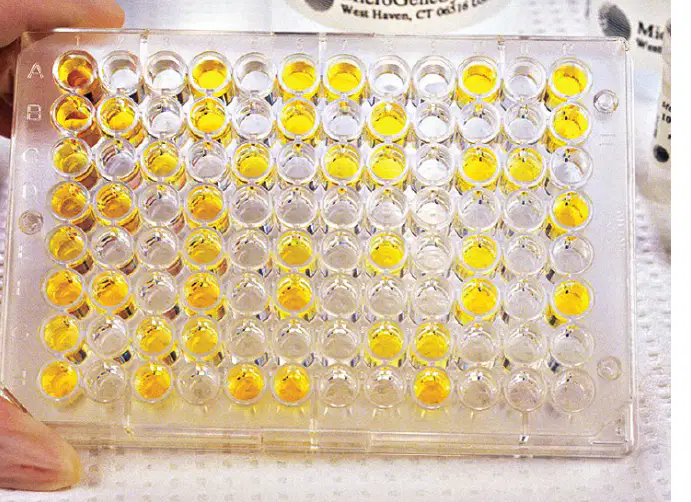
In the microtiter ELISA plate shown, colored wells indicate a ________ reaction.
positive
negative
neutral
inactive
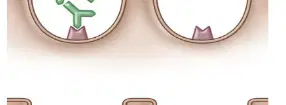
Which of the following steps is NOT part of the indirect ELISA process as shown in the diagram?
Addition of serum samples with unknown antibodies
Rinsing to remove unbound antibodies
Addition of indicator antibody linked to enzyme
Direct detection of antigen without antibody

In the indirect ELISA diagram, what does a colorless well indicate?
Positive for antibody
Negative for antibody
Explain the basic principles for the following differential, selective, and biochemical test: Growth on MacConkey agar.
MacConkey agar differentiates lactose fermenters from non-fermenters and selects for Gram-negative bacteria.
MacConkey agar is used to grow all types of bacteria without differentiation.
MacConkey agar selects for Gram-positive bacteria and differentiates glucose fermenters.
MacConkey agar is a non-selective medium used for fungal growth.
Explain the basic principles for the following differential, selective, and biochemical test: Growth on EMB agar.
EMB agar is selective for Gram-negative bacteria and differentiates lactose fermenters by color change.
EMB agar is selective for Gram-positive bacteria and differentiates glucose fermenters by gas production.
EMB agar is used to identify spore-forming bacteria based on colony morphology.
EMB agar is a non-selective medium that supports the growth of all bacteria equally.
Explain the basic principles for the following differential, selective, and biochemical test: Growth on MS agar.
MS agar is selective for Streptococcus mutans due to its ability to ferment mannitol and tolerate high salt concentrations.
MS agar is used to detect lactose fermentation in Gram-negative bacteria.
MS agar differentiates between aerobic and anaerobic bacteria based on color change.
MS agar is a general-purpose medium for all types of bacteria.
Explain the basic principles for the following differential, selective, and biochemical test: Growth on LB agar.
LB agar supports the growth of a wide range of non-fastidious bacteria and is not selective or differential.
LB agar is selective for Gram-negative bacteria only.
LB agar differentiates lactose fermenters from non-fermenters.
LB agar contains indicators for biochemical reactions.
Explain the basic principles for the following differential, selective, and biochemical test: TSI test.
The TSI test differentiates bacteria based on their ability to ferment sugars and produce hydrogen sulfide.
The TSI test identifies bacteria by their resistance to antibiotics.
The TSI test is used to detect the presence of viral particles in a sample.
The TSI test measures the pH of the medium to determine bacterial motility.
Explain the basic principles for the following differential, selective, and biochemical test: Gelatinase test.
The Gelatinase test detects the ability of bacteria to hydrolyze gelatin using the enzyme gelatinase.
The Gelatinase test identifies bacteria that ferment lactose.
The Gelatinase test determines bacterial resistance to antibiotics.
The Gelatinase test measures the production of hydrogen sulfide by bacteria.
Explain the basic principles for the following differential, selective, and biochemical test: Catalase test.
The catalase test detects the presence of the enzyme catalase by adding hydrogen peroxide and observing bubble formation.
The catalase test detects the ability of bacteria to ferment lactose, producing acid and gas.
The catalase test identifies bacteria based on their ability to reduce nitrate to nitrite.
The catalase test determines bacterial motility by observing movement in semi-solid media.
For the above tests, describe how different bacterial species would respond to each test. For example, how E. coli will grow on MacConkey agar, what type of colony they will produce, etc.
E. coli will grow on MacConkey agar and produce pink colonies due to lactose fermentation.
E. coli will not grow on MacConkey agar and produce no colonies.
E. coli will grow on MacConkey agar and produce colorless colonies.
E. coli will grow on MacConkey agar and produce green colonies.
According to the Specimen Identification Scheme, which of the following is a Gram-positive cocci that is strictly aerobic?
Micrococcus
Staphylococcus
Streptococcus
Veillonella
In the Specimen Identification Scheme, which bacteria is Gram-negative, aerobic, oxidase positive, and has a curviform shape?
Vibrio
Campylobacter
Pseudomonas
Shigella
According to the Specimen Identification Scheme, Bacillus and Clostridium are examples of Gram-positive bacilli that are _________
sporeformers
non-sporeformers
anaerobes
cocci
According to the Specimen Identification Scheme, Lactobacillus is a Gram-positive, non-acid-fast, regular bacilli.
True
False
Which of the following is NOT a Gram-negative, facultative anaerobic, oxidase negative, motile bacilli according to the Specimen Identification Scheme?
Escherichia
Enterobacter
Shigella
Proteus
According to the Specimen Identification Scheme, Corynebacterium is a Gram-positive, non-acid-fast, ________ bacilli.
pleomorphic
spore-forming
motile
acid-fast

