
 Worksheets
SEM Unit test study tool
Total questions: 102
Worksheet time: 53mins
What are dark areas that become apparent at the sun's photosphere?
sunspots
solar flares
coronal mass ejections
prominences
The outer layer of the Sun where energy moves in swirling currents is called what?
the corona
photosphere
chromosphere
core
All the sun's energy is made in which layer?
The core
The photosphere
The corona
The convective zone
What is the layer of sun just outside the core?
Radiation zone
Convective zone
Photosphere
Chromosphere
What happens in the convection zone?
Heat is transferred by convection
Energy is primarily radiated
There is little to no heat transfer
Nuclear fusion reactions
What is the name for the surface of the sun that is the first visible layer?
photosphere
corona
chromosphere
sunspot
The layer of the Sun's atmosphere where visible light is produced is called what?
the photosphere
the chromosphere
the corona
the convection zone
What is the outermost layer of the sun?
The outermost layer of the sun is called the corona.
The outermost layer of the sun is called the photosphere.
The outermost layer of the sun is called the chromosphere.
The outermost layer of the sun is called the convective zone.
What is the inner most layer of the sun?
The inner most layer of the sun is the core.
The inner most layer of the sun is the photosphere.
The inner most layer of the sun is the corona.
The inner most layer of the sun is the chromosphere.
The sun has how many interior (not visible) layers?
3
1
5
7
What is the second most inner layer of the sun?
The second most inner layer of the sun is the radiation zone.
The second most inner layer of the sun is the convective zone.
The second most inner layer of the sun is the corona.
The second most inner layer of the sun is the photosphere.
What are temporary phenomena on the Sun's photosphere that appear as dark spots?
sunspots
solar flares
coronal mass ejections
prominences
What moon phase would people on earth see?
The moon phase that people on Earth would see depends on the relative positions of the Earth, moon, and sun. The main phases are new moon, first quarter, full moon, and last quarter.
The moon is always full regardless of its position relative to the Earth and sun.
Only the new moon is visible from Earth at all times.
The Earth's position has no influence on which moon phase is observed.

What moon phase is this?
New Moon
First Quarter
Full Moon
Last Quarter

What moon phase is this?
Waning Crescent
Waxing Gibbous
New Moon
Full Moon
How long does it take for the moon to go through all lunar phases?
365 1/4 days
1 year
1 week
1 month
Which moon phase will occur next?
Waxing Crescent
New Moon
Full Moon
Waning Crescent
Which moon phase will occur before the one shown?
The moon phase that occurs before the one shown.
The moon phase that occurs after the one shown.
The moon phase that occurs during the same phase as the one shown.
The moon phase that follows the one shown.
What moon phase comes AFTER a New Moon?
Waxing Crescent
Full Moon
Waning Crescent
Waning Gibbous
How much of the moon is always lit by the sun?
The side of the moon that faces the sun is always lit, which is about half of the moon's surface at any given time.
The entire moon is always lit by the sun.
Only a quarter of the moon's surface is always lit by the sun.
The side of the moon that does not face the sun is always lit.
We always see the ______ side of the moon.
the near side
the far side
the hidden side
the dark side
The moon rotates and revolves at the ______ rate.
same
fast
slow
constant
Earth's revolution and tilt are the reason for what?
Seasons
Phases of the moon
Solar eclipses
Tidal patterns
Why does the sun appear to move across the sky each day from east to west?
Because the Earth rotates on its axis
Because the sun revolves around the Earth
Due to the Earth's revolution around the sun
Because the moon's gravitational pull affects the sun
Earth's rotation is the reason for what?
day and night
seasons
weather patterns
gravity
How long does it take Earth to make a complete rotation on its axis?
24 hours
12 hours
48 hours
7 hours
The hemisphere where you live is called what?
Northern Hemisphere
Southern Hemisphere
Eastern Hemisphere
Western Hemisphere
How long does it take the Earth to make one complete rotation?
The Earth takes approximately 24 hours to make one complete rotation.
The Earth takes approximately 48 hours to make one complete rotation.
The Earth takes approximately 12 hours to make one complete rotation.
The Earth takes approximately 23 hours to make one complete rotation.
How long does it take Earth to orbit the sun?
365 days
24 hours
30 days
100 days
What is the spinning motion of a planet on its axis called?
rotation.
revolution.
orbit.
precession.
What happens when the area in which you live tilts away from the sun?
A) It is summer
B) It is winter
C) It is spring
D) It is fall
Indirect Sunlight ______
when sunlight energy is spread out and has less energy; it hits Earth's surface at an angle.
is completely blocked by the atmosphere.
travels in a straight line without scattering.
concentrates and increases in energy.
The sun appears to rise in the ______.
East.
West.
North.
South.
Which correctly identifies the Northern Hemisphere?
Earth rotates ______.
every 24 hours.
every 12 hours.
every 6 hours.
every 48 hours.
What time of day would the sun cast its shortest shadow during the summer?
12:00 noon.
6:00 AM.
3:00 PM.
6:00 PM.
When it is spring in the Northern Hemisphere, it is ______ in the Southern Hemisphere.
fall
winter
summer
spring
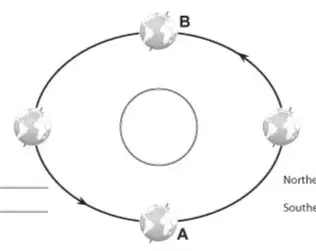
Position A represents ___ in the northern hemisphere.
Winter
Spring
Summer
Fall
Label the seasons for the Northern Hemisphere.
What causes the change in the length of shadows throughout the day?
Rotation of the Earth.
The movement of the moon.
Seasonal weather changes.
Refraction of sunlight by the atmosphere.
Where does the sun appear to set?
west.
east.
north.
south.
A long shadow indicates what times of day?
morning and evening.
noon.
midnight.
afternoon.
What happens as the day goes from morning to noon?
Shadows get shorter.
The sun starts to set.
Shadows fade away entirely.
The temperature decreases.
During what season is the sun highest in the sky?
Summer.
Winter.
Spring.
Autumn.
This occurs in June and marks the beginning of summer in the Northern Hemisphere. This is also the longest day of the year in the NH.
Winter Solstice
Summer Solstice
Spring Equinox
Autumnal Equinox
Winter Solstice occurs in ______ and marks the beginning of winter in the Northern Hemisphere. It is also the shortest day of the year in the NH.
December
June
March
September
Two times of year when the day and night lengths are about 12 hours. Equal day and night.
Equinox
Solstice
Vernal
Shadows
During the winter, days are . . .
shorter.
longer.
colder.
brighter.
During the summer, days are . . .
longer.
shorter.
colder.
brighter.
What happens to the hours of daylight throughout the year?
Starts low, then increases, then decreases again.
Starts high, then decreases, then increases.
Remains constant throughout the year.
Fluctuates randomly.
When the Sun is higher in the sky, shadows will be longer.
True
False
Where on Earth are days always 12 hours and nights always 12 hours?
on the equator.
at the poles.
in the polar regions.
in the Arctic circle.
Vernal equinox occurs in ______ and marks the beginning of spring in North America.
March
April
February
May
The Earth's tilt is parallel to the sun.
True
False
Time zones were created so that it would ______ directly overhead.
12pm.
6am.
6pm.
12am.
Autumnal equinox: This occurs in September and marks the beginning of fall in North America. The Earth's tilt is parallel to the sun.
True
False
Tropic of Cancer is in the ______.
northern hemisphere.
southern hemisphere.
around the equator.
tropical region.
Tropic of Capricorn is in the _______ hemisphere.
southern
northern
eastern
western
A leap year gives us one extra _______ every 4 years.
day
month
year
week
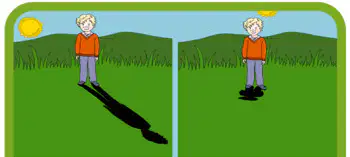
What time of day would you say it is in the picture on the right?
12 am (midnight)
8 am
8 pm
The first picture was taken at 8:00AM. The second picture was taken at 12:30 PM. Describe what the boy's shadow would look like at 2PM.
the shadow would be the same length as the picture on the left.
the shadow would be the same length as the picture on the right.
the shadow would be longer than the picture on the right, shorter than the picture on the left, but on the opposite side of how it is cast on the left picture.
the shadow would be longer than the picture on the left.
The moon _______ .
reflects light from the sun
produces its own light
shines by its own heat
glows by capturing starlight
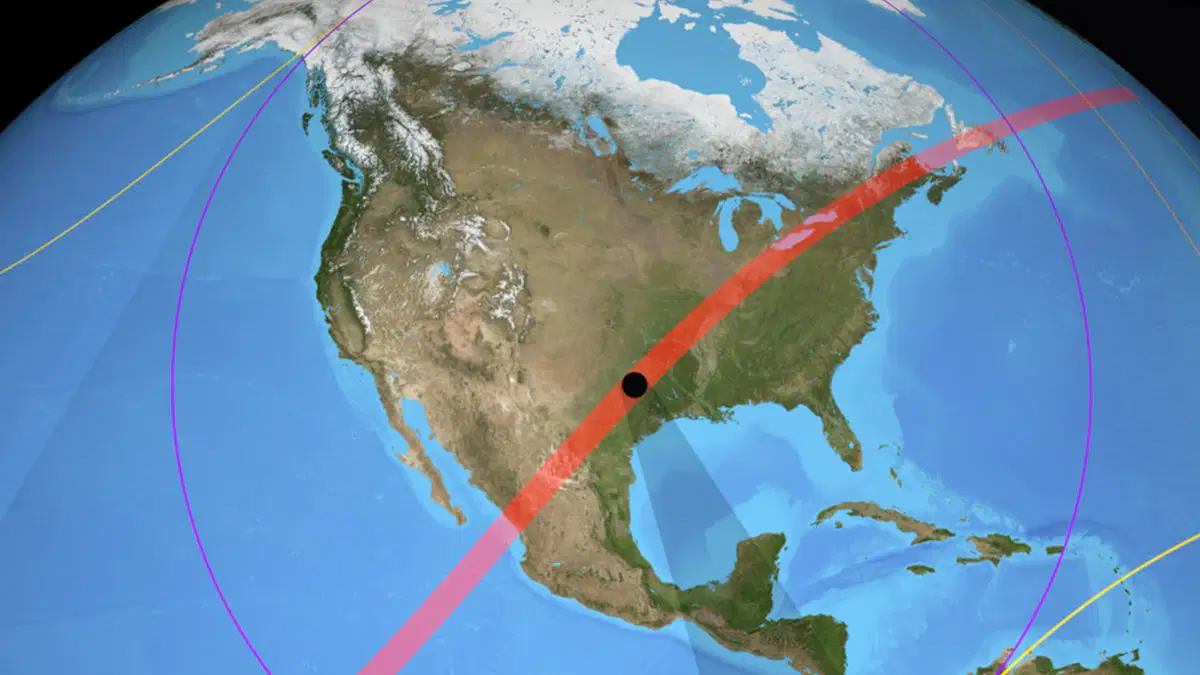
The picture shows a
Total Solar Eclipse on entire Earth
Partial Eclipse across Earth
Path of totality for a solar eclipse
Lunar Eclipse
Why do tides happen?
The moon and the sun's gravitational pull
Ocean currents affecting water movement
Wind and temperature differences causing water shifts
Earth's magnetic field influencing the ocean
How many hours does it take Earth to make one complete rotation?
24
12
48
36
How long does it take for Earth to orbit around the sun?
365 days
360 days
350 days
370 days
Waning _______
decreasing in size
growing
increasing
widening
Waxing _______
increasing in size
decreasing in size
erratic in size
steadily constant
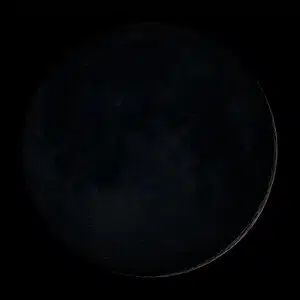
Identify the moon phase:
New Moon
First Quarter
Full Moon
Last Quarter
Moon phase in which all of the Moon appears to be illuminated (lit up).
Full Moon
New Moon
First Quarter
Waxing Crescent
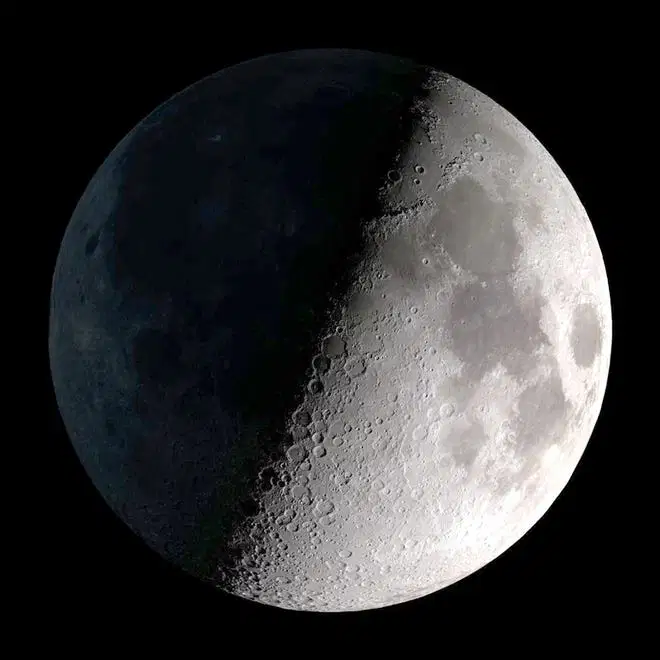
Which moon phase would we see from Earth in this picture?
Last Quarter
Half Moon
Waxing Gibbous
On average, about how many times in a month can we see a full moon?
1
0
2
3

Which moon phase would we see from Earth in this picture?
New Moon
Quarter Moon
Whole Moon
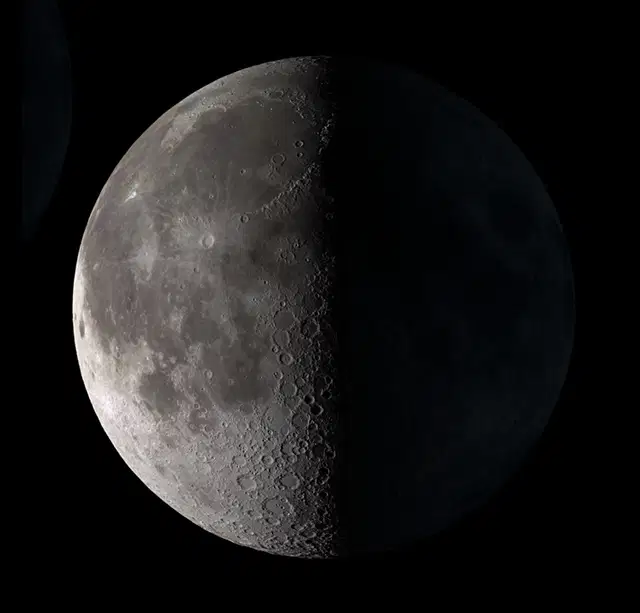
Which moon phase would we see from Earth in this picture?
First Quarter
Waxing Gibbous
Waning Crescent
Tides _______
rising and lowering of Earth's ocean waters
generation of Earth's ocean waters
regulation of Earth's ocean waters
initiation of Earth's ocean waters

Which moon phase would we see from Earth in this picture?
(a)
Lunar eclipse ______
the blocking of sunlight to the moon that occurs when Earth is directly between the sun and the moon
the alignment of the Earth between the sun and the moon that allows more sunlight to reach the moon
an event where the moon blocks sunlight from reaching the Earth
the occurrence of the moon partially occluding the sun's rays during sunrise
When can lunar and solar eclipses take place?
during a full moon only
during a new moon only
during a full and new moon only
never

The can only been seen during a full moon...
(a)

What event is being shown in the diagram?
(a)
Which creates a spring tide? a full moon or new moon
a full moon
new moon
What type of tide would happen if the Sun, Earth, and Moon were in this order?
(a)
Solar Eclipses happen during what type of moon?
(a)
What phase of the moon is viewed during a lunar eclipse?
(a)
The Gulf of Mexico _____ high and _____ low tide each day.
one
two
three
four
During a solar eclipse, where is the moon positioned?
behind the sun
behind the earth
between the sun and earth
between the earth and mars
The East and West Coast has _____ high and _____ low tides each day.
two
three
four
one
In a lunar eclipse, the _____ comes between the moon and the sun
Earth
red
planets
eclipse
How much time is in between each tide on average?
6 hours
12 hours
24 hours
1 hour
From the center outward, which of the following lists the "layers" of the Sun in the correct order?
core, radiation zone, convection zone, corona, chromosphere, photosphere
core, corona, radiation zone, convection zone, photosphere, chromosphere
core, radiation zone, convection zone, photosphere, chromosphere, corona
core, convection zone, radiation zone, photosphere, chromosphere, corona
What is the term for the path Earth takes as it revolves around the sun?
Equator
Rotation
Axis
Orbit
Which layer of the sun is visible during a solar eclipse?
Core
Radiation Zone
Corona
Photosphere
What is the phenomenon called when the moon passes directly between the Earth and the sun?
Solar Eclipse
Lunar Eclipse
Equinox
Solstice

What causes the variation in the length of day and night throughout the year?
The tilt of the Earth's axis
The Earth's rotation around the Sun
The distance from the Sun
The Moon's orbit

