
 Worksheets
Unit 2 Review
Total questions: 60
Worksheet time: 30mins
What element is in period 3 group 18?
Aluminum
Potassium
Argon
Neon
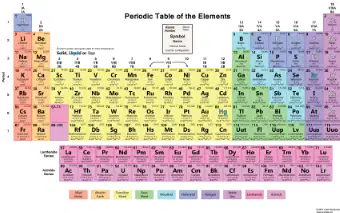
Refer to the periodic table of the elements. What element has the same number of energy levels as Silicon?
Sodium (Na)
Carbon (C)
Germanium (Ge)
Boron (B)
What are valence electrons?
The total number of electrons in an atom
The number of electrons in the outermost shell
The number of electrons in the second shell
The number of protons in the outermost shell
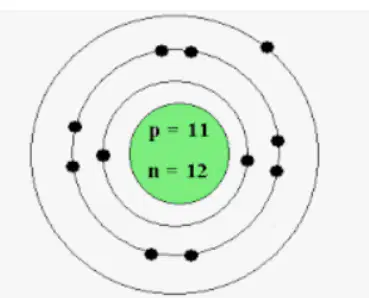
What group and period does this element belong in?
period 1 and group 3
period 3 and group 1
period 2 and group 3
period 3 and group 2
How many valence electrons and energy levels does lead (Pb) have?
4 valence electrons and 6 energy levels (orbitals)
6 valence electrons and 4 energy levels (orbitals)
5 valence electrons and 5 energy levels (orbitals)
5 valence electrons and 10 energy levels (orbitals)
How many valence electrons does chlorine (Cl) have?
6
16
7
17
An element’s reactivity and other chemical properties are determined by the number of…
isotopes it has
oxidation states
orbitals in an atom
valence electrons
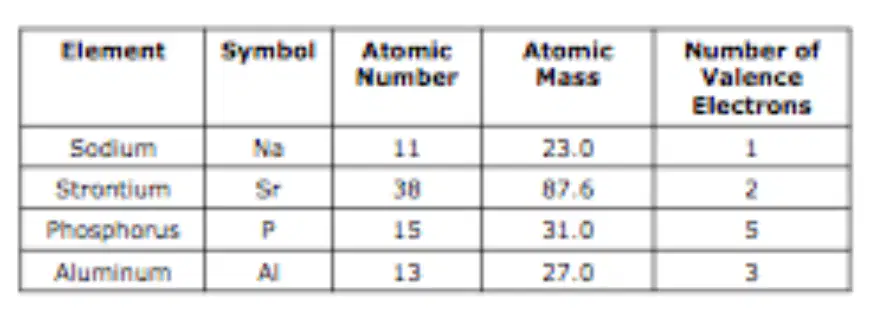
Based on this table it can be concluded that
Sodium is the most reactive
strontium is the best conductor
phosphorous is the least stable
aluminum has the most protons
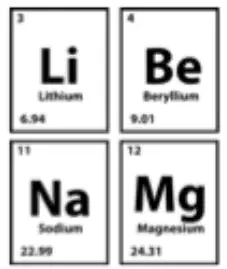
Which pair of elements have the same number of valence electrons? Elements shown: Lithium (Li), Beryllium (Be), Sodium (Na), Magnesium (Mg).
Lithium and Beryllium
Magnesium and Sodium
Lithium and Sodium
Magnesium and Lithium
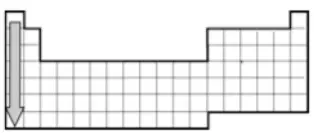
What do elements in group 1 have in common? (Diagram shows the group 1 column of the periodic table highlighted.)
Number of valence electrons
Melting point of the element
Number of energy levels
They are all Nonmetals
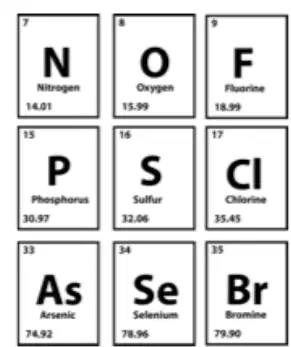
Which element would have similar properties to Sulfur? Elements shown: N, O, F, P, S, Cl, As, Se, Br.
Nitrogen
Oxygen
Flourine
Chlorine
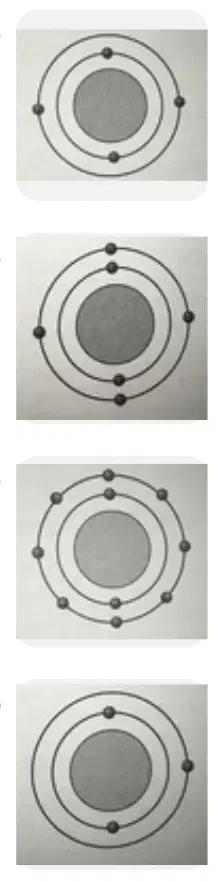
Which model represents the most reactive atom? From top to bottom, they are a, b, c, and d with different numbers of electrons in the outermost shell.
a
b
c
d
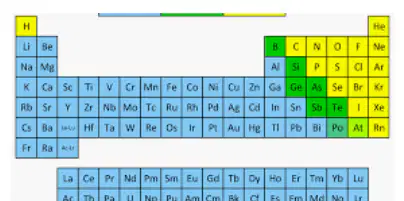
In which region would brittle nonconductors be located?
blue
green
yellow
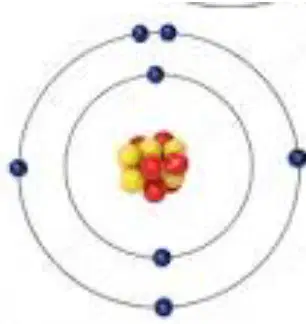
What period and group is the element in?
(Hint: the Bohr model shown has two energy levels and five valence electrons)
period 2; group 15
period 5; group 2
period 2; group 5
can't be determined
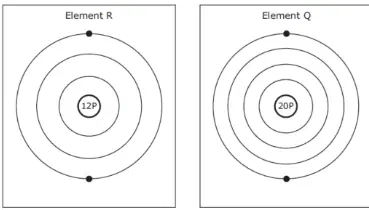
Element R and Element Q have the same number of valence electrons, but Element R has fewer energy levels than Element Q. Which statement best describes the positions of the two elements in the periodic table?
the two elements are in the same period, with element R the first element in the period and element Q the last element
the two elements are side by side in the same period, with element Q to the left of element R
the two elements are in the same group, with element R just above element Q
the two elements are in the same group, with element Q at the top of the group and element R at the bottom
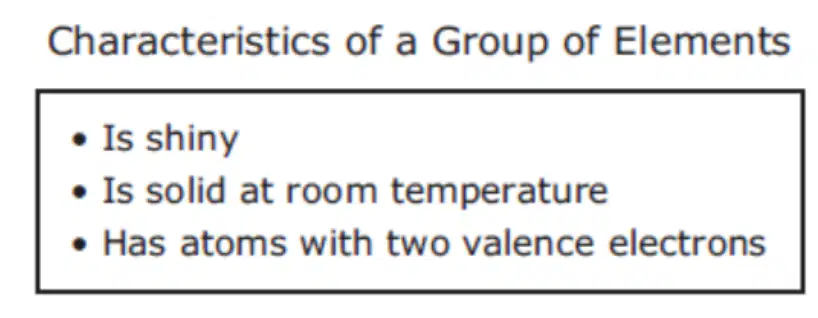
The periodic table is organized into groups and periods of elements.
The characteristics of a certain group of elements are listed in the image.
Which of these elements is in this group?
Lithium
Strontium
Aluminum
Silicon
A chemist is identifying the elements present in a sample of seawater. What characteristic of an element's atoms always determines the element's identity?
The number of neutrons.
The number of protons.
The number of valence electrons.
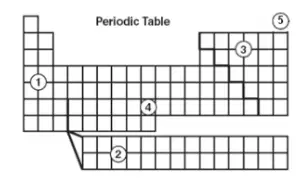
Use the Periodic Table diagram with five numbered regions (1–5). In which region would the most reactive metals be found?
1
4
5
3
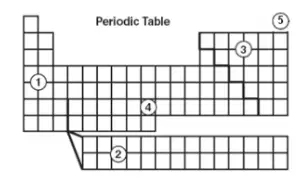
Use the Periodic Table diagram with five numbered regions (1–5). In which region would the least reactive elements be found?
1
4
3
5
Elements on the periodic table that have physical and chemical properties of both metals and nonmetals are called
metals
nonmetals
metalloids
transition elements
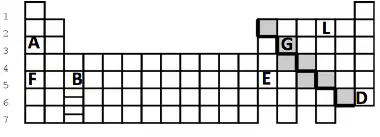
Refer to the periodic table diagram with lettered positions A, B, G, L, E, and D. Which element could be lustrous, brittle and a semiconductor?
A
B
G
L
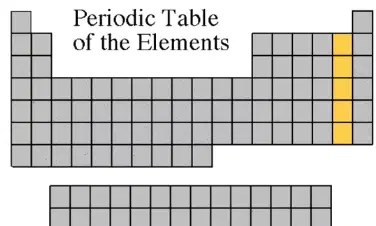
What is the name of the family that is highlighted on the periodic table diagram?
Alkali Metal Family
Halogen Family
Noble Gas Family
Transition Metal Family
What are the vertical columns on the periodic table called?
groups
periods
nonmetals
metals
metalloids
What are the horizontal rows on the periodic table called?
periods
groups
metals
nonmetals
metalloids
What do the groups on the periodic table tell us?
The number of orbits or energy levels
The number of valence electrons (electrons on the outer most shell)
What do the periods on the periodic table tell us?
The number of orbits or energy levels
The number of valence electrons (the electrons on the outer most shell)
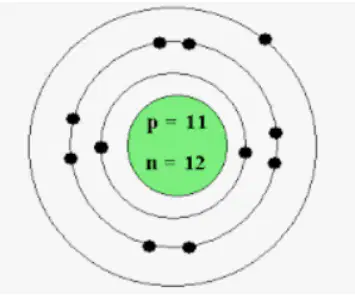
A Bohr model shows an atom with p = 11 and n = 12, and three energy levels with electrons arranged 2, 8, and 1. What group and period does this element belong in?
period 1 and group 3
period 3 and group 1
period 2 and group 3
period 3 and group 2
Match the following families to their typical number of valence electrons.
Alkali Metals
1 Valence Electron
Alkaline Earth Metals
2 Valence Electrons
Noble Gases
8 Valence Electrons
Halogens
7 Valence Electrons
Match the following families to their periodic table group numbers.
Alkaline Earth Metals
Group 2
Noble Gases
Group 18
Alkali Metals
Group 1
Halogens
Group 17
Choose the correct pair to complete the statement: Protons determine an element’s (a) _______ , while valence electrons determine its (b) _______.
identity; reactivity
mass; charge
charge; mass
density; conductivity
The central region of an atom where neutrons and protons are located is the ---
center
electron cloud
nucleus
core
What is the total charge on a neutral atom of Oxygen?
+8
-8
0
+16
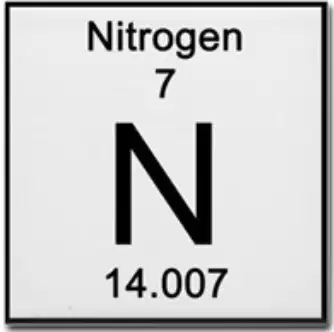
What is the number of protons that the element in this image contain?
7
14
15
18
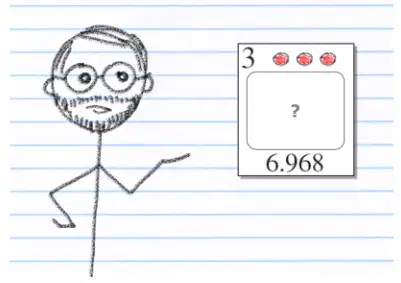
If an atom contains exactly three protons, then it's an atom of ---
lithium
carbon
gold
nitrogen
For an atom to be electrically neutral, it must contain the same number of ---
protons and electrons
nucleons and electrons
protons and neutrons
neutrons and electrons
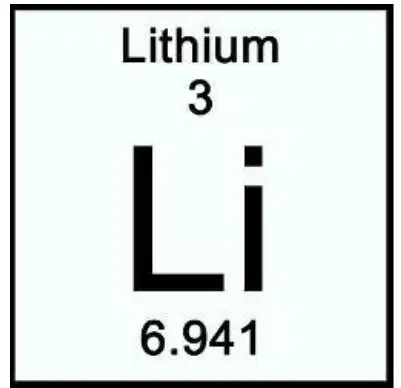
What is the charge on the NUCLEUS of lithium?
+3
0
+7
-3
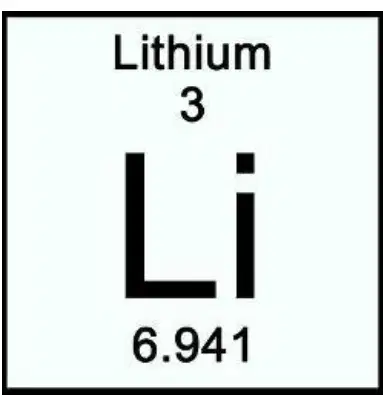
How many Neutrons are in one atom of Lithium?
7
6.941
3
4
Which part of an atom is used to identify it?
number of protons
number of electrons
number of neutrons
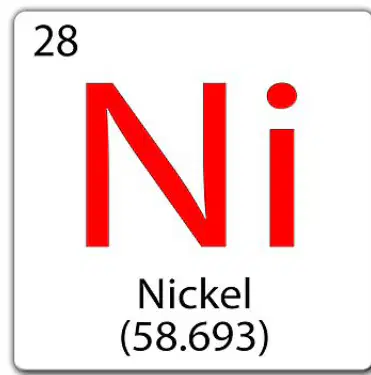
How many protons does an atom with an atomic number of 28 and a mass number of 59 have?
88
28
32
60
Which of the following is NOT an element?
Co
Ca
CO
C
Value representing the number of protons in an element
Mass Number
Atomic Number
Atomic Mass
Valence Electrons
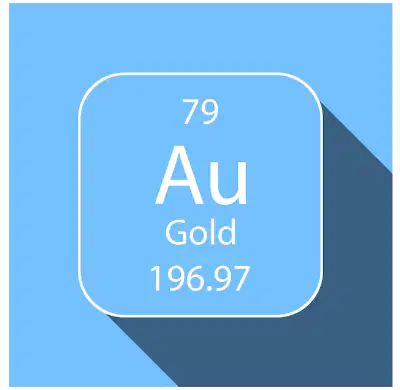
What is the mass number of Gold (Au)?
79
118
276
197
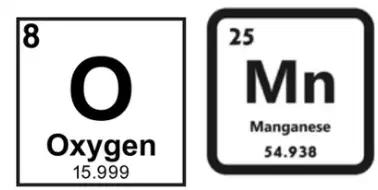
How many total protons are in one atom of Oxygen and one atom of Manganese combined?
33
71
20
38
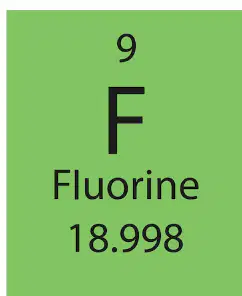
Fluorine has an atomic number 9 and atomic mass of 19.
How many protons and neutrons are found in the nucleus of Fluorine?
19
9
10
27
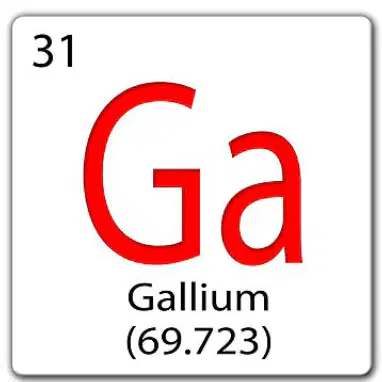
Gallium's atomic number 31 and atomic mass 70.
How many neutrons are in the atom of an element with 31 protons?
70
31
39
101
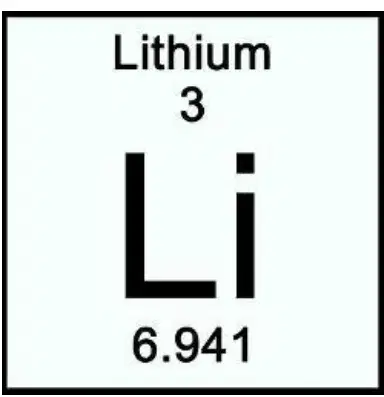
What is the total number of particles in an atom of Lithium?
10
7
3
4
Match the following
Neutron
No charge
Proton
Positive
Electron
Negative
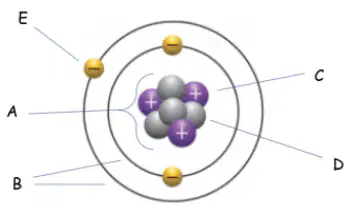
A student needs to know which element this is. What is the first thing she should be counting?
B
C
A
D
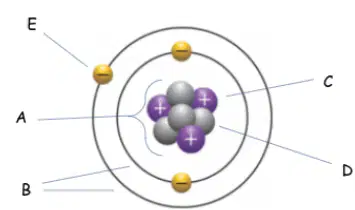
Match the following
A
Nucleus
B
Orbit
C
Proton
D
Neutron
E
Electron
The sum of the protons and neutrons in the nucleus of an atom
Mass Number (also called Atomic Mass)
Compound
Atomic Number
Electrons
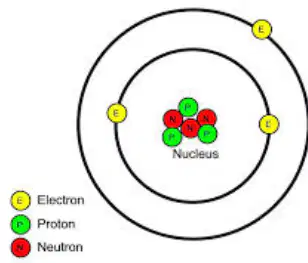
What element is represented in this Bohr Model?
Hydrogen
Lithium
Carbon
Aluminum
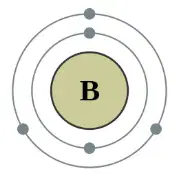
What are valence electrons?
electrons in the first level
electrons in the outermost energy level
the atomic number
electrons in the second energy level
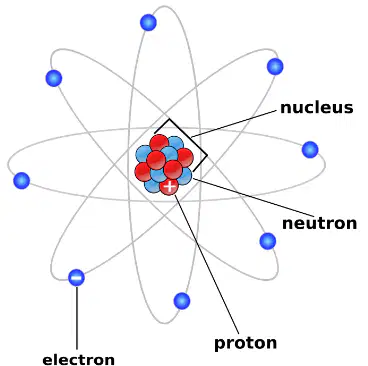
Which two subatomic particles make up the nucleus of an atom?
Protons and Neutrons
Electrons and Protons
Neutrons and Electrons
Protons and Electrons
Why do scientists use models to study atoms?
Atoms make up everything so they are impossible to study
There are way too many atoms to study
Atoms are too small to study directly
Atoms are too far away to study directly
Which of the following statements is true about protons?
Protons are inside the nucleus and have no charge.
Protons are outside the nucleus and have a negative charge.
Protons are outside the nucleus and have no charge.
Protons are inside the nucleus and have a positive charge.
How do electrons compare to protons?
Electrons have the same mass and charge as protons
Electrons have the same mass as protons but an opposite charge.
Electrons have very little mass compared to the protons but the same charge.
Electrons have very little mass compared to the protons and opposite charge.
Which of the following is a way in which elements and compounds are similar?
Elements and compounds are both made up of different kinds of atoms.
Elements and compounds are listed on the periodic table.
Elements and compounds are pure substances.
Elements and compounds can both be broken down by physical means.
Air is made up of molecules of different gases that are not joined chemically. Which term best describes air?
element
compound
pure substance
mixture
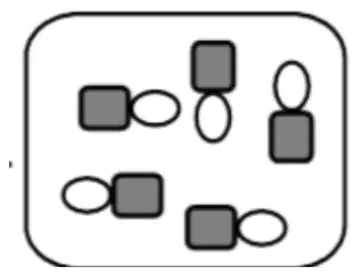
What type of matter is this?
mixture
element
compound
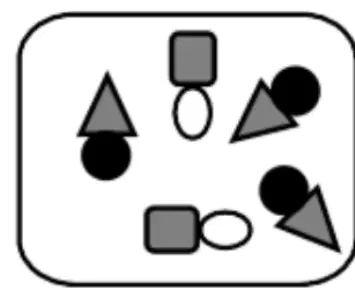
What type of matter is this?
element
compound
mixture

