
 Worksheets
2nd Graded Test
Total questions: 117
Worksheet time: 3600secs
It is one of the most important aspects in the management of investigation which reflects not only the important account of the investigation but also the quality of the investigation service:
Poor record-keeping
Record-keeping
Incomplete record-keeping
No record-keeping
Good record-keeping
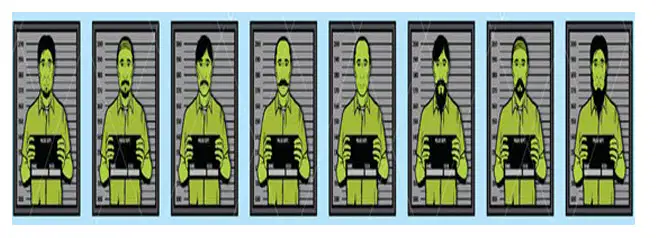
Identify the police procedure depicted below:
Cartographic sketch
Police line-up
General photographs
Modus operandi file
Rouge’s gallery
Objectives under LOI 03-09 regarding the “Procedure in the Submission of
Tenprint Cards and Latent Prints to the PNPCL for Encoding in the AFIS”:
1) Proper lifting of prints from the crime scene if the case is neither “sensitive”
or “sensational”
2) Proper lifting of prints from recovered evidence if case is neither “sensitive”
or “sensational”
3) Timely submission of processed tenprints to nearest Crime Lab unit
4) Timely submission of latent prints to nearest Crime Lab unit
5) Proper processing of tenprints during “booking”
c. 1, 3, 5
d. 1, 3
a. 1, 2, 3, 4, 5
b. 1, 2, 3, 4
e. 2, 4
NOT a requisite in preparing and taking a “dying declaration” (Sec 37, Rule 130, Rules of Court):
Declaration from dead victim
Declaration refers to the cause and surrounding circumstances of such death
Death is imminent and the declarant is conscious of that fact
Declaration relates to facts which the victim is competent to testify to
Declaration is offered in a case wherein the declarant's death is the subject of the inquiry
Evidence is the means sanctioned by the rules (under Sec 1, Rule 128, Rules of Court) of ascertaining in a judicial proceeding the truth respecting a matter of fact. If the suspect has NO RIGHT to be in area, the evidence: Which of the following combinations is correct?
1, 3, 5
2, 3, 4
1, 2, 3
3, 4, 5
2, 4
Not among the activities in gathering of investigative leads:
Conversation with merchants, traders, vendors or other non-criminal informants who may aid in the recovery of stolen property
Utilizing informants of a criminal background, paid or otherwise in obtaining information of criminal activities
Conducting thorough neighborhood search for witnesses or those who may provide any type of pertinent information
Appealing to the public for information by utilization of the media or other sources
Obtaining and service of warrant of arrest and/or search warrant
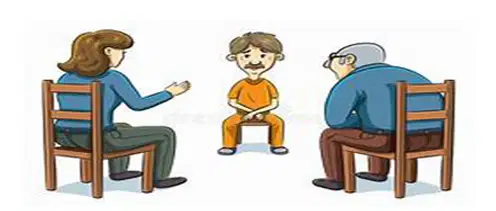
Identify what the image below projects:
Custodial investigation
Criminal investigation
Crime scene investigation
Crime investigation
Homicide investigation
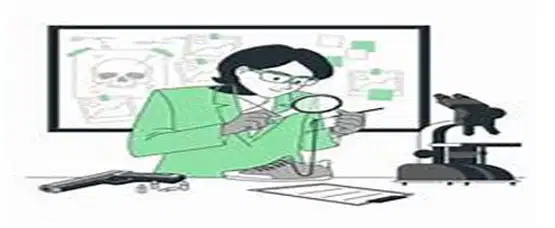
Identify what the image below projects:
Forensic investigation
Forensic science
Microscopy
Firearm examination
Crime scene investigation
Most common examples of associative or corroborative evidence found by investigators:
Hair and fiber
Tool marks and Hair shed at a scene
Latent fingerprints
Blood stain and seminal fluid
Paint and glass transfer
Rationales behind the rule “Never conduct, or let anyone conduct, an interview if the interviewer has not gone to the Crime Scene”
1, 2
1, 5
2, 4
3, 5
1, 4
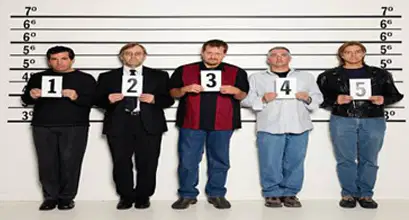
Identify the police procedure depicted below:
Wanted persons poster
Rouge's gallery
Modus operandi file
Police line-up
Police line
Among the factors in determining the value of associative evidence:
Class characteristics includes evidence that can only be associated within a group
Specificity or degree of identity of the evidence
Any physical evidence that links an individual to a crime scene
Individual characteristics contain marks or characteristics that are unique to the object
All associative evidence is considered unreliable until it has been tested
Methods and techniques in reactive investigation:
Crime Scene Investigation; Witness Interviews; Forensic Analysis; Case Reviews
Crime Mapping; e-Wanted Persons Information System; e-Rouge’s Gallery; e-Subpoena System
Rapid Response; Emergency Communications; Specialist Units; Technology Use
Surveillance Operations; Casing Operations; Undercover Operations; Infiltration Operations; Human Intelligence
Data Analysis; Sting Operations; Buy-Bust Operations; Entrapment Operations

Identify what the image below projects:
Crime scene investigation
Forensic investigation
Forensic science
Microscopy
Firearm examination

Identify what the image below projects:
Criminal investigation
Crime investigation
Homicide investigation
Custodial investigation
Crime scene investigation
The utilization of instruments, techniques and technology in the analysis of evidence related to the investigation of criminal cases:
Instrumentation
Forensic investigation
Forensic science
Criminalistics
Crime scene investigation
Primary types of investigation:
(1) Information consisting of knowledge gathered by direct observation, or those knowledge communicated by a witness to the investigator; (2) Interview (and Interrogation) through questioning of a person relative to the incident under investigation; (3) Instrumentation by the use of instruments in the conduct of forensic examination of evidence
(1) Reactive investigation to address crimes that have already occurred; (2) Proactive investigation involving anticipated criminal activity; (3) Preventive investigation through deterrence by arresting the criminal and aggressive prosecution
(1) Initial investigation which is the first exposure of a criminal offense to the investigative effort; (2) Follow-up investigation regarding a continuing inquiry of all facts, leads and other types of information stemming from the preliminary investigation; (3) Concluding investigation concerning the preparation of a solid case to maximize the probability of a conviction
(1) Crime investigation regarding the reported/discovered incident to determine if a crime was committed and, if so, the circumstances behind the incident; (2) Crime scene investigation necessitating the methodical approach to the scene for the necessary scientific processing for forensic evidence; (3) Criminal investigation through the use of clear and convincing evidence to successfully identify and prosecute the perpetrator
(1) Identifying the suspect/s by name and personal circumstances; (2) Locating and apprehending the identified suspect/s; (3) Gathering and presenting evidence to establish the guilt of the suspect accused of committing the crime
Principles behind the rule 'Make him admit something, no matter how small or trivial': 1) Securing the first admission is the biggest stumbling block in dealing with tough suspects. 2) It is a systematic questioning of all persons living, or frequenting the area. 3) Obtain information regarding the innocence or guilt of the subject. 4) The questioning will lead wayward for the interrogator. 5) Usually, the first admission will lead to another. Which of the above are principles behind the rule?
3, 4
5, 1
2, 3
1, 2
4, 5
Phases of investigation:
(1) Information consisting of knowledge gathered by direct observation, or those knowledge communicated by a witness to the investigator; (2) Interview (and Interrogation) through questioning of a person relative to the incident under investigation; (3) Instrumentation by the use of instruments in the conduct of forensic examination of evidence
(1) Reactive investigation to address crimes that have already occurred; (2) Proactive investigation involving anticipated criminal activity; (3) Preventive investigation through deterrence by arresting the criminal and aggressive prosecution
(1) Initial investigation which is the first exposure of a criminal offense to the investigative effort; (2) Follow-up investigation regarding a continuing inquiry of all facts, leads and other types of information stemming from the preliminary investigation; (3) Concluding investigation concerning the preparation of a solid case to maximize the probability of a conviction
(1) Crime investigation regarding the reported/discovered incident to determine if a crime was committed and, if so, the circumstances behind the incident; (2) Crime scene investigation necessitating the methodical approach to the scene for the necessary scientific processing for forensic evidence; (3) Criminal investigation through the use of clear and convincing evidence to successfully identify and prosecute the perpetrator
(1) Identifying the suspect/s by name and personal circumstances; (2) Locating and apprehending the identified suspect/s; (3) Gathering and presenting evidence to establish the guilt of the suspect accused of committing the crime
It does not of itself conclusively establish a disputed fact but merely creates an
inference (notion/idea) or presumption of its existence:
1) Circumstantial evidence
2) Corroborative evidence
3) Associative evidence
4) Hearsay evidence
5) Indirect evidence
a. 1, 2
b. 2, 3
c. 3, 4
d. 4, 5
e. 5, 1
General stages of investigation include:
a. Crime investigation regarding the reported/discovered incident to determine if a
crime was committed and, if so, the circumstances behind the incident; (2) Crime
scene investigation necessitating the methodical approach to the scene for the
necessary scientific processing for forensic evidence; (3) Criminal investigation
through the use of clear and convincing evidence to successfully identify and
prosecute the perpetrator
b. Initial investigation which is the first exposure of a criminal offense to the
investigative effort; (2) Follow-up investigation regarding a continuing inquiry of all
facts, leads and other types of information stemming from the preliminary
investigation; (3) Concluding investigation concerning the preparation of a solid case
to maximize the probability of a conviction
c. Information consisting of knowledge gathered by direct observation, or those
knowledge communicated by a witness to the investigator; (2) Interview (and
Interrogation) through questioning of a person relative to the incident under
investigation; (3) Instrumentation by the use of instruments in the conduct of
forensic examination of evidence
d. Reactive investigation to address crimes that have already occurred; (2) Proactive
investigation involving anticipated criminal activity; (3) Preventive investigation
through deterrence by arresting the criminal and aggressive prosecution
e. Identifying the suspect/s by name and personal circumstances; (2) Locating and
apprehending the identified suspect/s; (3) Gathering and presenting evidence to
establish the guilt of the suspect accused of committing the crime
Typical gaps noted on the part of investigation units/offices include: No proper turn-over of case/case folder between the outgoing and the incoming investigators, No investigator assigned on the case that was handled and left by the previous investigation, Frequent change of investigators brought about by reassignment, Poor record-keeping/documentation, and No crime was reported. Which of the following options includes all the typical gaps noted above?
a) a. 1, 2, 3, 4, 5
b) d. 1, 3
c) b. 1, 2, 3, 4
d) c. 1, 3, 5
e) e. 2, 4
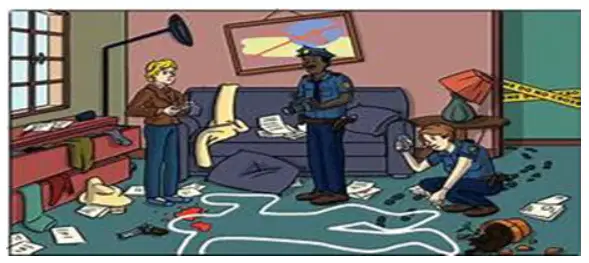
Identify what the image below projects:
Crime scene investigation
Custodial investigation
Homicide investigation
Crime investigation
Criminal investigation
To avoid overload and mismanagement of the investigation of cases:
The investigation workload should be evenly distributed to the investigators
In order to avoid repetition of recurrent lapses and to ensure a systematic case management, it is imperative to establish mechanism which prescribes the guidelines on the transfer of investigators
Non-duty investigators may not be required to attend daily formations or personnel accounting, however, they shall be on call anytime of the day and shall be ready to take cognizance of any new criminal cases to be assigned by the Chief, Inves Sec and the COP
There should be at least one (1) duty investigator to render duty at the police station of a 12-hour shift, who shall take charge of cases that requires immediate action while all other investigators shall conduct follow-up investigation of their assigned cases
All Chiefs of Investigation Offices/Units nationwide shall closely monitor and supervise the IOC Monitoring Sheet and shall sensibly distribute all cases to its IOCs and diligently monitor the status of these cases on a monthly basis
Responsibility and accountability of unit commanders and concerned supervisors for non-observance of DIDM ID # 2017-16, dtd 31 May 2017:
Lapse of judgement
Unlawful performance of duty
Chain of command
Command responsibility
Irregularity in the performance of duty
In the McKinsey 7S Framework, 'Shared Values' are considered the:
Customer satisfaction metrics
Core beliefs that guide the organization's actions
Financial targets
Marketing strategies
A firm introduces a new corporate face focusing on global expansion. This primarily impacts which element?
Skills
Staff
Structure
Strategy
After a merger, a company needs to integrate two different corporate cultures. This challenge is related to:
Structure
Systems
Skills
Shared Values
To stay competitive, a company focuses on innovation and flexibility. This change is most associated with which 7S element?
Structure
Strategy
Systems
Style
Which 7S element is likely the focus if a company is enhancing its onboarding and employee development programs?
Style
Systems
Structure
Staff
The 'Skills' element in the McKinsey 7S Framework is concerned with:
Employee satisfaction
Organizational structure
Marketing techniques
Employee competencies and capabilities
A business decides to implement a new technological breakthrough in their operations. This change is most closely related to which 7S element?
Systems
Staff
Structure
Skills
A company facing high employee turnover should reassess which 7S elements?
Staff and Style
Systems and Structure
Strategy and Skills
Shared Values and Skills
An organization needs to improve its decision-making process. Which 7S element should it focus on?
Style
Systems
Skills
Structure
To enhance market responsiveness, a company decentralizes its decision-making. This is an adjustment to which element?
Structure
Strategy
Systems
Skills
When aligning new strategic goals with existing processes, a company is primarily dealing with:
Systems and Strategy
Staff and Style
Structure and Skills
Shared Values and Systems
Which of the following best describes the 'Strategy' element in the McKinsey 7S Framework?
The daily operations plan
The overarching plan for achieving long-term goals
The physical layout of the office
The technological tools used
The 'Systems' element in the McKinsey 7S Framework refers to:
Formal and informal procedures
IT infrastructure
Market strategy
Organizational culture
Which of the following is NOT one of the 7S in the McKinsey 7S Framework?
Systems
Solution
Structure
Strategy
A company emphasizes collaborative, coaching and team approach. This primarily reflects changes in which 7S element?
Systems
Staff
Strategy
Style
The introduction of a new performance management system primarily affects which element?
Style
Structure
Staff
Systems
When a company shifts from a hierarchical to a flat organizational design, it is altering its:
Structure
Strategy
Style
Systems
If employees are unclear about the company’s subordinate goals, which 7S element needs to be addressed?
Strategy
Skills
Shared Values
Systems
To improve customer satisfaction, a company invests heavily in employee training. This action pertains to:
Structure
Skills
Strategy
Systems
In the McKinsey 7S Framework, 'Style' primarily pertains to:
Product design
Market segmentation
Management and leadership approach
Office layout
The 'Shared Values' element in the McKinsey 7S Framework refers to:
Fundamental beliefs and attitudes
Marketing tactics
Financial goals
Organizational objectives
Which element in the McKinsey 7S Framework focuses on the organization's hierarchy and reporting lines?
Strategy
Style
Structure
Systems
The McKinsey 7S Framework is primarily used for:
Evaluating financial performance
Aligning organizational elements to achieve objectives
Developing new product lines
Conducting market research
If a company is struggling with ineffective communication across departments, which 7S element is likely misaligned?
Strategy
Structure
Skills
Systems
It is one of the human mental activities, which critical thinking skill is observed. This is very essential in argumentative approaches either utilizing inductive or deducted logical processes.
Directional reasoning
Right reasoning
Reactional thinking
Conclusive reasoning
PCMS Tawas is tasked to investigate the occurrence of frequent robbery in the Barangay. The best logical argument and approach that he does to establish the result of his investigation is what?
Logical statement of the witnesses
Deductive logic
Inductive logic
Logical structure of the investigative proceeding
PEMS Duds is engaged in an arising situation in their Unit. He happens to be the senior PNCO thereat, and his COP is not around. Considering that he needs to do something, how can he apply critical thinking skill on that particular moment, so that tension caused by the arrogant client with his family be initially pacified?
He needs to communicate well with the people he has encountered in the Office.
He should entertain them with humorous words.
He just sticks on the approach showing maximum tolerance.
He needs to refer them to the COP by giving COP's number.
Being able to think critically is important in virtually every industry and applicable across a wide range of positions.
The statement is reliable.
The statement is absolute.
The statement is false.
The statement is true.
Besides critical thinking, what is it that is also significant in conducting police operation. This should not be also put into oblivion as one of the tools a police officer can use in his job
Common understanding
Policy and Guidance
Common sense
Common intelligence
PEMS Paga has been twenty years in the police service. His experiences in problem solving have provided him the necessary skills to settle problematic issues he has encountered every day. One of the techniques that he is very much comfortable
Being comfortable with cognition
Being comfortable with friendship
Being comfortable with ambiguity
Being comfortable with trust
PEMS Tandua has received information. The bulks of information are consistent, and thus apparently reliable. However, PEMS Tandua has been also aware that in dealing with information reliability is just one side of the coin. The other is validity. In critical thinking analysis, what is more expected of PEMS Tandua?
To be logical
To be consistent
To be open-minded
To be analytic
Who is that Industrial Psychologist who offered the definition of critical thinking as “a mental process that involves deep cognitive functions resulting in wise decision making.”
Sigmund Freud
Douglas Scriven
Herbert L. Ulayao
Nao Chen Wang
In critical thinking analysis, what is the C that pertains to the questioning attitude of the child?
Curiosity
Competence
Coherence
Commitment
PCMS Basahi failed in his first attempt to pass the Bar exam. He was frustrated and engaged in too much intoxication. His family and work obligation were not properly managed as well. His COP learned what is happening to one of his competent senior PNCOs. How can the COP offer a help to that problematic policeman with deep cognitive functioning?
The COP must talk with that policeman in public.
The COP must visit the house of the policeman and have an ambiance of friendship with that policeman by showing empathy and listening skills with the direct support of the family.
The COP must refer the case to the CHS and HS for further diagnostic and spiritual approaches.
The COP must set a wellness activity together with other members of the Station to give that policeman explain his condition.
PCMS San Diego is so intense in his search of the problem. In the 7 steps, he is dealing with qualifying the nature of the problem.
The statement is false
The statement is quite relatively true.
The statement is quite false.
The statement is true.
Except one, all of the enumerated concepts are included in the 5 Cs of critical thinking analysis:
Creativity
Consistency
Coherence
Clarity
Curiosity
Doing critical thinking analysis is one way of showing one’s expertise in whatever endeavor he is engaged. He must always adhere to methodology in his dealing to make sure he does something beyond the way of the ordinary people. What are the two words that pertains to “going beyond the way?”
Method and expertise
Meta and ados
Metas and ado
Metanol and adology
Dedicating oneself to ongoing learning and improvement is necessary in critical thinking analysis. What is it on the enumerated Cs of critical thinking analysis?
Clarity
Commitment
Coherence
Consistency
This is one of the critical thinking skills that allows police office to identify trends and patterns in data.
Problem solving
Decision making
Open-mindedness
Analytic thinking
PSMS Huk is so filled with a lot of concerns in the office and in his familial obligation. His mind cannot operate well, and thus affecting his judgment towards his familial and organizational obligation. To regain his spirit, he decides to have a walk in the woods to emancipate himself from that cognitive bombardment. What can PSMS get from that approach?
Reflective thinking
Pre-judging capacity
Profound rational activities
Cognitive exercises
Confronted with various alternatives, what kind of critical skills is required to someone to do?
Analytic thinking
Problem solving
Decision making
Curiosity
It is defined as “a mental process that involves deep cognitive functions resulting in wise decision making.”
Critical thinking ability
Critical thing skill
Critical thinking analysis
Critical thinking modality
The COP of a certain station in Pasig noticed that one of the Patrolman has been consistent being late in assuming police duty in the Station. Aware of the obligation of the personnel having rank of PSMS, he instructed PSMS Shy to deal with that Patrolman apparent misbehavior. How can PSMS Shy respond on that situation?
PSMS Shy will initiate filing of admin case, so that the Patrolman can have a good chance to explain himself.
PSMS must first converse with amicable mood. Invite the Patrolman to tell the story on what has been happening in him with empathic mood of listening as one way of showing his critical thinking skills.
PSMS Shy just accepts the instruction and must approach that Patrolman with intimidation to cease such bad conduct or else the COP will reprimand him.
PSMS Shy shall conduct investigative approach to solicit information of the private activity of that Patrolman causing him to be consistently late in the Station.
Critical thinkers can also be considered expert on their chosen fields such as in policing job. What are the words attached to the understating of the word, “expert.?
Nun and perior
Non and periori
Non and perio
Non and perior
Elements of public speaking except.
Whom
Who
What
When
Effect
The context of any communication needed in an environment except.
Noise
Event
Attitude of sender and receiver
Time
Place
What factor do you think would distract effective listening
Listen for ideas not just words
Stop talking
Prepare yourself to listen
Be patient
Don’t become irritated
The channel responsible for delivery of message forms, except.
Magazine
Body language
Internet, Radio
Letter, Post office
Good listeners are more effective than poor listeners. Which of the following are effective for listeners?
Keep quiet
All of the Above
Try taking note
Active listening
Ask Question
An effective communicator should be guided by the following process in order to reduce misunderstanding by the receiver.
None of the Above
All of the Above
Understand their audience
Choose appropriate communication channel
Encodes the message
Which of the following effective communication in an organization is not important.
Serves as the foundation of every facet of business.
None of the above
Communication is a tool that helps in socialization.
Helps managers to perform basics function of management.
Helps in building people’s attitude.
The following categories of communication except.
Communication channel
Written Communication
Spoken or Verbal
Visualization
non-Verbal
The act of transferring or conveying information from one person to another.
Communication
Debate
Socialization
Argumentation
Listening
The Communication process responsible for the delivery of the chosen message form.
Channel
Receiver
Medium
Sender
All the above
In the communication process who decides on the message?
Channel
Feedback
Sender
Encode
Receiver
DOs in public speaking are the following except:
Speak clearly & loud enough
Have eye-contact
Be respectful
Know your message
Avoids extra movements
The different categories of communication are the following:
Non-verbal
Visualization
Spoken or Verbal
All of the Above
Written communication
In your respective office what medium is used to send messages?
All the above
Face to Face
Form of speech
Letter
One of the communication process responsible for the delivery of the chosen message form like: post office, internet, radio etc.
Sender
Feedback
Medium
Channel
Receiver
How to institute criminal actions where preliminary investigation is not required?
Filing of complaint directly in MTC/MCTC
Both a and b
Filing of complaint with the office of the prosecutor
None of the above
Who files the information in court?
None of the above
The judge
The complainant
The prosecutor
What is the quantum of evidence being determined in preliminary investigation?
Proof beyond reasonable doubt
None of the above
Preponderance of evidence
Prima facie evidence with reasonable certainty of conviction
Warrant of arrest is valid throughout the Philippines.
False
None of the above
True
Immaterial
Complete name of AC, PNP
(a)
Miranda rights pertain to the right to remain silent and right to counsel
False
True
Immaterial
None of the above
The reasonable time of the arrest is relevant in “in flagrante delicto” arrest.
None of the above
Immaterial
False
True
Complete name of the Chief, NHQ-NSUs TC
(a)
Complete name of Director NPTI
(a)
How to institute criminal actions where preliminary investigation is required?
Filing of complaint with the office of the prosecutor
Filing of complaint directly in MTC/MCTC
Both a and b
None of the above
In cases where the penalty provided by law is Reclusion Perpetua or life imprisonment, the right to bail is a matter of __________ when the evidence of guilt is strong.
Privilege
None of the above
Discretion
Right
What penalty for the crime/offense is required for the conduct of preliminary investigation?
At least 6 years and 1 day
At least 1 year and 1 day
At least 4 years and 1 day
None of the above
Evidence obtained in violation of the constitutional rights of a person and the relevant provisions in valid warrantless arrest/search is inadmissible in evidence pursuant to the principle of a fruit of a ____________________.
Solitary confinement
None of the above
Irrelevant evidence
Poisonous tree
INDEX AND NON INDEX CRIMES SUCH AS ______, EXCEPT ______ ARE THE MOST FREQUENTLY RECORDED CRIMES AT THE LOCAL LEVEL.
MURDER
THEFT
UNFAIR LABOR PRACTICE
NONE OF THE ABOVE
ROBBERY
THE FOLLOWING ARE SOME OF THE KINDS OF CONFLICT __________, EXCEPT
POLITICAL AND EXTRA JUDICIAL KILLINGS
RIDO OR CLAN WARS
RACIAL M DISCRIMINATION
NONE OF THE ABOVE
IDEOLOGY
CONFLICT OR VIOLENCE IS USUALLY SEEN AS ______ OR PEACE AND ORDER PROBLEMS AT THE LOCAL LEVEL
DISCRIMINATORY ACTS
CIVIL ACTS
CRIMINAL ACTS
NONE OF THE ABOVE
ADMINISTRATIVE ACTS
THESE ARE THE TWO {2} MAJOR STATUTES THAT SUPPORTS THE PEACE
AND ORDER EFFORT OF THE PHILIPPINE GOVERNMENT.
A. LOCAL PEACE AND ORDER COUNCILS [ EXECUTIVE ORDER 309 XXII, ART. 186 OF RA 7160].
B. REPUBLIC ACT 6975
C. REPUBLIC ACT 8550
D. A AND B ONLY
E. NONE OF THE ABOVE
IN LUZON AND VISAYAS REGION, THE ROOT CAUSES OF
INSURGENCY/CONFLICT IS __________________________.
A. POLITICS
B. IDEOLOGY
C. POOR GOVERNANCE
D. POVERTY
E. NONE OF THE ABOVE
IT IS THE FIRST PEACE PARADIGM WHICH IS THE TRADITIONALLY
DOMINANT FRAMEWORK I N THE FIELD OF INTERNATIONAL RELATIONS
A. POWER POLITICS
B. WORLD ORDER
C. CONFLICT RESOLUTION
D. TRANSFORMATION
E. NONE OF THE ABOVE
THE ROOT CAUSES OF CONFLICTS IN THE PHILIPPINES ARE THE
FOLLOWING ______, EXCEPT
A. MASSIVE AND ABJECT POVERTY
B. POOR GOVERNANCE
C. INJUSTICE
D. LACK OF EMPLOYMENT
E. NONE OF THE ABOVE
THE EVERYDAY USE OF THE “DO NO HARM” PRINCIPLE IN CONLICT
SENSITIVITY PEACE PROMOTING PARADIGM BY THE INTERNATIONAL
COMMUNITY TENDED TO INTERPRET SUCH PRINCIPLE AS
A. NEVER COMMIT A WRONG
B. SIMPLY AVOIDING TO HARM
C. ALWAYS PROTECT PEOPLE
D. ASSURE PEOPLE OF FULL
E. NONE OF THE ABOVE
ANOTHER PEACE PARADIGM WHICH VIEWS THE “ORDER” CREATED BY
PRACTICES OF POWER POLITICS AS A FORM OF DISORDER, PROPOSES
THAT SUSTAINED COOPERATION AMONG STATES AND OTHER
SIGNIFICANT FACTORS, SUCH AS NGO’S AND INTERGOVERNMENTAL, IS
BOTH POSSIBLE AND NECESSARY.
A. POWER POLITICS
B. WORLD ORDER
C. CONFLICT RESOLUTION
D. NON-VIOLENCE
E, NONE OF THE ABOVE
THIS IS ONE OF THE SIX {6} PATHS TO PEACE WHERE IT INVOLVES THE
VARIOUS IMPLEMENTATION OF VARIOUS POLICIES, REFORMS, PROGRAMS,
AND PROJECTS AIMED AT ADDRESSING THE ROOT CAUSES OF INTERNAL
ARMED CONFLICTS AND SOCIAL UNREST.
A. PURSUIT OF SOCIAL, ECONOMIC, AND POLITICAL REFORMS
B. CONSENSUS-BUILDING AND EMPOWERMENT FOR PEACE
C. PEACEFUL NEGOTIATED SETTLEMENT
D. PROGRAMS FOR RECONCILIATION
E. NONE OF THE ABOVE
THE FOLLOWING ARE CONFLICT SENSITIVITY AND PEACE PROMOTING
PARADIGM PRINCIPLES ___________________, EXCEPT
A. CONFLICT SENSITIVITY
B. DO NO HARM
C. SOMETIMES DO HARM
D. A AND B ONLY
E. NONE OF THE ABOVE
IT IS ALSO A PEACE PARADIGM WHICH INVOLVES THE CULTIVATION OF A
PEACEFUL CONCIOUSNESS AND CHARACTER, TOGETHER WITH AN
AFFIRMATIVE BELIEF SYSTEM AND SKILLS THROUGH WHICH THE FRUITS
OF INTERNAL DISARMAMENT AND PERSONAL INTEGRATION MAYBE
EXPRESSED.
A. WORLD ORDER
B. POWER POLITICS
C. CONFLICT RESOLUTION
D. TRANSFORMATION
E. NONE OF THE ABOVE
IT IS ALSO A KIND OF CONFLICT WHERE THE LOCAL GOVERNMENT
UNITS MENTION _____ AS ONE OF THE MAJOR CONDITIONS OF
STRUCTURAL VIOLENCE IN THEIR LOCALITIES.
A. POOR GIOVERNANCE
B. CRIME
C. POVERTY
D. RIDO OR CLAN WARS
E. NONE OF THE ABOVE
THAT PARADIGM WHICH PROPOSES THAT THE POWER OF ANY
GOVERNMENT DERIVES PRIMARILY FROM THE CONSENT OF THE PEOPLE,
AND ONLY SECONDARILY FROM COERSION.
A. NON-VIOLENCE
B. WORLD ORDER
C. CONFLICT RESOLUTION
D. POWER POLITICS
E. NONE OF THE ABOVE
A KIND OF CONFLICT WHICH INVOLVES DISPUTES OVER LAND AND
TERITORY ARE COMMON CONFLICTS AT THE LOCAL LEVEL.
A. POOR GOVERNANCE
B. ENVIRONMENTAL THREATS
C. BOUNDAREY AND TERITORIAL DISPUTES
D. IDEOLOGY
E. NONE OF THE ABOVE
CONFLICT SENSITIVITY IS DEFINED AS THE NOTION OF SYSTEMATICALLY
TAKING INTO ACCOUNT BOTH THE ____________________, IN TERMS OF
CONFLICT OR PEACE DYNAMICS, ON THE CONTEXTS IN WHICH THY ARE
UNDERTAKEN AND CONVERSELY, THE IMPACT OF THESE CONTEXTS ON THE
INTERVENTION.
A. POSITIVE IMPACT OF INTERVENTION
B. NEGATIVE IMPACT OF INTERVENTION
C. COMBINATION OF SOME NEGATIVE AND POSITIVE IMPACT OF INTERVENTION
D. A AND B ONLY
E. NONE OF THE ABOVE
ALSO ANOTHER KIND OF CONFLICT WHERE THE COMMONLY CITED
COMPLAINTS RELATE TO THE FOLLOWING: LIMITED OR MINIMAL
KNOWLEDGE OF LOCAL GOVERNMENT OFFICIALS ON MATTERS
PERTAINING TO LOCAL GOVERNANCE AND DEVELOPMENT; EXCESSIVE
POLITICKING; LACK OF POLITICAL WILL, ETC.
A. POVERTY
B. POOR GOVERNANCE
C. RIDO OR CLAN WARS
D. CRIME
E. NONE OF THE ABOVE
A STUDY ON ARMED CONFLICT IN MINDANAO AREA HAS FOUND THAT A
BIGGER NUMBER OF ARMED CONFLICT IN THE REGION IS NOT FROM
MORO ISLAMIC LIBERATION FRONT OR ABU-SAYYAF CAMPS BUT FROM
_____________________.
A. POOR GOVERNANCE
B. RIDO OR CLAN WARS
C. POVERTY
D. IDEOLOGY-BASE ARMED CONFLICT
E. NONE OF THE ABOVE
IN THE PHILIPPINES, _______________________ ARE OFTEN PERCEIVED AS
THE MAIN CONTRIBUTORS TO AN ARMED CONFLICT.
A. IDEOLOGY-BASE ARMED CONFLICT
B. BOUNDARY AND TERRITORIAL DISPUTES
C. POLITICAL AND EXTRA JUDICIAL KILLINGS
D. POVERTY
E. NONE OF THE ABOVE
ANY PROJECT SET IN A CONFLICT-PRONE REGION WILL INEVITABLY HAVE
______________ ON THE PEACE AND CONFLICT ENVIRONMENT.
A. NEGATIVE IMPACT
B. POSITIVE IMPACT
C. DIRECT OR INDIRECT
D. ALL OF THE ABOVE
E. NONE OF THE ABOVE

