
 Worksheets
Fall Final Exam 2025 Golish
Total questions: 121
Worksheet time: 1hrs 1mins
Name
Class
Date
1.
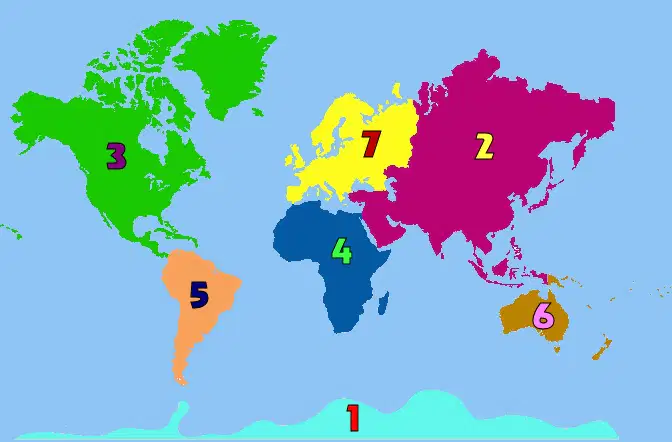
Identify continent #2
a)
Asia
b)
Africa
c)
Antarctica
d)
Australia
e)
Europe
2.
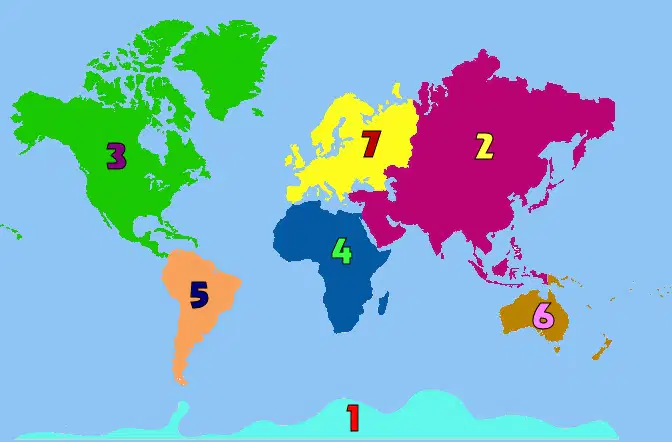
Identify continent #4
a)
Africa
b)
Antarctica
c)
Asia
d)
Australia
e)
Europe
3.
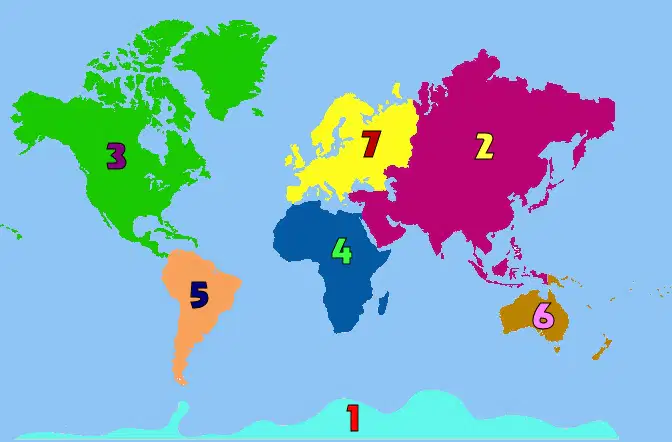
Identify continent #7
a)
Europe
b)
Africa
c)
Antarctica
d)
Asia
e)
Australia
4.
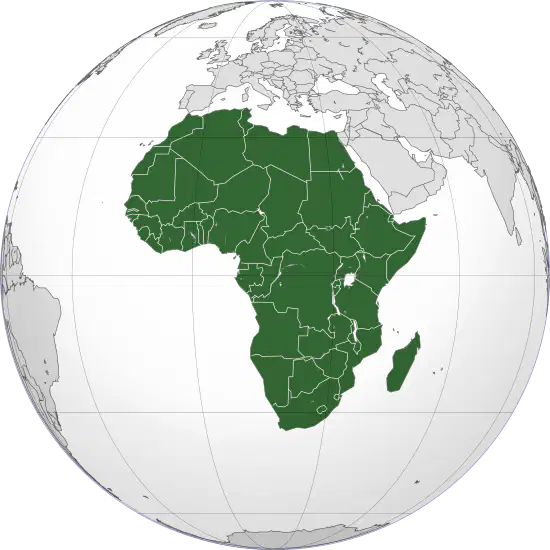
What is the second largest continent? It is directly south of Europe. It is home to The Great Sphinx, The Sahara Desert, The Great Pyramids, and the Nile River.
a)
North America
b)
South America
c)
Europe
d)
Asia
e)
Africa
5.
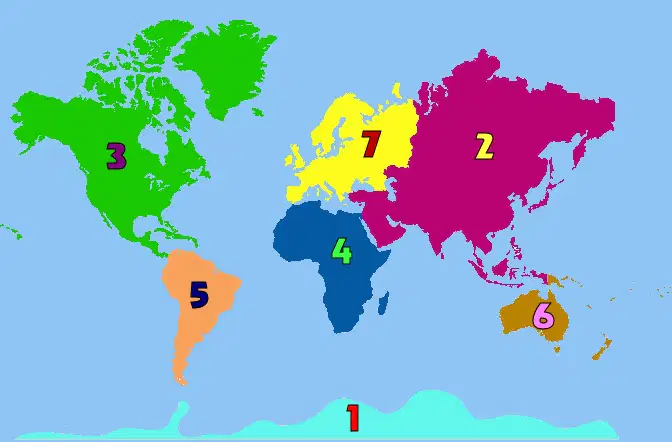
Identify continent #3
a)
North America
b)
Africa
c)
Antarctica
d)
Asia
e)
Australia
6.

What continent is connected with Asia? Hint: Home to Greece, Italy, the Tiber River, and Mt. Olympus.
a)
South America
b)
Europe
c)
North America
d)
Australia
e)
Antarctica
7.
Fill in the Blank: The period of time before the invention of writing and written records is known as ___________.
a)
Ancient History
b)
Modern History
c)
Medieval History
d)
Prehistory
8.
Fill in the Blank: History is DIFFERENT from archaeology and anthropology in that historians focus more on studying _____________.
a)
Artifacts
b)
Written Records
c)
Tools, Pottery, and Weapons
d)
Culture
9.
According to scientists, the universe is approximately how many years old?
a)
137 years old
b)
13,700 years old
c)
13.7 million years old
d)
13.7 billion years old
10.
The concept that scientists believe that started the universe from one single point
a)
The Big Bang Theory
b)
The Creationist Theory
c)
Cosmic Expansion
d)
The Little Whisper Law
11.
What sort of job would you apply for if you had an interest in prehistory and analyzing artifacts?
a)
Paleontologist
b)
Philanthropist
c)
Archaeologist
d)
Historian
12.
Fill in the Blank: Tools, pottery, paintings and weapons dug out of the ground are all examples of _______________.
a)
Fossils
b)
Metals
c)
Artwork
d)
Artifacts
13.
Often early humans told each other stories about how earth and humans began; Genesis and Adam and Eve are one such story.
a)
Origin Stories
b)
Creation Myths
c)
Epic Poems
d)
Fables
14.
With each successive generation, Apple changes the iPhone trying to make it better and outsell other phone manufacturers. Similarly, animals and plants on this planet change over generations to better survive and reproduce.
a)
Evolution
b)
Relativity
c)
Gravity
d)
Creationism
15.
According to the most likely explanation, the earliest humans likely originated from which continent?
a)
North America
b)
Asia
c)
Africa
d)
Antarctica
16.
The earliest humans followed their food sources from place to place making them:
a)
Farmers
b)
Nomads
c)
Archaeologist
d)
Neoliths
17.
What benefits did farming provide early humans?
a)
Steady food production
b)
The accumulation of personal possessions
c)
Permanent homes and villages
d)
All of the above
18.
Domestication is the process by which early humans:
a)
Began to set up cities
b)
When men and women began to get married
c)
Tamed wild animals into useful food sources and farm labor
d)
Studied the moon and other heavenly objects
19.
Which term describes the shift from hunting-and-gathering to more permanent farming settlements (villages)?
a)
Neolithic Revolution
b)
Paleolithic Era
c)
Big Bang Theory
d)
Stone Age
20.
Which choice below properly puts the following events in proper chronological order (from first to most recent):
a)
The Big Bang; Dinosaurs went extinct; Humans first arrived on earth; Columbus "discovered" America; Last week
b)
Dinosaurs went extinct; The Big Bang; Humans first arrived on earth; Last Week; Columbus "discovered" America
c)
The Big Bang; Humans first arrived on earth; Dinosaurs went extinct, Columbus 'discovered' America; Last week
21.

Which early invention allowed ancient farmers to water their crops in the hot, dry months?
a)
Ziggurats
b)
Pyramids
c)
Irrigation
d)
Cuneiform
22.
Fill in the Blank: Finish the sentence. __________________ is known as the "land between the rivers"
a)
Sumer
b)
India
c)
Egypt
d)
Mesopotamia
23.
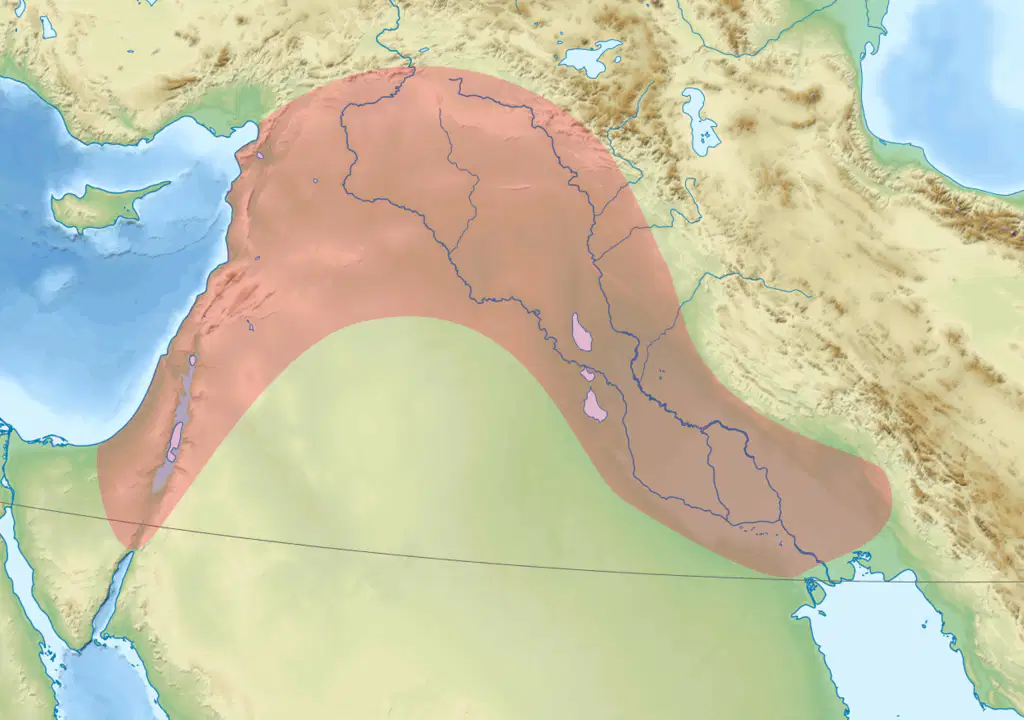
Fill in the Blank: This area stretched up towards Egypt and extended down towards the Persian Gulf. It was an area where farming (domestication and agriculture) first developed and where the first towns were established. It is known as the ________________.
a)
The Valley of the Kings
b)
The Fertile Crescent
c)
The Empire of Babylon
d)
The Pyramids at Giza
24.
Fill in the Blank: All early civilizations developed along _______________.
a)
Mountain Ranges
b)
Oceans
c)
River Valleys
d)
Ponds
25.
What were the two main rivers that formed the basis of civilization in the Fertile Crescent?
a)
Tigris and Eurphrates
b)
Nile and Amazon
c)
Yellow and Yangtze
d)
Mississippi and Ohio
26.
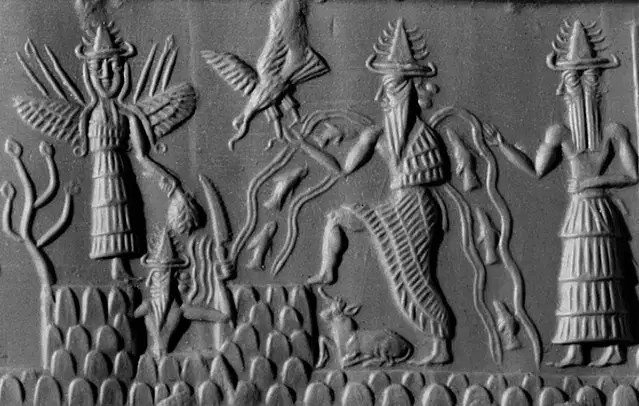
What is the meaning of the term civilization?
a)
A valley that supported and encouraged trade
b)
The study of human life and culture
c)
When human beings share several common elements including their food source
d)
The study of past societies by analyzing what people left behind
27.
Who were the first people to settle in Mesopotamia?
a)
The Babylonians
b)
The Egyptians
c)
The Greeks
d)
The Sumerians
28.
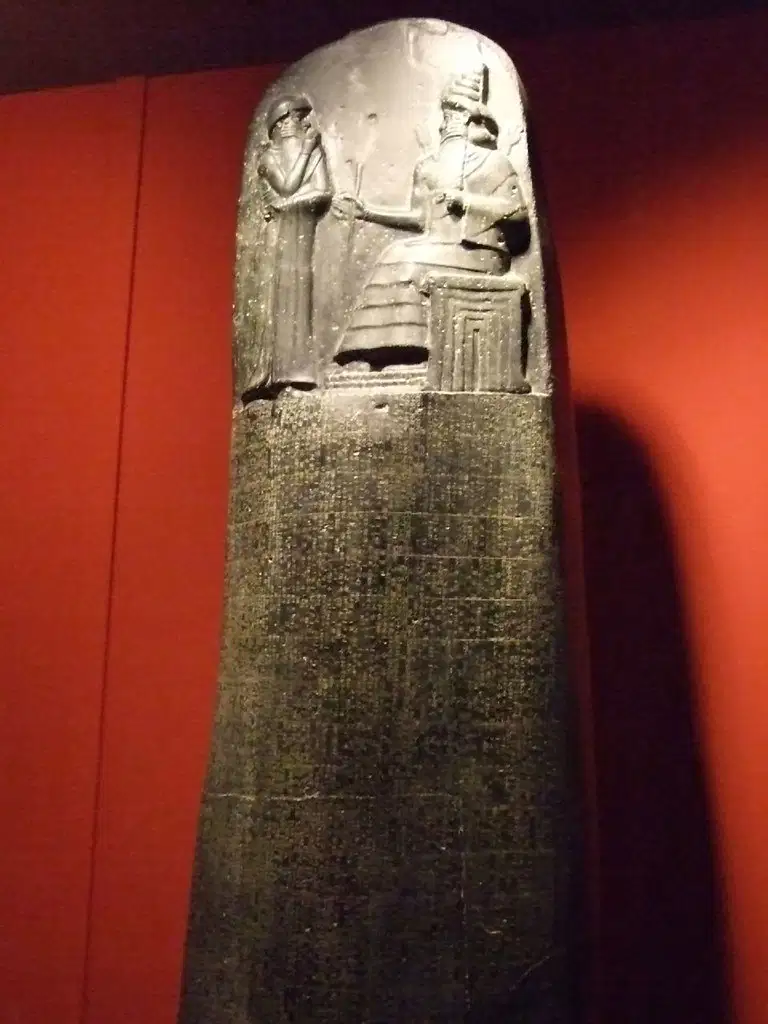
What were the first written laws? They were based on retaliation. For example, “an eye for an eye.”
a)
The Bill of Rights
b)
The Code of Hammurabi
c)
King Tut's Code
d)
Miranda Rights
29.
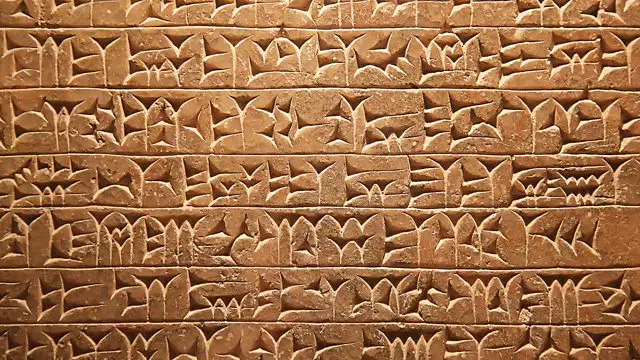
Fill in the Blank: The wedge-shaped writing seen below is better known as ____________.
a)
Cuneiform
b)
Greek Alphabet
c)
Hieroglyphics
d)
Demotic
30.

Fill in the Blank: The Mesopotamians of the Fertile Crescent practiced a _______________ religion and worshiped in _____________.
a)
Monotheistic; Synagogues
b)
Polytheistic; Mosques
c)
Monotheistic; Temples
d)
Polytheistic; Ziggurats
31.
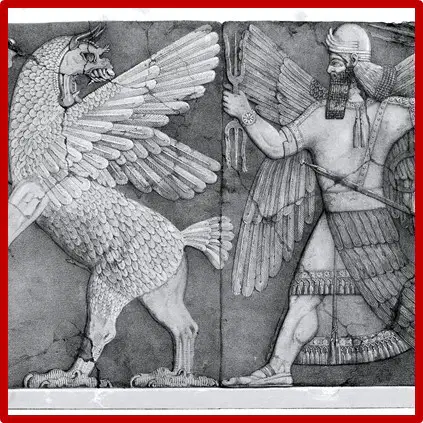
This story featured a major hero of ancient Mesopotamian mythology during the late 2nd millennium BC. Understood to be the oldest story ever written, this tale is about a king who wishes to live forever. What is this story called?
a)
The Odyssey
b)
The Epic of Gilgamesh
c)
The Code of Hammurabi
d)
The Iliad
32.
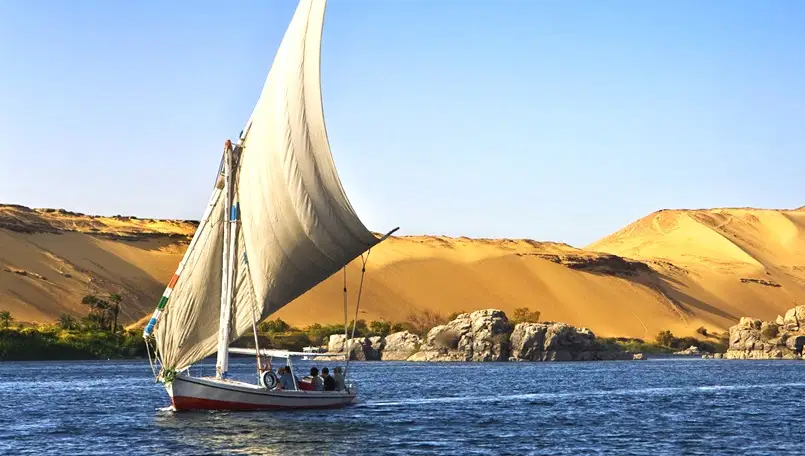
This river uniquely flows south to north in Africa (instead of the usual north to south). It begins in Lake Victoria and dumps into the Mediterranean Sea.
a)
Nile
b)
Euphrates
c)
Memphis
d)
Tigris
33.
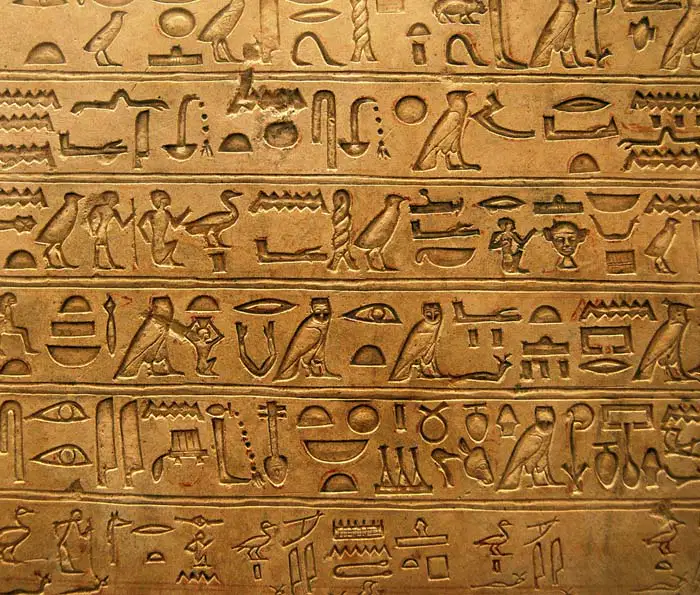
Fill in the Blank: The Ancient Egyptian form of writing pictured below is known as ________________.
a)
Cuneiform
b)
Greek Alphabet
c)
Hieroglyphics
d)
Demotic
34.
Which discovery allowed people to finally read and decipher Egyptian writing?
a)
The Code of Hammurabi
b)
The Epic of Gilgamesh
c)
The Ziggurat
d)
The Rosetta Stone
35.
Which monuments / tombs are best representative of Ancient Egyptian religion and government?
a)
The Great Pyramids of Giza
b)
The Parthenon
c)
The Code of Hammurabi
d)
The Roman Colosseum
36.
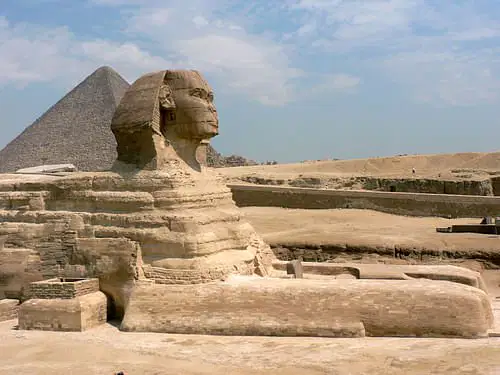
This Egyptian mythological creature is half-lion, half-man. One of these creatures "guards" the Great Pyramids of Giza.
a)
Scarab
b)
Sphinx
c)
Minotaur
d)
Ahmet
37.
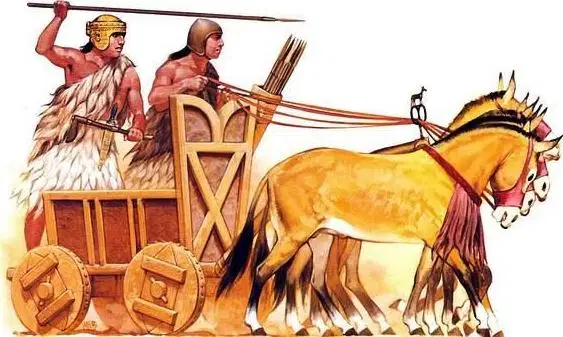
Which ancient civilization invented the wheel for hauling loads and for war chariots?
a)
Egyptians
b)
Greeks
c)
Mesopotamians
d)
Nubians
38.
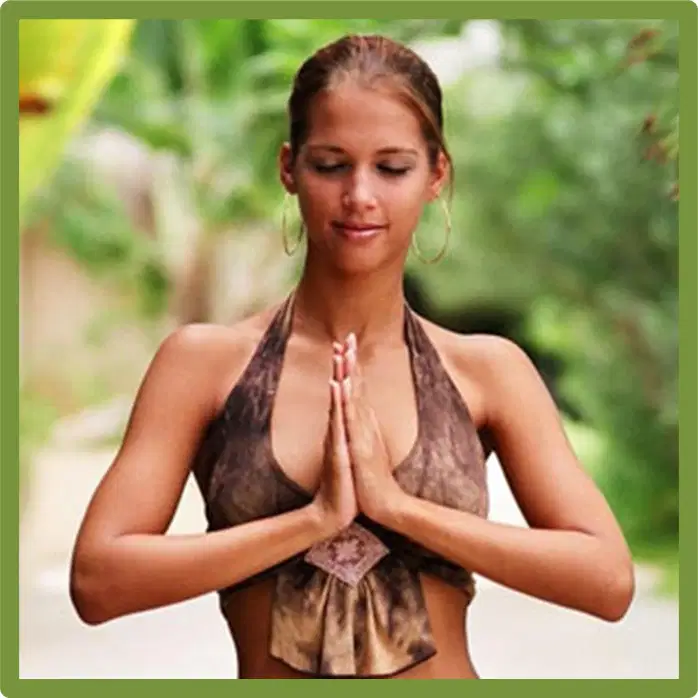
This Hindu greeting means the god in me acknowledges the god you.
a)
Moksha
b)
Godspeed
c)
Nirvana
d)
Namaste
39.
Which religion best fits the descriptions below: 1.] 3rd Largest religion in the world 2.] The world’s oldest religion being practiced today 3.] A religion so old there is no single founder
a)
Buddhism
b)
Hinduism
c)
Judaism
d)
Islam
40.
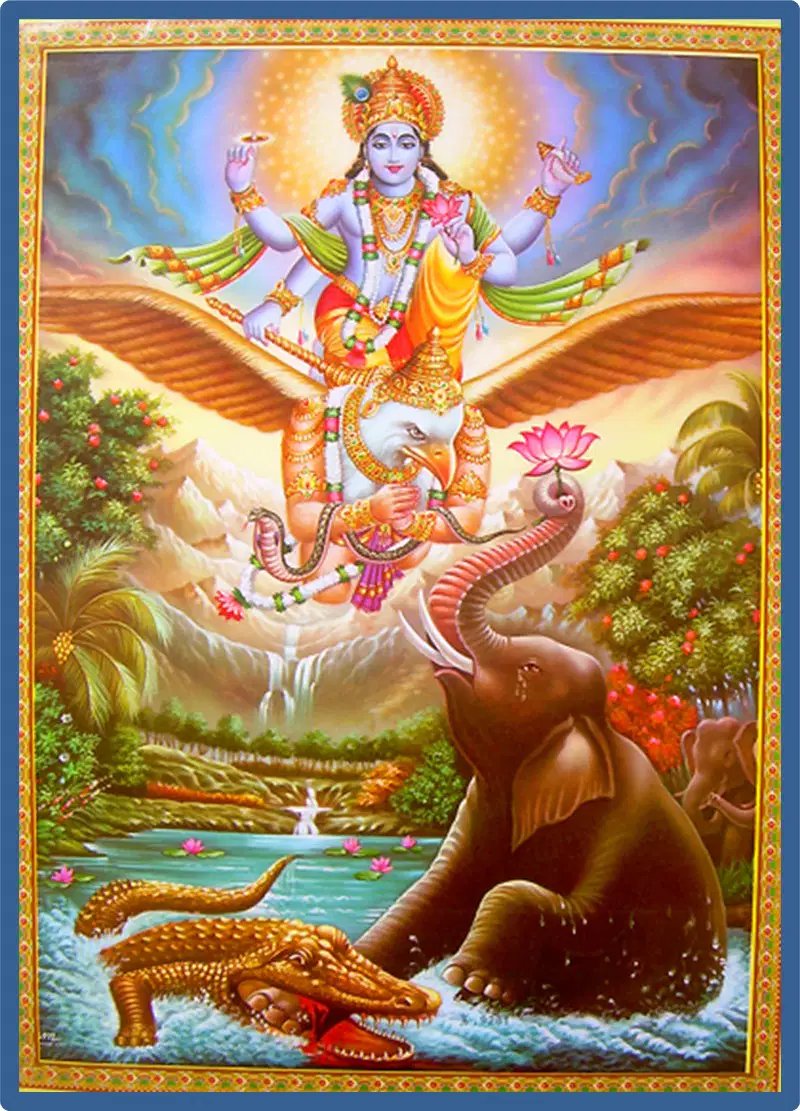
The concept of reincarnation, enlightenment through Moksha, and the study of the Vedas are most closely associated with:
a)
The Hindu Faith
b)
The Buddhist Faith
c)
The Christian Faith
d)
The Muslim Faith
41.
Followers of the Hindu faith demonstrate their religious values by
a)
Converting Africans to their faith
b)
Making a pilgrimage to Mecca
c)
Bathing or washing in the Ganges River
d)
Visiting the Wailing Wall in Jerusalem
42.
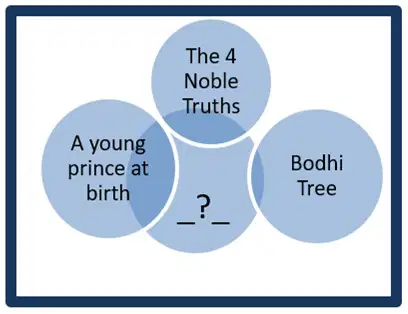
Which religious leader best completes this graphic organizer?
a)
Muhammad
b)
Abraham
c)
Vishnu
d)
Buddha
43.
Siddhartha Gautama became the Buddha, which means:
a)
The Prophet
b)
The Messiah
c)
The Enlightened One
d)
God
44.
How do followers of Buddhism practice and express their beliefs?
a)
Making a religious pilgrimage to the Ganges River
b)
Going to the Bodhi Tree to pay respect to the founder and to meditate
c)
Praying at the Western Wall in Jerusalem
d)
Reciting the Qur’an during Ramadan
45.
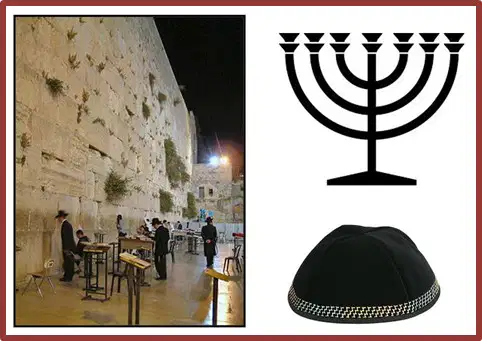
The photographs above are all associated with which religion?
a)
Judaism
b)
Hinduism
c)
Christianity
d)
Islam
46.
The fact that Jewish people cannot combine meat and dairy products in their meals is an example of laws.
a)
Vegetarian
b)
Hammurabi Laws
c)
Kosher
d)
Halal
47.
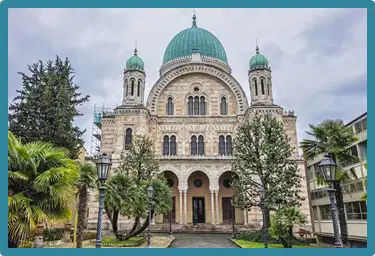
You are in a synagogue for a service, whom would you be listening to deliver the message?
a)
Priest
b)
Rabbi
c)
Caliph
d)
Monk
48.
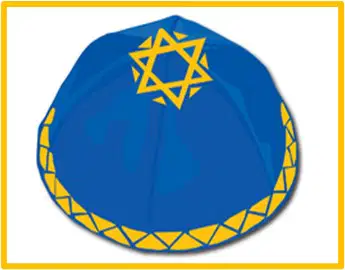
Jewish men cover the top of their heads with what? [One is pictured below]
a)
Yarmulke
b)
Shaw
c)
Kafka
d)
Menorah
49.
Of the world’s five major religions, which one has the smallest number of followers?
a)
Christianity
b)
Judaism
c)
Hinduism
d)
Islam
50.
Buddhism is to the Wheel of Law like Judaism is to .....
a)
Crescent Moon & Stars
b)
Sacred Aum
c)
Mandala
d)
Star of David
51.
The Torah and the Vedas are both examples of ???
a)
Religious Symbols
b)
Holy Sites
c)
Religious Leaders
d)
Sacred Texts
52.
Christians and Jews both believe in the same God. What is the major difference between the two?
a)
Jews believe in reincarnation.
b)
Christians believe that Jesus is the Son of God.
c)
Their religious sites are in different cities.
d)
Only the Jews trace their heritage back to Abraham.
53.
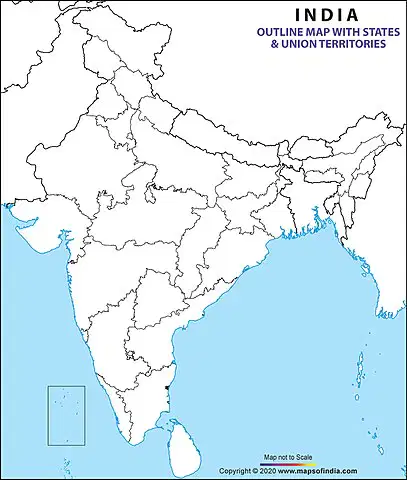
Which of the following items are related to the religion that the majority of people in this country practice?
a)
Qur’an, Kaba Stone, Hajj
b)
Torah, Kosher, Abraham
c)
River Ganges, Vedas, Moksha
d)
The Bible, Jesus, The Cross
54.
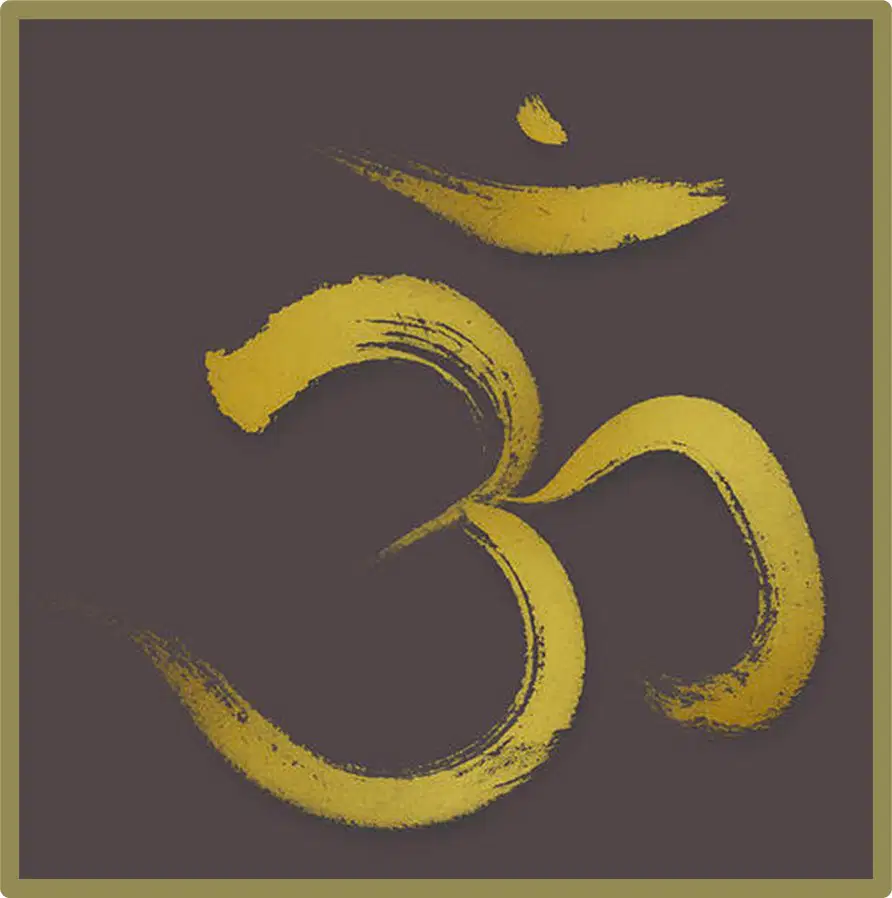
This sacred symbol of Hinduism is known as the ???
a)
Sacred Aum
b)
Namaste
c)
Star of David
d)
Crescent Moon & Stars
55.
The Western Wall, Ganges River and Bodhi Tree are all:
a)
Holy Sites
b)
Symbols
c)
Texts
d)
Religious Buildings
56.
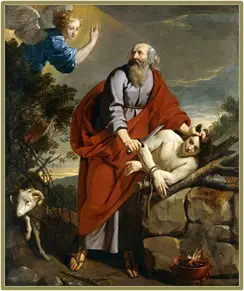
Christians and Jews believe Abraham was going to sacrifice which of his children?
a)
Ishmael
b)
Isaac
c)
Ivan
d)
Ian
57.
Fill in the Blank: Small communities in Ancient Greece such as Athens and Sparta which had their own governments and culture were called _________.
a)
Academies
b)
City-States
c)
Republics
d)
Towns
e)
Villages
58.
Critical Thinking: Why did the Greek city-states develop independently from one another?
a)
They were isolated by mountains and islands.
b)
Each city-state spoke a different language and could not communicate.
c)
Each city-state was divided and separated by Alexander the Great.
d)
All of the choices are true.
e)
59.
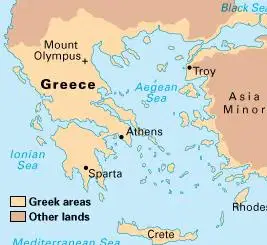
What trick did the Greeks use to defeat the Trojans in the city of Troy?
a)
wooden horse
b)
guerrilla warfare
c)
dragging Hector around the walled city
d)
war elephants
60.
What made Sparta so different from all the other city-states in Greece?
a)
They valued reading, writing, and music.
b)
They had a full time army and were loyal to the state.
c)
They created a democracy, a government ruled by the people.
d)
They built great architectural structures like the Parthenon that lasted thousands of years.
61.
Sparta's government with two kings and a ruling council of 5 men called ephors is best referred to as a(n)...
a)
Tyranny
b)
Democracy
c)
Oligarchy
d)
Republic
62.
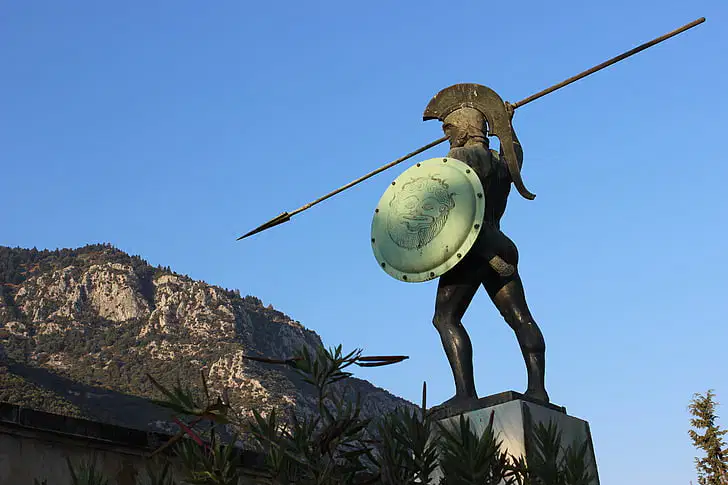
300 Spartan Warriors and thousands of Persians faced each other at the Battle of Thermopylae under which Spartan king?
a)
Alexander the Great
b)
Pericles
c)
Leonidas
d)
Arrhideus
63.
Which of the following terms best describes the love of wisdom and knowledge?
a)
biology
b)
astronomy
c)
philosophy
d)
aesthetics
64.
Who was the first great Greek Philosopher? His student was Plato. He taught by asking questions.
a)
Aesop
b)
Alexander the Great
c)
Homer
d)
Socrates
65.
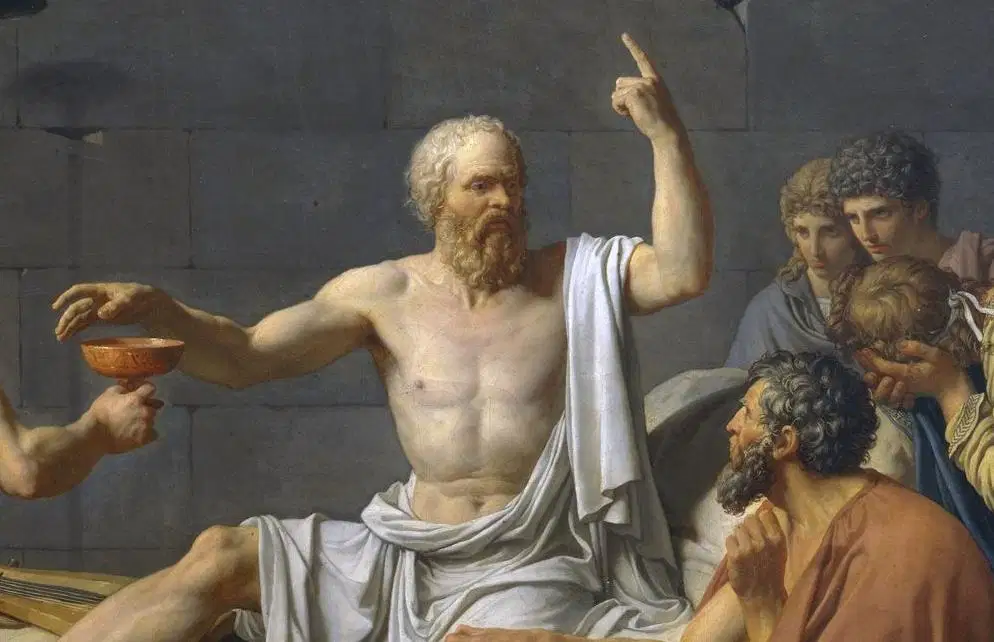
Fill in the Blank: Your World History teacher is continuing to ask a student a series of questions. As the student responds, the teacher throws back even more questions. Eventually, the student arrives with a new conclusion that they had not considered before. This form of questioning that is rooted in Ancient Greek philosophy is known as ____________________.
a)
The Question-and-Answer method
b)
The Socratic Method
c)
The Platonic Method
d)
The Method of Aristotle
66.
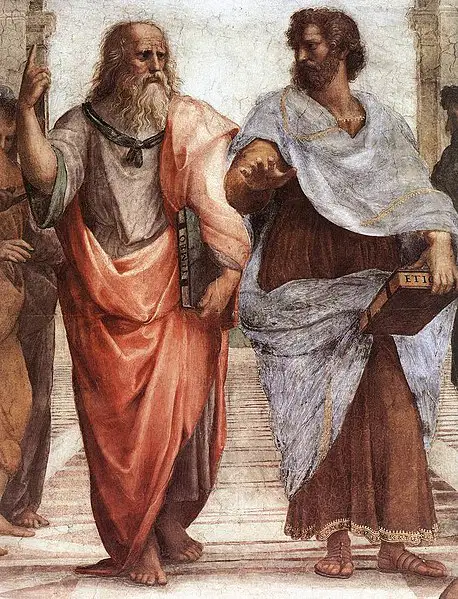
Which famous Greek thinker was a student of Socrates, the author of the Republic and developed the Allegory of the Cave?
a)
Plato
b)
Socrates
c)
Aristotle
d)
Pythagoras
67.
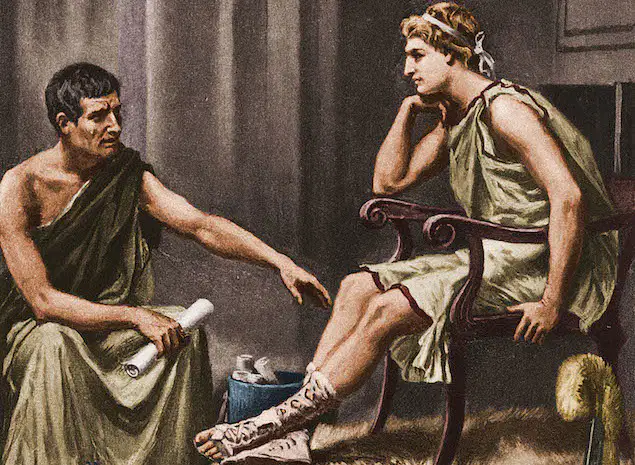
This Greek philosopher and scientist used logic and made encyclopedias of knowledge. He also taught Alexander the Great.
a)
Socrates
b)
Plato
c)
Euclid
d)
Aristotle
68.
Which Greek city-state practiced democracy, valued education and civic duty over military honors, but did not allow women to be seen in public?
a)
Sparta
b)
Thebes
c)
Argos
d)
Athens
69.
The classroom is cold. Which of the following scenarios best describes a democracy?
a)
The teacher wears all the coats
b)
"A" students are given a coat
c)
The teacher closes the window
d)
All students vote on who is given a coat
70.
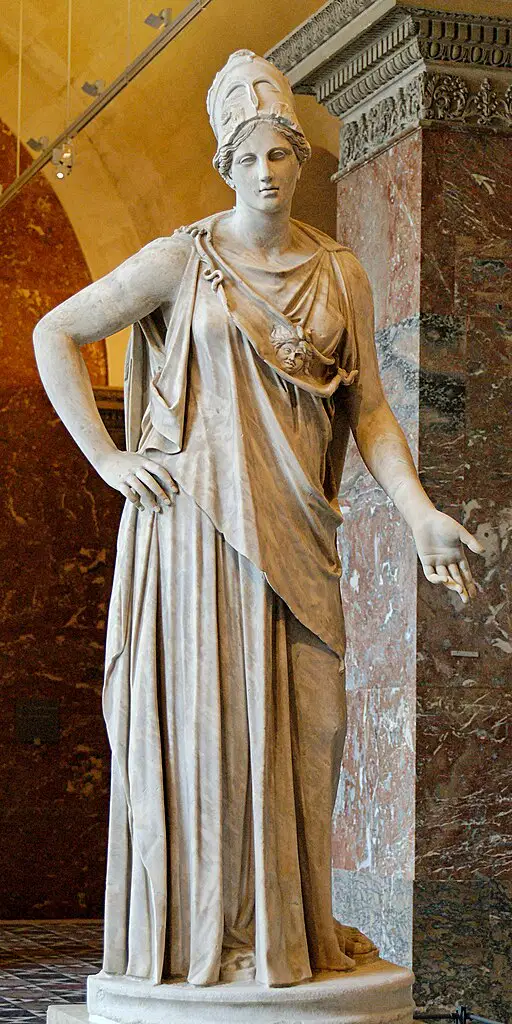
Who was the goddess of War and Wisdom? She was born fully-formed from the head of Zeus and gives her name to a famous Greek city-state.
a)
Aphrodite
b)
Eris
c)
Athena
d)
Hera
71.
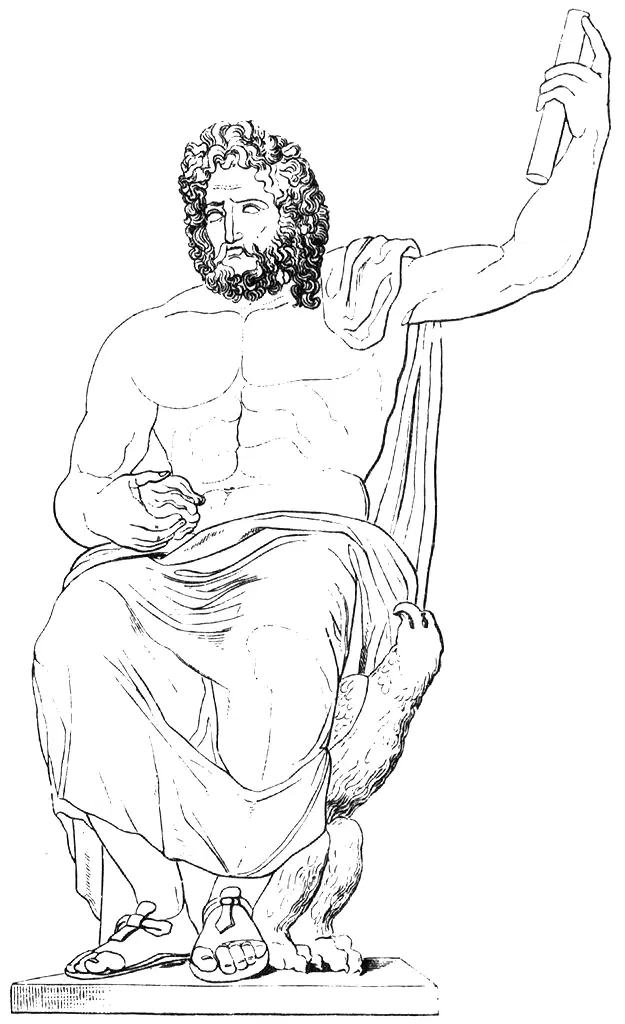
Chief of the Greek Gods, ruler of the skies and god of Lightning:
a)
Thor
b)
Zeus
c)
Pikachu
d)
Jupiter
72.
The main foe of the Greeks in the Iliad was:
a)
The Trojans
b)
The Spartans
c)
The Athenians
d)
The Achaeans
73.
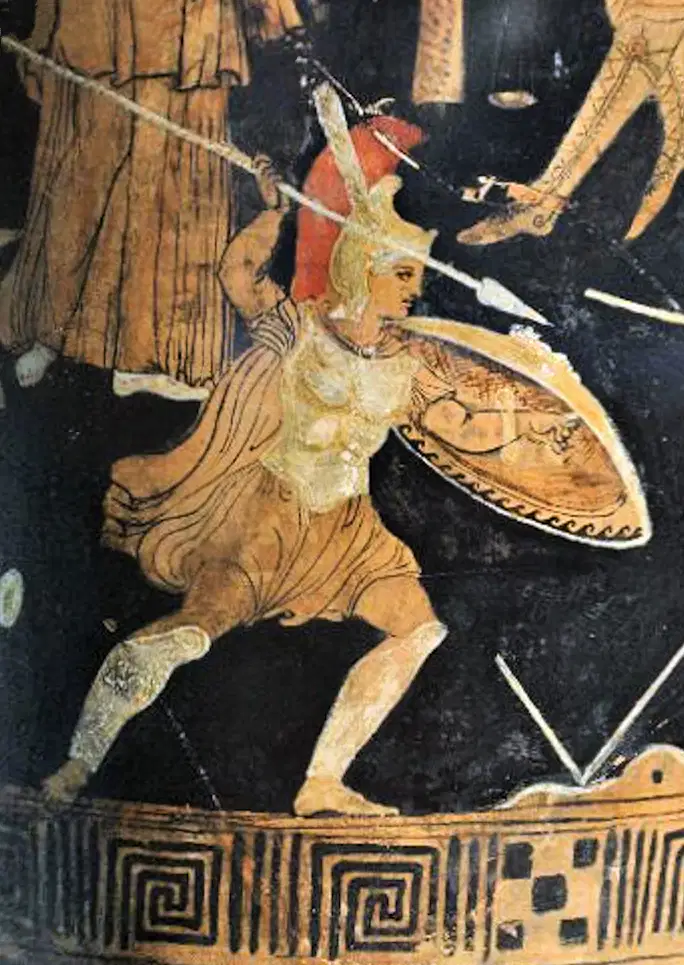
Hector, Prince of Troy, fought this Greek hero in battle:
a)
Hercules
b)
Achilles
c)
Perseus
d)
Theseus
74.

Early Greek history is based mostly on the poetry of one blind, Greek poet. The author of the Iliad and the Odyssey is:
a)
Hercules
b)
Theseus
c)
Pheidippides
d)
Homer
75.
Traditional stories the Greeks told to teach, warn and give one another hope are best referred to as...
a)
Fables
b)
Legends
c)
Myths
d)
Philosophies
76.
Which Greek event which began in the 8th century temporarily brought the Greek cities together every four years, even during times of war? It was a way of honoring Zeus.
a)
The Olympics
b)
The Allegory
c)
The Parthenon
d)
The Agora
77.

Identify this image.
a)
The Roman Forum
b)
The Roman Colosseum
c)
The Circus Maximus
d)
The Roman Pantheon
78.
Which of the following would spectators have witnessed taking place in the Colosseum?
a)
Gladiators fighting
b)
Reenactments of historical battles
c)
Execution of Christians
d)
All of these answer choices
79.
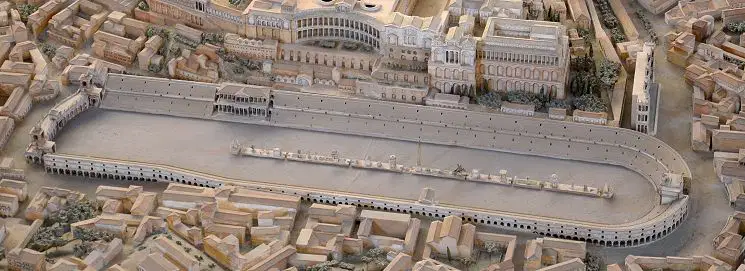
What is the name of the stadium shown below?
a)
Parthenon
b)
Pompeii Ampitheatre
c)
Circus Maximus
d)
Colosseum
80.
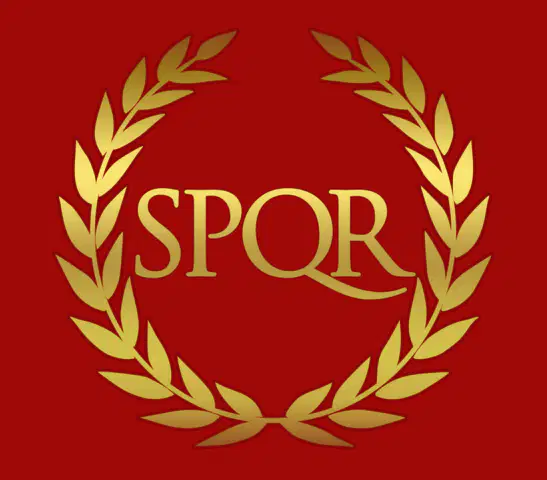
After the last Etruscan king was overthrown by the Romans, what type of government did they establish?
a)
Democracy
b)
Republic
c)
Monarchy
d)
Dictatorship
81.
Which of these best match the description of a republic?
a)
A unit of the Roman army
b)
A government in which citizens vote for elected officials to represent them
c)
A Latin phrase meaning 'the Senate and the People of Rome'
d)
A government in which citizens vote directly on public matters
82.
Which of these best match the following description:
The wealthy, upper-class of Ancient Rome; could serve in the government as Senators; had the right to vote
a)
Patricians
b)
Plebeians
c)
Optimates
d)
Populares
83.
The common people of Rome who could vote but could not serve in the Senate were called:
a)
Plebeians
b)
Optimates
c)
Patricians
d)
Populares
84.
Fill in the Blank: The ___________ was made up of 300 appointed Roman officials to make laws and taxes.
a)
Senate
b)
Consul
c)
Tribunes
d)
Parliament
85.
The language spoken by Romans is called:
a)
Roman
b)
Romani
c)
Latin
d)
Italian
86.
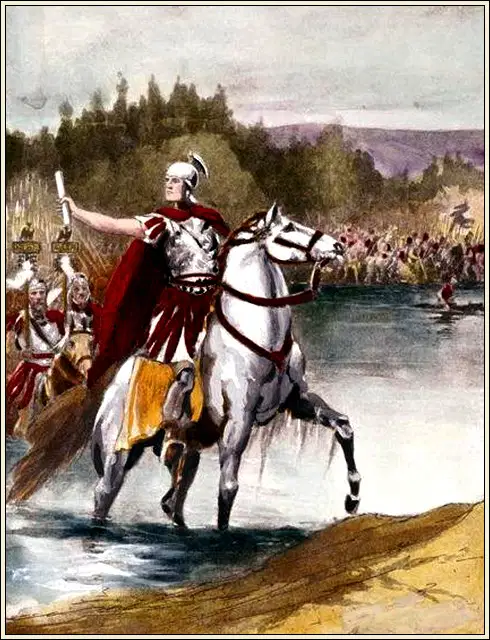
What event ended the Roman Republic?
a)
The rape of Lucretia by the son of the Etruscan king
b)
Julius Caesar is assassinated by Senators
c)
After crossing the Rubicon, Caesar marches on Rome and is declared dictator for life
d)
Caesar Augustus dissolves the Senate and institutes proscriptions
87.
Who betrayed Julius Caesar by participating in a plot to kill him?
a)
Remus
b)
Augustus
c)
Octavian
d)
Brutus
88.
The first true emperor of Rome after the assassination of Julius Caesar was...
a)
Nero
b)
Augustus
c)
Tiberias
d)
Claudius
89.

What title did all Roman emperors adopt for themselves?
a)
King
b)
Tyrant
c)
Pontifex Maximus
d)
Caesar
90.
Which Roman emperor brought great peace to Rome? The "pax Romana"
a)
Nero
b)
Caligula
c)
Augustus
d)
Marcus Aurelius
91.

Which Roman emperor "fiddled while Rome burned" ?
a)
Nero
b)
Caligula
c)
Augustus
d)
Marcus Aurelius
92.
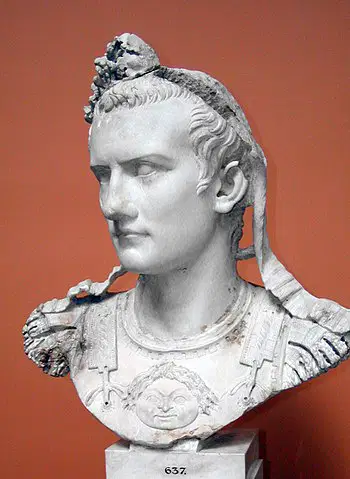
Which of these best match the following description:
This Roman emperor claimed he was God; he named his horse co-Consul; Rome's most flawed Emperor; killed by his own guards
a)
Marcus Aurelius
b)
Nero
c)
Augustus
d)
Caligula
93.

Which of the following qualities could describe the Roman Emperor Marcus Aurelius?
a)
Fiddled while Rome burned, cruel and insane, killed his mother and wife
b)
Believed he was God, named his horse co-consul, killed by his own guards
c)
Rome's wisest emperor, a philsopher-king, the last of the 5 Good Emperors
d)
Rome's First Emperor, the adopted son of Julius Caesar, the founder of the Roman peace
94.
The Western Roman Empire finally collapsed in what year?
a)
44 BC
b)
AD 33
c)
AD 70
d)
AD 476
95.

Fill in the Blank: Roman ___________ transported fresh water using gravity over very long distances.
a)
Aqueducts
b)
Roads
c)
Chariots
d)
Viaducts
96.

During the Middle Ages, which Christian denomination did the majority of Europeans belong to?
a)
Catholicism
b)
Seventh Day Adventist
c)
Unitarian
d)
Lutheranism
e)
Methodist
97.

The overall leader of the Catholic Church is known as?
a)
Head Bishop
b)
Pope
c)
Chief Priest
d)
Emperor of Europe
e)
Cardinal Supreme
98.

You are planning a trip to the smallest country in the world. It is located inside the City of Rome. It is also the headquarters of the Catholic Church.
Where is your vacation?
a)
Jerusalem
b)
Mecca
c)
Vatican City
d)
Rome
99.
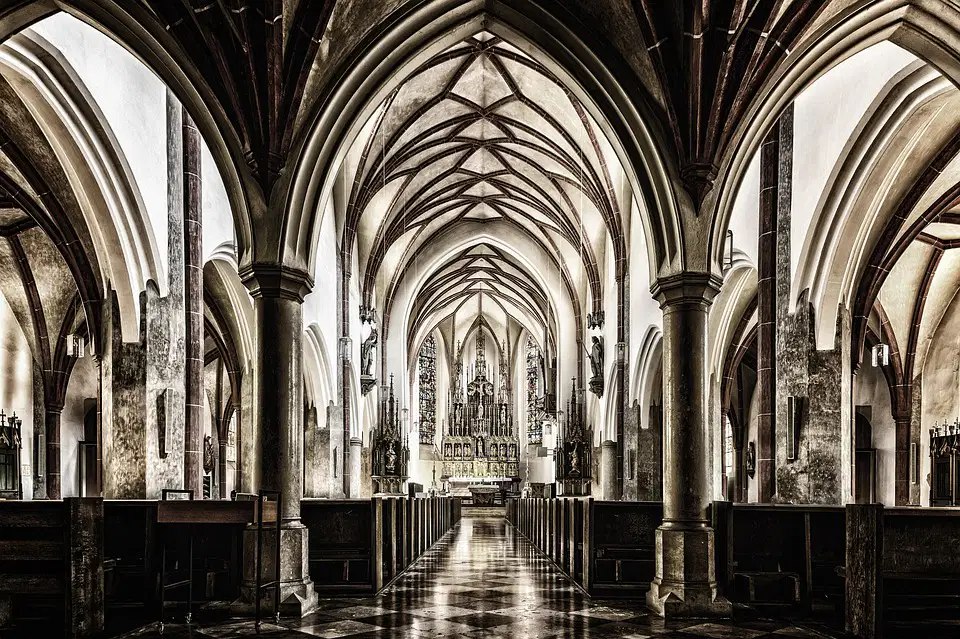
Which of these best match the following description?
The oldest and largest Christian denomination. Over 1 billion people belong to this institution. The first leader was Peter.
a)
Protestantism
b)
The Church of England
c)
The Catholic Church
d)
The Church of Latter Day Saints
100.
Which term is used to refer to the leadership of the Catholic Church?
a)
Clergy
b)
Priesthood
c)
Bishopric
d)
Tithe
e)
Sacrament
101.

Where is the headquarters of the Catholic Church?
a)
Rome, Italy
b)
Vienna, Austria
c)
Constantinople
d)
Washington, D.C.
e)
Vatican City
102.
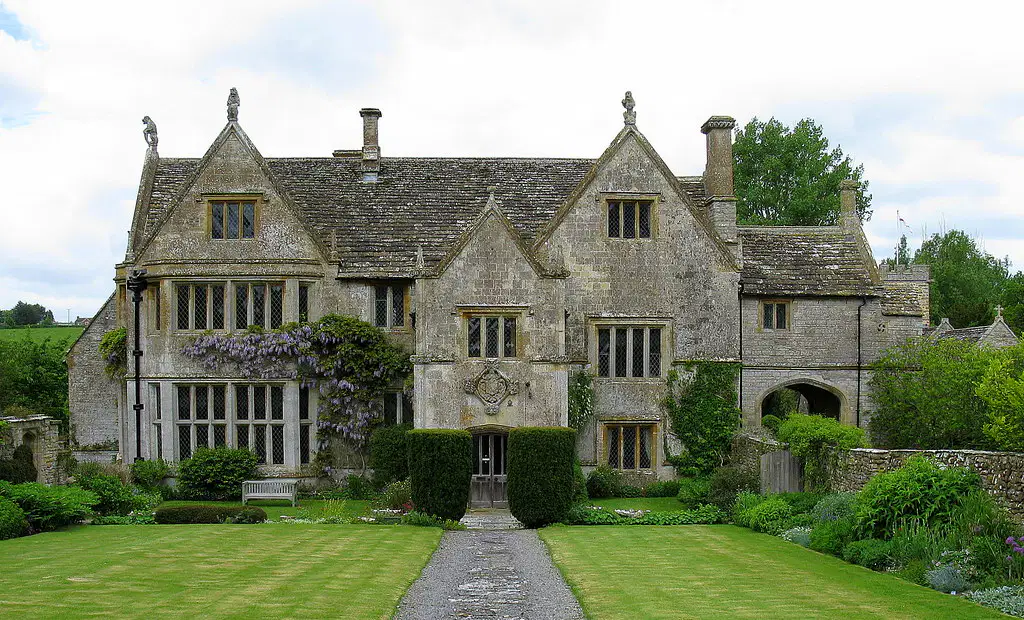
A self-sufficient area of land during the Middle Ages. Everyone depended on each other for survival.
a)
Plot
b)
Manor
c)
Castle
d)
Peasant
103.
Which period of history begins around 500 A.D. and ends around 1500 A.D.?
a)
The Middle Ages
b)
The Renaissance
c)
The Modern Era
d)
The Age of Exploration
104.
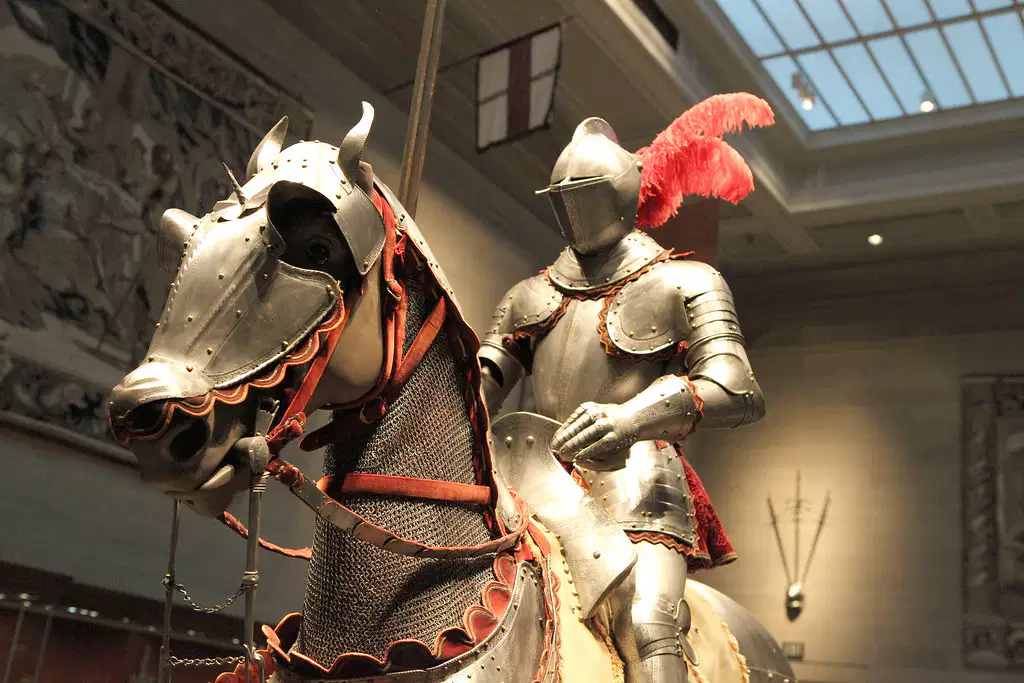
The knights code of conduct
a)
Feudalism
b)
Chivalry
c)
Lord
d)
Manor
105.
Which of these are a synonym for (can also mean) the Middle Ages?
a)
The Inbetween Times
b)
The Rise of Catholicism
c)
The Dark Ages
d)
The Holy Roman Empire
106.
The protectors of the King
a)
Lord
b)
Vassal
c)
Peasant
d)
Knight
107.

The person who received lands from their lords
a)
Peasant
b)
Manor
c)
Vassal
d)
Knight
108.
Which of these were over the Kings in the Feudal system?
[Hint: they could threaten to revoke God's favor]
a)
The Nobles
b)
The Knights
c)
The Pope / Church
d)
The People
109.

Which city were the Crusades concerned with re-taking?
a)
All of them
b)
Damascus
c)
Constantinople
d)
Jerusalem
e)
Byzantium
110.

Which three (3) religious groups claimed a city in the land of Palestine as their holy city?
a)
Jews
b)
Muslims
c)
Christians
d)
The Greeks
e)
Buddhists
111.

In what year were Jews and Christians expelled (removed) and not allowed to live in Jerusalem?
a)
1095 A.D.
b)
600 B.C.
c)
600 A.D.
d)
1095 B.C.
112.
What do we call the armed pilgrimage to liberate Jerusalem?
a)
An armed pilgrimage
b)
The First Crusade
c)
The Pope's Crusade
d)
The Crusades
113.
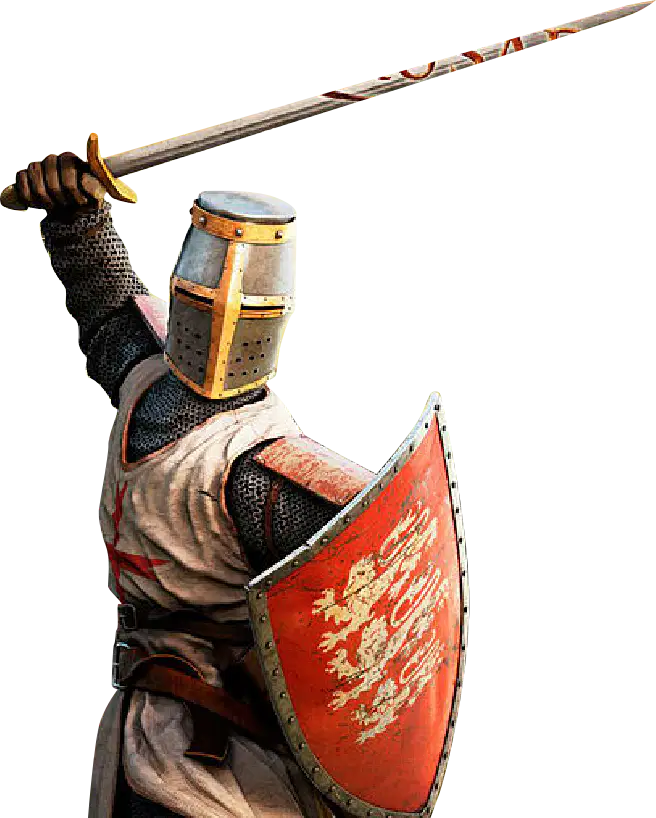
How did the Crusaders recapture Jerusalem?
a)
They fought a battle for it
b)
They laid siege to it
c)
They negotiated for it
d)
They did not recapture Jerusalem
114.

In what year did the Crusaders recapture Jerusalem?
a)
1095
b)
600
c)
1099
d)
1291
115.

What is the name given to the effort of 30,000 young people to recapture the city of Jerusalem?
a)
The Second Crusade
b)
The Children's Crusade
c)
The Third Crusade
d)
The Innocent's Crusade
116.
According to the Church, why were people getting sick and dying?
a)
God was punishing them for their sins
b)
They did not wash their hands after using the bathroom
c)
Their homes were filthy and covered with bacteria
d)
They were not properly following the 7 sacraments
117.

The Plague was actually caused by which of these?
a)
God was actually punishing people for their sins
b)
Rats
c)
Gerbils
d)
Mice
e)
Infected grains
118.
Which of these could carry the disease?
a)
Rats
b)
Fleas
c)
Bacteria
d)
All of the above
119.

What children's nursery rhyme is about the plague?
a)
Ring Around the Rosie
b)
Jack and Jill
c)
Three Little Pigs
d)
Red Rover
e)
Humpty Dumpty
120.

About how many people died from the plague?
a)
100,000
b)
1,000,000
c)
10,000,000
d)
25,000,000
e)
100,000,000
121.

Which Latin phrase is associated with art made during the Black Death?
a)
Unus Annus
b)
In Nomine Patri, et Fili, et Spritus Sancti
c)
Memento Mori
d)
Si vis pacem, para bellum
100 %

