
Font size
 Worksheets
Midterm Review
Total questions: 90
Worksheet time: 2hrs 3mins
Which of the following describes a solid
low kinetic energy
high kinetic energy
takes the shape of the container
a fixed shape but not a fixed volume
WHat happens when a substance goes from a liquid state to a solid state? (Think about liquid water forming ice)
Thermal energy is added
Pressure is added
Thermal energy is removed
Temperature increases
Adding thermal energy (heat) to a substance ____ the space between particles.
Increases
Decreases
What happens to molecules when their kinetic energy increases?
The molecules move slower
The molecules move faster
The molecules get heavier
It depends on the type of molecule

Three containers with the same amount of the same material are shown below. Which container has the substance with the lowest amount of energy?
The container on the left
The middle container
The container on the right
All have an equal amount of energy
Transition from a liquid to a gas
Condensation
Freezing
Evaporation
Melting
(Charles Law) There are 65 liters of helium in a balloon at 35 K. If the temperature of the balloon is increased to 40 K, what will the new volume of the balloon be?
40 L
70 L
74.3 L
75.9 L
According to Charles Law, if Temperature of a gas increases Volume will also....
Increases
Decreases
Stays the same

Charles law states..
As pressure goes up, volume goes up
As volume goes up, temperature goes up
As pressure goes up, temperature goes up
Pure Substance or Mixture?
can be made from multiple elements that are chemically combined
pure substance
mixture
Homogeneous or Heterogeneous?
a mixture that is uniform throughout
homogeneous
heterogeneous

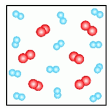
Ice melting is an example of a ...
Physical Property
Physical Change
Chemical Property
Chemical Change
Milk turning sour is an example of a ...
Physical Property
Physical Change
Chemical Property
Chemical Change
The luster or shine of a metal is an example of a ...
Physical Property
Physical Change
Chemical Property
Chemical Change
Flammability is a ...
Physical Property
Physical Change
Chemical Property
Chemical Change
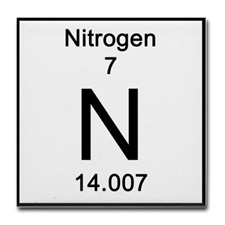

A neutral atom must have the same number of _______ and _______.
protons
neutrons
electrons
croutons
What is the mass number of potassium that has 19 protons and 20 neutrons?
19
20
39
10
Which of the following would NOT alter the atomic number of an atom?
adding a neutron
adding a proton
removing a proton



The vertical (up and down) columns in the Periodic Table are called
groups
towers
periods
atomic numbers
Which group of elements have one valence electron(s)?
Group 13
Group 2
Group 18
Group 1
Which classification of elements are shiny, silvery solids and good conductors of heat and electricity?
Transition metals
Metalloids
Nonmetals
Metals

This could be the electron dot diagram of
Magnesium
Chlorine
Carbon
Oxygen

This could be the electron dot diagram for
Helium
Aluminum
Beryllium
Silicon
What is the "magic number" of valence electrons for atoms to be stable?
1
2
8
18
Neon is a noble gas because it is stable, nonreactive, and has ___ valence electrons.
1
8
10
4
Which elements have the most similar chemical properties?
boron and carbon
oxygen and sulfur
aluminum and bromine
argon and silicon

An atom with 3 valence electrons "wants" a full shell, so it can either gain 5 or lose 3. Which is more likely to occur?
Gain 5
Lose 3
Nothing
How do covalent bonds form?
By donating and receiving valence electrons between atoms.
Scientists still aren't sure.
Opposite slight charges attract each atom in the compound.
Sharing valence electrons between atoms
Which type of bond is formed between a metal and a nonmetal?
Polar
Metallic
Covalent
Ionic
What is the correct formula for potassium oxide?
KO2
KO
K2O
OK2
What is the correct name for SrF2?
fluoride strontium
strontium fluorine
strontium diflluoride
strontium fluoride
Name the following covalent compound.
NO
Mononitrogen Oxide
Nitrogen monoxide
Nitrogen Oxide
Cl2 + 2 SnI4 → I2 + SnCl4
Single Replacement
Decomposition
Double Replacement
Synthesis
Combustion
2 H₂O₂ → 2 H₂O + O₂
Double Replacement
Single Replacement
Synthesis
Decomposition
Neutralization
HCl + AgNO3 → AgCl + HNO3
Single Replacement
Decomposition
Double Replacement
Synthesis
Neutralization
C7H14 + O₂ → CO₂ + H₂O
Decomposition
Single Replacement
Double Replacement
Combustion
Neutralization
In an endothermic reaction, energy is _________.
absorbed
released
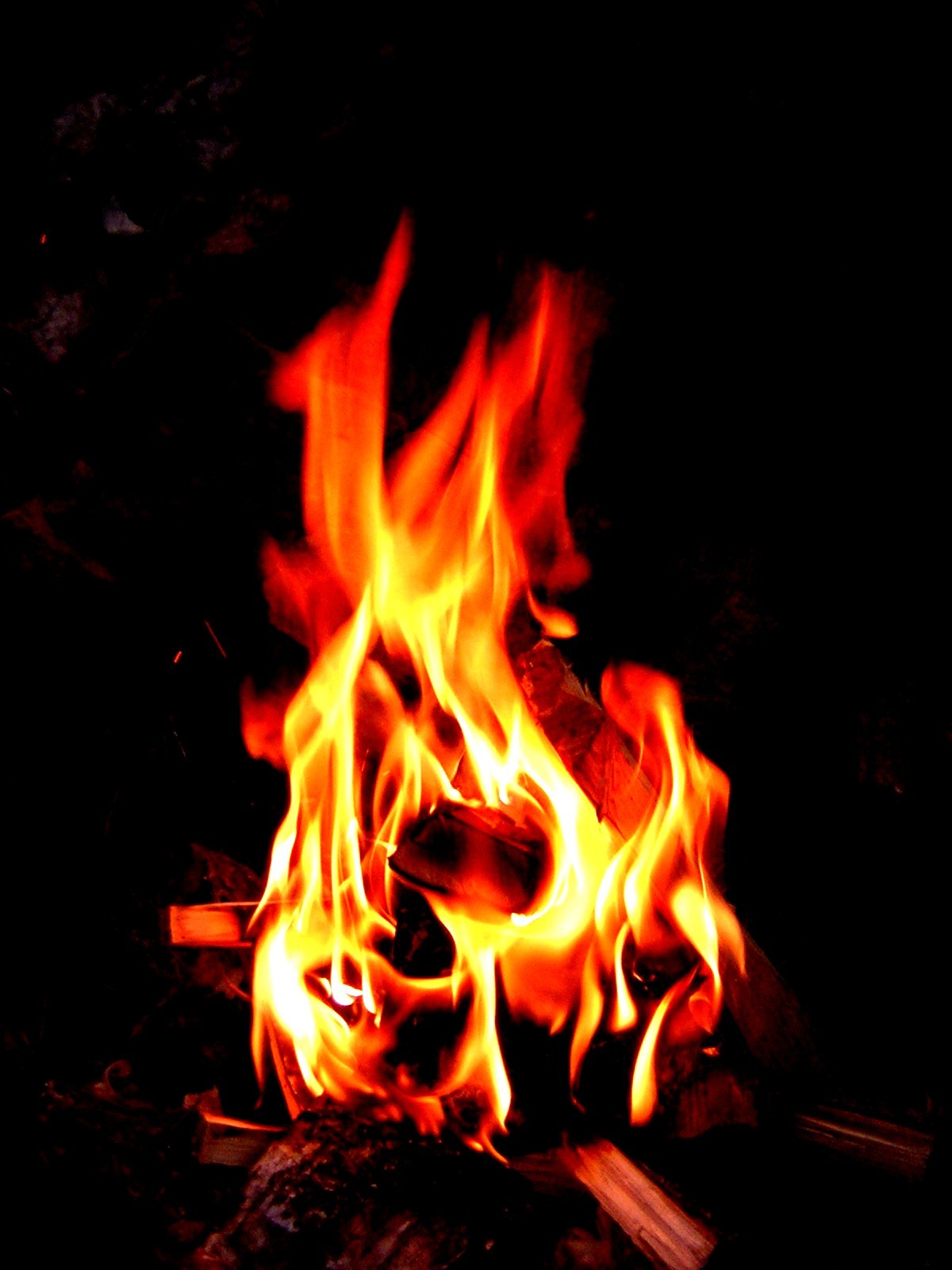
_____ reactions usually feel hot!
endothermic
exothermic
____ reactions usually feel cold.
endothermic
exothermic
Increasing the ____ causes the particles (atoms
or molecules) of the reactants to move more quickly so that
they collide with each other more frequently and with more
energy.
Catalyst
Surface Area
Temperature
Concentration
Collision theory states that....
reaction rate increases when particles collide more
reaction rate is not affected by collisions
reaction rate increases as there are fewer collisions
there is no relationship between collisions and reaction rate.
What is the pH range of an acid?
4-6
1-7
1-6
8-14
What would happen to blue litmus paper if it came into contact with an acid?
It would turn red
It would turn green
It would stay blue
It would turn pink
What would happen to red litmus paper when it encounters a base?
It turns blue
It stays red
It turns purple
It turns green
A substance is found to have the following characteristics:
Very bitter taste
Feels slippery to the touch
Produces OH- ions when dissolved in water
In what category would the substance be classified?
acid
base
enzyme
fatty acid
7
11
What is the fundamental force responsible for holding the nucleus of an atom together?
strong nuclear force
weak nuclear force
gravitational force
electromagnetic force
Which fundamental force is responsible for the attraction between two charged particles?
Gravitational force
Electromagnetic force
Weak nuclear force
Strong nuclear force
What is the weakest fundamental force in nature?
Gravitational force
Strong nuclear force
Electromagnetic force
Weak nuclear force
Which fundamental force is responsible for radioactive decay?
gravitational force
weak nuclear force
electromagnetic force
strong nuclear force
In Alpha decay what particle is emitted?
Helium (He)
Electron (e-)
Energy (Photon)
In Beta decay what particle is emitted?
Helium (He)
Electron (e-)
Energy (Photon)
In Gamma decay what particle is emitted?
Helium (He)
Electron (e-)
Energy (Photon)

Identify the missing variable in the following reaction.


Identify the missing variable in the following reaction.
Where does fusion take place?
sun
stars
deep inside the earth
nuclear reactors
Which reaction represents fission?




Which reaction represents fusion?





