
Font size
 Worksheets
Camelids
Total questions: 78
Worksheet time: 39mins
Which activity best describes typical packing capacity and distance for South American camelids used as pack animals?
Carrying half their body weight, 5 miles
Carrying light loads only, 30 miles
Carrying a quarter of body weight, 20 miles
Dragging loads equal to body weight, 10 miles
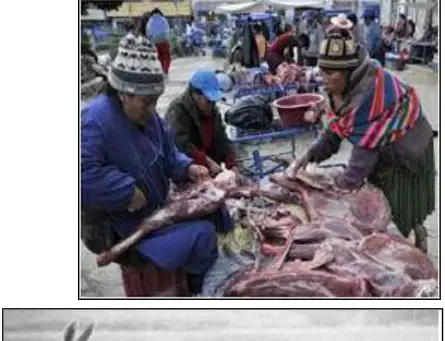
Which are common reasons people keep South American camelids? Select all that apply.
Livestock guardian duties
Fiber production for textiles
Companion animal roles
Tax incentives
Primary dairy production
In camelid terminology, what does the term "cria" refer to?
Birthing process
Hybrid of llama and alpaca
Juvenile offspring
Adult female camelid
Which term correctly names the offspring of an alpaca and a llama?
Vicugna
Guanaco
Suri
Huarizo
Identify the camelid fiber type pair that refers to coat styles.
Orgling and Humming
Cria and Huarizo
Suri and Huacaya
Lock and Kush
Which statement about camelid reproduction and physiology is accurate?
Gestation averages 245 ± 30 days
They are spontaneous ovulators
They are induced ovulators
They typically have litters of multiple crias
According to the diagram of camelid facts, which respiratory trait is characteristic?
Obligate nasal breathers
Dual oral-nasal breathers
Primarily oral breathers
Facultative mouth breathers
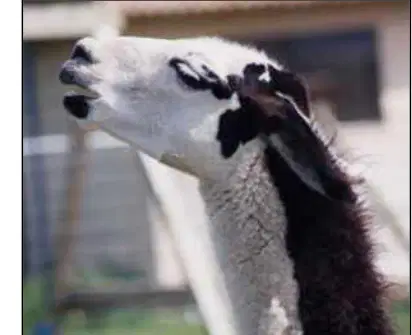
From the body language panel, which behavior indicates a warning?
Head raised, ears back
Neck extended forward
Sternal recumbency position
Ears forward, alert gaze
Match each labeled behavior in the body language images to its general social meaning.
Submission reduces conflict
Alert signals attention
Fighting asserts dominance
Stay away indicates distance
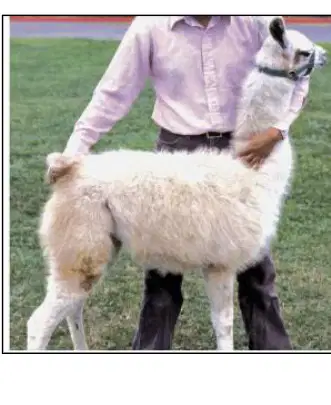
Which physical trait best distinguishes a llama from an alpaca in field identification?
Smaller ears and shorter neck
Shorter face and stockier frame
Longer face and taller frame
Wool covering face and ears
Which pairing about camelid chromosomes and interbreeding is accurate?
Same chromosome number enables fertile hybrids
Different chromosome number prevents hybridization
Same chromosome number allows hybridization but fertility varies
Hybridization requires identical mitochondrial DNA
Llamas are commonly used for packing. Which property makes them suitable for this role?
Short limbs for steep terrain stability
Preference for solitary travel over herding
Efficient load carrying with calm temperament
Wide hooves that sink into soft soils

When placing a halter on a camelid head, where should the noseband sit relative to the nasal bone regions labeled on the diagram?
High on the danger region near soft tissue
Centered between the danger and safe regions
Low across the safe bony region of the nose
Directly over the premaxilla near the incisors
On an alpaca farm, what stocking density is recommended as an upper limit with rotational grazing?
Two to three camelids per acre
Five to seven camelids per acre
Eight to ten camelids per acre
Twelve or more camelids per acre
Which set of pens should be present and interconnected with catch pens on a well-managed camelid farm?
Show preparation, hospital, training, storage
Racing arena, playground, waterfowl, pasture
Breeding, birthing, weanlings, males, quarantine
Milking, feedlot, transport, isolation, nursery
For birthing pens, which conditions are most important to maintain?
Visibility to humans and visual contact with herd
Cria safety with clean environment
Permanent separation of mother from herd
Complete isolation from all herd members
Which fencing strategy best protects camelids from predators and disease-carrying animals?
Electric or portable fencing options
Single rope perimeter around fields
Open pasture without barriers
Low wooden rails without gates
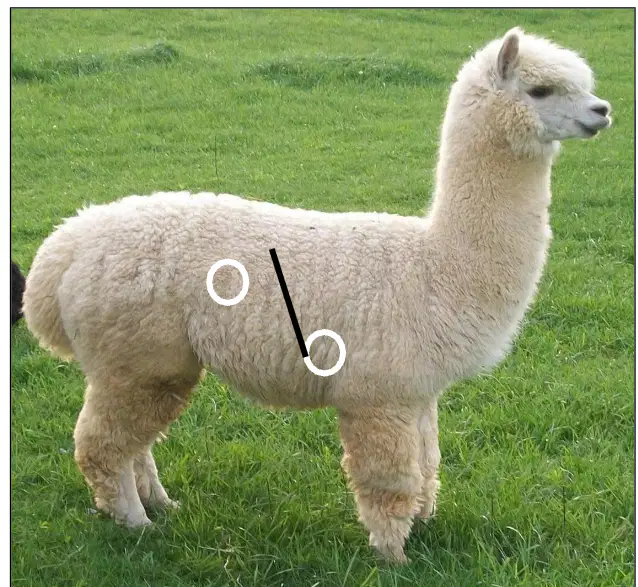
During physical examination of an alpaca, the marked sites on the diagram most likely indicate locations for which assessments?
Palpation of carpal joint swelling
Respiratory auscultation over thorax
Heart auscultation at left apex
Body condition scoring along ribs
In camelid medicine, what is a ‘Llamoid’ best described as?
Crossbreed between llama and alpaca
Juvenile alpacas under six months old
Any Old World camel species only
Members of the Lama genus and relatives
Which term refers to a newborn camelid, typically from birth until weaning?
Cria
Huarizo
Llamoid
Suri
A ‘Huarizo’ is specifically which type of camelid?
Alpaca with Suri fleece
Hybrid of llama and alpaca
Camelid in Kush posture
Young male llama calf
In restraint or handling, the ‘Kush position’ indicates what body posture?
Crouched squatting on hind limbs
Lateral recumbency on one side
Standing alert with ears forward
Sternal recumbency with legs tucked
Suri and Huacaya are terms that distinguish which feature in alpacas?
Breeding soundness category
Fleece type and fiber structure
Age class before weaning
Hybrid status with llamas
What characterizes Suri fleece compared with Huacaya fleece?
Mixed fibers from hybrid crosses
Short, crimped fiber with loft
Long, lustrous locks that hang down
Coarse guard hair predominant
During breeding, ‘Orgling’ most commonly refers to what behavior in male camelids?
Continuous mating vocalization
Territorial neck wrestling
Humming to locate herd mates
Alarm call during handling
Which vocalization is commonly used by camelids to communicate calmly within the herd?
Bellowing
Orgling
Humming
Bleating
Select the terms that correctly pair with their definitions.
Cria: neonatal camelid until weaning
Kush: sternal recumbency restraint posture
Huarizo: alpaca–llama hybrid
Suri/Huacaya: breeding soundness grades
Which trait best describes camelid reproductive physiology?
Obligate parthenogens without males
Spontaneous ovulators with cycles
Induced ovulators requiring mating
Seasonally polyestrous breeders
Camelids are pseudo-ruminants. What key anatomical feature supports this classification?
Crop and gizzard like birds
Four-chamber ruminant stomach
Three-compartment forestomach system
Single stomach without compartments
Typical life expectancy for healthy camelids under managed care is closest to which range?
15–25 years commonly
8–12 years in most herds
45–55 years frequently
30–40 years routinely
Which body language cue most reliably signals a camelid is agitated and may spit?
Pinned ears with head raised
Lying sternal with humming
Ears forward and relaxed posture
Tail tucked with chewing cud
White South American camelids show increased risk of which sensory condition?
Photosensitivity leading to hypervision
Enhanced hearing above normal
Inherited deafness occurs more often
Congenital blindness predominates
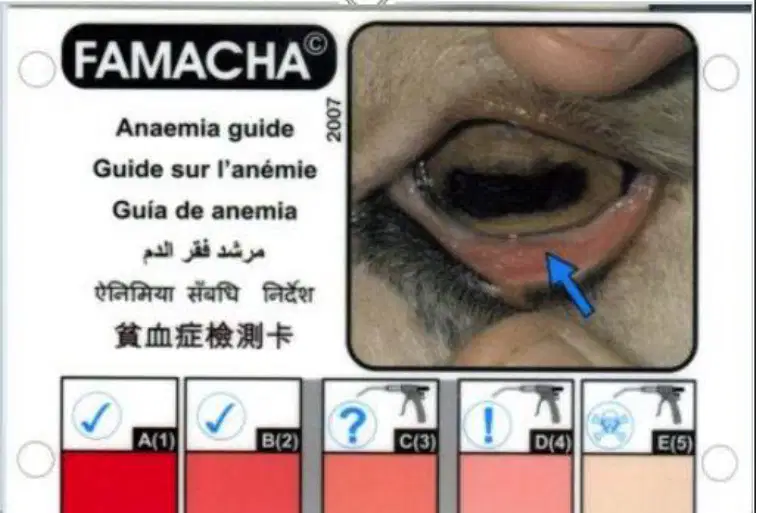
You examine a camelid’s lower eyelid using a FAMACHA card. Which interpretation correctly links eyelid color to action?
D: pale, treat for Haemonchus promptly
E: very white, urgent anthelmintic intervention
C: pink, monitor and recheck soon
A/B: bright red, deworm only if other signs
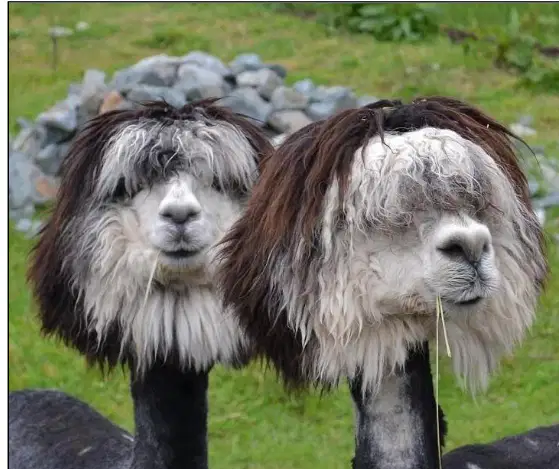
Which routine health procedures are emphasized for camelid husbandry?
Hoof trimming using horseshoes
Vaccinations tailored to regional risks
Strategic deworming guided by FAMACHA
Dental care focusing on fighting teeth
When trimming camelid feet, what structure is primarily managed?
Cartilaginous flippers adapted
Single hoof like horses
Pads with toenails on each toe
Cloven hooves with hard walls
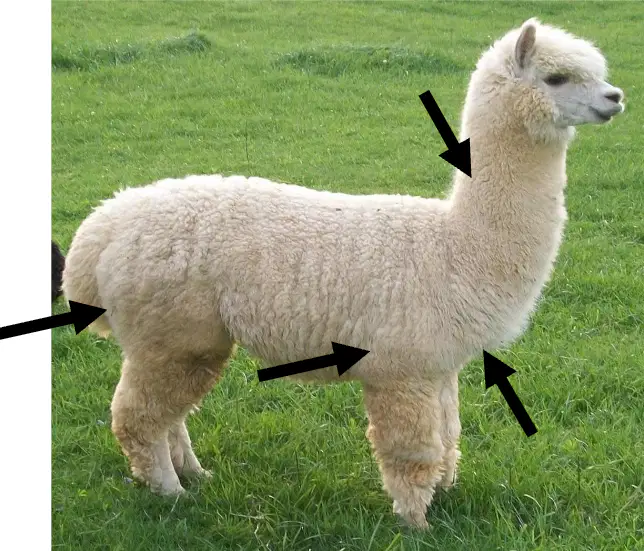
Which intramuscular injection sites are commonly used in camelids as shown by arrows on the diagram?
Gluteal muscles over pelvis
Triceps brachii of forelimb
Intercostal muscles near ribs
Cervical epaxial muscles of neck
Semimembranosus/semitendinosus of hind limb
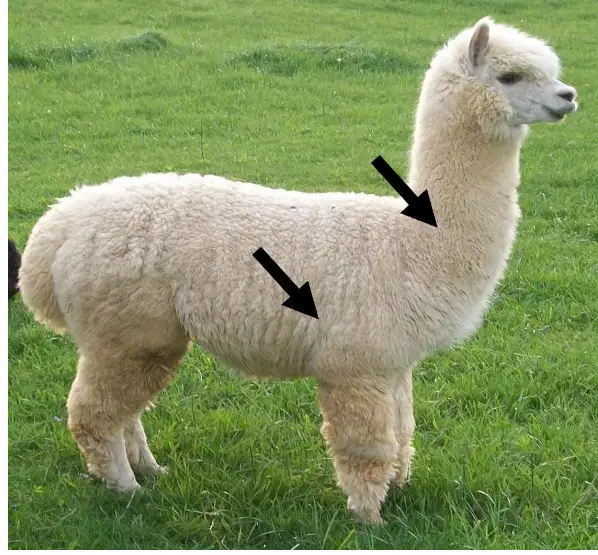
Subcutaneous injections in camelids are generally preferred. What are typical locations highlighted in the diagram?
Dorsal midline over spine
Axillary region behind elbow
Base of neck in loose skin
Intermandibular space under jaw
Distal limb over cannon bone
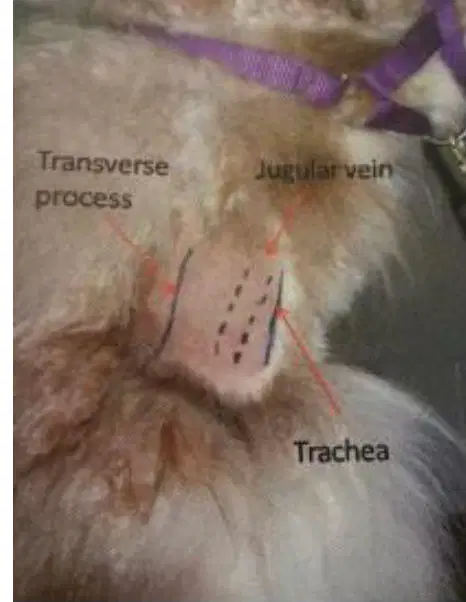
For venous access in camelids, which veins are practical targets and what positioning reduces risk?
Jugular vein with head slightly extended
Carotid artery with strong tourniquet
Cephalic vein with limb flexed and supported
Lateral saphenous vein with animal recumbent
Tail vein with tail lifted high
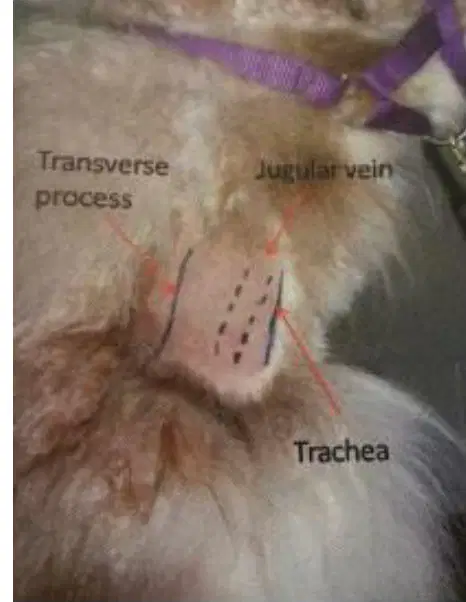
During jugular venipuncture in a llama, which risk is most critical to avoid based on neck anatomy?
Mild skin infection from needle touch
Accidental tracheal puncture causing emphysema
Inadvertent carotid cannulation causing hematoma
Temporary alopecia from clip site
Skin bruising from excessive alcohol
Which stocking density best prevents stress and overgrazing in alpacas or llamas on well-managed pasture?
Four adults per 0.2–0.4 hectare
One adult per 0.1 hectare
One adult per 0.2–0.4 hectare
Two adults per 0.1 hectare
A breeding facility wants separate areas for males, females with crias, and quarantine. Which pen design principle most supports welfare and biosecurity?
Rotating open paddocks only
Large shared central pen
Dedicated pens with solid partitions
Interconnected pens without gates
Select the fencing features that reduce predator entry while remaining safe for camelids.
Tight gates and buried apron
Barbed wire lower course
Woven wire 1.2–1.5 m tall
Wide square openings
Electric strands at nose height
Which characteristic defines a proper birthing pen for camelids to minimize neonatal disease risk?
Dark enclosed stall without airflow
Deep mud for soft footing
Clean, draft-free, easily disinfected
Crowded space with shared feeders
When integrating guard dogs with camelids to deter predators, which management step is most important at introduction?
Immediate off-leash roaming at night
Feeding from camelid troughs only
Housing dogs away from paddocks
Gradual supervised acclimation to herd
You plan fencing for a mixed-age herd near wooded predator habitat. Which combination is most appropriate?
Single smooth wire perimeter
Three-strand barbed wire perimeter
Woven wire with top hot wire
Five-strand electric only perimeter
For a quarantine pen, which design element best limits pathogen spread to the main herd?
Shared manure pile access
Adjacent open-air sleeping area
Dedicated equipment and footbath
Shared water source piping
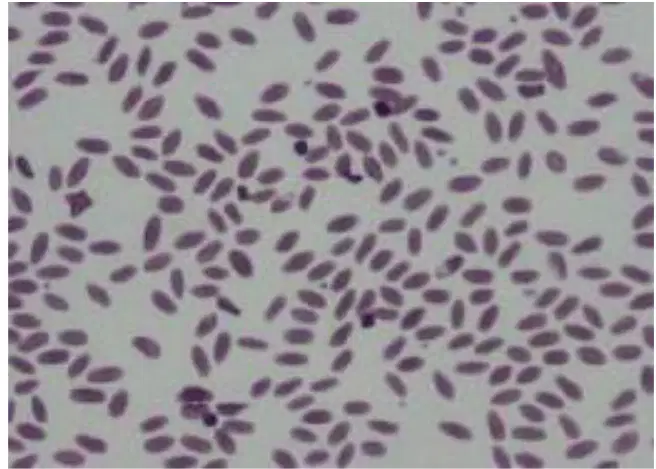
Image shows elliptical red blood cells typical of camelids. Which clinical concern commonly accompanies this hematology finding?
Leukocytosis from infection only
Anemia with immature cells present
Polycythemia from dehydration
Thrombocytosis with clot risk
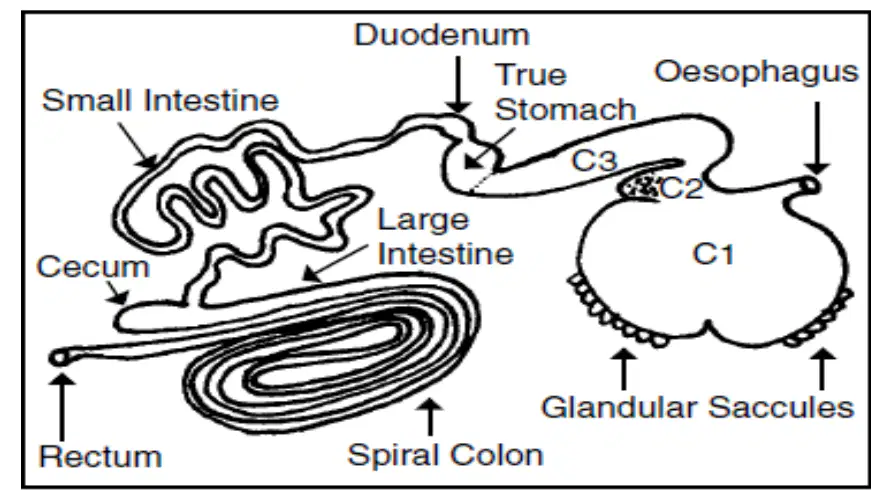
In camelid fore-stomach management, which technique safely collects rumen-like C1 fluid?
Endoscopic biopsy of C3 mucosa
Rectal aspiration of fecal fluid
Percutaneous C1-centesis under asepsis
Oral swab sample of saliva
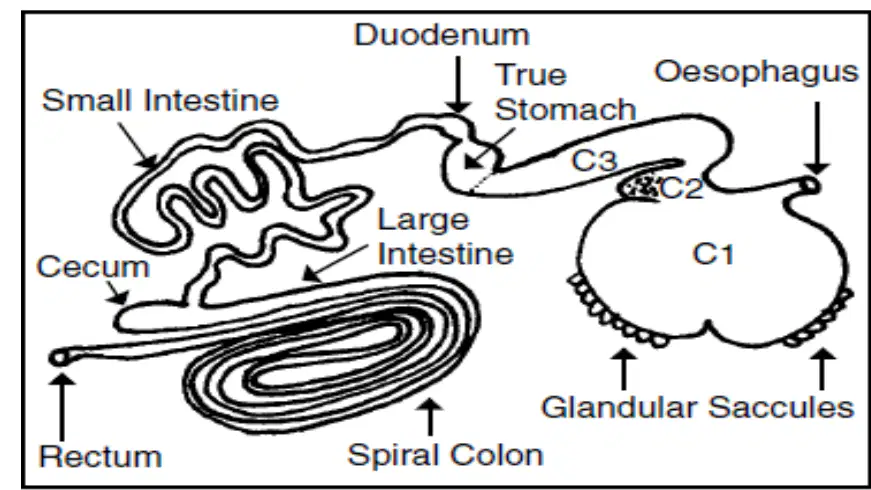
During treatment of C1 gas distension, which therapeutic route is appropriate for rapid relief and supportive care?
Orogastric tube decompression
Nasogastric tube placement
Intramuscular antibiotics only
Topical poultice on flank
Direct C1-centesis for gas
There are no vaccines labeled for camelids in the US. Which factors should primarily guide vaccine use decisions?
Availability of discount coupons
Risk of disease exposure
Cost of each dose
Known side effects
Efficacy evidence
Which timing precaution is recommended when scheduling vaccines for camelids?
Administer during hottest summer days
Avoid during first trimester pregnancy
Give immediately after transport stress
Always at night for better tolerance
Which pathogens are targeted by the core CD&T vaccine used in camelids?
Mycobacterium bovis; Brucella abortus strains
Campylobacter fetus; Chlamydia psittaci infections
Clostridium perfringens C and D; Clostridium tetani
Pasteurella multocida; Mannheimia haemolytica serotypes
A cria receives the CD&T vaccine at 3 months. What is the recommended follow-up schedule?
Booster after 3 weeks; annual repeats
Two boosters monthly; biennial repeats
Single dose only; no annual repeats
Booster after 6 months; triennial repeats
Which statement best describes a risk-based vaccination program for camelids?
Select vaccines based on local disease exposure
Administer every possible vaccine regardless
Vaccinate only when animals show illness signs
Use pediatric human vaccines off-label routinely
For E. coli control associated with neonatal mortality and uterine infections, what dosing guidance is given?
Females 1 cc pre-breeding and pre-parturition
All other animals 1 cc administered annually
Neonates 3 cc weekly until weaning
Males 1 cc only at 6 months of age
Regarding rabies vaccination in camelids, which recommendations are correct?
Annual booster following initial series
Boost every five years after priming dose
Initial vaccination at 3–4 months of age
Prefer killed vaccines labeled for large animals
Leptospirosis prevention in camelids often uses a Lepto 5 vaccine. Which schedule is indicated?
Short immunity; boosters every 6 months
Monthly boosters for the first two years
No boosters; lifetime protection after series
Long immunity; boosters every 3 years
West Nile virus vaccination guidance for camelids includes what protocol?
Three doses three weeks apart; before mosquito season
Two doses two months apart; after mosquito season
Single spring dose; repeat every three years
Weekly dosing until vector numbers decline
What are key best practices for camelid toenail trimming shown?
Use appropriate restraint during trimming
Trim at least every six months
Perform only when nails crack naturally
Avoid trimming to preserve hoof length
Which findings most consistently indicate an obese camelid during body condition scoring?
Spine forms a trench of soft tissue
Transverse processes hard to palpate
Fat deposits at tailhead
Ribs easily palpable throughout
During routine assessment, you cannot see bony landmarks, but the transverse processes are palpable with firm pressure. What nutritional status is most likely?
Underfed and losing weight
Adequate and stable intake
Overfed with mild excess
Severely malnourished
Which step improves accuracy in camelid body condition scoring when fleece is long or matted?
Use systematic palpation points
Rely on rib cage contour alone
Trim teeth before scoring
Score only by visual inspection
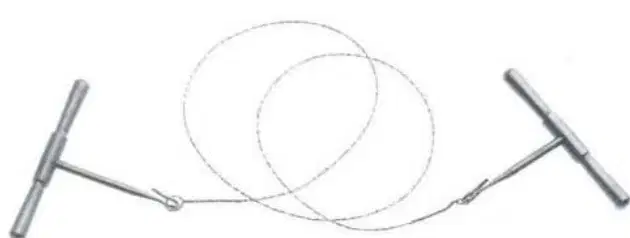
In camelids, fighting teeth include the upper third incisor and canines. Which trimming tools are commonly used for these teeth?
Gigli wire saw handles
Orthodontic elastics
High-speed Dremel tool
Hand scaler for plaque
Which color change in the lower eyelid conjunctiva most strongly indicates severe anemia in FAMACHA scoring?
Bright salmon-pink coloration
Pale pink with slight blanching
White to very pale coloration
Deep red with visible vasculature
How should scoring frequency change during high parasite risk seasons when using FAMACHA in camelids?
Only score after clinical signs appear
Increase scoring to weekly or biweekly
Maintain the same as low-risk periods
Decrease scoring to monthly checks
Which interpretation aligns with FAMACHA scoring principles for camelid anemia management?
Consistent moderate scores warrant monitoring and nutritional support
Higher numeric score indicates paler conjunctiva and worse anemia
Scores help target selective deworming to affected animals
FAMACHA replaces all other anemia diagnostics entirely
Which approach best describes strategic deworming in camelids to slow parasite resistance while maintaining animal health?
Dose lightly at every feeding
Frequent blanket dosing year-round
Treat only when fecal counts rise
Rotate every drug monthly
When administering medications to camelids, which practice minimizes aspiration risk and ensures accurate dosing?
Mix dose in large water bucket
Give oral paste slowly over tongue
Inject intramuscular behind shoulder
Bolus quickly while head elevated
Which vaccination strategy is most appropriate for herd-level protection in camelids?
One-time mass vaccination
Only vaccinate young males
Core vaccines on schedule
Risk-based boosters added
In routine dental and foot care for camelids, which combination reflects proper preventive husbandry?
Float sharp teeth as needed
Rely solely on soft pasture
Trim toenails regularly
Ignore minor malocclusions
Which site is most appropriate for intramuscular injection in camelids to minimize nerve injury risk?
Neck muscles near jugular
Gluteal muscles near hip
Longissimus along lumbar spine
Triceps brachii lateral head
Semimembranosus–semitendinosus group
When choosing a subcutaneous injection site in camelids, which location provides loose skin and reduces the chance of hitting muscle?
Dorsal lumbar epaxial area
Axillary fold behind elbow
Gluteal crest region
Hamstring area caudal thigh
Cervical region over jugular
Which combination lists common intravenous access sites in camelids and one key consideration?
Saphenous vein with minimal restraint
Jugular vein with thick skin
Ear vein with slow flow
Cephalic vein with reliable visualization
Tail vein with high pressure
You must administer a large-volume medication. Which route and site pairing is most suitable to reduce tissue irritation?
Intramuscular in neck for viscous drugs
Subcutaneous at axilla for dilute fluids
Intravenous in jugular for isotonic solutions
Subcutaneous over dorsum for hypertonic
Intramuscular in gluteal for large volumes
Which statement best describes medication volume limits for intramuscular injections in adult camelids?
Up to 25 mL per single muscle belly
Large volumes safer than subcutaneous
Volume limits only apply to juveniles
No limit if drug is isotonic and sterile
Small volumes per site to avoid soreness
Which risk is specifically higher with intravenous administration compared to intramuscular or subcutaneous routes?
Delayed absorption variability
Local muscle fiber necrosis
Rapid systemic adverse reactions
Skin tenting and leakage
Fibrosis at injection site
For subcutaneous injections in camelids, which technique detail improves accuracy and comfort?
Massage vigorously after injection
Use largest gauge available
Lift a skin tent before inserting
Aim toward underlying muscle belly
Insert needle perpendicular deeply
Which scenario warrants avoiding the jugular vein for IV access in camelids and selecting an alternative site?
Severe neck cellulitis present
Drug requires slow absorption
Owner prefers fewer visible marks
Patient is mildly dehydrated
Needle length is shorter than usual

