
 Worksheets
Integrated Science I Fall Final Exam
Total questions: 75
Worksheet time: 44mins
Which process is responsible for the sun's energy production?
A. Chemical reactions
B. Nuclear fusion
C. Nuclear fission
D. Geothermal activity
Which of the following best describes the Big Bang theory?
A. A theory that explains the formation of the solar system
B. A theory that describes the expansion of the universe from a singular point
C. A theory that explains the life cycle of stars
D. A theory that describes the motion of galaxies
How do stars produce elements over their life cycle?
A. Through chemical reactions
B. Through nuclear fusion
C. Through gravitational collapse
D. Through magnetic fields
Which scientific laws describe the motion of planets in their orbits around the sun?
A. Orbital Period
B. Law of gravitation
C. Newton's third law of motion
D. Kepler's laws of planetary motion
Which of the following provides evidence for the theory that continents have drifted over time?
A. The discovery of matching geological formations on separate continents
B. The identical age of all continental rocks
C. The fixed location of mountain ranges
D. The lack of volcanic activity
Explain how nuclear fusion in the sun's core releases energy that reaches Earth.
A. By converting hydrogen into helium, releasing energy in the form of light and heat
B. By burning hydrogen gas, releasing energy in the form of light and heat
C. By splitting helium atoms, releasing energy in the form of light and heat
D. By absorbing energy from space, releasing it as light and heat
Communicate how stars produce heavier elements during their life cycle.
A. Stars produce heavier elements through gravitational collapse
B. Stars produce heavier elements through nuclear fusion in their cores
C. Stars produce heavier elements through chemical reactions
D. Stars produce heavier elements through magnetic fields
Use Kepler's laws to predict the motion of a planet orbiting the sun.
A. The planet moves in a circular orbit with constant speed
B. The planet moves in an elliptical orbit with varying speed
C. The planet moves in a parabolic orbit with constant speed
D. The planet moves in a hyperbolic orbit with varying speed
What evidence supports the theory of plate tectonics?
A. The existence of a single supercontinent throughout Earth's history
B. The alignment of fossil records across different continents
C. The consistent thickness of oceanic crust
D. The lack of seismic activity in oceanic regions
Which element is primarily formed in the sun's core as a result of nuclear fusion?
A. Helium
B. Carbon
C. Oxygen
D. Nitrogen
Which observation supports the Big Bang theory?
A. The presence of water on Mars
B. The cosmic microwave background radiation
C. The rotation of the Earth
D. The phases of the moon
Which law can be used to calculate the gravitational force between two orbiting objects?
A. Newton's first law
B. Newton's second law
C. Newton's third law
D. Newton's law of universal gravitation
Illustrate how energy from the sun reaches Earth.
A. Energy is transferred through conduction
B. Energy is transferred through convection
C. Energy is transferred through radiation
D. Energy is transferred through reflection
Explain how the motion of distant galaxies supports the Big Bang theory.
A. Distant galaxies are moving towards us, indicating a contracting universe
B. Distant galaxies are stationary, indicating a static universe
C. Distant galaxies are moving away from us, indicating an expanding universe
D. Distant galaxies are moving in random directions, indicating a chaotic universe
Describe the process by which stars create elements during their life cycle.
A. Stars create elements through chemical reactions in their atmospheres
B. Stars create elements through nuclear fusion in their cores
C. Stars create elements through gravitational interactions with other stars
D. Stars create elements through magnetic field interactions

This image shows the formation of a mountain range at this (a) plate boundary.
the rock that forms Earth's outer layer
A. crust
B. mantle
C. core
D. atmosphere

What information did scientists study in order to develop this model of Earth's interior?
fossils found in rocks
core samples from seafloor drillings
locations of recent volcanic activity
recordings of earthquake waves


Here is our solar system, why do the planets stay in orbit around the sun? Why do they not fly away?
The sun has a strong gravitational pull
The sun keeps the planets together
Our solar system is one big gravity bed
The comets and asteroids help keep the planets floating in the air

Which planet will experience the least gravitational pull from the Sun?
Neptune
Jupiter
Mars
Mercury
What is the final stage of a very large mass star?
White Dwarf
Blue Giant
Black Hole
Red Giant
When using parallax to measure the distance to a star, what is the length of the baseline used from Earth?
1 parsec
1 astronomical unit
1 light year

Which of the following is a branch of Earth Science that focuses on the study of the atmosphere and weather patterns?
Geology
Meteorology
Oceanography
Astronomy
How do the hydrosphere and atmosphere interact to influence weather patterns?
The hydrosphere absorbs sunlight, causing the atmosphere to cool.
The atmosphere provides oxygen for aquatic life in the hydrosphere.
The hydrosphere evaporates water, which then forms clouds in the atmosphere.
The atmosphere blocks sunlight, preventing evaporation in the hydrosphere.
How does the atmosphere interact with the geosphere to affect Earth's surface?
The atmosphere provides nutrients for soil formation.
The atmosphere causes erosion through wind and precipitation.
The atmosphere blocks sunlight, preventing plant growth.
The atmosphere absorbs heat, causing the geosphere to cool.

What is the primary role of the atmosphere in Earth's system?
To provide a habitat for marine life
To regulate Earth's temperature and protect from harmful solar radiation
To form the solid surface of Earth
To store and cycle water
What is the term for the warming of the Earth's surface due to trapped heat?
Global Cooling
Greenhouse Effect
Ozone Depletion
Acid Rain

What geological activity is most commonly triggered by the shifting of Earth's crust?
Volcanic eruptions
Earthquakes
Tsunamis
Landslides
Which of these stages in the life cycle of a star come first?
black hole
red giant
nebula
supernova
Metamorphic rocks are formed by....
Compression of crust causing extreme heat and pressure
Sinking of dead organic matter
Formation of Granite Underground
In which era did the first humans first appear?
Cenozoic
Mesozoic
Paleozoic
Precambrian

The distance between the Sun and the Earth is called ...
A light minute
A light half hour
An Astronomical Unit (AU)
A short trip.
Who came up with three laws explaining planetary motion?
Isaac Newton
Galileo Galilei
Tycho Brahe
Johannes Kepler
Which gas makes up 78% of our atmosphere?
oxygen
Carbon dioxide
nitrogen
argon
Which layer of the atmosphere does all weather occur?
exosphere
troposphere
mesosphere
thermosphere
Which layer of the atmosphere contains the ozone layer?
troposphere
thermosphere
methosphere
stratosphere
What happens to air pressure the higher up in space you go?
air pressure stays constant
air pressure increases
air pressure deceases
there is no air pressure

What was a major contributor to the formation of Earth's early atmosphere?
Comet Impacts
Volcanic Activity
Ocean Currents
Solar Winds
What does the term renewable energy source mean?
Energy that can be replenished
Energy that can be all used up
Energy that can be lost
What kind of energy is natural gas?
Renewable
Non renewable
Sources of energy made from prehistoric plants and animals.
the sun
the wind
fossil fuels

Condition of earth’s atmosphere at a particular time and place.
Maritime
Weather
Polar
Warm Front
Which of the following best describes the process of erosion?
The movement of soil and rock by natural forces such as wind, water, ice, or gravity.
The accumulation of sediment in a riverbed.
The formation of mountains through tectonic activity.
The creation of new landforms through volcanic eruptions.
How deforestation can contribute to global warming?
it increases CO2 level in the air that decreases the global temperature
it decreases CO2 level in the air that increases the global temperature
it increases CO2 level in the air that increases the global temperature
What criteria are used to classify the different climate zones on Earth?
By latitude lines
By longitude lines
By the prime meridian
By the equator
How much time does the Earth take to rotate once around its axis?
365 days
24 hours
7 days
12 hours
Which elements are the main components of the Sun?
carbon and oxygen
nitrogen and hydrogen
hydrogen and helium
helium and neon
Where in the Sun does the production of energy take place?
the corona
the photosphere
the core
the chromosphere
What is the name of the geological feature where magma erupts through the Earth's surface?
volcano
lava
earthquakes
Which of the following are the three kinds of stress?
Compression, Tension, Shear
P-wave, S-waves, Surface waves
Focus, Epicenter, Fault
Reverse, Normal, Strike-slip
What is a characteristic of S waves that differentiates them from P waves?
They travel faster than P waves
They can move through both liquids and solids
They are unable to pass through the Earth's outer core
They are the first waves to be detected by seismographs
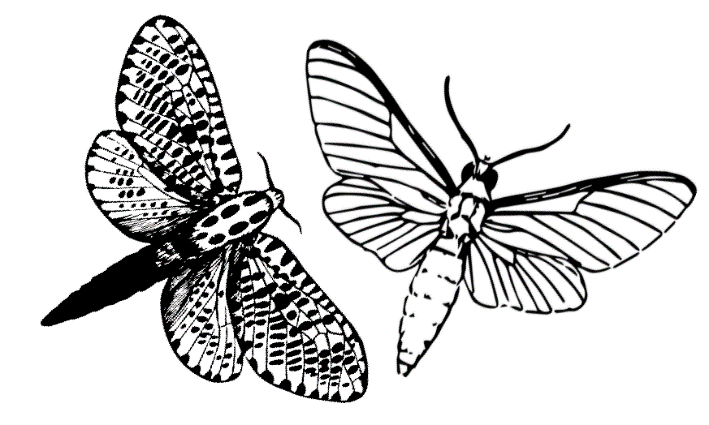
A physical trait favored by an environmental change can be called an
adaptation
extinction
possibility
mutation
What is the primary cause of the Earth's seasons?
The distance of Earth from the Sun
The gravitational pull of the Moon
The tilt of Earth's axis
The rotation of Earth on its axis
Which layer of Earth's atmosphere contains the ozone layer?
Thermosphere
Troposphere
Stratosphere
Mesosphere
What is the main process that drives the water cycle on Earth?
Condensation
Infiltration
Evaporation
Precipitation
What is the primary cause of ocean tides on Earth?
Wind patterns
The gravitational pull of the Sun
The rotation of the Earth
The gravitational pull of the Moon
Which phase of the moon occurs when the moon is between the Earth and the Sun?
Full Moon
New Moon
Waning Crescent
First Quarter

