
 Worksheets
benchmark review
Total questions: 73
Worksheet time: 2hrs 30mins
The (a) shows all of the elements.
The symbol C on the periodic table stands for the element (a) .

What is this an example of?
compound because it is made up of 3 different elements bonded together
a molecule because it is the same element bonded together
compound because it is made up of 2 different elements bonded together
an element because it is the simplest form of matter


The basic unit from which all matter is made.
Atom
Molecule
Substance
Element
What is the symbol for the element Oxygen?
O
Ox
Oy
Om
Which of the following is a molecule but not a compound?
NaCl
CO2
H2O
O2
Which of these is NOT an element?
Carbon
Water
Hydrogen
Oxygen
Which two formulas contain 4 atoms of hydrogen?
2H2CO3
H2O2
C2H6
C2H4O2

How many total atoms are in the compound for ammonia, NH3
2
3
4
5
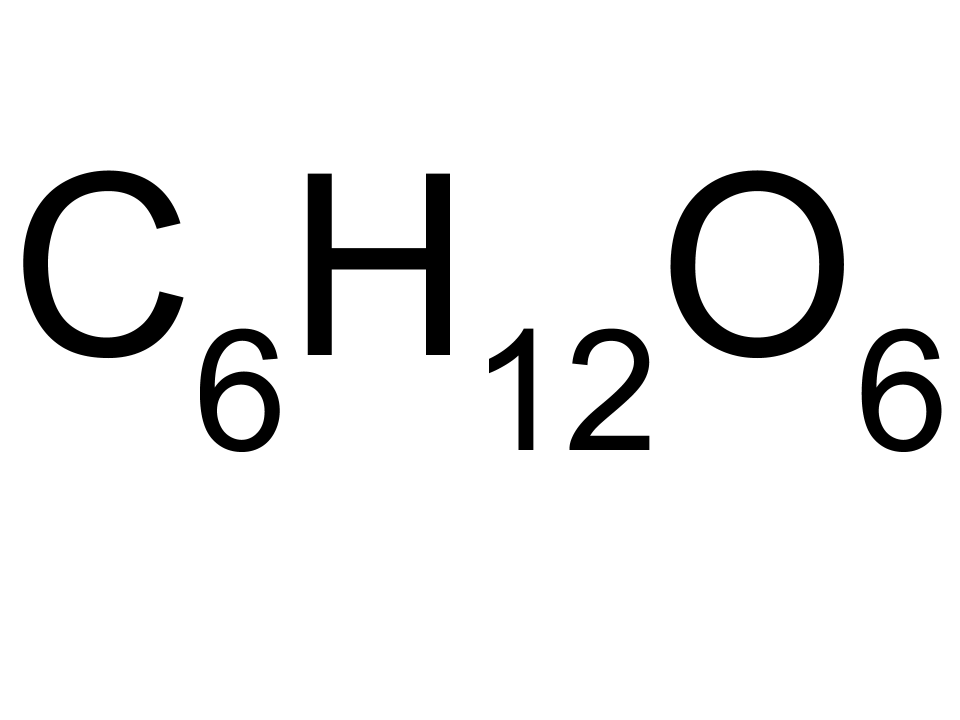
The chemical formula for glucose is C6H12O6. How many hydrogen atoms are in glucose?
3
6
12
24

How many total atoms are in the compound 2H2O?
2
3
4
6

How many atoms of magnesium (Mg) are in the compound Al2MgO4
7
4
2
1

Crushing a Coke Can

Sodium metal is cut with a knife

Sugar is mixed and dissolved into water.

Cooking an egg
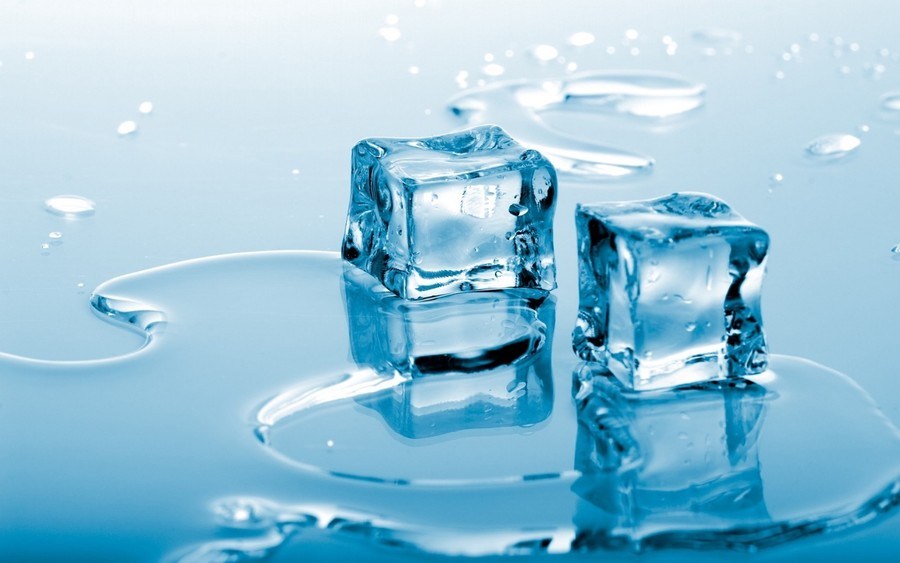
Water freezing into Ice

Copper tarnishing.
If I dissolve carbon dioxide in water, what is the solvent?
Carbon Dioxide
There is no solvent
Oxygen
Water
Which of the following is a unit of distance ?
miles/hr
hr
m
min
Another way to explain the speed and direction of a object would be to describe it’s ________
Speed
Velocity
Acceleration
This occurs when an object speeds up, slows down, or changes direction.
Speed
Velocity
Acceleration
If it takes me 10 minutes to walk 1 mile, what is my speed?
10min/mi
10mi/min
1mi/10min
1min/10mi
9.88m/sec south best represents a speed
True
False

What is happening during point A to B?
not moving
increasing speed at a constant rate
moving at a constant speed
moving at 10 m/s2 acceleration
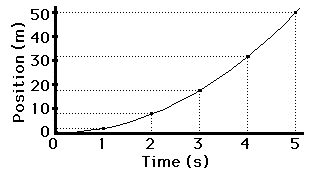

What is this graph showing?
At rest
Acceleration
Constant speed of 1 m/s
Gradually speeding up

What is the graph showing?
Constant speed towards start
Constant speed away from start
Acceleration away from start
Acceleration towards start
Which of the following demonstrates a property of a metal?
Malleable
Dull
Brittle
None of these

Nonmetals are found on the right side of the metalloids.
TRUE
FALSE

What is the only nonmetal element on left side of the periodic table?
Helium (He)
Hydrogen (H)
Lithium (Li)
Calcium (Ca)

Of all the elements, about 75 percent are classified as
Nonmetal
Metalloid
Metal
Noble Gas

The Northern Hemisphere is warmer in spring than in winter, because in spring
the days are shorter.
it gets more direct sunlight.
the Earth is closer to the Sun.
it is tilted away from the Sun.

When the Moon, Earth, and Sun are lined up as seen here, the gravity of the sun plus the gravity of the moon cause _________ tides on Earth.
low
neap
slow
spring

If you live in the southern hemisphere, what season would you be experiencing in position C this diagram?
Fall
Summer
Winter
Spring
Gravity is the force by which a planet or other body draws objects toward its center. The force of gravity keeps all of the planets in orbit around the sun. What does the force of gravity depend on?
mass and weight
weight and speed
mass and distance
speed and distance

The rotation is responsible for what we call _________; the tilt on the axis influences the ________.
a day; a year
a day; seasons
a year; seasons
a day; the phases of the moon

Which position represents spring in the southern hemisphere?
A
B
C
D

Both the Moon and the Sun influence the tides on Earth. The moon has a much greater influence though. Why is that?
because the Sun is much less dense
because the Sun is gaseous, not solid
because the Sun is so far away from Earth
because the Sun is less massive than the Moon

______ tides, tides that are weaker than normal, happen when the Moon is at first or last quarter phase and the sun and moon interfere with each other.
High
Low
Neap
Spring

If Earth were not tilted on its axis, what change would we experience?
Day length would be less than 24 hours.
Both sides of the moon would be visible.
Temperatures would be constant year round.
The length of the year would be more than 365 days.
Newtons law states that for every action, there is an_________ reaction
unequal and opposite
stronger and opposite
equal and similar
equal and opposite

Force always come in________
waves
triplets
pairs

How is this an example of Newton's Third law
Only the ball is using the head
only the head is pulling the ball
They are both exerting an equal force on each other


What is the relationship between temperature and the kinetic energy of particles in a substance?
As temperature increases, kinetic energy decreases.
As temperature increases, kinetic energy increases.
Temperature and kinetic energy are unrelated.
As temperature decreases, kinetic energy increases.
Which of the following best describes thermal equilibrium?
When two substances have different temperatures.
When thermal energy moves from cooler to warmer substances.
When all substances in a system reach the same temperature.
When thermal energy stops moving.
Which method of thermal energy transfer involves the movement of fluids?
Conduction
Convection
Radiation
Insulation
Explain how the kinetic energy of particles changes when a substance is heated.
Particles move slower and kinetic energy decreases.
Particles move faster and kinetic energy increases.
Particles stop moving and kinetic energy remains constant.
Kinetic energy is not affected by heating.
Describe the process of conduction in thermal energy transfer.
Energy is transferred through electromagnetic waves.
Energy is transferred through the movement of fluids.
Energy is transferred through direct contact between particles.
Energy is transferred through sound waves.
Which of the following is an example of radiation?
Heat from a stove warming a pot.
Warm air rising in a room.
Sunlight warming your skin.
Ice melting in your hand.
How does thermal energy transfer through convection?
By direct contact between particles.
By the movement of electromagnetic waves.
By the circulation of fluids due to temperature differences.
By the vibration of particles in place.
If you added ice (0oC) to a glass of water (15oC) how would the heat move between the ice & water?
from the ice to the water
from the water to the ice
Thermal energy moves...
from hot to cold.
from cold to hot.
Transfer of thermal energy caused by the rising of hotter less dense fluids and the sinking of cooler more dense fluids:
convection
conduction
radiation
density
What causes wind?
Conduction
Radiation
Convection

