
 Worksheets
Objectives
Total questions: 85
Worksheet time: 43mins
Anika is learning about how diabetes develops in her medical class. Which concept best describes the changes that occur at the cellular and hormonal level in diabetes?
Pathophysiology of insulin dysregulation
Sociocultural access to healthy foods
Administrative billing for clinic visits
Marketing strategies for glucose meters
Ethan is reviewing his health risks with his doctor. Which set of factors would his doctor most likely identify as predictive risk factors for diabetes?
Obesity, family history, physical inactivity
High education level, wealth accumulation
Mindfulness, yoga practice, meditation
Annual dental cleaning, flu vaccination
Aria is a nurse caring for a client with diabetes. Which step belongs in the nursing process?
Negotiating clinic lease contracts
Assessment of blood glucose patterns
Designing pharmaceutical advertisements
Selling insurance policy options
Anika has recently been diagnosed with diabetes and is assembling her collaborative care team. Which professional should be part of her team for diabetes management?
Retail store merchandiser
Registered dietitian nutritionist
Patent attorney specialist
Airline operations supervisor
Oliver has diabetes and is working with his healthcare team to improve his health outcomes. Which determinant of health will most directly impact Oliver's ability to manage his diabetes?
Number of streaming subscriptions
Preference for luxury fashion brands
Frequency of international tourism
Access to affordable, nutritious food
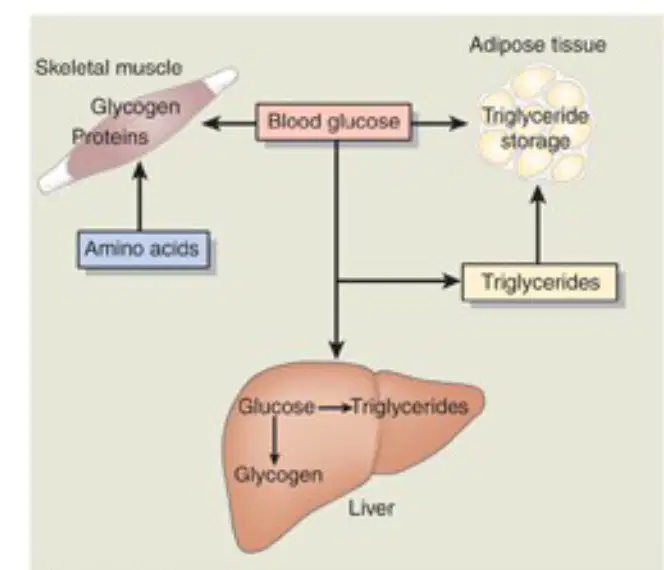
During a period of fasting, Isla's body needs to maintain her blood glucose levels. Which pathway helps generate glucose from non-carbohydrate precursors to support her energy needs?
Lipogenesis in adipose tissue
Gluconeogenesis in the liver
Proteolysis in the pancreas
Glycogenolysis in skeletal muscle
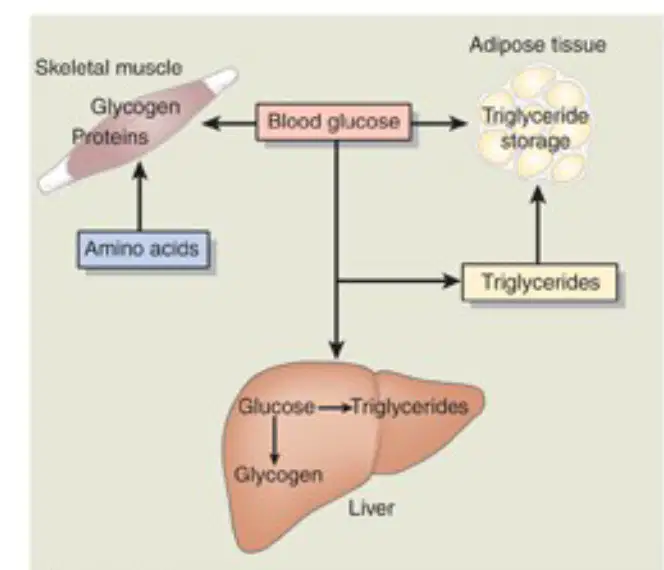
Emma is learning about how her body stores energy after eating a meal. According to the diagram, which tissue in her body is primarily responsible for triglyceride storage under the influence of hormones?
Skeletal muscle fibers
Adipose tissue depots
Pancreatic islets
Renal cortex cells
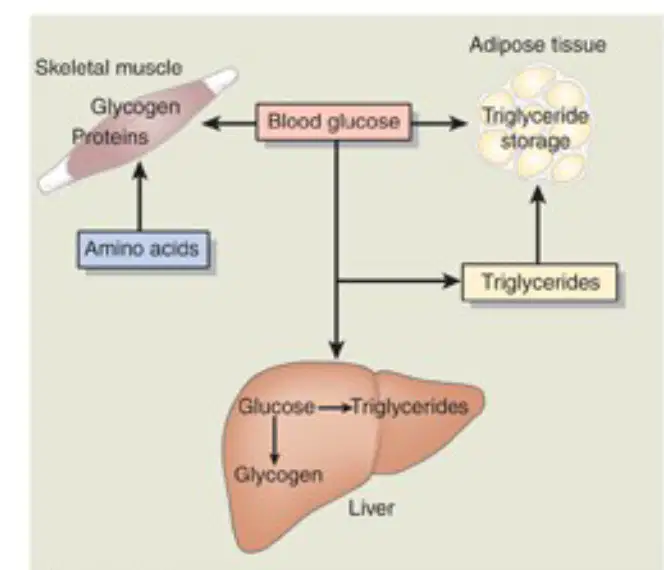
Mia is training for a marathon and has been fasting for an extended period, leading to depleted glycogen stores. Which process must increase in her body to maintain blood glucose?
Anaerobic glycolysis in muscle
Triglyceride storage in adipose
Glycogenolysis in the liver
Gluconeogenesis from amino acids
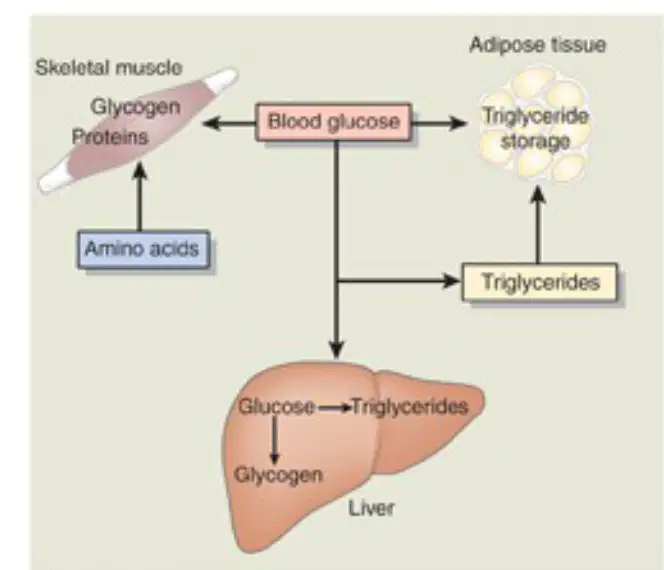
After a long run, Ava's skeletal muscles begin to break down proteins. Based on the diagram, which statement best describes what happens to the amino acids released from her muscles?
They perform hepatic gluconeogenesis
They store triglycerides long term
They convert glucose to ketones
They are released into blood
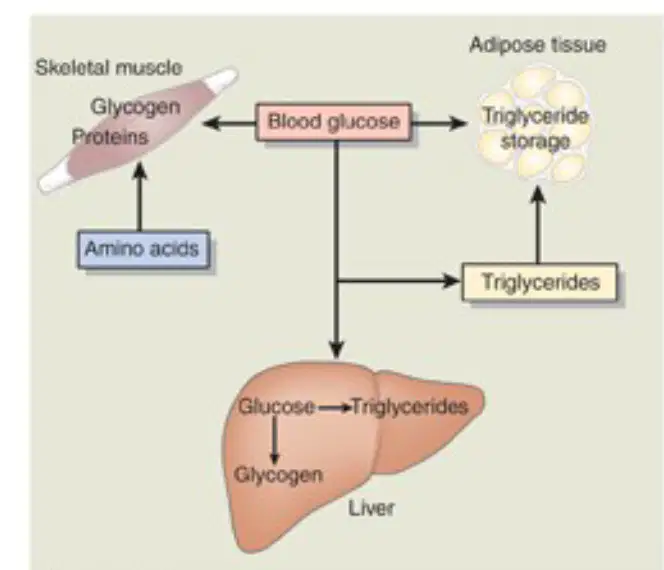
After a long run, Evelyn's body releases hormonal signals that promote glycogenolysis. Which immediate outcome will most directly increase as a result?
Triglyceride synthesis rate
Blood glucose concentration
Renal gluconeogenesis flux
Protein transcription activity
Maya recently went for a routine health check-up. Her doctor explained that in healthy adults, the typical fasting blood glucose is closest to which value range?
120–130 mg/dL fasting level
100–110 mg/dL fasting level
80–90 mg/dL fasting level
60–70 mg/dL fasting level
Ethan has just finished eating a mixed meal and wants to check his blood glucose level. What blood glucose range is expected for nondiabetic individuals immediately after a meal?
100–120 mg/dL post-meal
130–150 mg/dL post-meal
90–100 mg/dL post-meal
70–90 mg/dL post-meal
After eating a meal, Evelyn’s blood glucose rises. Which statement best describes insulin’s immediate role in her body?
Insulin enables glucose entry into cells
Insulin triggers glucose release from liver
Insulin converts glucose into fatty acids
Insulin blocks glucose formation in muscle
After eating a meal, Mason’s pancreas fails to increase insulin production. Which immediate physiological consequence is most likely?
Intestinal glucose absorption stops
Rapid drop in fasting glucose occurs
Blood glucose remains elevated longer
Enhanced cellular glucose uptake occurs
After eating a meal, Daniel experiences changes in his body to regulate blood sugar. Place the following events in the most logical order for normal post-meal glucose regulation: A) Insulin secretion increases, B) Cells take up glucose, C) Blood glucose rises.
C → B → A sequence order
C → A → B sequence order
B → C → A sequence order
A → C → B sequence order
Zoe is studying how the pancreas works in her biology class. She wants to know which pancreatic tissue is responsible for secreting hormones directly into the bloodstream. Which tissue should she focus on?
Acini in the exocrine pancreas
Ductal epithelium of pancreas
Pancreatic capsule connective tissue
Islets of Langerhans endocrine
David is diagnosed with a condition where his pancreatic beta cells are not functioning. Which hormone is most immediately decreased?
Glucagon secretion from alpha cells
Insulin secretion from beta cells
Somatostatin from delta cells
Digestive enzymes from acini
Scarlett is studying for her physiology exam and is trying to remember which islet cell type produces which hormone. Help her match each islet cell type with its primary hormone product.
Delta cells secrete somatostatin
Alpha cells release insulin
Beta cells produce glucagon
Acini release amylin
Emma is studying how different structures in the pancreas function. She wants to know which structure most likely releases enzymes into the duodenum rather than hormones into blood. Which should she choose?
Pancreatic acini exocrine clusters
Beta-cell cords within islets
Islets of Langerhans endocrine tissue
Alpha-cell rims of islets
Charlotte is learning about hormones that regulate metabolism. Her teacher asks: Which statement best characterizes insulin in metabolic regulation?
Catabolic hormone increasing blood glucose
Neurotransmitter modulating appetite signals
Anabolic hormone lowering blood glucose
Paracrine factor elevating lipolysis rate
After eating a meal, Lily's blood sugar rises and her pancreas releases insulin. What is the immediate cellular effect of this increase in insulin?
Reduced glucose uptake by target cells
Increased glucose uptake by target cells
Accelerated glycogen breakdown in muscle
Enhanced gluconeogenesis in the liver
After eating a meal, Elijah's body releases insulin. Select the best explanation of how insulin supports energy storage in this real-world scenario.
Diverts glucose to ketone production in liver
Promotes triglyceride breakdown for fuel
Channels glucose into glycogen and adipose fat
Stimulates proteolysis to free amino acids
Jackson is diagnosed with a condition that causes his body to produce chronically low levels of insulin. Which pattern is most consistent with this state?
Decreased gluconeogenesis and reduced lipolysis
Increased gluconeogenesis and enhanced glycogenolysis
Elevated glucose uptake and expanded adipose stores
Augmented protein synthesis and lower blood glucose
Imagine Aria is trying to enter a secure building, but she needs a special key to unlock the door. Which step best explains how the key (insulin) enables Aria (glucose) to enter the building (target cell)?
The key enters the building and carries Aria inside
The key blocks the lock to prevent Aria from leaving
The key binds to the lock and triggers the door to open
The key is converted into Aria within the building
Elijah checks his blood glucose level right before lunch and notices it is higher than usual. Which physiological response would most likely occur in his body?
No change in pancreatic hormone release
Increased insulin release from beta cells
Increased glucagon release from beta cells
Reduced insulin release from beta cells
Imagine Hannah is trying to enter a secure building, and she needs a key card to unlock the door. Mechanistically, what does this “unlocking” accomplish at the door?
It allows Hannah to walk through the door without using the key card
It initiates a signal that opens the door for Hannah
It displaces another person from inside the building
It forces Hannah to convert her belongings outside the building
Kai has a genetic mutation that causes his insulin receptor to bind insulin weakly but not internalize the hormone. Predict the most immediate cellular consequence for Kai.
Insulin accumulates inside the cytosol rapidly
Glucose entry increases through constant transporter opening
Glucose entry decreases due to poor signaling
Glucagon signaling is permanently silenced
Grace is studying how the body maintains blood glucose levels. She learns that certain pancreatic cells primarily produce glucagon to help regulate this process. Which cells are responsible for this function?
Alpha cells in pancreatic islets
Acinar cells of the pancreas
Beta cells in pancreatic islets
Delta cells in pancreatic islets
Michael is participating in a medical study where he must fast overnight. During this period, what is glucagon’s main hepatic action to prevent hypoglycemia?
Stimulating glycogenesis in hepatocytes
Initiating glycogenolysis in hepatocytes
Blocking gluconeogenesis in hepatocytes
Increasing insulin secretion from hepatocytes
During a long-distance run, Henry notices his energy levels dropping as his blood glucose decreases. How does glucagon respond to this challenge?
Decreases secretion to spare glycogen
Increases secretion to mobilize glucose
Remains unchanged to avoid fluctuations
Switches to promoting lipogenesis
Charlotte is studying how the body maintains blood glucose during fasting. She learns that beyond glycogen breakdown, another process is enhanced by glucagon to provide additional glucose substrates. Which process is this?
Insulin-mediated glucose uptake in muscle
Protein synthesis and urea cycle activity
Ketone body synthesis and lipid storage
Amino acid transport and protein-to-glucose conversion
After enjoying a large pasta dinner, Michael's blood glucose levels rise. Which hormone is released by the pancreas immediately after this carbohydrate-rich meal to lower his elevated blood glucose?
Glucagon from alpha cells
Insulin from beta cells
Epinephrine from adrenal medulla
Cortisol from adrenal cortex
After eating a large meal, Ethan’s body releases insulin. What is the liver’s primary action in response to insulin during this fed state?
Convert excess glucose to glycogen
Release glycogen as glucose
Increase gluconeogenesis rapidly
Inhibit pancreatic hormone release
Grace has not eaten for several hours and her blood glucose levels begin to drop. Which sequence best describes the corrective pathway her body uses to restore normal blood glucose?
Pancreas releases epinephrine, muscle absorbs glucose
Pancreas releases cortisol, liver synthesizes ketones
Pancreas releases glucagon, liver breaks down glycogen
Pancreas releases insulin, liver stores glycogen
After eating a large meal, Aria's blood glucose rises above the set point. Which statement best explains how homeostasis is achieved in this situation?
Cortisol raises blood glucose during stress
Epinephrine increases hepatic glucose output
Insulin signals tissues to uptake glucose
Glucagon signals glycogen breakdown
Samuel skips lunch and his blood glucose drops. What direct hepatic effect does glucagon trigger in this situation?
Activate glycogen synthesis pathways
Increase insulin receptor expression
Suppress gluconeogenesis enzymes
Stimulate glycogenolysis to release glucose
Arjun is learning about how the body controls blood sugar. Which statement best describes counterregulatory hormones in glucose control?
They promote insulin-driven glycogen storage
They oppose insulin to maintain blood glucose
They block all hepatic glucose production
They act only during carbohydrate overfeeding
Michael is participating in a week-long wilderness survival challenge with limited food supplies. During this prolonged fasting, which hormone group primarily helps sustain his blood glucose by counteracting insulin?
Parathyroid calcium regulators
Thyroid follicular hormones
Catecholamines from adrenal medulla
Pancreatic amylin peptides
During a marathon, Grace, an endurance athlete, finds herself with limited access to glucose-rich snacks mid-race. Which regulatory response is most likely to occur to stabilize her blood glucose?
Reduced growth hormone release during stress
Increased insulin secretion and lipogenesis
Activation of catecholamines and glucagon
Suppressed glucocorticoid signaling
During a stressful situation, such as when Ava is about to give a public speech and her body needs to quickly regulate blood glucose, which source produces epinephrine to help her respond?
Anterior pituitary gland
Adrenal medulla tissue
Pancreatic beta cells
Thyroid follicular cells
During a sudden emergency, Mason experiences acute stress and his body releases epinephrine. Which mechanism primarily raises his blood glucose in this situation?
Stimulated glycogenolysis in liver
Accelerated lipogenesis in adipose
Enhanced glycolysis in muscles
Increased gluconeogenesis in kidneys
During a marathon, Olivia experiences hypoglycemia due to intense physical exertion. Which action of epinephrine most directly counteracts this state?
Promotes insulin secretion from beta cells
Inhibits insulin release from beta cells
Facilitates glucose uptake into muscle cells
Suppresses hepatic glycogenolysis pathways
During a sudden emergency, Olivia experiences a fight-or-flight response. Epinephrine alters her muscle energy stores. Which statement best explains this change?
Muscle glycogen stores expand substantially
Muscle glycogen stores remain unchanged
Muscle glycogen stores break down more rapidly
Muscle glycogen stores convert into triglycerides
Nora is studying for her medical exams and comes across a question about hormone synthesis. She wonders: Which site is responsible for synthesizing glucocorticoids in humans?
Pancreatic islet beta cells
Adrenal cortex zona fasciculata
Anterior pituitary corticotrophs
Liver hepatocyte cytosol
Samuel is participating in a week-long wilderness survival challenge with very limited food supplies. During this period of prolonged fasting, what is the primary metabolic role of glucocorticoids in his body?
Stimulate gluconeogenesis from noncarbohydrate substrates
Increase peripheral glucose uptake in muscle
Enhance insulin-mediated glycogenesis
Promote ketone body oxidation in neurons
Grace is being treated with high-dose glucocorticoids for an autoimmune condition and develops hyperglycemia. Which mechanism best explains the increase in her blood glucose?
Enhanced insulin secretion from pancreatic beta cells
Increased hepatic glucose production through gluconeogenesis
Suppressed hepatic glucose output via glycogenolysis
Upregulated GLUT4 insertion in adipocytes
Grace visits her doctor due to worsening joint pain from her autoimmune condition. Her doctor prescribes glucocorticoids to help manage her symptoms. Which direct effect underlies the therapeutic use of glucocorticoids in this situation?
Suppression of the inflammatory phase of the immune response
Potentiation of neutrophil oxidative burst activity
Activation of pro-inflammatory cytokine transcription
Stimulation of mast cell degranulation
Maya visits her doctor after experiencing frequent thirst and urination. Her blood tests reveal persistently high blood sugar levels. Based on this scenario, which statement best defines the condition Maya is likely experiencing?
A vascular condition primarily causing hypotension
A genetic syndrome with electrolyte imbalance
An acute infectious disease causing leukocytosis
A chronic metabolic disorder with hyperglycemia
Sophia has uncontrolled diabetes, which leads to impaired glucose transport into her cells. What is the immediate cellular consequence?
Cells accumulate excess glycogen stores
Cells become starved of usable energy
Cells rapidly regenerate pancreatic beta cells
Cells increase aerobic ATP production
Emma, who has been diagnosed with diabetes, is experiencing persistent high blood sugar levels. This hyperglycemia most directly results from which imbalance?
Epinephrine depletion and receptor downregulation
Glucagon deficiency and cortisol excess
Insulin secretion and tissue responsiveness
Thyroid hormone surplus and iodine lack
When glucose cannot enter cells, what metabolic shift is expected?
Increased breakdown of fat and protein
Decreased ketone formation and lipolysis
Enhanced glycogenesis and protein synthesis
Suppressed gluconeogenesis and beta-oxidation
Which statement best represents the estimated diabetes prevalence among U.S. adults?
About 96 million people have diabetes
About 37 million people have diabetes
About 327 thousand people have diabetes
About 13 million people have diabetes
Approximately what fraction of adults with diabetes are unaware of their condition?
About 1 in 5 adults
About 1 in 2 adults
About 1 in 10 adults
About 1 in 20 adults
Which range best reflects the proportion of adult diabetes cases that are type 2?
About 90% to 95% of cases
About 40% to 50% of cases
About 10% to 15% of cases
About 60% to 70% of cases
Which statistic most accurately describes prediabetes among U.S. adults?
About 327 billion adults have prediabetes
About 8 million adults have prediabetes
About 37 million adults have prediabetes
About 96 million adults have prediabetes
Which set lists common serious health risks associated with diabetes?
Asthma, dermatitis, migraine, anemia
Fractures, sprains, concussions, rashes
Appendicitis, influenza, tinnitus, scoliosis
Blindness, kidney failure, heart disease, stroke
Medical costs for people with diabetes compared to those without are typically:
Slightly lower on average
Negligible difference
About the same overall
More than twice as high
Which figure represents the total annual economic burden of diagnosed diabetes (medical costs and lost work/wages)?
About $3.27 trillion
About $327 million
About $32.7 billion
About $327 billion
Which population groups are noted to have higher diabetes prevalence compared with others?
American Indians/Alaska Natives, Non-Hispanic African Americans, Hispanic Americans
Non-Hispanic Whites, Pacific Islanders, Middle Eastern Americans
Asian Americans, non-Hispanic Whites, Eastern Europeans
Pacific Islanders, Scandinavian Americans, non-Hispanic Whites
A community health team must prioritize screening resources. Based on known disparities, which strategy best targets groups at elevated risk for complications and death from diabetes?
Prioritize areas with the lowest reported diabetes rates
Concentrate testing only on adolescents irrespective of ethnicity
Allocate equally across all neighborhoods regardless of demographics
Focus outreach on American Indians/Alaska Natives and Hispanic Americans
Which feature best distinguishes Type 1 diabetes from other types?
Hyperglycemia due to medication-induced insulin resistance
Glucose intolerance starting in second or third trimester
Insulin resistance with impaired insulin secretion
Autoimmune beta-cell destruction with absolute deficiency
Prediabetes is defined primarily by which statement?
Hyperglycemia first recognized during pregnancy
Insulin resistance with metabolic syndrome is established
Persistent absolute insulin deficiency is present
Diagnostic criteria for diabetes are not yet met
Which description aligns most with Type 2 diabetes pathophysiology?
Autoimmune loss of pancreatic beta cells
Insulin resistance and reduced insulin secretion
Transient glucose intolerance in late pregnancy
Hyperglycemia following partial pancreatectomy
Gestational diabetes is best characterized by which scenario?
Hyperglycemia beginning before conception
Autoimmune destruction causing absolute deficiency
Glucose intolerance first occurring in pregnancy
Insulin resistance unrelated to pregnancy hormones
Diabetes due to other causes most plausibly results from which situation?
Autoimmune reaction to islet antigens in youth
Removal of pancreatic tissue or pancreatic disease
Placental hormones causing transient intolerance
Long-term metabolic syndrome without obesity

Which feature best distinguishes Type 1 diabetes from Type 2 in this diagram?
Adult onset, gradual symptoms
Autoimmune, absent insulin
Family history, mild hyperglycemia
Obesity, insulin resistance

The classic “3 P’s” listed for diabetes assessment refer to which symptom set?
Proteinuria, pyrexia, petechiae
Pruritus, pallor, palpitations
Polyphagia, polydipsia, polyuria
Pain, paresthesia, photophobia

According to the diagram, which diagnostic threshold confirms diabetes on a different day when repeated?
Random glucose below 200 mg/dl
A1C above 5.0 percent
Fasting glucose above 126 mg/dl
Fasting glucose above 90 mg/dl

Which complication category is directly linked to insulin therapy in the diagram?
Retinopathy and nephropathy
Neuropathy and peripheral disease
Angiopathy and infections
Hypoglycemia and lipodystrophy

A patient presents with weight loss, excessive thirst, bed-wetting, and rapid onset. Which type fits best with the diagram’s cues?
Gestational diabetes type
Type 1 diabetes features
Maturity-onset diabetes
Type 2 diabetes features
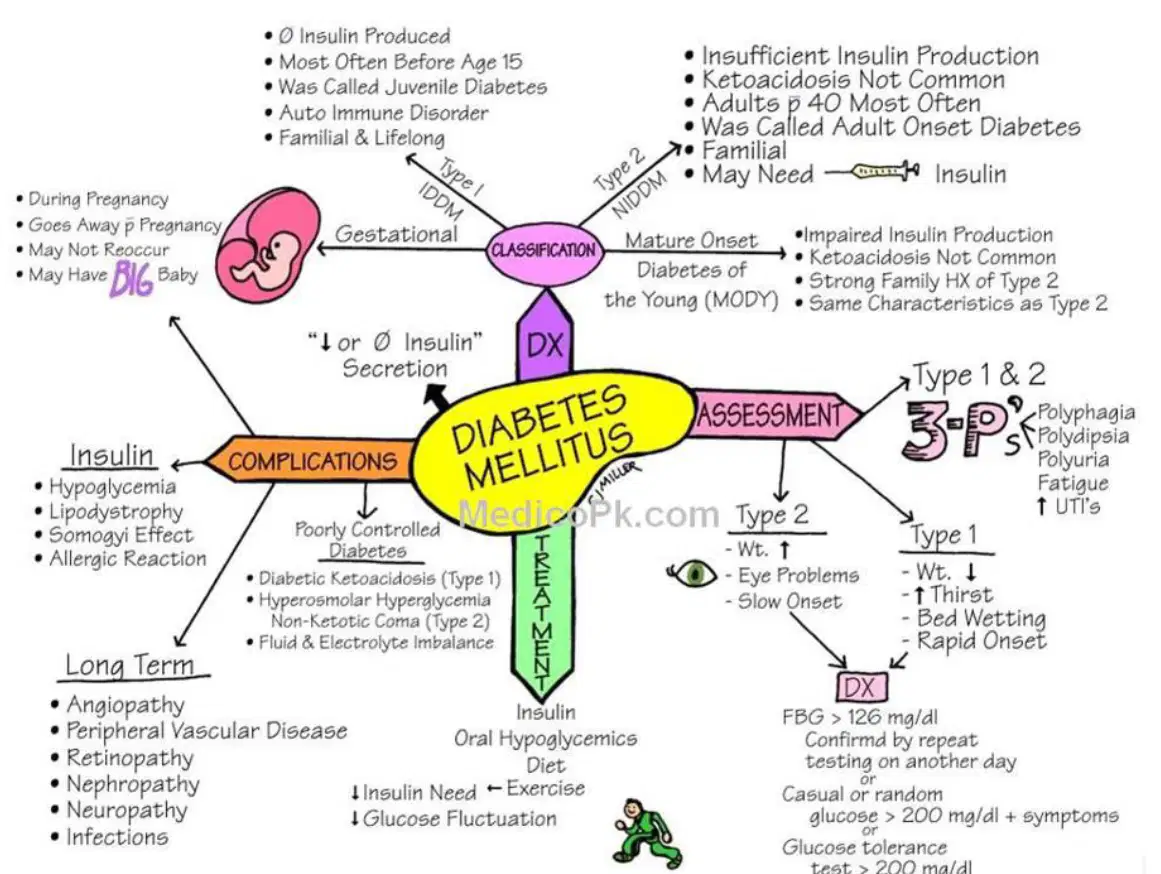
Which treatment plan aligns with the diagram for managing diabetes long term?
Vitamin supplements with bed rest
Antibiotics with fluid restriction
Diet and exercise with insulin or orals
Insulin only without diet changes

Which acute complication cluster is associated with poorly controlled diabetes in the diagram?
Lipodystrophy, Somogyi effect, allergy
Polyphagia, fatigue, urinary infections
Angiopathy, retinopathy, nephropathy
Diabetic ketoacidosis, hyperosmolar state, non-ketotic coma
Which lifestyle pattern is a recognized risk factor for prediabetes?
Consistent high-intensity training
Habitual inactivity in daily routines
Occasional light activity on weekends
Balanced activity with weekly exercise
Which combination of lipid values indicates increased prediabetes risk?
HDL 50 mg/dl; triglycerides 100 mg/dl
HDL 45 mg/dl; triglycerides 150 mg/dl
HDL 60 mg/dl or higher; triglycerides 120 mg/dl
HDL 35 mg/dl or lower; triglycerides 250 mg/dl or higher
A patient with previous gestational diabetes is evaluating risk. Which scenario aligns with higher prediabetes risk?
Cesarean section due to breech presentation
History of gestational diabetes or LGA baby over nine pounds
History of preterm labor without diabetes
No pregnancy complications and average birthweight
Which medical history element raises prediabetes risk in diverse populations?
Belonging to Asian, African-American, Hispanic, or Native American groups
European ancestry with no family history
Mixed ancestry with low cardiovascular risk
Any ancestry with routine athletic training
Which health indicator most directly increases prediabetes risk?
Blood pressure variability without elevation
Low-normal systolic and diastolic pressures
Elevated blood pressure in clinical readings
Normal resting blood pressure values
Which HbA1C range indicates prediabetes in adults?
7.1% to 7.8%
6.5% to 7.0%
5.7% to 6.4%
5.0% to 5.6%
A patient has a fasting plasma glucose of 118 mg/dl. Which classification is most appropriate?
Hypoglycemia state
Type 2 diabetes
Prediabetes range
Normal glycemia
Two hours after an oral glucose tolerance test, a patient’s blood glucose is 165 mg/dl. What is the most accurate interpretation?
Definite diabetes diagnosis
Indeterminate test result
Prediabetes threshold met
Normal post-load value
Which factor most increases suspicion for prediabetes when combined with borderline lab values?
Increased body weight history
Younger age without symptoms
Low-carbohydrate diet adherence
Regular endurance training
Which feature best distinguishes Type 1 diabetes from other forms of diabetes?
Insulin resistance in peripheral tissues
Transient hyperglycemia during acute illness
Absolute lack of insulin due to beta cell loss
Partial insulin deficiency from beta cells
A teenager presents with hyperglycemia. Which pathophysiologic mechanism is most consistent with Type 1 diabetes?
Reduced renal glucose excretion capacity
Autoimmune destruction of pancreatic beta cells
Genetic defect causing excess glucagon release
Primary hepatic overproduction of glucose
Which statement correctly links prevalence and age pattern in Type 1 diabetes?
Accounts for about 50% of diabetes, mostly elderly
Accounts for about 5% of diabetes, often young
Accounts for about 25% of diabetes, middle-aged
Accounts for about 10% of diabetes, predominantly neonatal
In Type 1 diabetes, which downstream metabolic consequence results directly from absent insulin signaling?
Enhanced glycogen synthesis in liver
Breakdown of body fats and proteins
Increased glucose uptake by muscle
Suppressed hepatic gluconeogenesis

