
 Worksheets
Protein
Total questions: 52
Worksheet time: 1hrs 13mins
Which of the following units are repeatedly joined together to form a strand of DNA?
Amino Acids
Nucleotides
Fatty Acids
Polysaccharides


What is the correct order to make a protein?
Protein, DNA, RNA
RNA, DNA, Protein
DNA, RNA, Protein
Protein, RNA, DNA
What enzyme does transcription use?
DNA polymerase
ligase
RNA polymerase
helicase
Which RNA carries the message?
mRNA
rRNA
tRNA
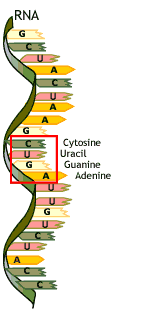
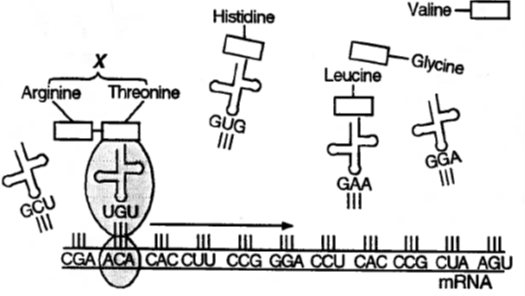
When the mRNA sequence leave the nucleus, what organelle does it travel to?
mitochondria
smooth ER
ribosome
vacuole
What best explains the interaction between tRNA and mRNA during translation?
anticodons on the mRNA line up with complementary codons on the tRNA
anticodons on the tRNA line up with complementary codons on the mRNA
tRNA attach amino acids to the complementary mRNA sequence
mRNA attach amino acids to the complementary tRNA sequence
What does tRNA "transfer"?
amino acids
nucleic acids
nucleotides
AUG
codons are located on __________
mRNA
tRNA
rRNA
snRNA
anti-codons are located on __________
mRNA
tRNA
rRNA
snRNA
How many nucleotides make up a single codon?
3
5
4
1
What sequence of mRNA always begins a new polypeptide chain?
UAG
AUG
GAU
UGA

How many codons code for phenylalanine?
2
3
4
1
The following codon is translated into which amino acid?
CAU
Methionine
Isoleucine
Histidine
Arginine
A change in the nucleotide sequence
of an organism’s genome
DNA
sequence
mitosis
mutation

What type of mutation involves substituting a DNA base with a different base but still forms the same protein?
point mutation
frameshift mutation
silent mutation
chromosomal mutation
What type of mutation involves adding or deleting bases from the DNA, which results in new codons (a shift in the reading of the codons)?
point mutation
frameshift mutation
silent mutation
chromosomal mutation
What mutation has occurred here?
T-G-A-C-C-A
T-G-A-G-C-A
Substitution
Deletion
Insertion
Frameshift
Which of the following would result in a frameshift mutation?
Insertions only
Substitution only
Deletion only
Insertions and Deletions
DNA molecule segment is : TTACGCAAG
The mutated DNA segment is TTCGCAAG. This is an example of ___ mutation.
Substitution
Deletion
Insertion
Inversion
ATTTGAGCC- Original
ATTGAGCC - Mutated
The example above is an example of a
Insertion- Frameshift
Deletion- Substitution
Deletion -Frameshift
All of the above
Why are insertion and deletion (frameshift) mutations so harmful?
They change all of the codons from the mutation on down the line, which changes the amino acid sequence
They insert things that an organism doesn't need.
They often delete things that organisms need.
Insertion and deletions are not any more harmful than substitution mutations.
Enzymes are _____________?
Hydrocarbons
Hormones
Lipids
Proteins
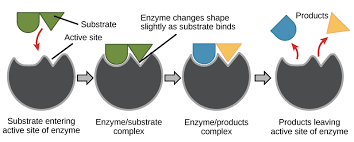
What is an enzyme?
A protein that speeds up chemical reactions
A protein that breaks apart molecules
A protein needed for cell structure
A neurological protein involved in cell signaling
What is activation energy
The energy released after chemical reactions
The energy required to activate an enzyme
Energy absorbed by chemical reactions
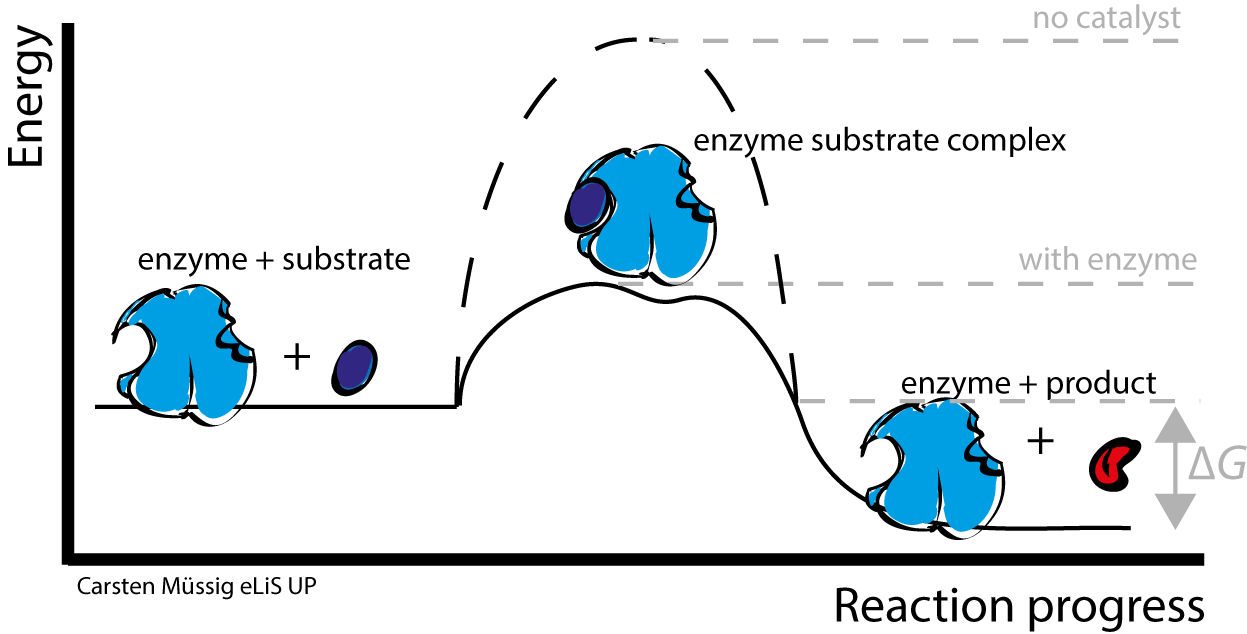

Which letter represents the product?
A
B
C
D

What is the optimal temperature of this enzyme?
60
40
70
30
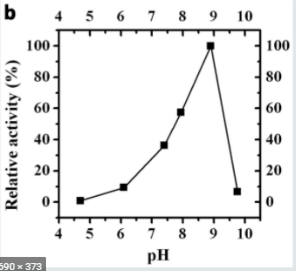
What is the optimal pH for this enzyme?
6
10
9
7
Changes in pH and temperature can ___________________ an enzyme which causes it to lose its shape and affects its function.
puncture
denature
double
delete
What are the 4 RNA nitrogen bases?
adenine, thymine, cytoplasm, and guanine
adenine, thymine cytosine, and guanine
adenine, uracil, cytoplasm, and guanine
adenine, uracil, cytosine, and guanine
RNA is double-stranded.
true
false
it depends on the type

When these bond together, they form a protein
Amino Acids
Peptide Bonds
Ribose
Nucleotides

Enzyme A works optimally at pH 7, however, it was removed from its environment and placed into a pH of 1. This is not in its working range. This enzyme is not nonfunctioning how it used too. What do we call the process of an enzyme becoming not functional due to pH change or temp change?
Naturing
Denaturing
Transcription
Translation
Enzyme A works optimally at pH 7, however, it was removed from its environment and placed into a pH of 1. This is not in its working range. This enzyme is not functioning how it used too. Why is the enzyme not functional anymore?
The enzyme shape has altered
The enzyme changed color
The enzyme used all the substrate
The substrate change shape
One morning, Drake ate lots of salt and vinegar chips, which have lots of acid on them. Throughout the day, Drake was feeling stomach pains and his food in his stomach is not being broken down by the enzymes. Why would the enzymes in Drakes stomach not break down the food?
The enzymes have denatured due to the acid in the chips changing the shape of the enzyme.
The enzymes in the stomach have broken the substrate down in to smaller parts
The enzymes in the stomach have built the pieces of substrate in to larger molecules called polymers
The enzymes will function normally not matter the pH change.
Lactase is an enzyme that breaks down a sugar found in dairy products known as lactose. Some people are lactose intolerant, and this can be due to not having enough lactase production. People who are lactose intolerant may not feel well after eating foods containing lactose.
What does lactase do to lactose?
break down the bigger sugar, lactose, into monosaccharides
break down the bigger sugar, lactose, into lipids
Combine the monosaccharides to form the bigger sugar, lactose
Combine the nucleic acids to form the bigger sugar, lactose
Lactase is an enzyme that breaks down a sugar found in dairy products known as lactose. Some people are lactose intolerant, and this can be due to not having enough lactase production. People who are lactose intolerant may not feel well after eating foods containing lactose.
What is the substrate in the scenario?
lactase
lactose
enzyme
protein
An enzyme called glucocerebrosidase breaks down a glycolipid in the body known as glucocerebroside. However, in a genetic disease known as Gaucher’s disease, the body does not produce enough glucocerebrosidase. Therefore glucocerebroside can build up in the body and this can cause serious side effects such as anemia and swelling of the liver and spleen.
Where do instructions to synthesize glucocerebrosidase originate from?
DNA
mRNA
tRNA
Amino Acids
An enzyme called glucocerebrosidase breaks down a glycolipid in the body known as glucocerebroside. However, in a genetic disease known as Gaucher’s disease, the body does not produce enough glucocerebrosidase. Therefore glucocerebroside can build up in the body and this can cause serious side effects such as anemia and swelling of the liver and spleen.
What is the substrate in the scenario?
a glycolipid
a protein
the enzyme
spleen

What is the optimal working condition for Salivary Amylase?
6
1
5
10
9

Which two enzymes share a working pH of 7.5?
Pepsin and Salivary Amylase
Alkaline Phosphatase and Pepsin
Pepsin only works at a pH of 6
Salivary Amylase and Alkaline Phosphatase

