
 Worksheets
The Fight-or-Flight Response 12/12/25
Total questions: 30
Worksheet time: 15mins
What does Fight-or-Flight mean?
Fight-or-Flight is a physiological response to a perceived threat, preparing the body to either confront or flee from the danger.
Fight-or-Flight is a type of exercise routine for building muscle.
Fight-or-Flight is a method of solving mathematical problems quickly.
Fight-or-Flight is a way to improve memory through meditation.
What is Chronic Stress?
Chronic Stress is a prolonged and constant feeling of stress that can negatively affect health and well-being.
Chronic Stress is a brief feeling of happiness that improves health.
Chronic Stress is a temporary excitement experienced during celebrations.
Chronic Stress is a short-term feeling of relaxation after exercise.
What is the body's automatic, super-fast way of reacting to danger called?
Stress Response
Relaxation Response
Immune Response
Digestive Response
Which system controls the body's stress response?
Parasympathetic System
Sympathetic System
Digestive System
Immune System
The goal of the body's stress response is simple: _______.
Survival
Relaxation
Digestion
Sleep
What is the name for the immediate reaction when you face a perceived threat?
Fight-or-Flight
Rest-and-Digest
Sleep Cycle
Growth Response
What does the Fight-or-Flight response prepare your body to do?
Sleep
Eat
Fight the danger or flee from it
Relax
Fill in the blank: During the Fight-or-Flight response, your heart ________ faster.
pounds
sleeps
shrinks
stops
Fill in the blank: During the Fight-or-Flight response, your breathing ________ up.
speeds
slows
stops
evens
Fill in the blank: During the Fight-or-Flight response, your muscles ________ up.
tense
relax
loosen
soften
Fill in the blank: During the Fight-or-Flight response, your focus ________ (tunnel vision).
narrows
expands
blurs
shifts

Refer to the diagram showing the body's response to a perceived stressor. What is the first step in the process?
Body's Major Reactions
Response: Flight or Fight
Perceived Stressor
Muscles Tighten
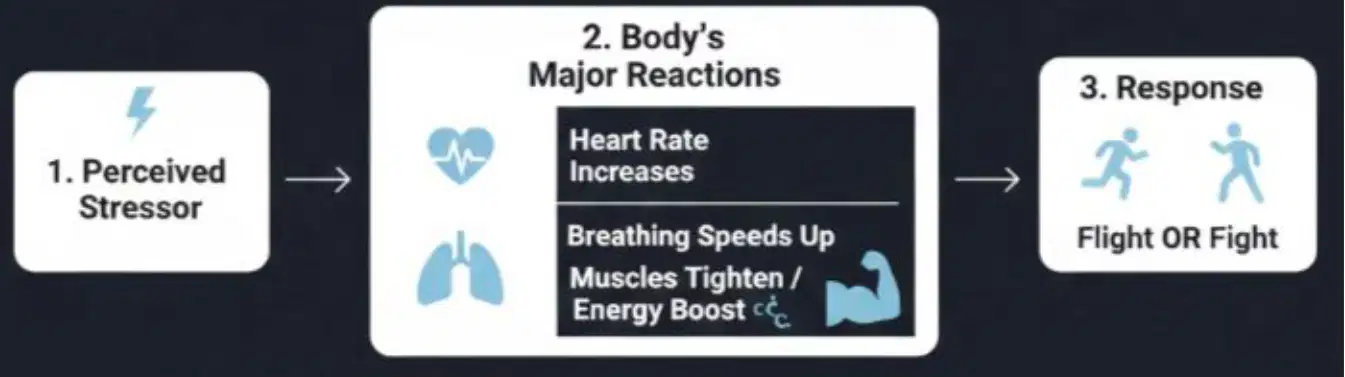
Refer to the diagram showing the body's response to a perceived stressor. Which of the following is NOT listed as a major reaction of the body?
Heart Rate Increases
Breathing Speeds Up
Muscles Tighten/Energy Boost
Blood Sugar Drops
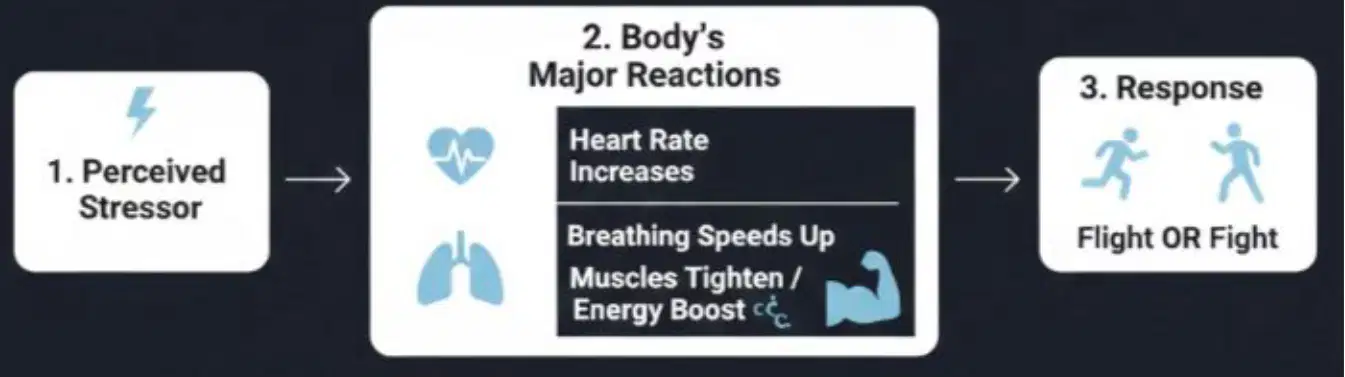
Refer to the diagram showing the body's response to a perceived stressor. Fill in the blank: When the body perceives a stressor, the heart rate ________.
increases
decreases
remains unchanged
slows down
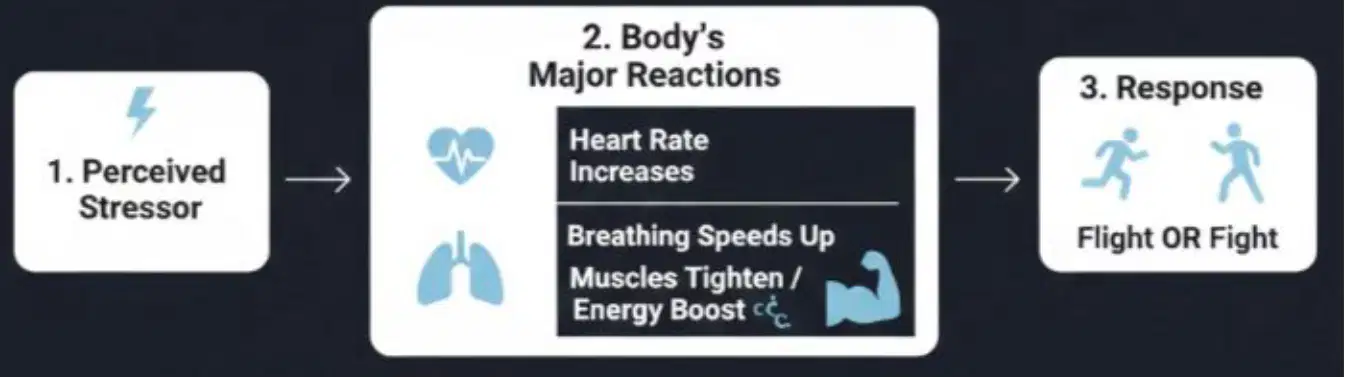
What is the typical response after the body's major reactions?
Sleep
Flight or Fight
Relaxation
Digestion
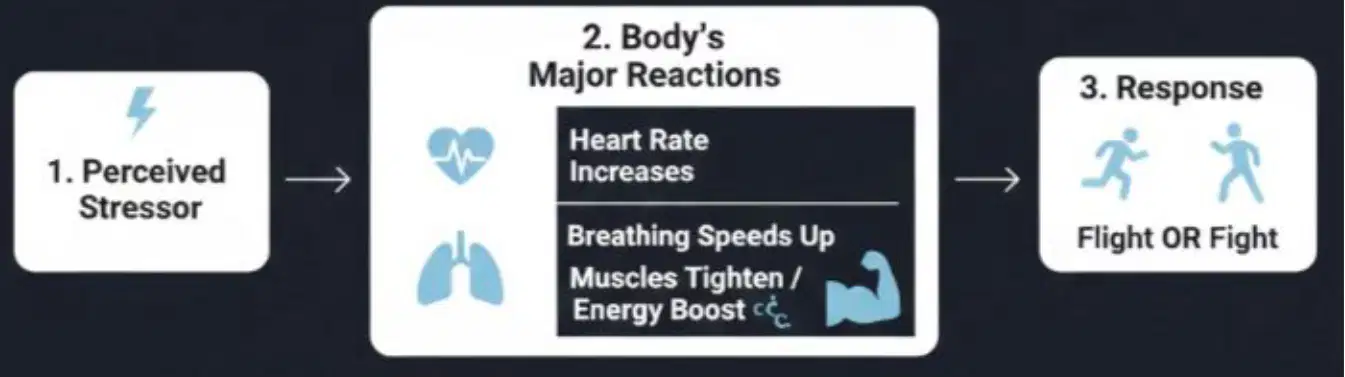
Muscles tighten and the body receives an energy boost as part of the major reactions.
True
False
Fill in the blank: Adrenaline is also called _________.
Epinephrine
Serotonin
Dopamine
Cortisol
Which hormone is known as the "super-power-up" hormone?
Cortisol
Adrenaline
Insulin
Melatonin
Fill in the blank: Cortisol is the "__________" stress hormone.
long-term
short-term
acute
immediate
What is the main function of Cortisol?
Causes immediate, powerful physical effects
Keeps blood sugar and energy high for sustained effort
Induces sleep
Increases appetite
According to the passage 'The Danger of Chronic Stress', which hormones are constantly released due to chronic stress?
Insulin and Dopamine
Cortisol and Adrenaline
Serotonin and Melatonin
Oxytocin and Estrogen
According to the passage 'The Danger of Chronic Stress', what is one physical health risk caused by chronic stress?
Weakened immune system
Improved memory
Increased energy
Better sleep
According to the passage 'The Danger of Chronic Stress', the 'fire alarm' in your body never shuts off.
True
False
When your body is stressed for a long time, it keeps releasing stress chemicals.
Insulin and dopamine
Cortisol and adrenaline
Serotonin and melatonin
Oxytocin and endorphins
What is the function of cortisol and adrenaline during real danger?
They help you sleep
They give you energy to react quickly
They make you feel happy
They slow down your heartbeat
Fill in the blank: If stress never stops, your body stays on ______ all the time, which is not healthy.
high alert
low energy
standby mode
rest
Chronic stress can lead to a weak immune system, which means your body becomes too tired to fight germs, so you get sick more often. What is the health risk described here?
Weak immune system
High blood pressure
Broken bone
Poor eyesight
Chronic stress causes your heart to work too hard for too long because the stress chemicals keep pushing it. What is the health risk described here?
Heart problems
Skin rash
Vision loss
Joint pain
Fill in the blank: Constant stress keeps your brain in 'worry mode.' What is the mental health risk described here?
Anxiety
Depression
Schizophrenia
Bipolar disorder
Fill in the blank: Being overwhelmed for too long can lower your mood and energy, leading to ________.
Depression
Excitement
Hunger
Euphoria

