
 Worksheets
2025 First Semester Biology Final
Total questions: 59
Worksheet time: 30mins
Name
Class
Date
1.
One characteristic of life is organization. Select the levels of organization from LARGEST to SMALLEST (not all levels are listed)
a)
cells, organs, organisms, tissues
b)
Organism, tissues, cells, organelles
c)
Tissues, organ systems, organisms
d)
organelles, cells, organ systems, tissues
2.
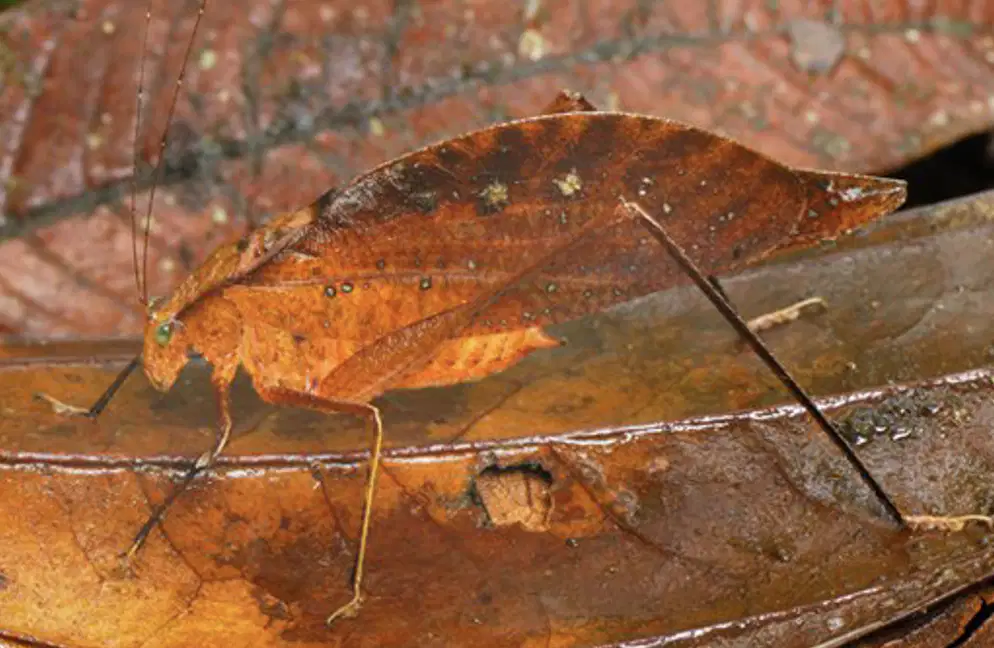
Camouflage is an example of which characteristic of life?
a)
Made of one or more cells
b)
Reproduction
c)
Adaptations evolve over time
d)
Uses energy
3.
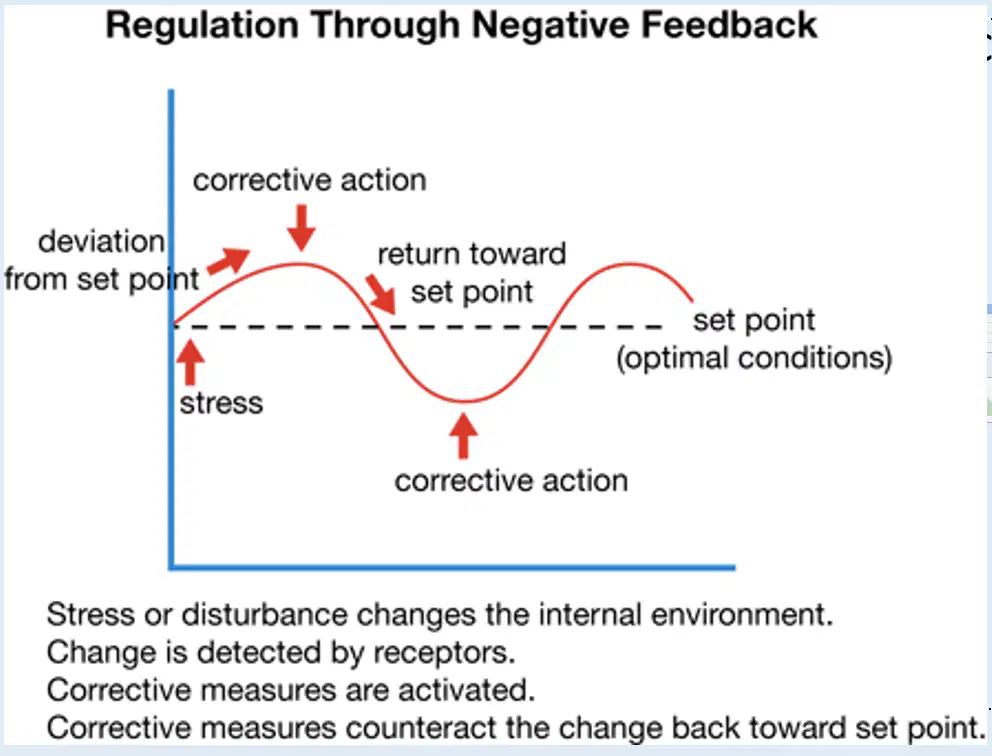
This diagram represents ________________ which is one of the eight characteristics of life. For example, a cell must maintain an internal balance of water and solute levels. If the external environment changes and becomes hypertonic, the cell will respond and try to pump solutes into the cell to maintain water balance. The cell is trying to maintain __________.
a)
Reproduction
b)
Growing and Developing
c)
Made of one or more cells
d)
Homeostasis
e)
Uses energy
4.

Chemical Reactions: A student wanted to test the impact of temperature on a yeast catalase enzyme. Catalase's job is to break down the build-up of hydrogen peroxide inside cells. Hydrogen peroxide (H2O2) potentially can destroy cells thus this enzyme breaks the toxic substance into oxygen gas (O2), water (H2O), and heat energy. Is this chemical reaction considered exothermic or endothermic and what evidence supports your claim?
a)
The chemical reaction is endothermic because heat energy is given off as a product of the chemical reaction
b)
The chemical reaction is endothermic because heat energy is absorbed the chemical reaction
c)
The chemical reaction is exothermic because heat energy is absorbed the chemical reaction
d)
The chemical reaction is exothermic because heat energy is given off as a product of the chemical reaction
5.

Chemical Reactions: A student wanted to test the impact of temperature on a yeast catalase enzyme. Catalase's job is to break down the build-up of hydrogen peroxide inside cells. Hydrogen peroxide (H2O2) potentially can destroy cells thus this enzyme breaks the toxic substance into oxygen gas (O2), water (H2O), and heat energy. What is the substrate for this enzyme catalyzed chemical reaction?
a)
Catalase
b)
Oxygen
c)
Water
d)
Hydrogen peroxide
e)
Heat
6.

Experimental Design: A student wanted to test the impact of temperature on yeast catalase enzyme. The student put 1 g of yeast catalase in a container with 100 mL of hydrogen peroxide and measured percent oxygen produced using a probe for five minutes. The student did a test with the experimental set-up in 22 degrees Celsius (room temperature), in 5 degrees Celsius (ice water bath), and 100 degrees Celsius (Boiling water bath). Identify the independent variable of the experiment
a)
Time in seconds
b)
Temperature of the enzyme in degrees Celsius
c)
Percent oxygen produced
d)
Percent oxygen produced each minute
7.
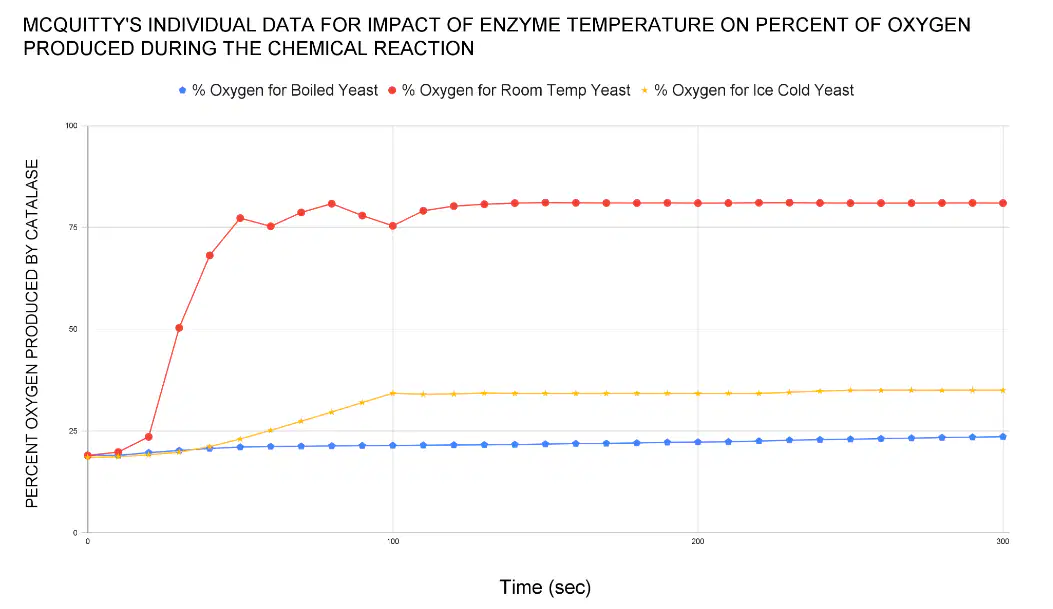
Experimental Design: A student wanted to test the impact of temperature on yeast catalase enzyme. The student put 1 g of yeast catalase in a container with 100 mL of hydrogen peroxide and measured percent oxygen produced using a probe for five minutes. The student did a test with the experimental set-up in 22 degrees Celsius (room temperature), in 5 degrees Celsius (ice water bath), and 100 degrees Celsius (Boiling water bath). Identify the dependent variable(s) of the experiment
a)
Time in seconds
b)
Temperature of the enzyme in degrees Celsius
c)
Percent oxygen produced
d)
Water produced during the chemical reaction
8.
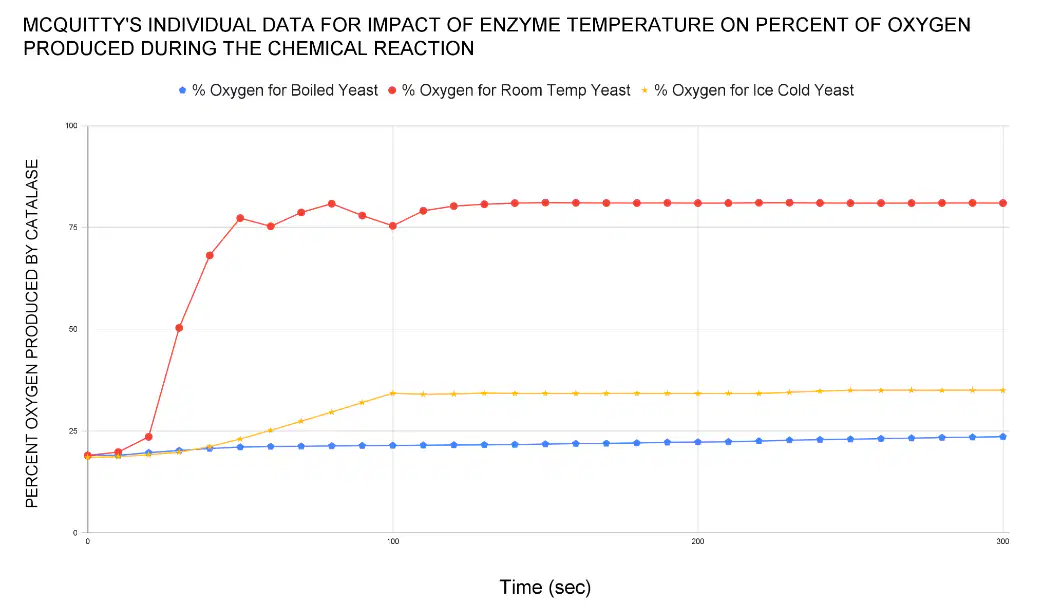
Experimental Design: A student wanted to test the impact of extreme temperatures on yeast catalase enzyme. The student put 1 g of yeast catalase in a container with 100 mL of hydrogen peroxide and measured percent oxygen produced using a probe for five minutes. The student did a test with the experimental set-up in 22 degrees Celsius (room temperature), in 5 degrees Celsius (ice water bath), and 100 degrees Celsius (Boiling water bath). Identify the experimental group(s) of the experiment. Check off all that apply.
a)
Yeast in 22 degrees Celsius temperatures
b)
Yeast in 100 degree Celsius temperatures
c)
Yeast in 5 degree Celsius temperatures
d)
Yeast in 0 degree temperatures
9.
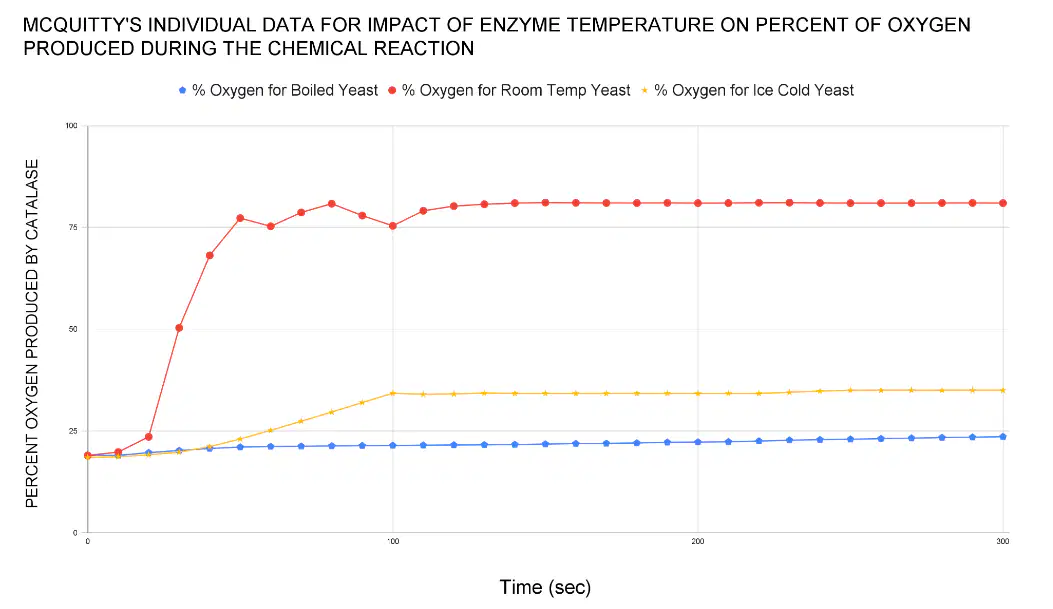
Experimental Design: A student wanted to test the impact of extreme temperatures on yeast catalase enzyme. The student put 1 g of yeast catalase in a container with 100 mL of hydrogen peroxide and measured percent oxygen produced using a probe for five minutes. The student did a test with the experimental set-up in 22 degrees Celsius (room temperature), in 5 degrees Celsius (ice water bath), and 100 degrees Celsius (Boiling water bath). Identify the control group(s) of the experiment. Check off all that apply.
a)
Yeast in 22 degrees Celsius temperatures
b)
Yeast in 100 degree Celsius temperatures
c)
Yeast in 5 degree Celsius temperatures
d)
Yeast in 0 degree temperatures
10.
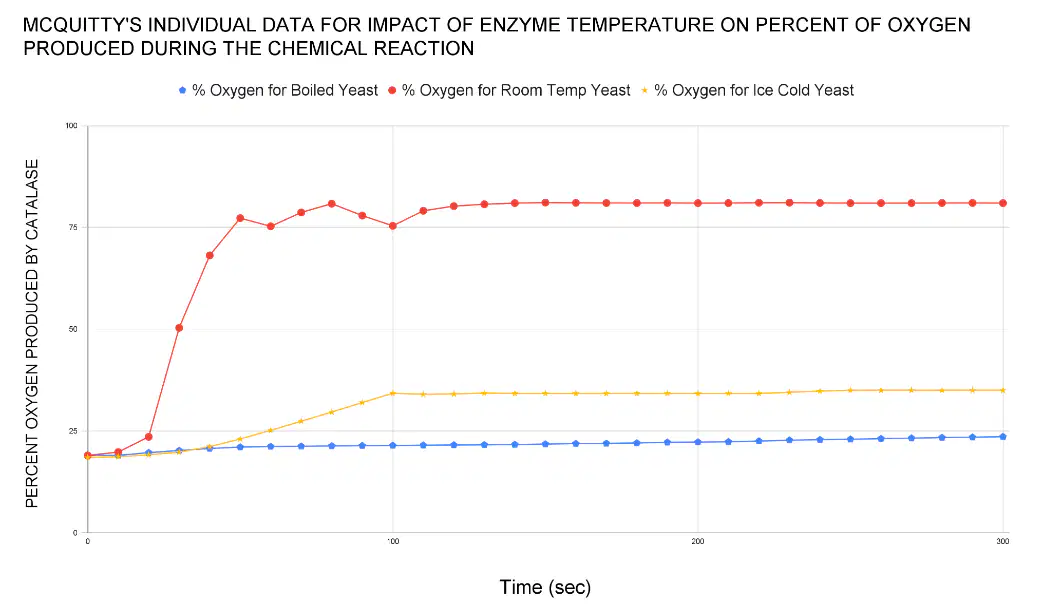
Experimental Design: A student wanted to test the impact of extreme temperatures on yeast catalase enzyme. The student put 1 g of yeast catalase in a container with 100 mL of hydrogen peroxide and measured percent oxygen produced using a probe for five minutes. The student did a test with the experimental set-up in 22 degrees Celsius (room temperature data is the top line), in 5 degrees Celsius (ice water bath data is the middle line), and 100 degrees Celsius (Boiling water bath data is the bottom line). Make a claim as to why boiling temperatures (line at the bottom closest to the x axis) caused the data shown in the graph?
a)
The catalase enzyme experienced ideal conditions and produced a constant amount of oxygen throughout the 5 minute period
b)
The catalase enzyme denatured and changed shape so the substrate could no longer fit in the active site
c)
The hydrogen peroxide denatured and changed shape so the substrate could no longer fit in the active site
d)
The catalase enzyme was able to catalyze the maximum number of substrates as possible
11.
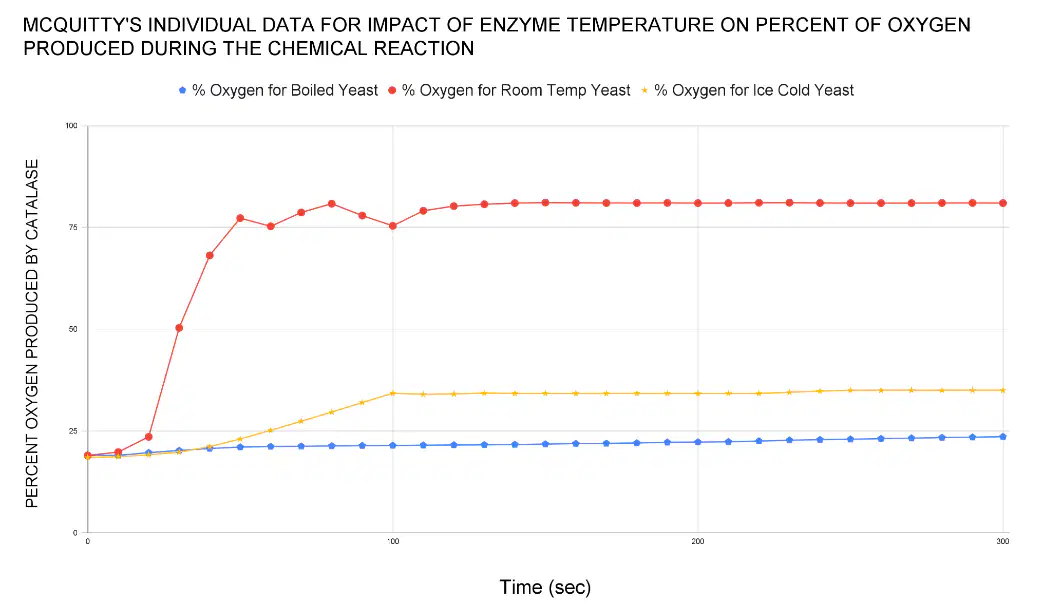
Experimental Design: A student wanted to test the impact of extreme temperatures on yeast catalase enzyme. The student put 1 g of yeast catalase in a container with 100 mL of hydrogen peroxide and measured percent oxygen produced using a probe for five minutes. The student did a test with the experimental set-up in 22 degrees Celsius (room temperature data is the top line), in 5 degrees Celsius (ice water bath data is the middle line), and 100 degrees Celsius (Boiling water bath data is the bottom line). Make a claim as to why cold temperatures (line in the middle) caused the data shown in the graph?
a)
The catalase enzyme experienced reduced kinetic energy so the substrates did not bounce into the active site as often as in room temperature
b)
The catalase enzyme denatured and changed shape so the substrate could no longer fit in the active site
c)
The catalase enzyme experienced increased kinetic energy so the substrates were able to bounce into the active site as often as in room temperatures
d)
The catalase enzyme denatured and had less interactions with the substrate
12.
In a controlled experiment, the researcher can have multiple independent variables.
a)
True
b)
False
13.
In a controlled experiment, the researcher can have multiple dependent variables.
a)
True
b)
False
14.

BELOW IS A MONOMER OF AN ORGANIC COMPOUND: Identify which organic compound it belongs to and what its primary function is
a)
Polysaccharide; used to create cell walls in plants
b)
Polypeptide; used to create enzymes that speed up chemical reactions in the cell
c)
Polynucleotide; used to create long strands of DNA
d)
Lipids; it is a phospholipid that makes up most of the plasma membrane
15.
A monomer is
a)
multiple building blocks put together
b)
a subunit of a polymer
c)
only found in lipids
d)
two subunits put together
16.
A polymer is
a)
multiple repeating subunits covalently bonded together
b)
a subunit of a monomer
c)
a substance that consists of one molecule
d)
a substance that indicates for the presence of organic compounds
17.

Identify which organic compound is shown and what is the main function of the picture on the left
a)
Polysaccharide; contains the information to make cell wall in plants
b)
Lipids; contains the information to make membranes
c)
Polypeptide; contains the directions to make proteins
d)
Polynucleotide; contains genetic information that code for the traits of organisms
18.
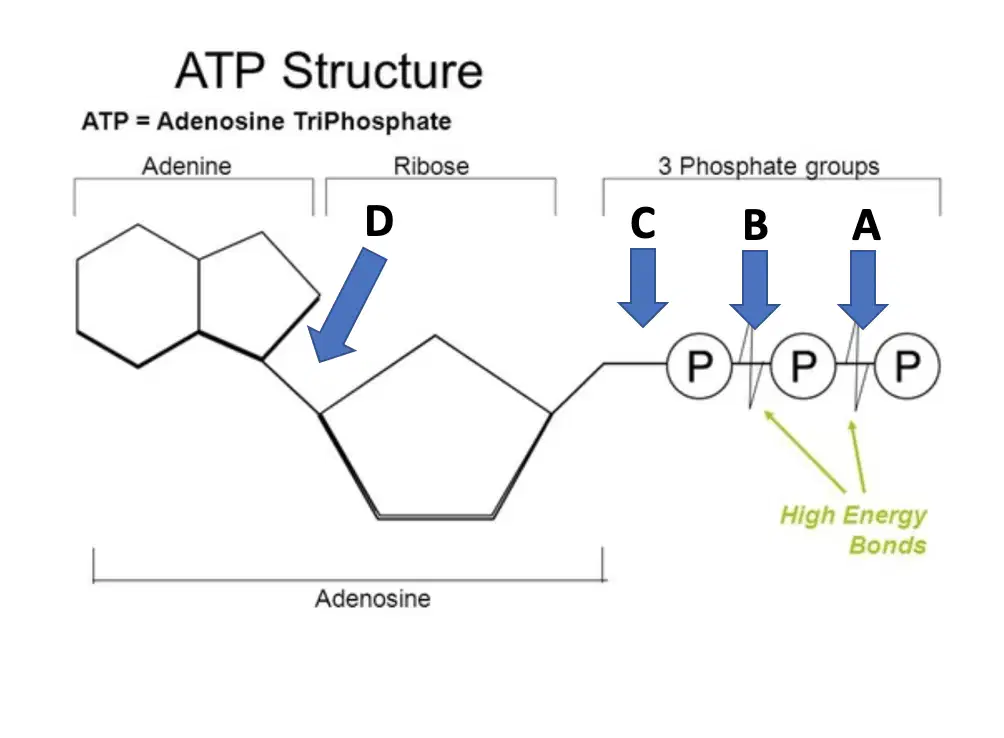
In the figure below, what is the importance of this molecule to living organisms?
a)
It is used as energy for animal cells can make sugar molecules
b)
Only plants have this energy molecule to fuel their cells
c)
It is a reusable energy molecule that can be used as a fuel to do work in any cell type
d)
It is made during cellular respiration to release heat into the environment
19.
Organic Compounds like the ones we studied in class (AKA Carbon Compounds and Macromolecules) ALL contain the elements __________.
a)
C only
b)
C, H only
c)
C, H, O
d)
C, H, O, and N
e)
C, H, O, N, and P
20.
The main job of a lysosome is
a)
to make proteins
b)
to store the cell's DNA
c)
to make food for the cell
d)
to digest worn out cell parts, food, or foreign invaders like bacteria
21.
The clear, jelly-like material that has dissolved salts and substances and supports/cushions structures inside the cell
a)
cytoplasm
b)
nucleus
c)
mitochondria
d)
cell membrane
22.
Made of microtubules and provides structural support (framework) for the inside of the cell. It is responsible for moving organelles around in the cell with the help of motor proteins.
a)
cytoplasm
b)
cytoskeleton
c)
vesicles
d)
vacuoles
23.
Made of loosely coiled DNA and controls all functions and traits of a cell.
a)
Chromatin
b)
Cell membrane
c)
Nucleus
d)
Nuclear membrane
24.
The plasma (Cell) membrane is called a fluid mosaic model because (be careful and read all answers...)
a)
it is a flexible lipid bilayer that has different substances like proteins and carbohydrates connected to it
b)
it is a flexible lipid bilayer
c)
it is made up of different materials
d)
it is a rigid lipid bilayer made up of carbohydrates, proteins, and lipids
25.
Which of the following is NOT a fundamental (main) idea of the cell theory?
a)
All organisms contain prokaryotic cells.
b)
Cells arise only from previously existing cells.
c)
Cells are the basic unit of structure for all living organisms.
d)
All living organisms are composed of one or more cells.
26.
The basic unit of life would be ______ since it is the smallest living that can show all 8 common characteristics of life.
a)
Ribosome
b)
DNA
c)
Cells
d)
Viruses
27.
Which is not a part of the Cell Theory
a)
New cells come from non-living matter
b)
All living things are made up of cells
c)
Cells are the building blocks of all life
d)
New cells are produced from existing cells
28.
Why do eukaryotic cells require specialized organelles?
a)
They are larger in size and materials can not diffuse very quickly throughout the cell
b)
They are smaller in size and materials can not diffuse very quickly throughout the cell
c)
They do not have organelles
d)
They have ribosomes that need extra compartments to store proteins
29.
In Passive Transport,
a)
substances tend to move from high concentration to low concentration and does not require energy
b)
substances tend to move from low concentration to high concentration and does not require energy
c)
substances tend to move from high concentration to low concentration and require energy
d)
substances tend to move from low concentration to high concentration and require energy
30.
In Active Transport,
a)
substances tend to move from low concentration to high concentration and does not require energy
b)
substances tend to move from high concentration to low concentration and does not require energy
c)
substances tend to move from high concentration to low concentration and require energy
d)
substances tend to move from low concentration to high concentration and require energy
31.
The plasma (Cell) membrane is called a fluid mosaic model because (be careful and read all answers...)
a)
it is a rigid lipid bilayer made up of carbohydrates, proteins, and lipids
b)
it is made up of different materials
c)
it is a flexible lipid bilayer
d)
it is a flexible lipid bilayer that has different substances like proteins and carbohydrates connected to it
32.
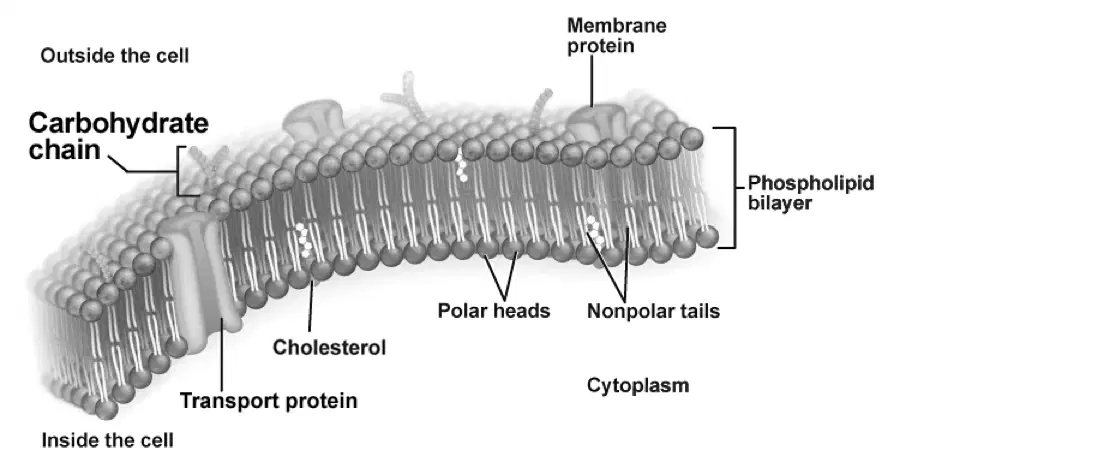
The plasma (cell) membrane is mostly made up of
a)
a protein bilayer where the nonpolar tails face toward each other avoiding contact with water
b)
a lipid bilayer where the nonpolar tails face toward each other avoiding contact with water
c)
a lipid bilayer where the polar tails face toward each other avoiding contact with water
d)
a carbohydrate bilayer where the nonpolar tails face toward each other avoiding contact with water
33.
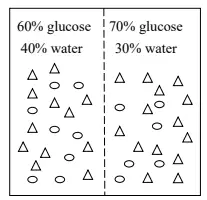
The dashed line in the picture represents the cell membrane. If the membrane is impermeable to glucose molecules which molecules could move across the membrane and in what direction?
a)
sugar molecules flow toward the right
b)
sugar molecules flow toward the left
c)
water molecules flow toward the right
d)
water molecules flow toward the left
34.

The dashed line in the picture represents the cell membrane. If the membrane is permeable to BOTH glucose and water molecules, what will happen over time?
a)
sugar molecules flow toward the right and water molecules flow toward the left and over time an isotonic solution will develop
b)
sugar molecules flow toward the left and water molecules flow toward the right and over time an isotonic solution will develop
c)
sugar molecules flow toward the left and water molecules flow toward the right and over time a hypertonic solution will develop
d)
sugar molecules flow toward the left and water molecules flow toward the right and over time a hypotonic solution will develop
35.
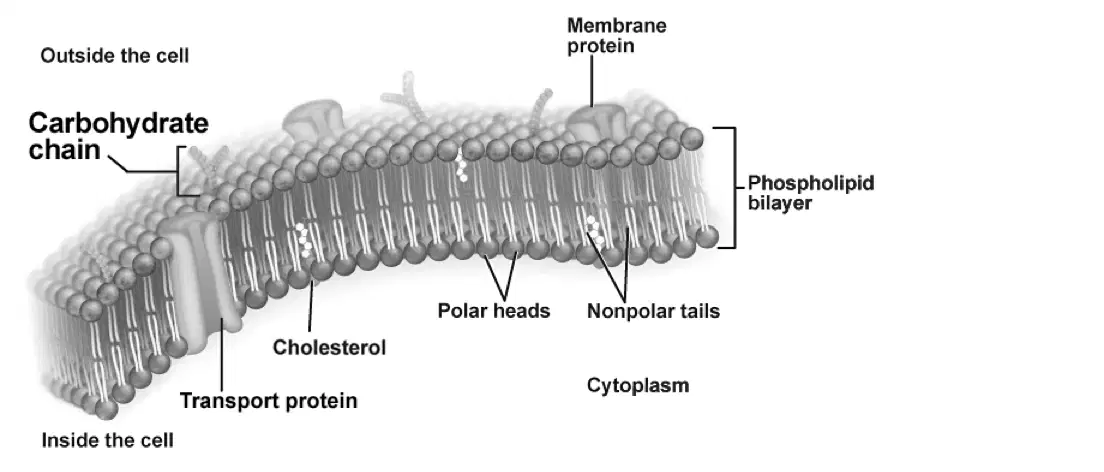
The plasma (cell) membrane has transport channels that allow
a)
diffusionof tiny nonpolar molecules like carbon dioxide
b)
diffusion of polar molecules through the nonpolar part of the membrane
c)
active transport of molecules from high concentration to low concentration
d)
endocytosis of large nonpolar molecules like fats
36.
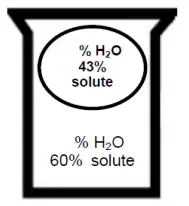
What would happen to a plant cell in this solution?
a)
Plasmolysis and most likely die
b)
It would become turgid
c)
It would most likely live
d)
It would become flaccid and die
37.
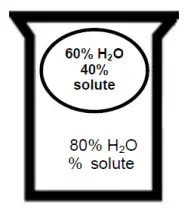
What would happen to a plant cell in this solution?
a)
Plasmolysis and most likely die
b)
It would become turgid (full of water) but not experience cell lysis since it has a cell wall
c)
It would not thrive in this condition since it would wilt
d)
It would become flaccid and die
38.
Which taxon level would only include one type of organism?
a)
Family
b)
Domain
c)
Kingdom
d)
Genus
e)
Species
39.
Why are classification systems important to scientists?
a)
They help organize and give everyone a common language to identify and discuss living organisms
b)
They make it easy to folllow recipies
c)
It makes naming organisms more complex and hard to study
d)
It does not help scientists
40.
All living organisms are uniquely named by their
a)
Domain and Kingdom
b)
Family and Genus
c)
Genus and Species
d)
Phylum and Class
41.
LUCA is most closely like a ___________ (hmmm...look at the tree of life)
a)
Eukaryote
b)
Animal
c)
Plant
d)
Prokaryote
42.
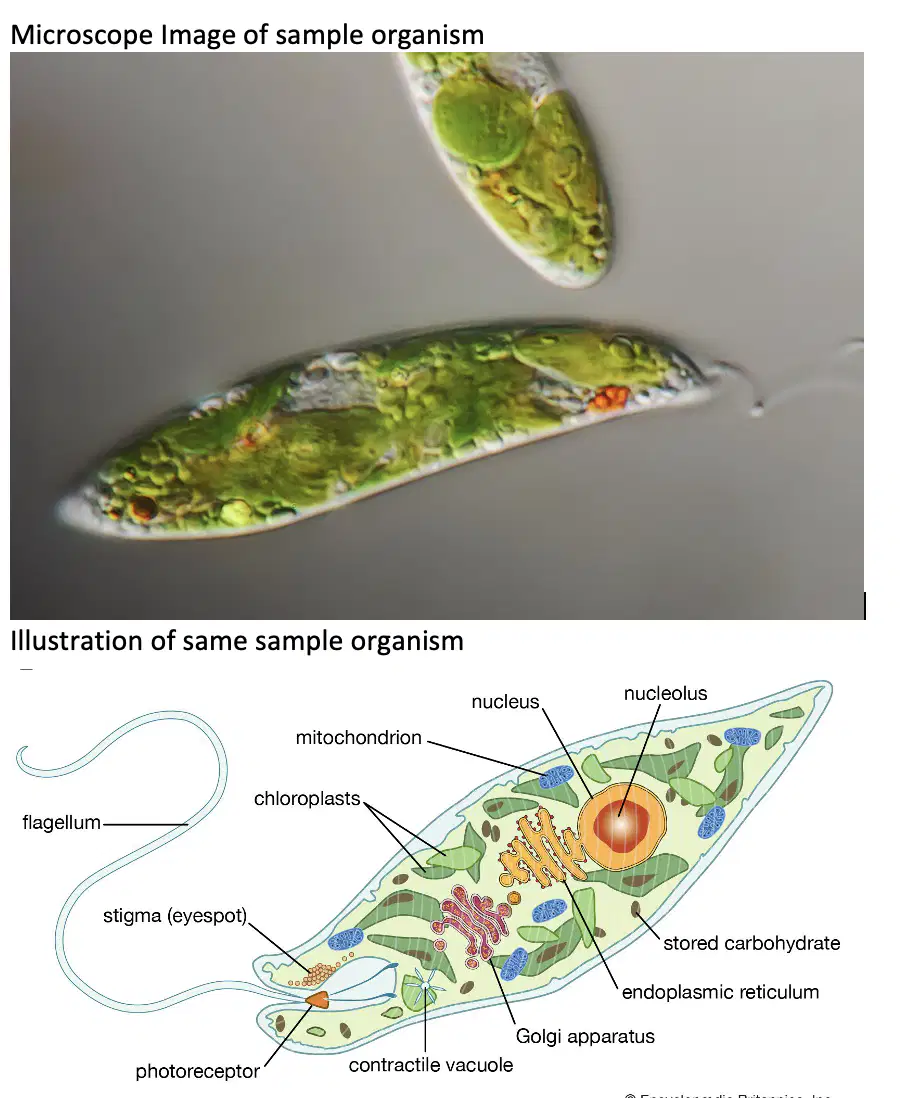
Which kingdom does the following organism belong to? It is unicellular with a nucleus and performs photosynthesis. It has a flagella to allow it to swim into the light and evade predators.
a)
Protista
b)
Animalia
c)
Plantae
d)
Fungi
e)
Archaebacteria
43.
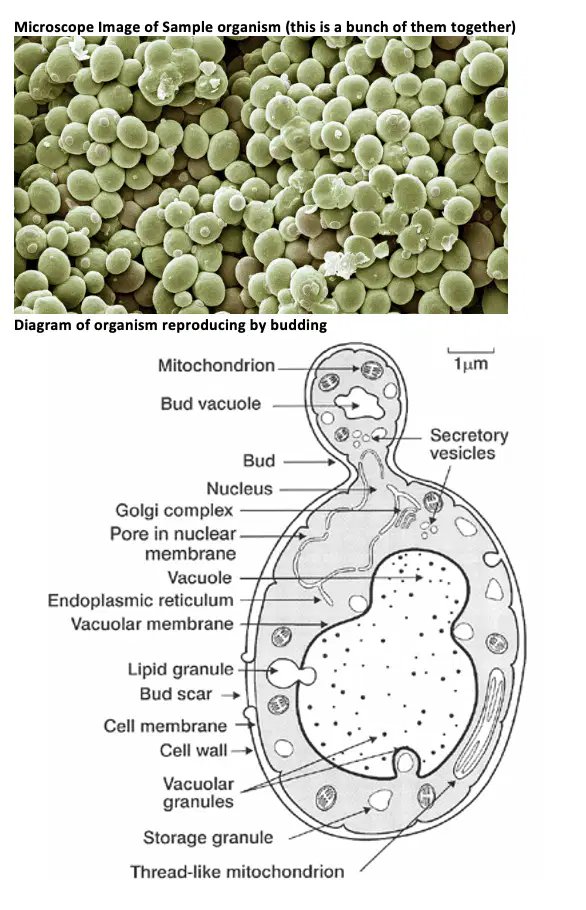
Which kingdom does the following organism belong to? This organism is unicellular but the kingdom it belongs to also has multicellular organisms in it. It is strictly a eukaryotic heterotroph with a cell wall made of chitin. These unicellular organisms reproduce both sexually and asexually.
a)
Fungi
b)
Animalia
c)
Plantae
d)
Protista
e)
Archaebacteria
44.

Which kingdom does the following organism belong to? This is the most primitive example from this kingdom. It is eukaryotic, multicellular, and strictly heterotrophic. It filters food from the watery environment in which it lives. It lacks cell walls and is anchored to the sea floor. It can reproduce by fragmentation but usually it reproduces sexually. They are often hermaphrodites and when conditions are right the eggs will remain inside the body of the organism while the sperm is relased intot he water.
a)
Animalia
b)
Plantae
c)
Fungi
d)
Protista
e)
Archaebacteria
45.

Which kingdom does the following organism belong to? This organism is found everywhere, especially in the digestive tract of chickens and lizards. It is strictly unicellular with cell walls made of peptidoglycan (protein-sugars). It lacks a nucleus and has circular DNA. It has plasmids, small pieces of circular DNA, that can help give it resistance to antibiotics.
a)
Eubacteria
b)
Animalia
c)
Plantae
d)
Fungi
e)
Protista
46.
Which taxon level would include all levels of classification?
a)
Family
b)
Domain
c)
Kingdom
d)
Genus
e)
Species
47.

Which kingdom does the following organism belong to? This is a unicellular organism that lives in extremely salty environments. It is prokaryotic and has cell walls without peptidoglycan (protein-sugars). This particular species can cause waterways to become pink (how cute!)
a)
Archaebacteria
b)
Animalia
c)
Plantae
d)
Fungi
e)
Protista
48.
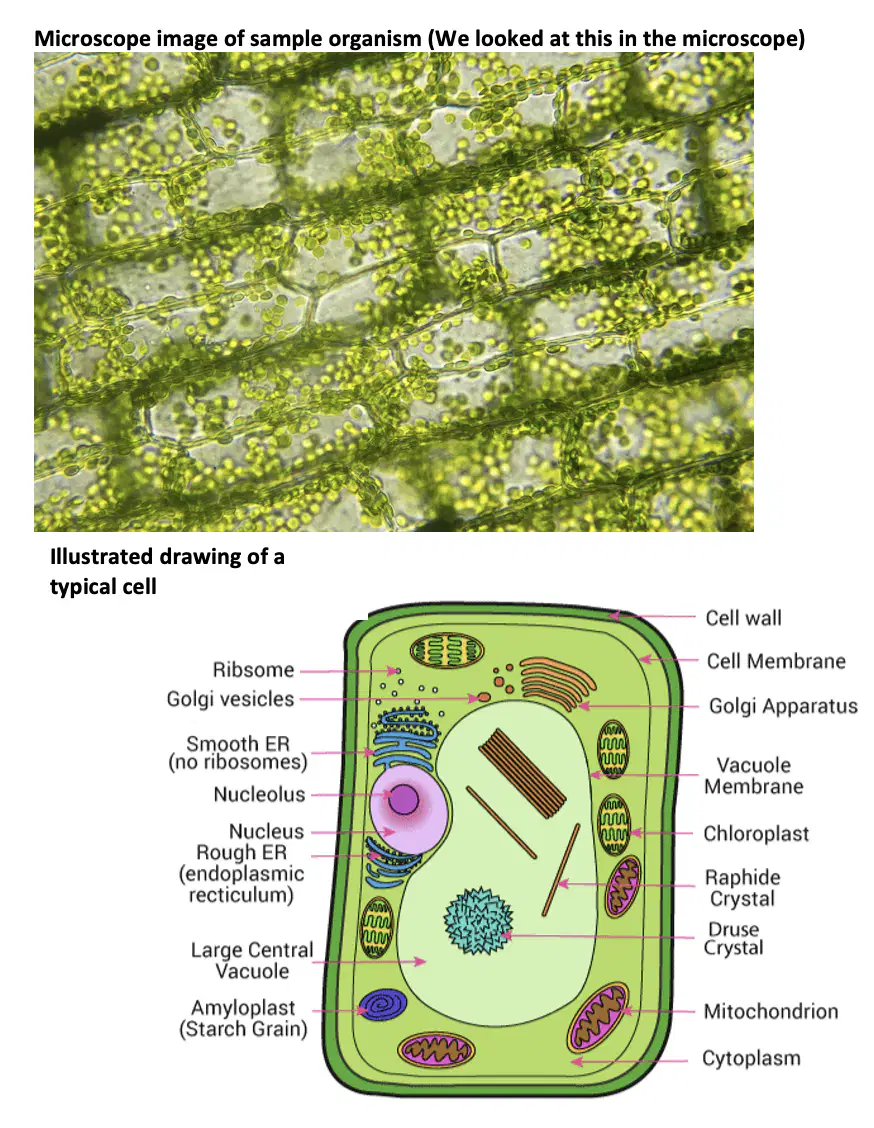
Which kingdom does the following organism belong to? This multicellular eukaryotic organism has cell walls made of cellulose. It is strictly photoautotrophic and will die without a source of carbon, water, and light energy.
a)
Plantae
b)
Animalia
c)
Fungi
d)
Protista
e)
Archaebacteria
49.

Use the illustration to identify the reactants of Cellular Respiration (check off all that apply)
a)
O2 Oxygen
b)
C6H12O6 Glucose
c)
CO2 Carbon Dioxide
d)
H2O Water
e)
ATP and Heat energy
50.

Use the illustration to identify the reactants of Photosynthesis (check off all that apply)
a)
CO2 Carbon Dioxide
b)
H2O Water
c)
Sunlight
d)
O2 Oxygen
e)
C6H12O6 Glucose
51.

Use the illustration to identify the CATABOLIC process in the cycle
a)
F
b)
D and C
c)
K
d)
E
e)
G and H
52.

Use the illustration to identify the ANABOLIC process in the cycle
a)
E
b)
D and C
c)
K
d)
F
e)
G and H
53.

Use the illustration to identify the Products of Photosynthesis (check off all that apply)
a)
O2 Oxygen
b)
C6H12O6 Glucose
c)
CO2 Carbon Dioxide
d)
H2O Water
e)
ATP and Heat energy
54.

Use the illustration to identify the Products of Cellular Respiration (check off all that apply)
a)
CO2 Carbon Dioxide
b)
H2O Water
c)
ATP and Heat energy
d)
O2 Oxygen
e)
C6H12O6 Glucose
55.
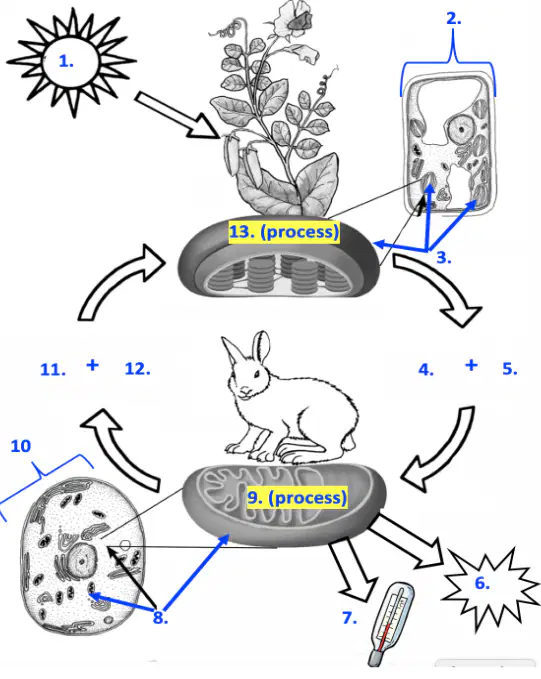
What are considered waste products of the process that happens in #9? Check off all that apply
a)
Heat energy
b)
Carbon Dioxide
c)
Water
d)
ATP
e)
Oxygen
56.
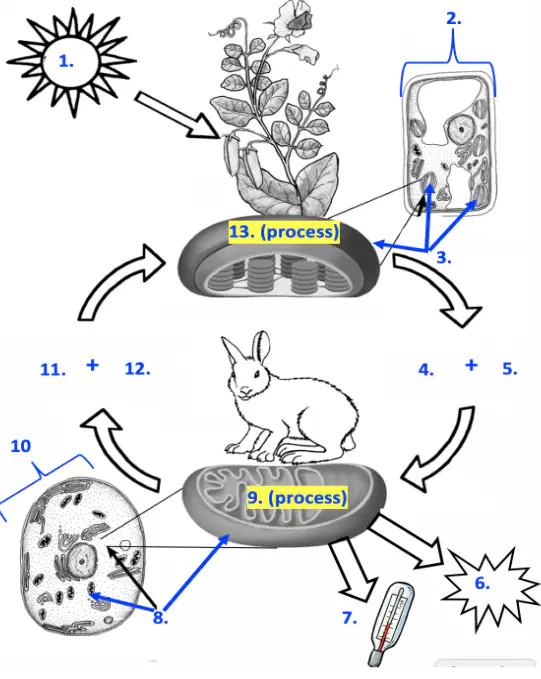
What is the relationship between 13 and 9?
a)
They allow animals to live
b)
They form a cycle by using most of each other's products as reactants in their chemical reactions
c)
Each process is independent of each other and does not have a relationship
d)
The reactants and products are exactly the same just in reverse
57.

Which letter(s) would represent the process(es) that AUTOTROPHS can perform?
a)
E + F
b)
D + C
c)
ONLY E
d)
Only F
e)
i
58.

Which letter(s) would represent the process(es) that HETEROTROPHS can perform?
a)
Only F
b)
D + C
c)
ONLY E
d)
E + F
e)
i
59.
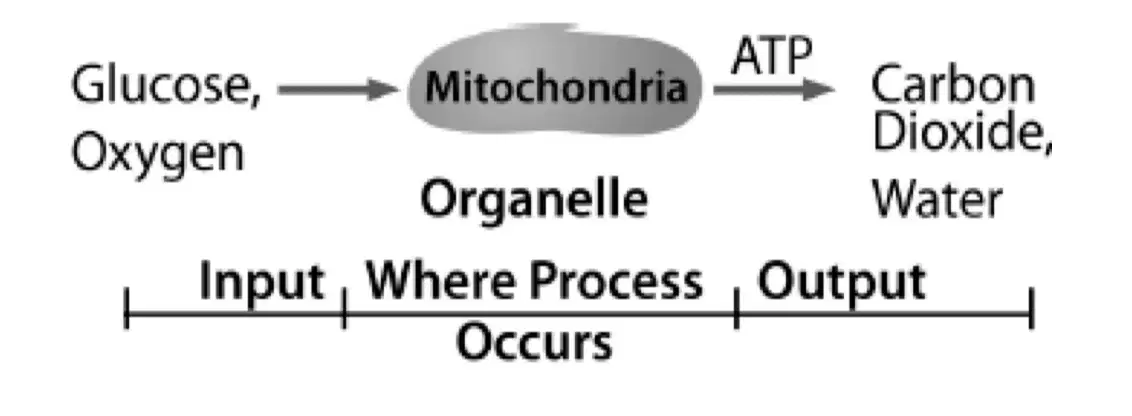
What is the purpose of this process?
a)
to use energy for cellular movement
b)
to transform energy into proteins
c)
to convert stored energy (glucose) into ATP
d)
to make glucose
e)
to make carbon dioxide for animals
100 %

