
Font size
 Worksheets
Fall Final Exam Review 25-26
Total questions: 75
Worksheet time: 41mins
which is NOT a role of an autotroph?
remove carbon dioxide from the atmosphere
breaking down dead stuff
use sunlight to make food
produce oxygen

in the food web, how do grasshoppers get their energy?
the grasshopper gets energy from owls and birds.
the grasshopper gets energy only from grass.
the grasshopper gets energy from carrots.
the grasshopper gets energy from grass and grains.
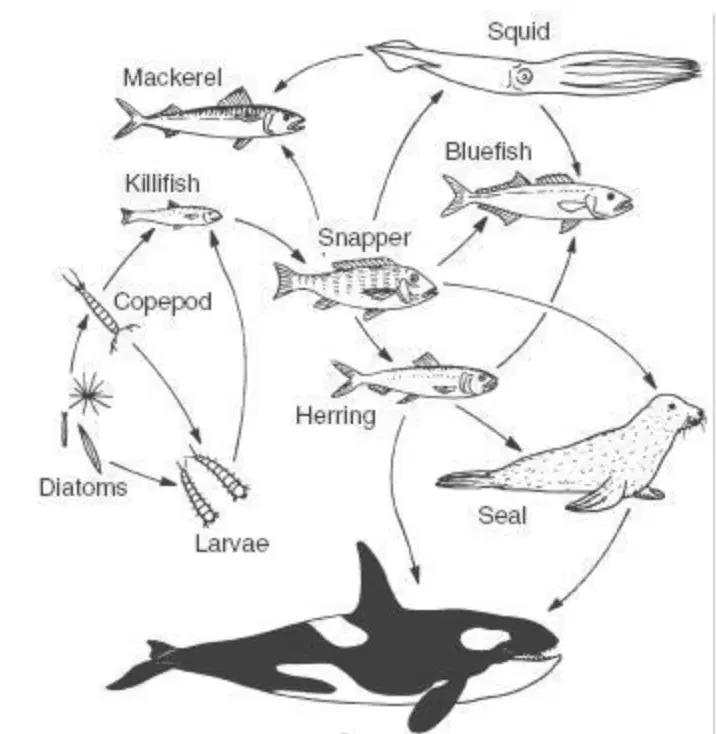
which organism in the food web has the most available energy?
seal
diatoms
squid
killer whale
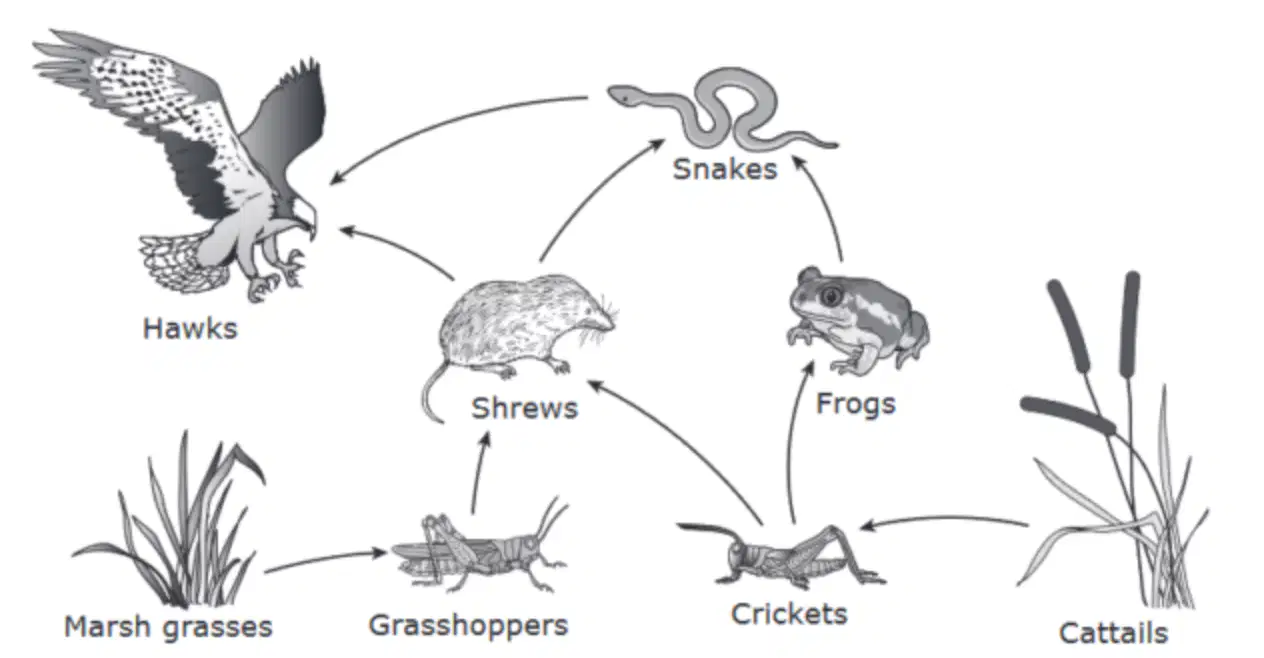
which of the following could happen if the crickets were removed from this ecosystem?
frogs would die off
cattails would decrease
shrews would increase
grasshoppers would increase
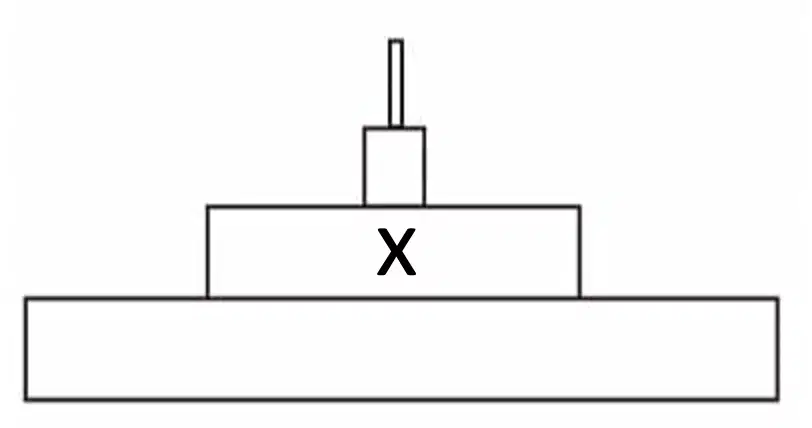
which level should be labeled at letter x?
producers
primary consumers
secondary consumers
tertiary consumers
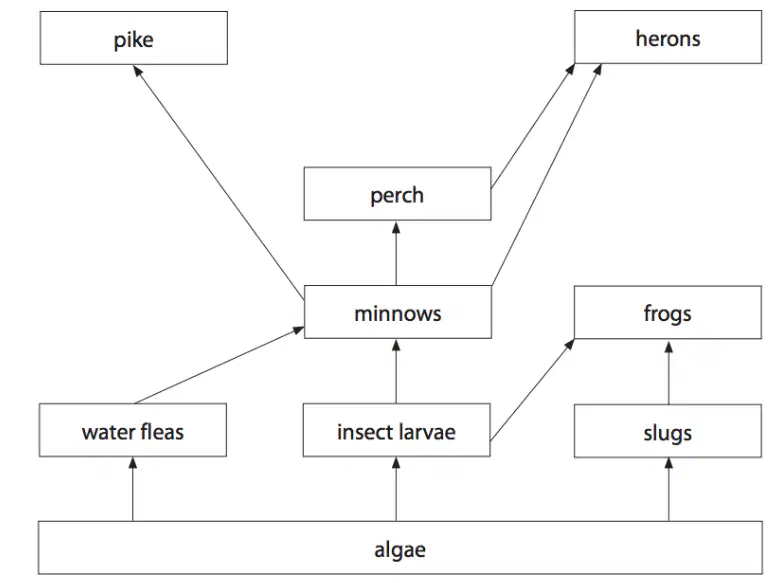
which organisms have the least available energy?
algae
slugs and water fleas
herons and pike
frogs and minnows
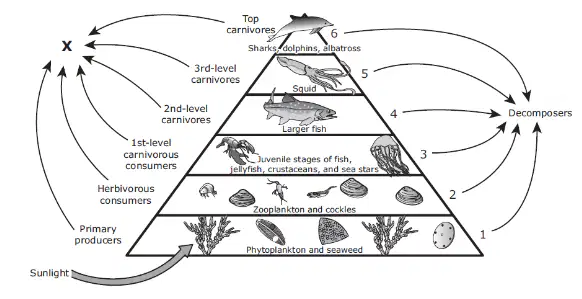
which organism would have the greatest effect on the ecosystem if removed?
seaweed
jellyfish
dolphins
squid
which correctly matches the symbiotic relationship to its definition?
commensalism - one organism is harmed while the other benefits
predation - one organism benefits and one is unaffected
parasitism - one organism is hunted and eaten
mutualism - both organisms benefit
which of the following would remove carbon from the atmosphere?
adding plants
burning fossil fuels
deforestation
respiration
what type of organism "fixes" nitrogen for plants to use?
fungi
bacteria
plants
animals
which is true of the carbon and nitrogen cycles?
plants get nitrogen from the soil
respiration removes carbon from the atmosphere
animals get nitrogen from the air
ocean sinks release more carbon
quick energy
carbohydrate
lipid
protein
nucleic acid
long term energy
carbohydrate
lipid
protein
nucleic acid
repairs tissues and builds muscle
carbohydrate
lipid
protein
nucleic acid
enzymes
carbohydrate
lipid
protein
nucleic acid
DNA/ RNA
carbohydrate
lipid
protein
nucleic acid
hereditary information
carbohydrate
lipid
protein
nucleic acid
which of the following is found only in eukaryotic cells?
cell membrane
genetic material
membrane bound organelles
cell wall
which is true regarding prokaryotes and eukaryotes?
viruses can only infect eukaryotic cells
eukaryotes evolved after prokaryotes
prokaryotes are more complex than eukaryotes
eukaryotes are smaller than prokaryotes
which organelle is correctly matched with its function?
nucleus - stores genetic information
cell membrane - performs photosynthesis
mitochondria - maintains homeostasis
chloroplast - cellular respiration
which of the following is true regarding viruses and bacteria?
only bacteria can cause illness
bacteria reproduce independently while viruses need a host
both bacteria and viruses have active metabolism
viruses and bacteria are both non-living
which statement best describes a virus?
prokaryotic becuase it is unicellular
eukaryotic because it is complex
non-living because it is unicellular
non-living because it is acellular
a viral disease like the rhinovirus (causes the common cold) is spread through which of the following methods?
close personal contact
cold weather
blood transfusions
sweat
which best explains the difference between the lytic cycle and lysogenic cycle?
the lytic cycle takes longer than the lysogenic cycle
a virus in the lysogenic cycle sneaks its DNA into the host cell's DNA
a virus in the lysogenic cycle invades and bursts the cell
the lysogenic cycle shows symptoms faster than the lytic cycle
in biomagnification, the amount of toxin
decreases in concentration along the food chain
remains the same along the food chain
increases along the food chain
stays within the producers
which of the following causes an enzyme to not work properly?
inhibitor
denatured
change in pH or temperature
all of these
which correctly matches the organelle to the function?
cell membrane - maintains homeostasis by allowing movement in and out of the cell
chloroplast - converts glucose to usable ATP energy
mitochondria - synthesizes proteins during translation of gene expression
ribosome - absorbs sunlight and performs the process of photosynthesis
how do enzymes work?
they speed up reactions by lowering the activation energy
they slow down reactions by lowering the activation energy
they speed up reactions by raising the activation energy
they slow down reactions by raising the activation energy
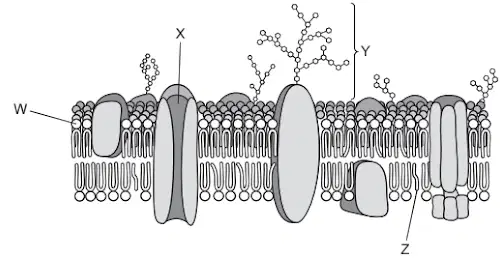
which is correctly matched to its function?
w - phospholipid semi-permeable
x - carbohydrate used for communication
y - cholesterol keeps the membrane fluid
z - protein channel used to transport large molecules
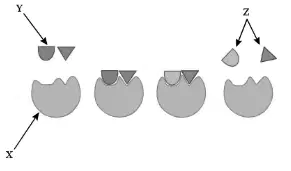
which is the enzyme?
x
y
z
which is NOT true of an enzyme?
they are proteins
they are catalysts and remain unchanged
they can build up or break apart molecules
they can only be used once
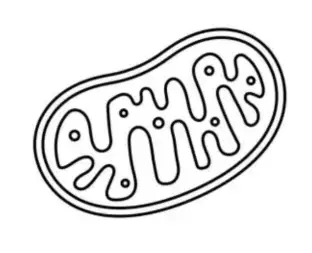
which organelle is shown and what process occurs?
mitochondria - cellular respiration
chloroplast - photosynthesis
mitochondria - photosynthesis
chloroplast - cellular respiration
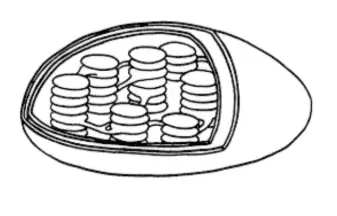
which organelle is shown and what process occurs?
mitochondria - photosynthesis
chloroplast - photosynthesis
mitochondria - cellular respiration
chloroplast - cellular respiration
how do the process of photosynthesis and cellular respiration cycle matter?
the outputs of photosynthesis are the inputs for cellular respiration
the inputs of photosynthesis are the inputs of cellular respiration
the inputs of cellular respiration are the inputs of photosynthesis
the outputs of cellular respiration are the outputs of photosynthesis
which is the correct equation for photosynthesis?
light + water + carbon dioxide --> ATP + oxygen
light + water + carbon dioxide --> glucose + oxygen
glucose + oxygen --> water + carbon dioxide + ATP
glucose + oxygen --> water + carbon dioxide + light
which is the correct equation for cellular respiration?
light + water + carbon dioxide --> ATP + oxygen
light + water + carbon dioxide --> glucose + oxygen
glucose + oxygen --> water + carbon dioxide + ATP
glucose + oxygen --> water + carbon dioxide + light
which is true of a a higher concentration of water outside of the cell?
hypertonic solution - water would move into the cell, it would swell
hypotonic solution - water would move into the cell, it would swell
isotonic solution - water would move in and out equally
hypertonic solution - water would move out of the cell, it would shrink
which is true regarding active and passive transport?
active transport requires ATP energy
active transport moves molecules from high to low concentration
passive transport moves molecules against the gradient
osmosis is a type of active transport
which is correctly matched?
backbone - phosphate, sugar and base
backbone - phosphate and sugar
nucleotide - phosphate and sugar
nucleotide - phosphate and base
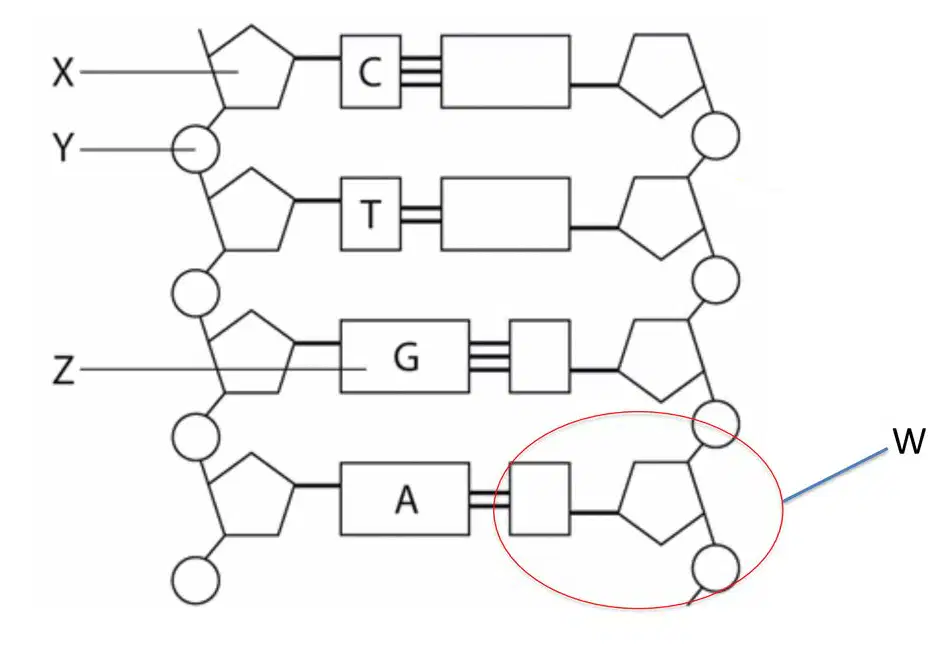
which letter is correctly matched to the structure?
w - backbone
x - phosphate
y - sugar
z - nitrogenous base
what determines the traits of organisms?
the order of nucleotides
the number of phosphates
the number of DNA molecules
the speed of the cell cycle
write the complementary strand of DNA below
T A C A G T G A
(a)
what causes cell differentiation?
the DNA is different in each type of cell
some cells have more or less DNA than others
only specific genes in the DNA are activated (turned on)
every cell has a different number of chromosomes
which correctly matches the phase to the part of the cell cycle?
mitosis - nuclear division
cytokinesis - growing
g - replicating DNA
s phase - cytoplasm dividing
what is DNA polymerase?
an enzyme used during DNA replication to build a complementary strand
a sugar used during DNA replication to build an identical strand
An enzyme used during mitosis to replicate identical cells
A sugar used during cytokinesis to separate the cytoplasm
Which best describes the DNA model during replication?
semi-conservative - one strand is original and one is new
semi-conservative - both strands are new
conservative - both strands are original
conservative - It is a double helix
what is a result of an unregulated cell cycle?
tumors
apoptosis
stem cells
specialized cells
what causes cancer?
unregulated cell division
cells stopping at checkpoints
cells skipping mitosis
staying in G0 phase
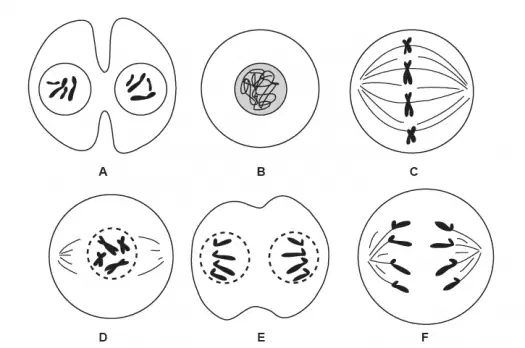
put the cells in order of the cell cycle.
ABCDEF
BDCFEA
DBCFEA
AEFCDB
what is the correct order of mitosis?
prophase, metaphase, anaphase, telophase
G1, S, G2
interphase, mitosis, cytokinesis
metaphase, anaphase, telophase, prophase
which body system exchanges carbon dioxide and oxygen?
circulatory
respiratory
endocrine
excretory
which body system transports nutrients, gasses, and wastes through the bloodstream?
circulatory
respiratory
endocrine
excretory
which body system uses white blood cells to fight infection?
integumentary
immune
endocrine
excretory
which body system is the first line of defense against foreign invaders?
integumentary
immune
endocrine
excretory
which body system secretes hormones into the bloodstream?
integumentary
immune
endocrine
excretory
which body system filters the blood and removes waste?
circulatory
immune
endocrine
excretory
which body system produces gametes?
integumentary
immune
endocrine
reproductive
which body system supports and protects the body?
nervous
circulatory
skeletal
reproductive
which body system sends electrical signals to control the body?
nervous
endocrine
skeletal
reproductive
which body system breaks down food to absorb nutrients?
nervous
digestive
skeletal
muscular
which body system is responsible for movement?
nervous
digestive
skeletal
muscular
what energy conversion occurs during cellular respiration?
radiant (light) --> chemical (glucose)
chemical (glucose) --> chemical (ATP)
chemical (ATP) --> chemical (glucose)
radiant (light) --> chemical (ATP)
what energy conversion occurs during photosynthesis?
radiant (light) --> chemical (glucose)
chemical (glucose) --> chemical (ATP)
chemical (ATP) --> chemical (glucose)
radiant (light) --> chemical (ATP)
which correctly matches the plant organ to its function?
stem - absorbs water
root - reproduction
leaves - photosynthesis
flower - transport
which part of the leaf prevents water loss?
waxy cuticle
guard cells
stomata
xylem and phloem
which part of the leaf allows for gas exchange?
waxy cuticle
guard cells
stomata
xylem and phloem
which of the following adaptations would NOT occur of a plant in a drought?
stomata close at night to prevent transpiration
roots increase to maximize surface area
stem and leaves decrease to slow the photosynthesis
flowers grow larger for pollination
which is the correct equation for photosynthesis?
light + water + carbon dioxide --> ATP + oxygen
light + water + carbon dioxide --> glucose + oxygen
glucose + oxygen --> water + carbon dioxide + ATP
glucose + oxygen --> water + carbon dioxide + light
which is the correct equation for cellular respiration?
light + water + carbon dioxide --> ATP + oxygen
light + water + carbon dioxide --> glucose + oxygen
glucose + oxygen --> water + carbon dioxide + ATP
glucose + oxygen --> water + carbon dioxide + light
which is true regarding fertilization?
self-fertilization is asexual reproduction
self-fertilization is when pollen from the anther lands on the stigma of the same flower
cross-fertilization is when pollen from the anther lands on the stigma of the same flower
fertilization occurs before pollination
which part of the flower produces pollen?
anther
filament
stigma
ovary
which part of the flower does the pollen attach to for pollination to occur?
anther
filament
stigma
ovary
which part of the flower does pollen fuse with to make a seed?
anther
filament
stigma
ovule
which tropism is correctly matched to its simulus?
phototropism - light
gravitropism - water
hydrotropism - touch
thigmotropism - gravity
which explains how plants respond to stimuli?
tropisms are caused hormones that travel through the vascular system
tropisms are caused by nerves in the nervous system
plants use their muscular system to move in response to stimuli
plants use hormones that travel through nerves

